
Japanese-influenced, this shingle-clad small holiday home is an exercise in restraint, minimalism and inherent warmth.
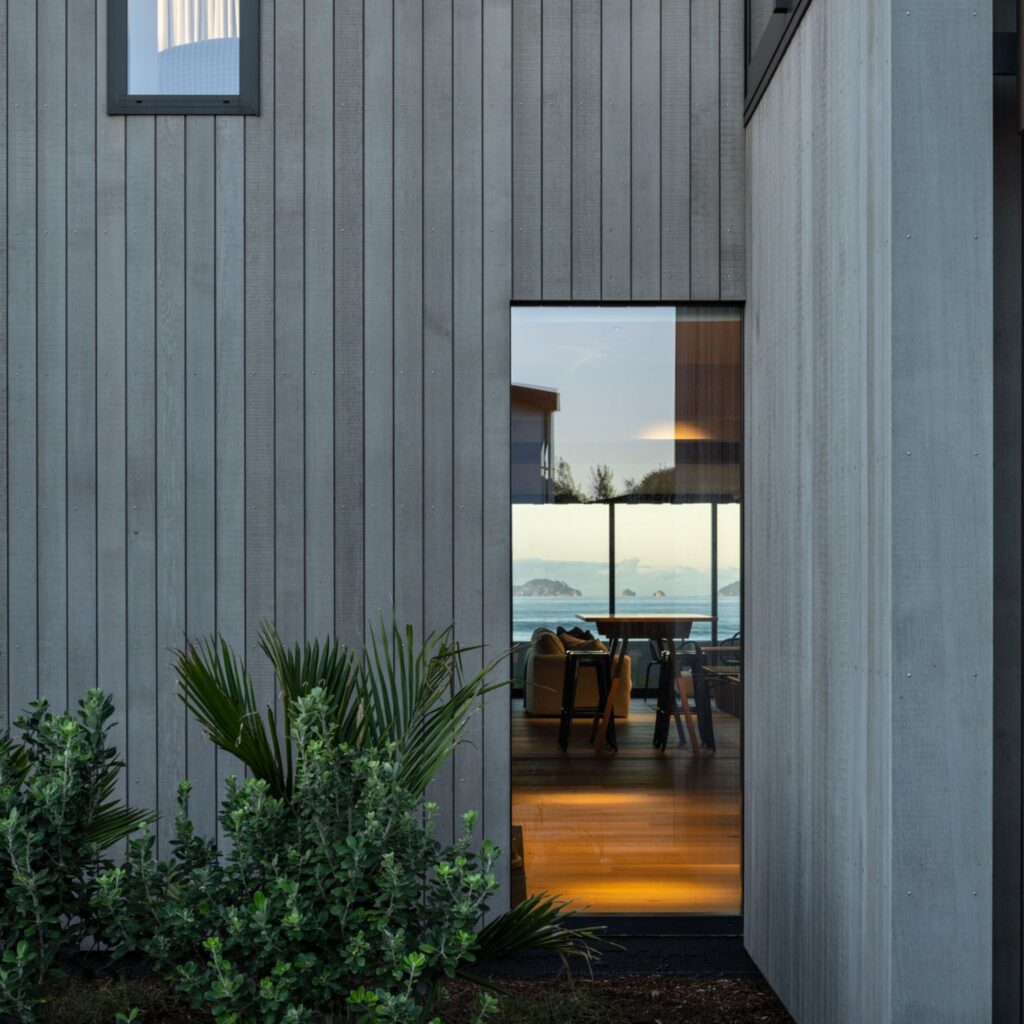
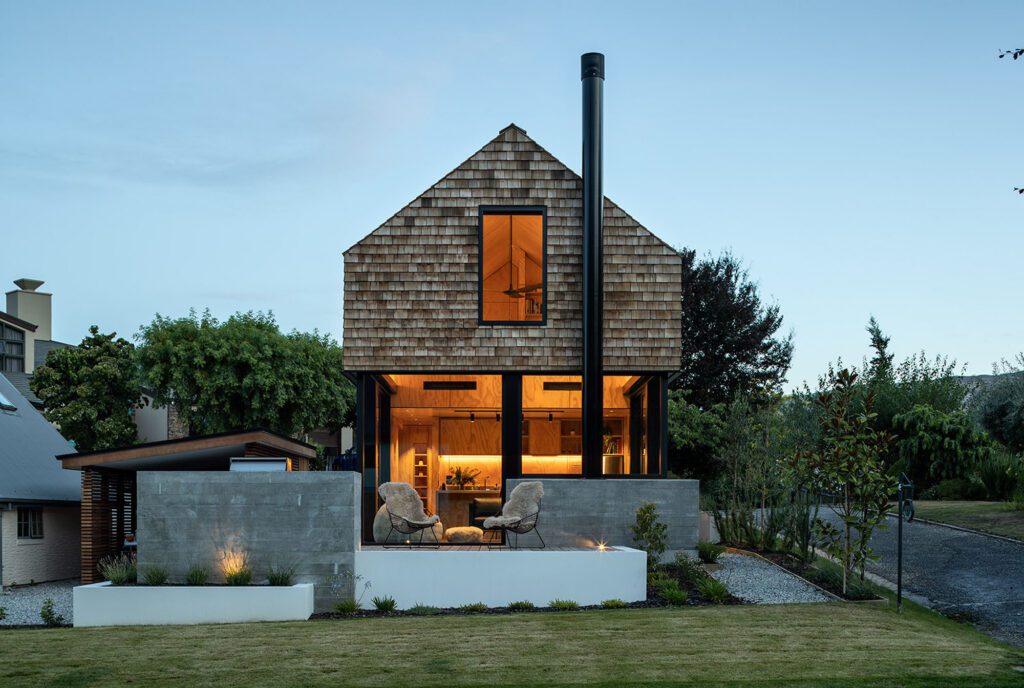
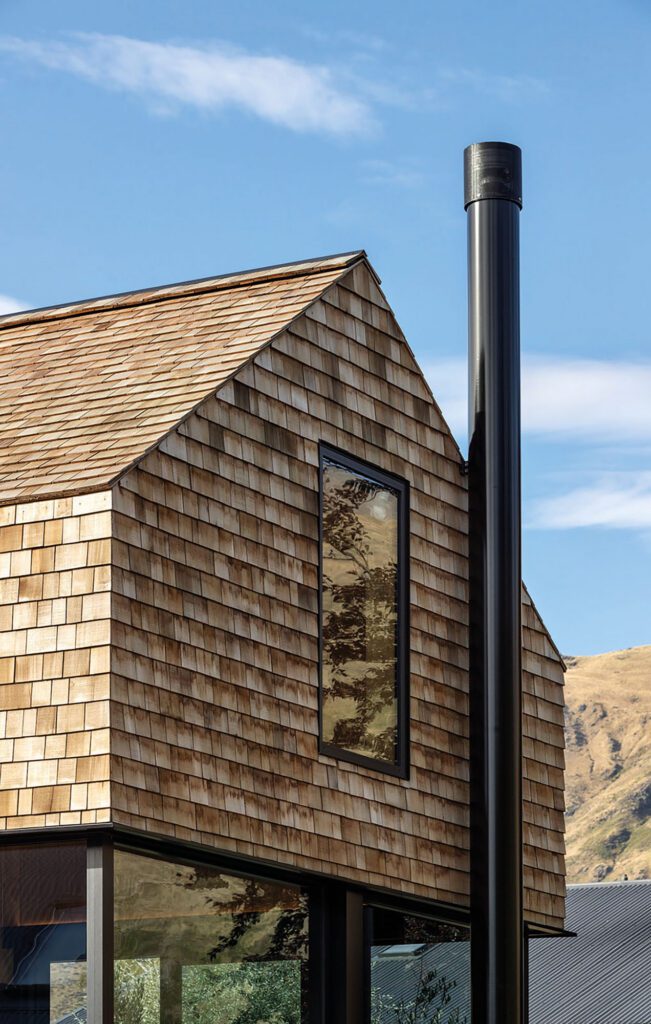
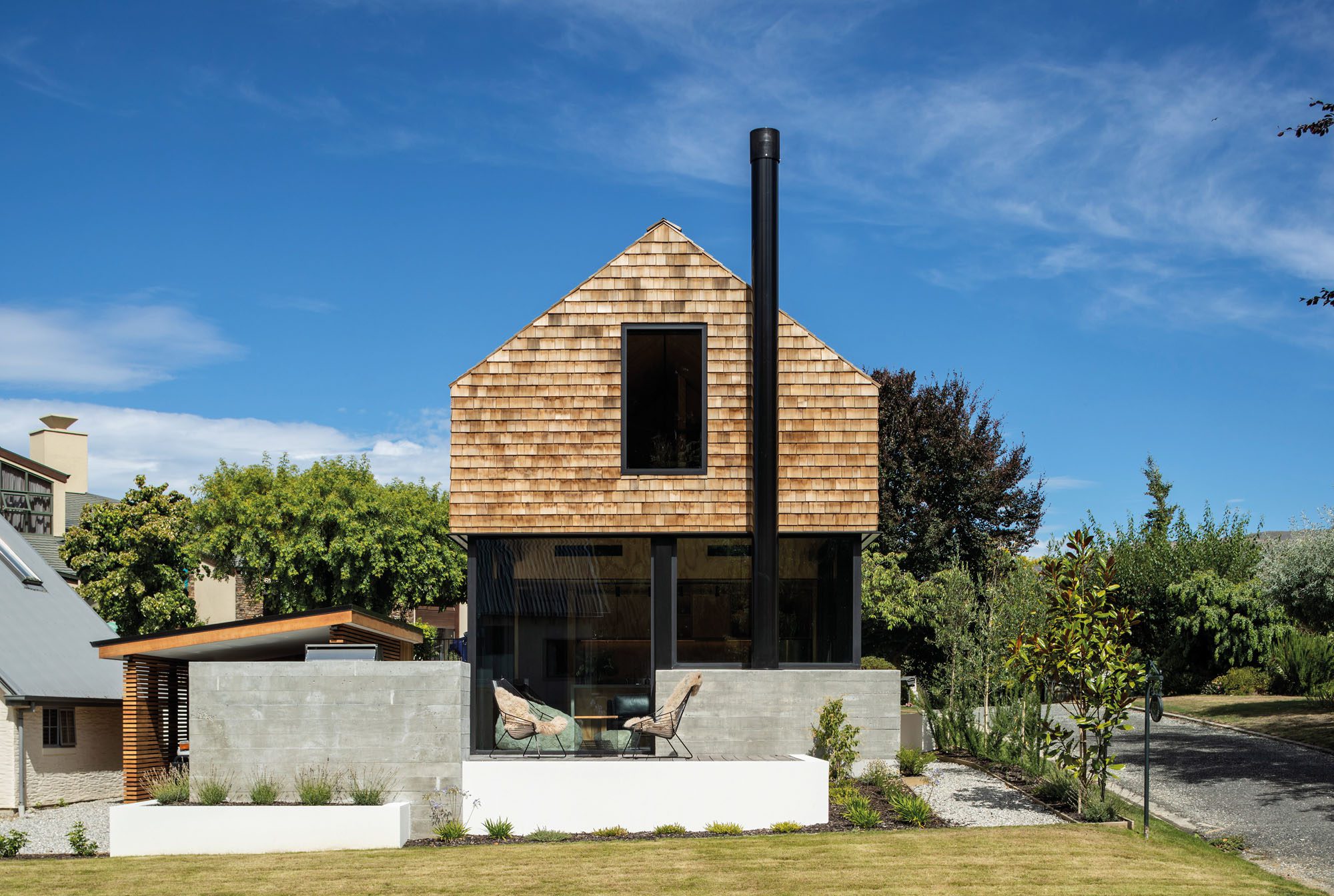
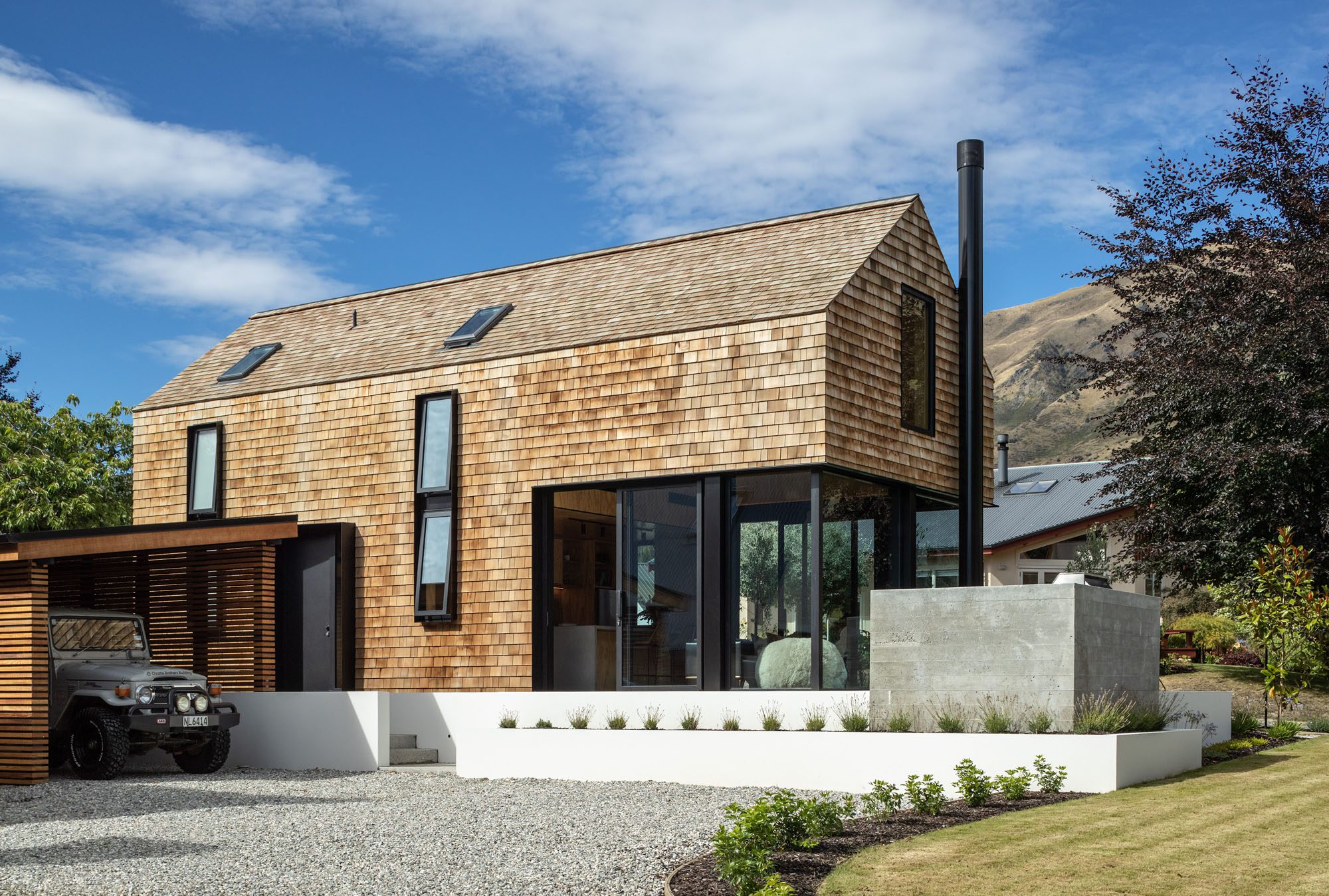
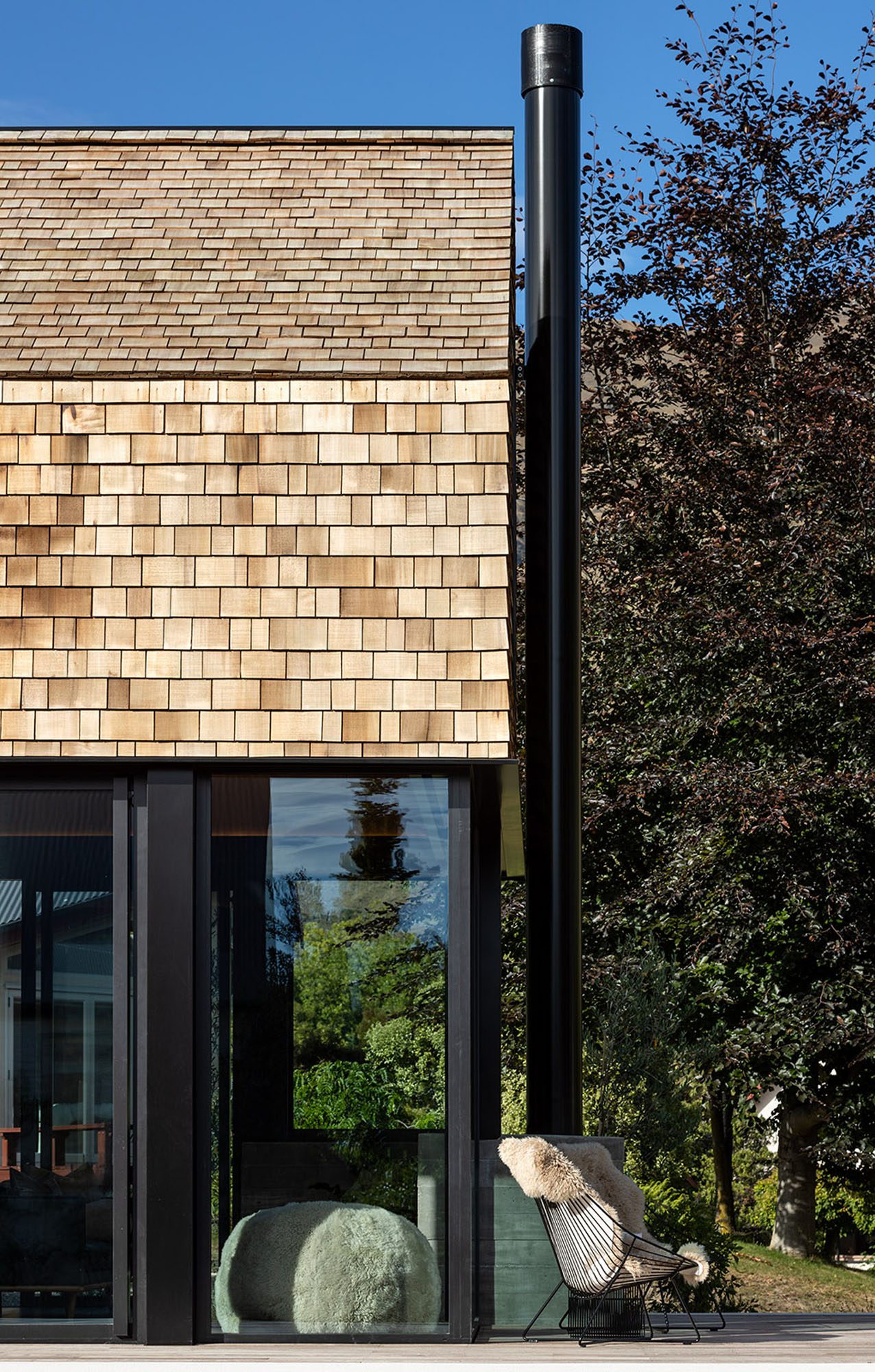
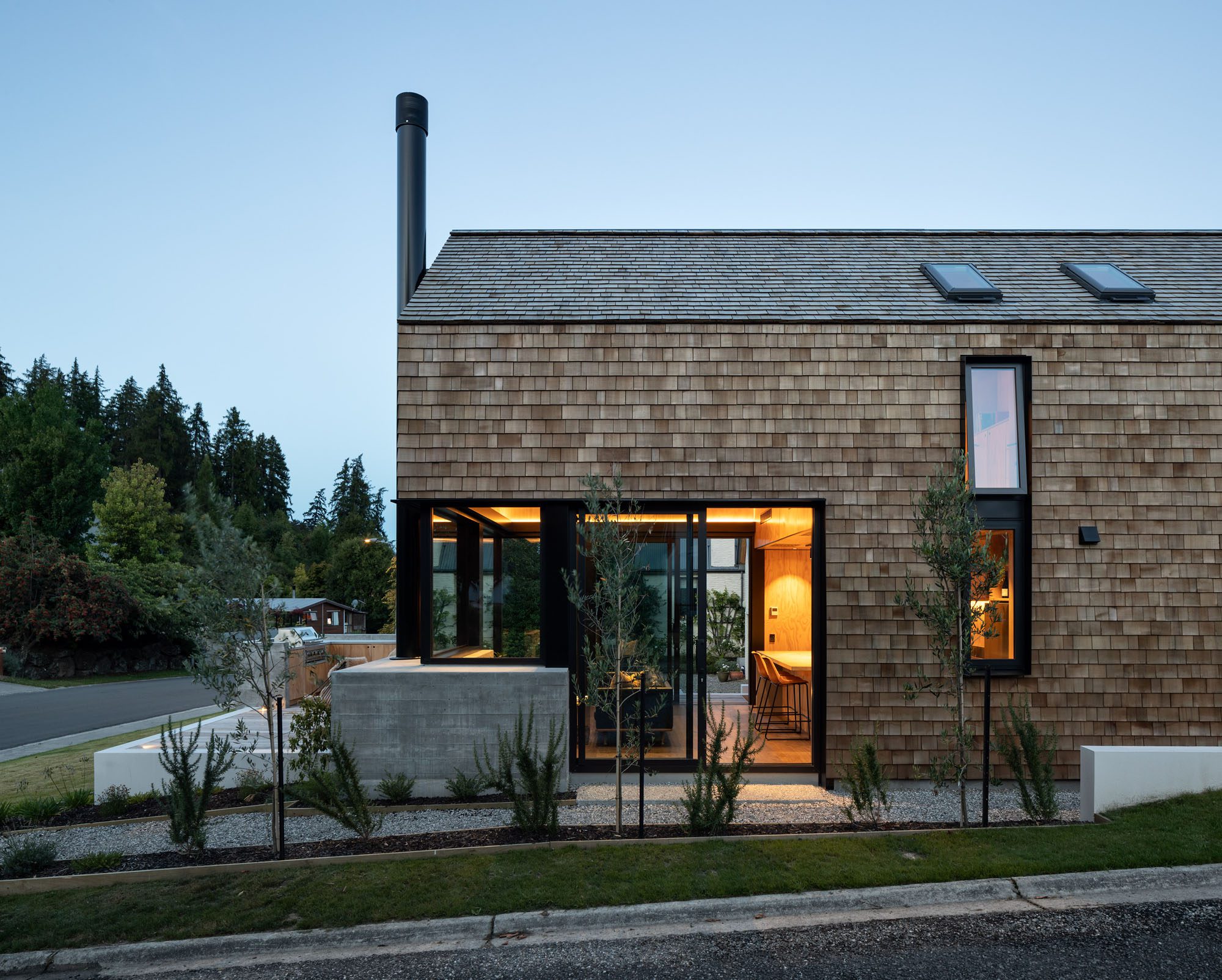
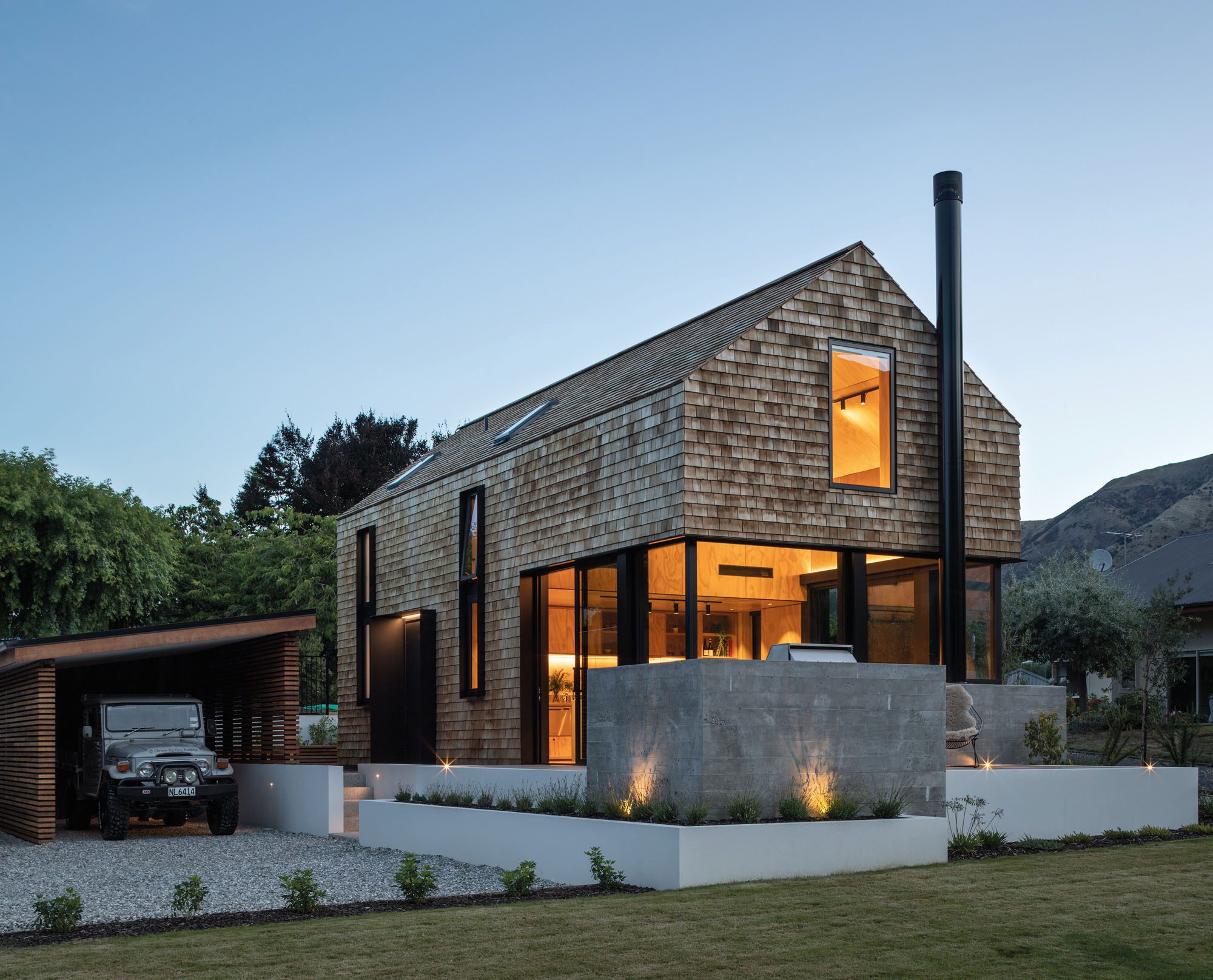
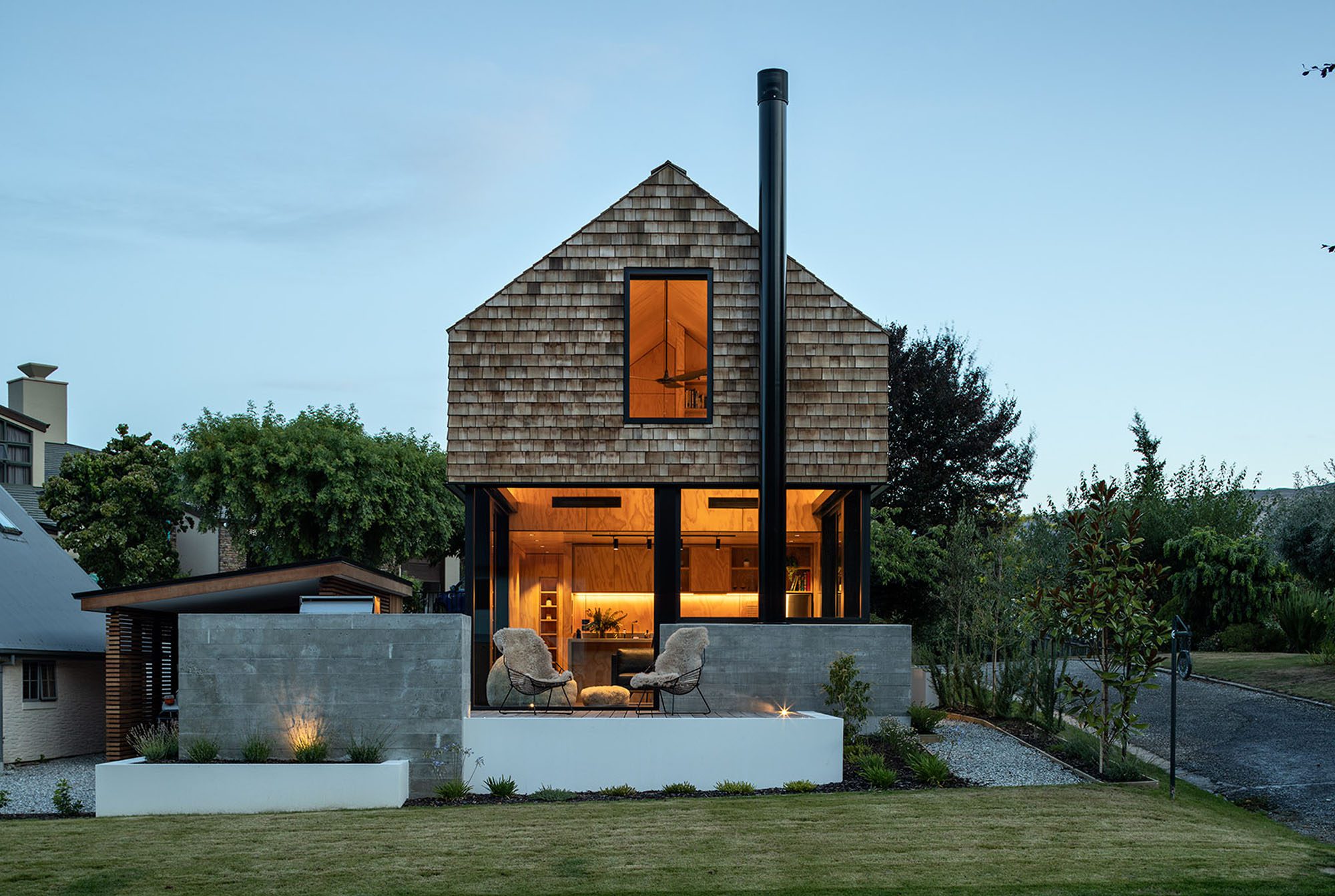
The first thing that captures one’s attention about this home is the carapace of cedar shingles that adorn three of its four sides. There are hundreds of them, side by side, acting like some sort of abstract mosaic. Some are darker than others, some have a patina of vertical or round lines while the irregularity of their horizontal lengths gives the whole thing a hand-crafted rusticity.
“We felt that a small form like this could easily become overwhelmed if multiple claddings were used, so we sought a material that could function as both wall and roof cladding,” says Barry Condon of Condon Scott Architects. It’s a distinctly unique style that has softened and weathered over time, creating an almost dappled effect on the exterior cladding.
This 96m² holiday home was influenced by the clients’ visit to Japan where architects there have honed their ability to create a feeling of spaciousness within a small footprint.
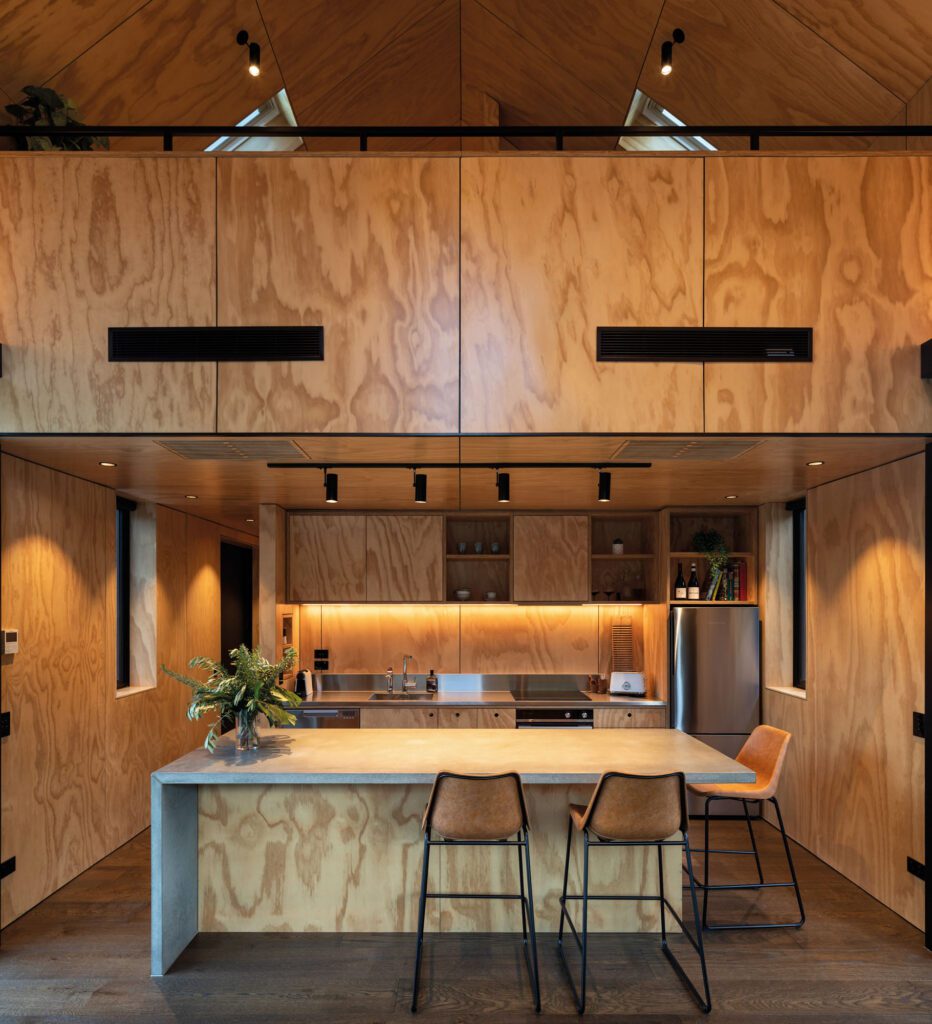
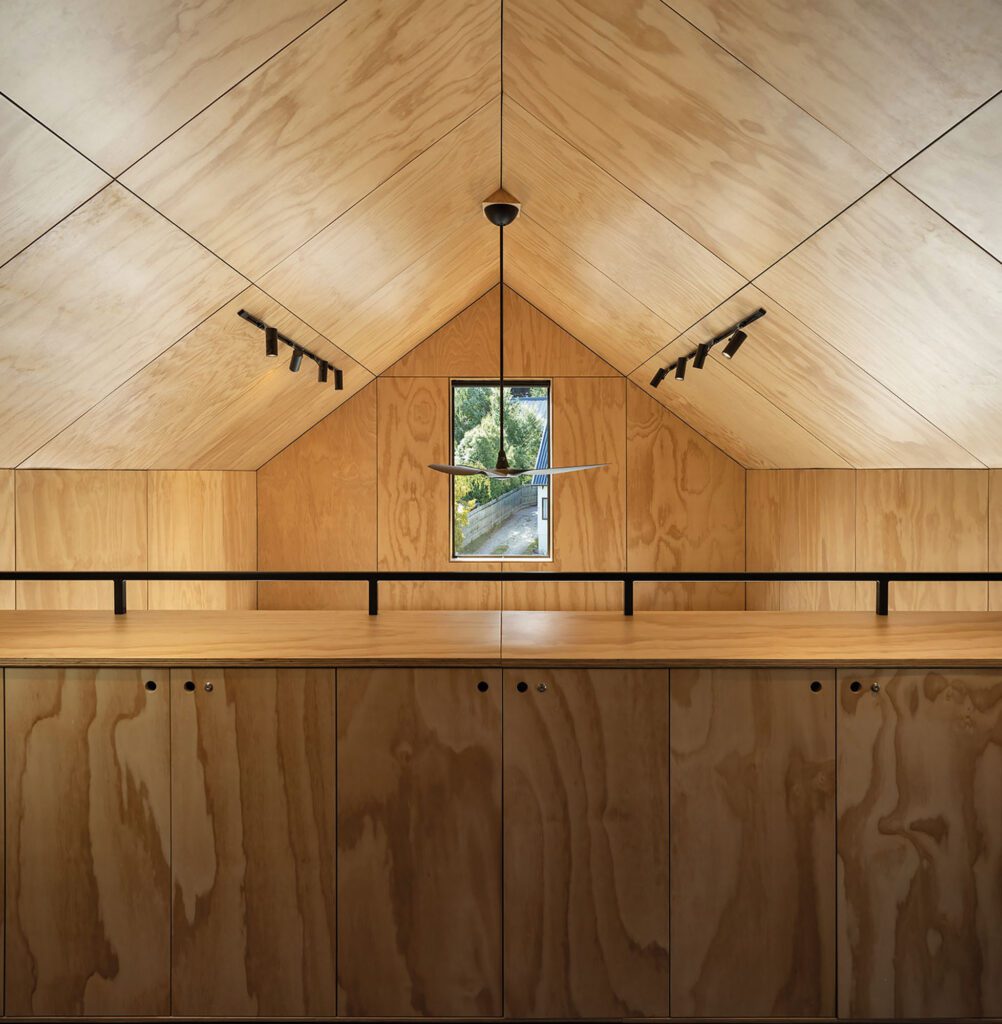
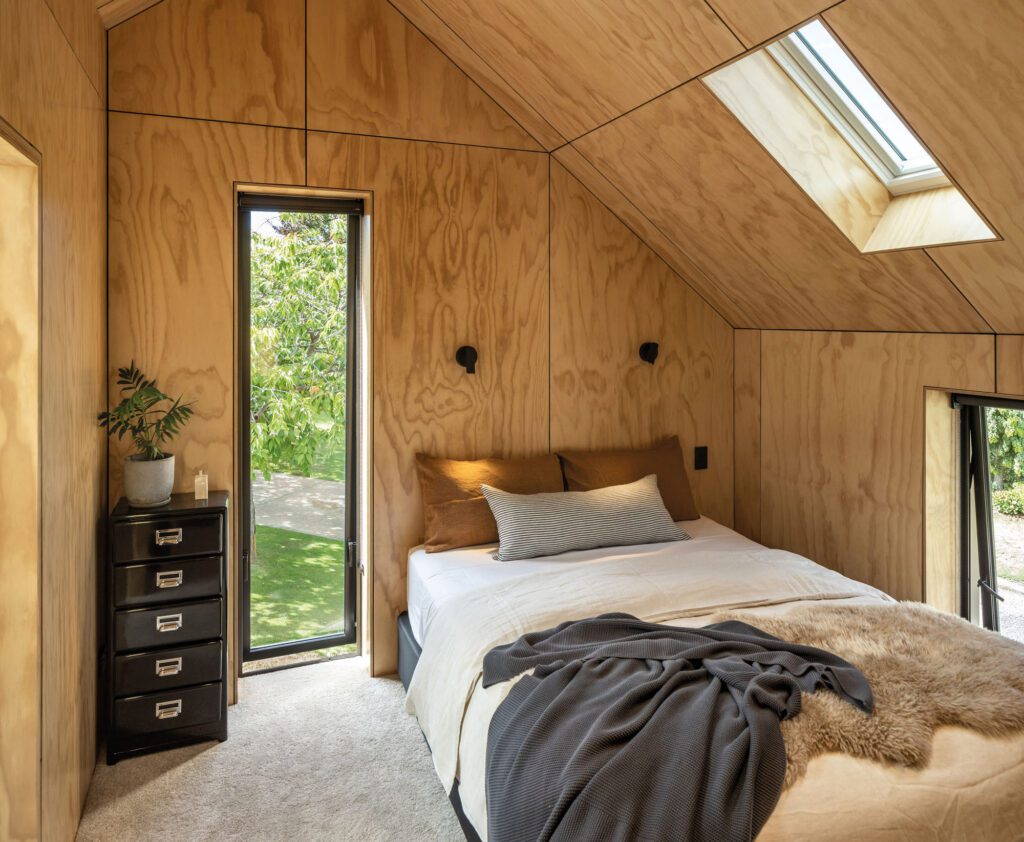
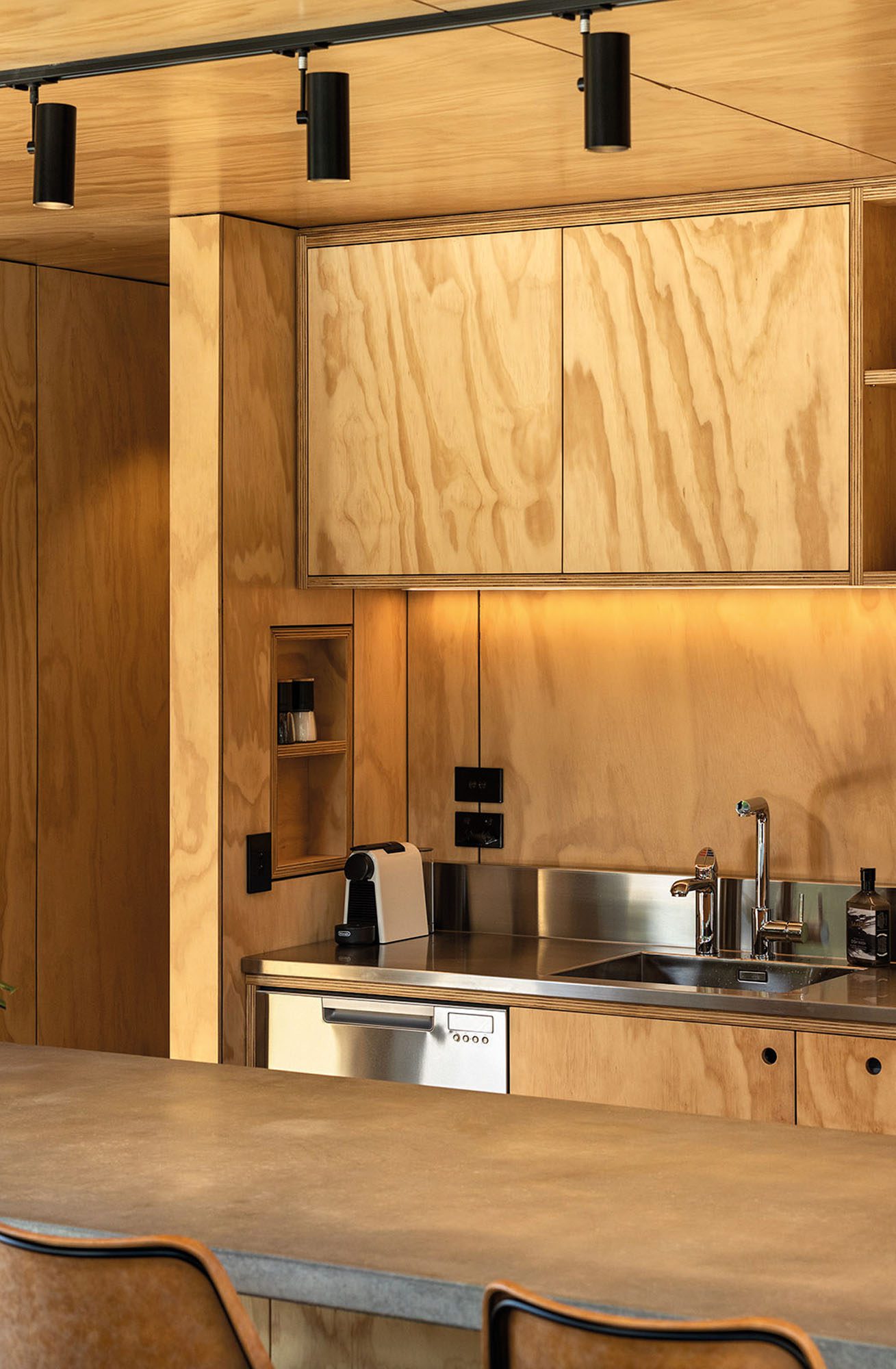
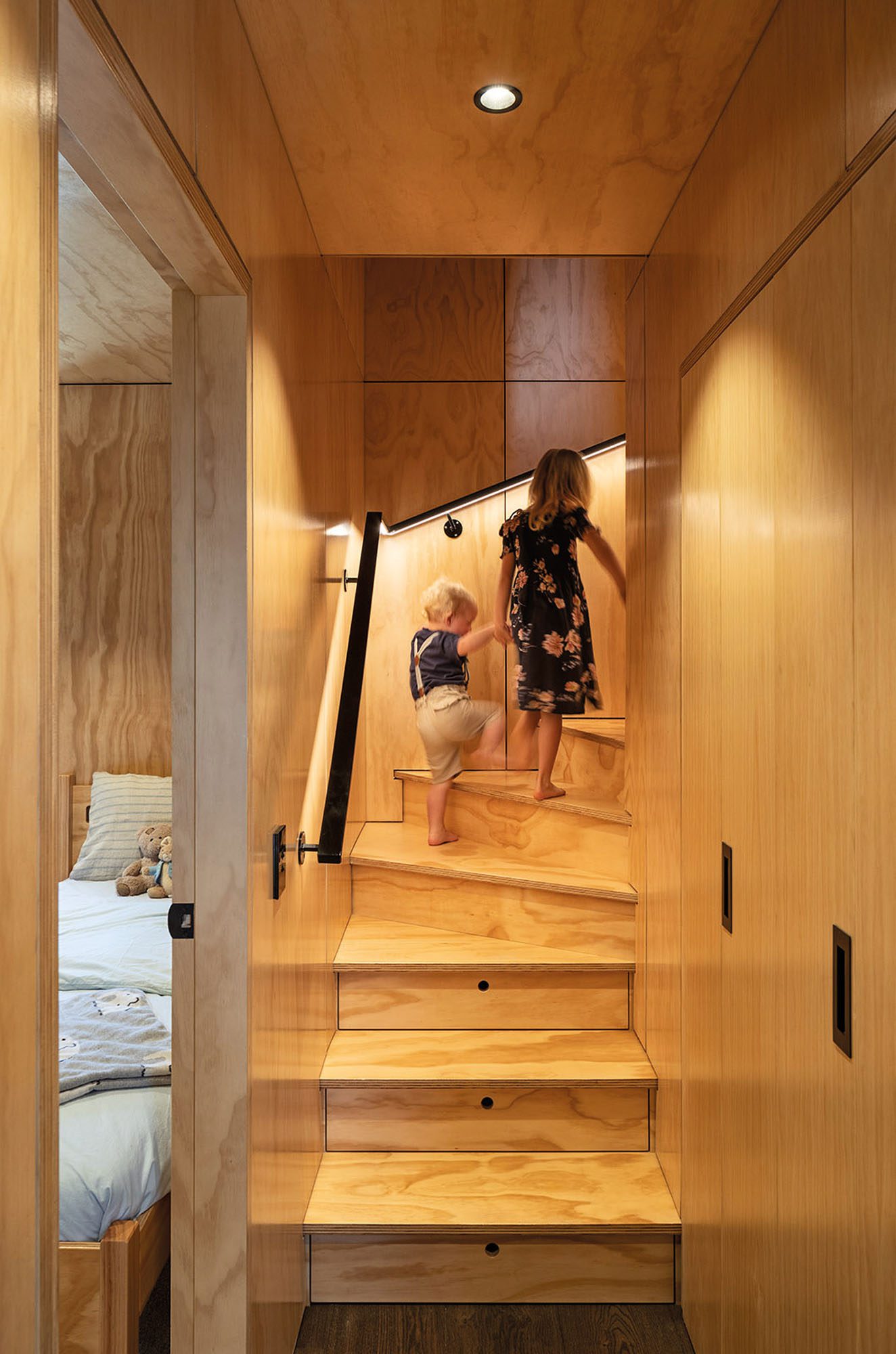
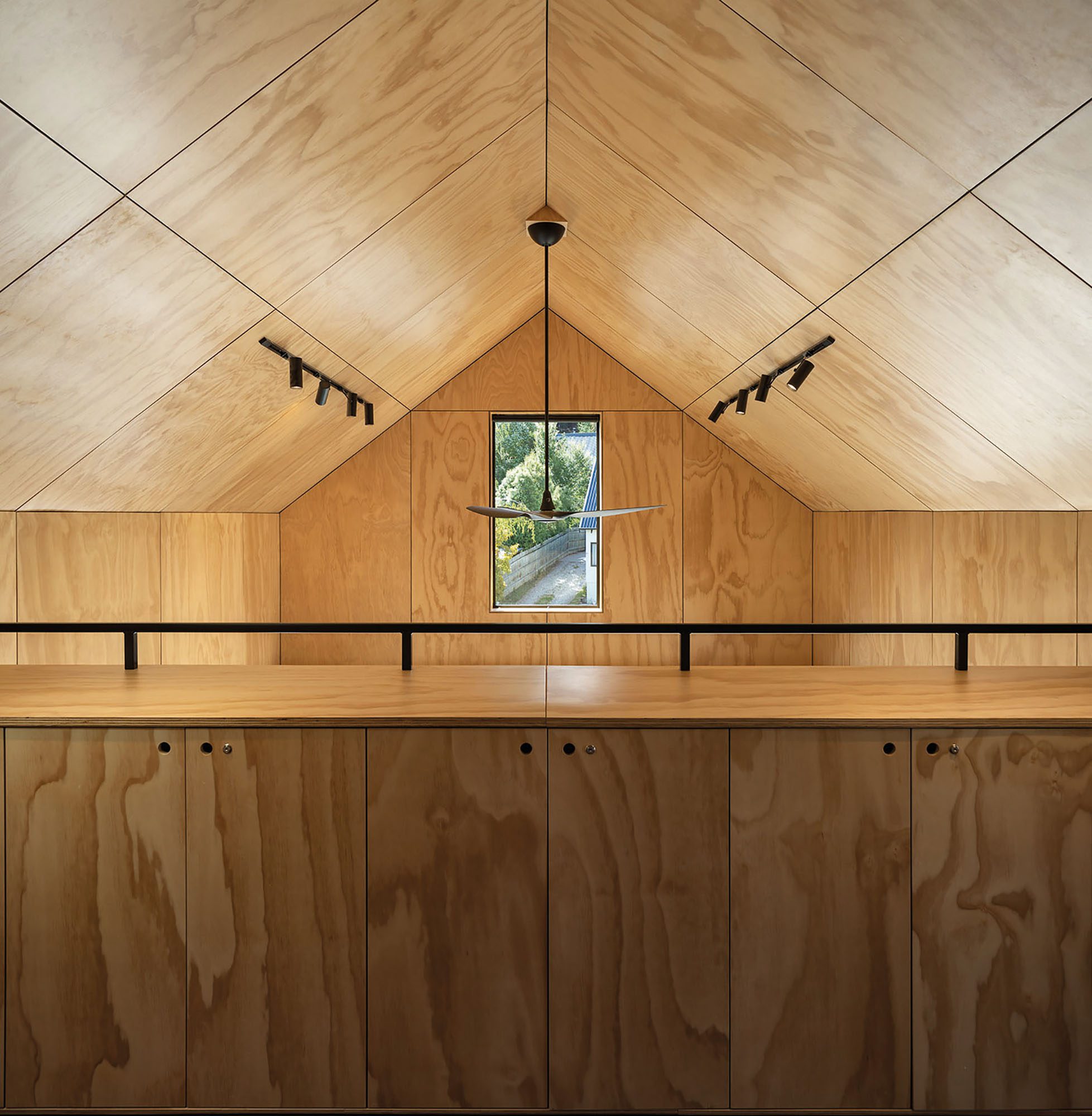
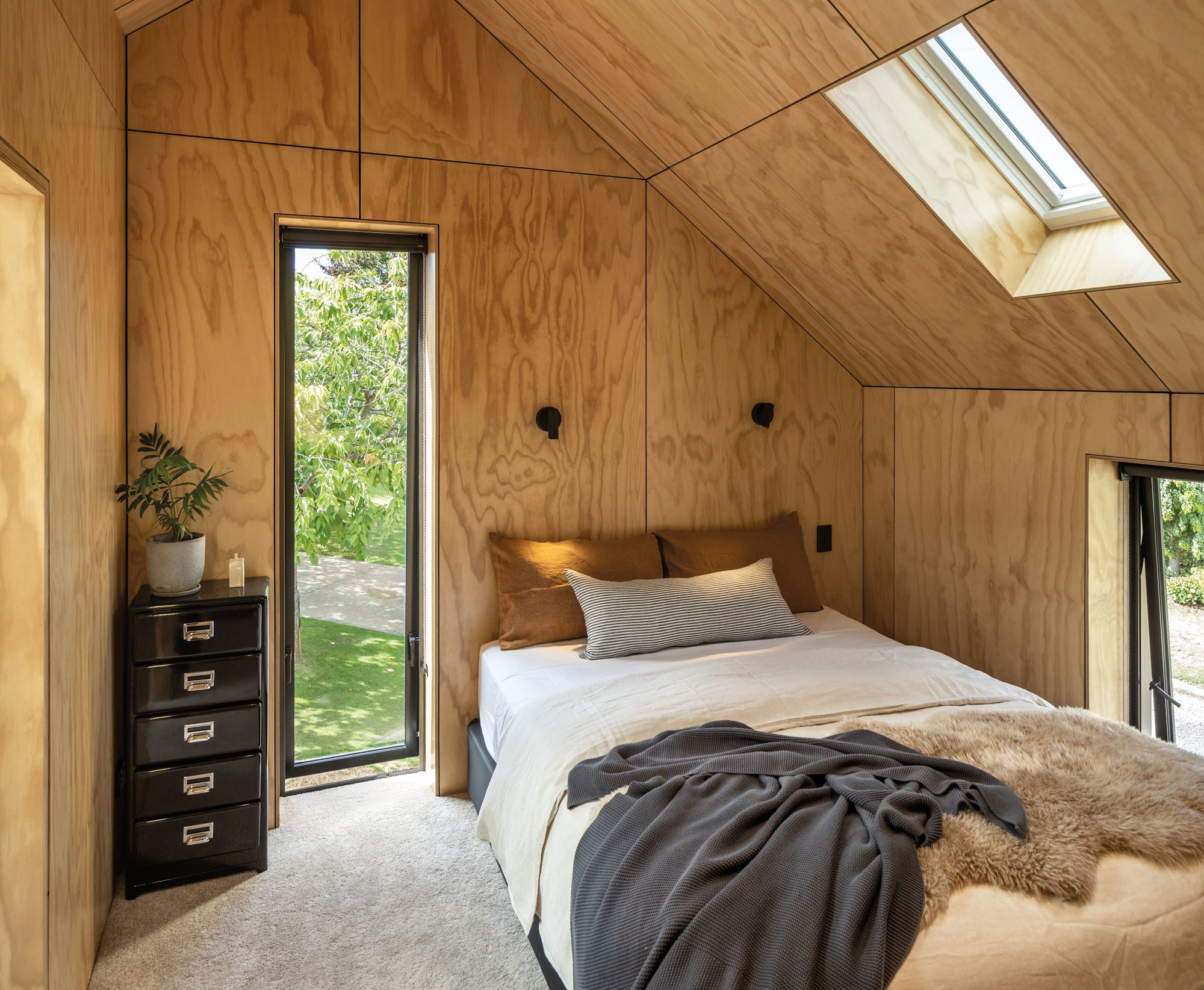
“From multiple ski trips to Japan, the clients came to appreciate the efficiency of small spaces. They had found that a small, carefully designed vacation house could be both comfortable and pleasant to live in,” continues the architect, mentioning how the house was designed with a “tight, considered floor plan and a refined, precise aesthetic. Each function was allocated only as much space as required. The interior is minimalist, and the timber panelling and alignment, combined with a double-height space in the living area, create a sense of volume indoors.”
The overall form consists of a two-storeyed rectangle capped by a steep gable. Pretty simple, really, but, as often happens, the beauty is in the details.
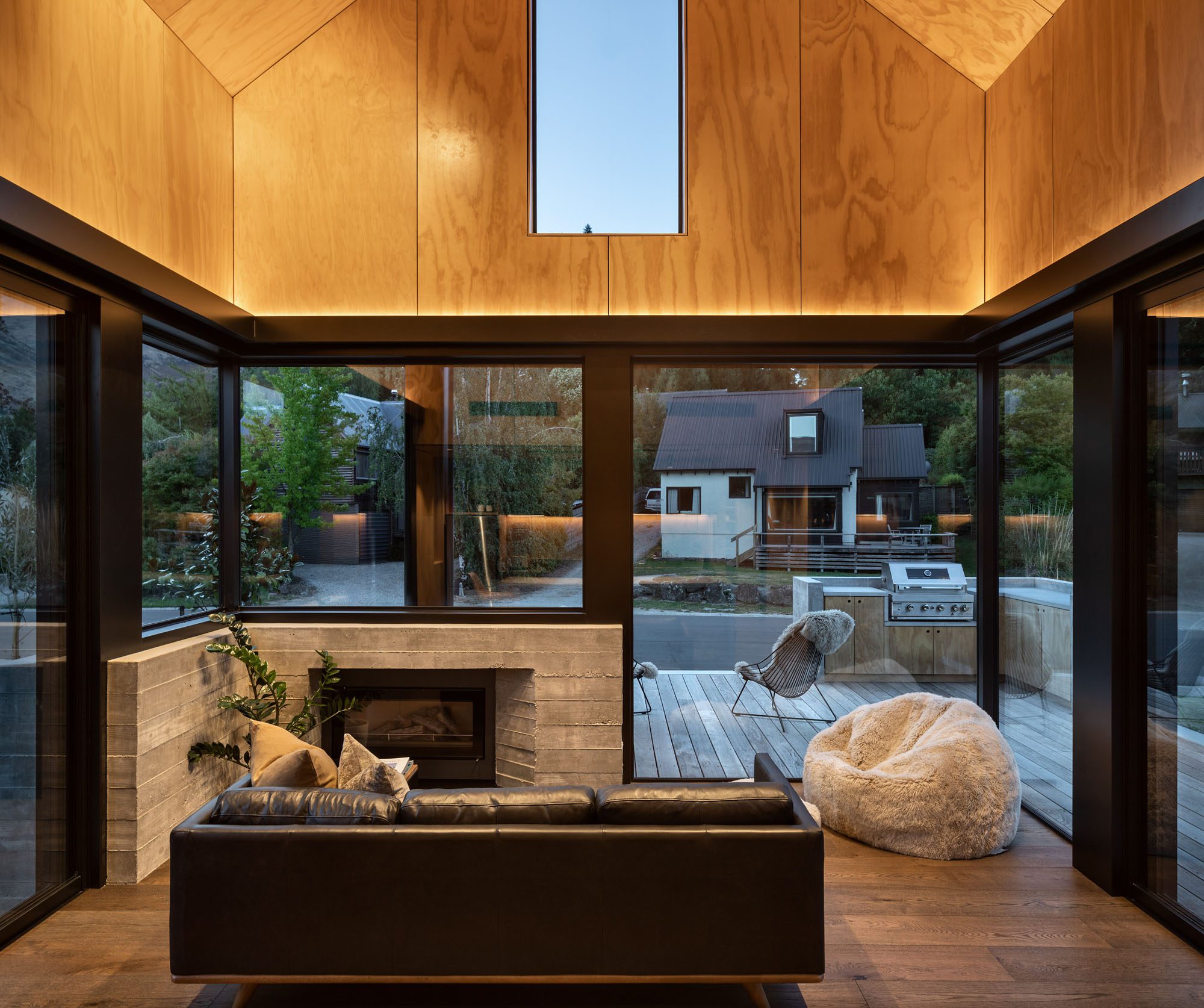
At the front elevation the ground floor is highly glazed, giving the upper level a feeling that it cantilevers dramatically over the entrance.
At this same spot a series of concrete volumes — one a low wall that hides the outdoor cooking area, the other an internal fireplace — gives layers of privacy and further intrigue to arrival.
Once inside, a simple kitchen area feels expansive because of the double height, while the mezzanine level above allows for air and light flow.
Proximity to neighbours called for a handful of thin, elongated and strategically placed windows. Meanwhile, lightwells do the rest of the work, allowing natural light ingress and capturing heat. Thermally broken joinery with low-E glass, a generous hearth and orientation take the edge off the notorious winters.
“The clients wanted a high-performing home with passive design principles. The house is constructed from insulated panels that are taped, sealed and wrapped to maximise thermal efficiency,” says Barry. “This construction methodology remains relevant today as a high-performance building approach. The forward-thinking vision of the clients has made this design an enduring one that will last many decades.”
Words: Federico Monsalve
Images: Simon Devitt
This feature first appeared in Homes of this Decade 2015-2025, which was published by Nook Publishing in 2025.