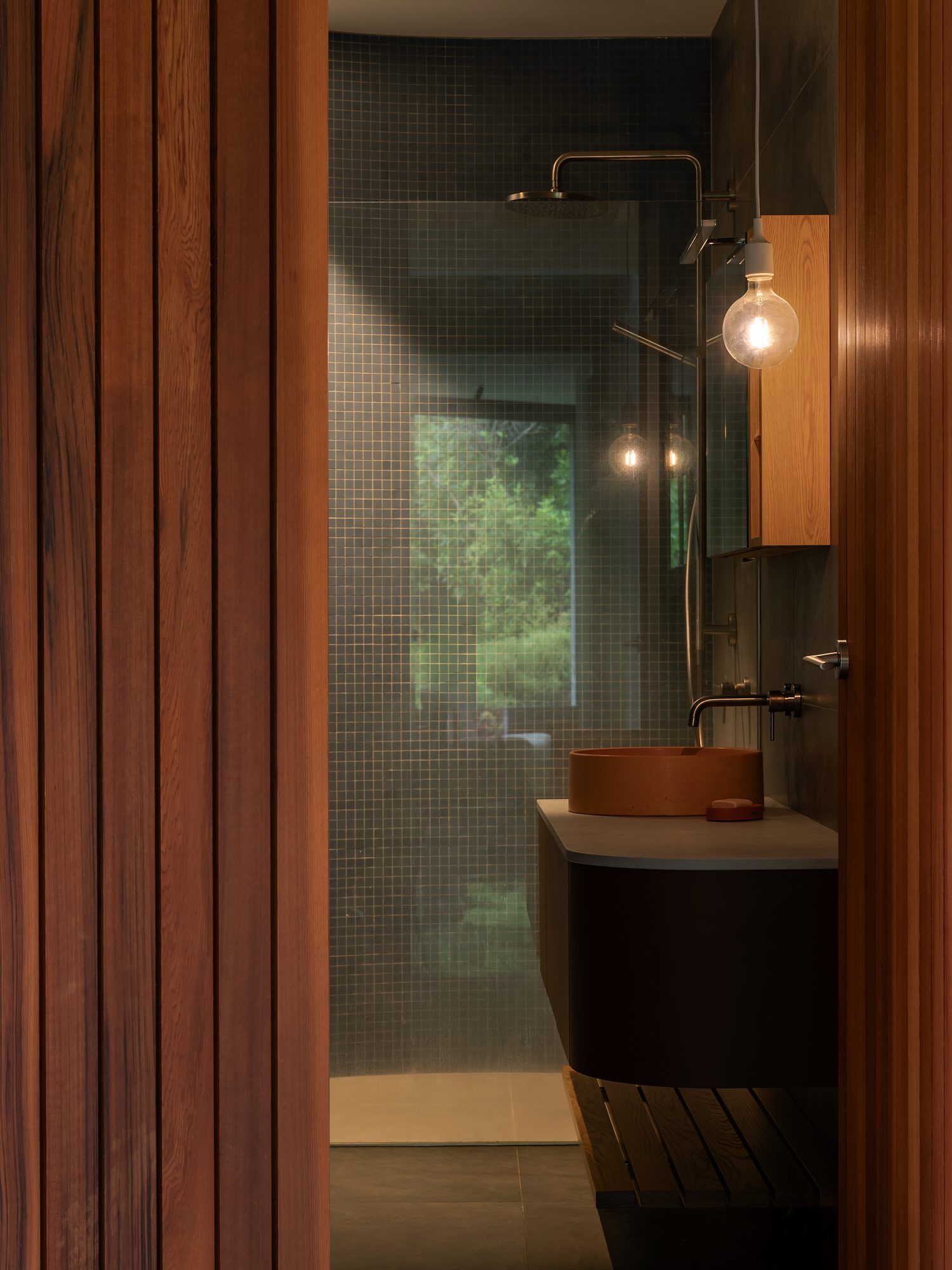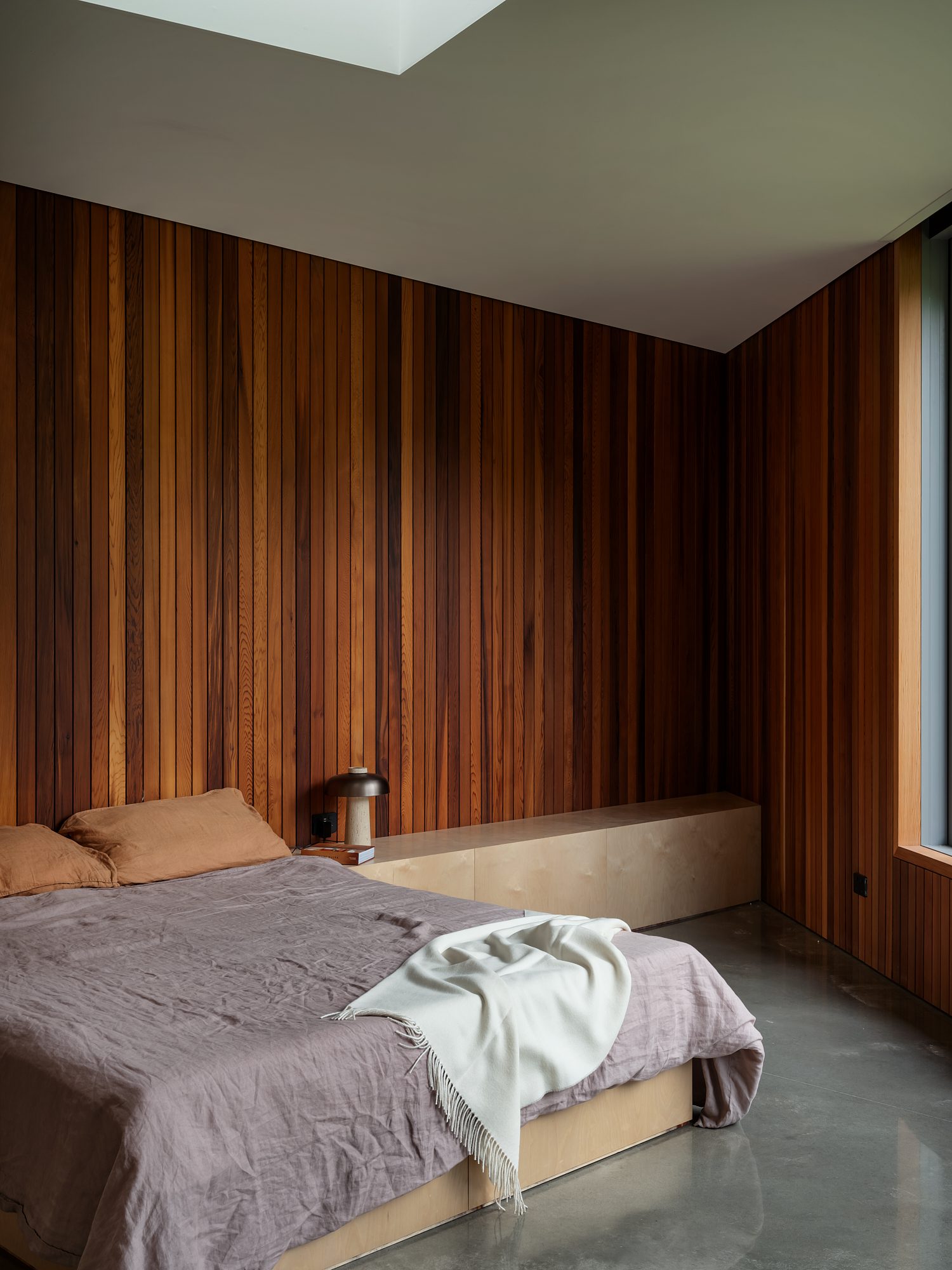
A triangular form bedded into the hillside. A place to enjoy a slower pace of life. A warm home; a living roof, soft timbers, light stalks. An inconspicuous little triumph for long summer days and intimate wintry get-togethers nestled into the head of a native bush-clad valley.
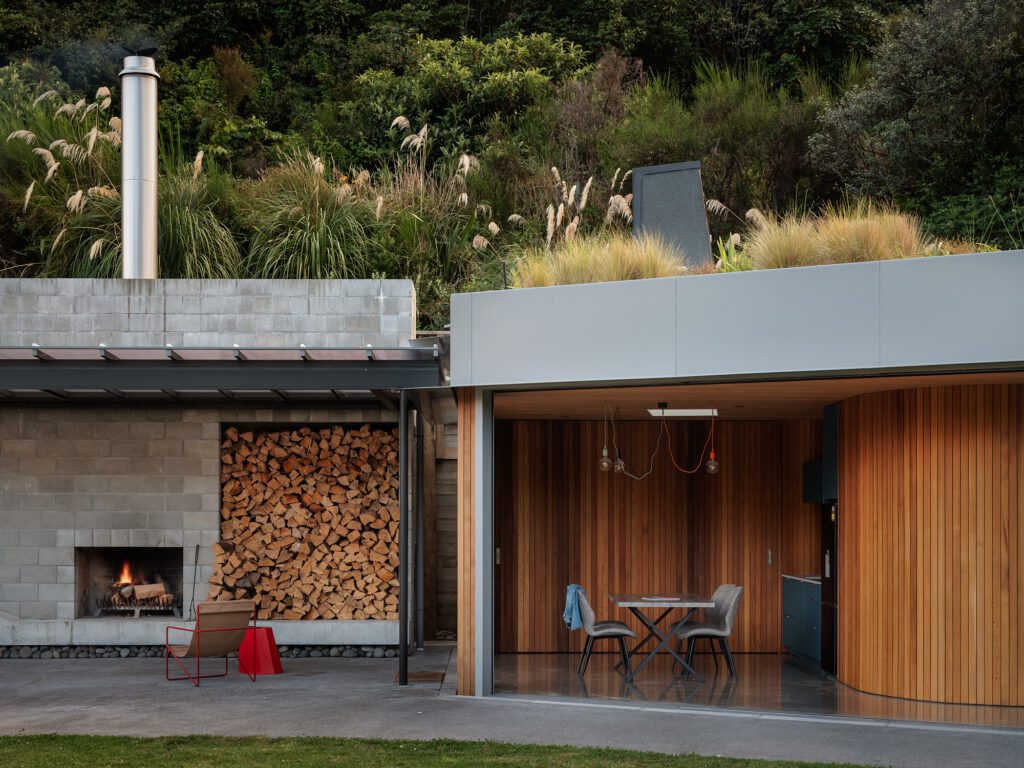
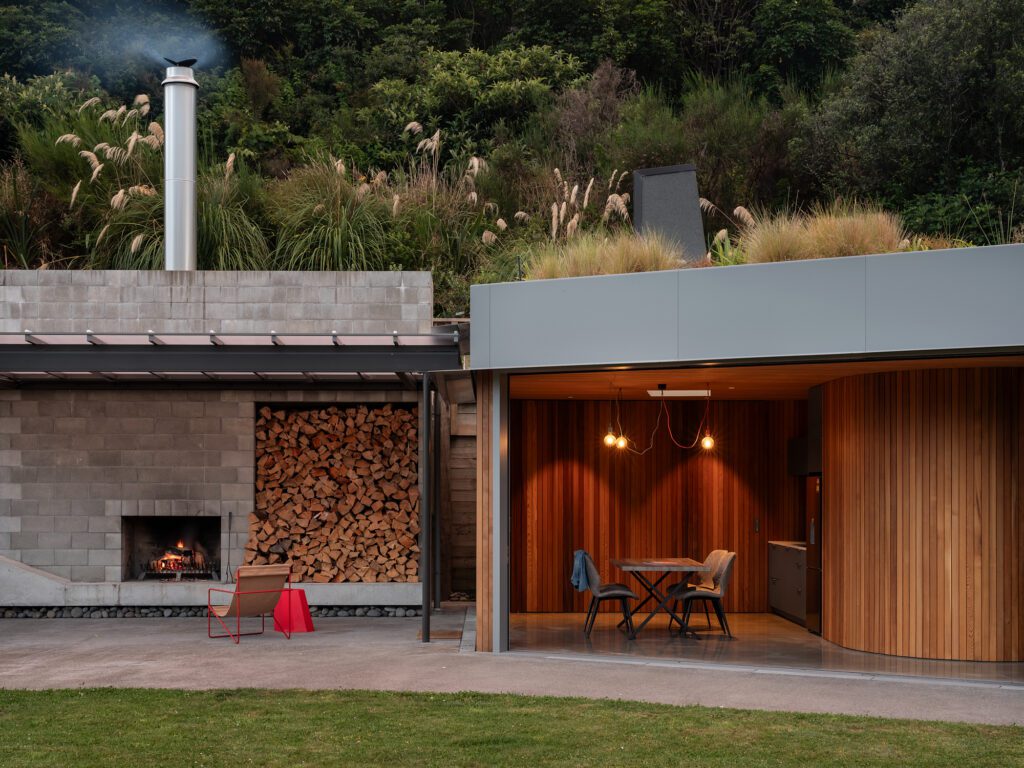
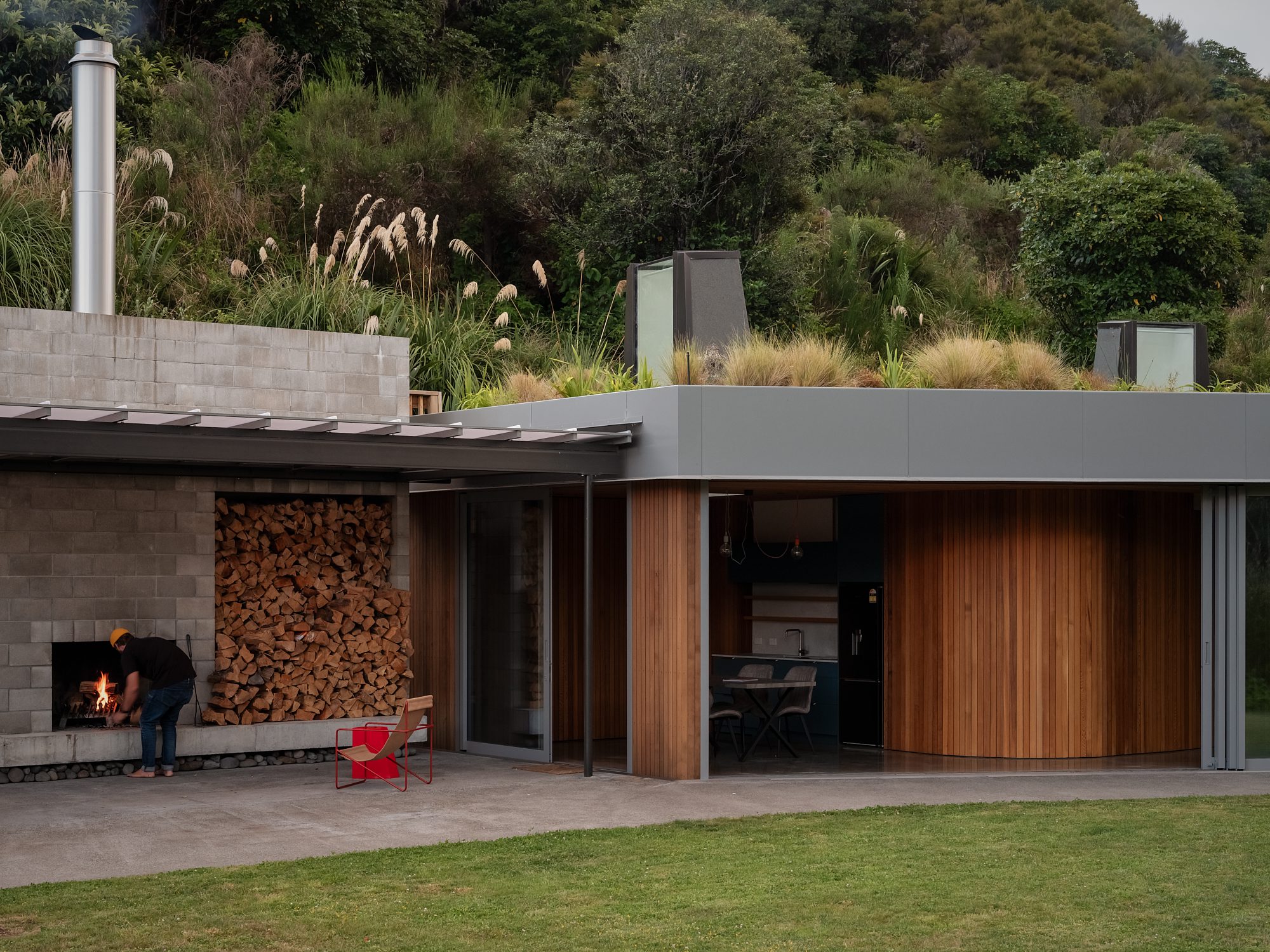
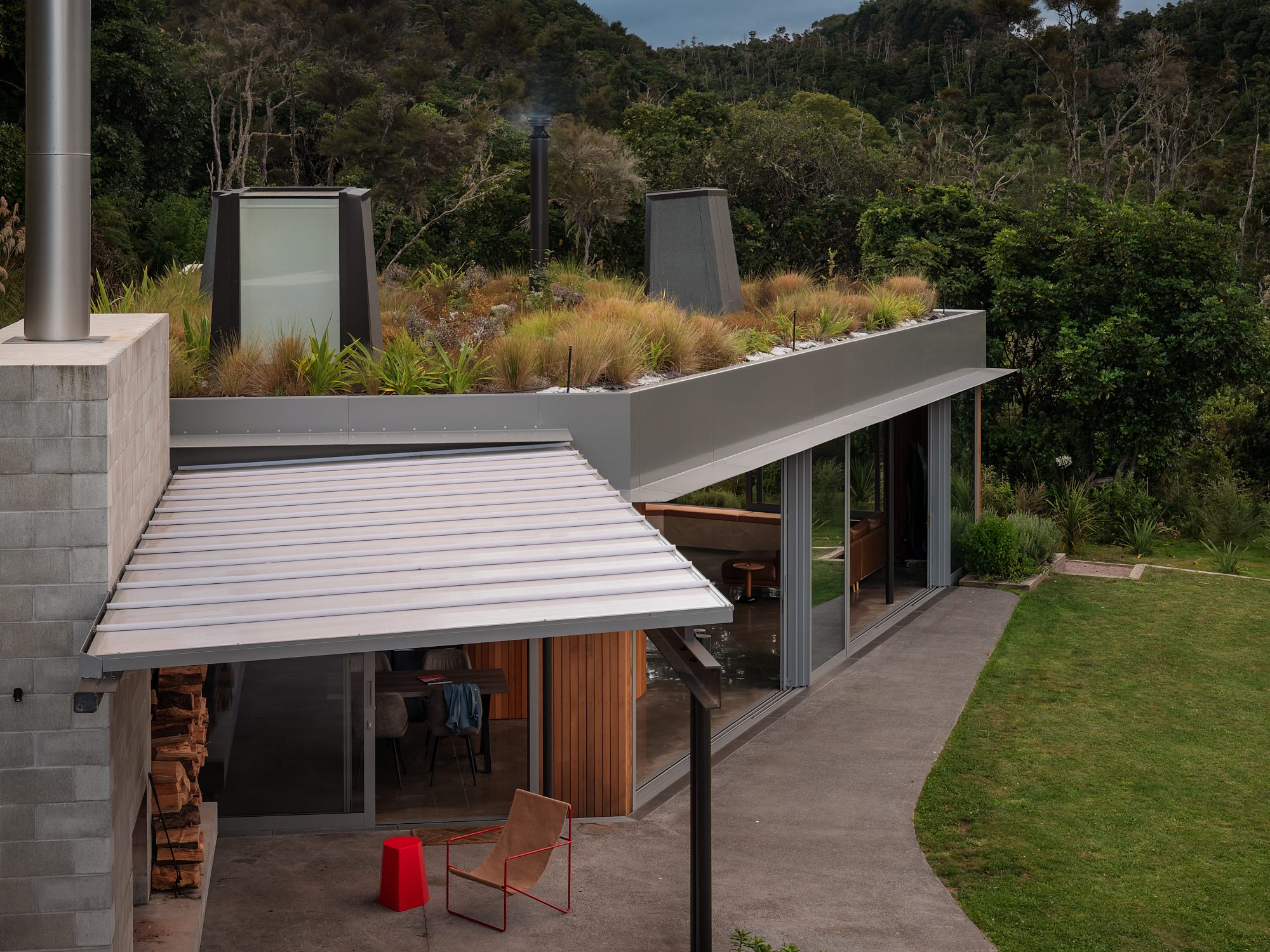
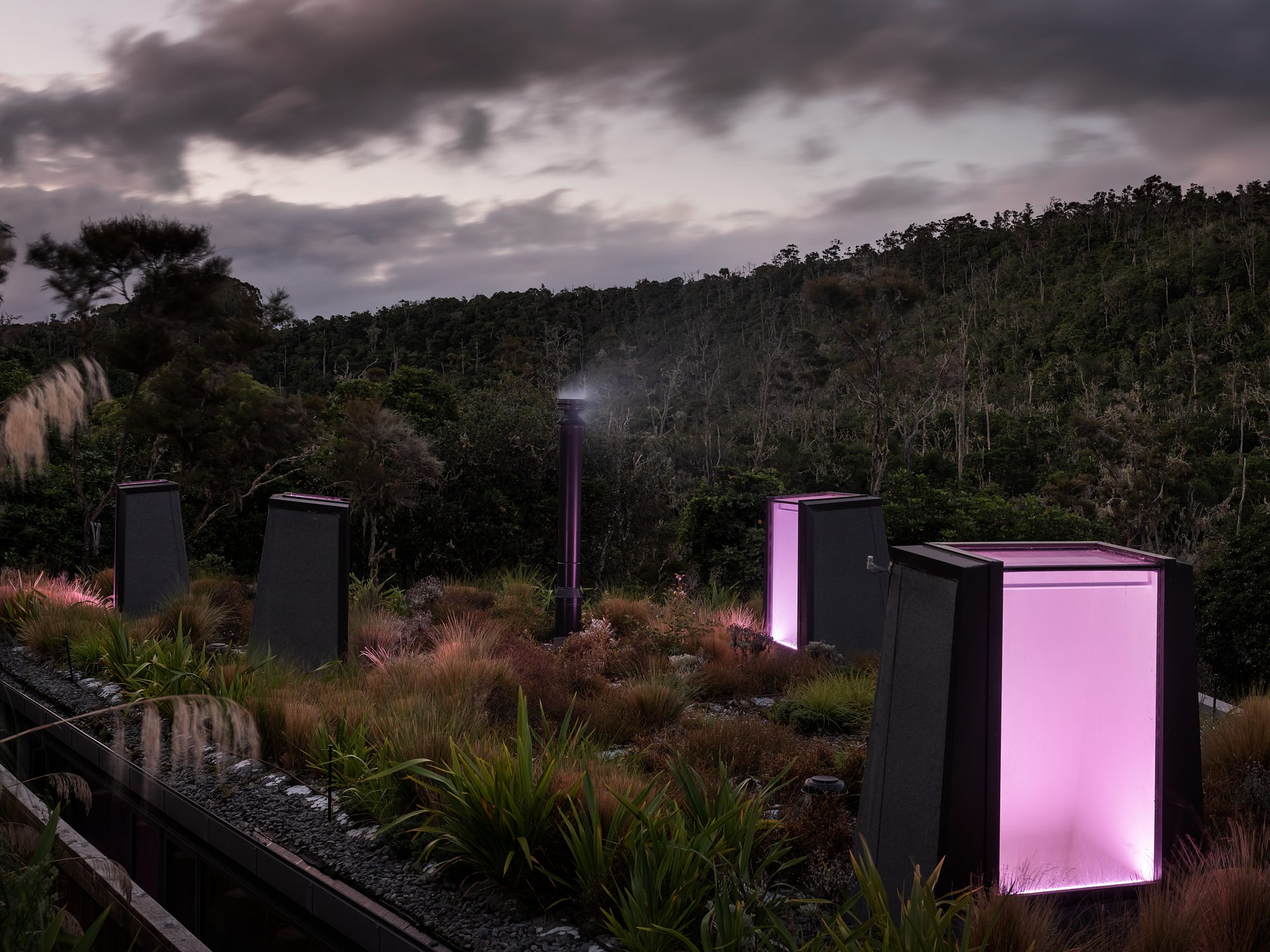
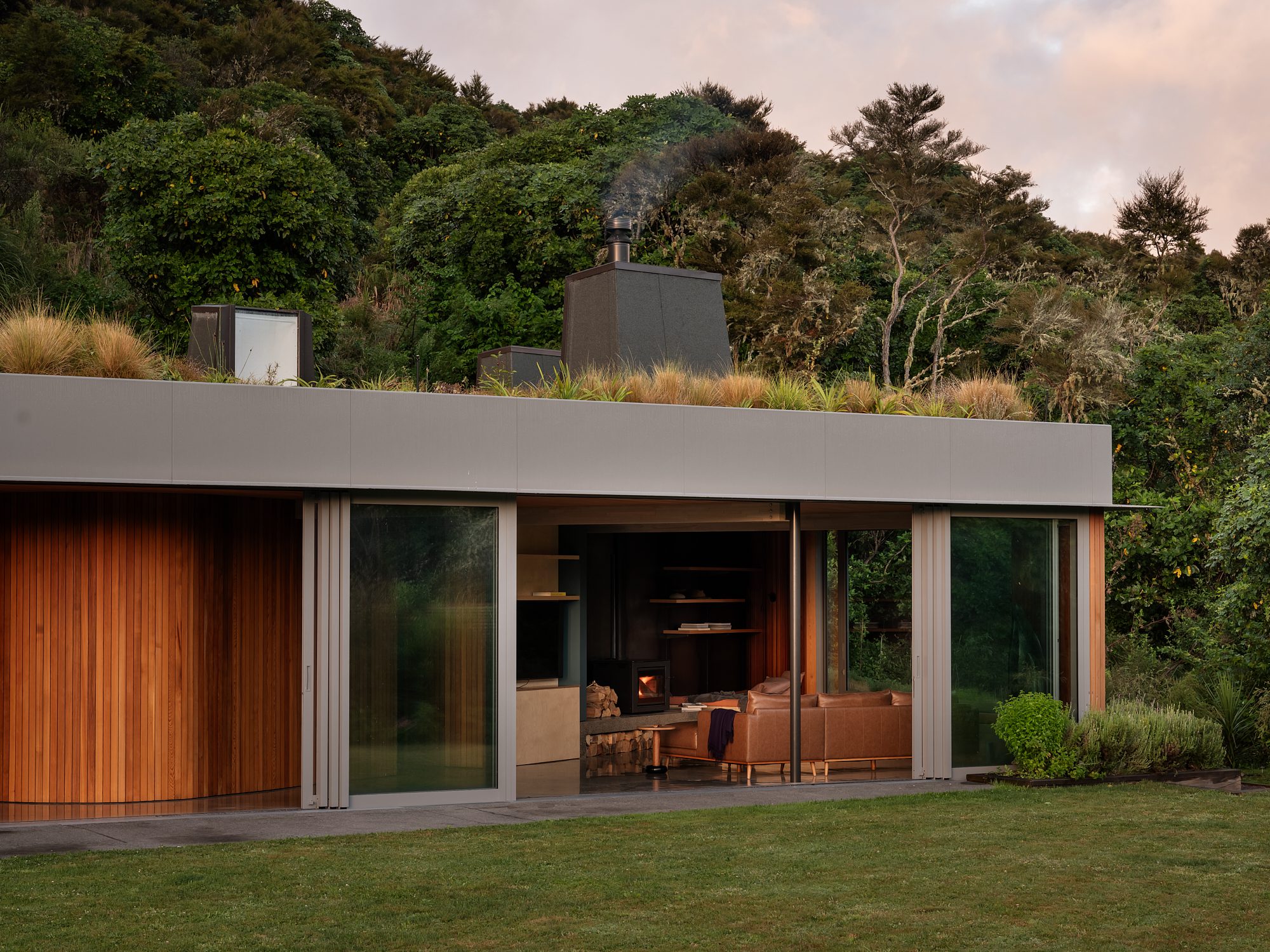
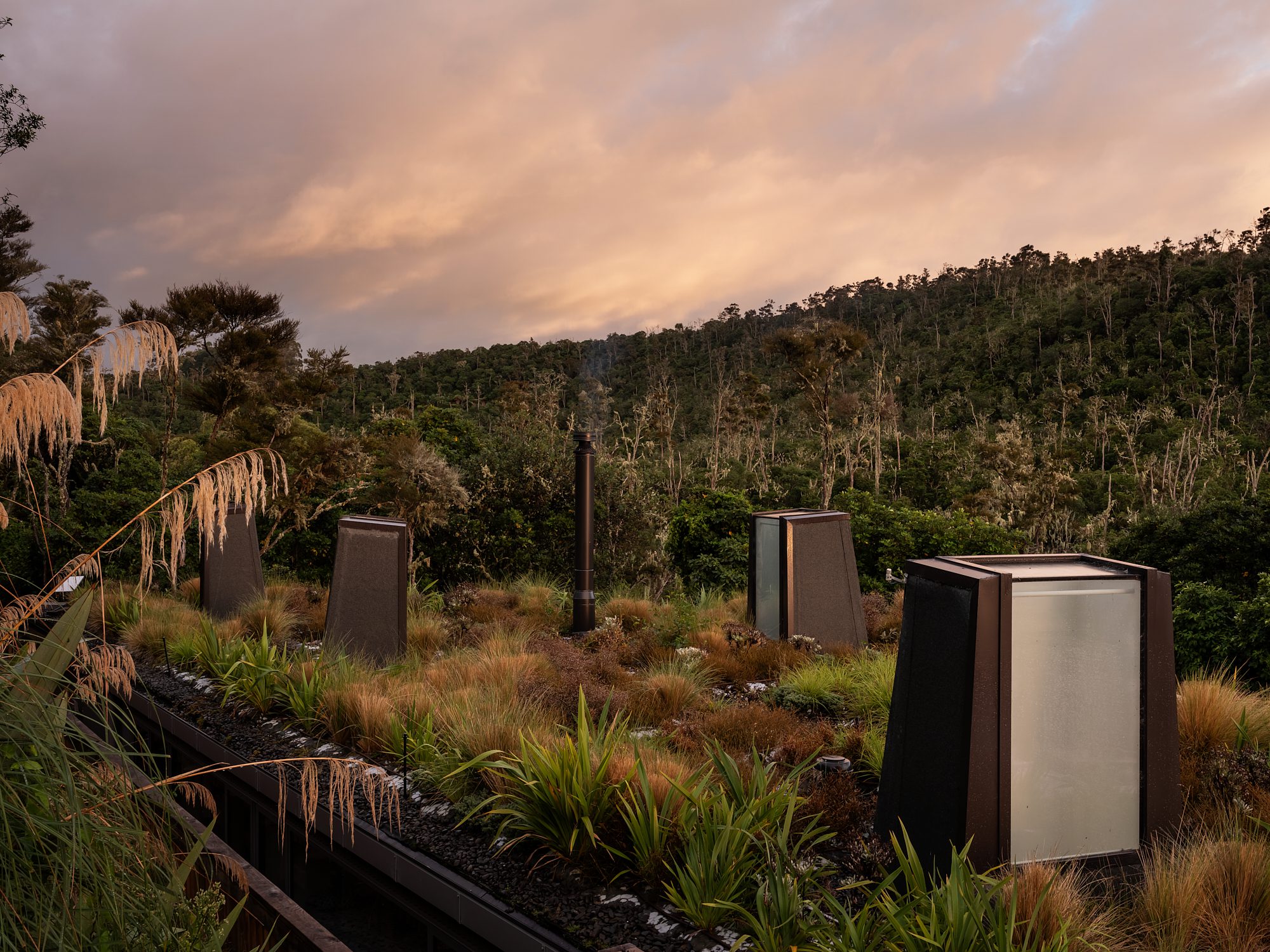
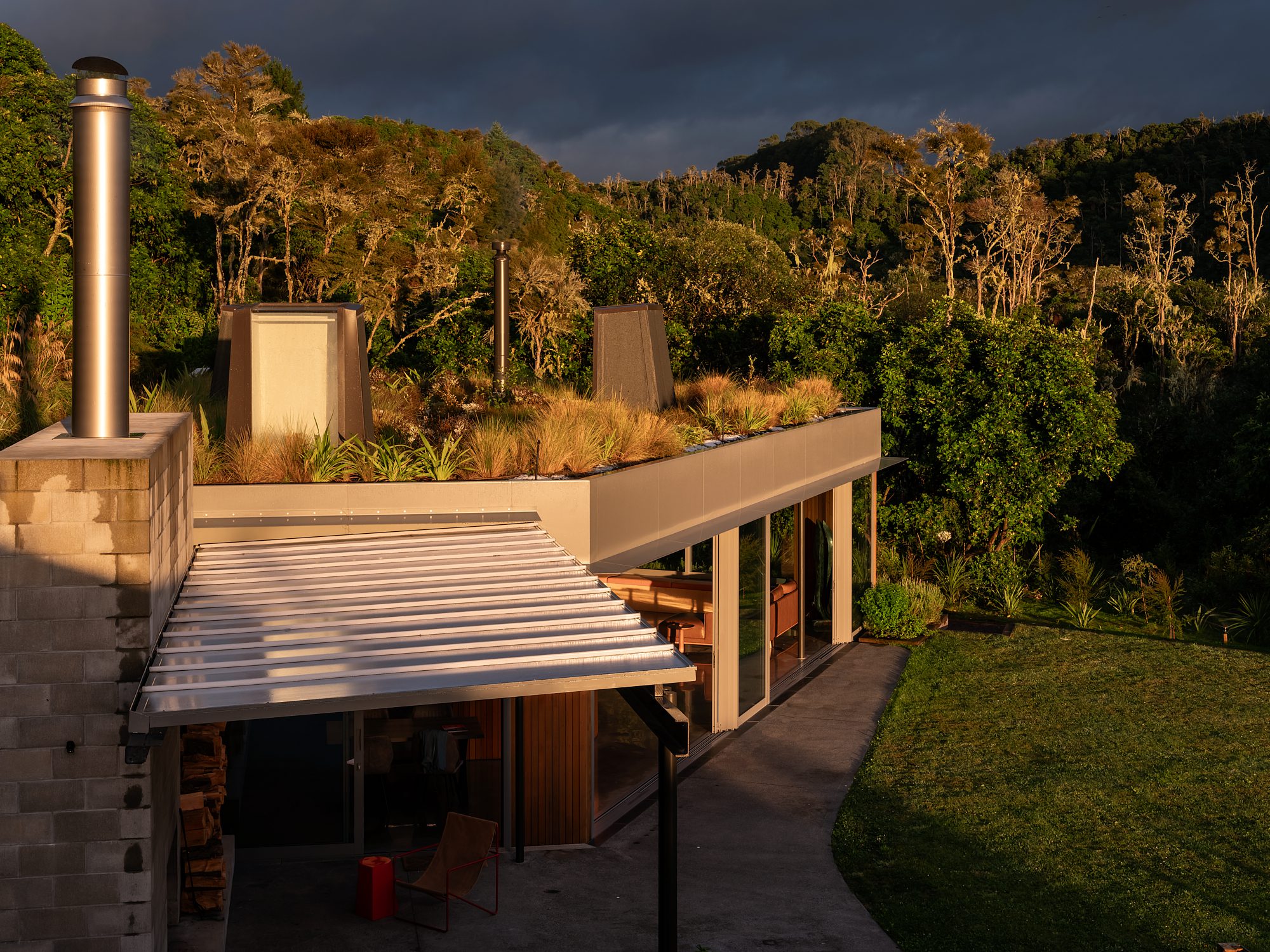
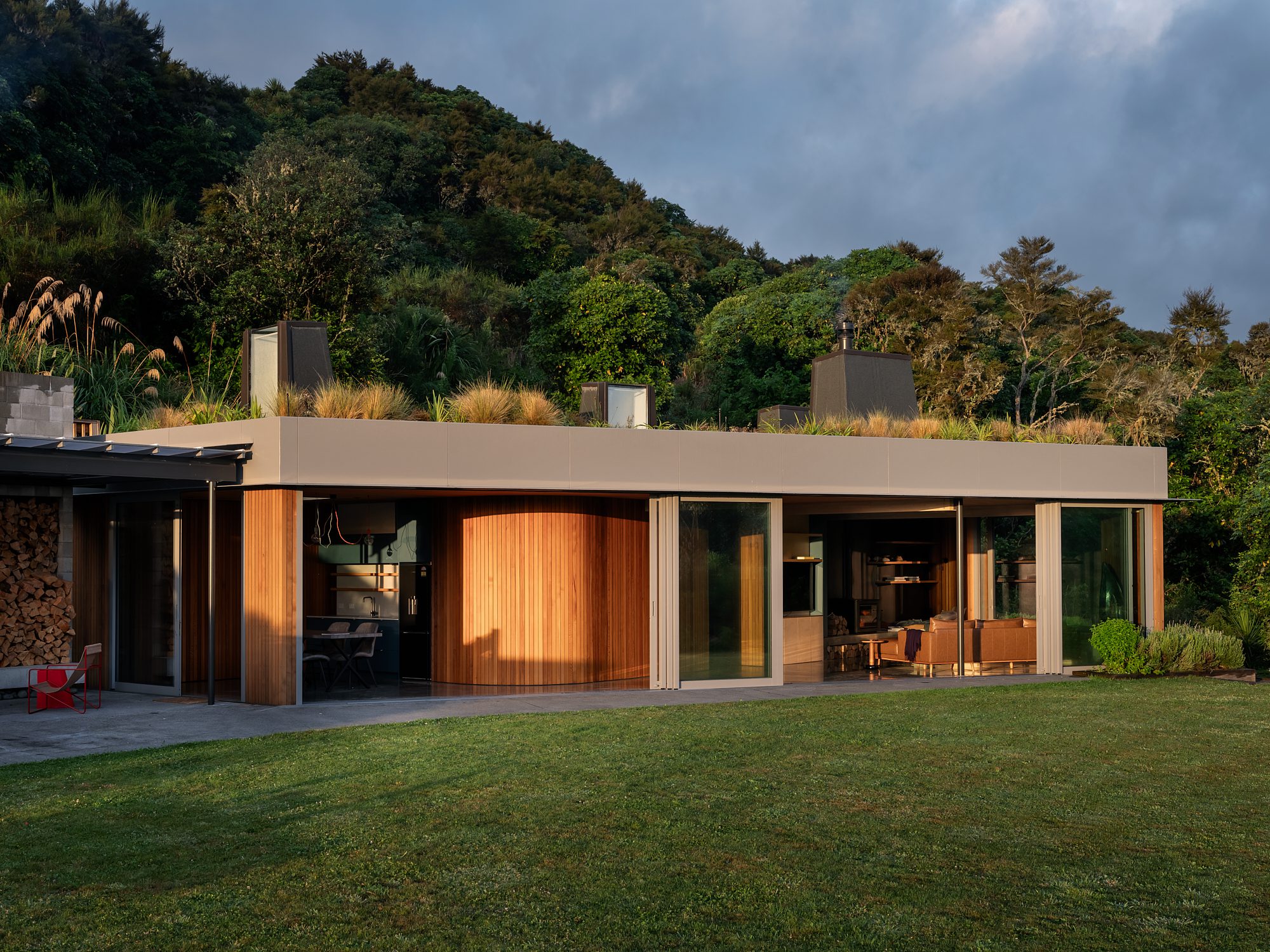
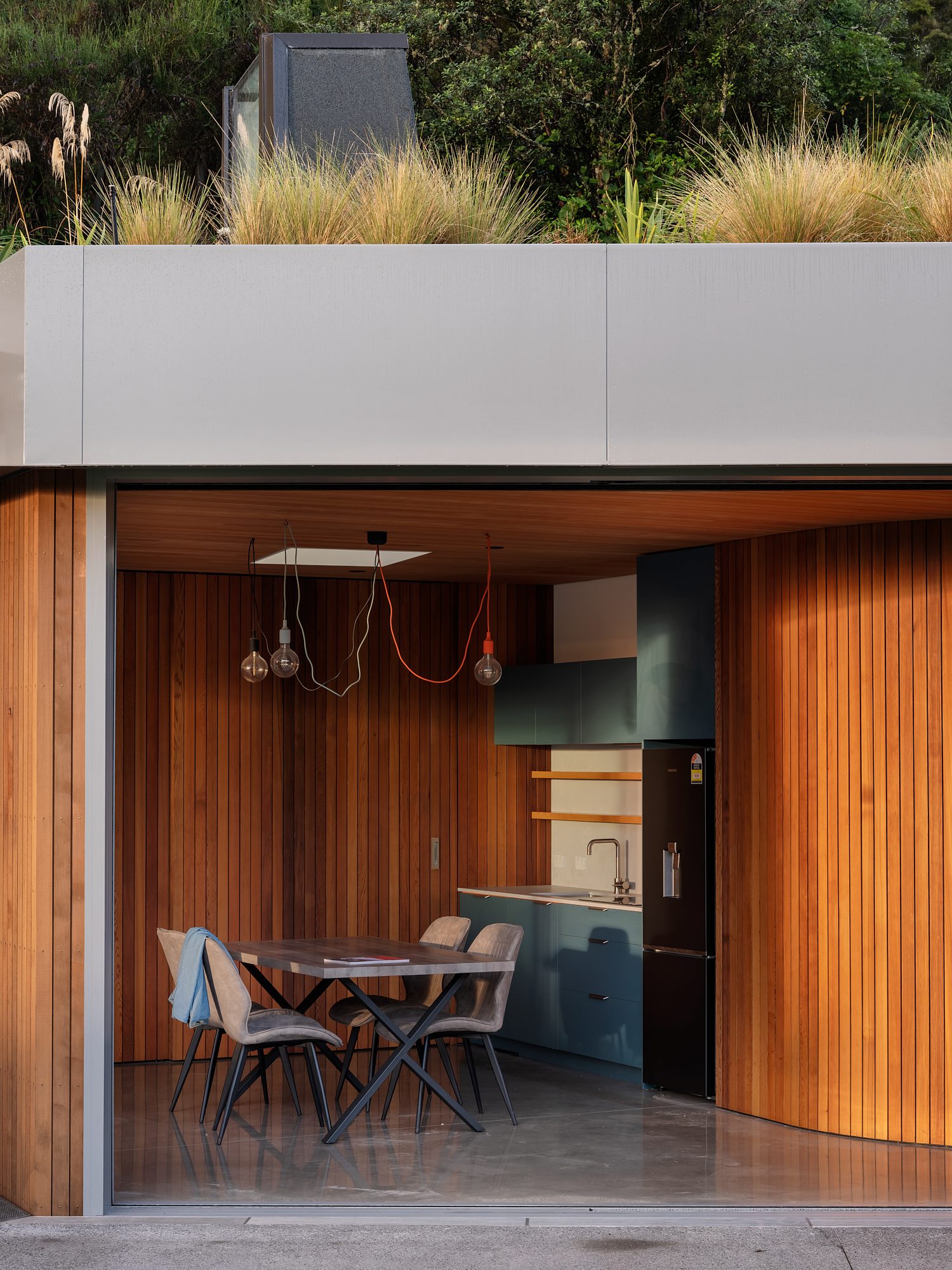
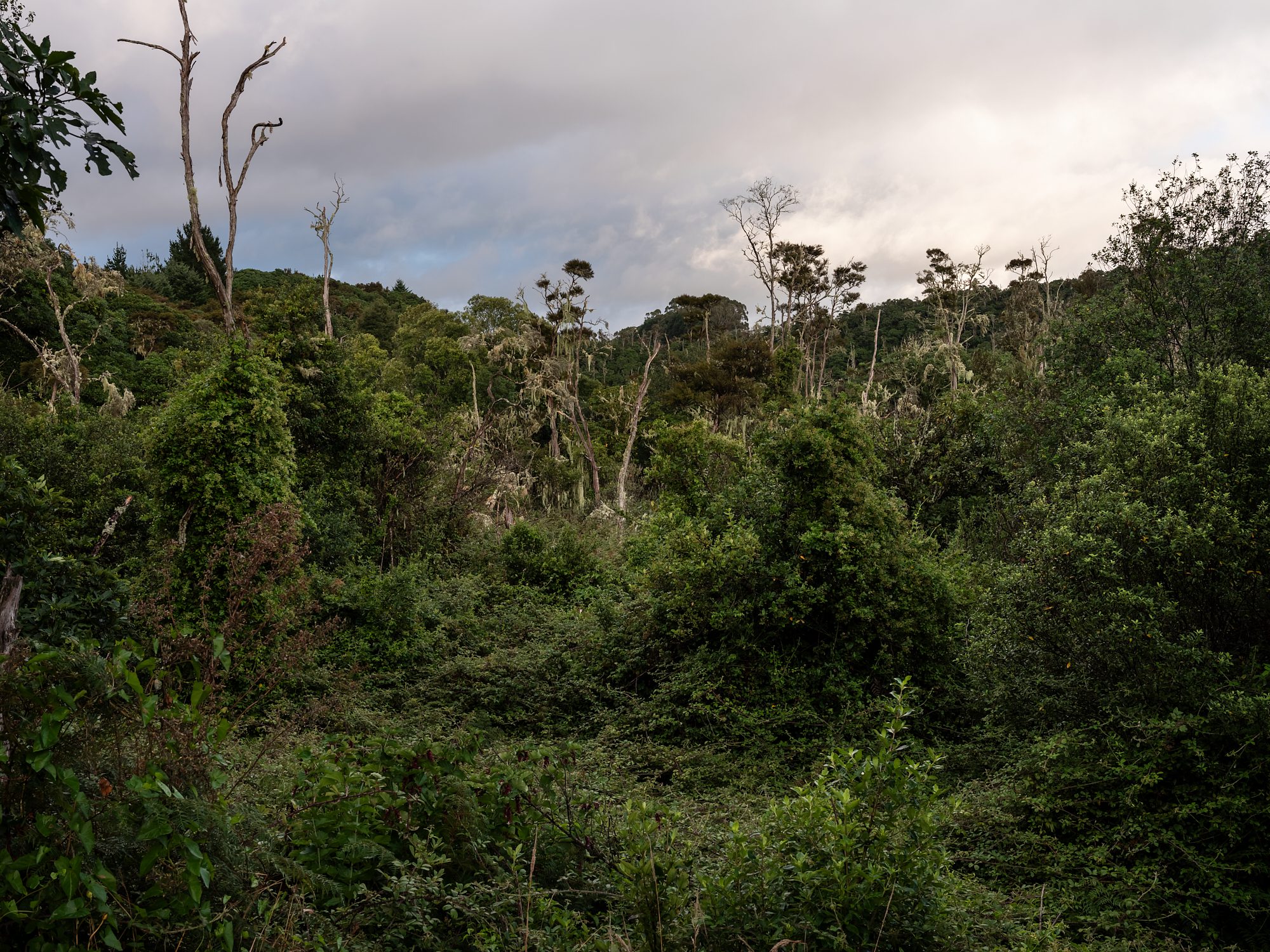
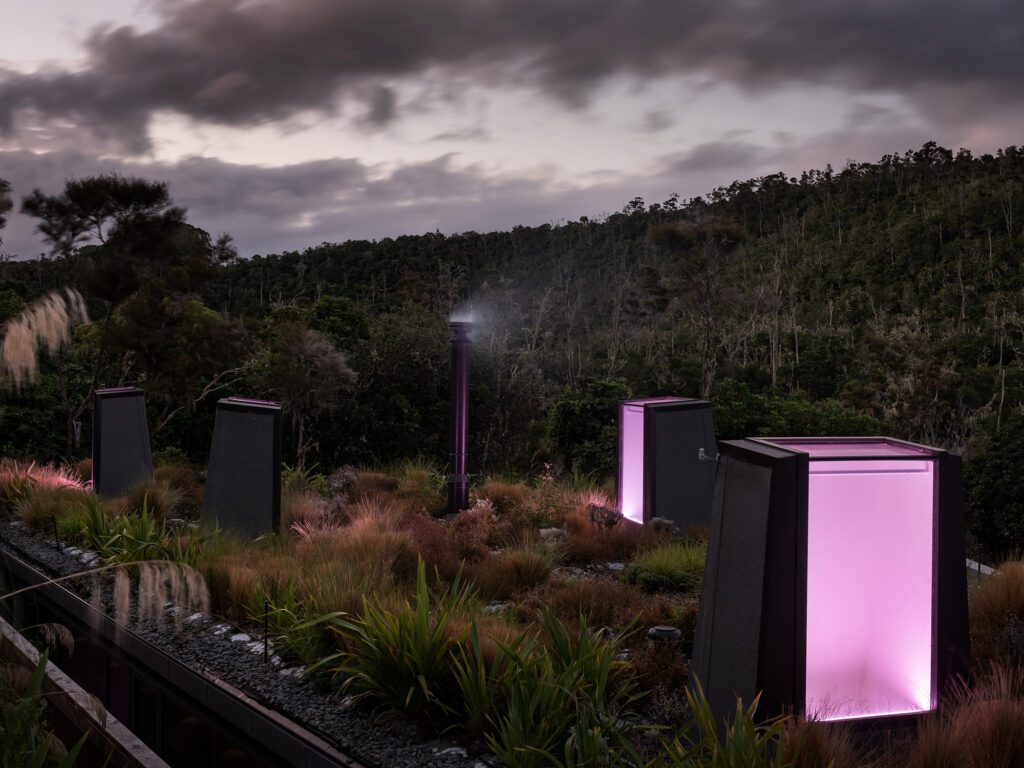
Set deep within a pocket of native bush on the remote south-western shores of Lake Taupō, this family bach sits low in the land, folded carefully into the hillside. At first glance, it’s barely there — its living roof thriving with tussocks and flax, obscuring what lies beneath. Trace the bush track that climbs above, and something flickers in the trees. Slender tubes of light rise from the rooftop garden, casting a spectral glow after dark.
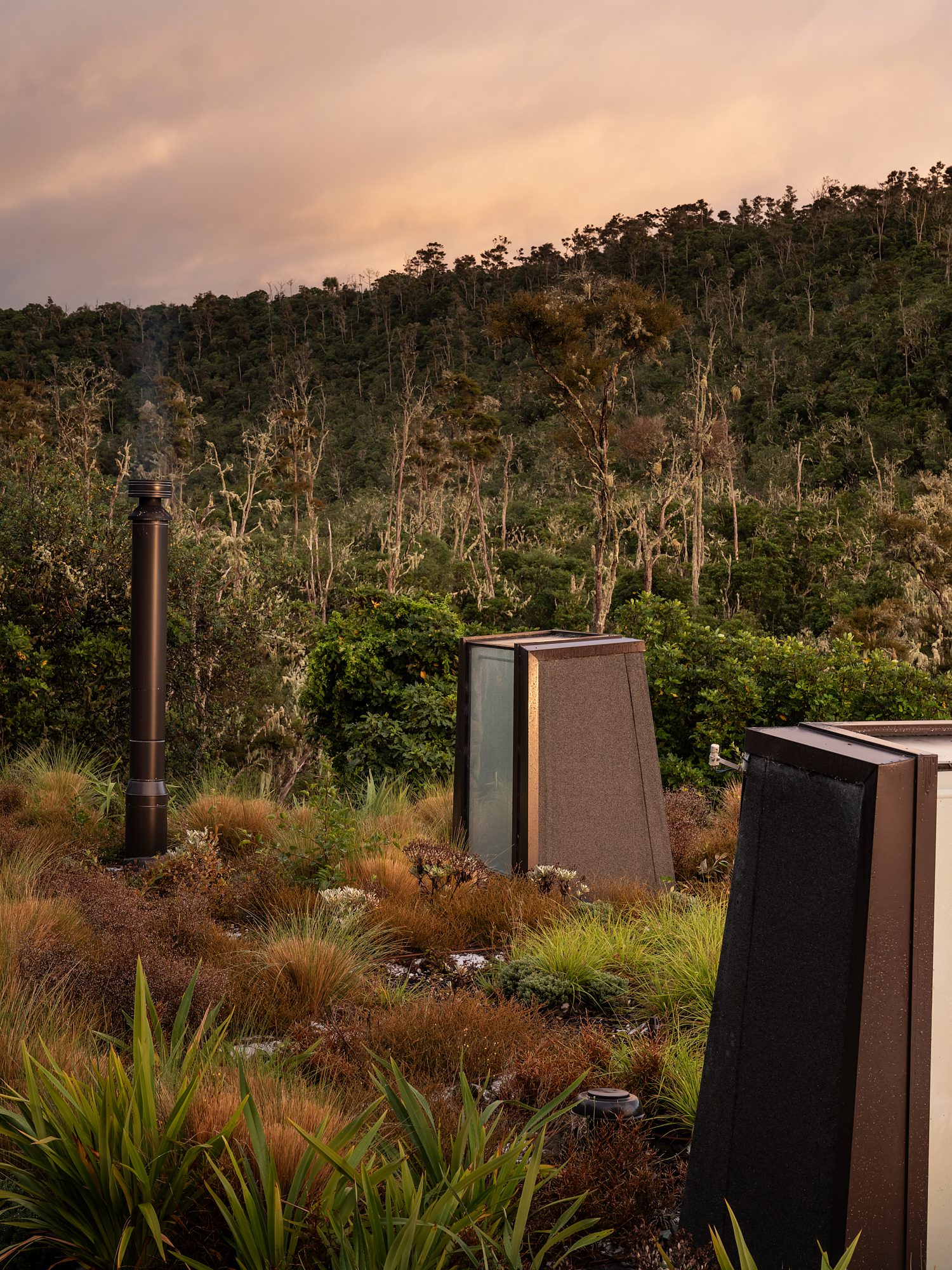
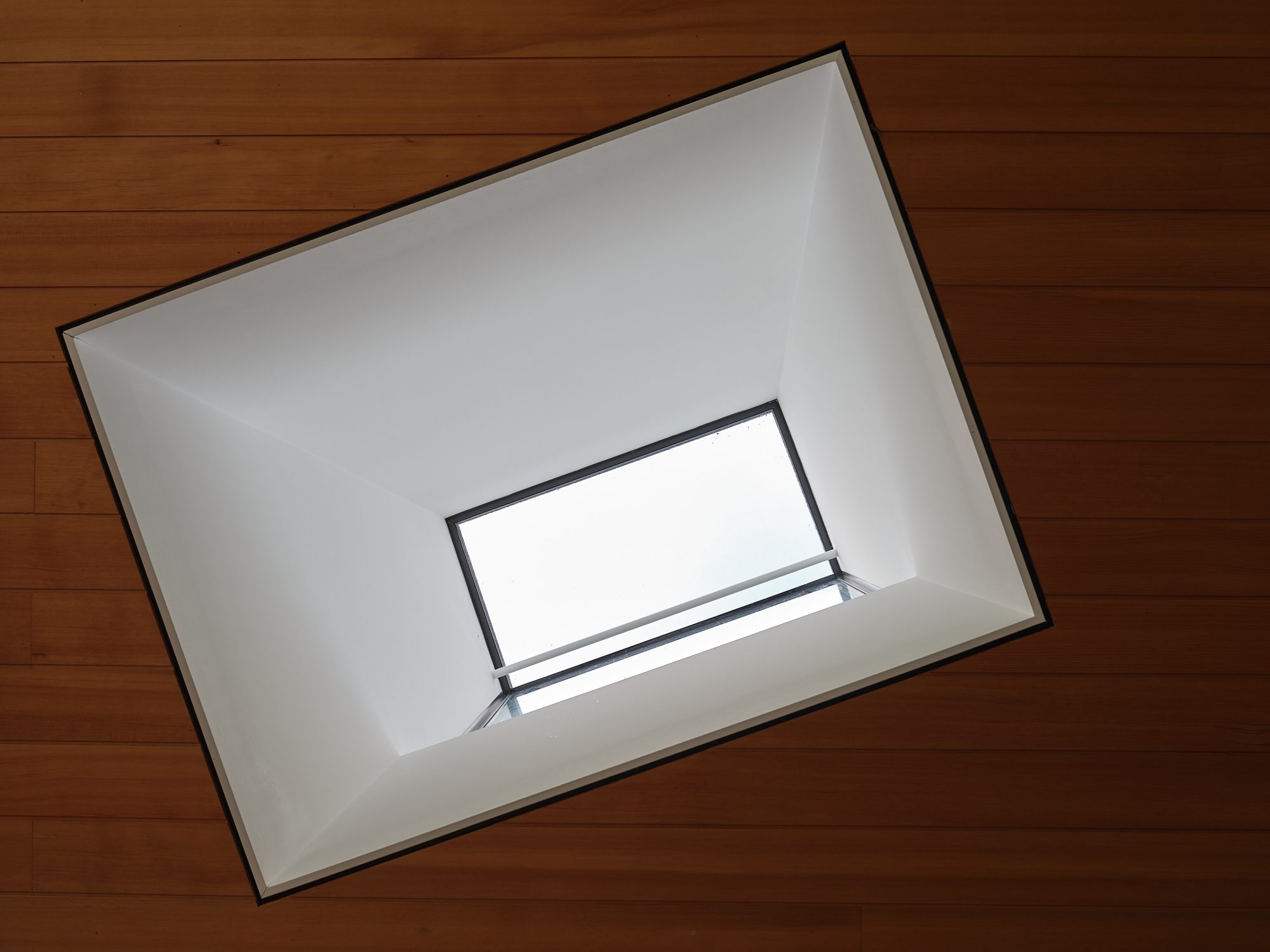
From above, these light stalks are surreal, sculptural and strangely beautiful. It’s a kind of architectural bioluminescence — and a concept Bossley Architects has investigated for some years across various projects, perhaps the most joyful of which is Arruba Bach (2014) at Orua Bay on the Manukau Harbour, where green stalks rise into the trees from a floating pōhutukawa-red form.
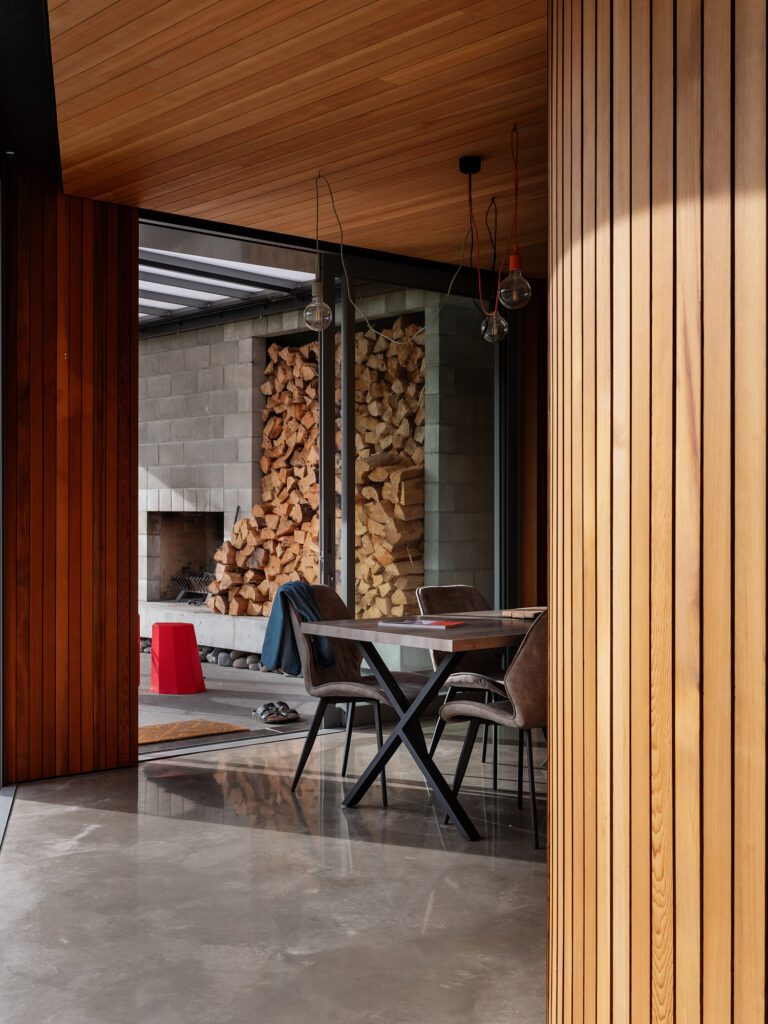
Though playful in nature, they’re highly functional; at Whareroa, scooping light deep into the building’s core by day — without adding too much solar gain. “They’re skylights that reach upwards, adding intrigue to the roof — the fifth elevation,” architect Finn Scott explains. At night, their function reverses to gently illuminate the rooftop planting, glowing quietly above the bush like fireflies caught mid-flight. Playful and purposeful — they provide a duality that defines much of the home’s charm.
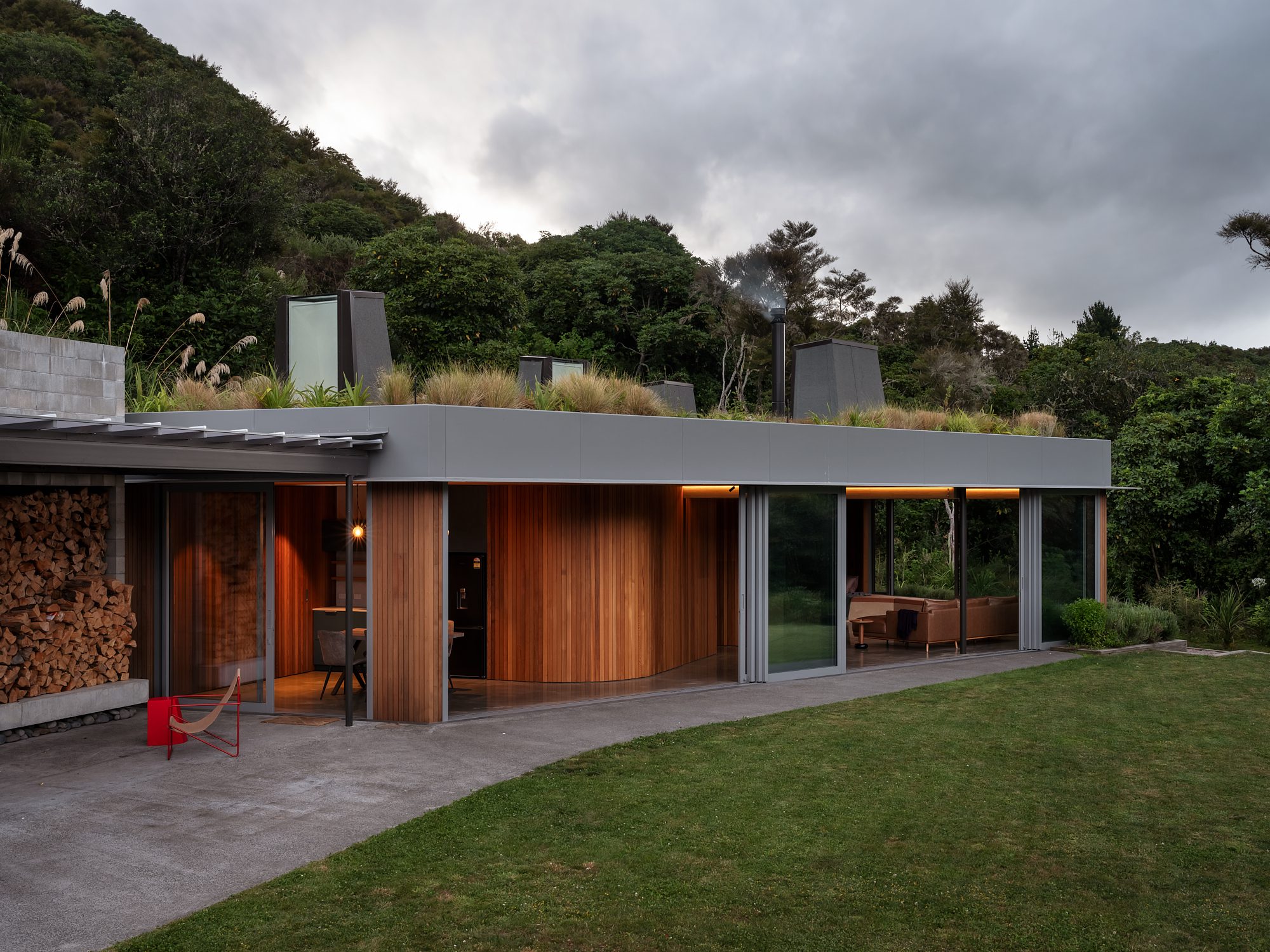
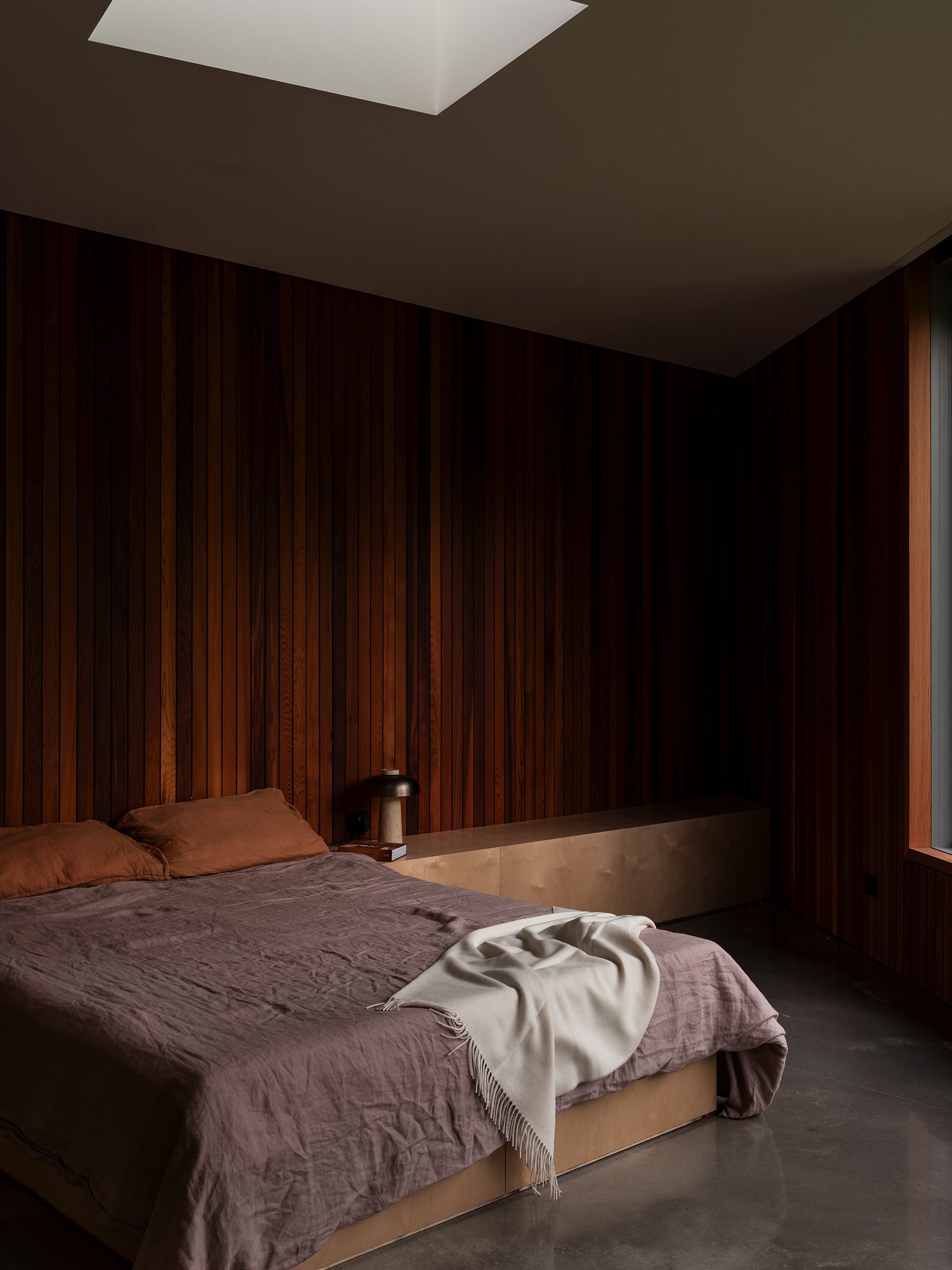
Cocooned within the terrain, three bedrooms hunker into the hillside while the communal spaces push forward towards the lawn and lake beyond.
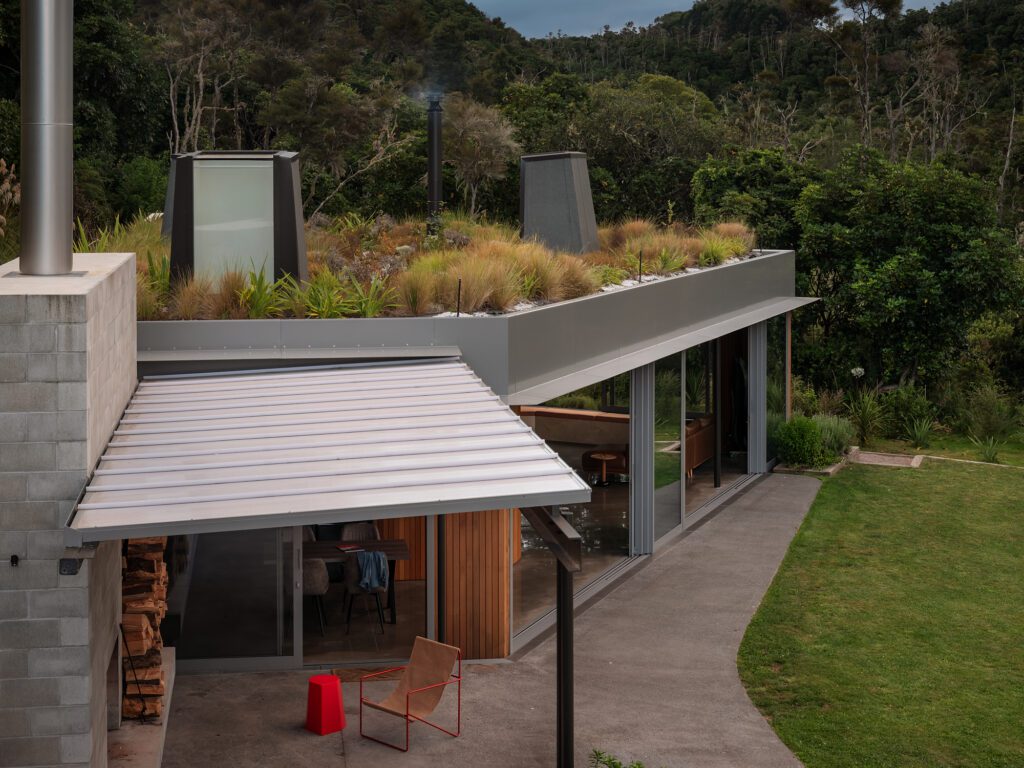
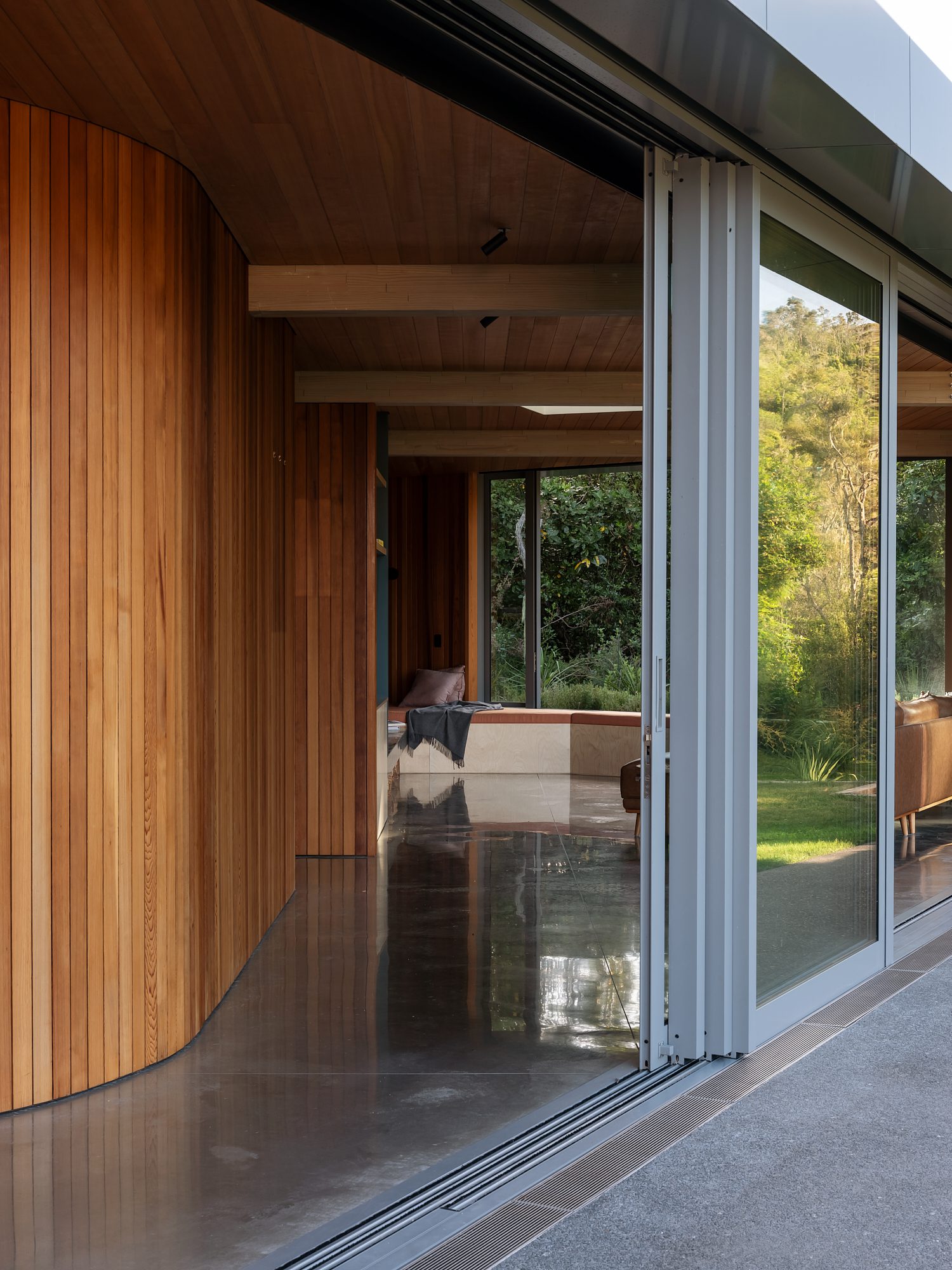
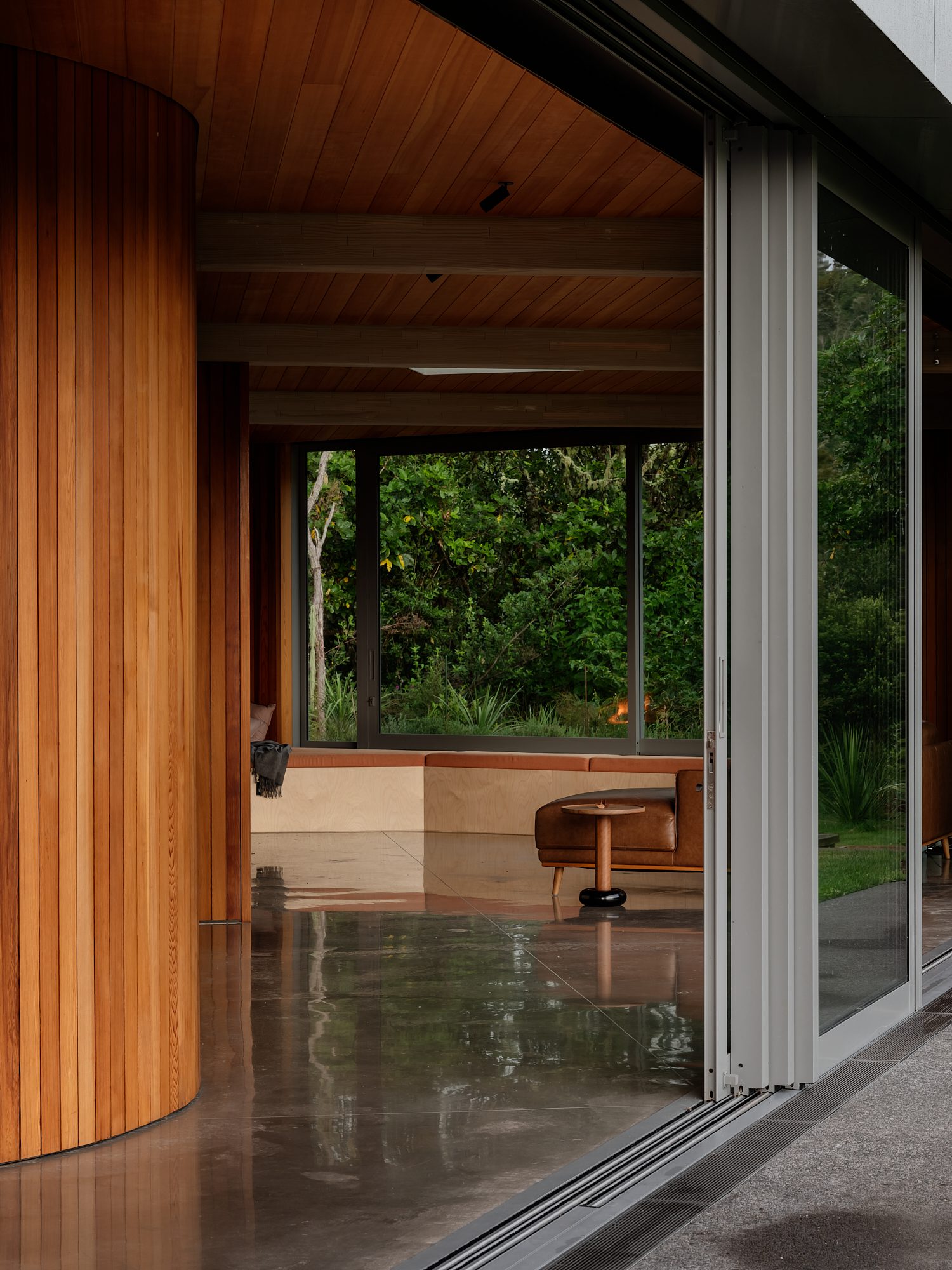
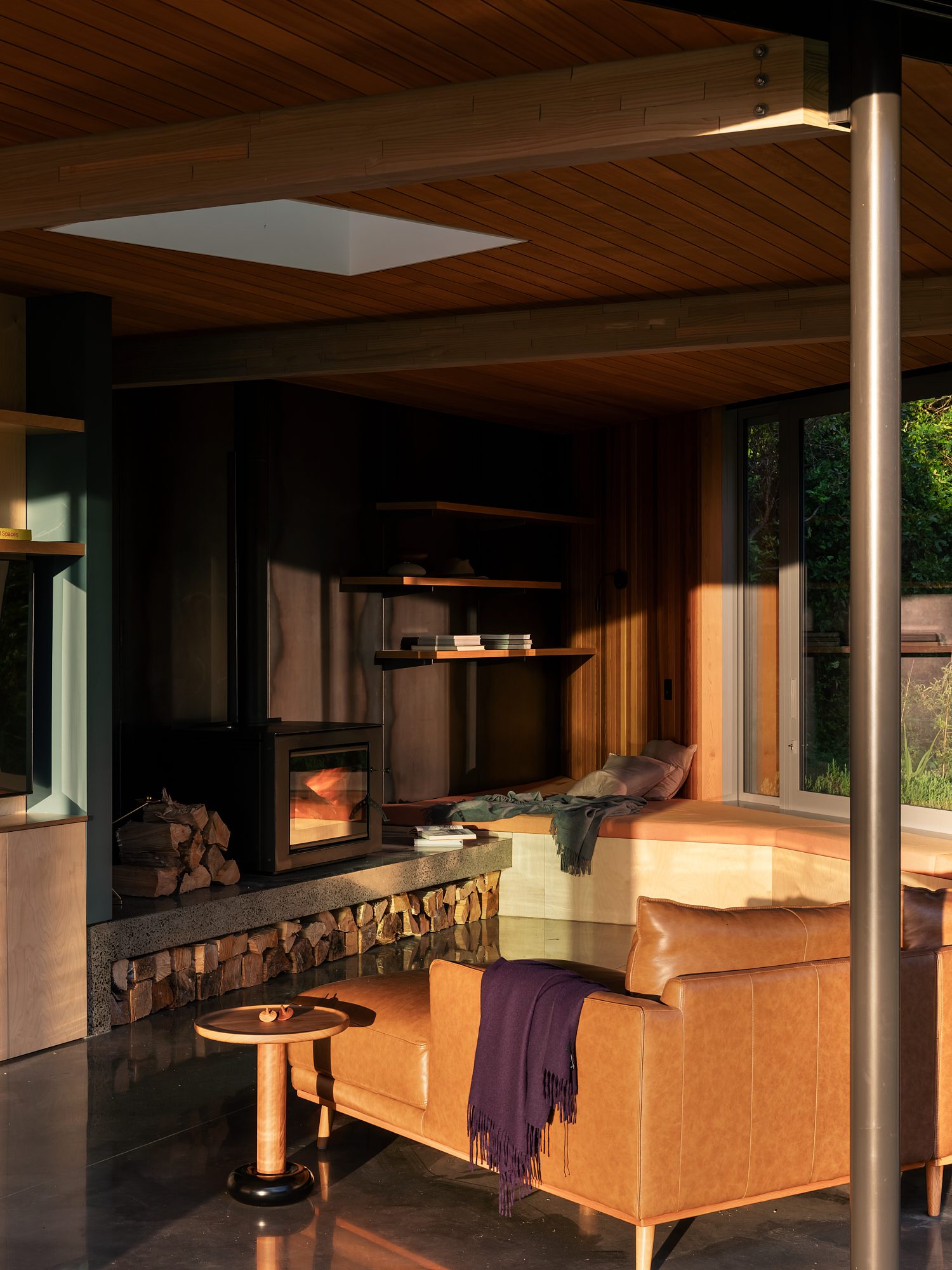
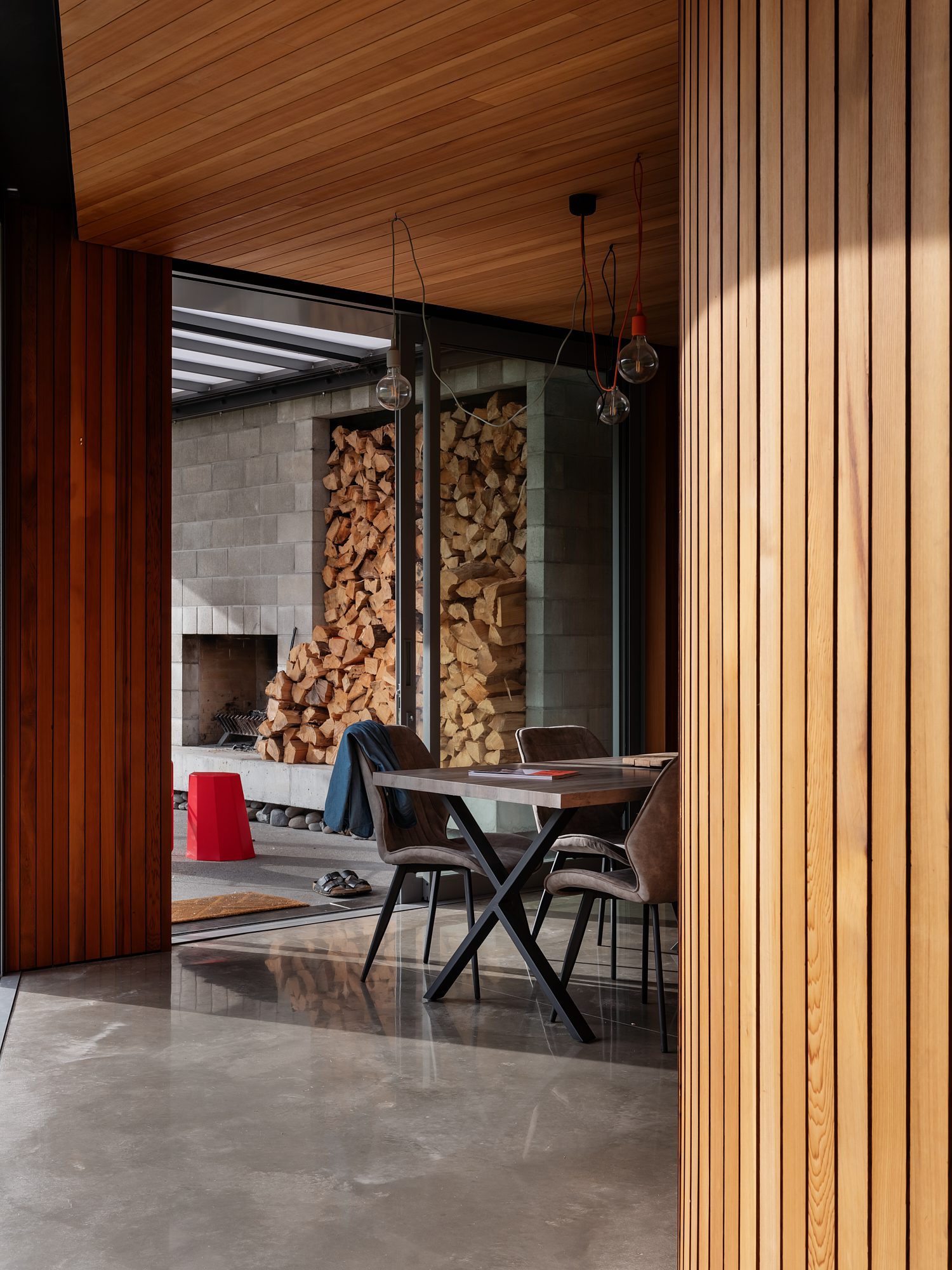
Glazed doors slide away to dissolve the boundary between indoors and out. Here, summer days slip away easily between cool, dappled shelter and open air, the consuming quietness of the bush and the calm clarity of the lake. “In winter, you can hear the faint trickle of a stream that runs past the site. Your senses are heightened with the seclusion and the stillness of the land,” Finn says.
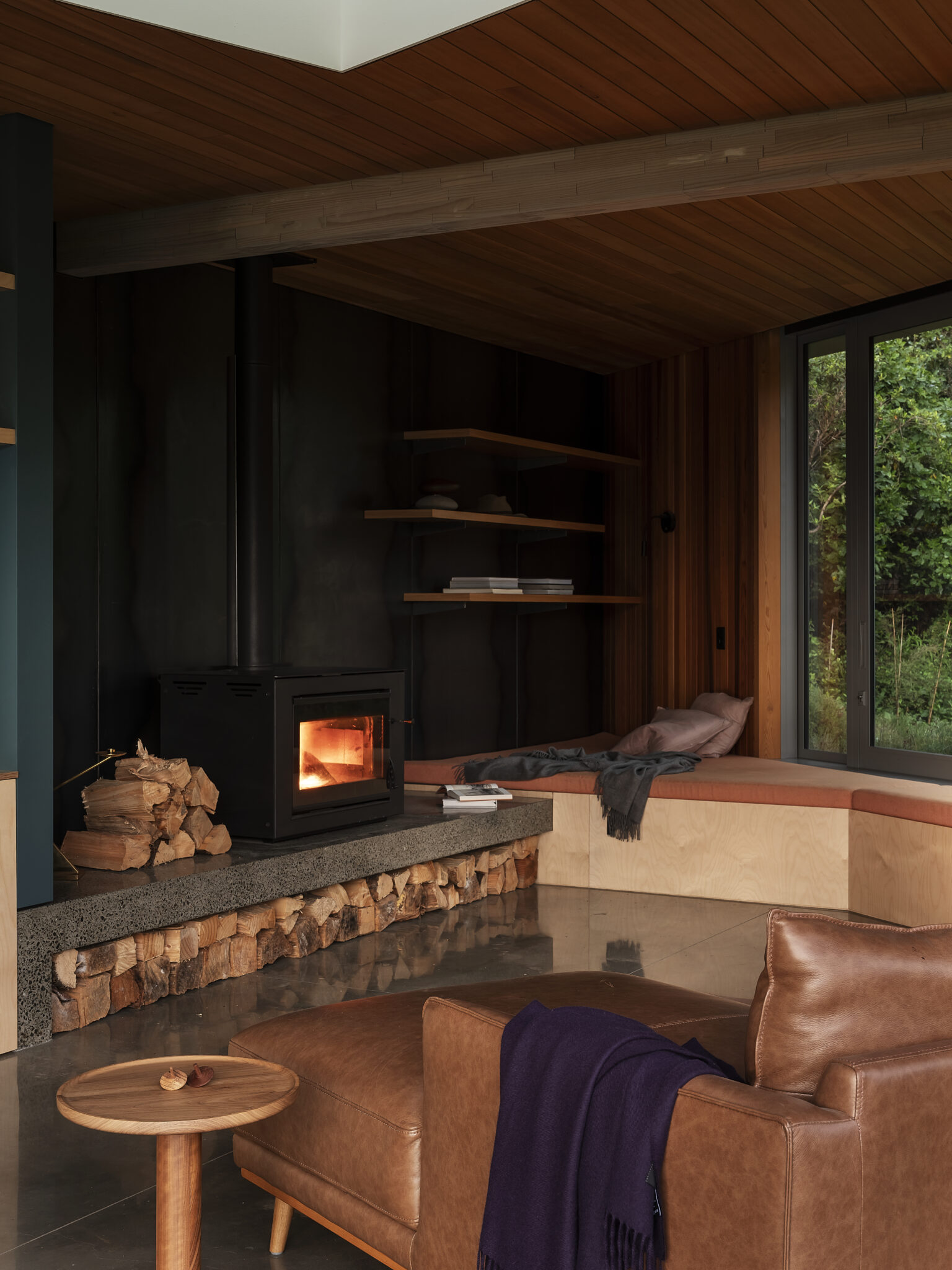
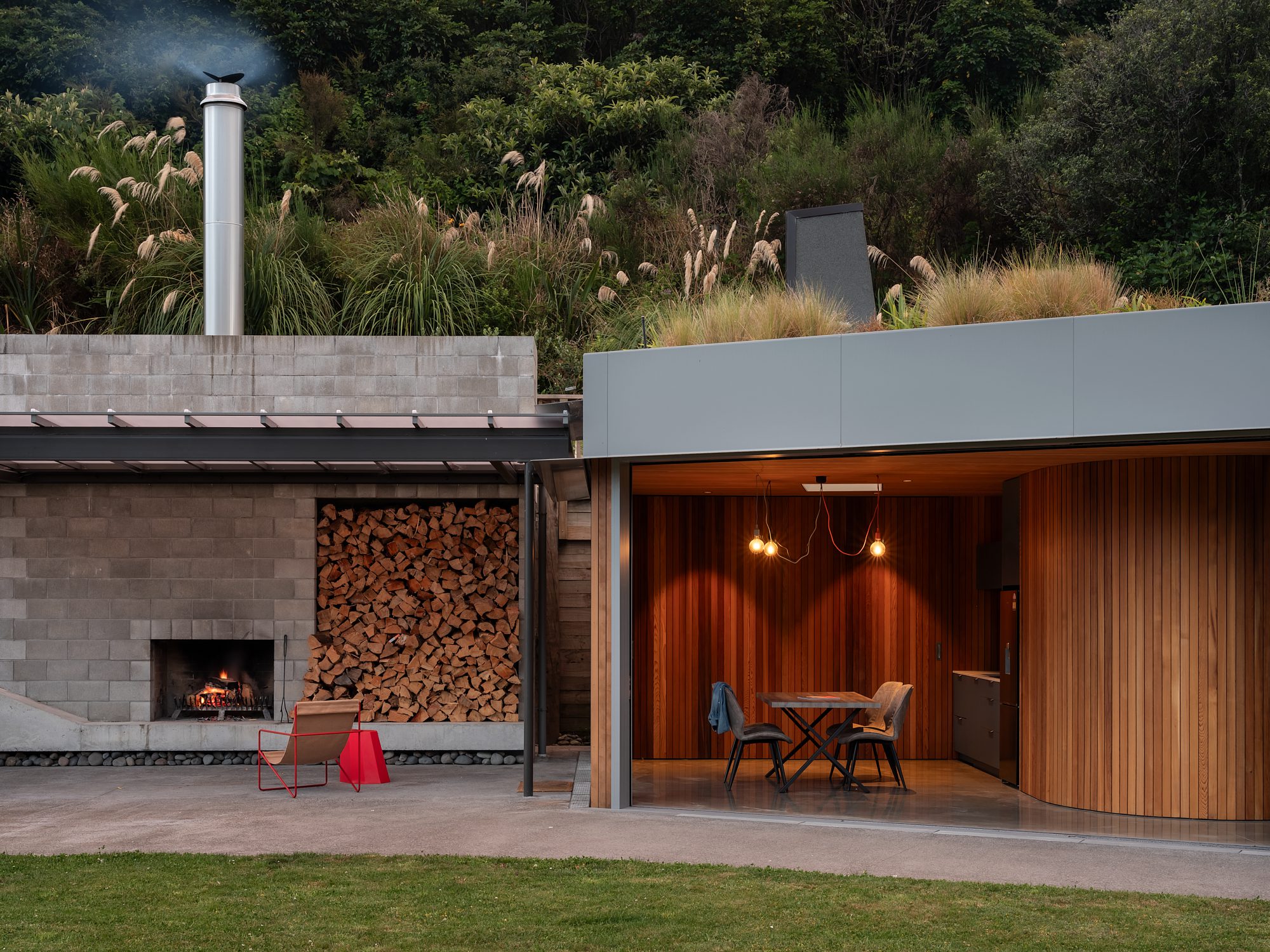
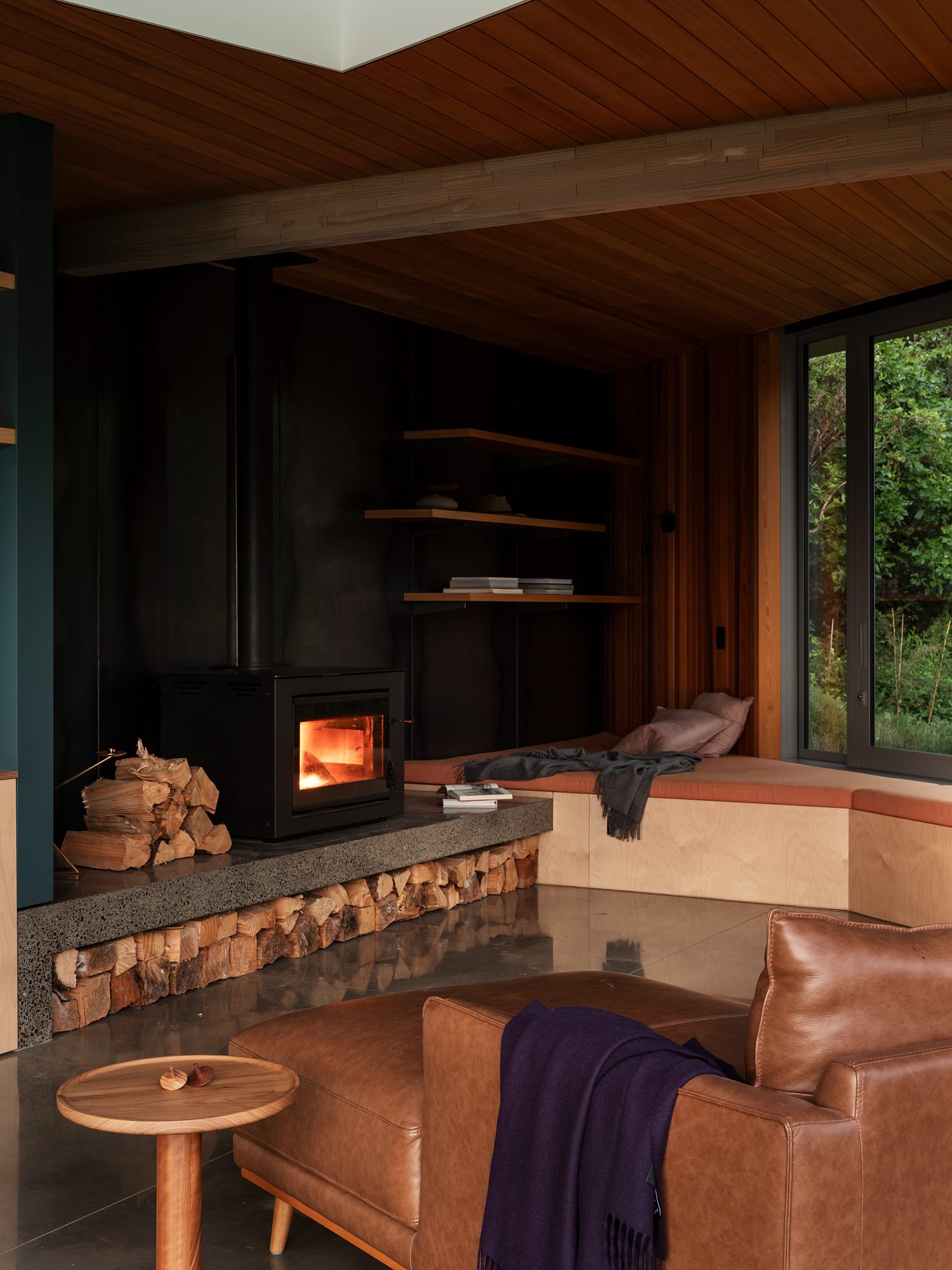
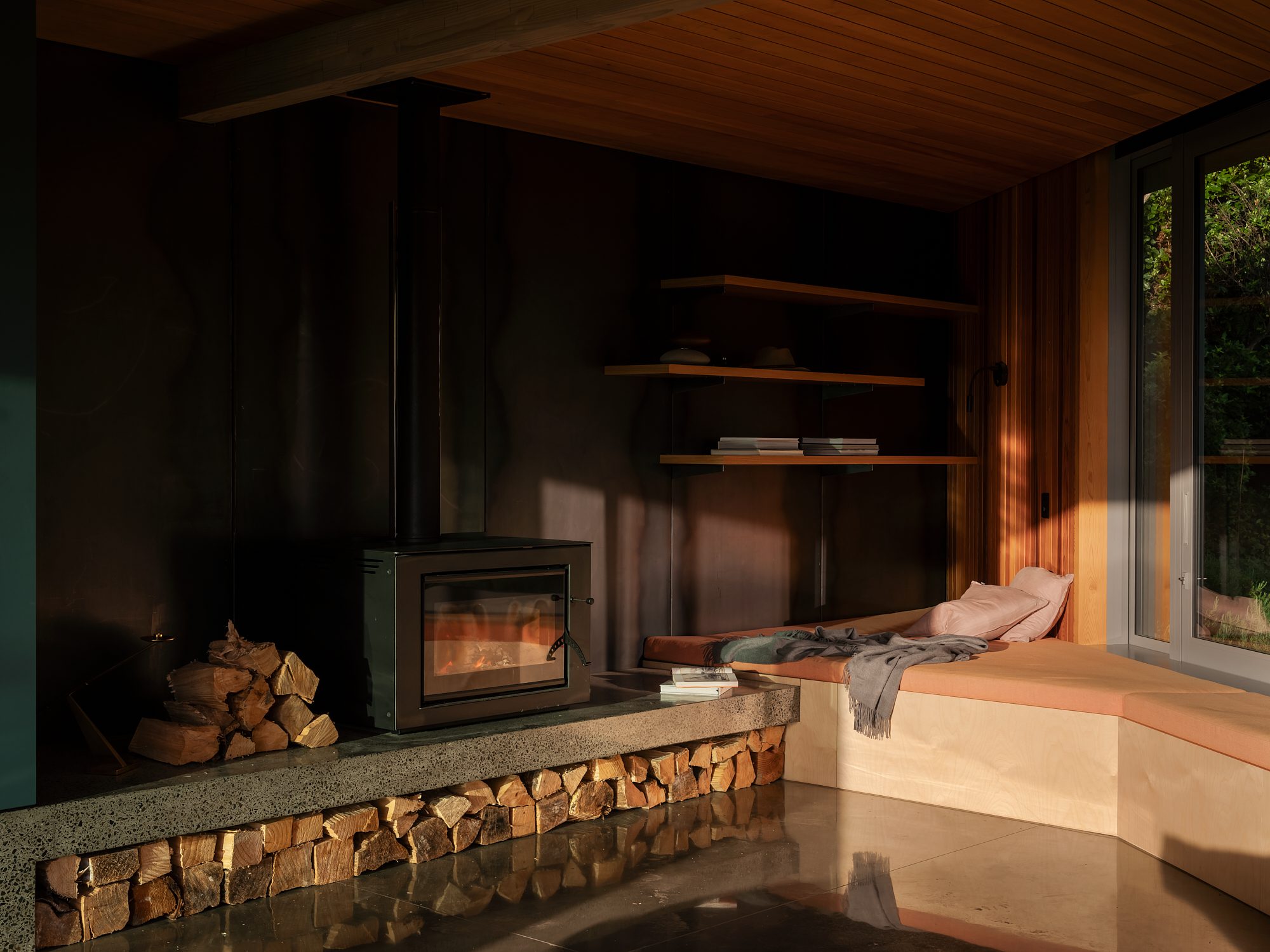
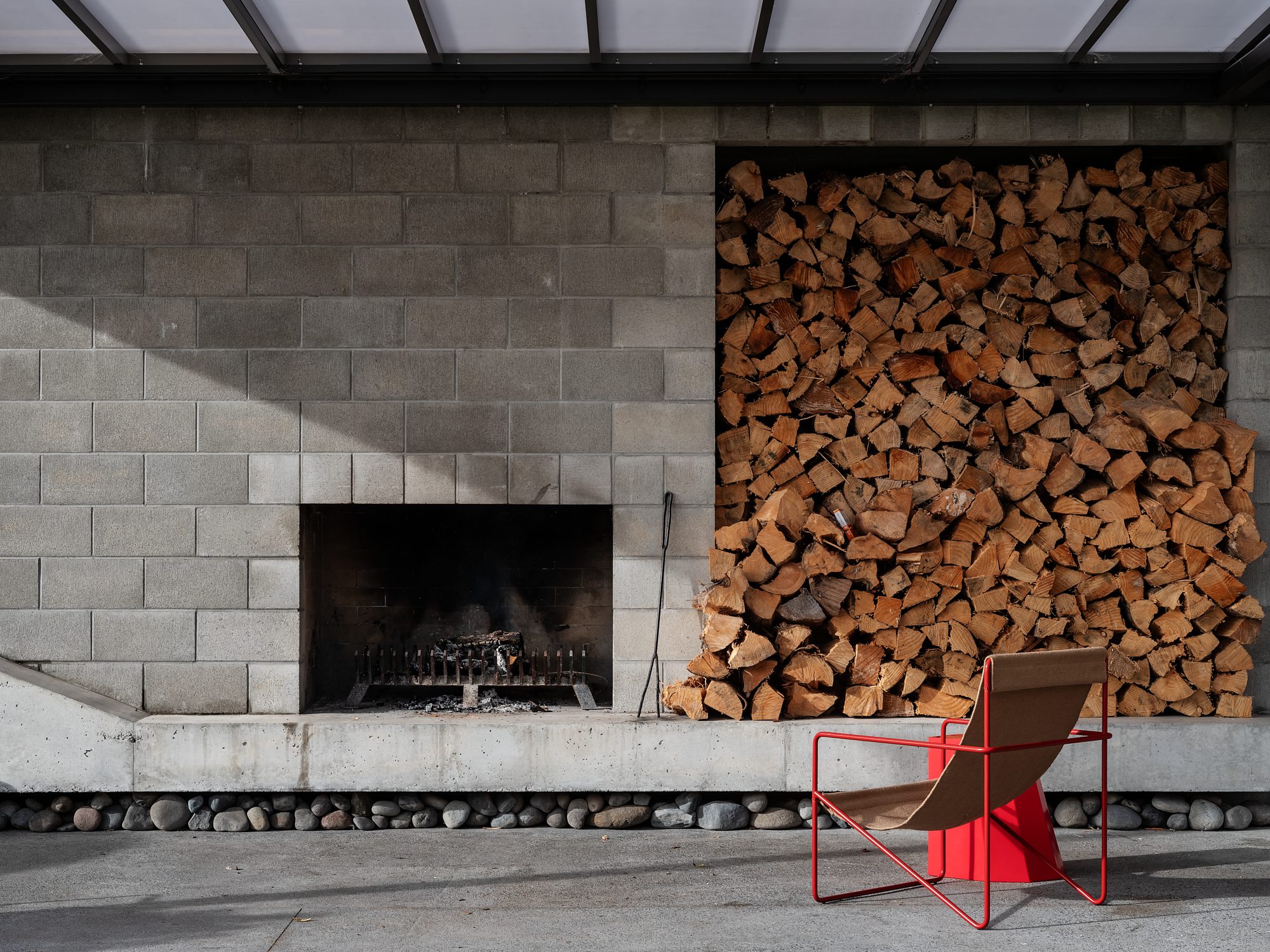
“It’s a place to connect, for family to converge. There’s a nostalgia to it that speaks to old fishing baches — the roaring fire, the timber, rods lying around. It’s a place to slow down.”
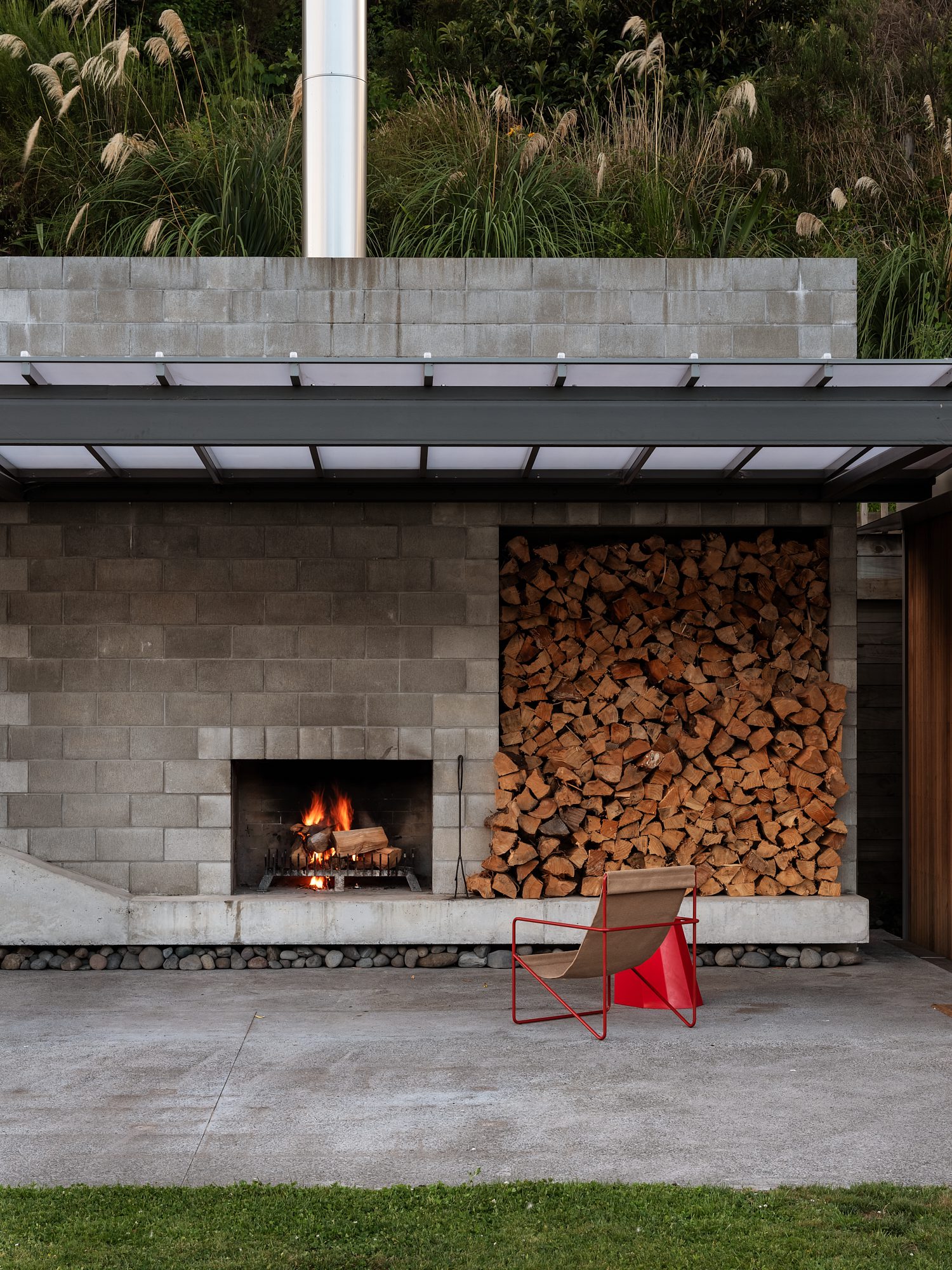
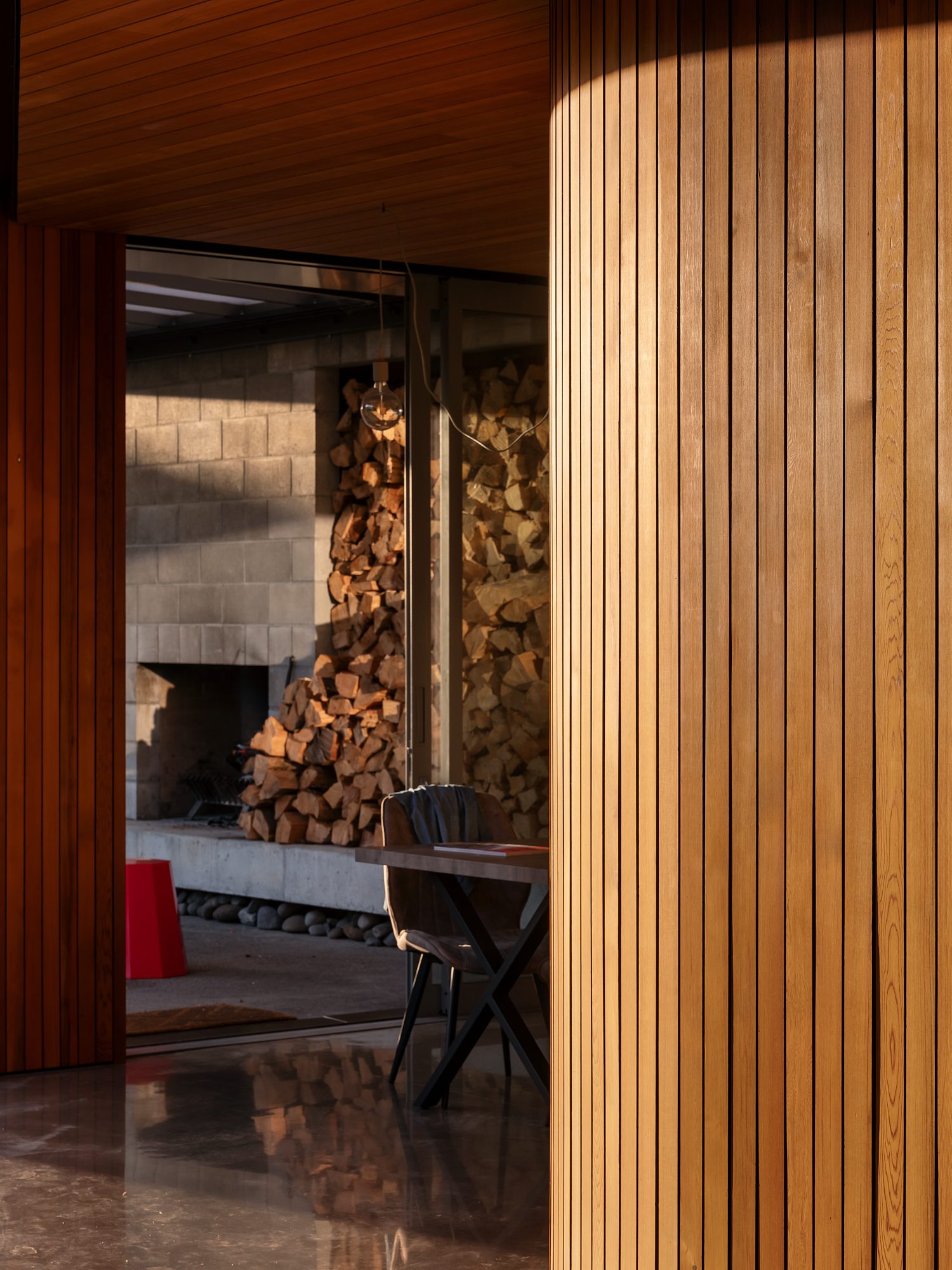
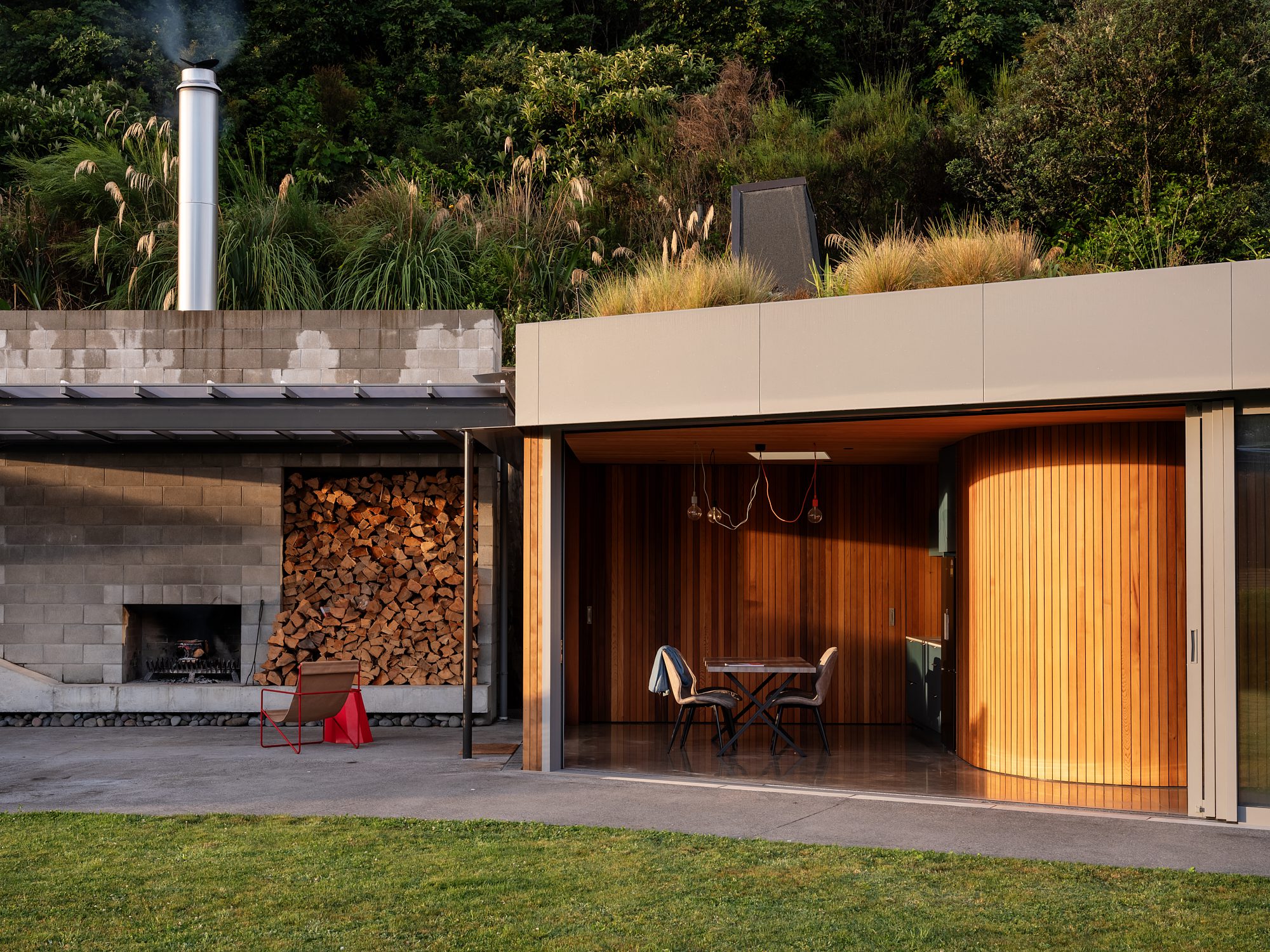
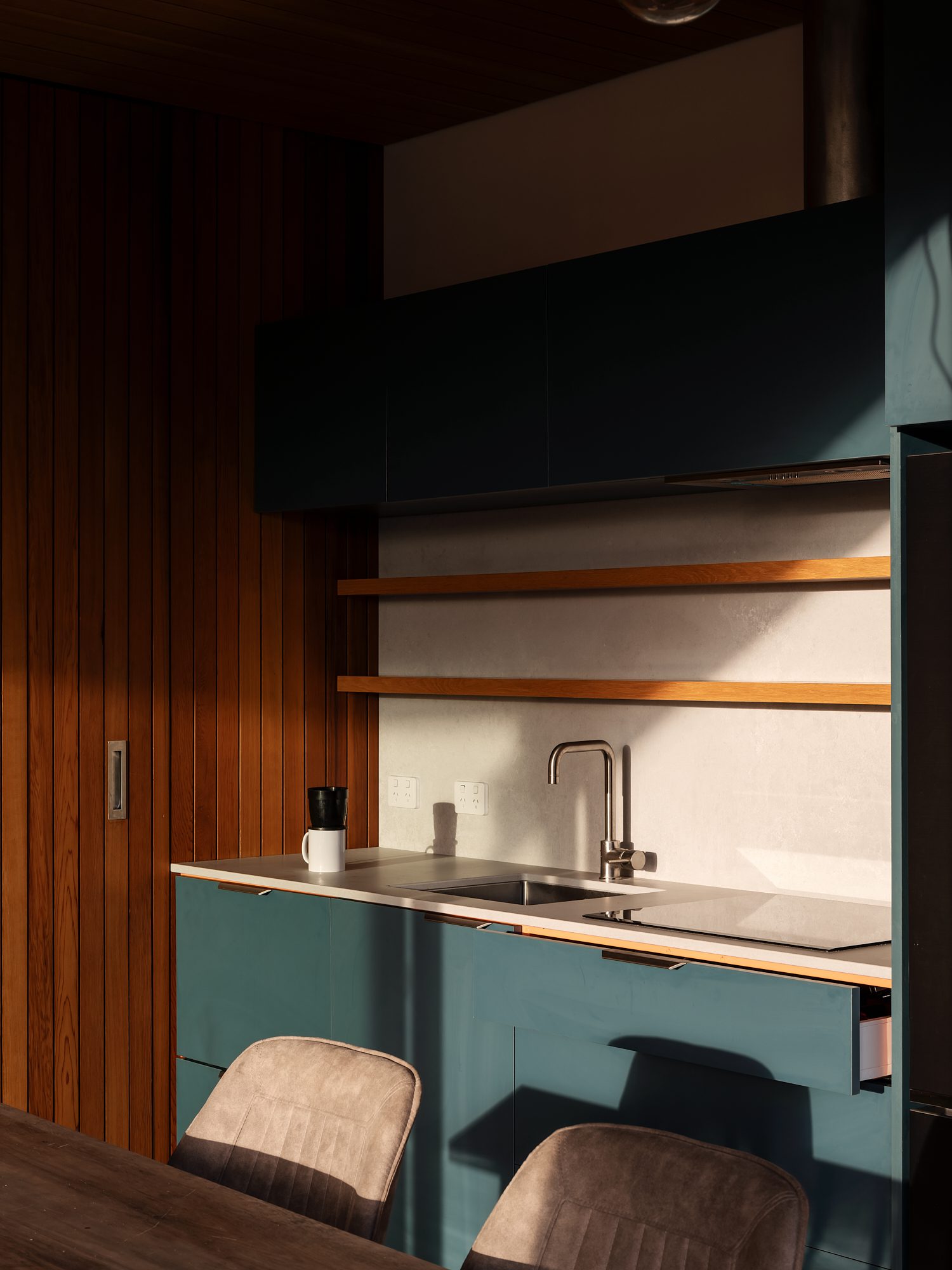
Originally designed as a sleepout — a first move towards a larger build — the project quietly became the main event. “As it progressed, they realised this was enough.” A trio of curved, timber-lined walls and a concrete fireplace at the eastern edge bring softness and solidity in equal measure, while a light-grey aluminium eyebrow shades the front: a subtle architectural lift.
There’s a warmth here that’s not just about materials. It’s in the rhythm of the roofline, the gentle slope of the land that seems, in some ways, to flow through the built form, and the way the light moves — slowly, deliberately — through the building. From above, it’s a patch of green, quietly glowing at dusk, the light stalks a soft beacon of home. From within, it’s a place that belongs.
Words: Clare Chapman
Images: Sam Hartnett
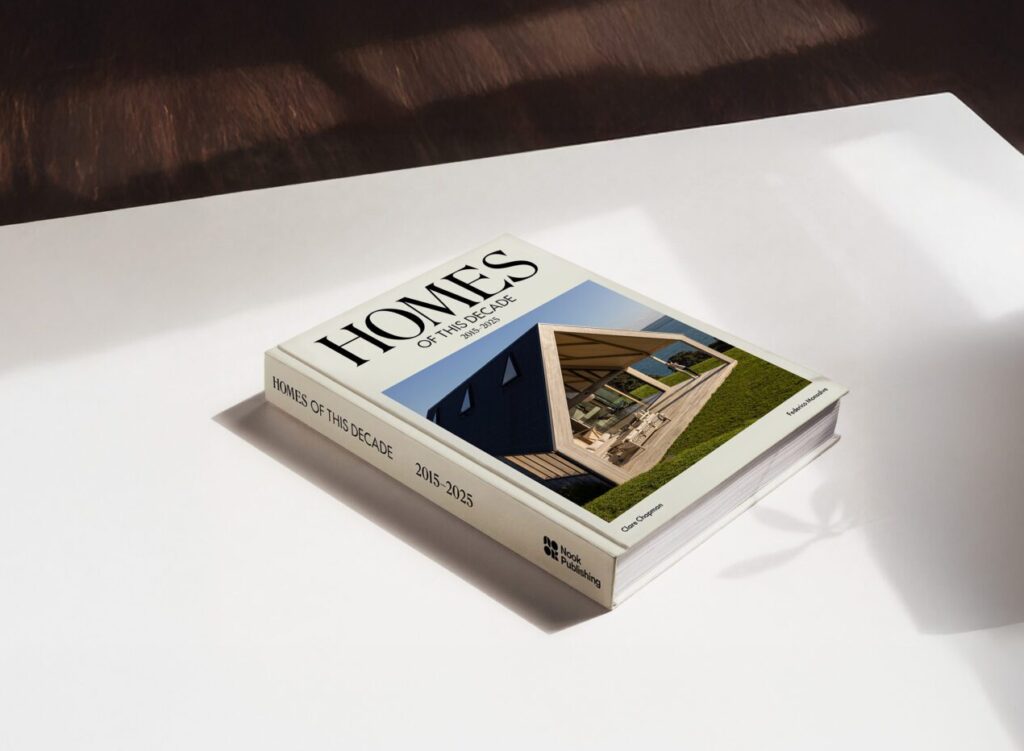
This feature first appeared in Homes of this Decade 2015-2025, which was published by Nook Publishing in 2025.