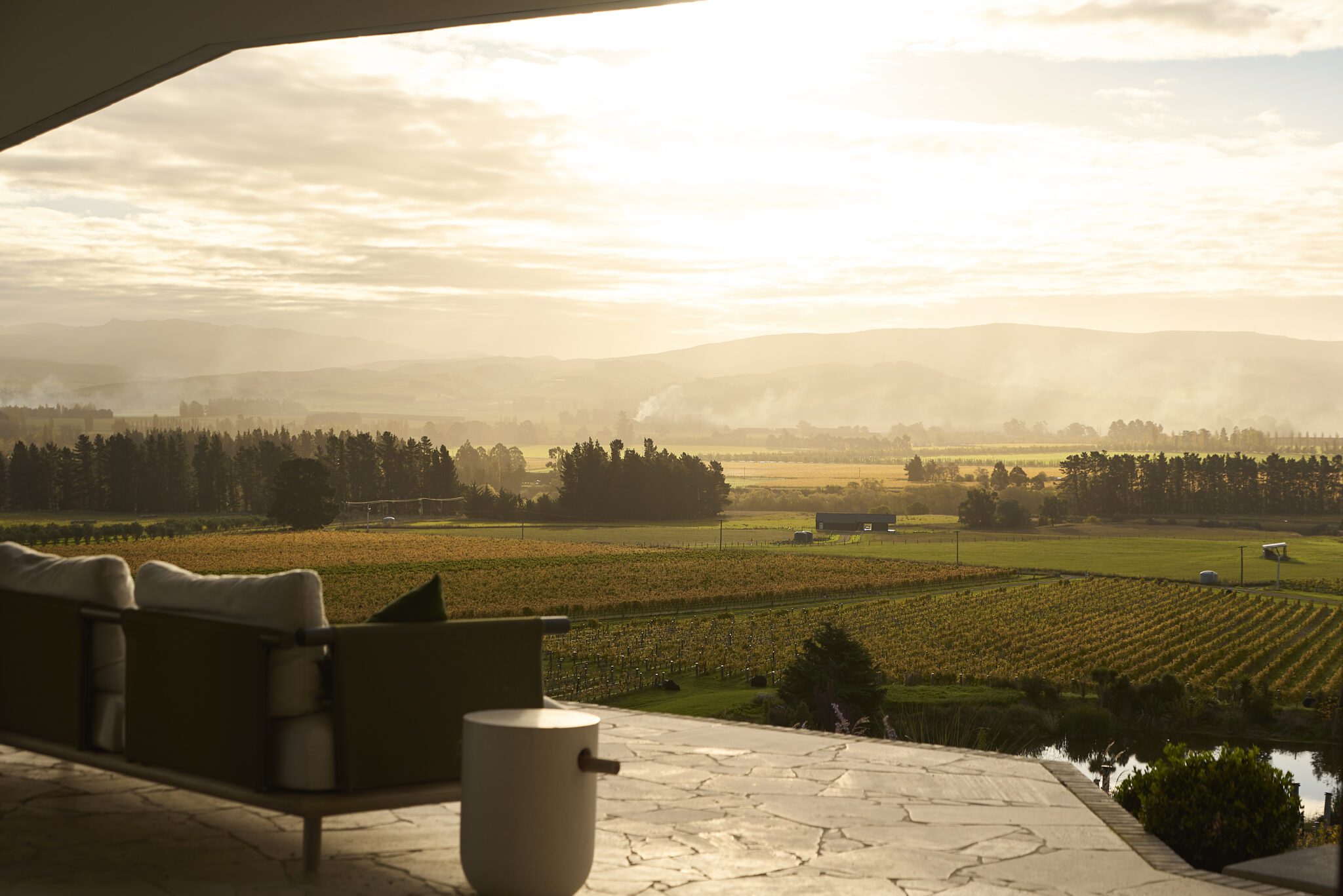
This sophisticated home by Case Ornsby is a sculptural response to the Waipara Valley’s unique geology.
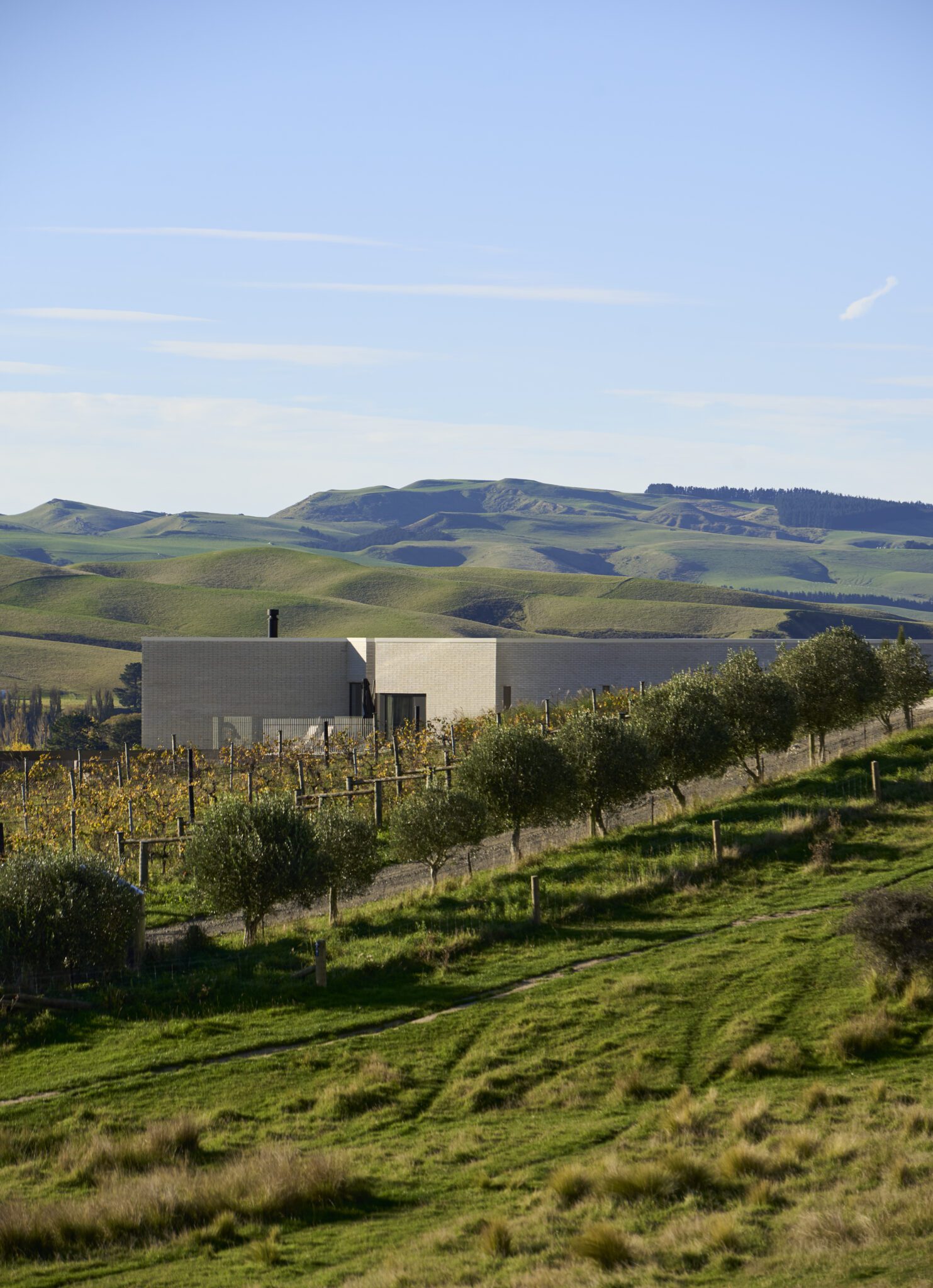
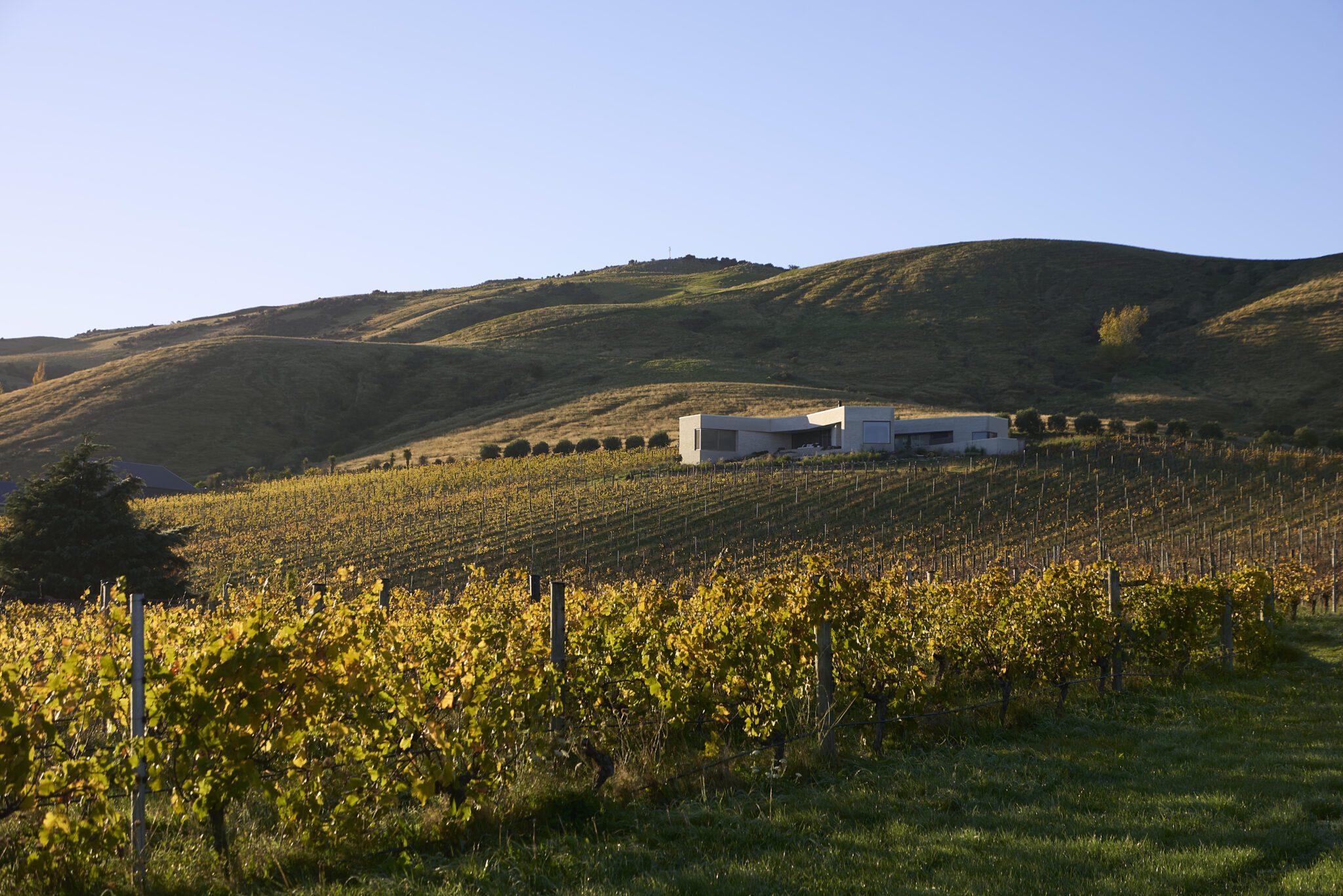
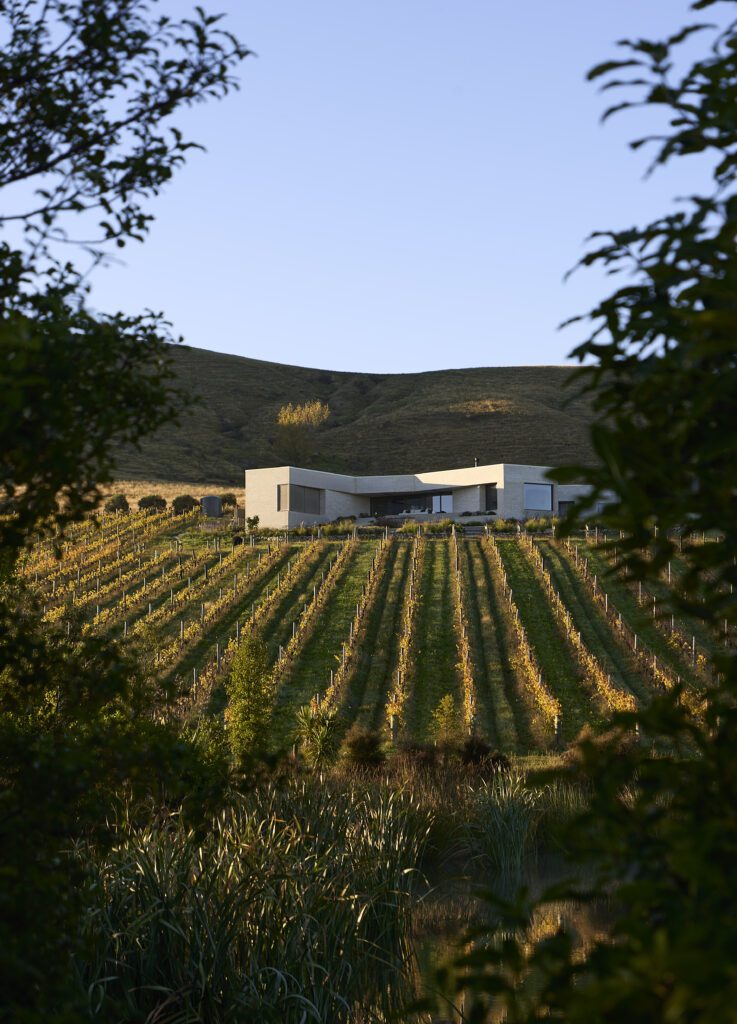
Grapes and high winds have chiselled this particular site. The former: rows and rows of Vitis vinifera that eventually make up Black Estate Winery’s sophisticated pinots; the latter: the owners’ desire to perch high up on the hill to capture views across the Waipara Valley and the landscape beyond — a position that exposes them to the region’s prevailing winds.
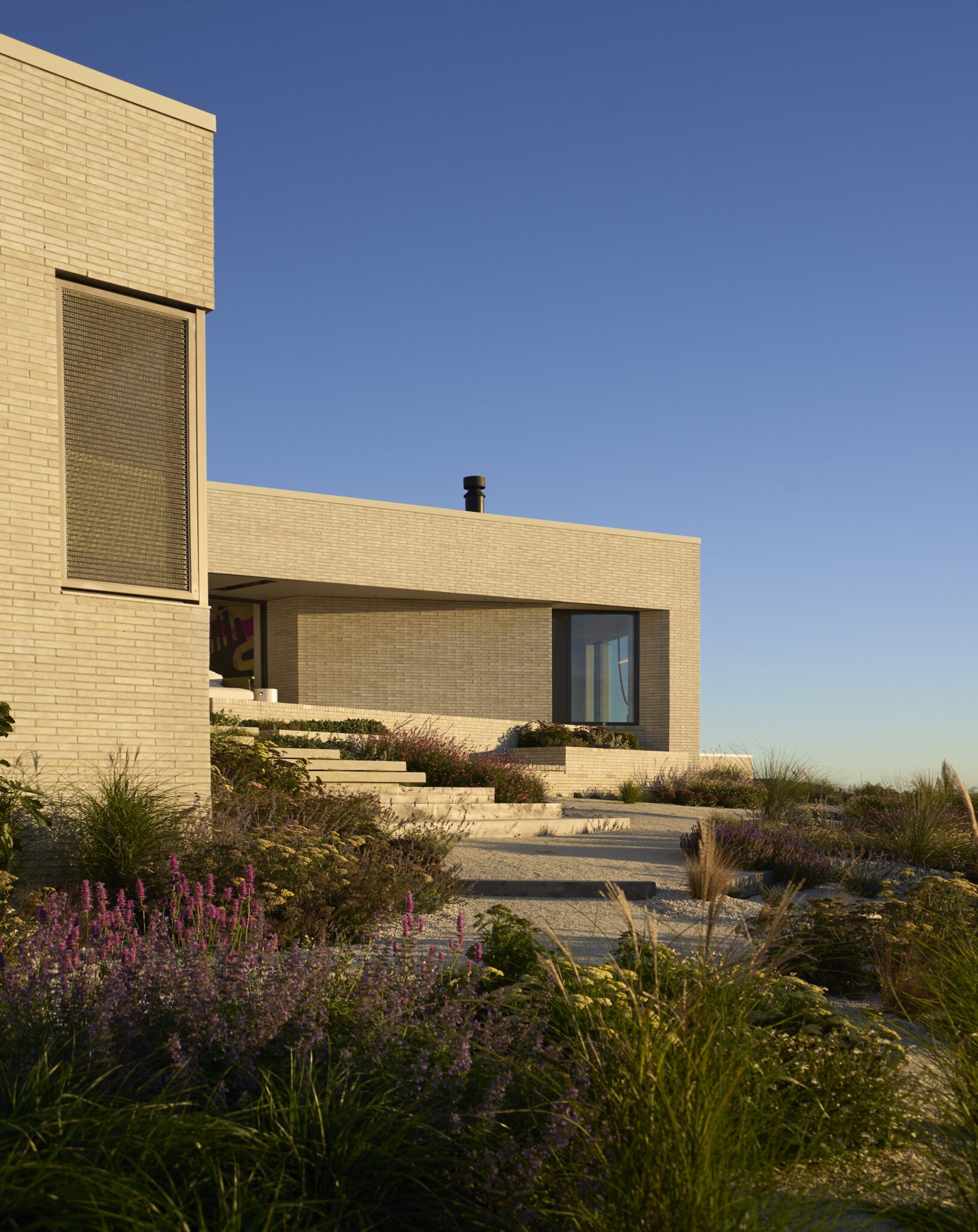
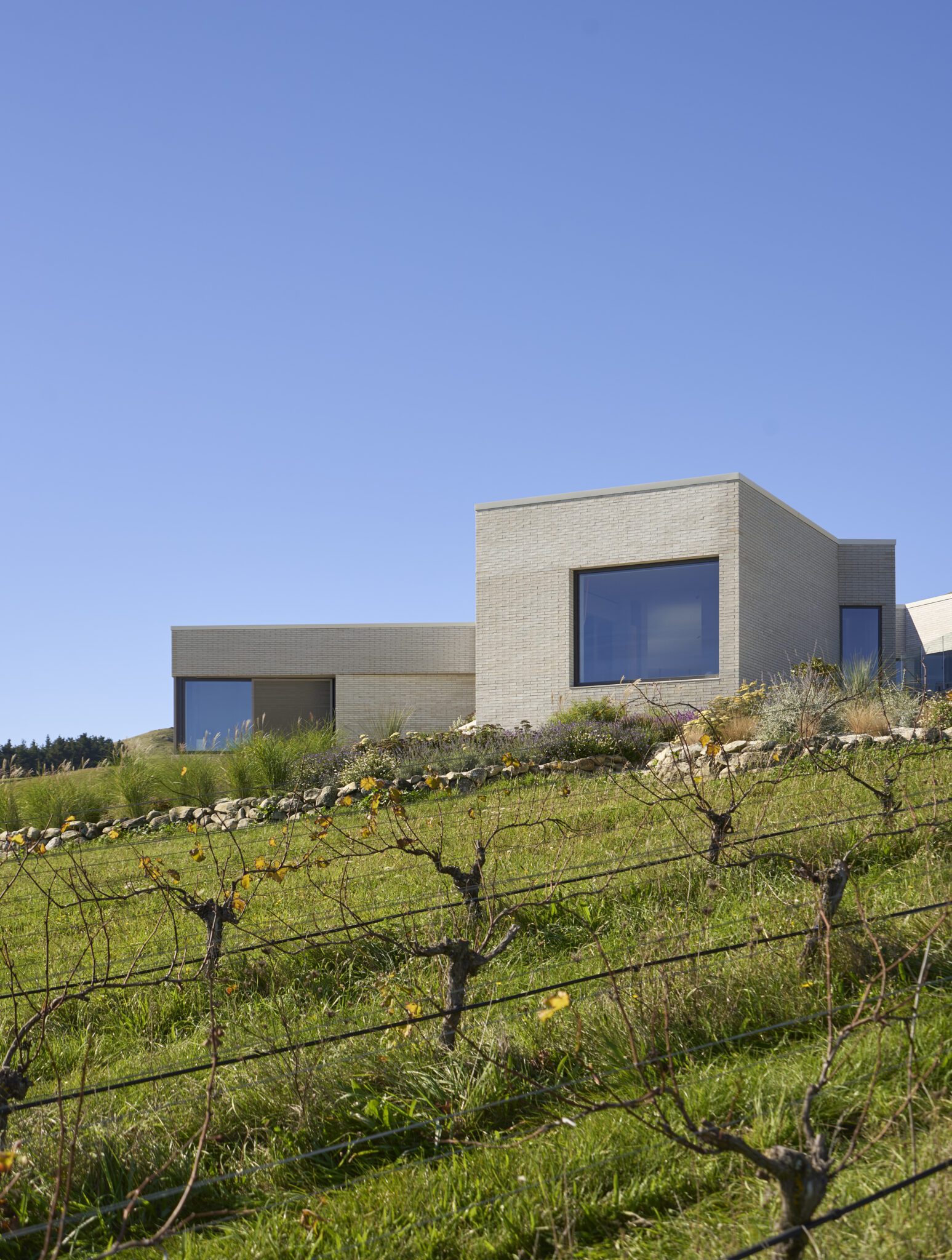
“Hence, when you look at the floor plan,” says architectural designer Case Ornsby, “it’s like a hand: three fingers flying out into the landscape. Within each of those spaces you can seek shelter, but they’re also framing quite different views at each wing or pavilion.”
The plan splays outwards from a central entry point, forming a sequence of courtyards and protected spaces between the digits. Rather than resisting the wind purely through enclosure, the house negotiates it spatially, allowing sheltered lateral movement (indoors and outdoors) and strong connections to varying aspects of the site and house.
These fissures on the form give the plan a directionality, allowing each ‘wing’ to operate also as a viewing instrument: a telescope or binoculars pointed towards different aspects of the landscape.
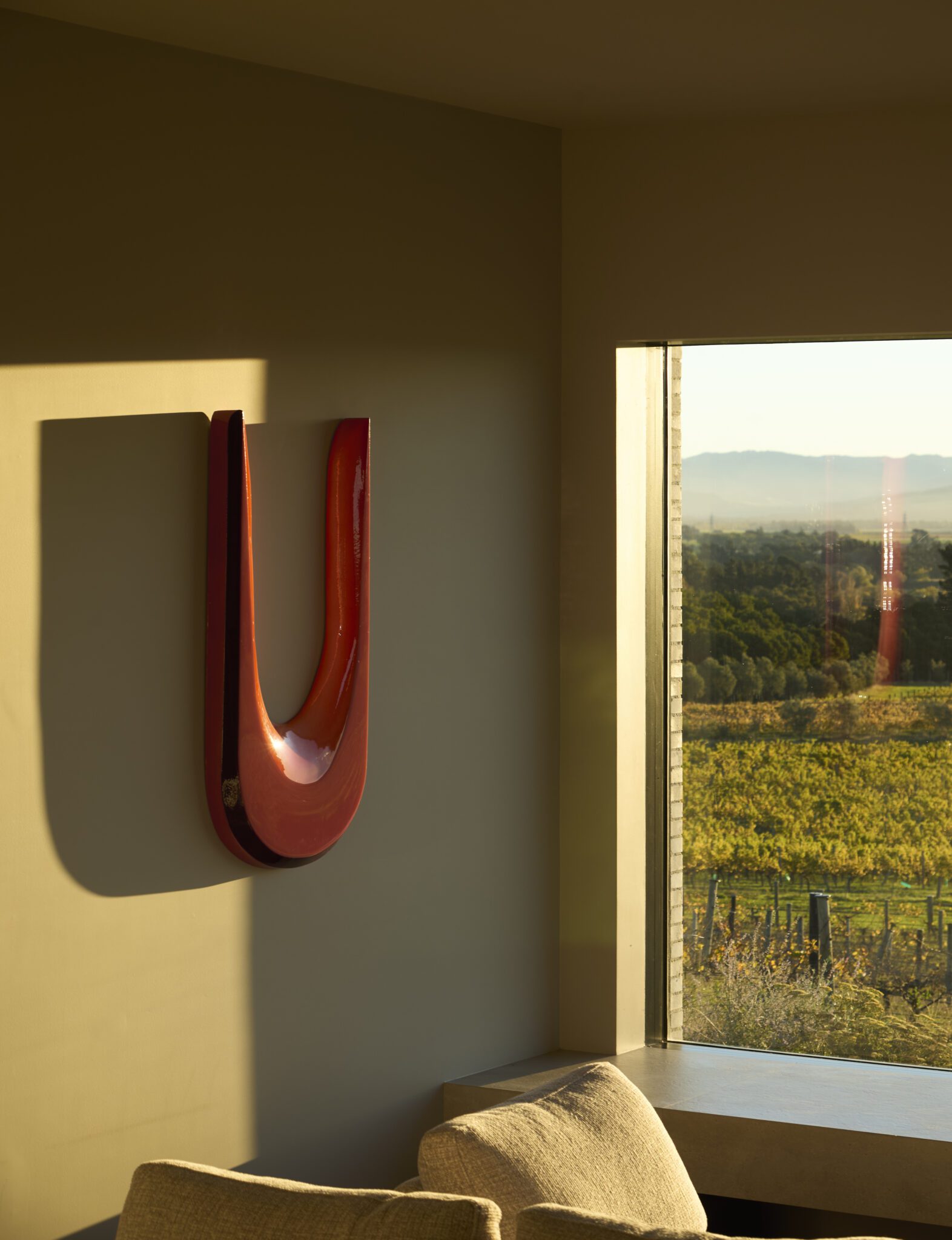
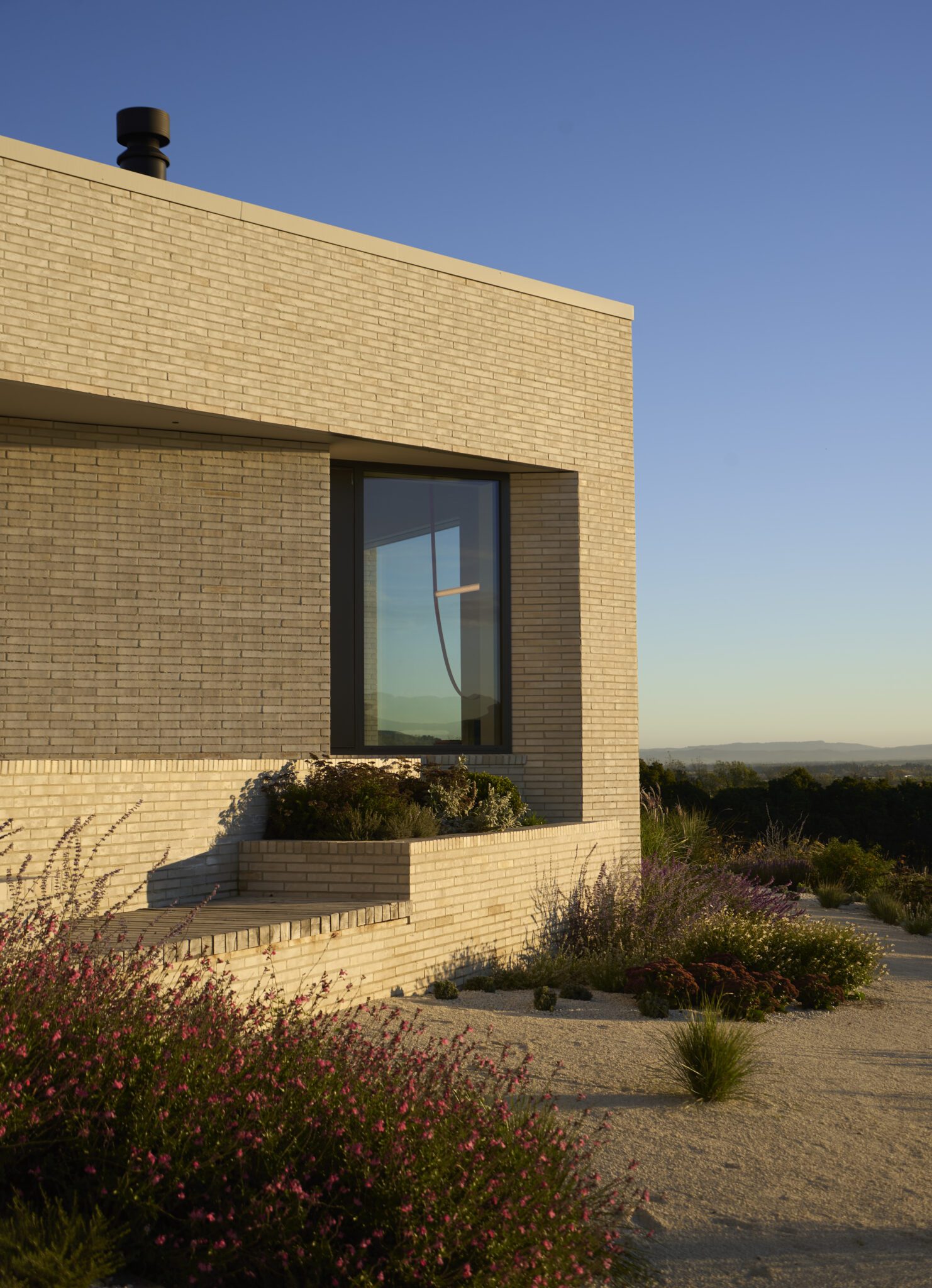
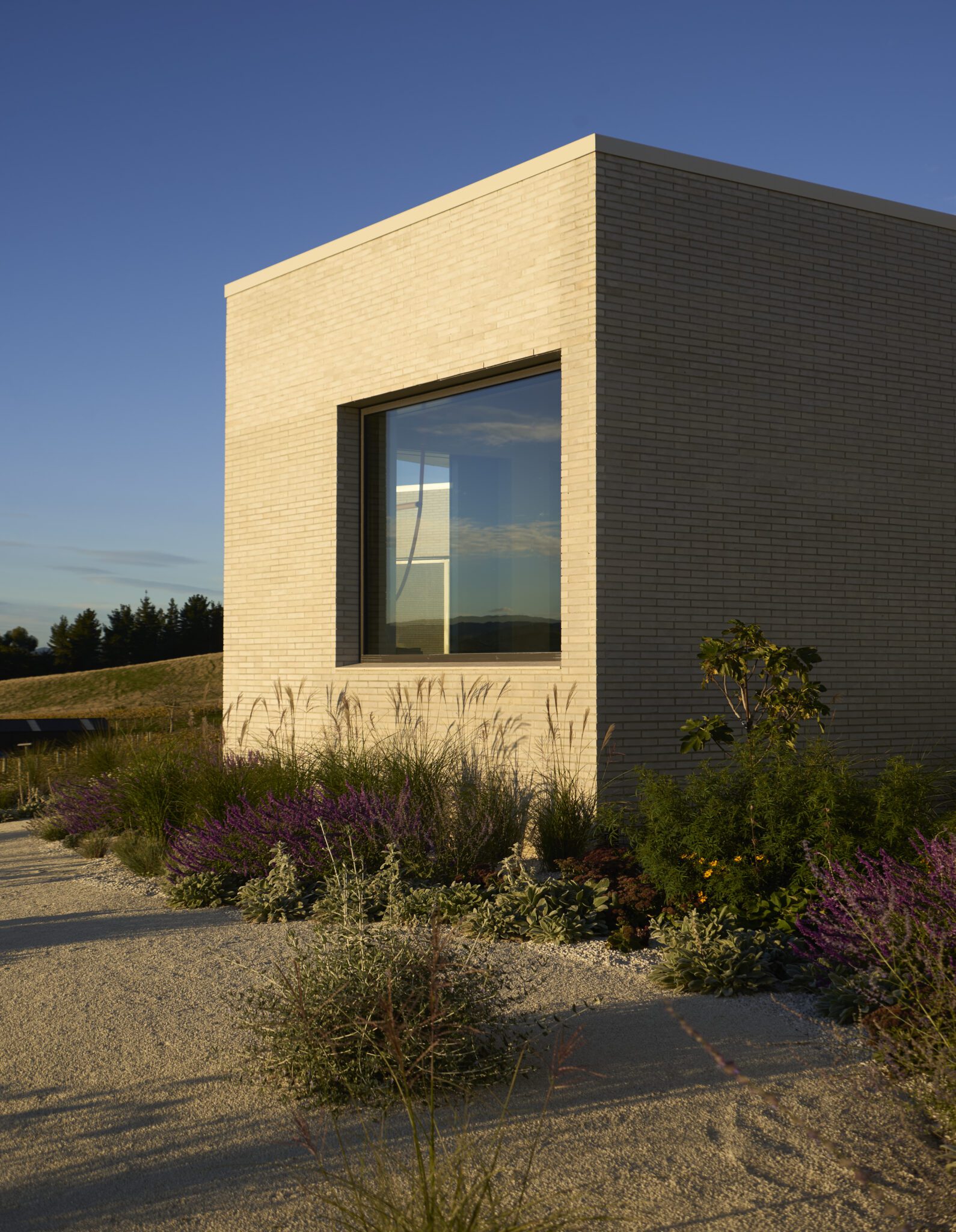
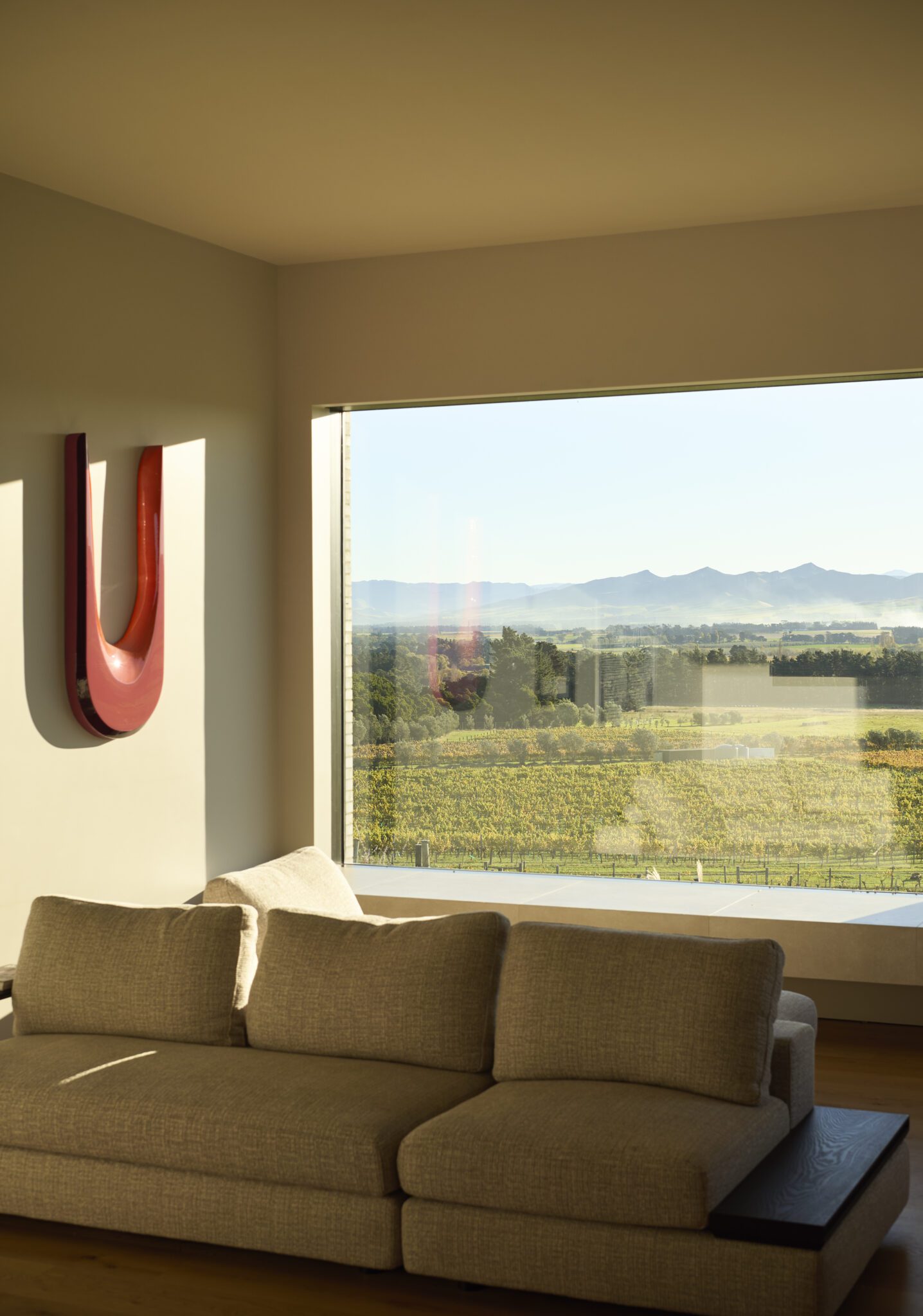
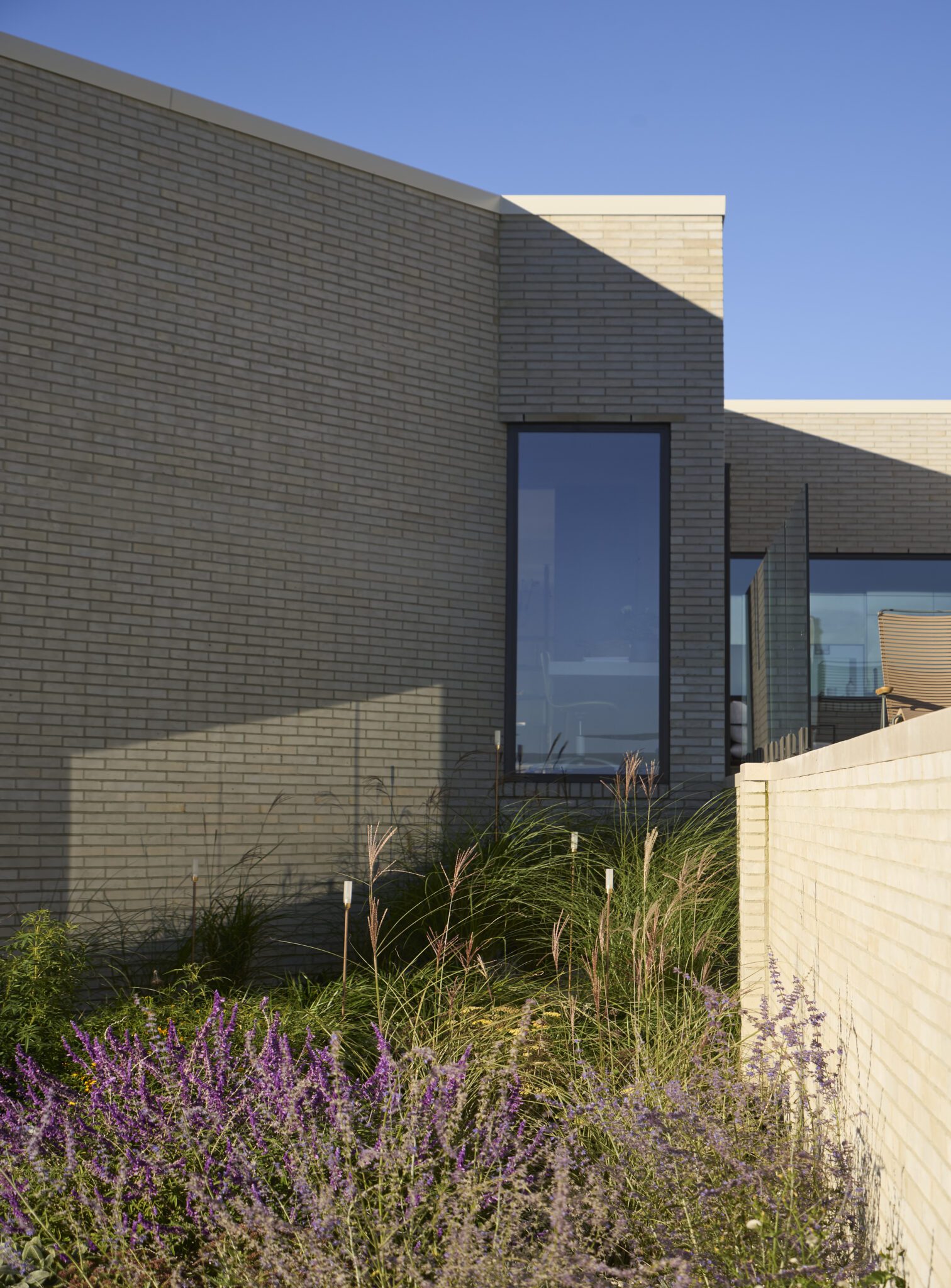
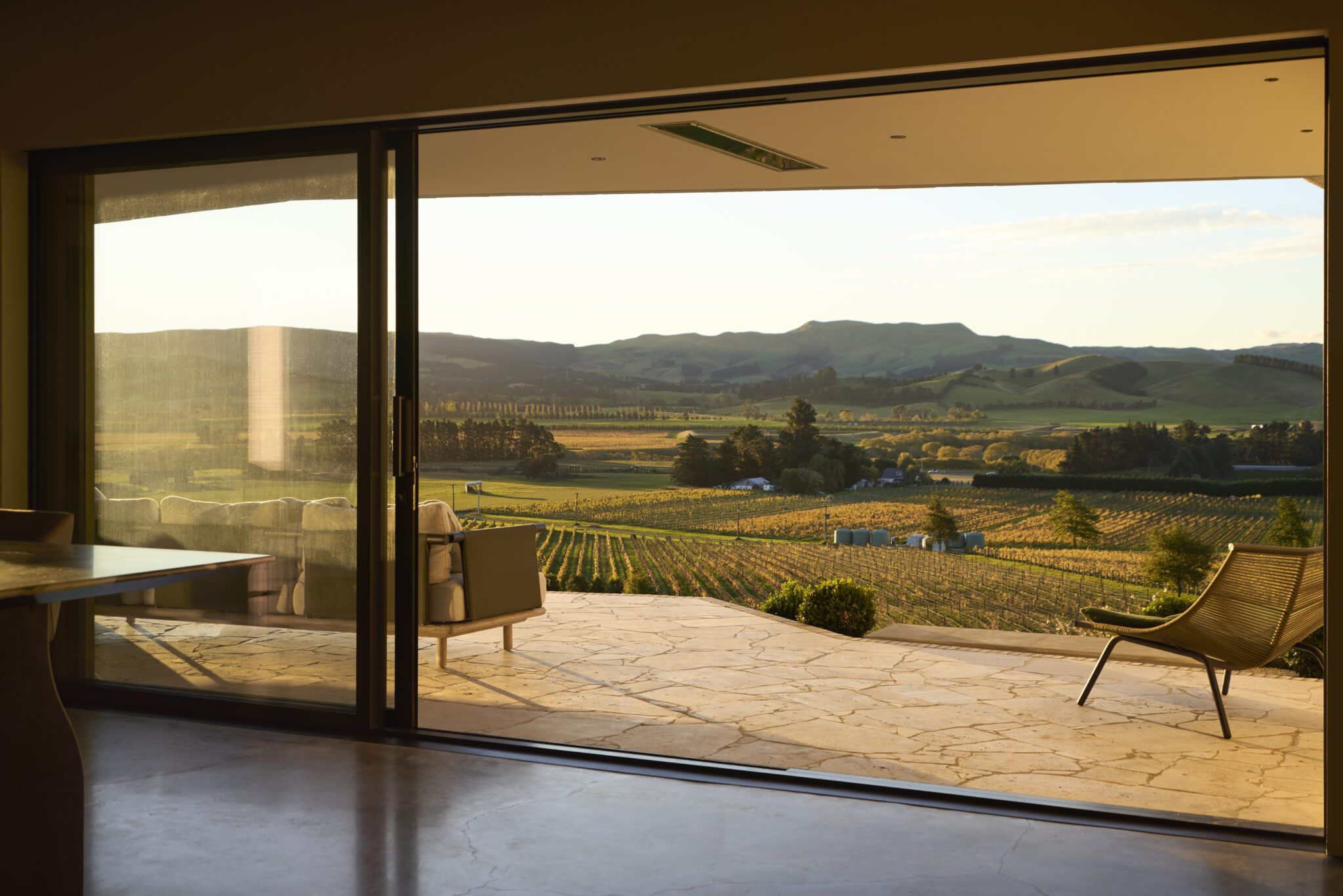
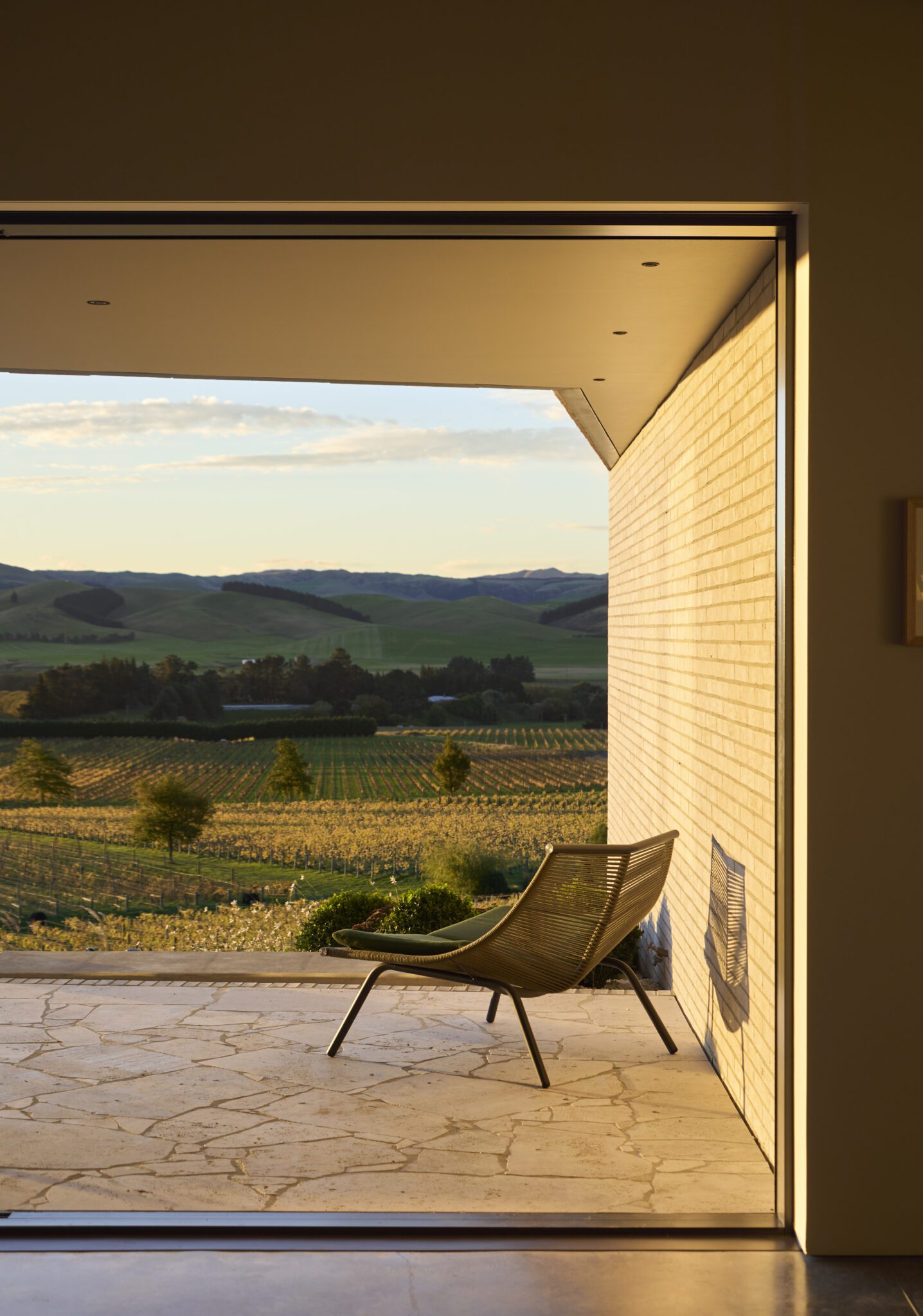
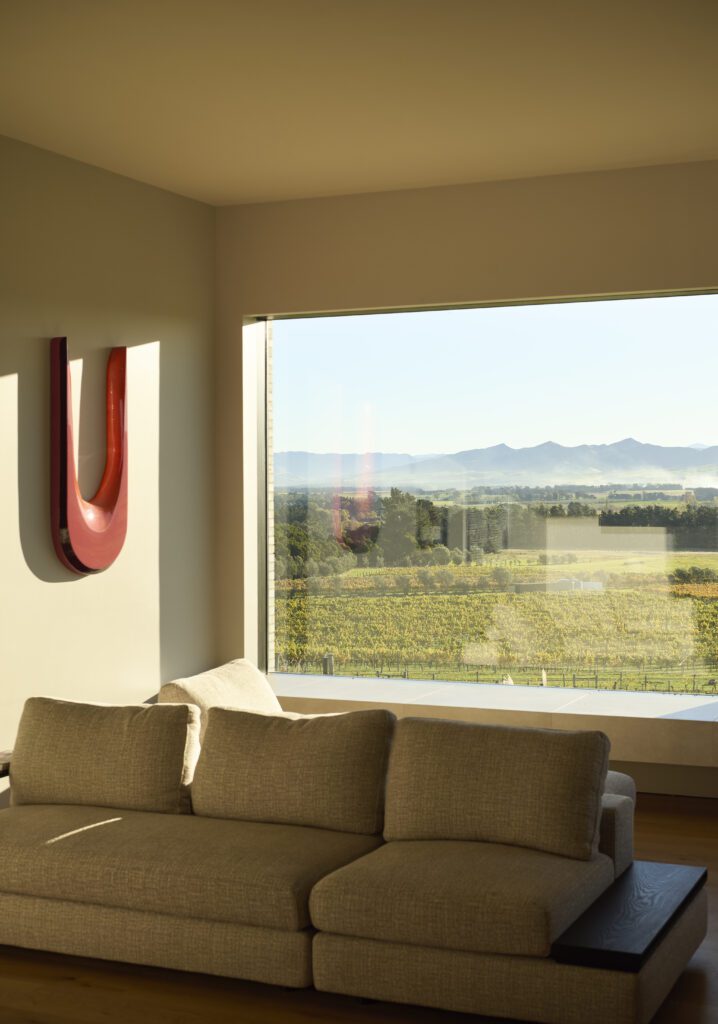
Case explains that the windows are deliberately proportioned as frames, curating moments of the surrounding terrain: distant outcrops, vineyard rows flowing downhill, and long axial views that align living spaces with the land’s natural contours, distant or otherwise.
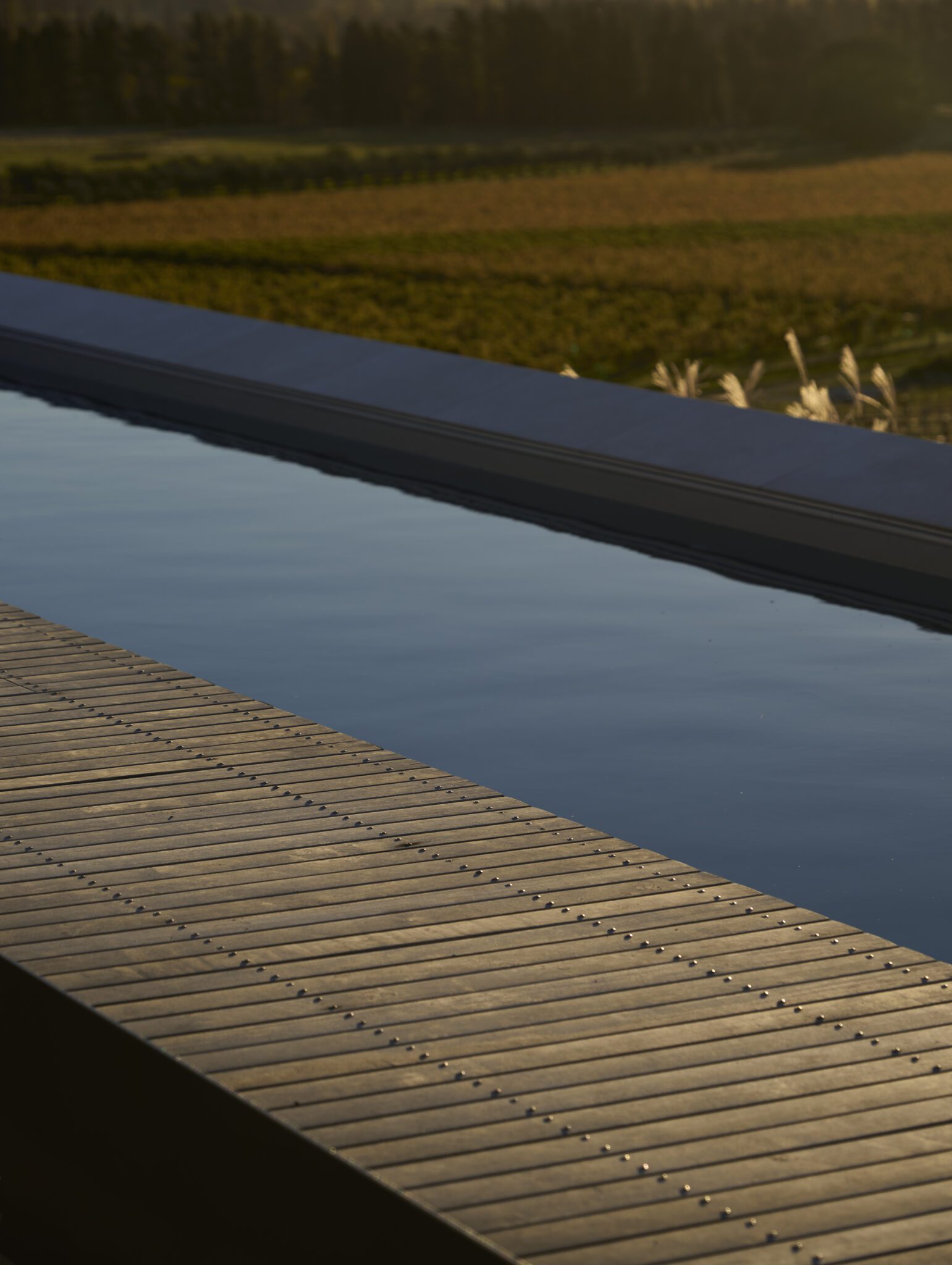
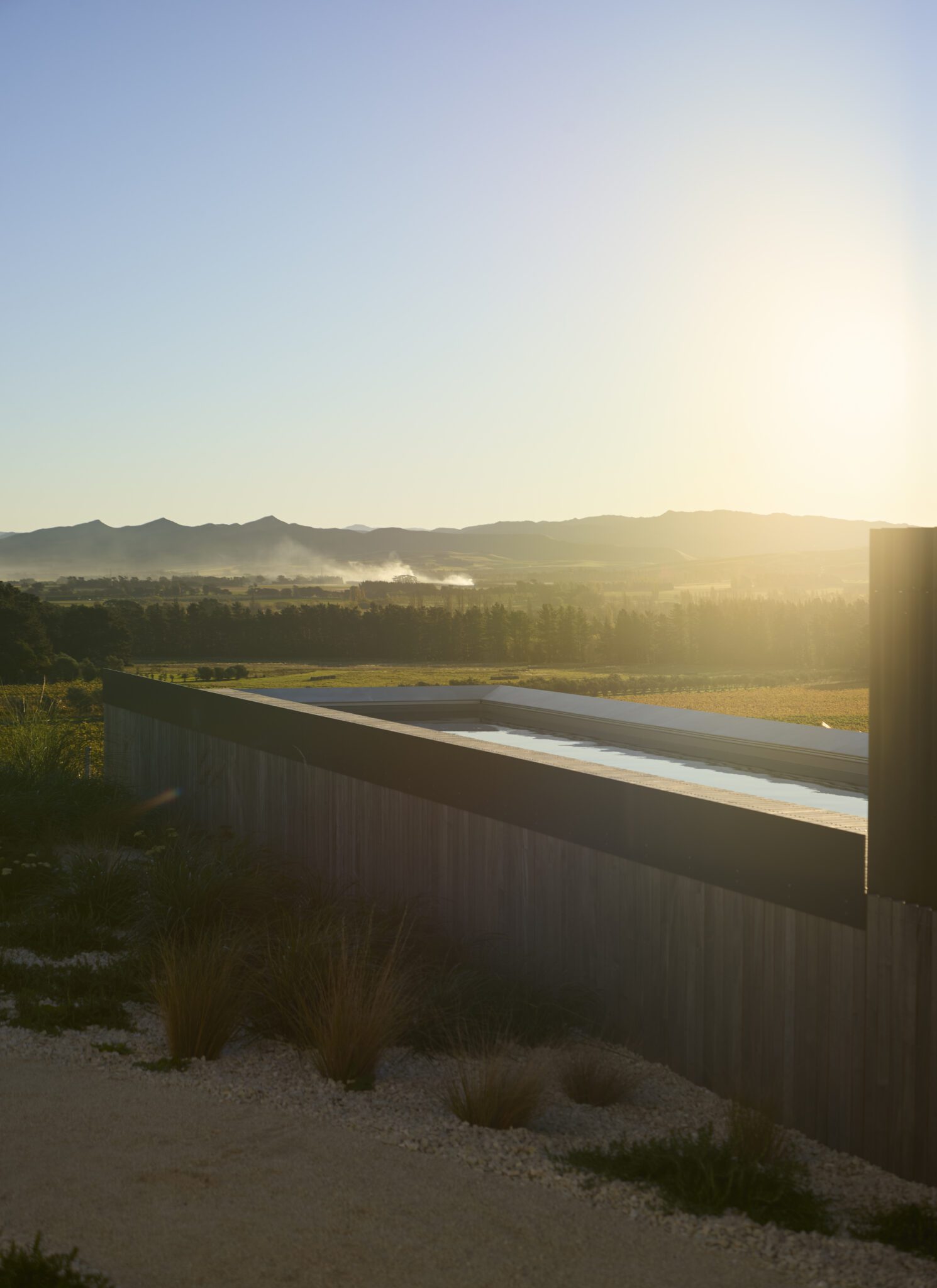
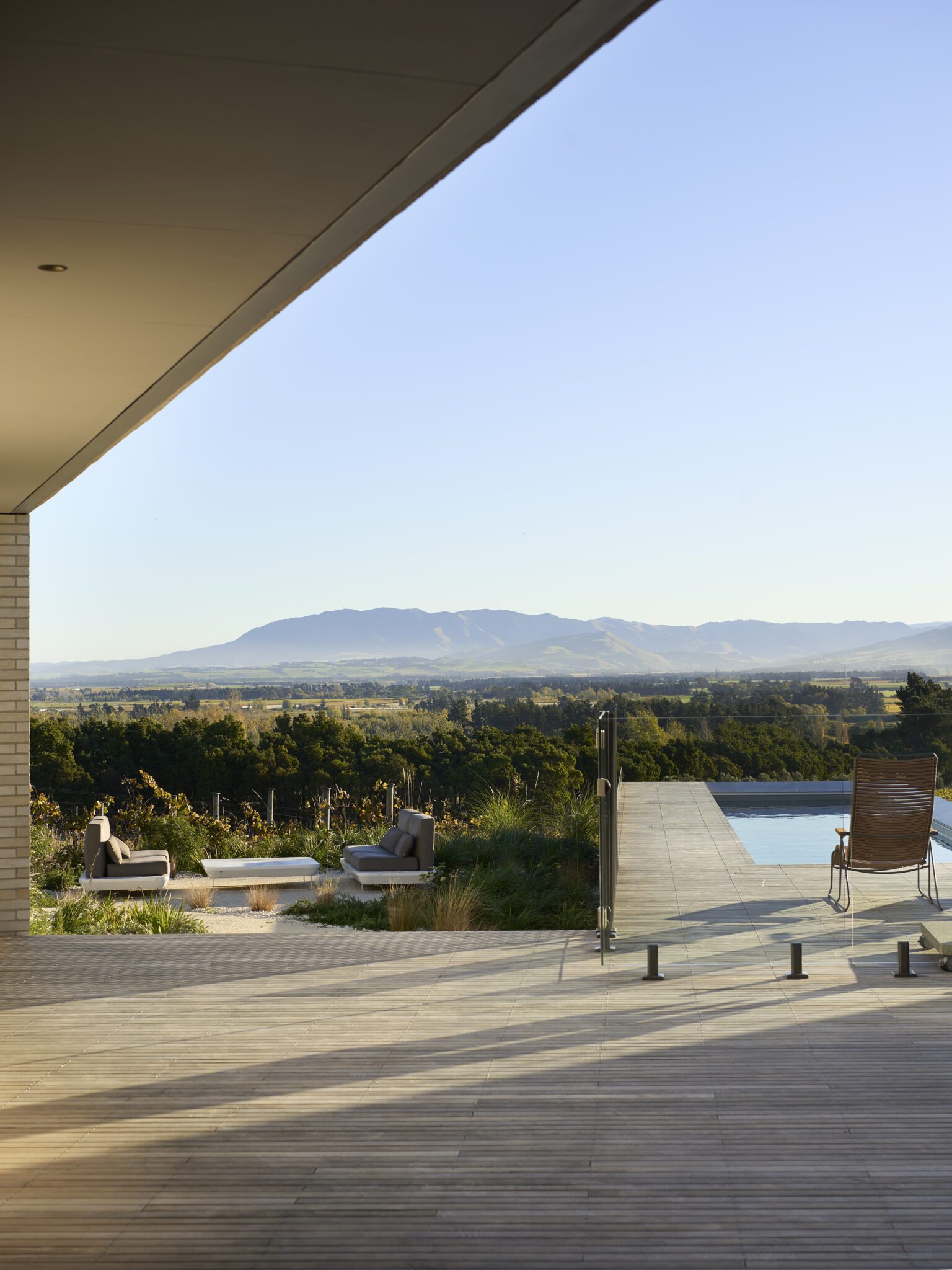
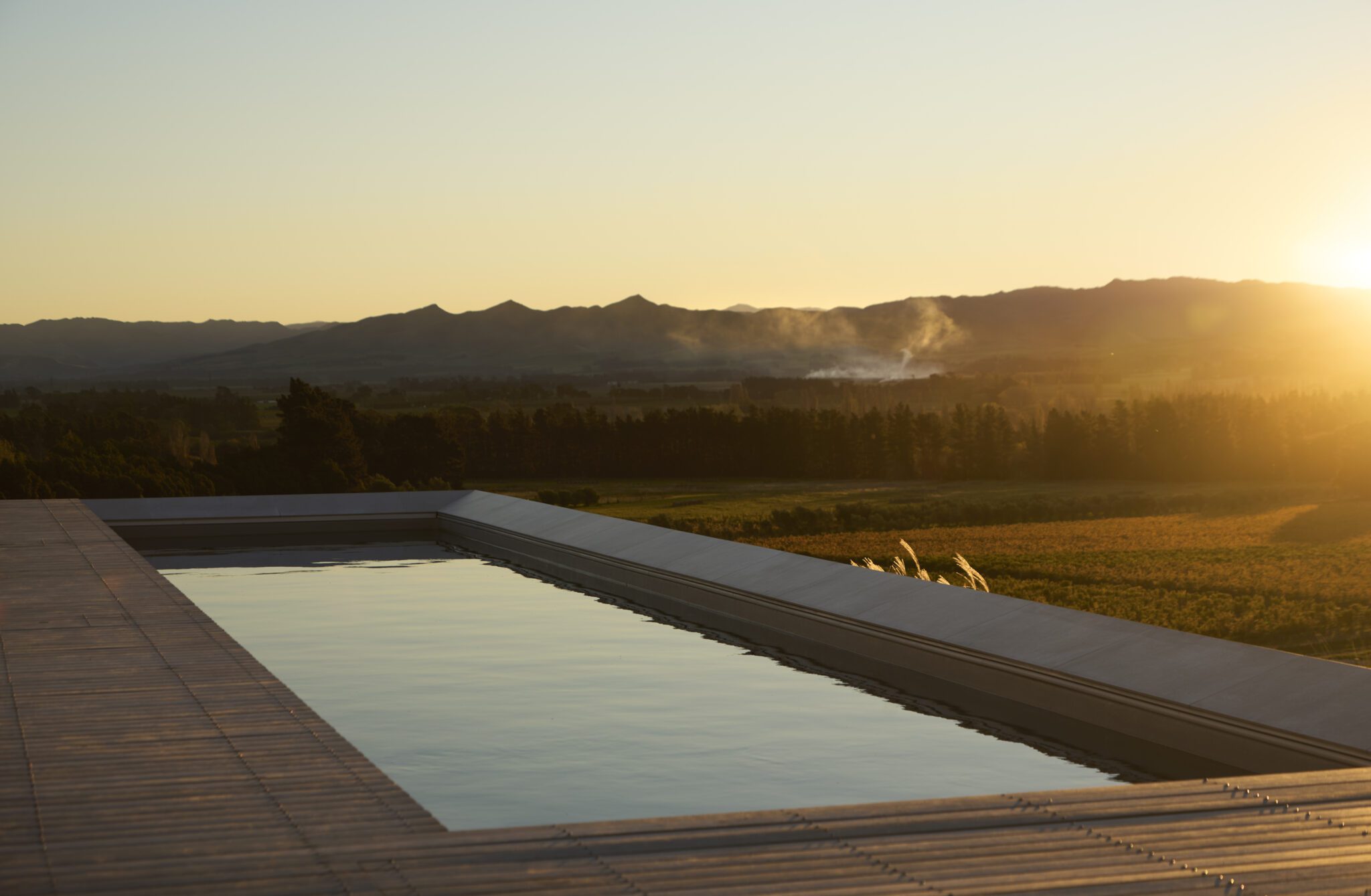
In one direction, the Three Sisters peaks appear framed at the end of the living room; in another, the swimming pool anchors the sky; elsewhere, there are vines and landscaped hills.
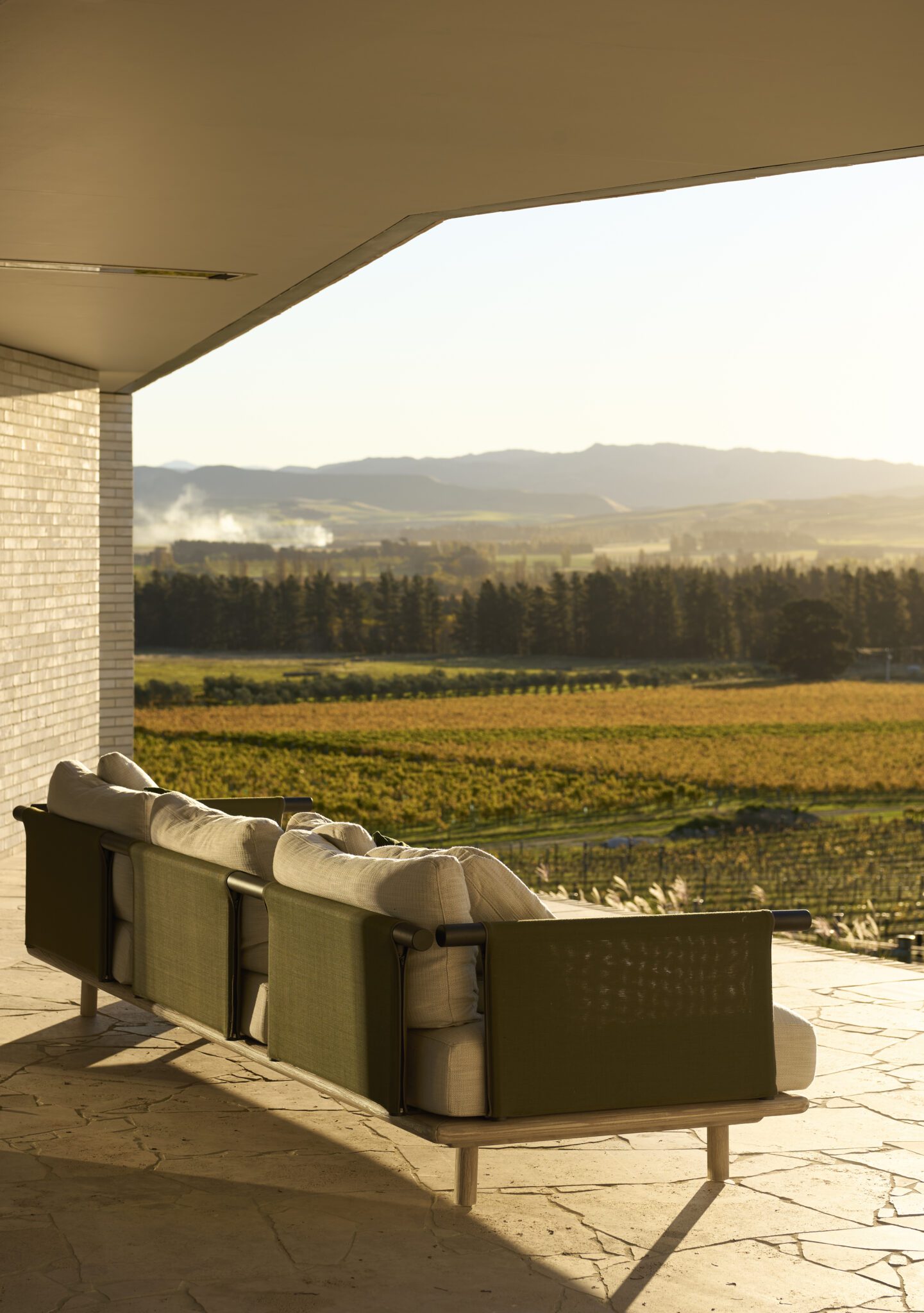
Each outlook is either compressed or elongated, sheltered or expansive, giving the outdoor multiple readings rather than a single panoramic gesture.
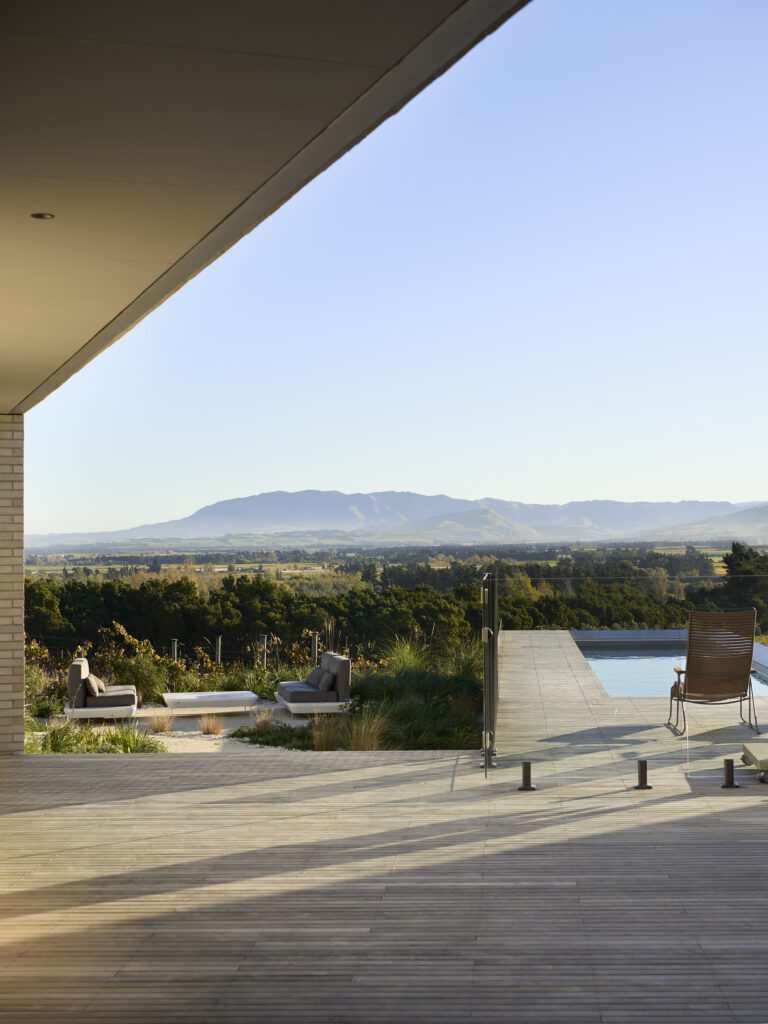
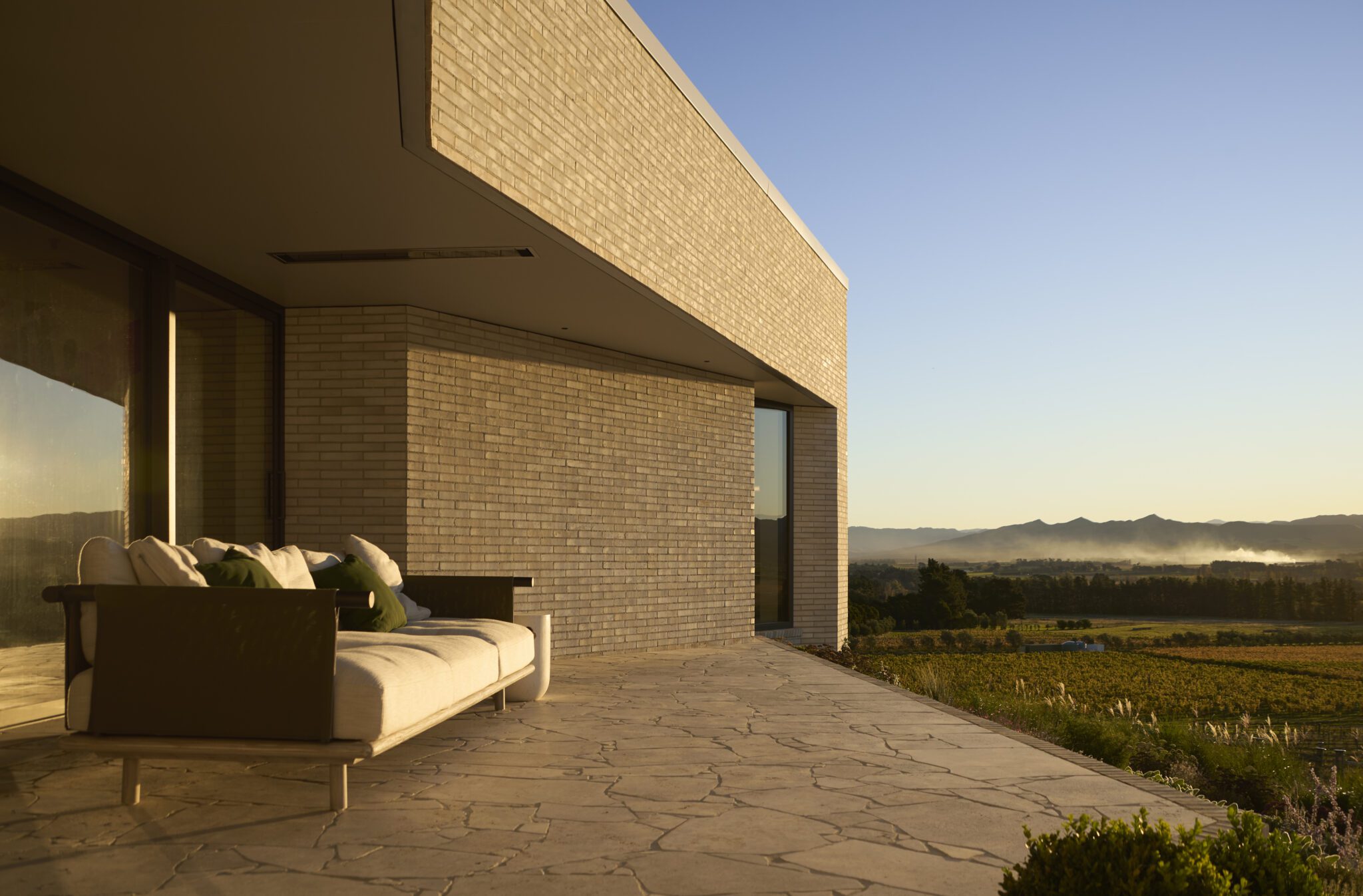
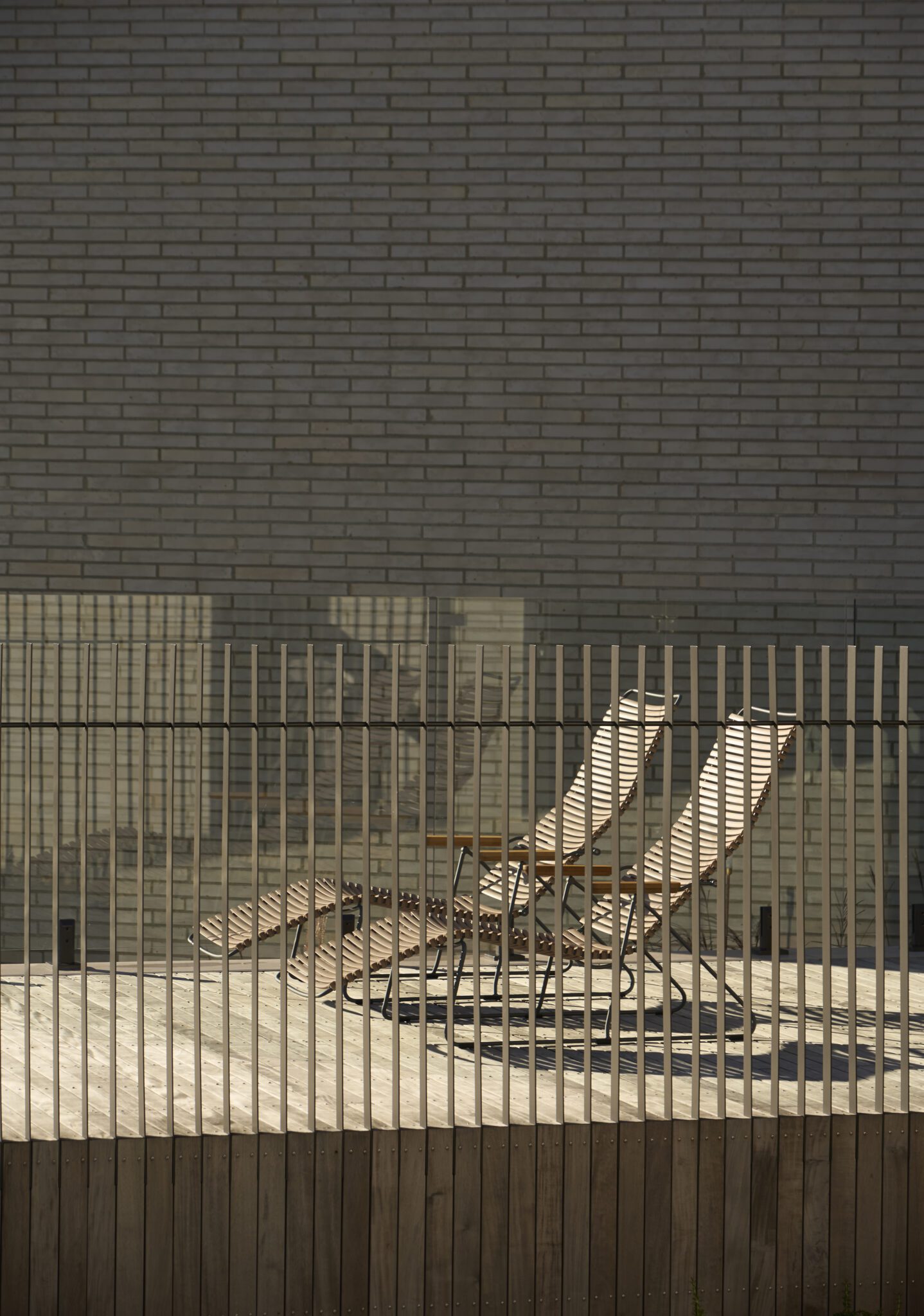
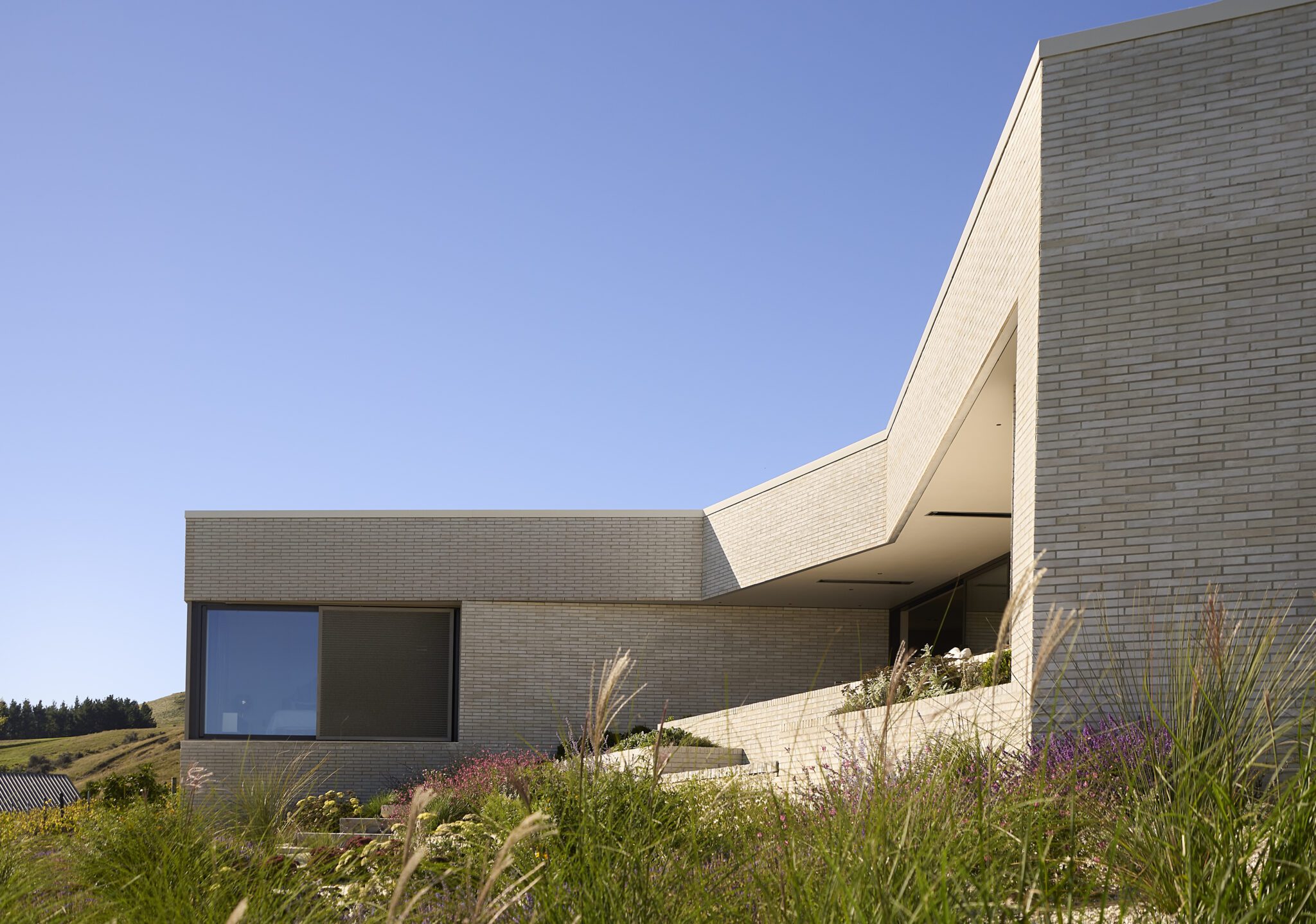
To mitigate the reflections that are often synonymous with seeking good views through glazing, the designer sliced and carved (especially on the front terrace): eaves made from the subtraction rather than extension; incised openings; recessed glazing — they all conspire to moderate light while reinforcing the architecture’s highly magnetic sculptural intent. Triangular cutouts, oversized roof forms, floating stairs, and cutouts all work in tandem to effect a very singular and stylised expression.
“We wanted to create a building that felt like an escarpment in the landscape of that limestone,” says Case. “It’s obviously still reasonably dominant in form, but, tonally, it fits in with its context there.”
The Waipara Valley is carved from sedimentary bedrock, where layered rock formations take on a number of rich personalities: brittle and scattered along the riverbeds; imposing and tall; often with deep crevices or karrens as it erupts from the hillsides.
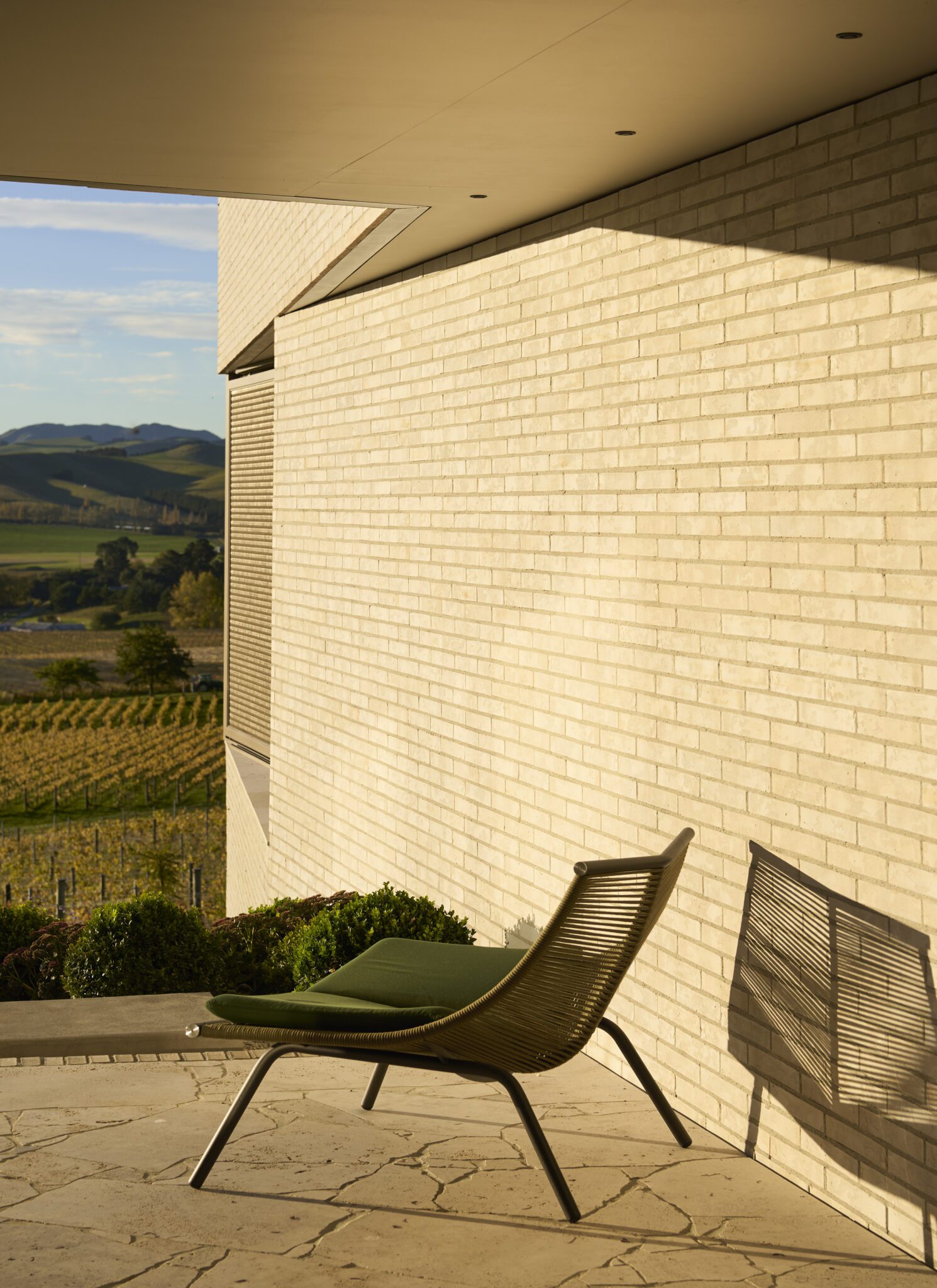
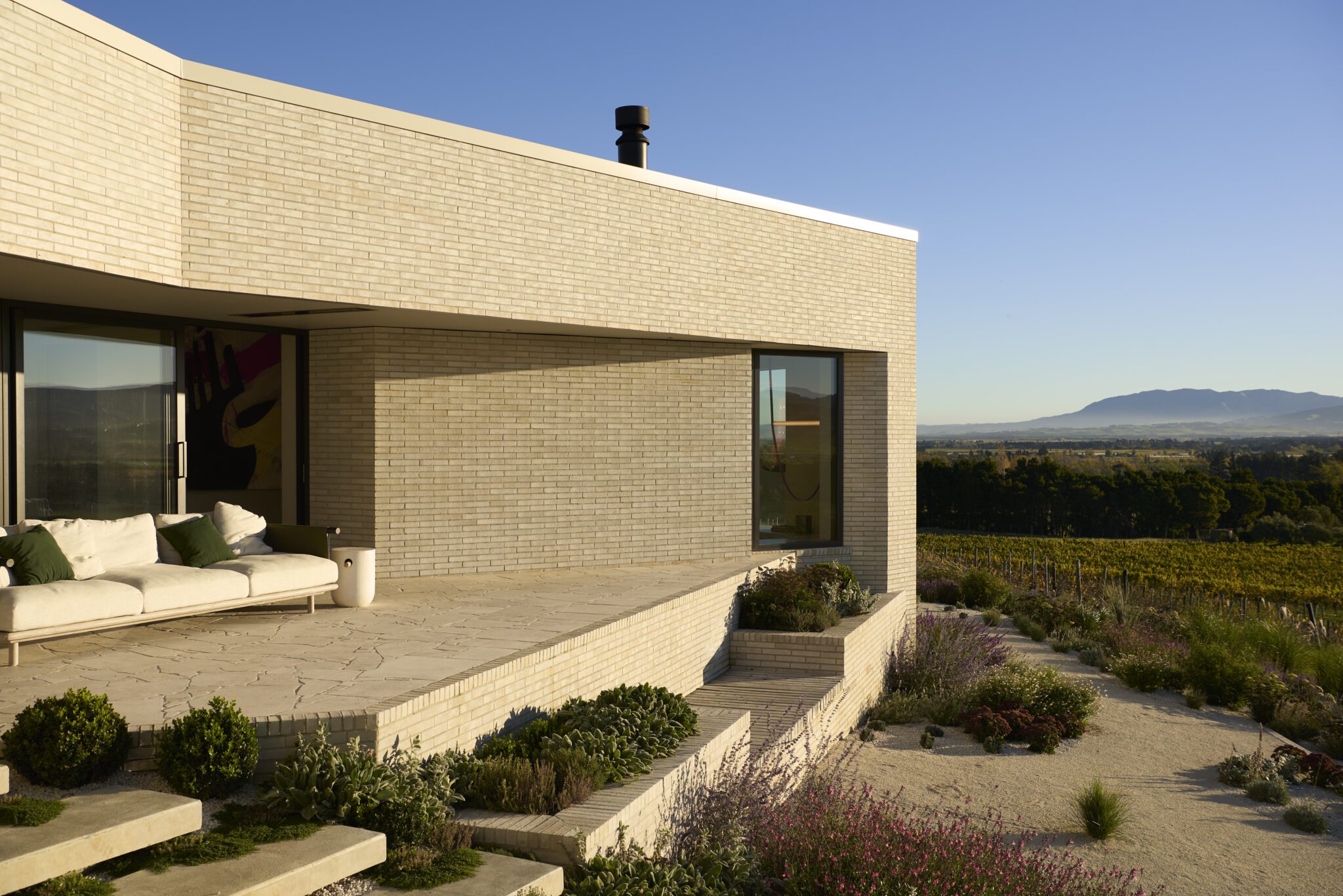
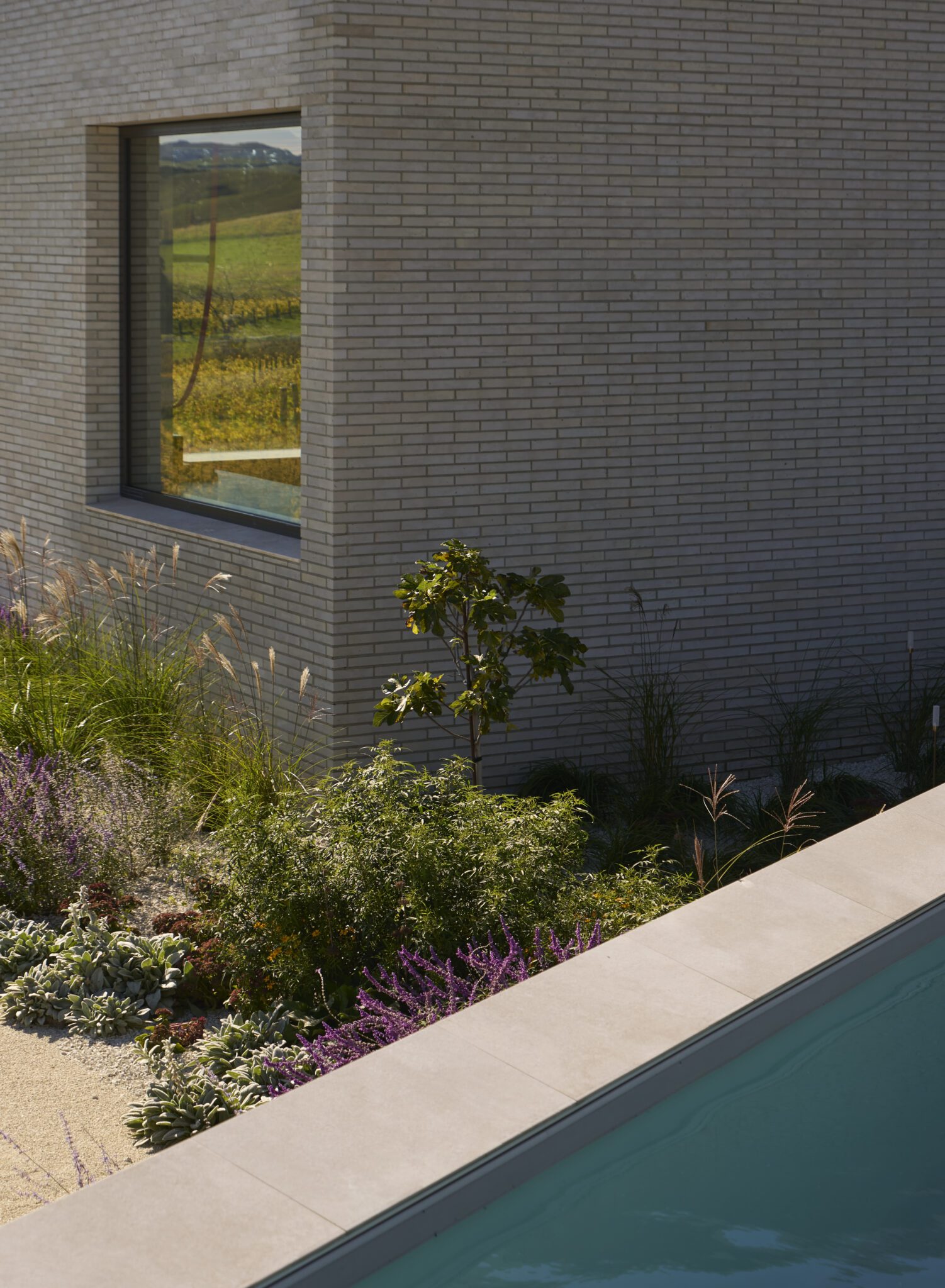
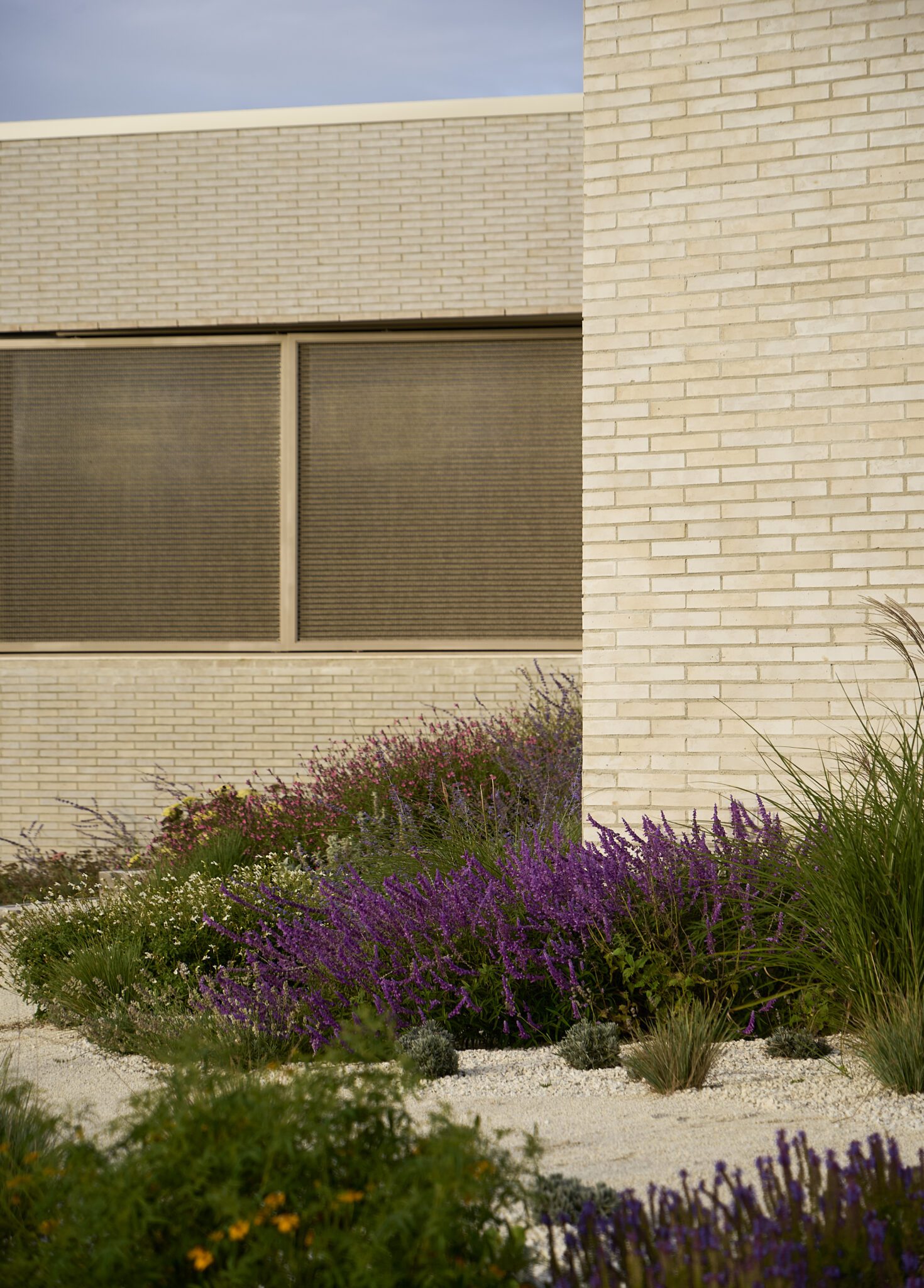
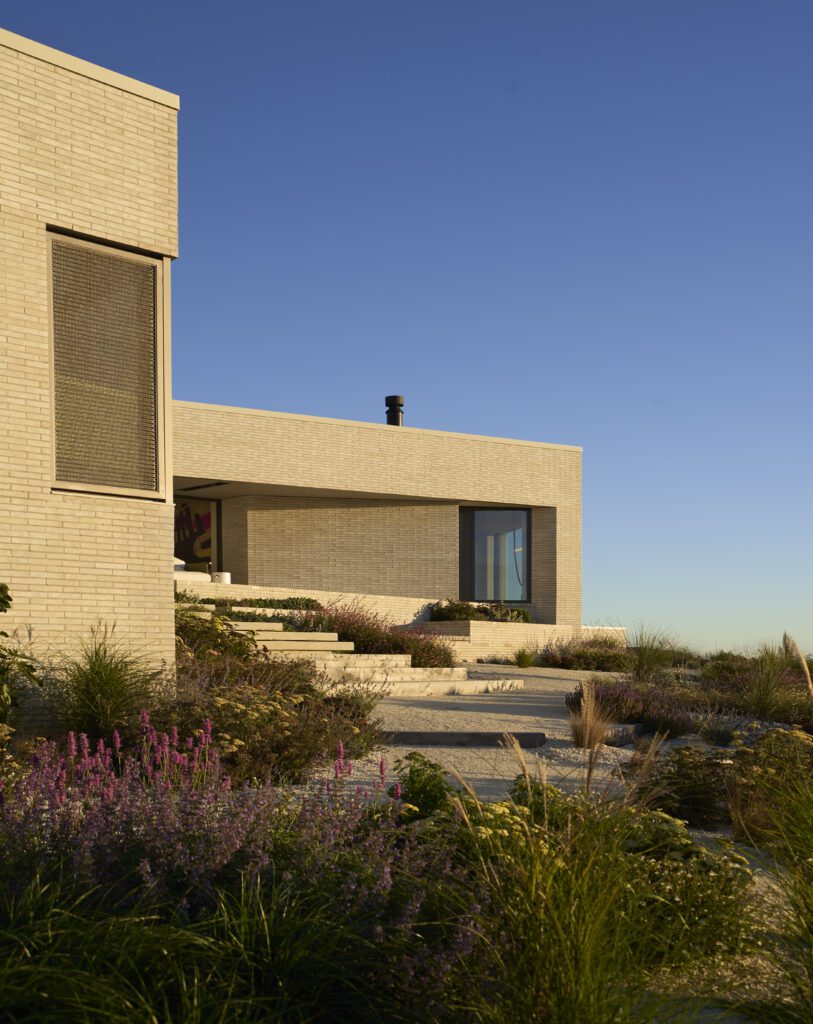
From below, this building reads as a continuous, light-toned mass; robust, certainly, but not alien. Its material palette deliberately echoes the pale limestone soils and chalky strata geology of the region. While the home is clad in brick rather than stone, the intention is clearly to evoke the textural qualities and palette of an exposed limestone face.
The bricks were manufactured locally by Canterbury Clay Bricks and were selected for their soft, muted hue. The grout was matched closely to their colour and swept rather than pointed, allowing the bricks to read less as individual units and more as a single, compacted surface.
According to the designer, the masonry takes on an almost rammed-earth quality in certain light — subtly uneven, softly shadowed, and visually dense. It feels somewhat geological rather than assembled.
On the main terrace, travertine and crazy paving appear as an allusion to a riverbed, inlaid timbers quietly carve a seating space along the stone, and — as in the interior — the attention to detail at the material junctions is exquisite and refined.
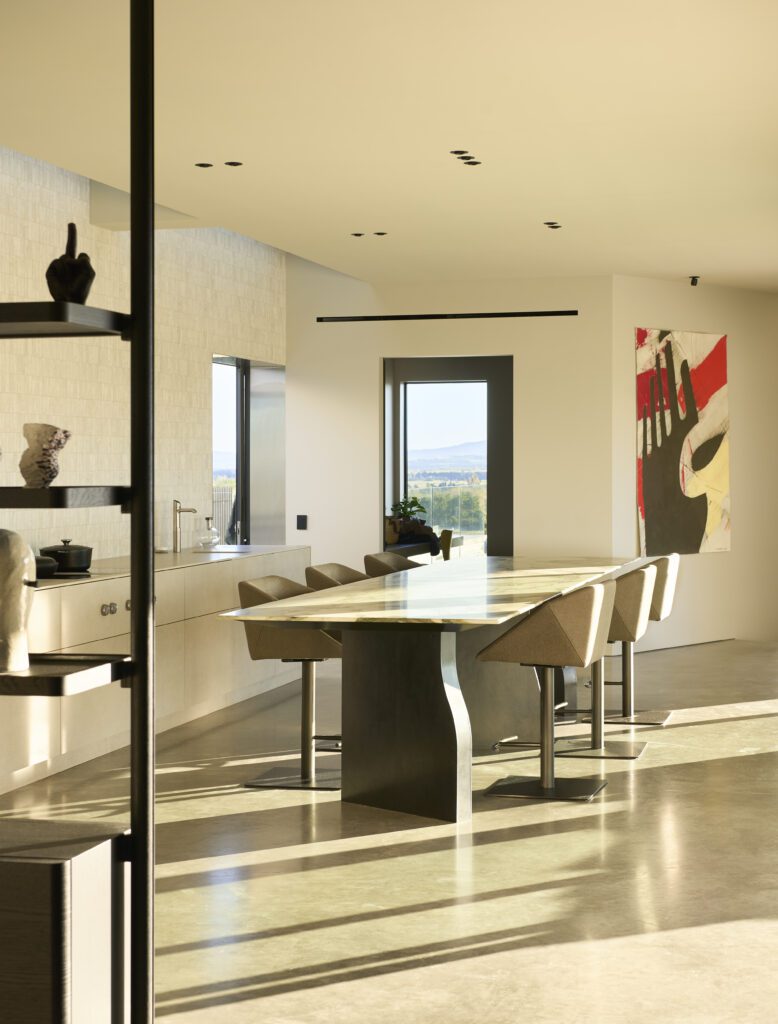
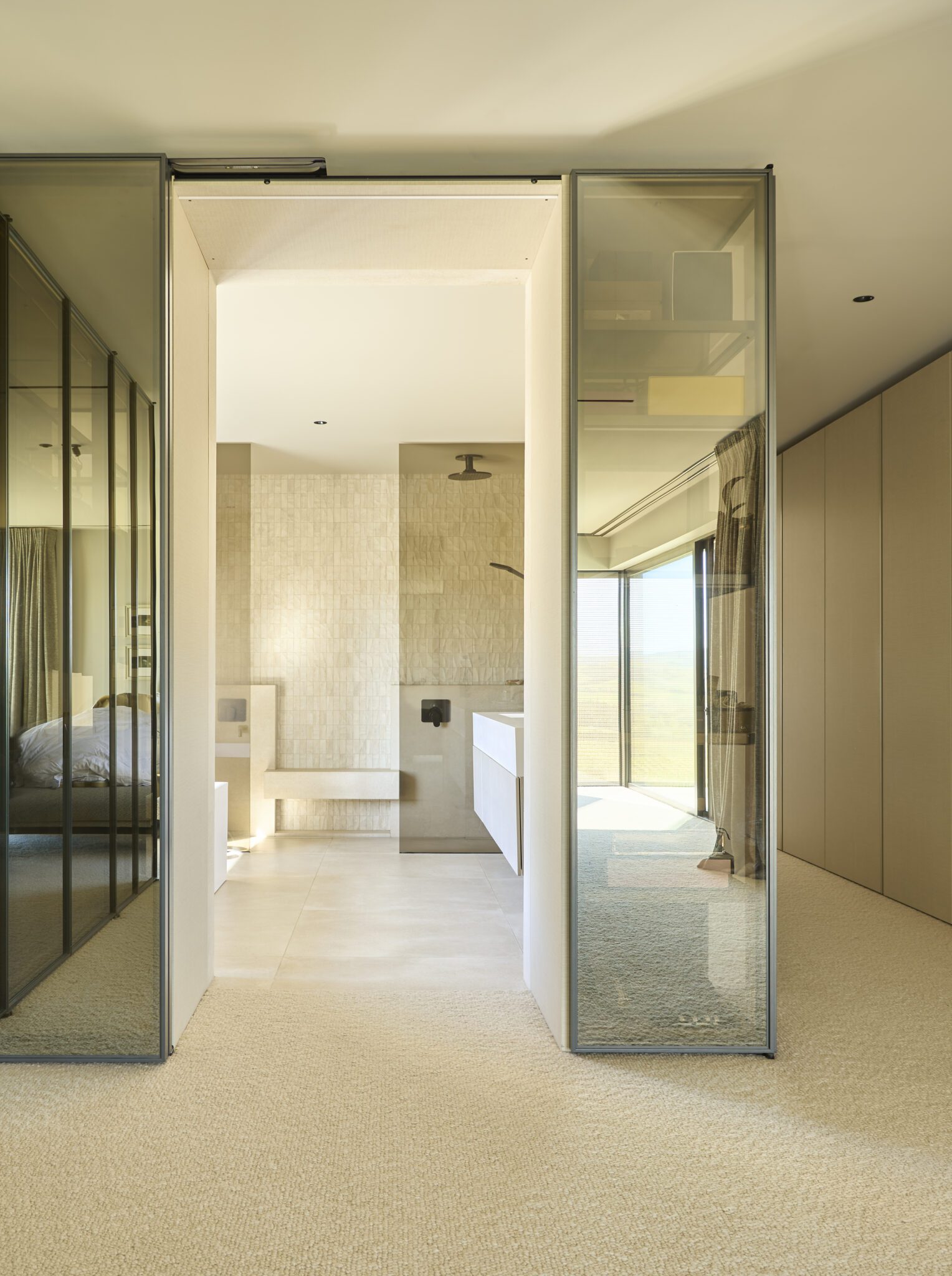
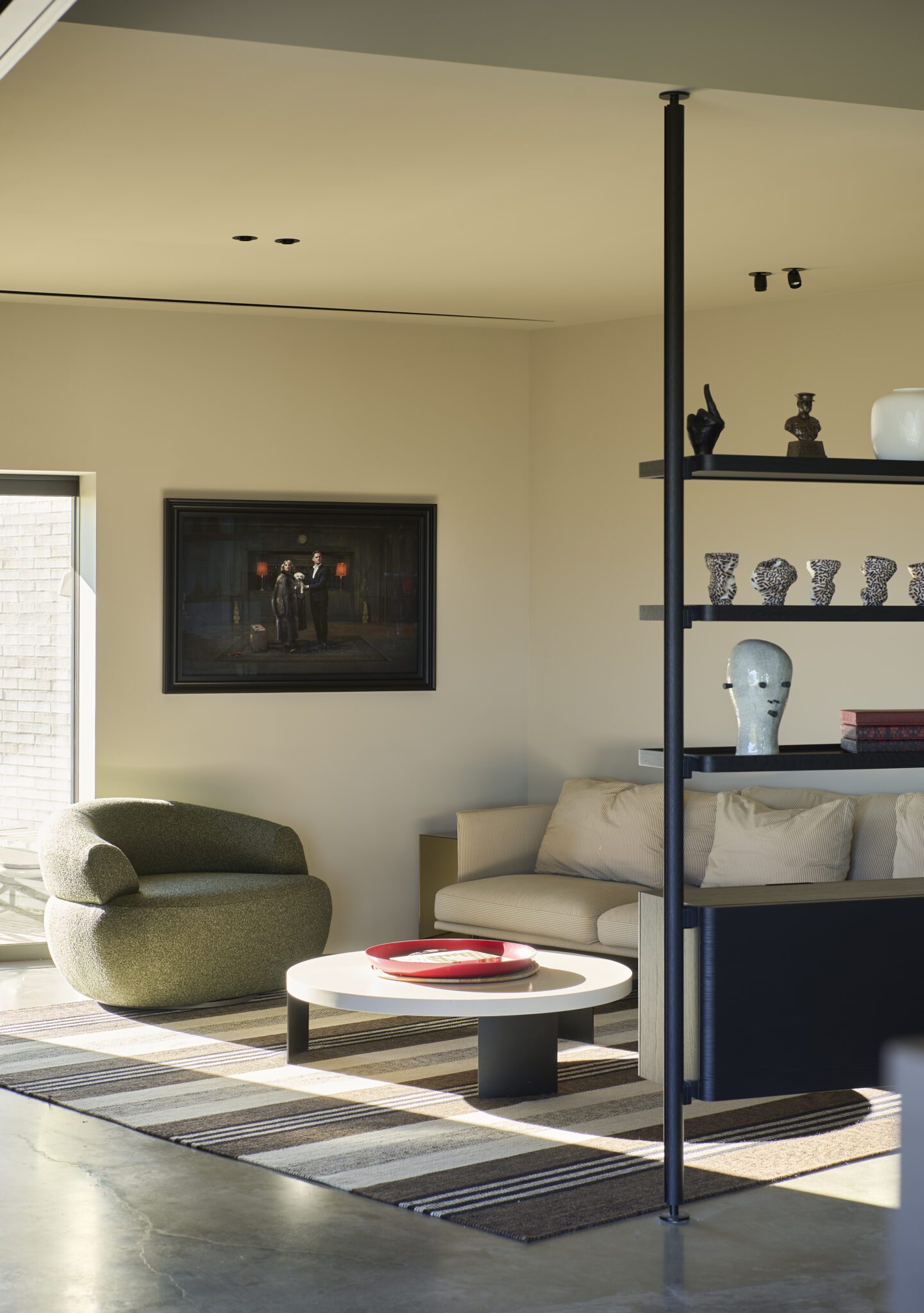
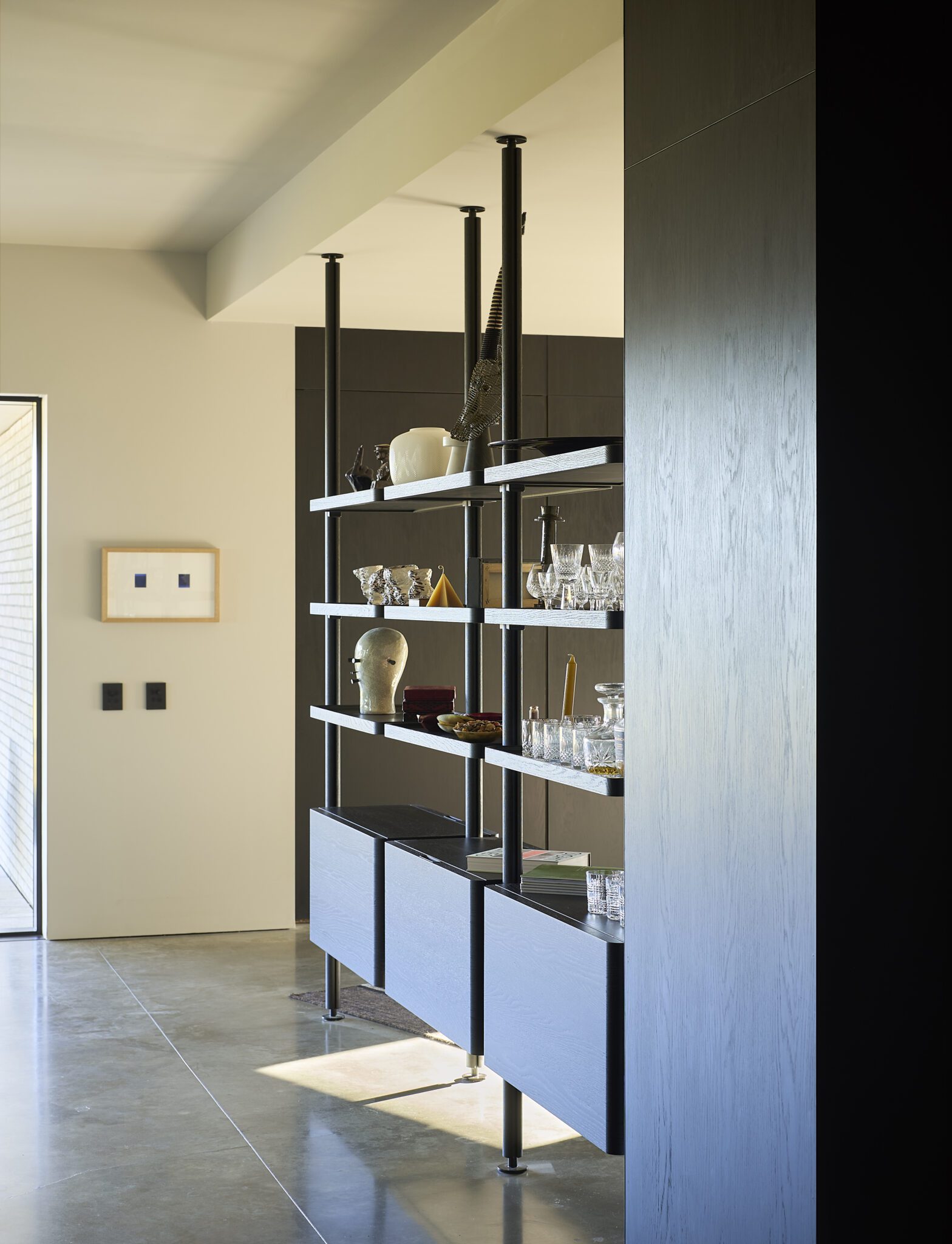
The interior feels a touch Van Duysen and Hotel Britomart, while retaining some of the elements we’ve seen in Case’s own home in Christchurch.
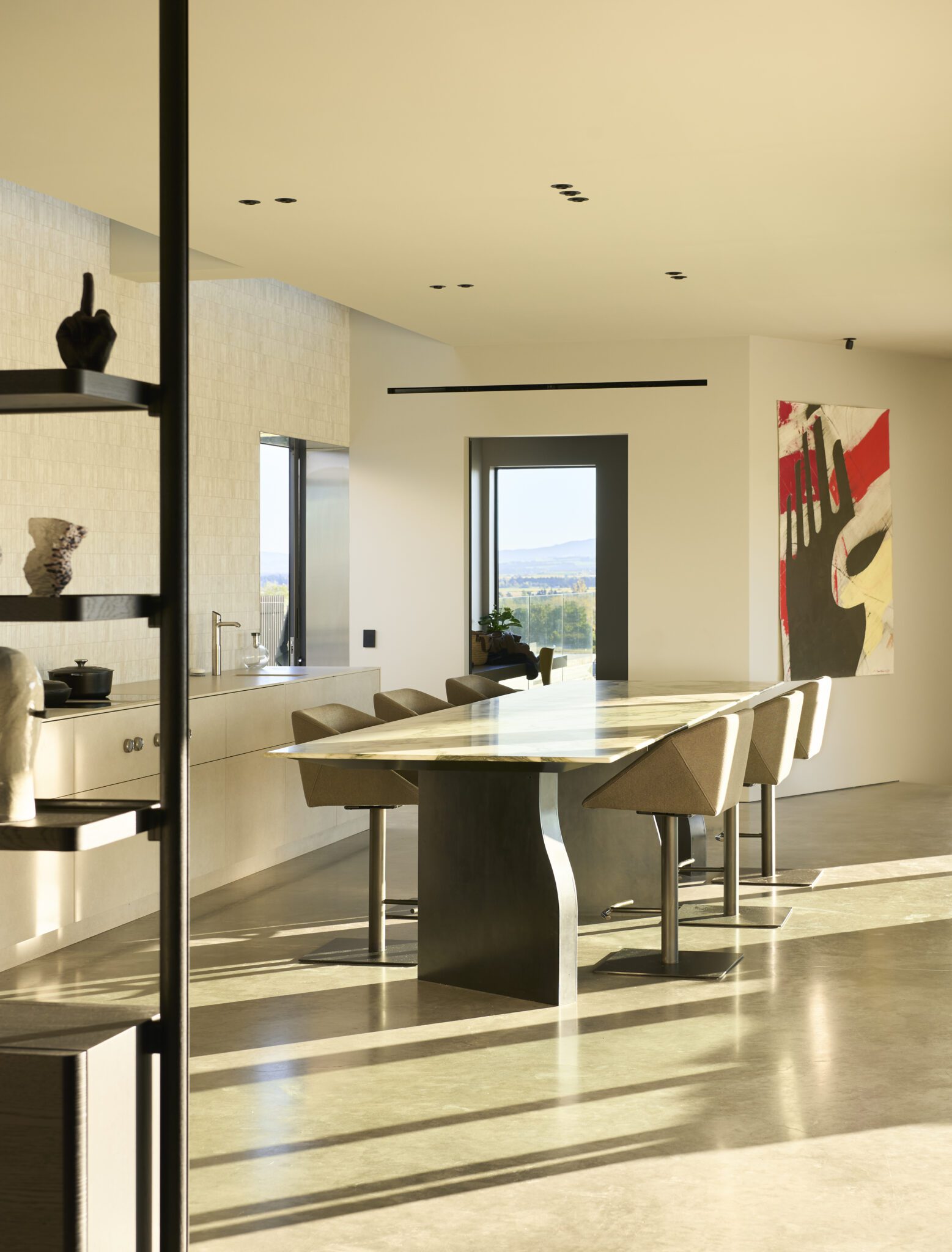
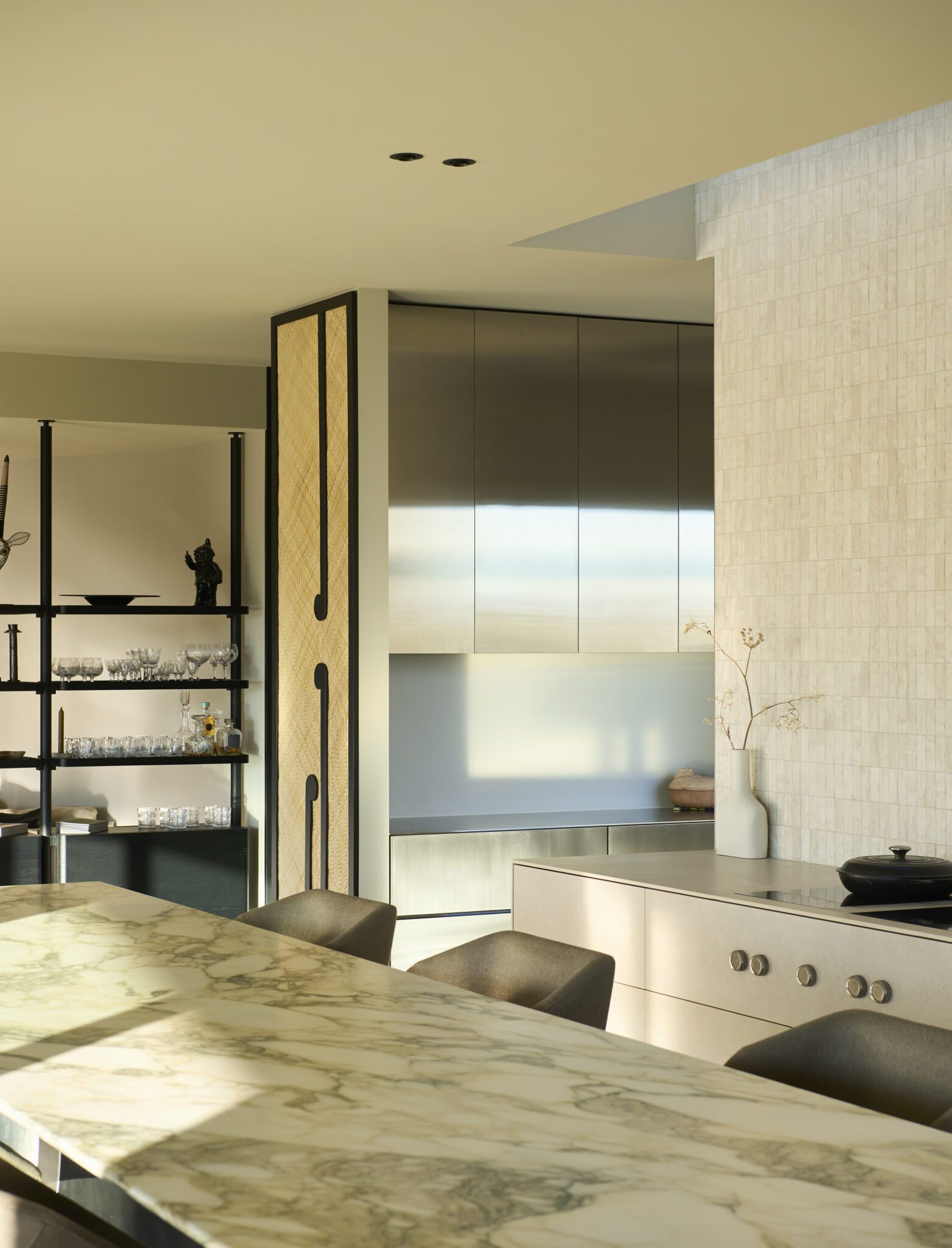
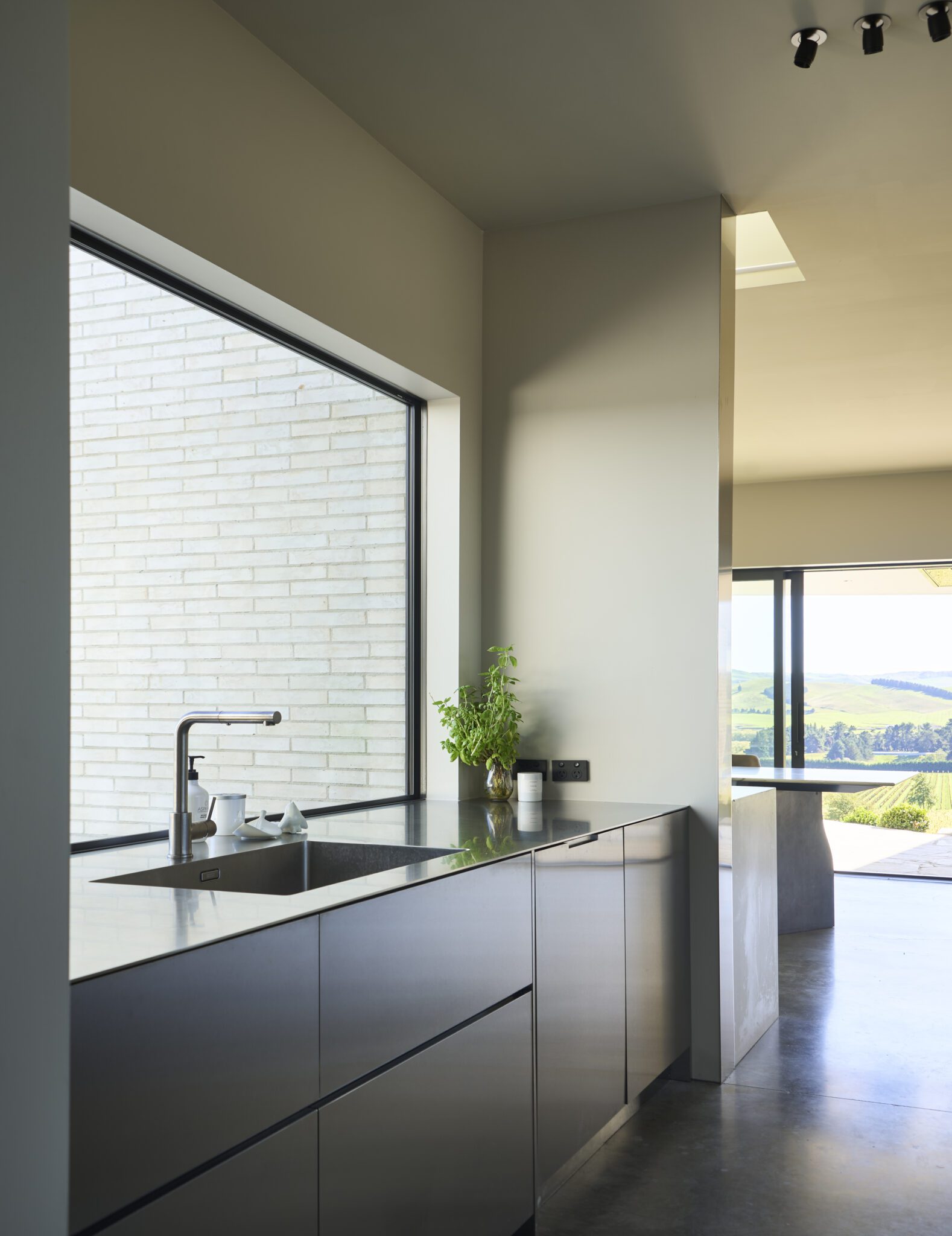
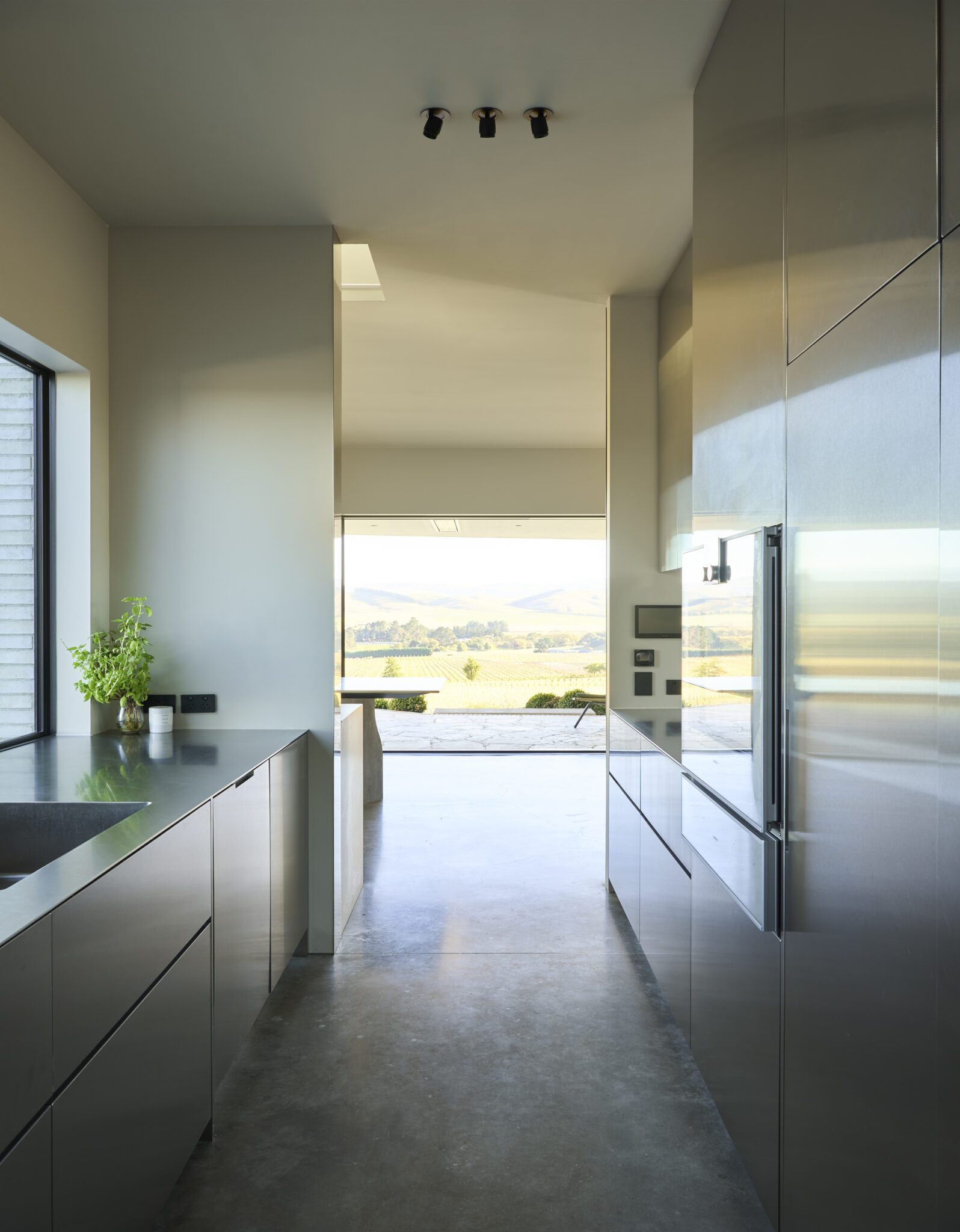
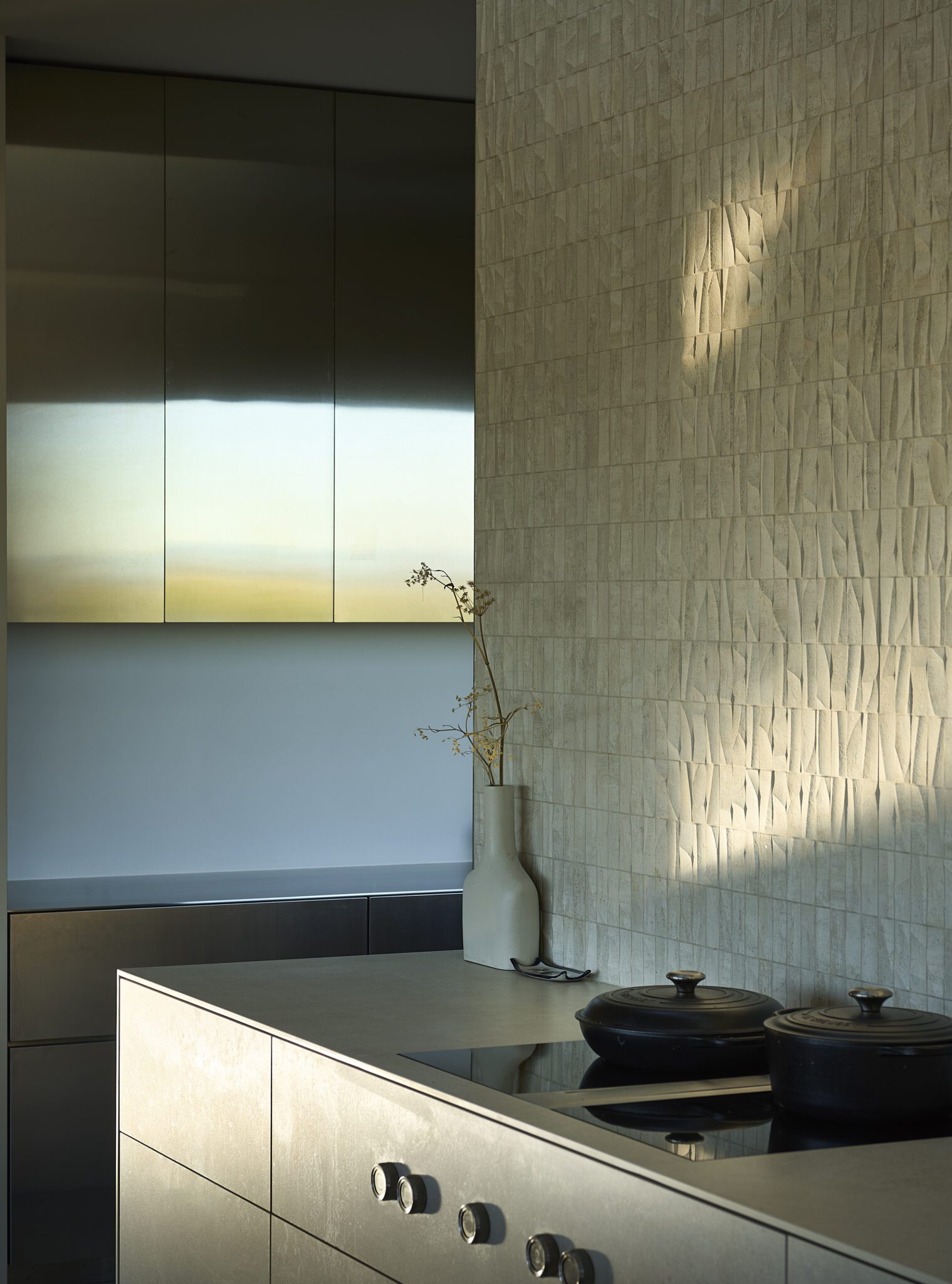
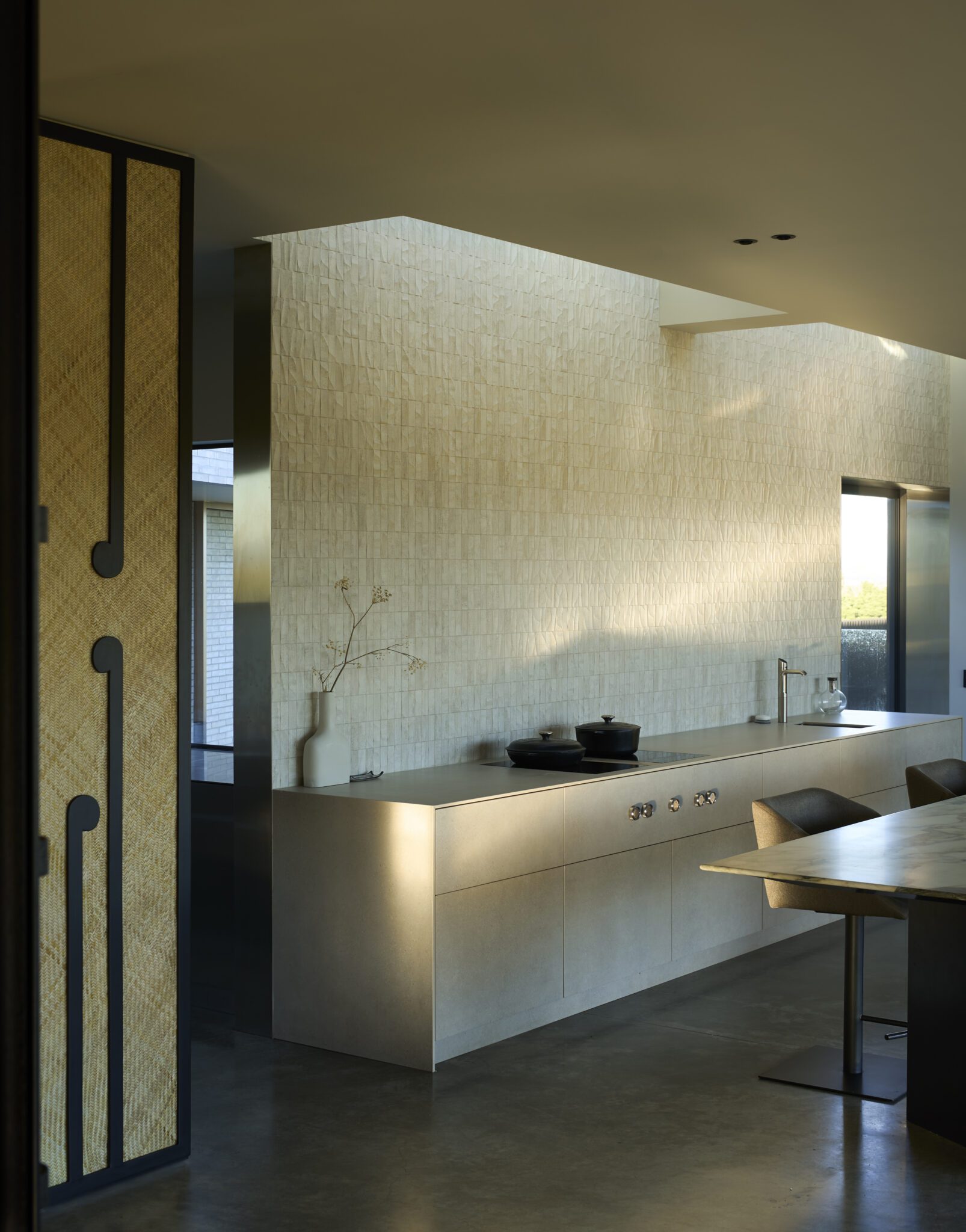
The kitchen exudes modernism with touches of Judd or Haller minimalism, but without the inherent coldness. Light wells above a splashback of Porcelanosa Nantes Caliza Mosaic tiles ensure that the uneven protrusions of the tiles are constantly activated by natural light.
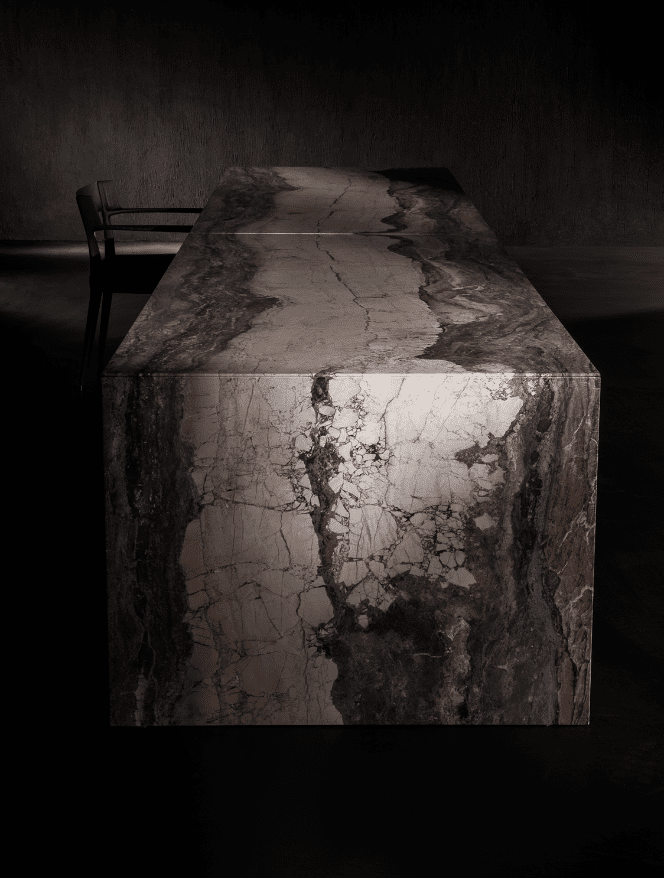
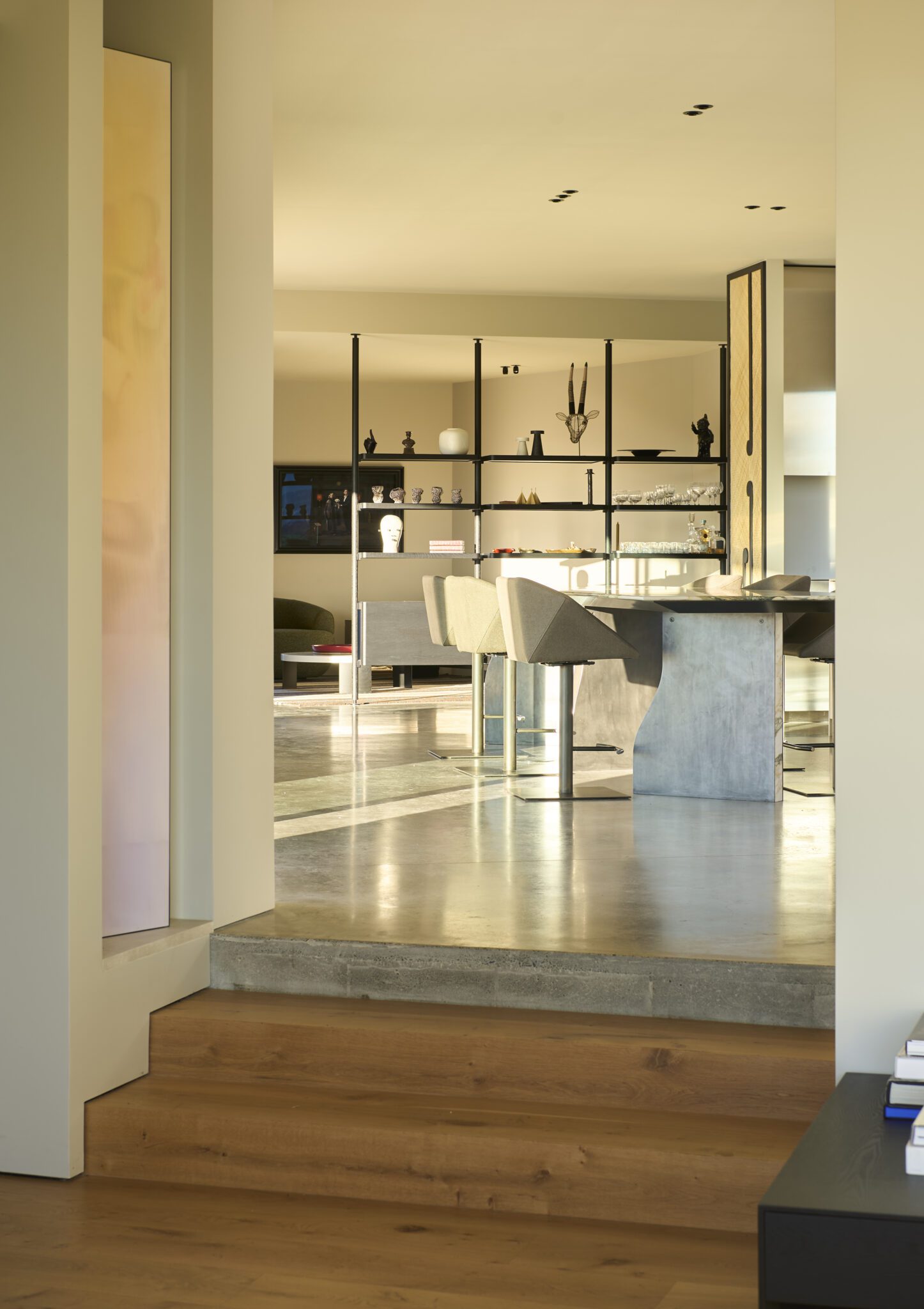
The impressive 4.8-metre dining table/kitchen island was designed by Case and incorporates stone inlays, its steel-blade legs subtly echoing limestone ridgelines.
“There’s a play between solidity and refinement,” the designer notes. “Stone feels heavy and permanent, but when you detail it finely enough, it can feel surprisingly light.”
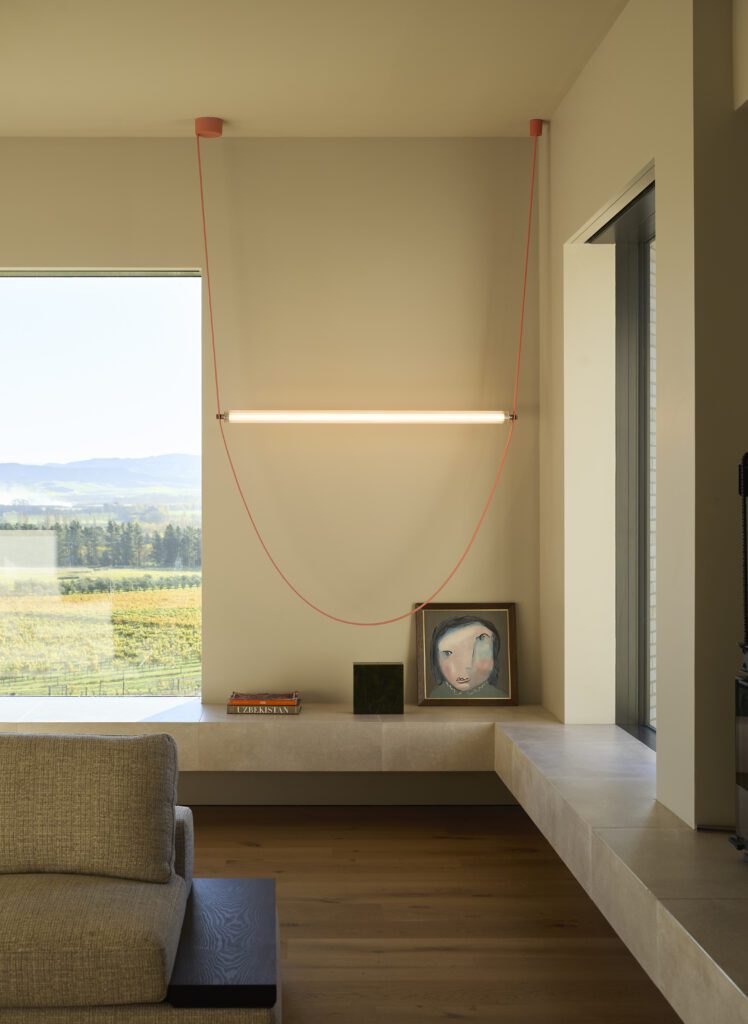
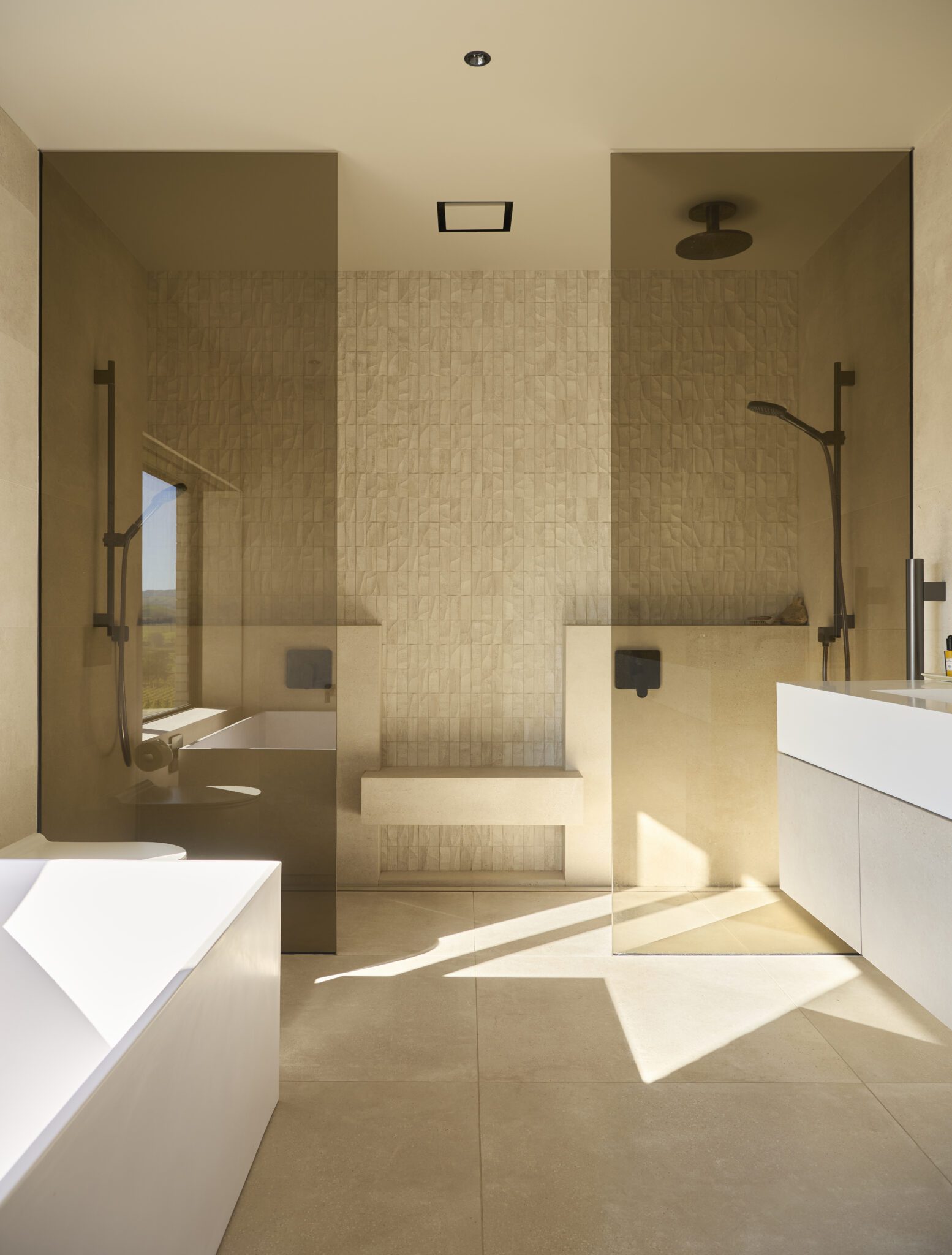
Semi-translucent mirrored surfaces cladding some of the storage spaces and a clear, red, washbasin in the main bathroom soften the inherent solidity of the materials.
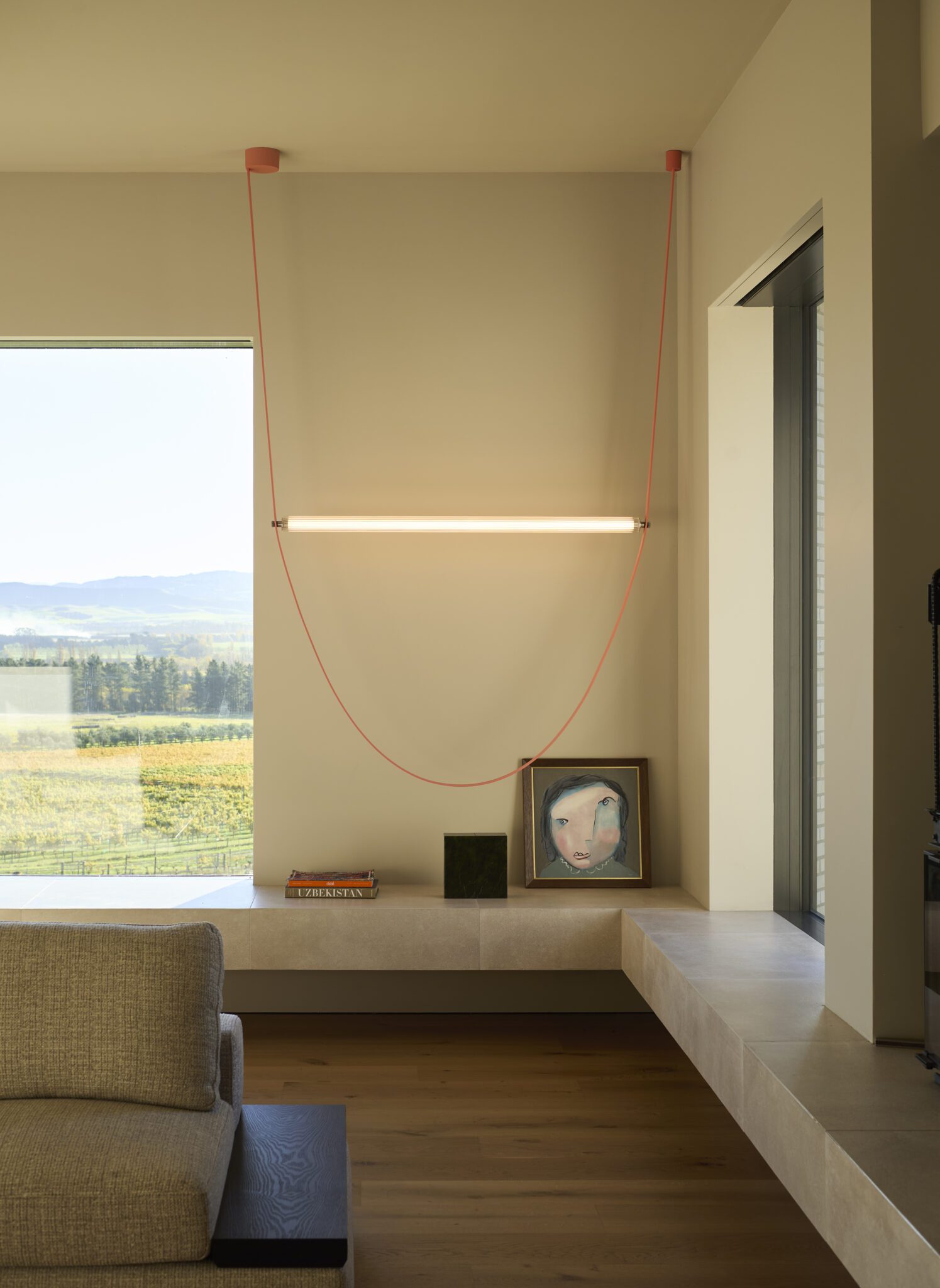
There is also plenty of sculptural balance at play here: in a bench around the hearth and in decorative elements in one of the bathrooms, offering a floating sense of equilibrium. This is echoed by one of the owners’ artworks (a red, U-shaped, wall-mounted piece), which is, in turn, emulated by the Flos Wireline pendant light by Formafantasma and the impressive curved firewood storage beside the cast-iron firebox.
This Case Ornsby project succeeds on many levels. It is full of architectural moves and variety without feeling hectic. It is playful and joyous while remaining sophisticated. Most of all, it responds to the landscape through metaphor and ideas rather than omission and camouflage.
Words: Federico Monsalve
Images: Thomas Cannings
Project Credits
Architecture: Case Ornsby Architecture
Build: Clive Barrington Construction
Landscape: Henry Blakely Landscapes
Cladding: Canterbury Clay Bricks
Paint: Resene
Lighting/Furniture: ECC
Cabinetry: Dawson & Co.
Pool: Mayfair Pools