

Pauanui Beach House

Bigger isn’t always better, but if it’s blonde, and beautiful to boot, it just might be. 

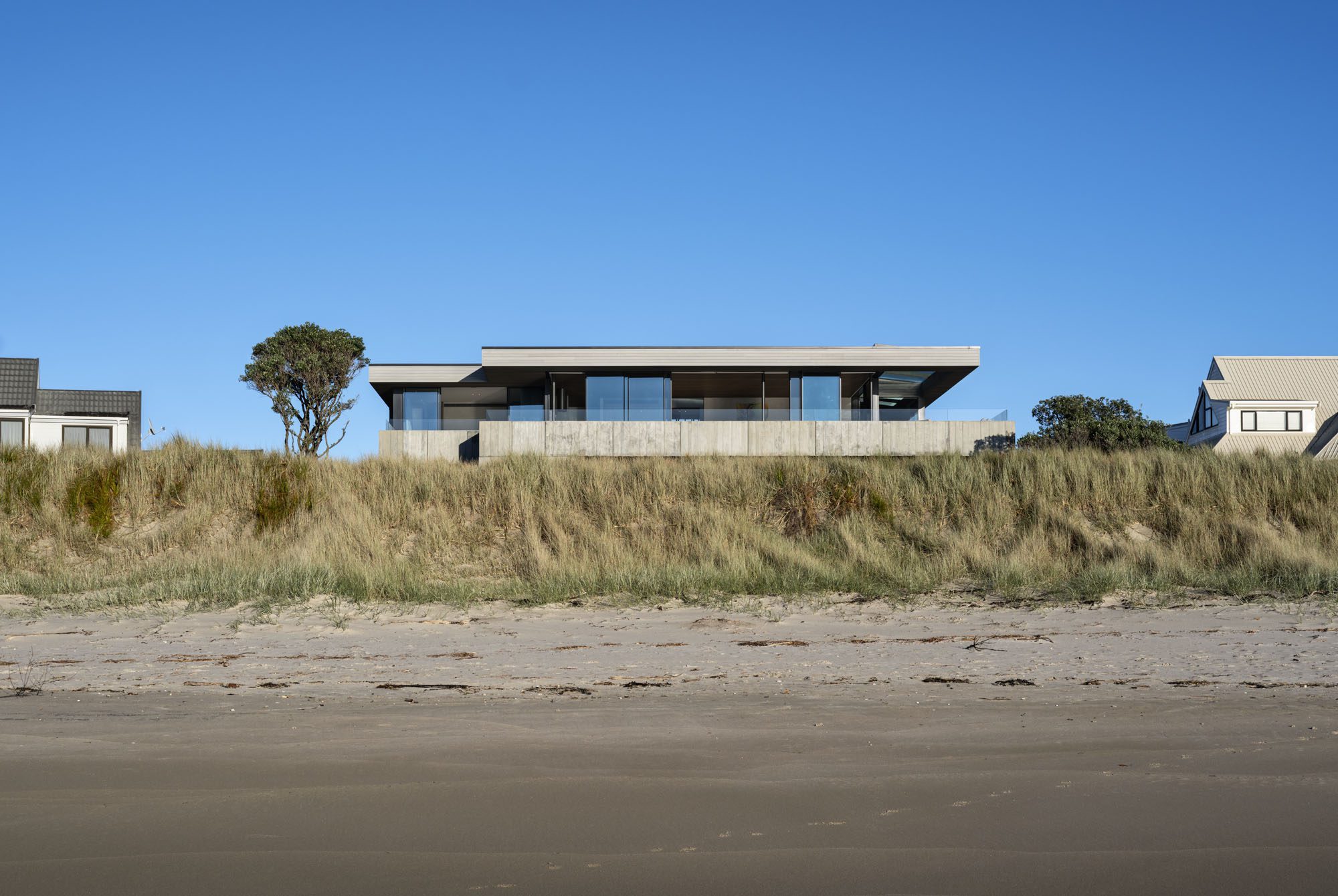
Situated on prime real estate on the popular Coromandel beach of Pauanui, this house stretches across a double-width section. Like the town, which gives off an old-school vibe with its red roads, sleepy cul-de-sacs, and visitors ambling around on bikes, the house is a relic of the 1970s. But you wouldn’t know to look at it.

“It was a cedar-clad, flat-roofed, two-level concrete structure,” says Julian Guthrie of the original dwelling. “On the ground level, there was an indoor pool; it was kind of a ‘party house’ scene.” 

A 1990s renovation hadn’t improved the house, which is one of the biggest in Pauanui, but had involved an exterior reclad and the addition of a large rumpus room where the party pool had once been. The cladding and timber framing was at the end of its life by the time the house went on the market again, but that didn’t put off Julian’s clients, who had a smaller house up the road and were keen for something new that could accommodate several generations at once.

A complete rebuild of a 1970s home, the brief required architect Julian Guthrie to completely reimagine the existing structure to create a generous, multigenerational holiday home. The original concrete structure was retained, forming the bones for the new design.
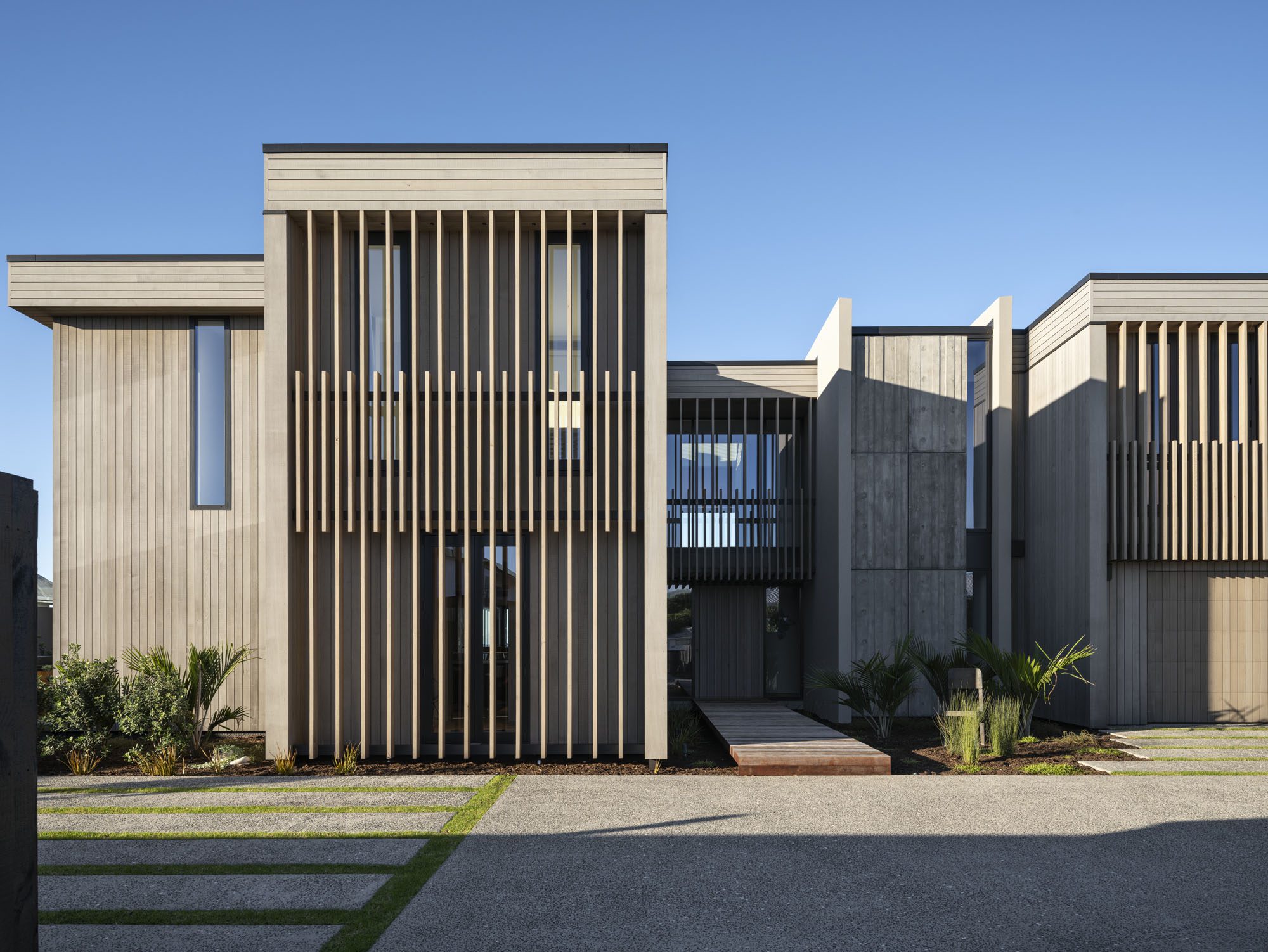
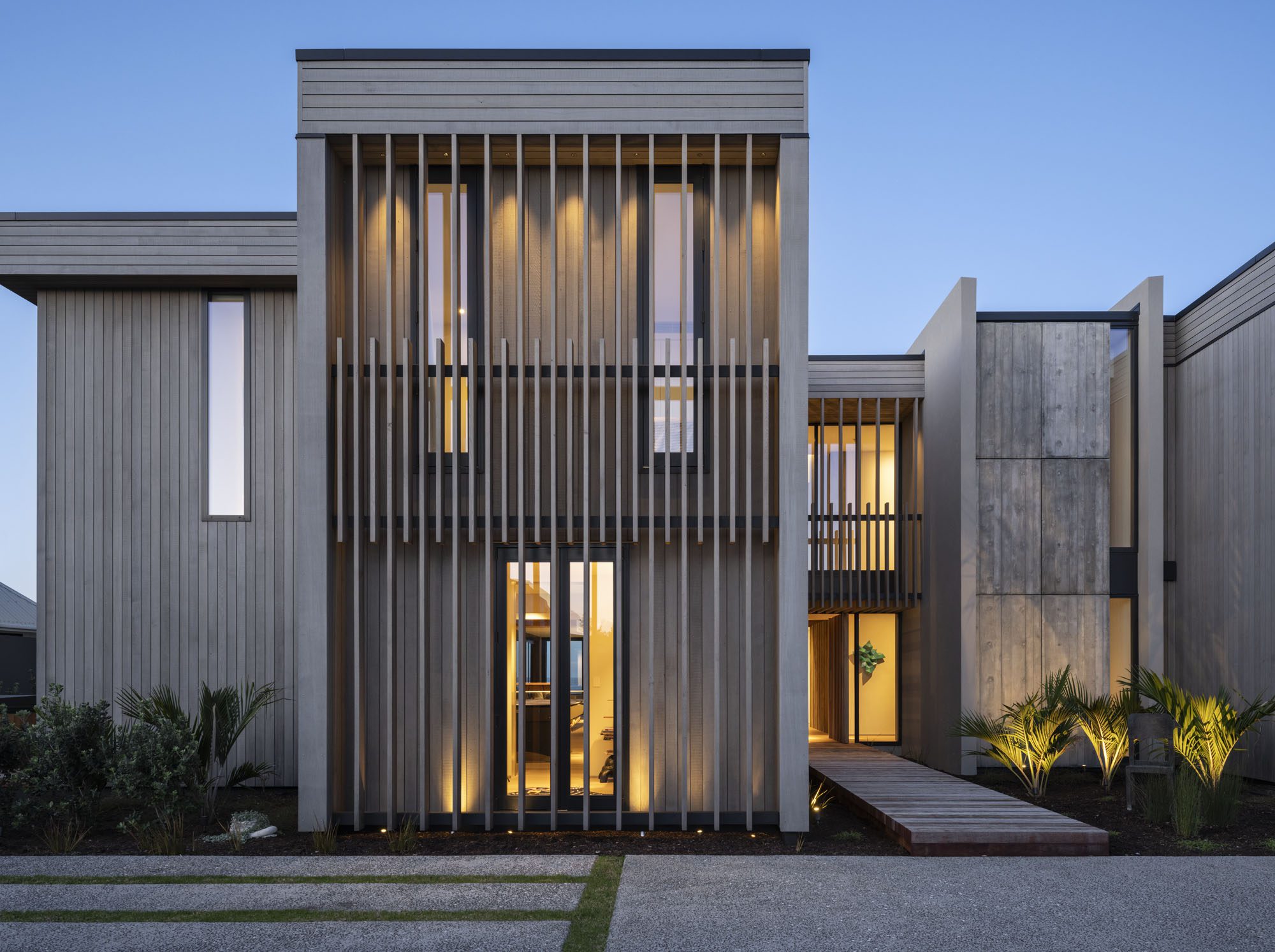
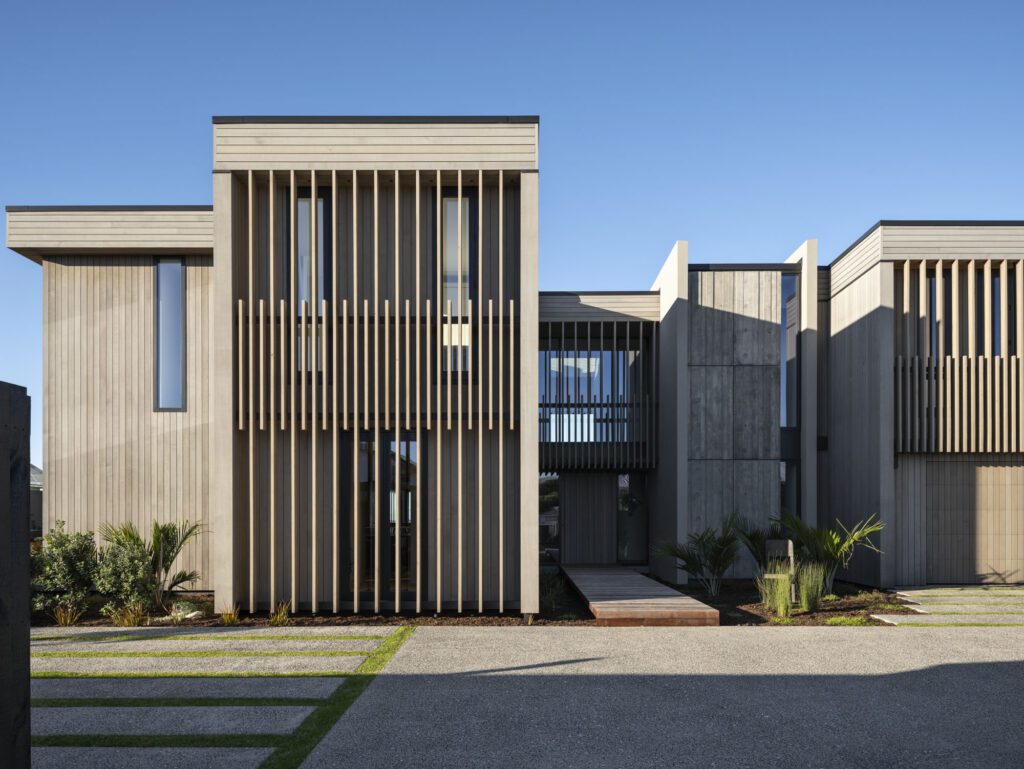
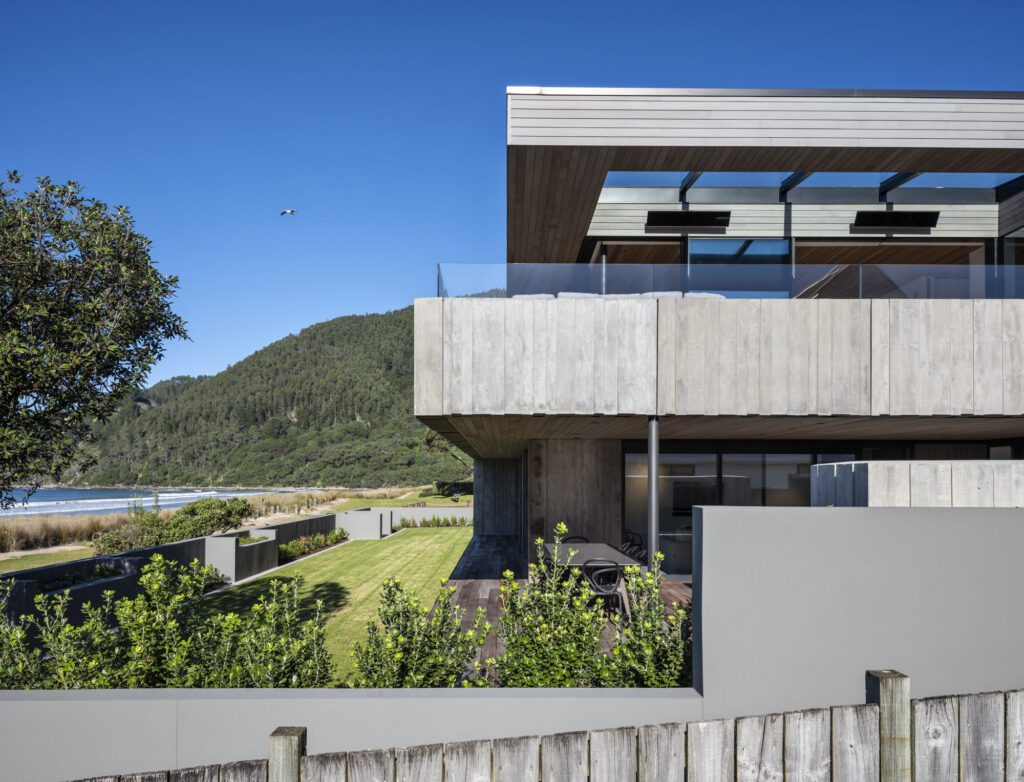
On the western façade, facing away from the coast, a vertical timber-slatted screen filters the light and provides privacy from adjacent homes.

The buyers, who love clean lines, modern art, and minimal decoration, asked the Auckland architect to salvage what he could of the existing dwelling. The concrete structure was sound, so it remained, and gave a framework to Julian’s vision.

“Letting the building be quiet and the view do the work,” was the goal, Julian says.

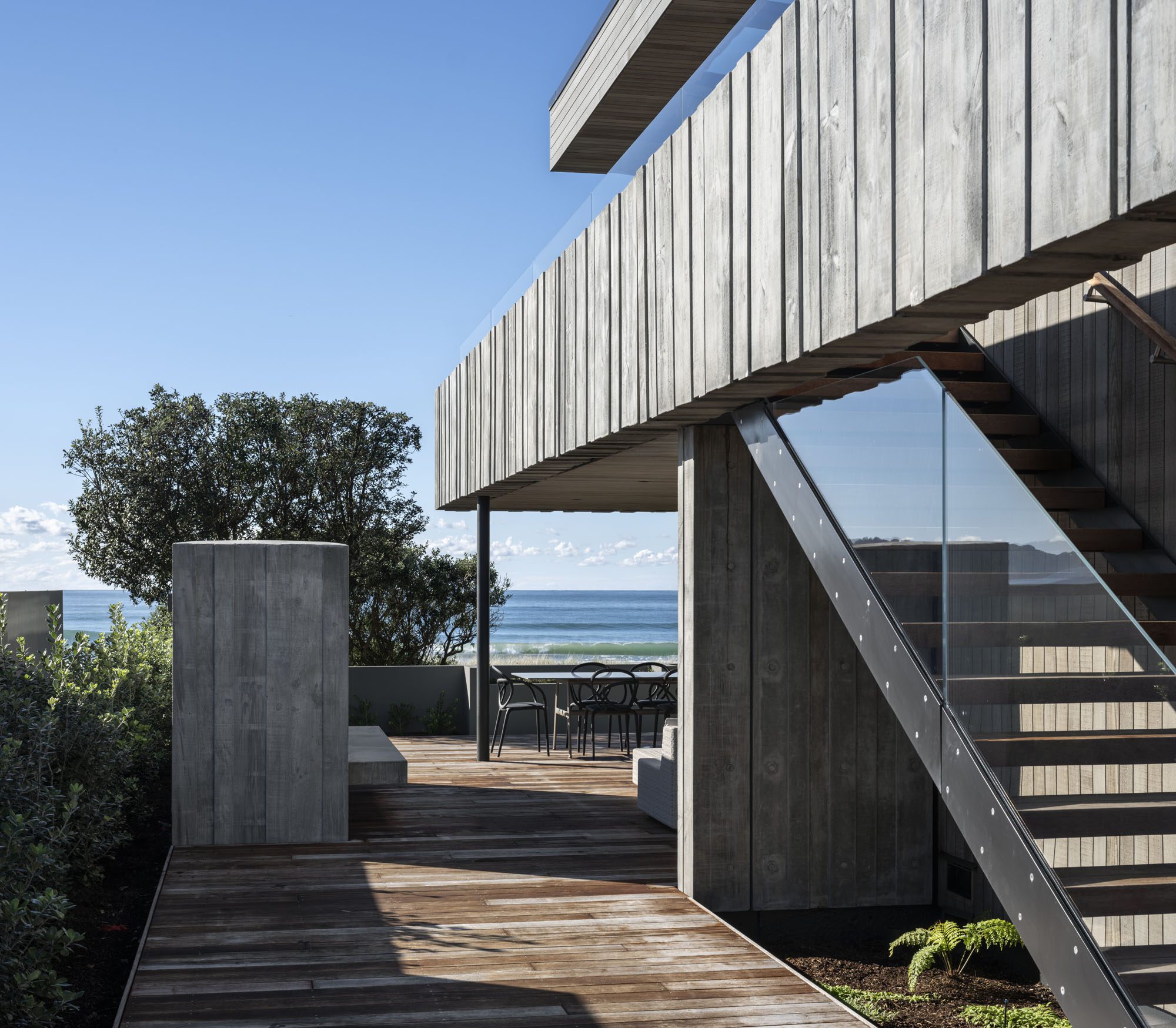
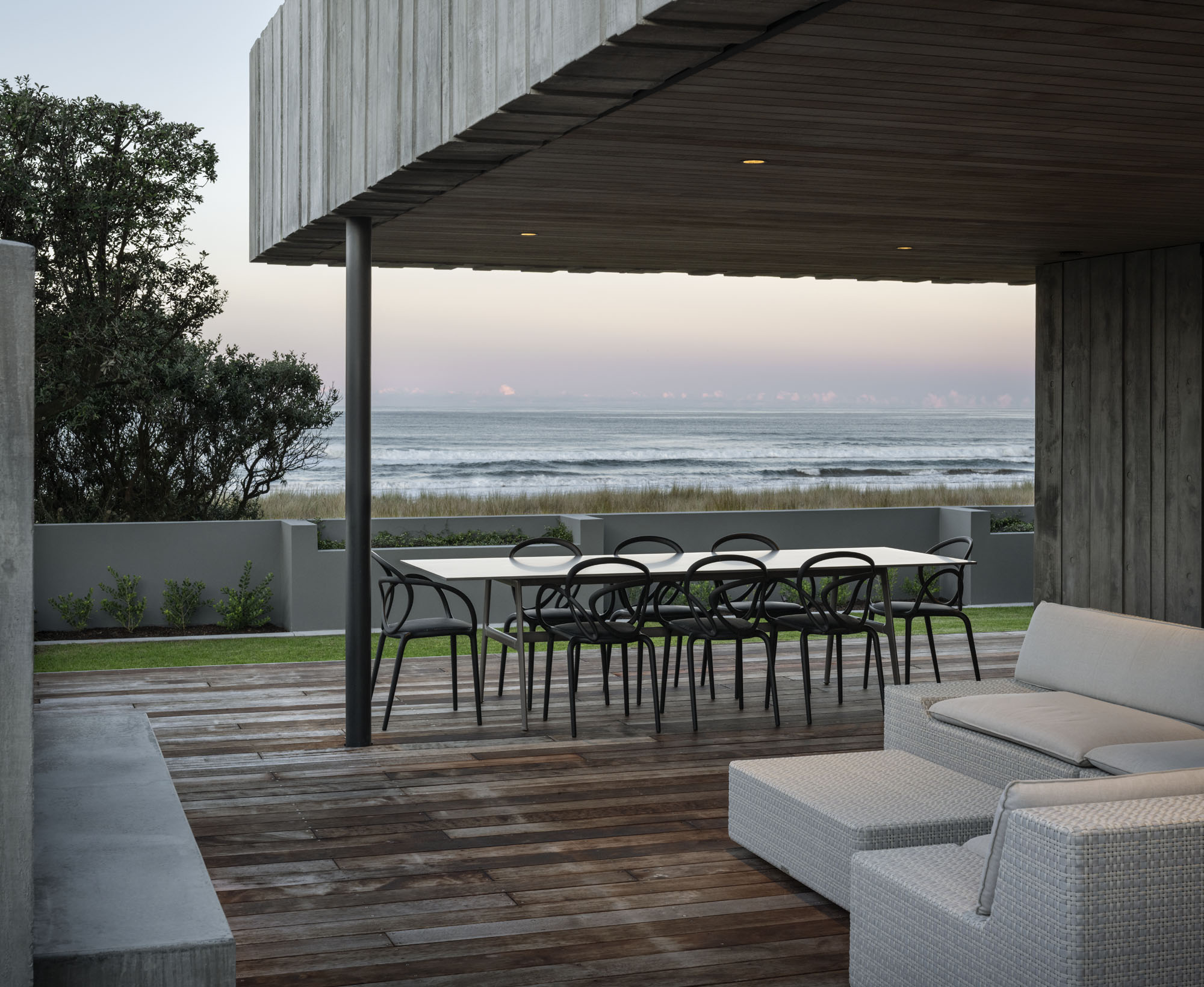
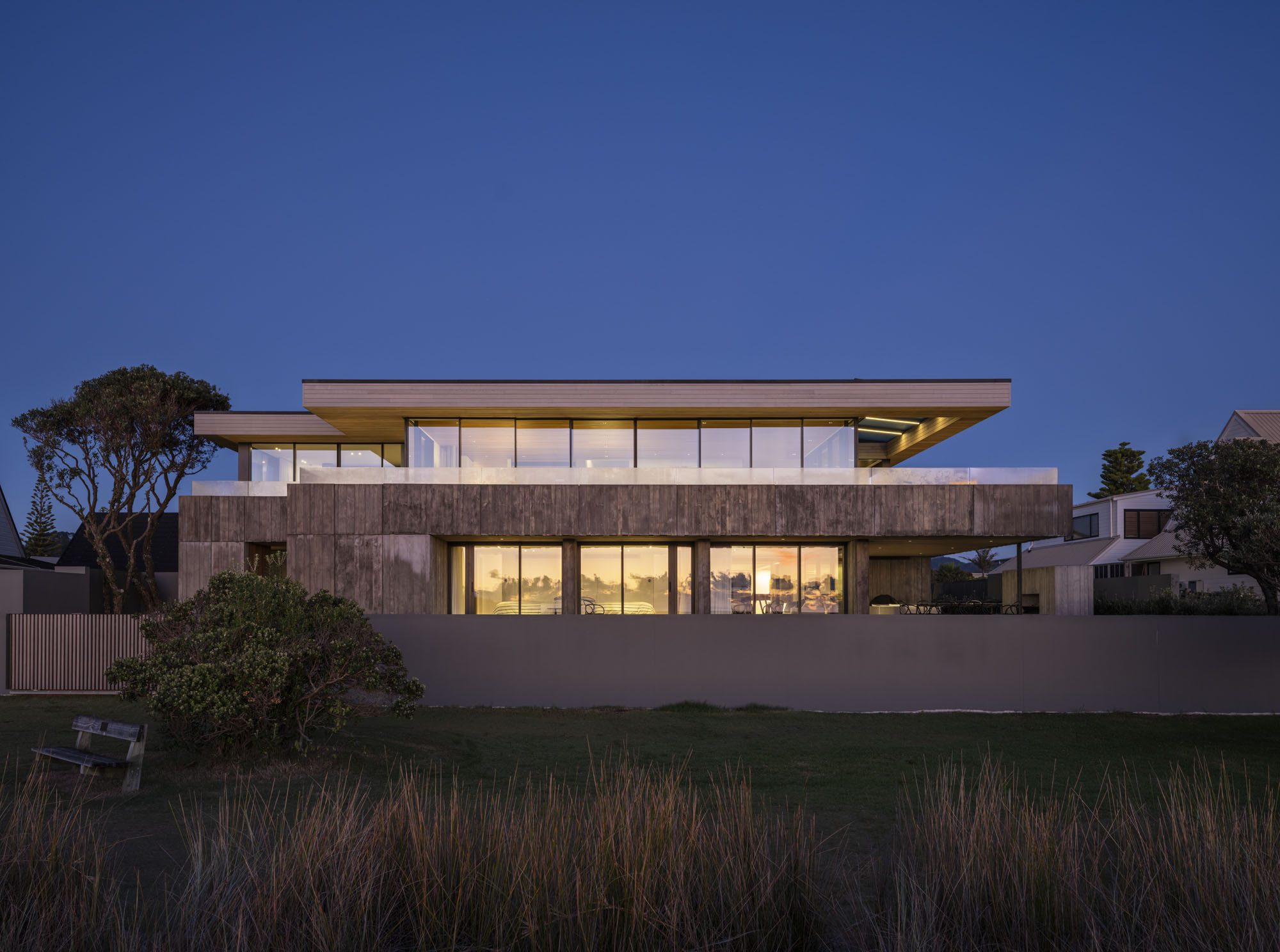
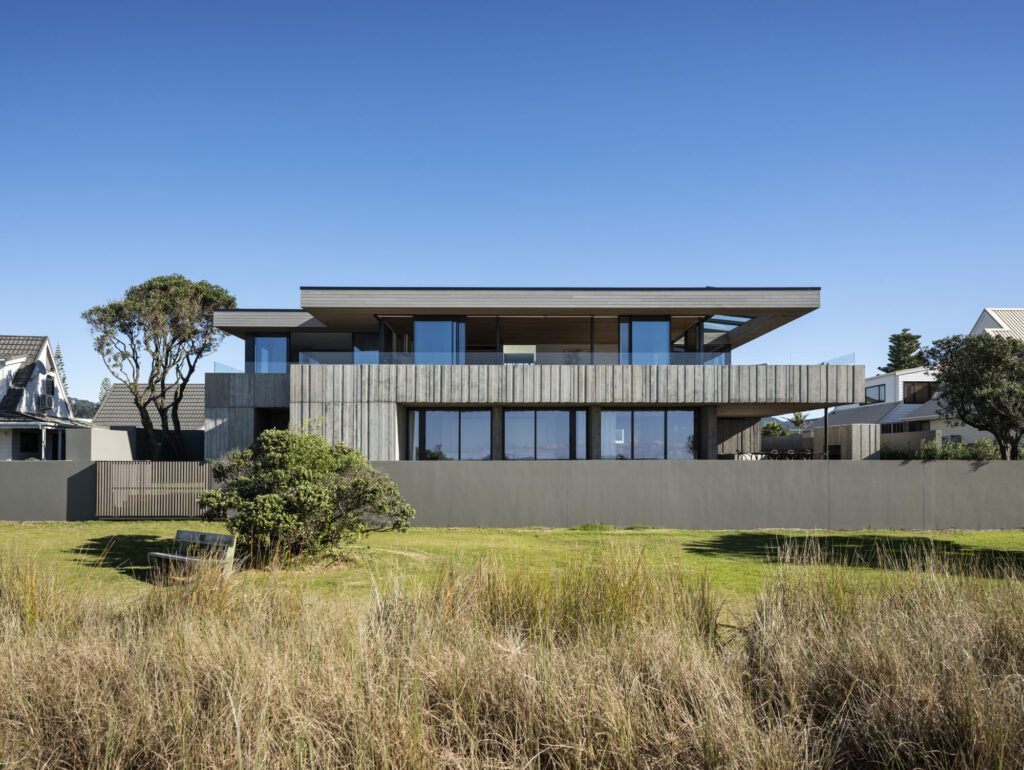
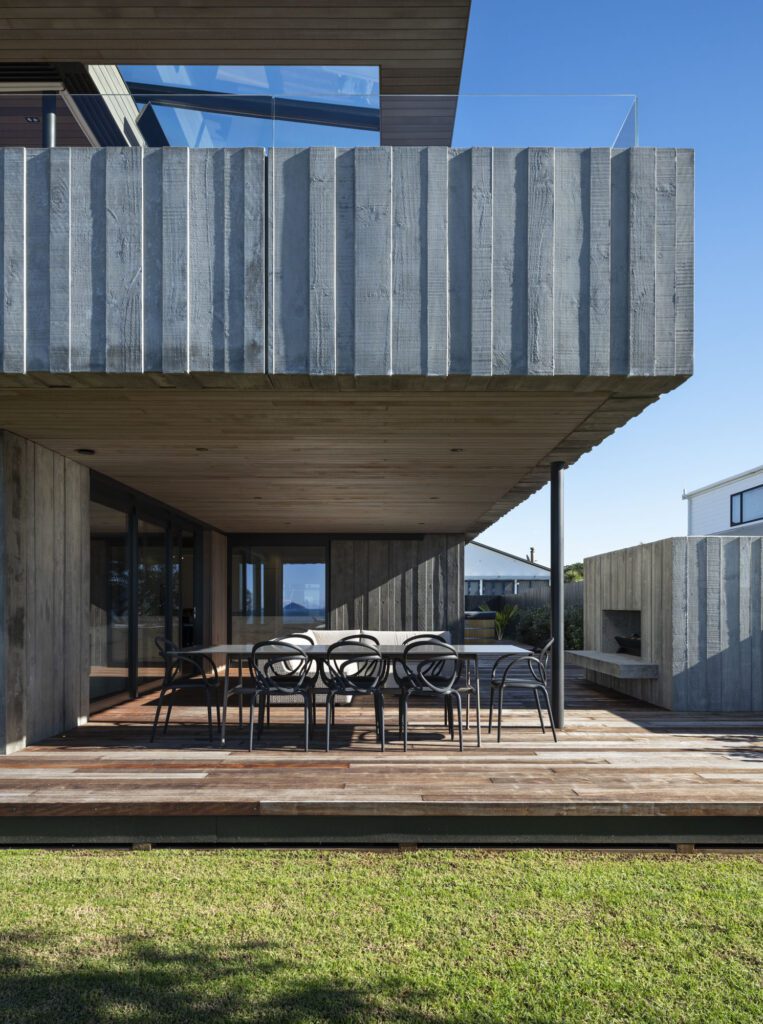
The team at Julian Guthrie Architecture was scrupulous in ensuring the home would sit in the landscape rather than stand out; simplicity and minimalism were prioritised when it came to each architectural detail. A palette of grey concrete and grey-oiled cedar was conceived to ensure a recessive exterior. Custom-made cement and fibreglass textured panels were specified for the seafront side of the house, with all pipes and gutters hidden behind them for a minimalist aesthetic.

“We like that it has a bark-like hue, lots of texture, and will improve with weathering,” says Julian.

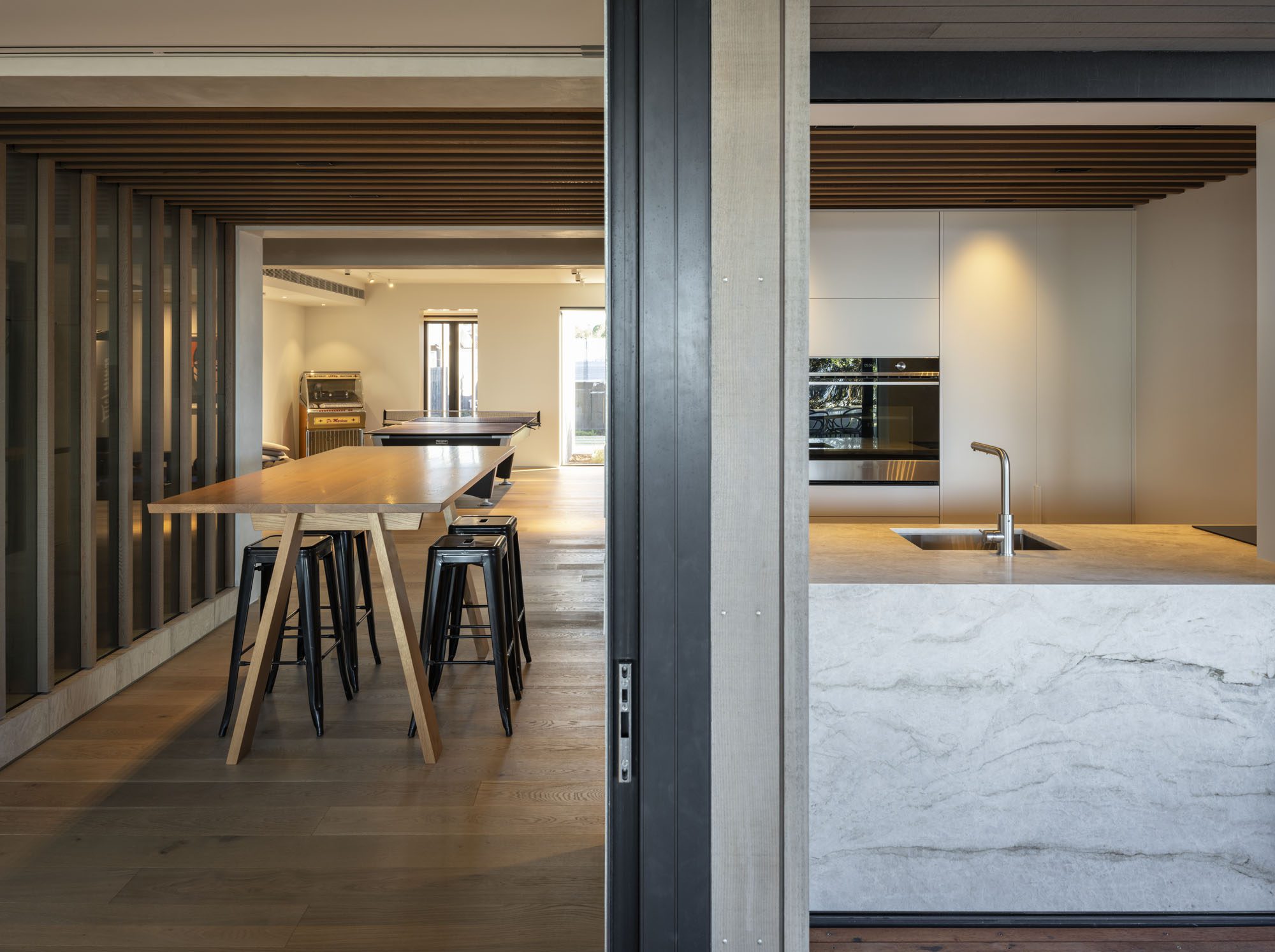
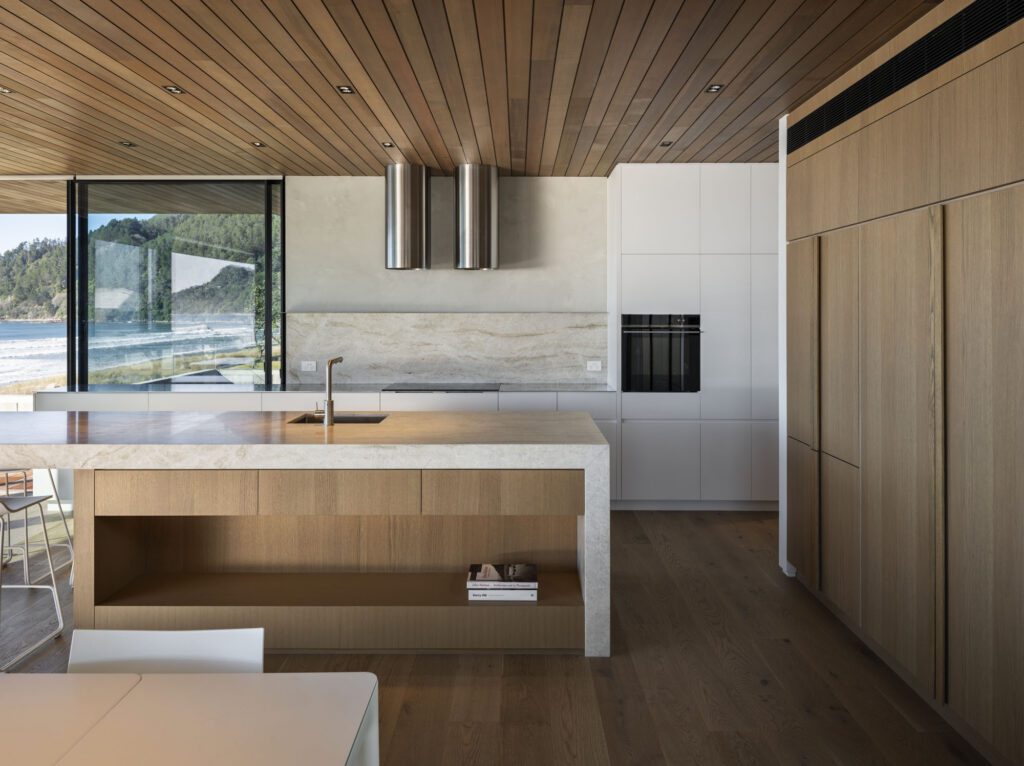
The kitchen tapware is from Plumbline, and the cabinetry, by Whangamata Woodworks, is a VidaSpace veneer.

On the inland side of the house — the western elevation — cedar covers the original structure. Matching vertical timber-slatted screens filter light and provide privacy here, too. The fine-framed, full-height glazing is sleek and modern.

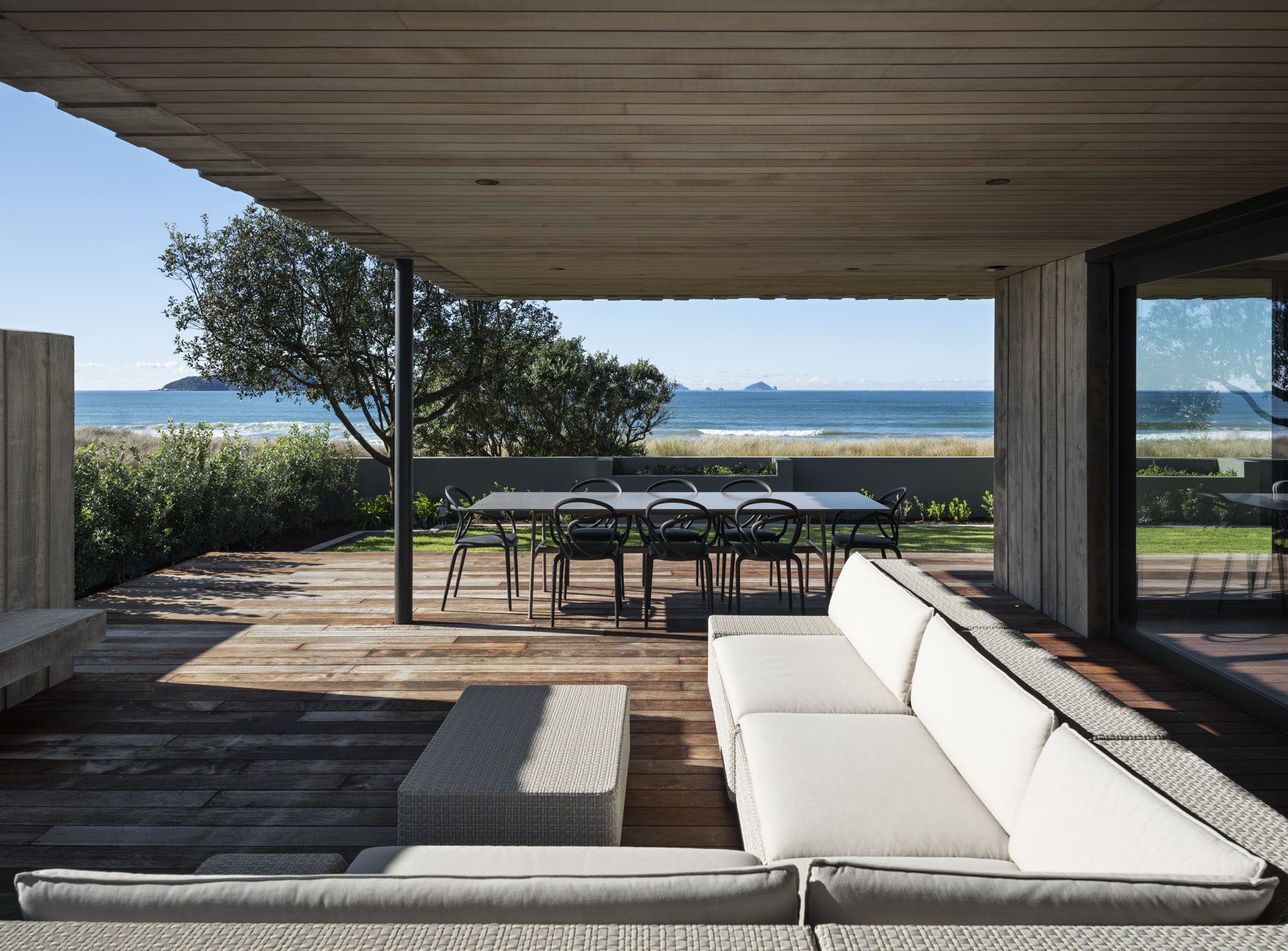
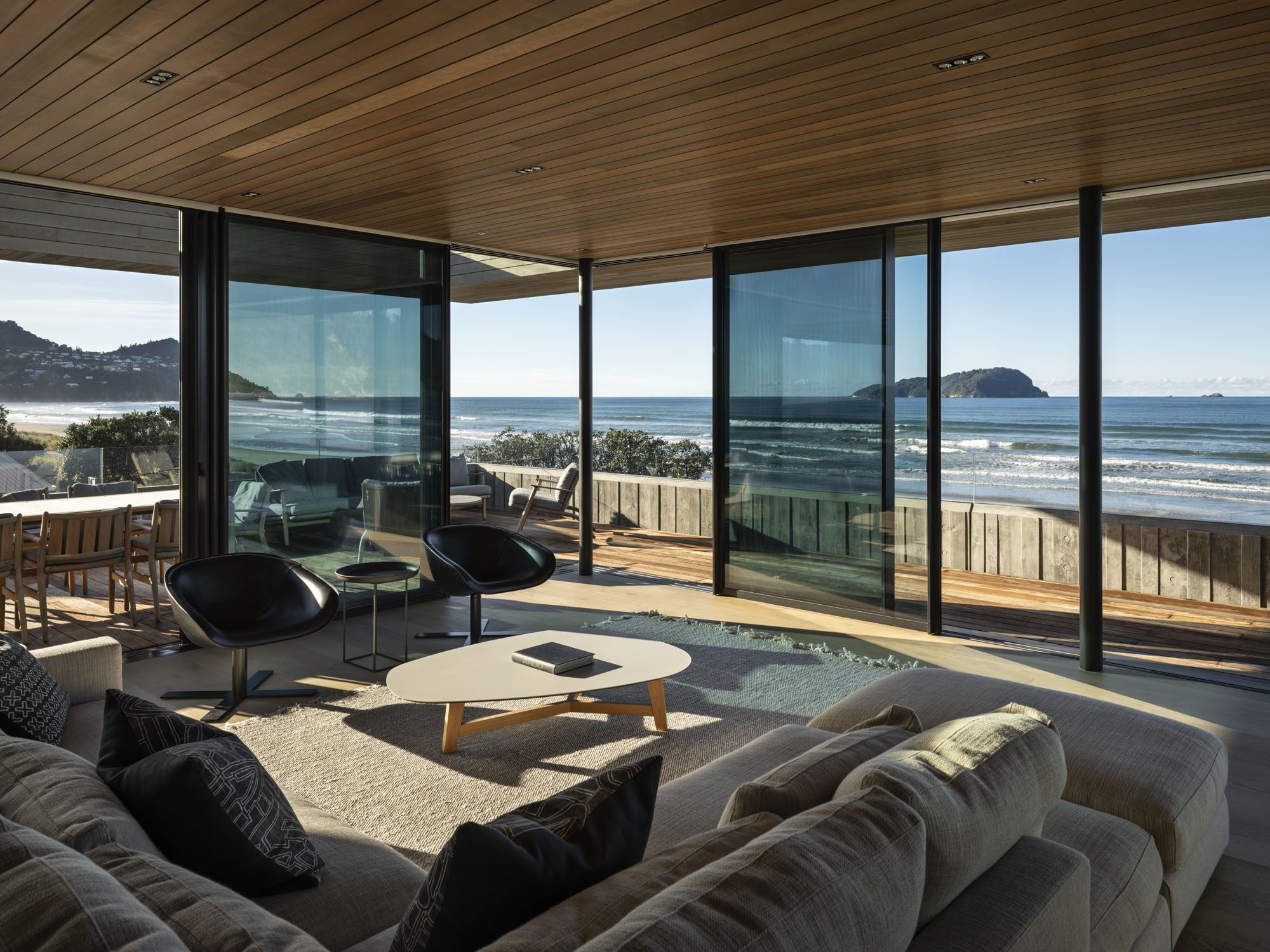
To top it all off, an impressive timber roof is cantilevered to remove the need for unsightly posts. Its deep eaves provide shade and cool spaces on the balconies for al fresco hangouts and lend a minimalist sophistication to the plan.

“It’s a restrained feel that proves timeless,” explains Julian. “The house hovers above the tussock of the sand dunes and recedes rather than jumps out. You have Lockwoods and classic beach houses surrounding the house that almost leap out of the landscape more.”

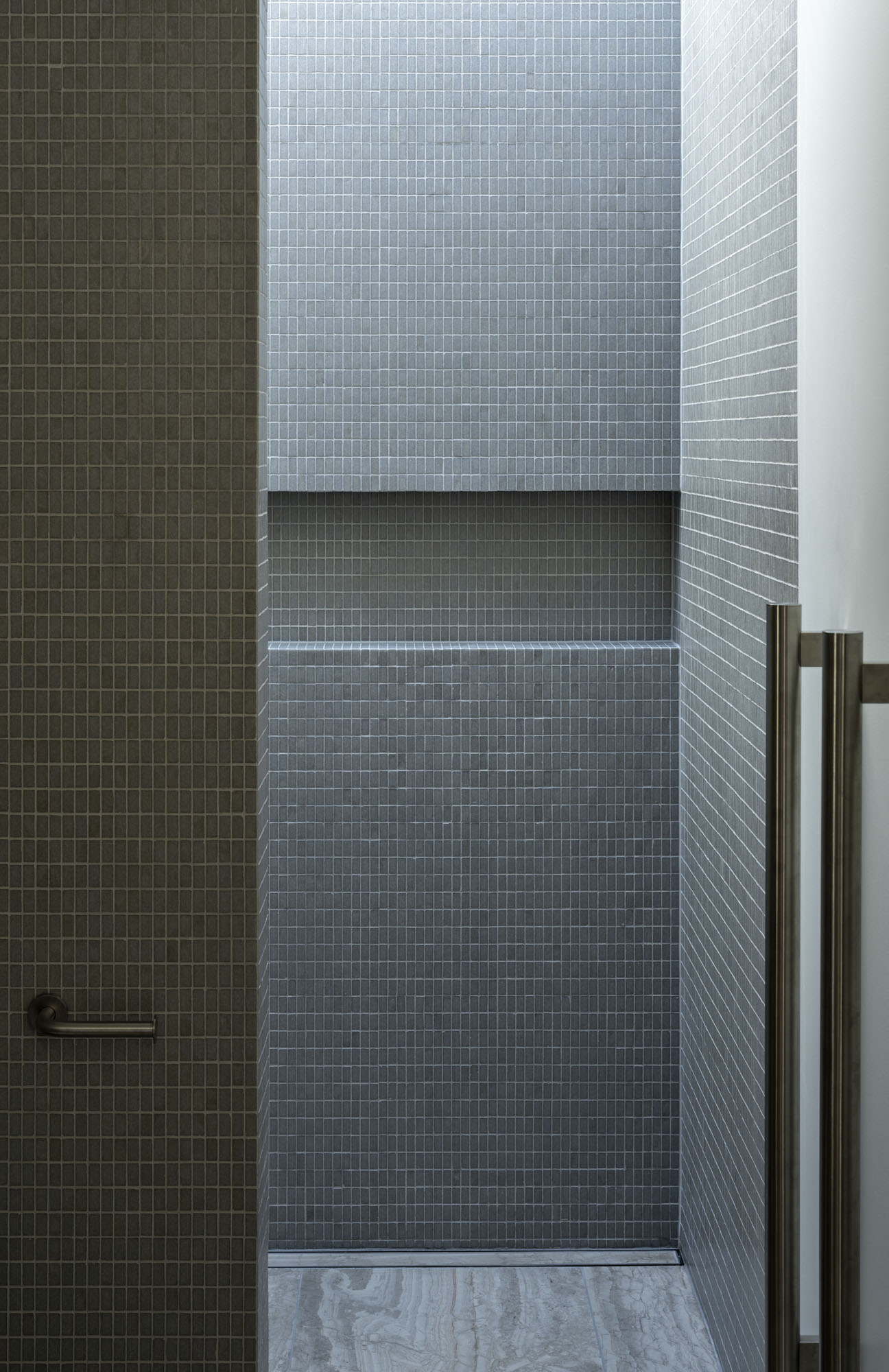
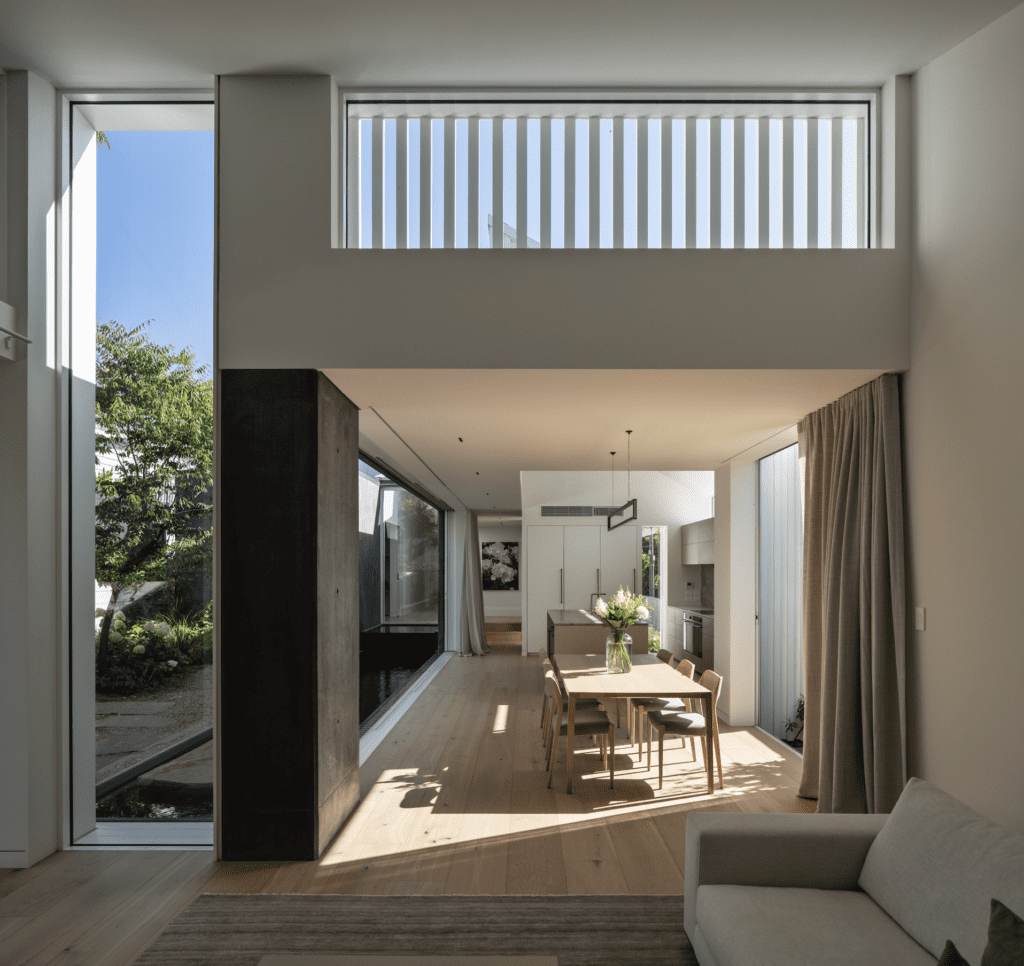
The interior features sand-toned Taj Mahal stone, subtle mosaic and plaster textures, and greyed oak flooring to create a warm, minimalist feel within the large spaces.

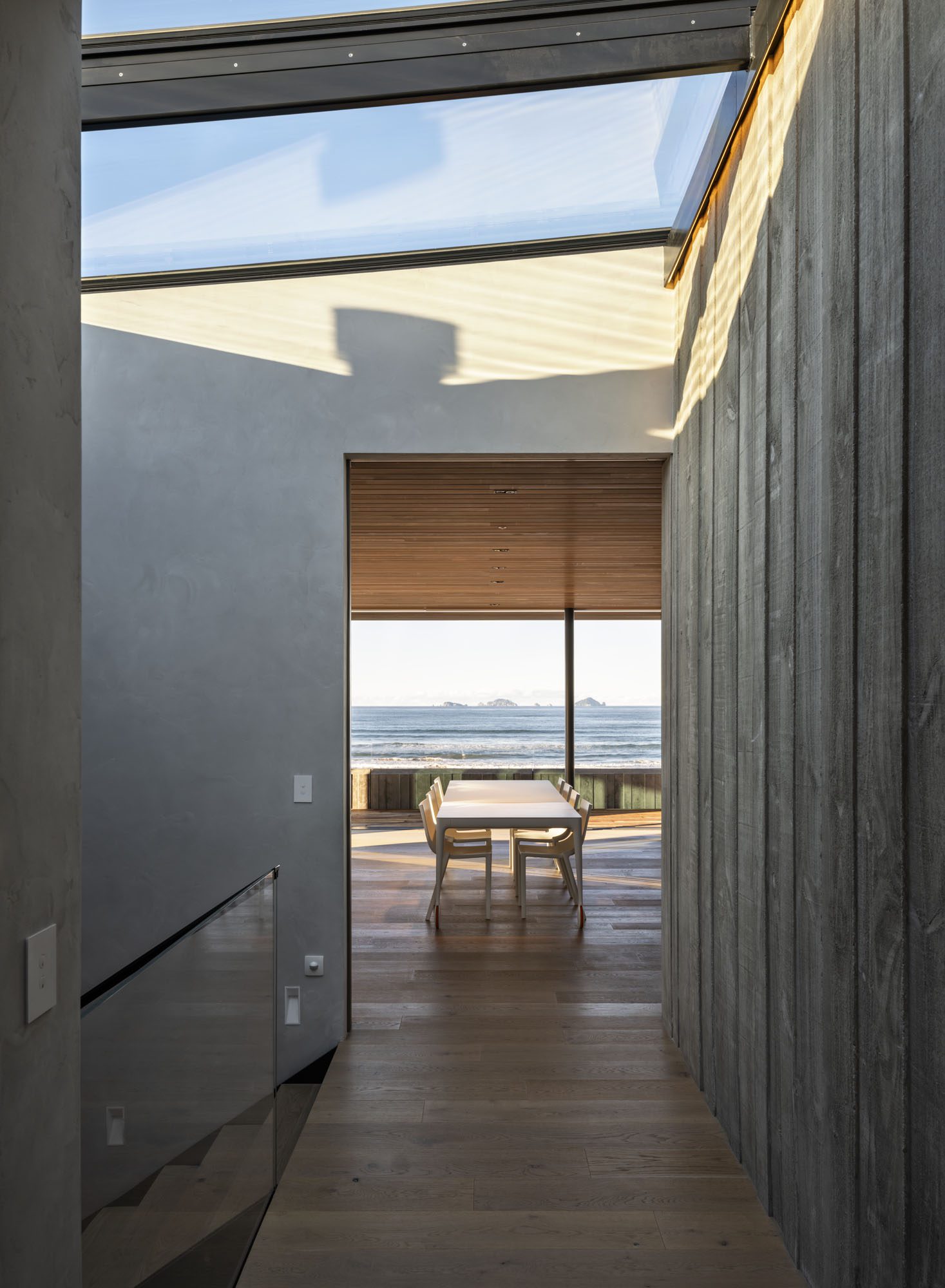
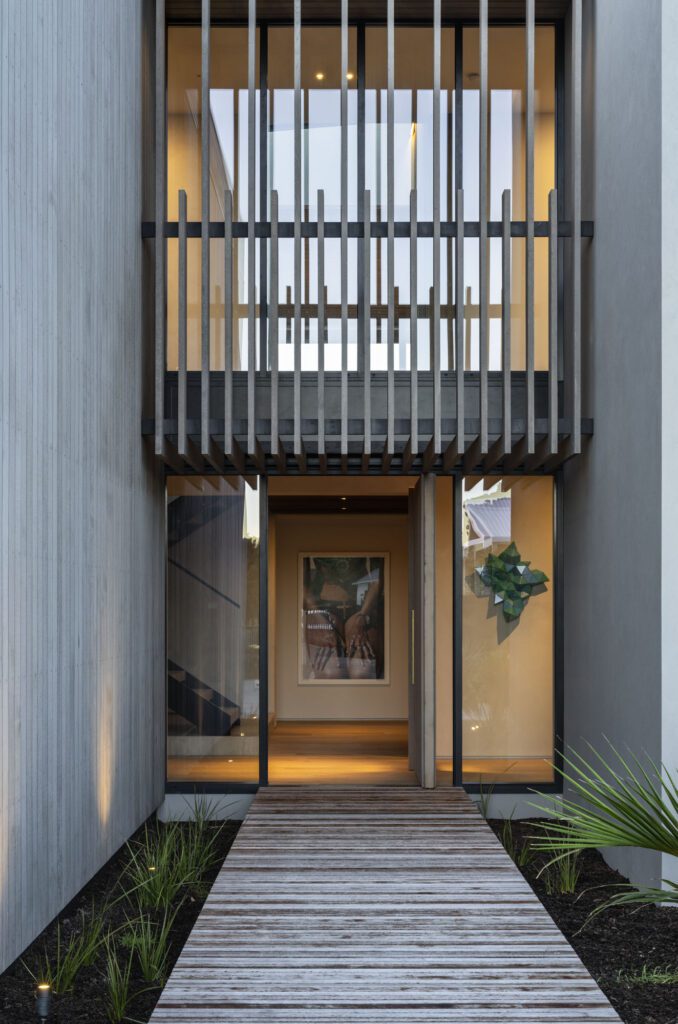
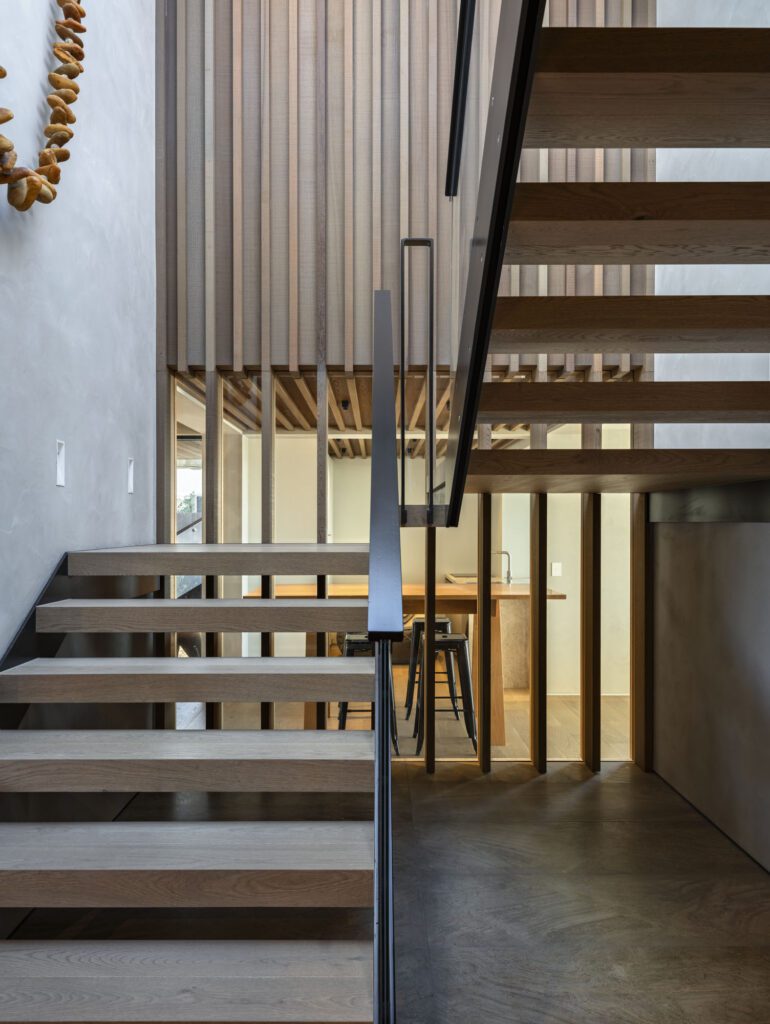
Inside, the same soothing colour scheme has been specified. Visitors arrive at the bottom of a beautiful, blonde stairwell cut out of an interior cube. Light pours down from the top, thanks to a glass ceiling, casting shadows across a sculptural steel frame and handrail and a stone plinth at the bottom. 

One one side of the stairwell, a concrete wall brings the grey of the outside in. It was one of the first things created on-site and the in situ pour was complicated, but now it’s a textural feature that gives the building a solid, central core. 

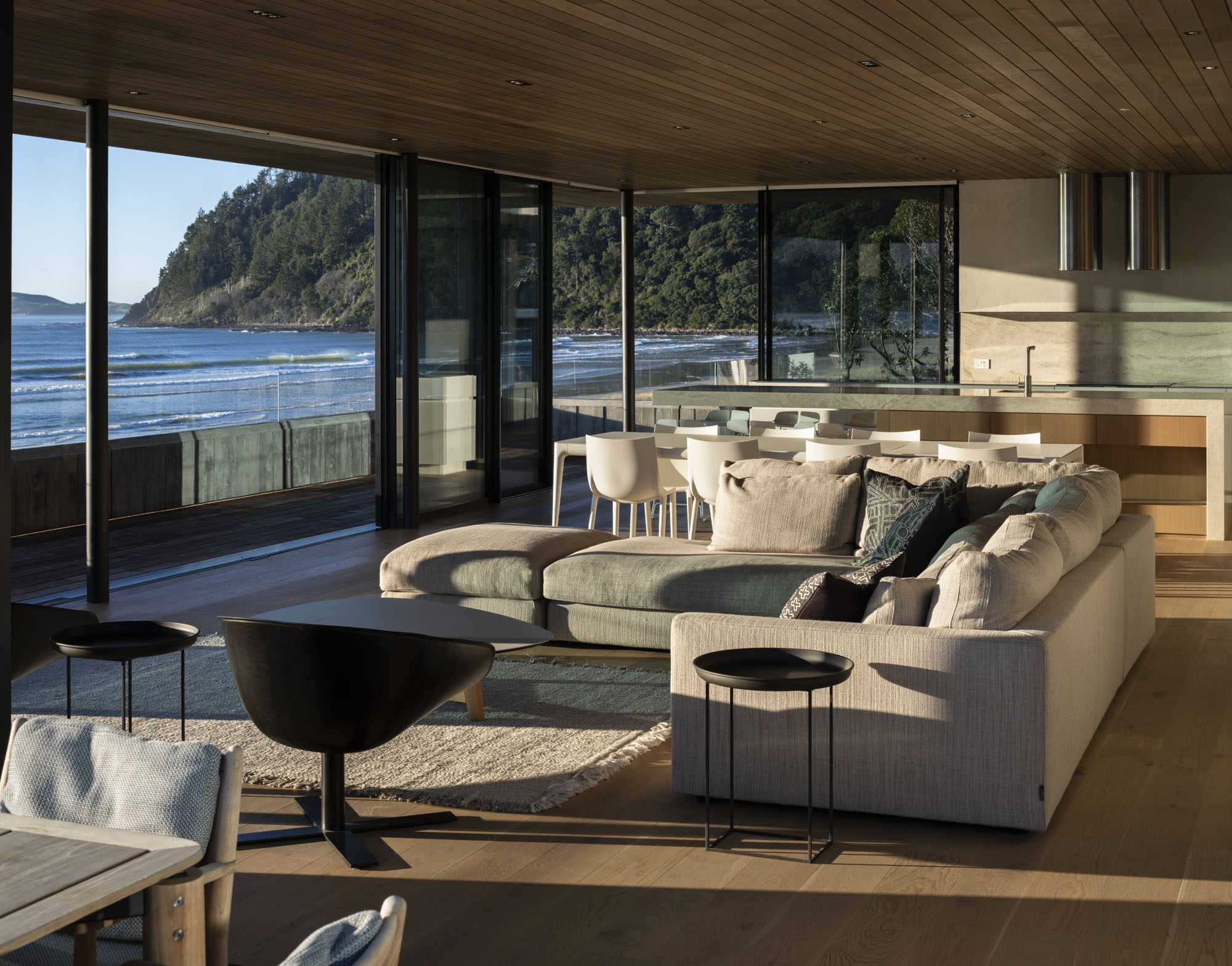
Upstairs, a luxurious living space — more art gallery than beach house — opens up to 180-degree views that include Tairua township and the ocean.

“It provides a nice backdrop for contemporary art,” says Julian of the sandy palette throughout. “The view does all the talking when you enter that living space, with that incredible open horizon.”

A rich palette of cast concrete and grey-oiled cedar defines the exterior, with materials flowing from inside to out to blur the boundaries between spaces.

The kitchen’s beige-toned Taj Mahal stone is paired with Forté greyed oak flooring and panelled ceilings. The furnishings are taupe and off-white. The kitchen island has a cantilevered table at the end of it, creating a diving board effect that stretches towards the sea. 

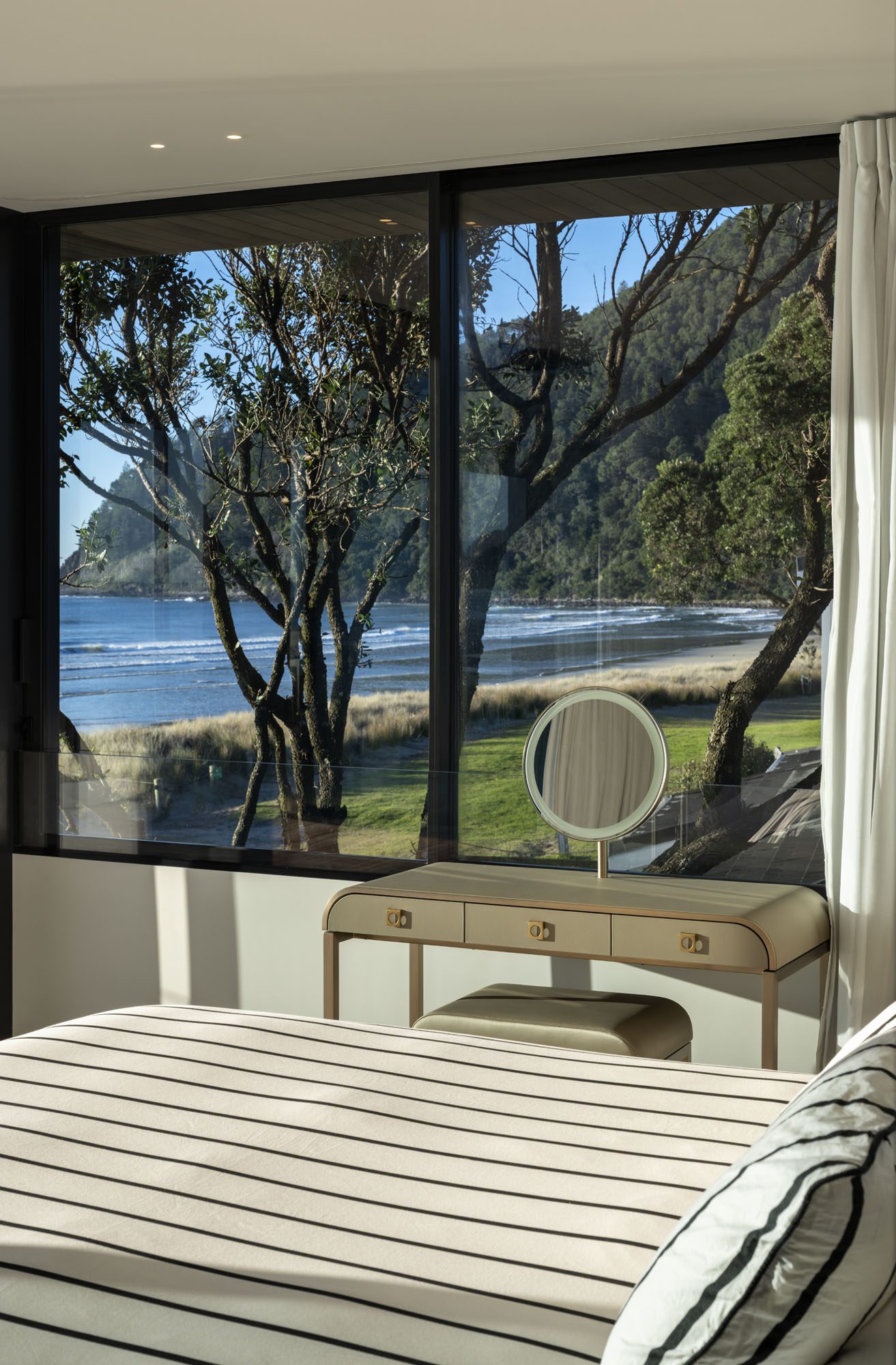
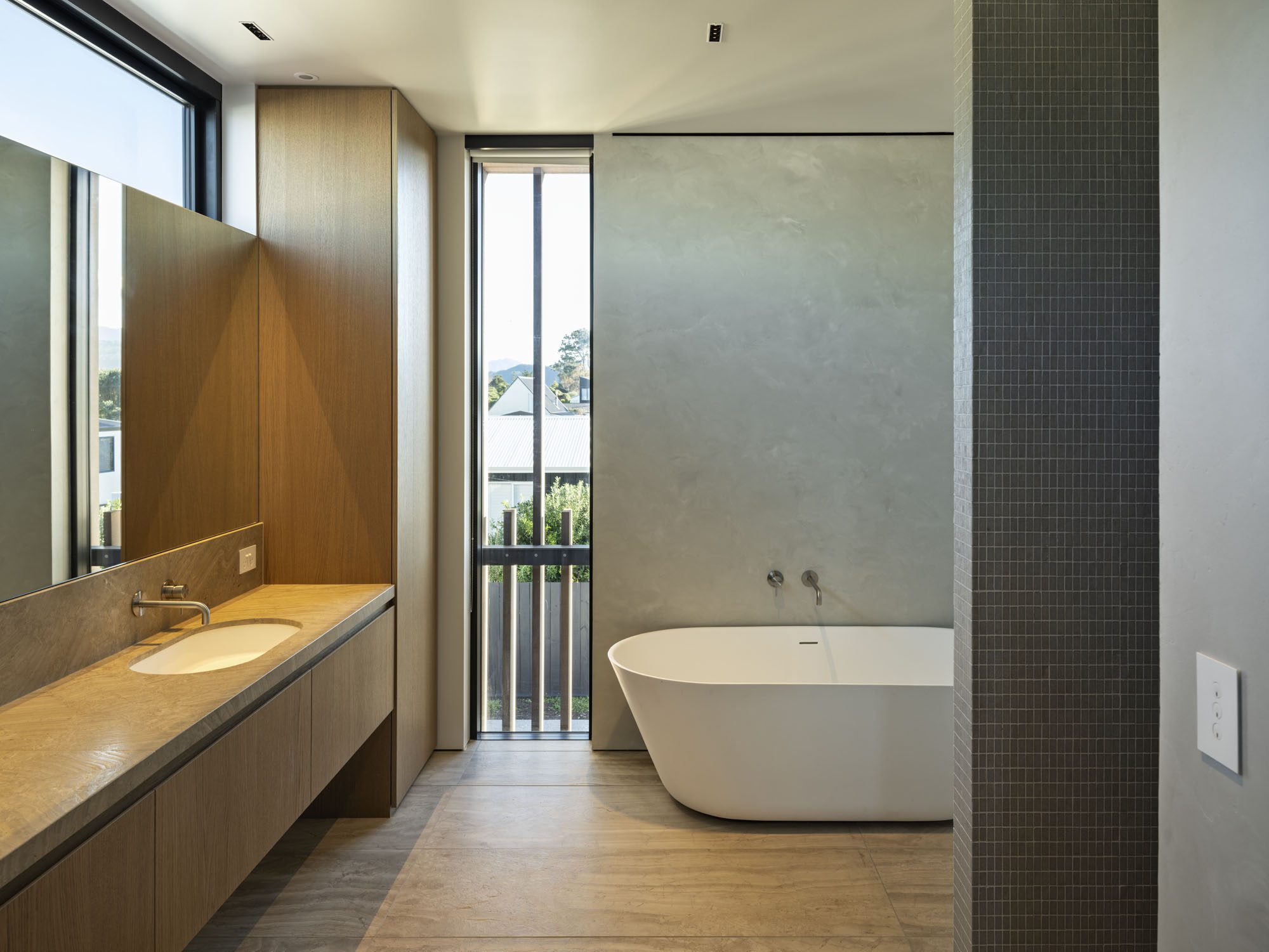
In the bathrooms, fossilised stone floors and soft mosaic tiles are in tune with the scheme, as are the oatmeal sisal floor coverings, plastered walls, and timber cabinetry throughout the bedrooms and other spaces.

“It’s difficult to take an old structure, worse for wear, not made with exacting standards, and stitch in a house like this,” explains Julian, who worked with local builders to get the construction just right. “You have to level floors and straighten walls, and negative joins need to be exact.”

In the end, the 1970s foundation of the house added to rather than took away from the design, the architect says. 

“It’s different to a new build, with a solidity on the lower level. Then the top level gives you a more open feel. I like the contrast; it’s a nice feeling.”

Words: Kirsten Matthew
Images: Simon Devitt

Latest video features

In the Coromandel, a home with a humble profile and a thoughtful design makes the most of a stunning location.

Built with awe-inspiring attention to detail, this Arrowtown home is a fresh interpretation of a familiar Otago rural vernacular.

This sculptural Northland bach is a perfect north arrow on a remote farm high above the sea.

With the sun on its bow and the community at its stern, this is a house in which the elements are always front of mind.

Trending articles

Design News

ALT by VidaSpace

VidaSpace is defined by a certain restlessness, a refusal to be confined by what has come before. With the launch of ALT, that mindset finds
Homes

Home of the Hills

In the Bay of Plenty settlement of Te Puna, a compact dwelling channels the enduring architectural language of the rural shed — robust and quietly
Architecture For Sale

Grey Lynn Light Catcher

Positioned within one of Grey Lynn’s tightly held streets, this reimagined villa by Jose Gutierrez Architects presents a compelling opportunity to acquire an award-winning piece