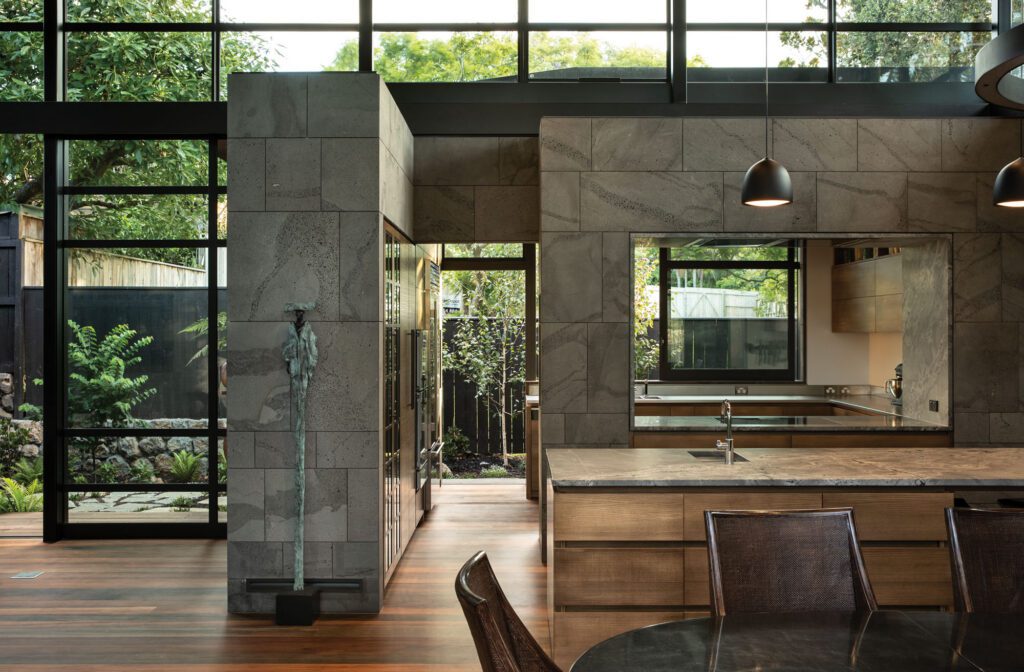
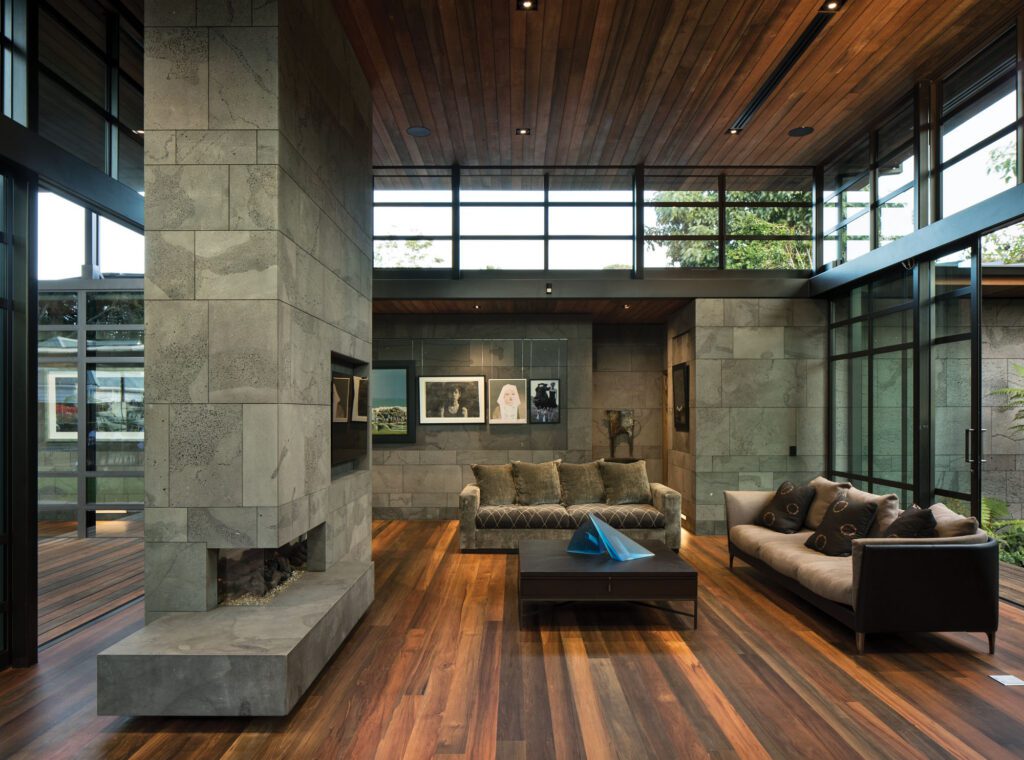
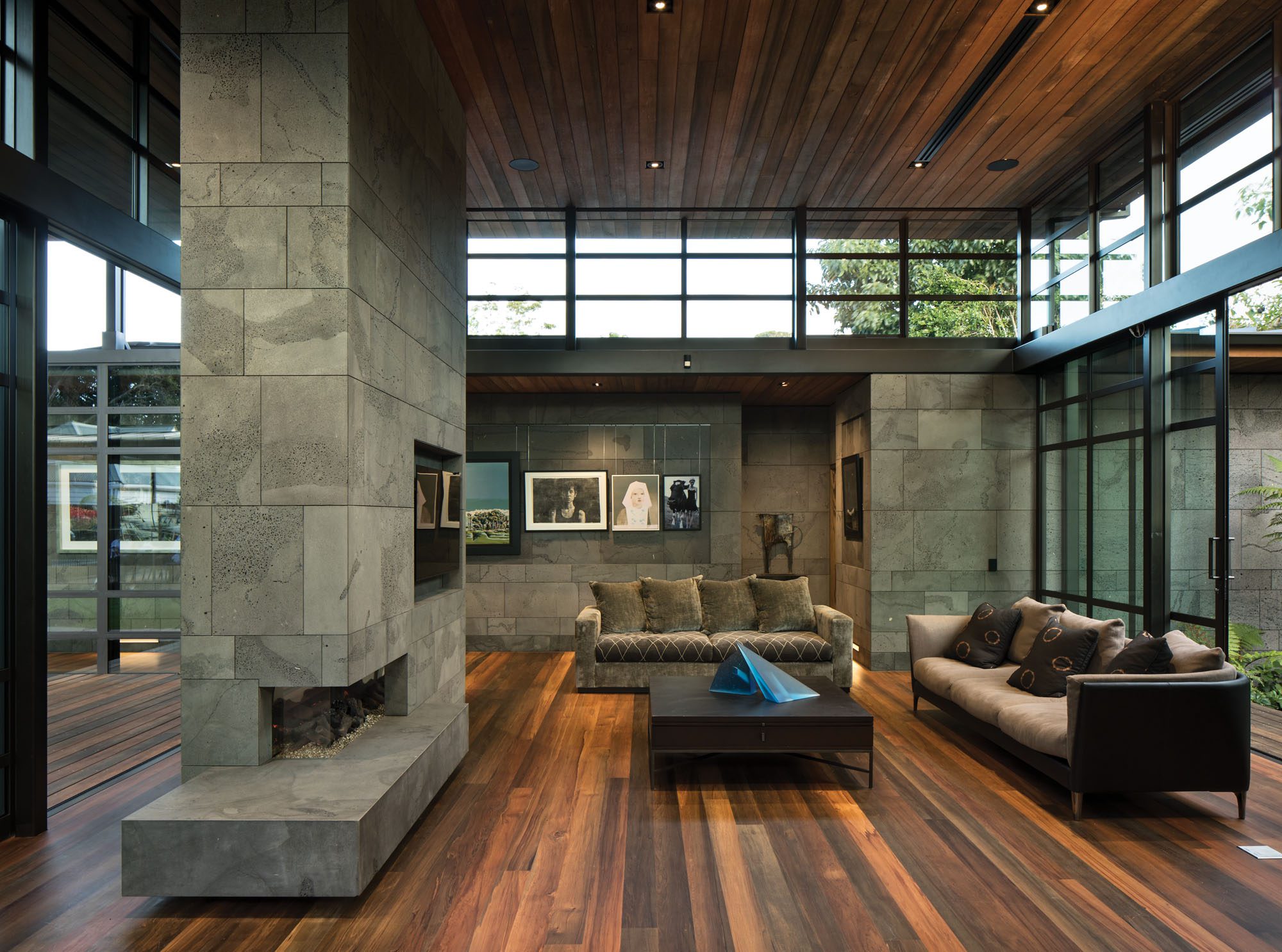
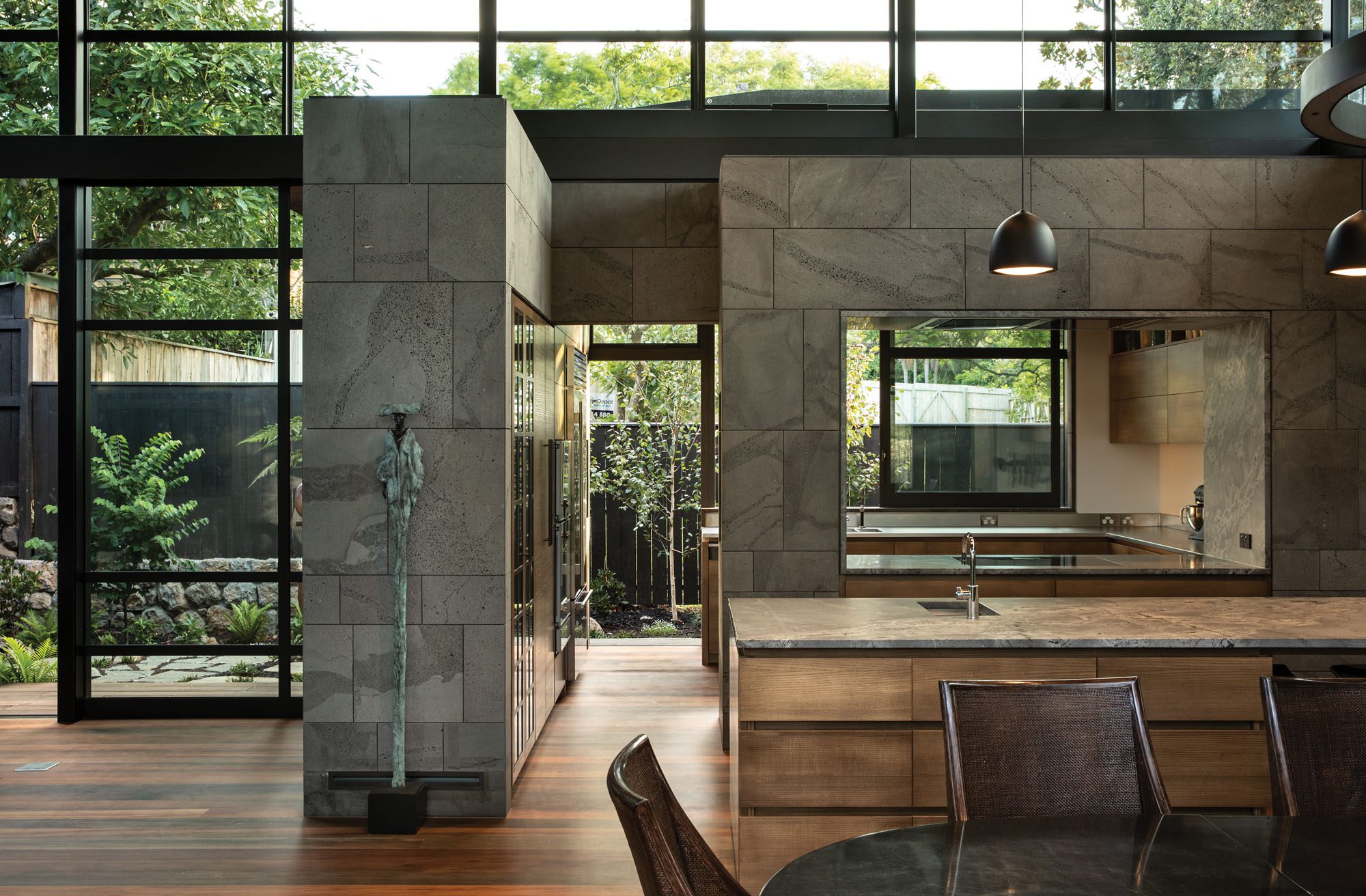
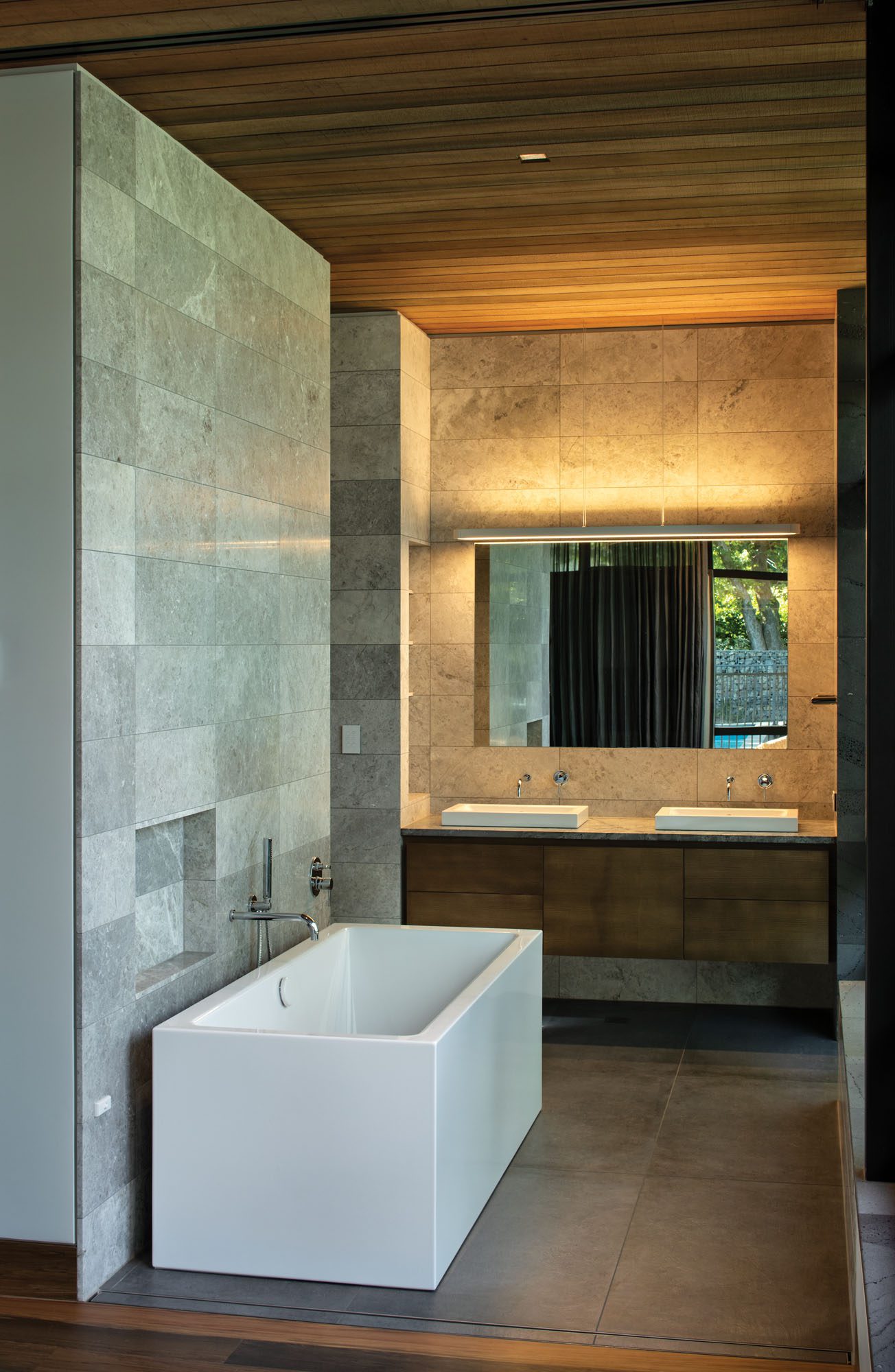

There’s a quiet poetry embedded in the landscape surrounding this home — a subtlety that has been translated into form by Rowe Baetens Architecture. Drawing from the nearby volcanic terrain, the architects have created a spatial and material language that is deeply grounded in place.
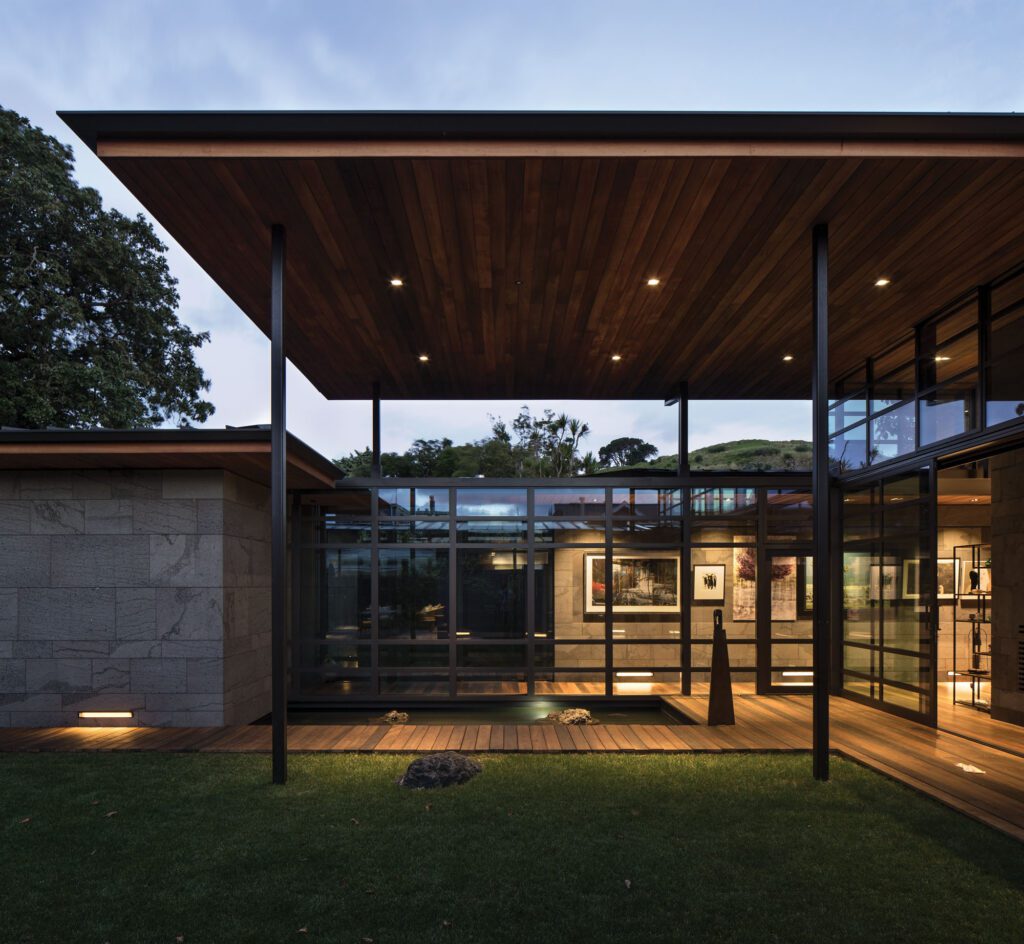
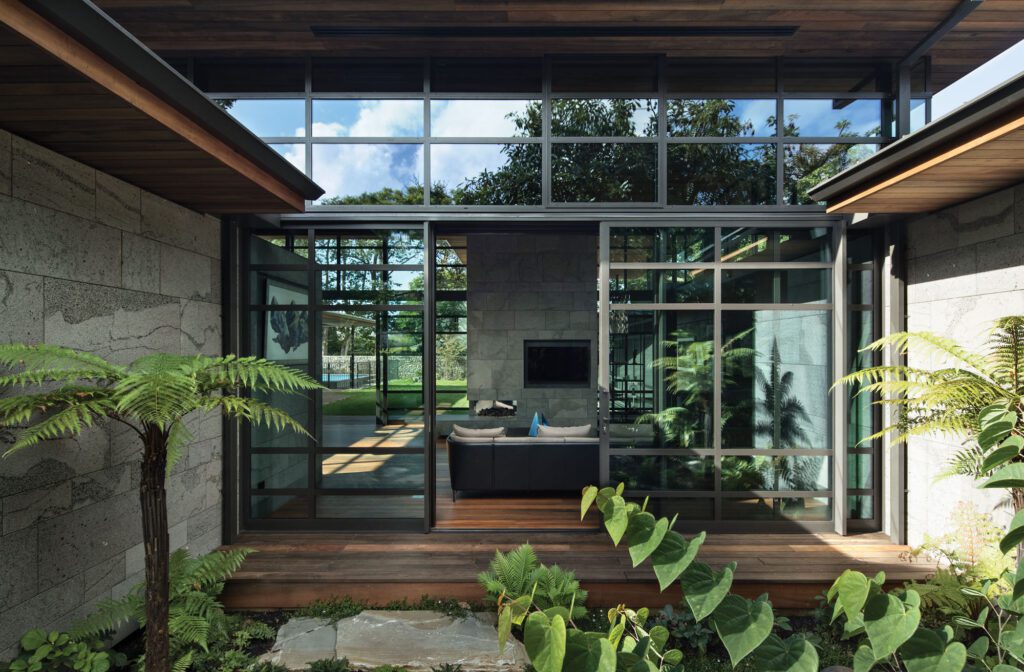
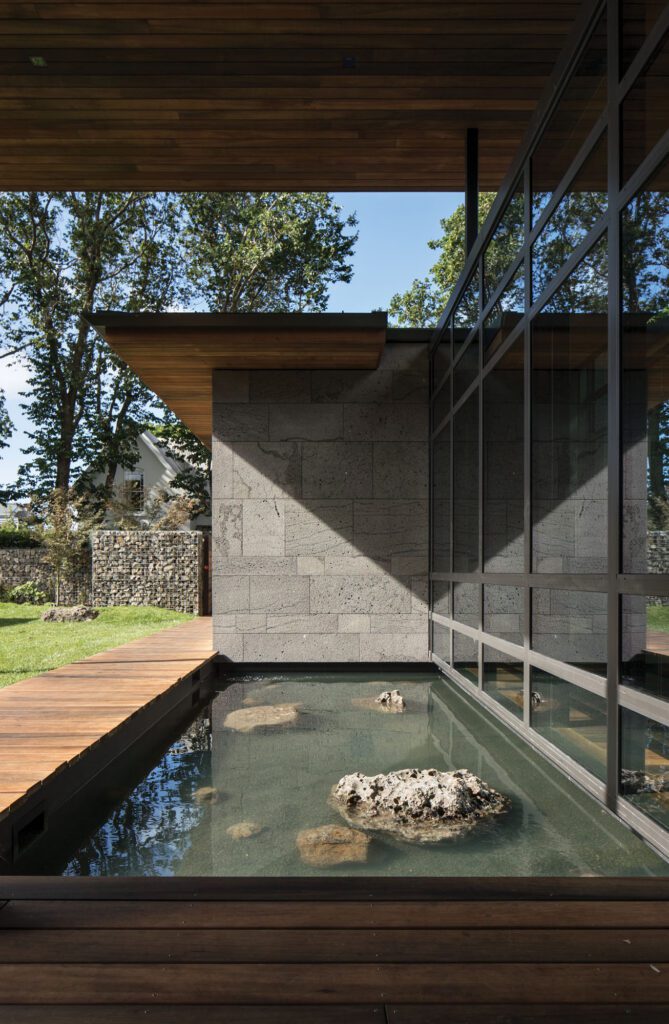
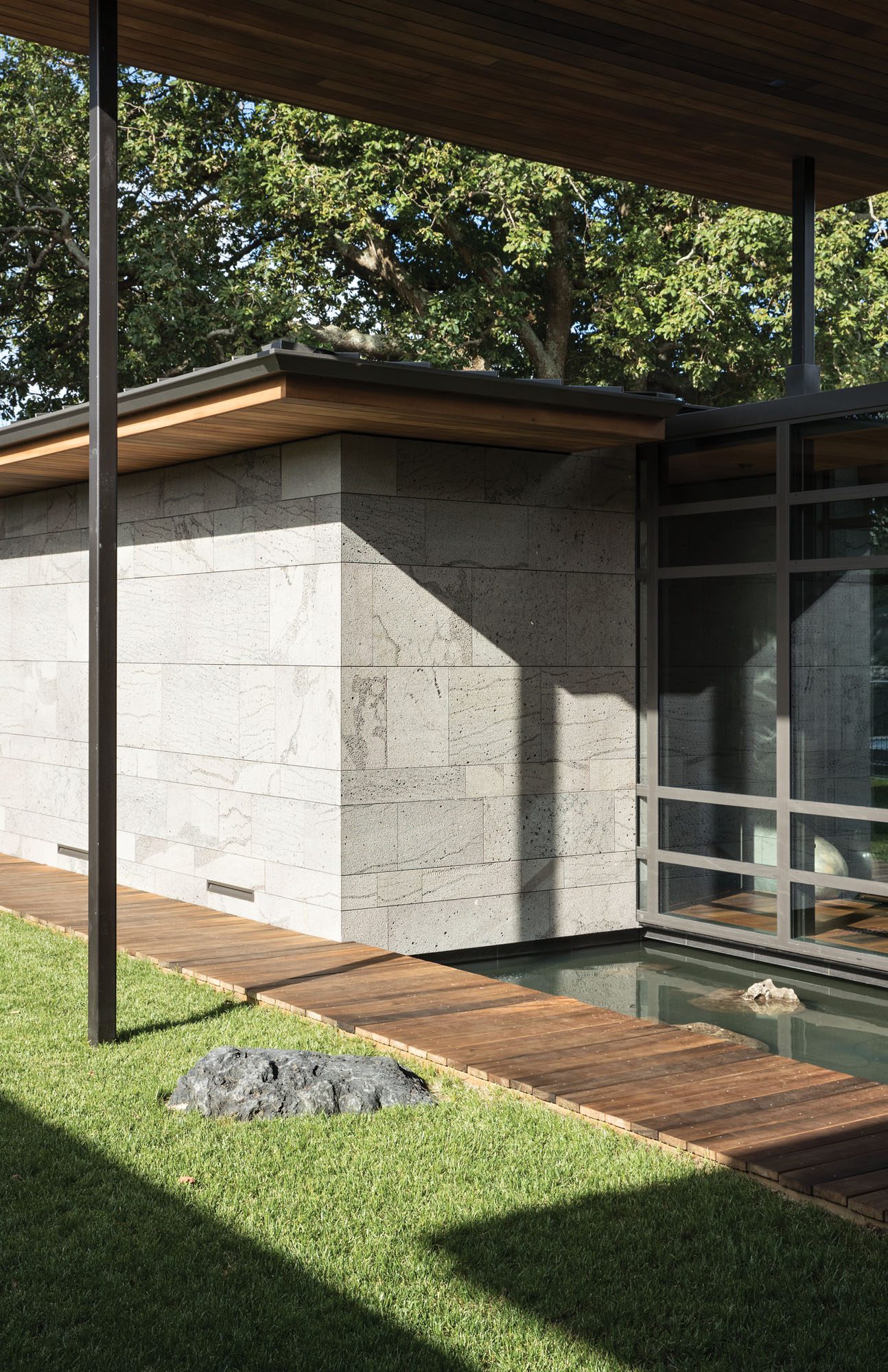
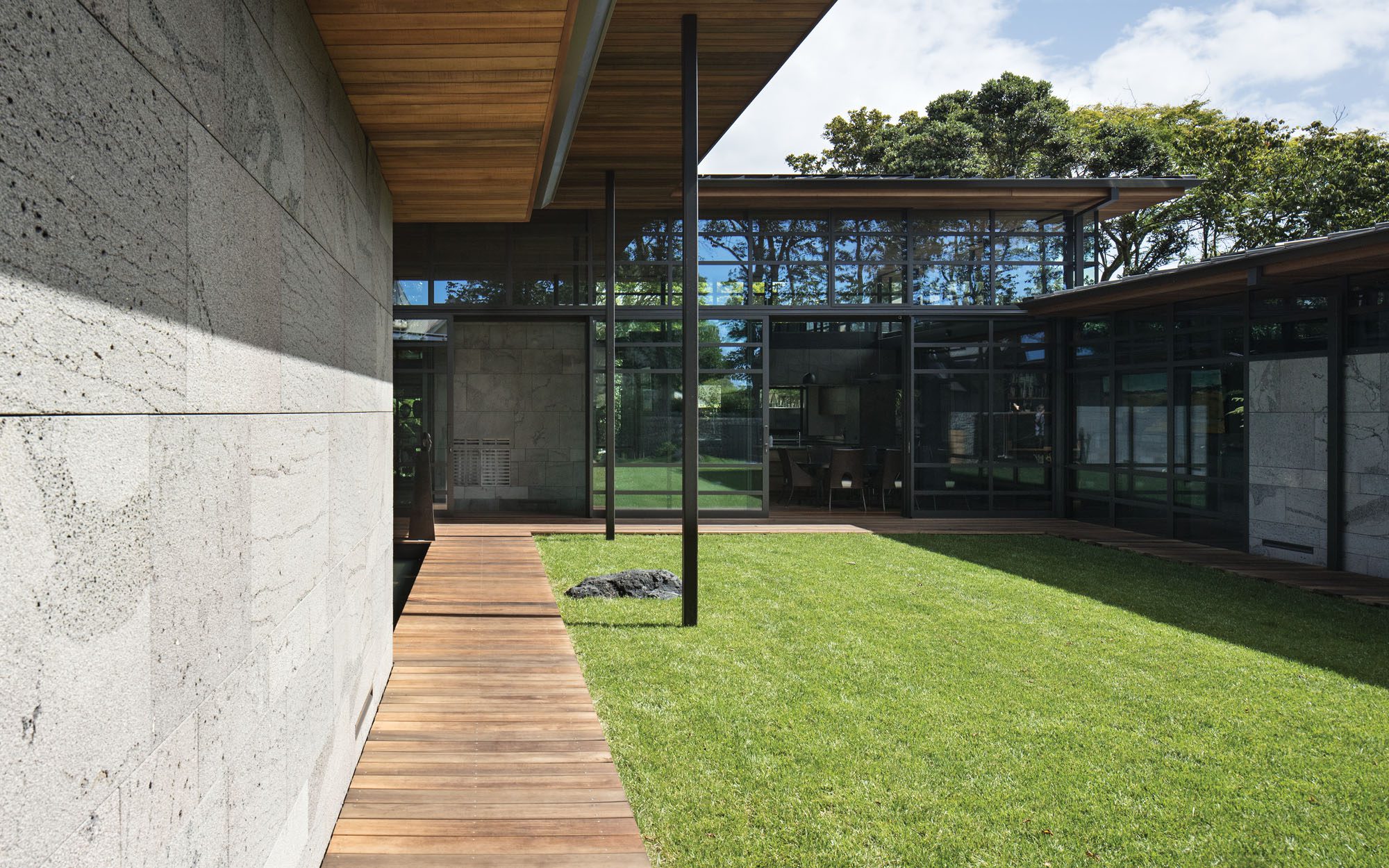
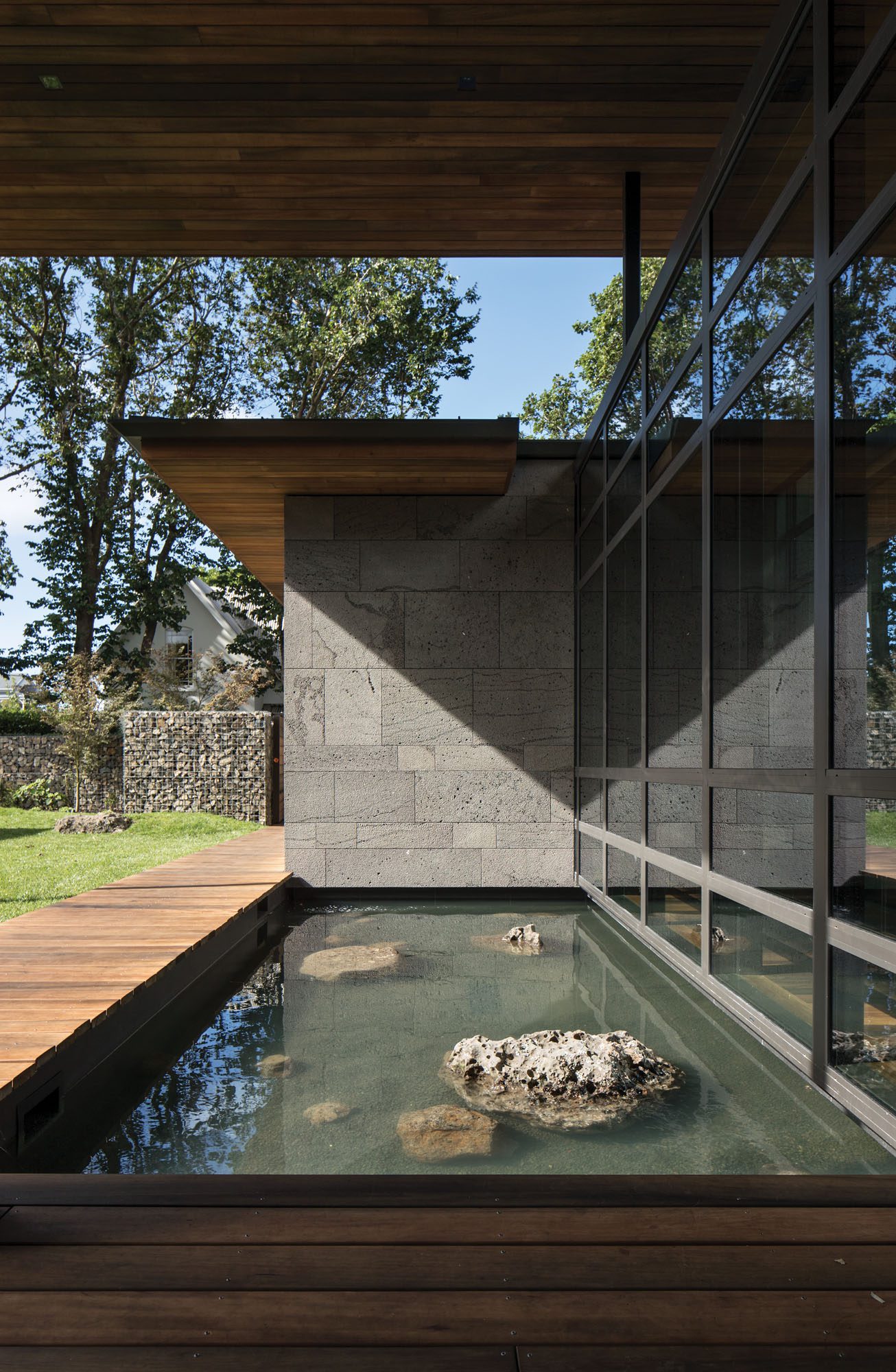
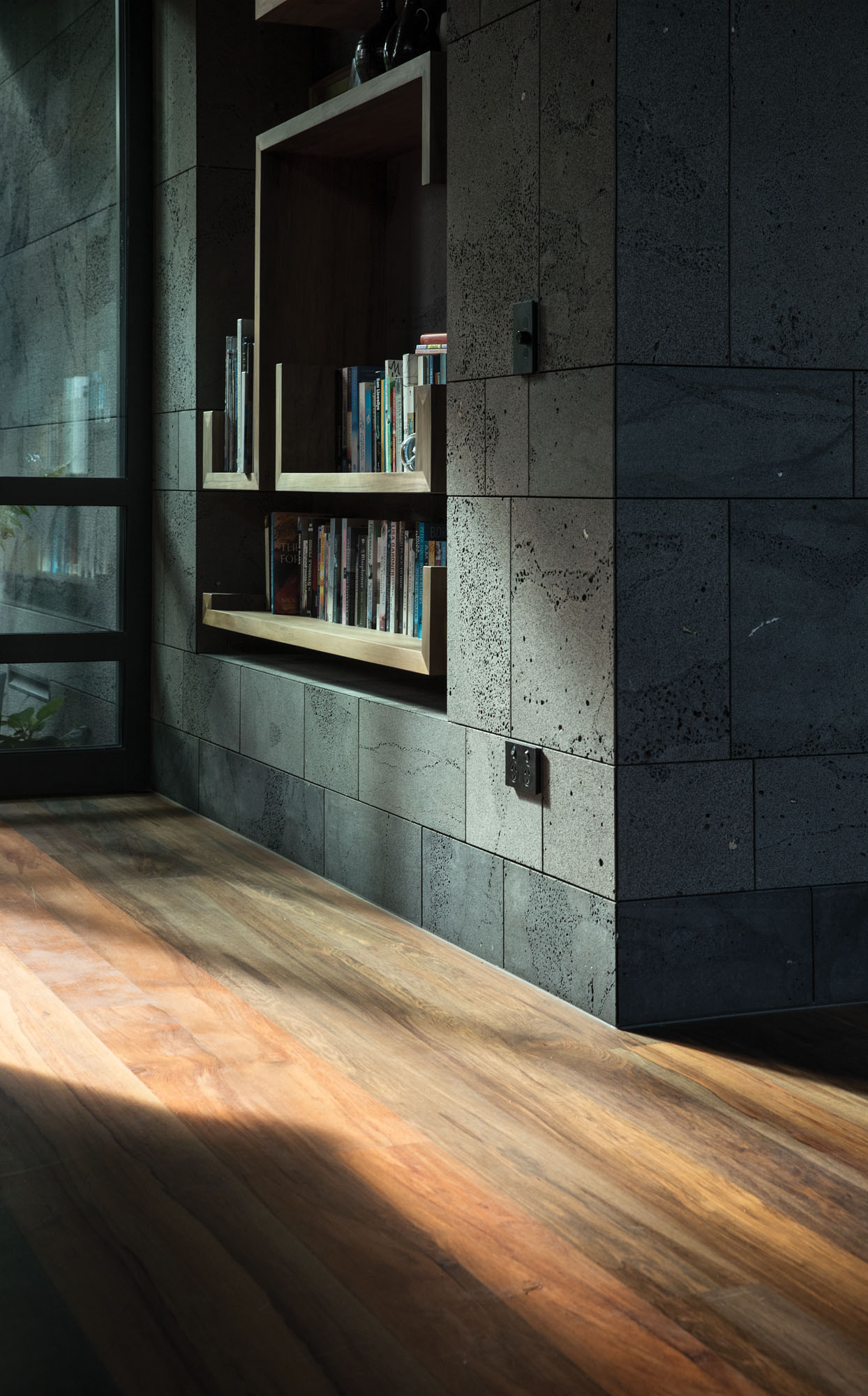
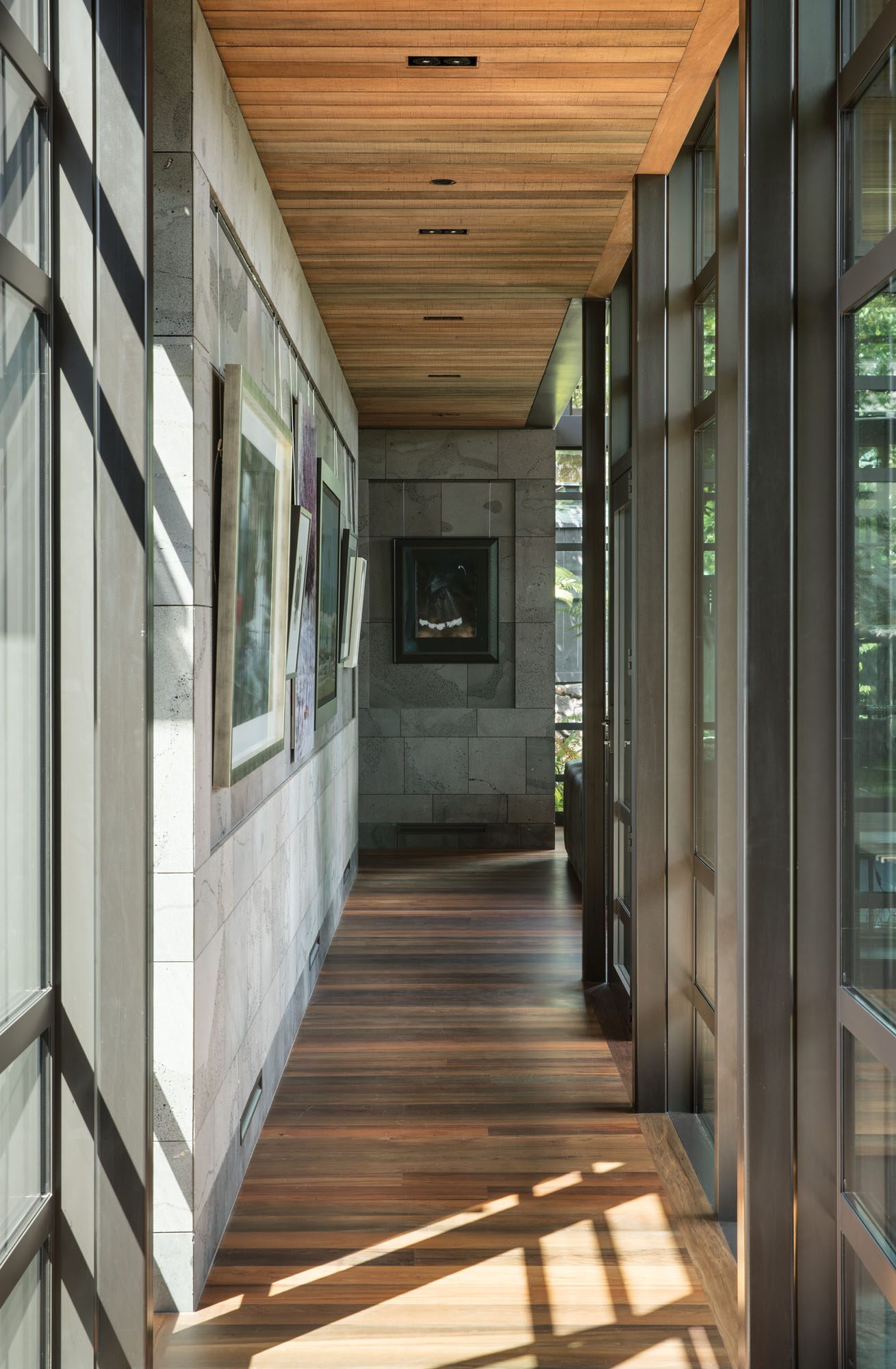
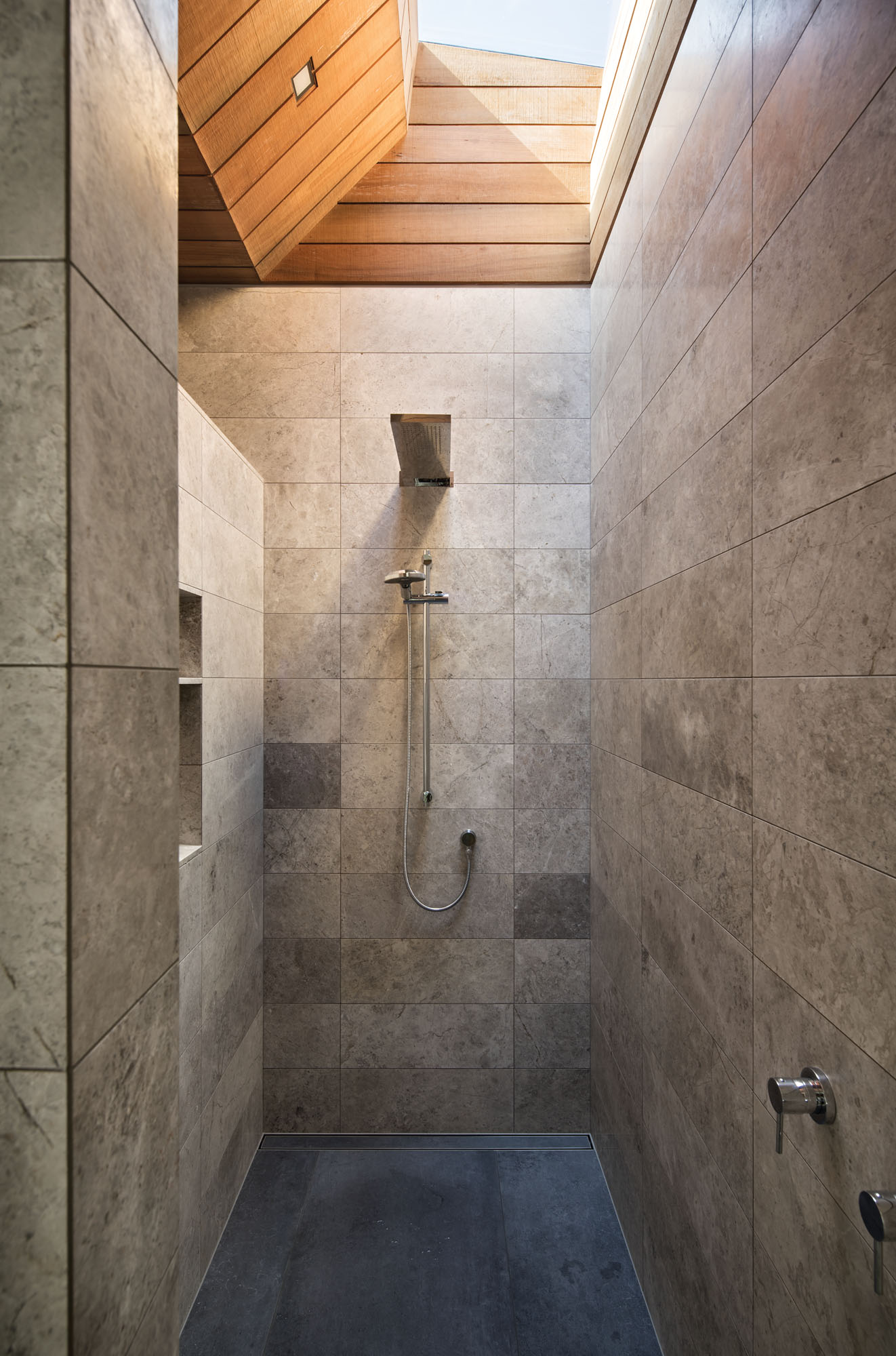
Clad in volcanic basalt — both rugged and honed — the home in Cheltenham, Auckland, integrates its interior and exterior through a unified palette. Echoes of the region’s geology appear again in the internal courtyard, where boulders of the same volcanic stone punctuate the landscape like sculptural relics.
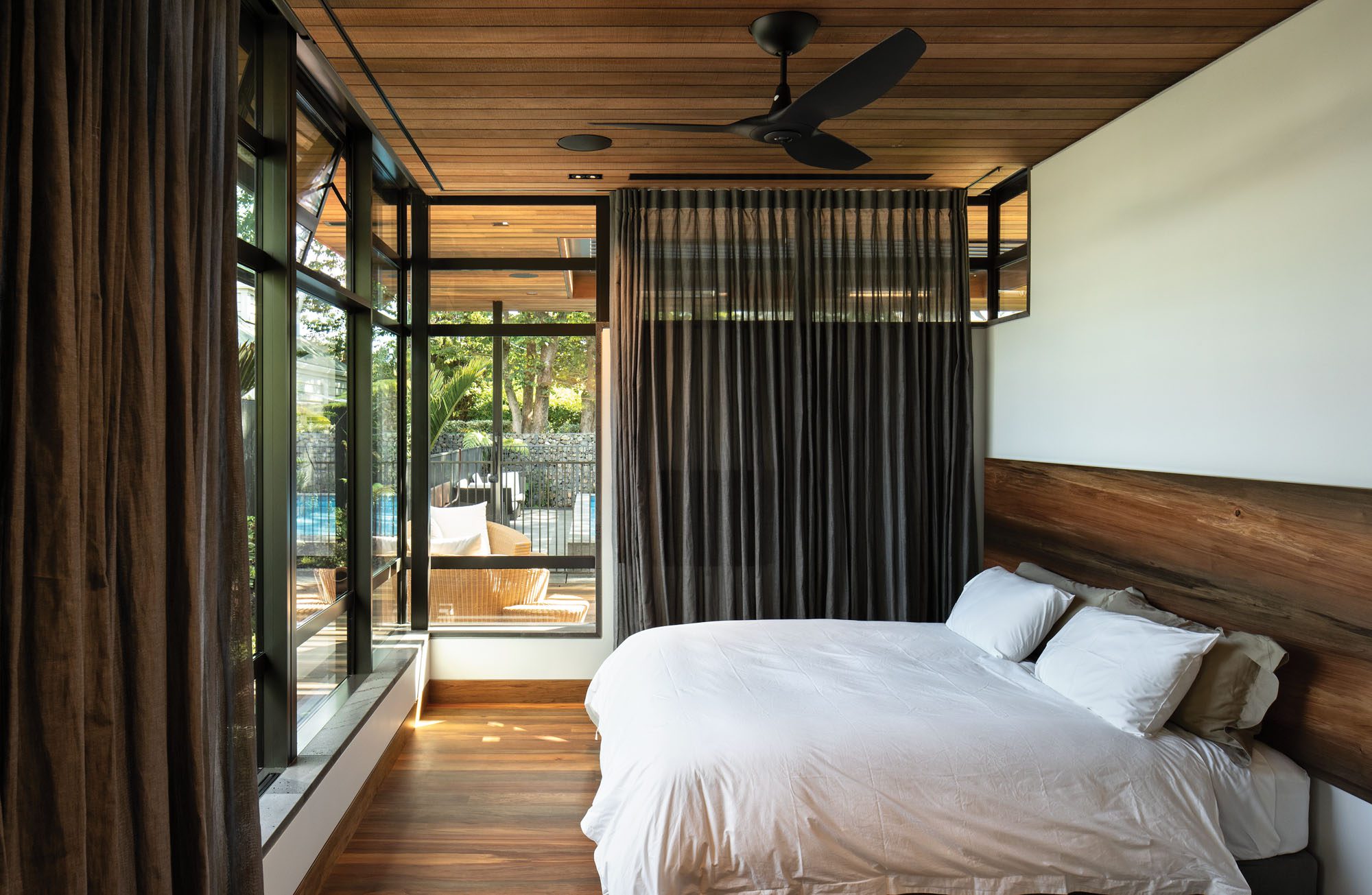
Ancient tōtara, recovered from the depths of a Northland river, is used across soffits and decking, its weathered grain lending a tactile memory of time. In the garden, a subtle water feature offers a quiet nod to that ancient, aqueous past.
Ever-present as you move around the house is Maungauika/North Head, the ancestral volcano whose dormant presence anchors this part of Auckland in geological and cultural significance. This is a suburb of tree-lined streets and villa-lined avenues — charming and established, but not untouched by the pressures of urban densification.
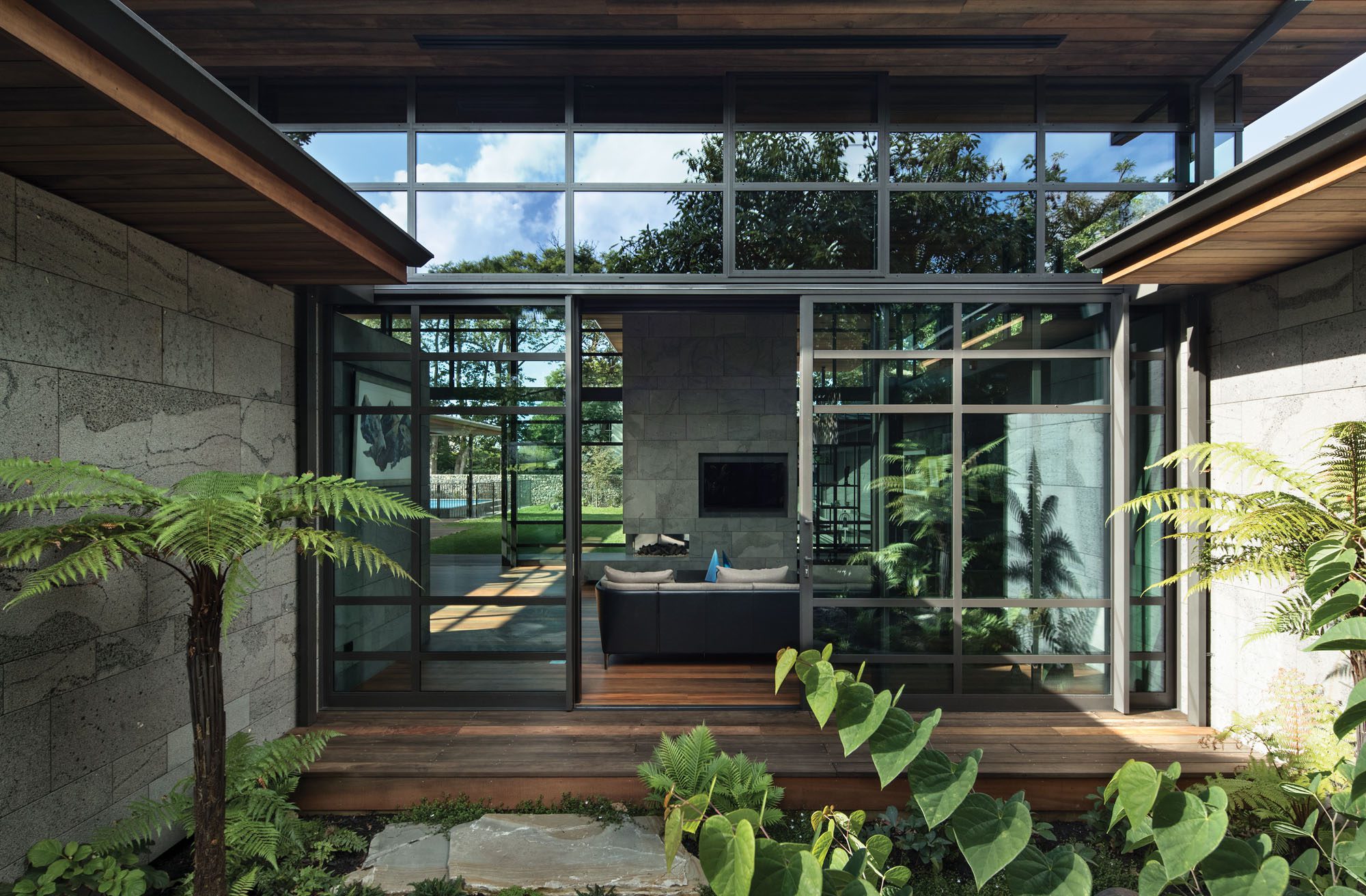
Here, where the home shares boundaries with seven neighbouring lots, the traditional front-yard/backyard dichotomy gives way to something more nuanced. Architect Tom Rowe describes the solution, designed to balance privacy and openness within a tight urban footprint.
“We created a tapestry of internalised micro-landscapes, offering moments of retreat and connection throughout the home,” he says. “It’s about finding balance — privacy without isolation; openness without exposure.”
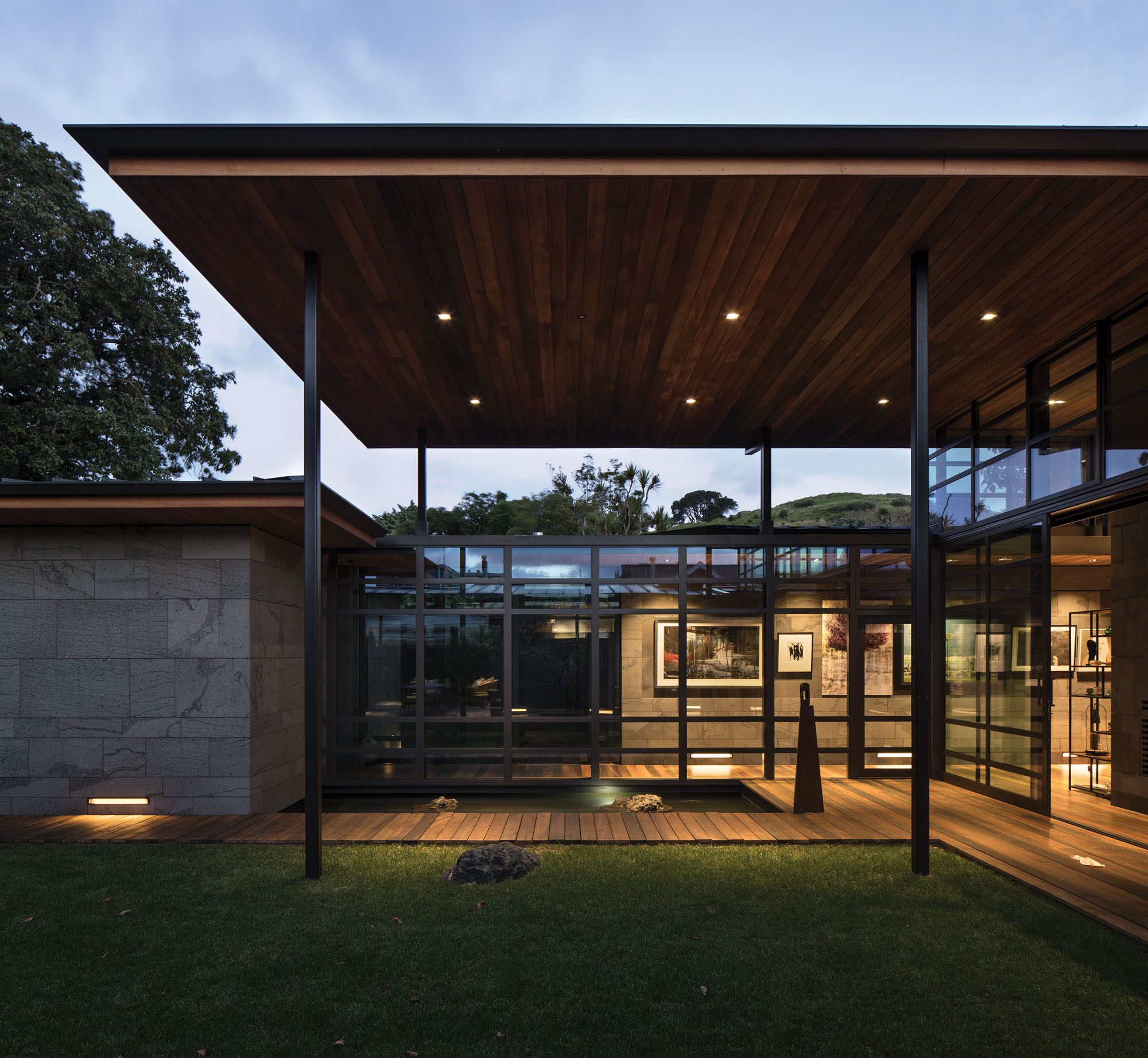
The result is a contemporary courtyard home — inward-looking yet outwardly expressive — where the architectural language draws from Japanese restraint and Californian Case Study transparency. Rather than translucent washi screens, expansive glazing defines the outer edges, supporting a delicately floating roof.
Tom explains, “Each room acts as a grounded volume, shaping the edges of the plan and defining the spaces in between. There’s a quiet interplay of light and shadow throughout, which lends a sense of structural lightness to even the most solid forms. The house feels deeply connected to its surroundings, without falling into familiar patterns.”
Tom likens the rooms themselves to boulders — solid volumes that shape the plan’s edges and give form to voids, reinforcing the connection of the house to its elemental surroundings. It’s a home profoundly ‘of this place’, yet free of the clichés that can weigh down such a phrase.
Balancing weight and lift, vernacular and refinement, the house remains grounded in its volcanic narrative — a dwelling that feels both inevitable and effortlessly considered.
Words: Federico Monsalve
Images: Simon Devitt
This feature first appeared in Homes of this Decade 2015-2025, which was published by Nook Publishing in 2025.