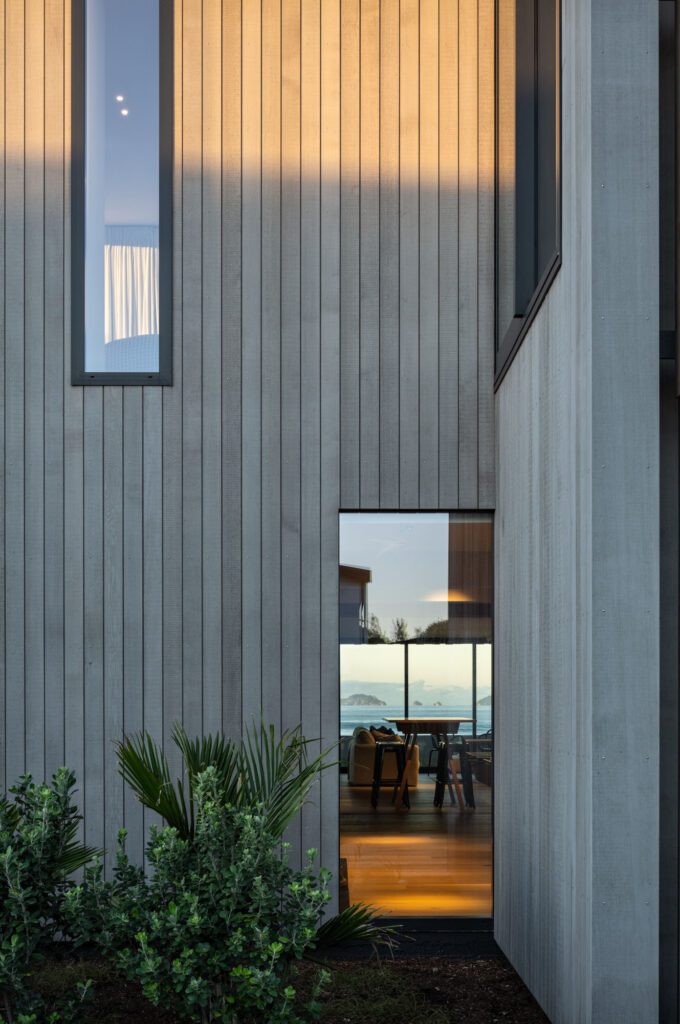


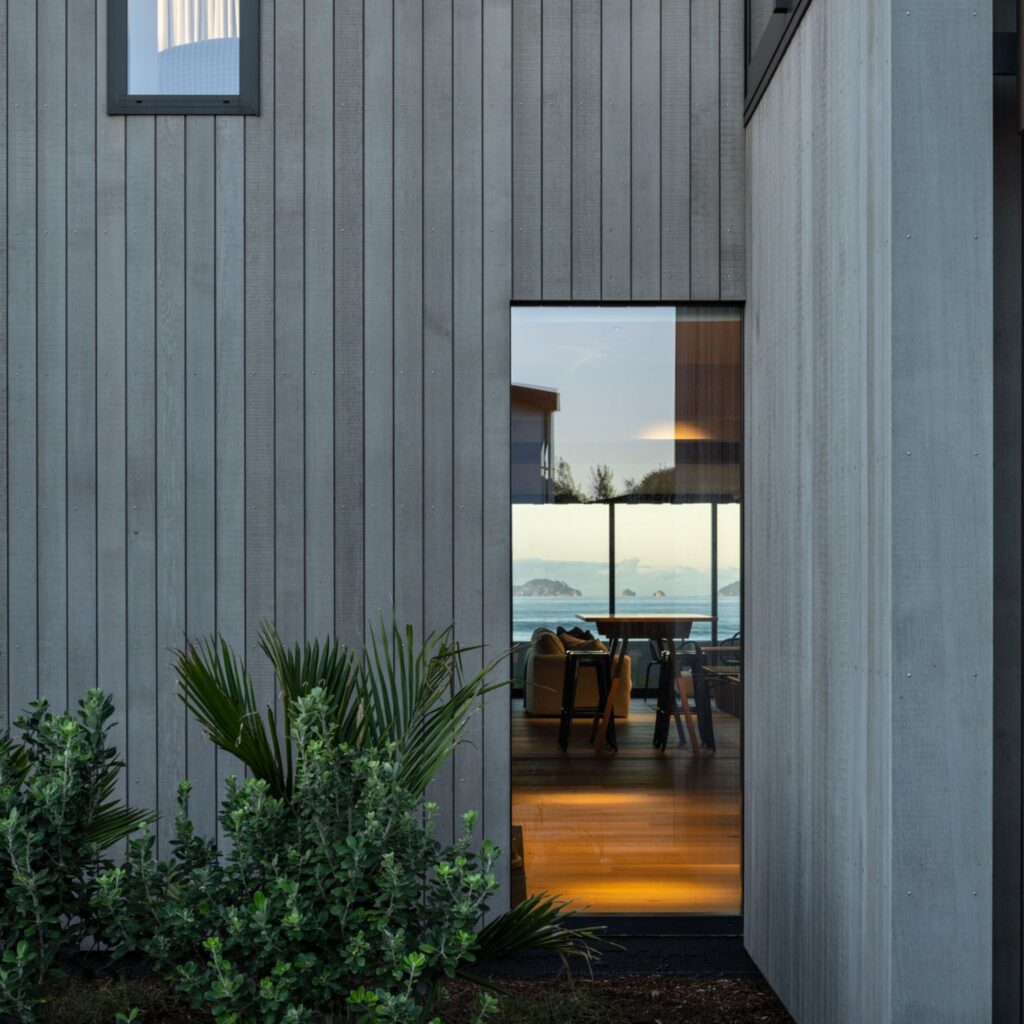
For a house so closely attuned to its coastal setting, material longevity was as critical as visual restraint. On the exterior, Dryden WoodOil in Platinum plays a subtle but pivotal role — preserving the cedar cladding while allowing it to age with grace.
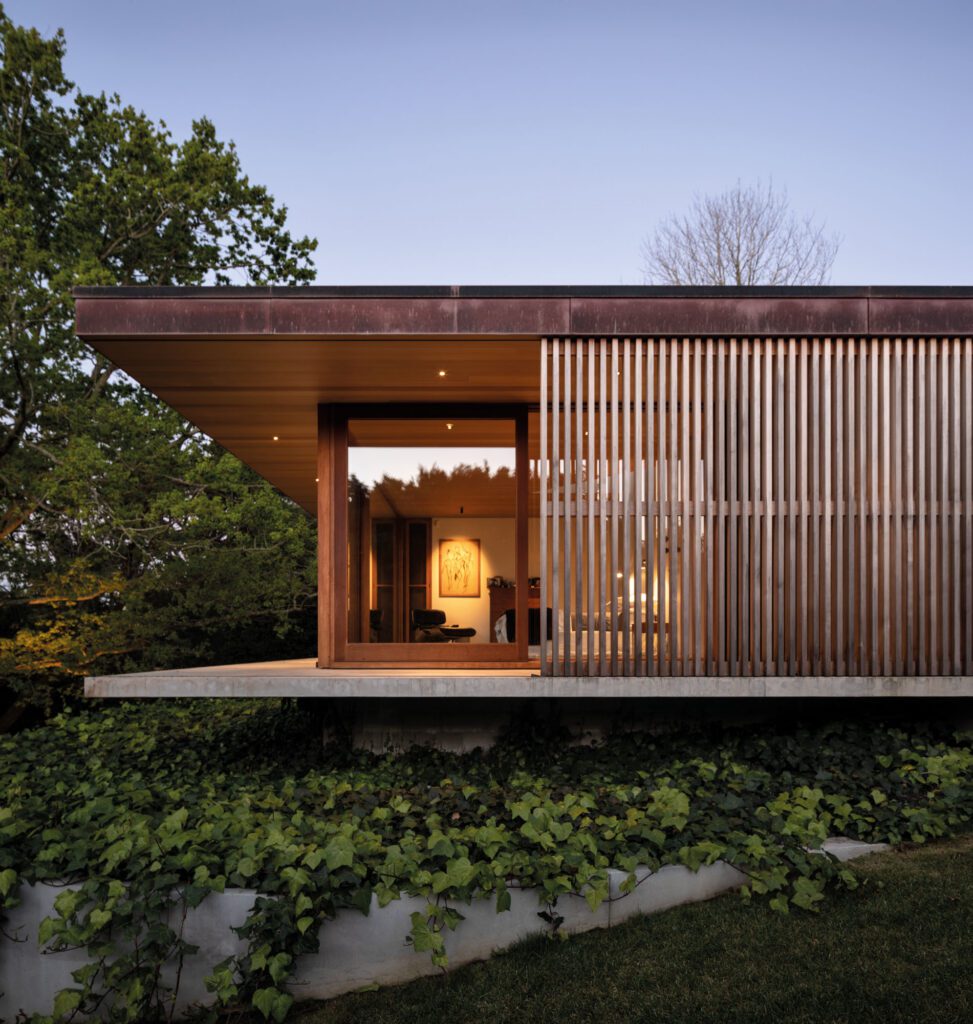
“We’ve used Dryden for decades,” says architect Julian Guthrie. “It’s a really well-proven oil system that protects the timber and weathers off beautifully over time.” For this Pauanui house, Julian specified Dryden WoodOil in Platinum, a light grey oil he frequently turns to for beachfront projects.
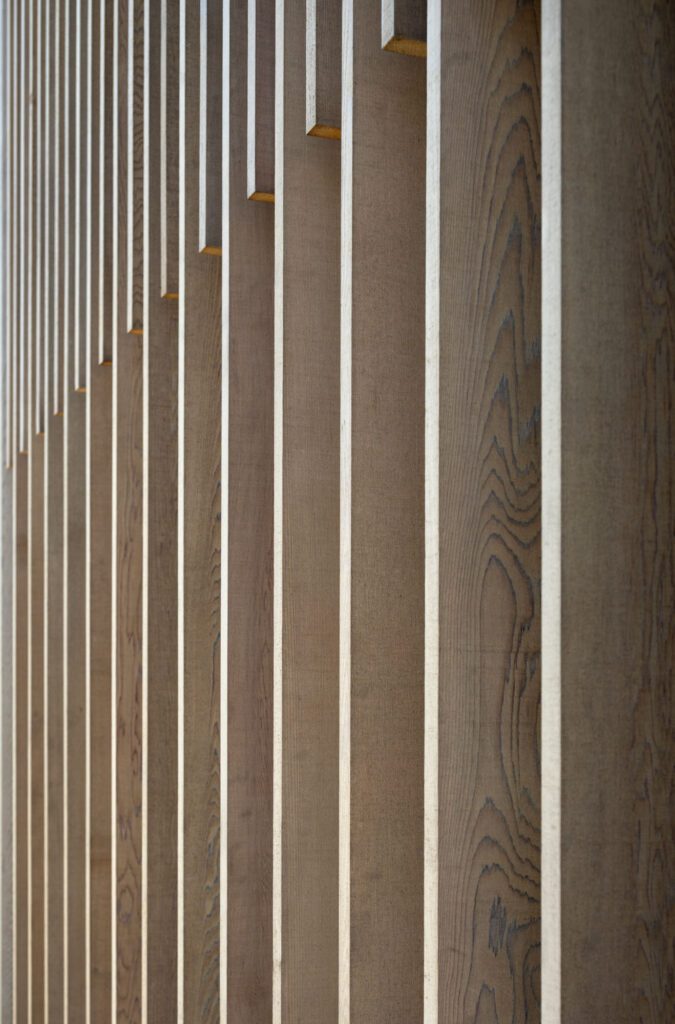
Applied to the cedar exterior, the oil enhances the timber’s natural character while improving long-term performance in a demanding coastal environment. “It helps manage moisture and movement,” Julian explains. “When it’s maintained properly, the timber stays in good condition for many years.” Aesthetically, the choice of Platinum was closely tied to both site and architecture.
Fresh cedar carries warm red undertones that, left untreated, can weather unevenly. “What we like about Platinum is how, over time, the grey settles in and you get this soft, warm driftwood effect.” It’s designed to evolve with the conditions — a product well suited to a home designed to recede into its landscape.
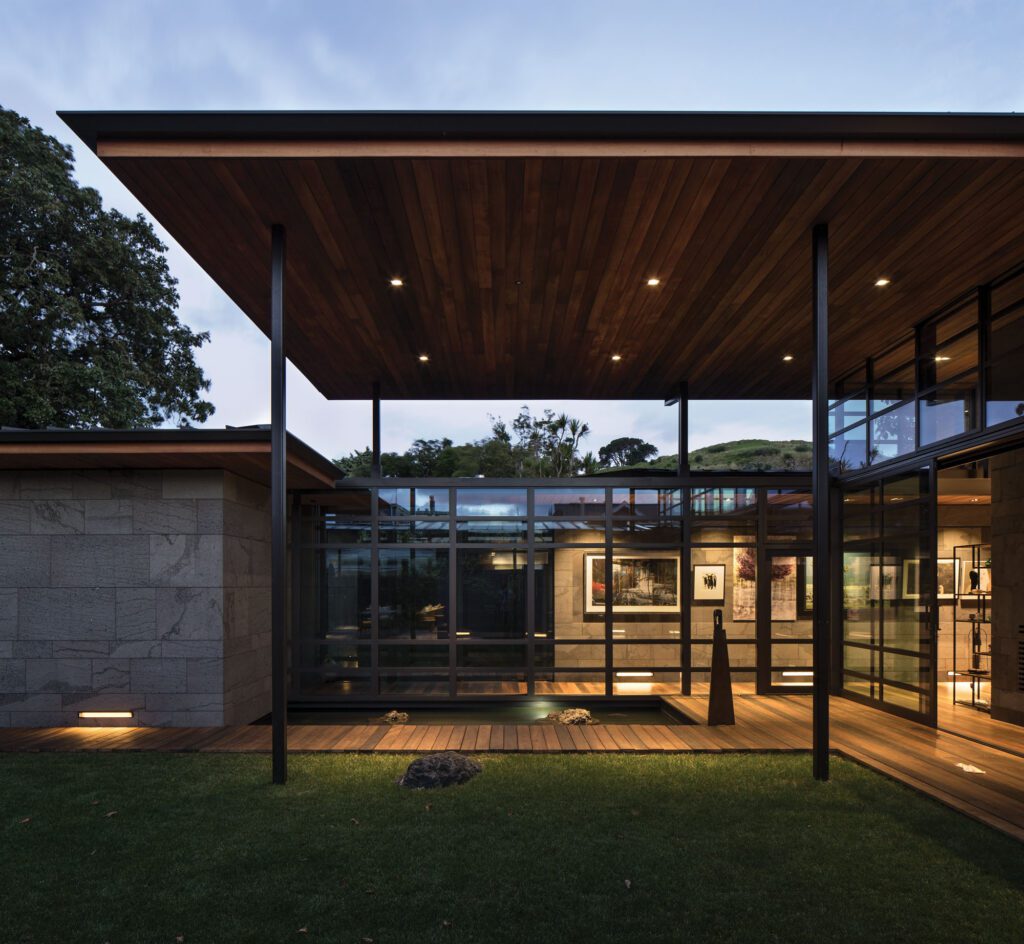
The resulting tone works in concert with the home’s broader material palette. The grey-oiled cedar sits comfortably alongside the in situ concrete structure, custom cement and fibreglass panels, and the textured surfaces that define the exterior. “It’s a very soft, beachy colour,” Julian says, “and it works beautifully with the concrete on this house.”
Rather than announcing itself, the exterior quietly absorbs the effects of sun, salt, and time — a deliberate move in a setting where understatement was the goal. As the timber continues to weather, the oil allows the house to soften further into its surroundings, reinforcing the original intent: to let the view, the light, and the landscape do the work.
Images Simon Devitt