
Spaces for Stillness: The Rise of the Wellness Bathroom

The bathroom is undergoing a quiet but significant transformation. No longer conceived simply as a functional room, it is becoming larger, more prominent, and more carefully considered within the architecture of the home than ever before.

Increasingly, architects and designers are approaching these spaces as places of retreat — environments designed to support moments of pause, restoration, and daily ritual. Generous layouts, freestanding baths, layered lighting, and richly tactile materials are turning the contemporary bathroom into something closer to a private wellness sanctuary.

Several ideas are shaping the bathrooms we’re loving right now.

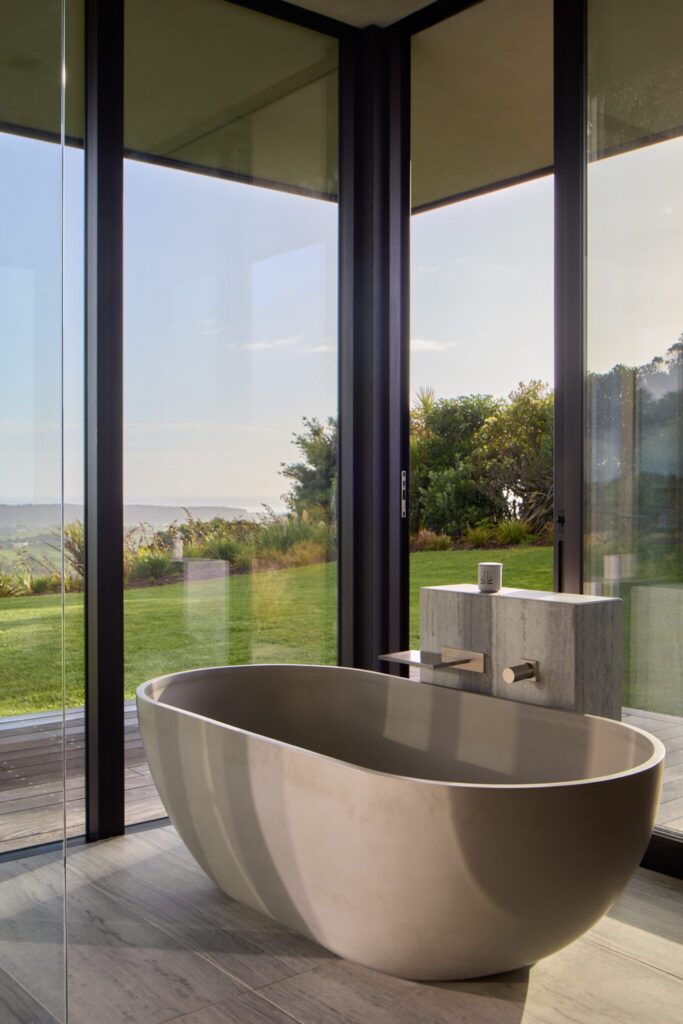
In this holiday home near Mangawhai by Patterson Associates, the bathroom opens onto the dunes and embraces a material palette that echoes the sandy hues of the coastal surrounds. Image: Simon Devitt

A connection to landscape

One of the most compelling shifts in contemporary bathroom design is the growing relationship with landscape. Architects are increasingly positioning baths beside expansive windows, courtyards, or planted light wells so that bathing becomes an experience shaped by natural light, greenery, and changing weather.

In coastal and rural homes particularly, freestanding baths are often oriented toward views — whether ocean, bush, or mountain — allowing the ritual of bathing to become a moment of quiet immersion in the surrounding environment.

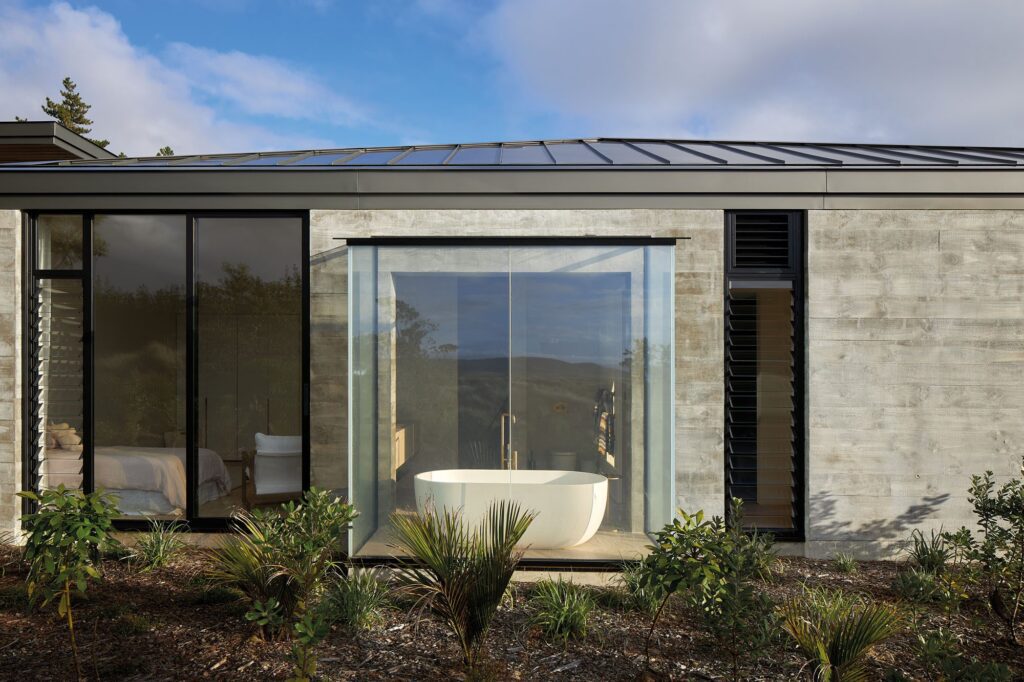
In this home by Julian Guthrie Architecture, a strong connection to the landscape exists throughout. It is the bathroom where that immersion into the beauty of the site is taken further with a freestanding bath surrounded by glass. Image: Simon Wilson
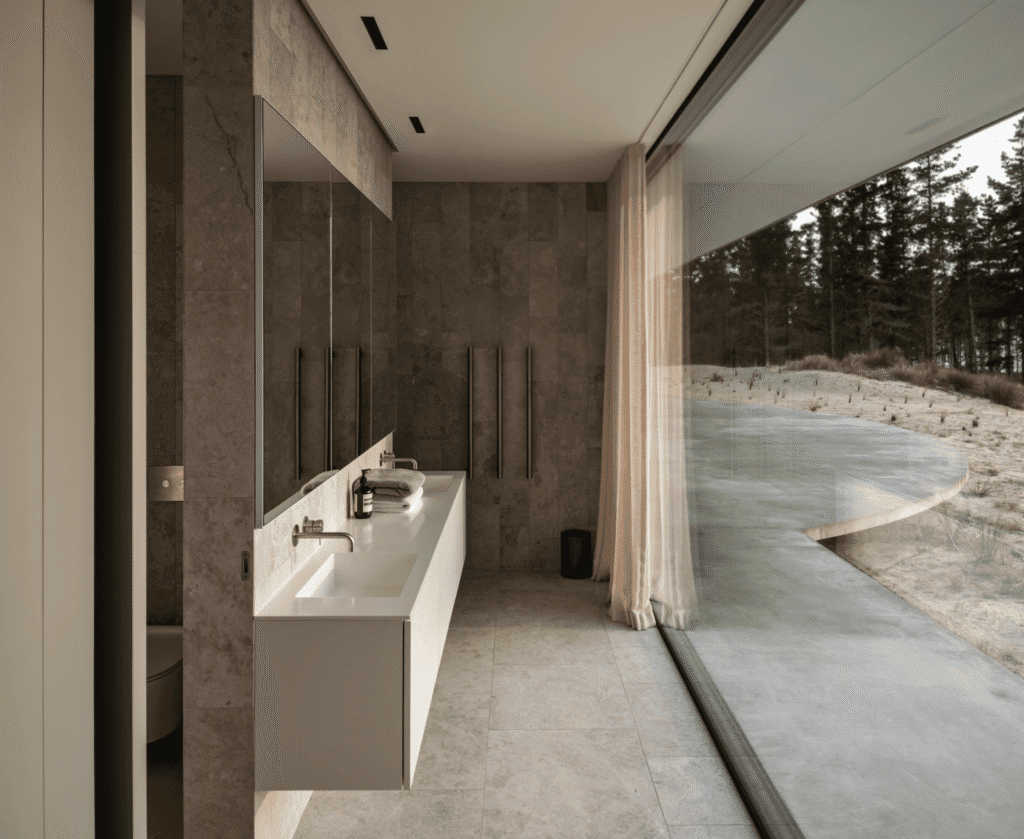
In this rural home by Studio John Irving, the en suite is almost entirely transparent, with a free-standing bath set to one side, the shower opposite. From each, the view is visible in full panorama. Behind, a mirrored vanity reflects the outlook, drawing the view in even when one’s back is turned. Image: Simon Wilson

Materiality that grounds the senses

Material palettes play a defining role in these wellness-led spaces. Rather than glossy surfaces or overtly polished finishes, many designers are favouring tactile, natural materials that introduce warmth and sensory depth.

Stone floors, lime plaster walls, timber cabinetry, and softly textured tiles appear frequently. Together, these materials create interiors that feel calm and grounded — spaces where texture and tone evoke the colours and rhythms of the landscape beyond.

The effect is subtle but powerful: bathrooms that feel composed, enduring, and deeply connected to place.

This bathroom, in a coastal home at Omaha by Lloyd Hartley Architects, continues the wider interior concept and tonality of the house: a sandy, natural colouration with pops of white and natural stone … it follows that New Zealand beachy resort vocabulary that is relaxed, evocative of nature. Image: David Straight
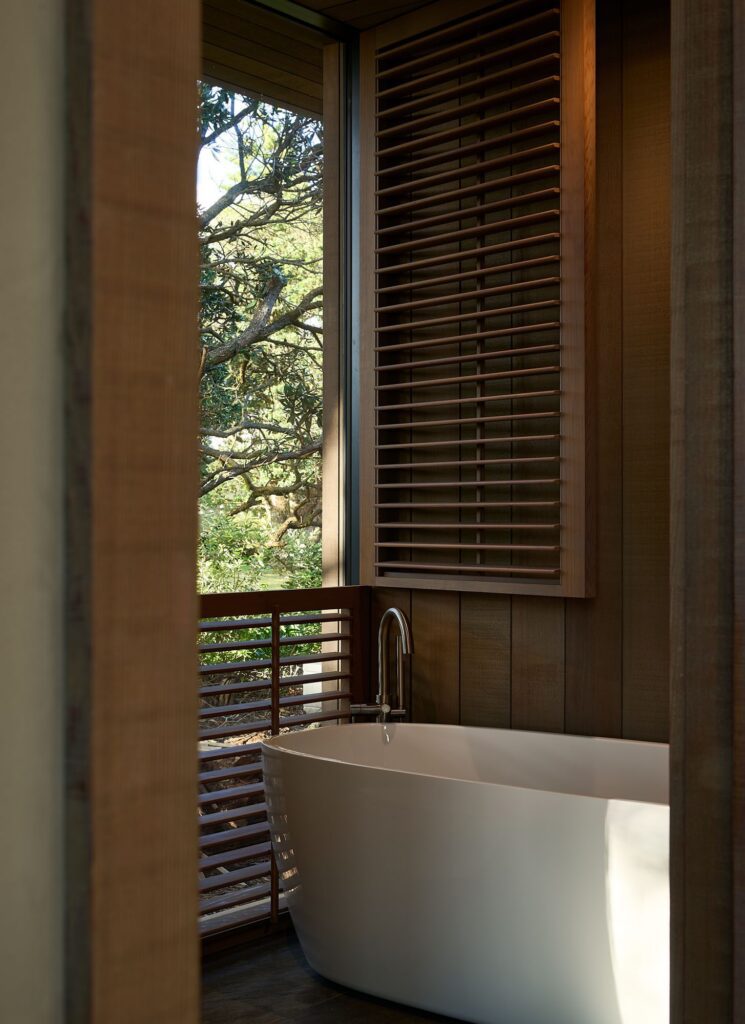
In this home by Sumich Chaplin Architects at Pauanui Beach, a freestanding bath is positioned to capture dappled light through timber screens, offering privacy without sacrificing outlook. Image: Thomas Cannings

Soft forms and sculptural gestures

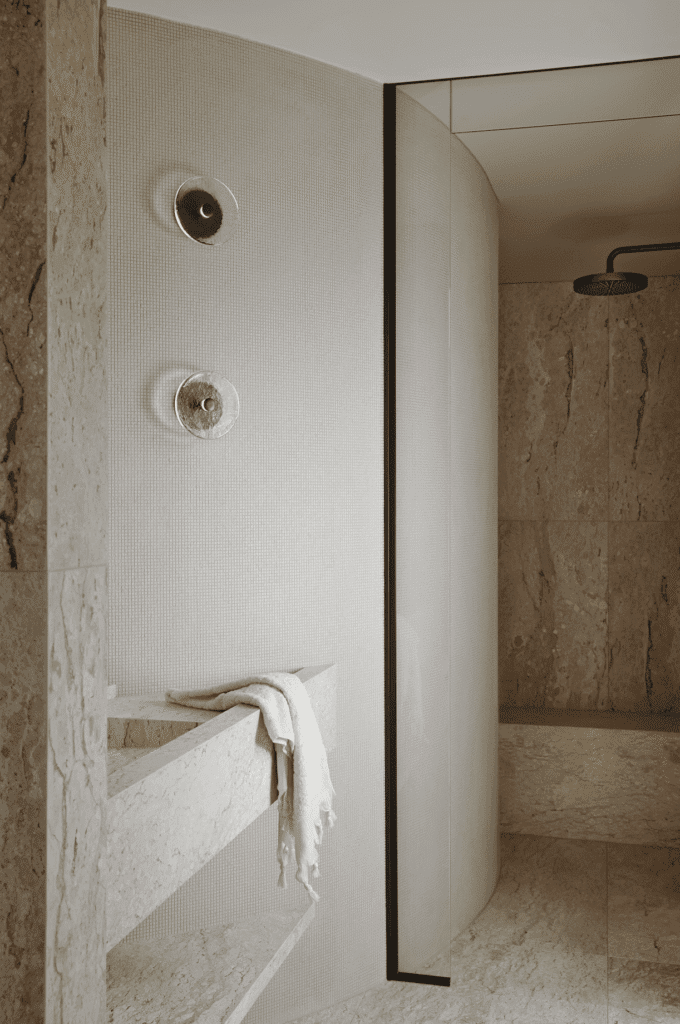
Bathrooms are also becoming more sculptural spaces. Curved walls, rounded basins, and softly profiled joinery introduce a sense of fluidity that contrasts beautifully with the more linear elements of architecture.

These gestures soften the room and create a gentle visual rhythm — a language of form that feels restorative rather than rigid. In many homes, these curves echo the organic geometries found in the surrounding landscape, reinforcing the bathroom’s role as a space of calm.

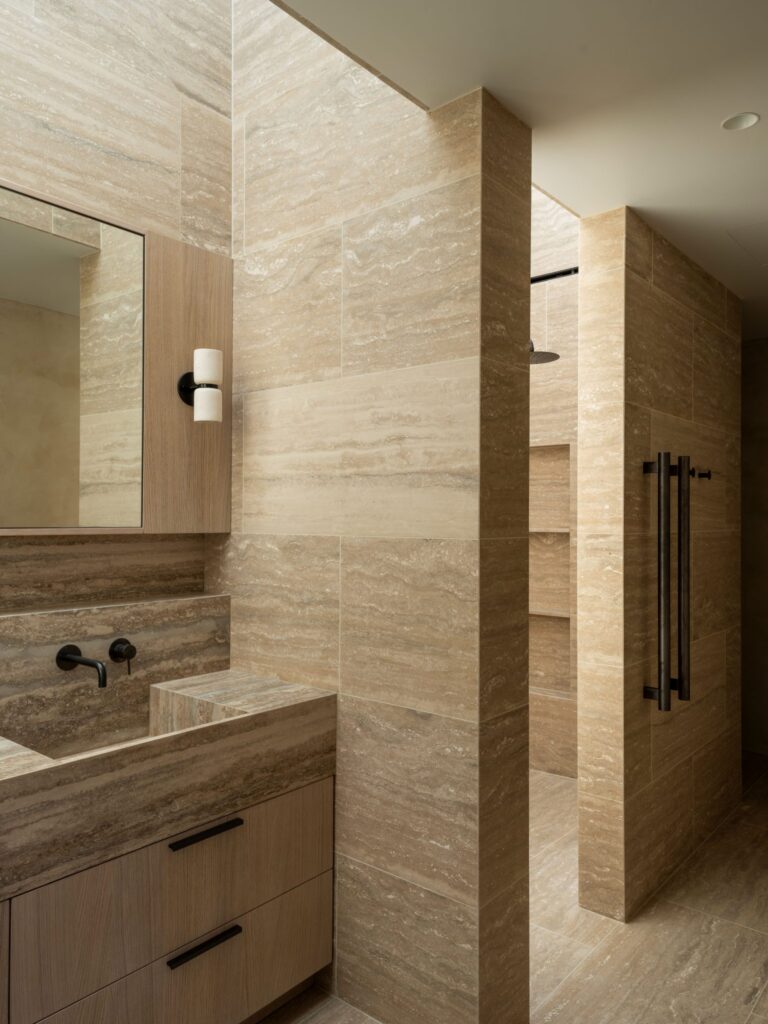
As interior designer Sonya Cotter explains of the 2025 Bathroom of the Year: “When we started, we had already selected the stone: a travertine that reminded me of handmade soap. Over time, the edges of a soap bar soften and bullnose out. There’s a softness to that, a luxury, and that was the aspirational and inspirational idea of how I wanted the room to feel when you walked into it."
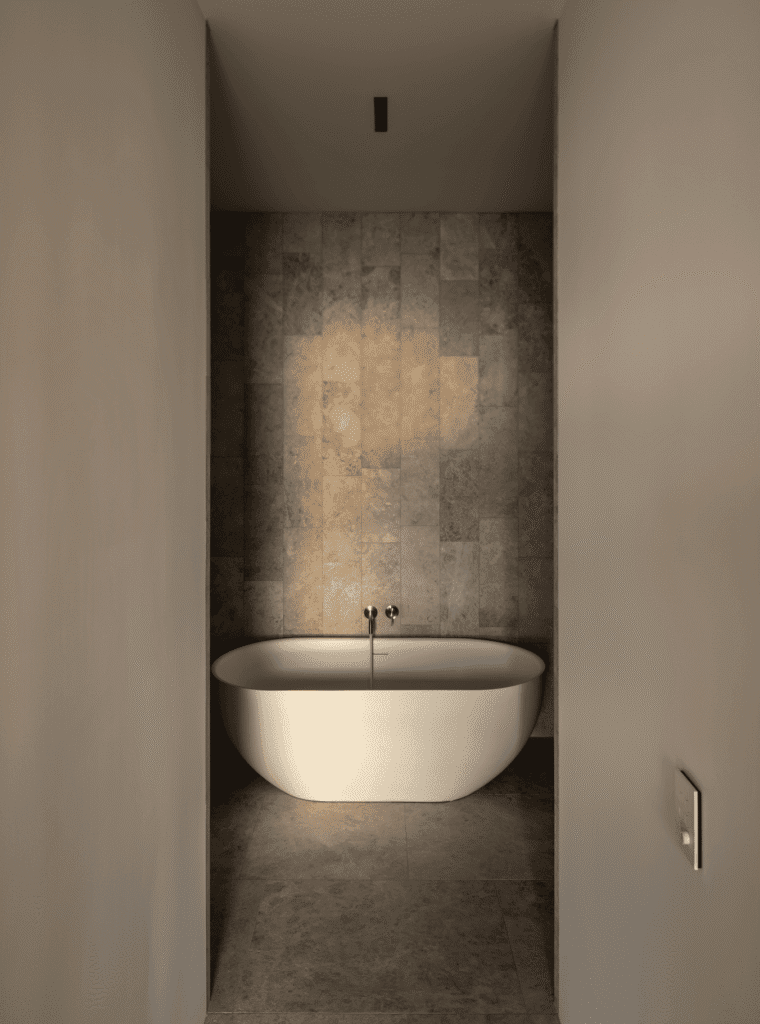
The generous curves of this freestanding bath are set against the rhythmic nature of the floor and wall tiles creating an immersive sanctuary for bathing in a home by Patterson Associates on the shore neat Mangawhai. Image: Simon Devitt

Light as atmosphere

Light has become another defining ingredient in the contemporary bathroom. Rather than relying on a single fixture, designers are layering illumination through skylights, concealed LED lighting, wall sconces, and softly backlit mirrors.

Natural light remains the most coveted element. Carefully positioned skylights or windows allow daylight to shift across surfaces throughout the day, subtly transforming the atmosphere of the room

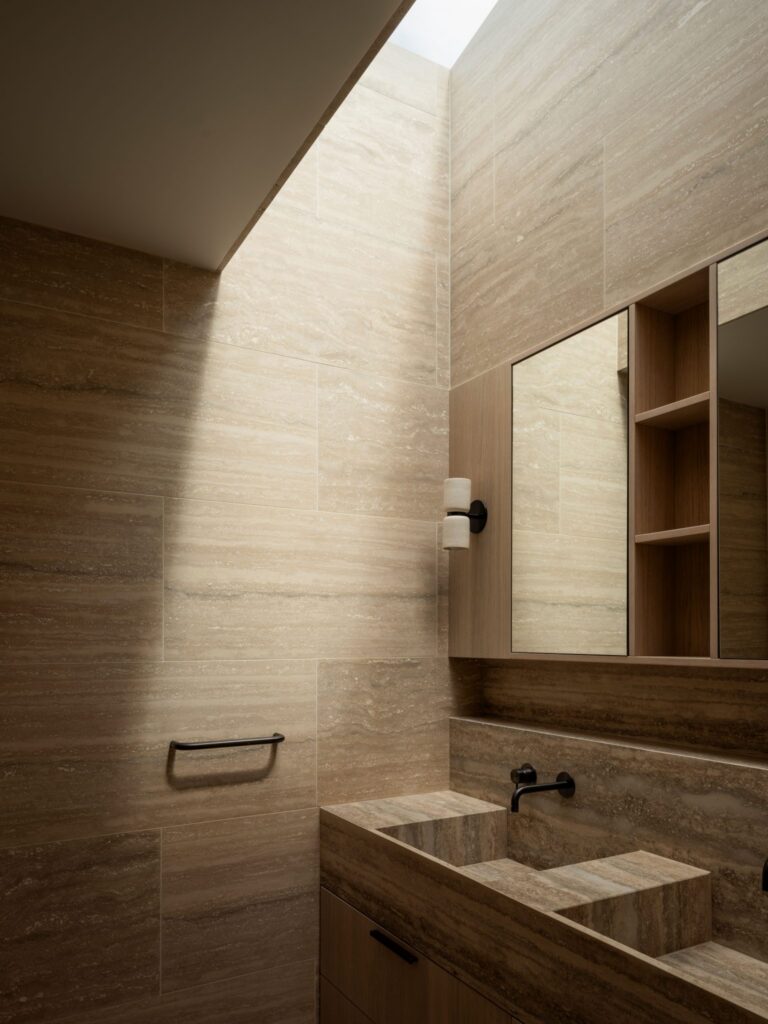
Here, a skylight defines the atmosphere, elevating the space and ensuring the experience of it changes throughout the day. Design, Lloyd Hartley Architects. Image, David Straight
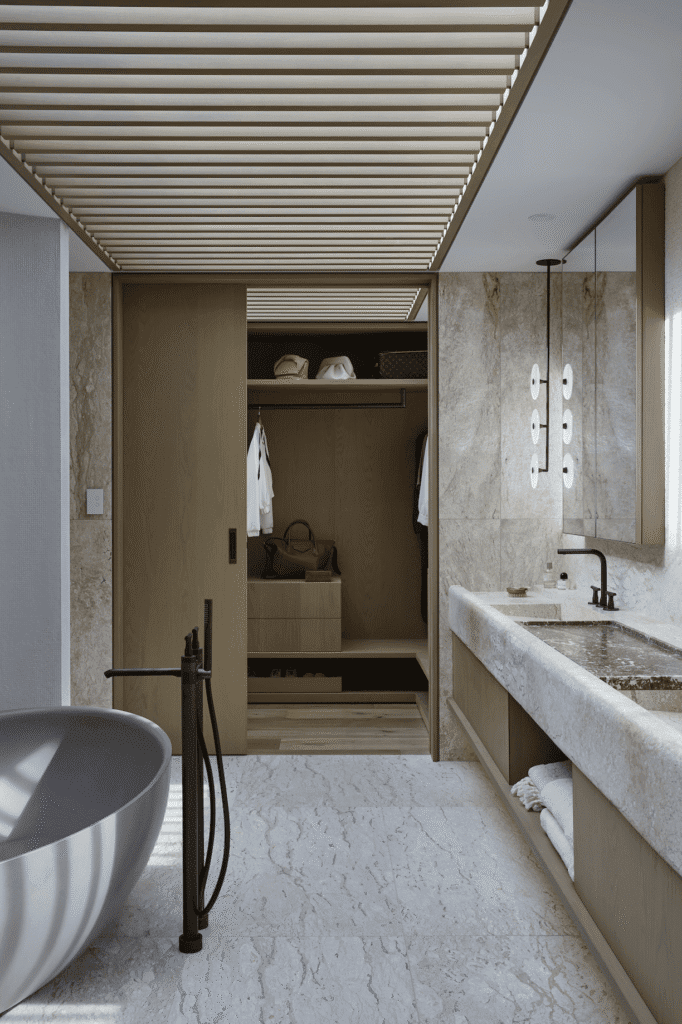
This ensuite has no windows but is always washed in an abundance of dappled natural light that filters through a slatted timber screen from a large skylight. “You get the most beautiful light. There are only three material surfaces in the whole room, so we wanted to celebrate each in its own format. We’ve used the same creamy travertine in different ways: honed for a beautiful soft tactility on the floor and walls, and combed behind the vanity and mirror and extending into the walk-through wardrobes, which expresses the material differently,” interior designer Sonya Cotter explains of this project she aptly named, Omaha Retreat. Image: Jackie Meiring

Spaces for ritual

Perhaps the most significant shift is conceptual. Increasingly, bathrooms are designed not simply as places to wash, but as spaces for ritual.

Freestanding baths, generous walk-in showers, and carefully composed vanities turn everyday routines into moments of restoration. In an age of constant movement and digital noise, these rooms offer something particularly valuable: stillness in its most decadent form.

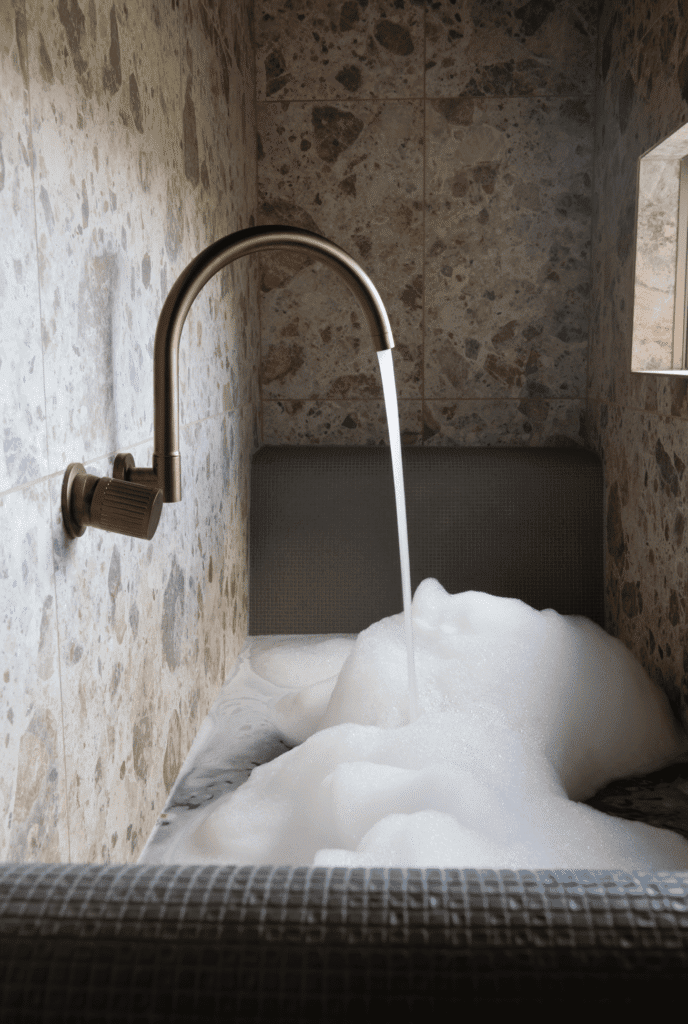
In this reimagined 1970s home in Auckland's Titirangi, Rarebirds Interiors transformed an awkward, small space into a decadent retreat for daily ritual. Image: Kelsie Barley

The bathroom of the future

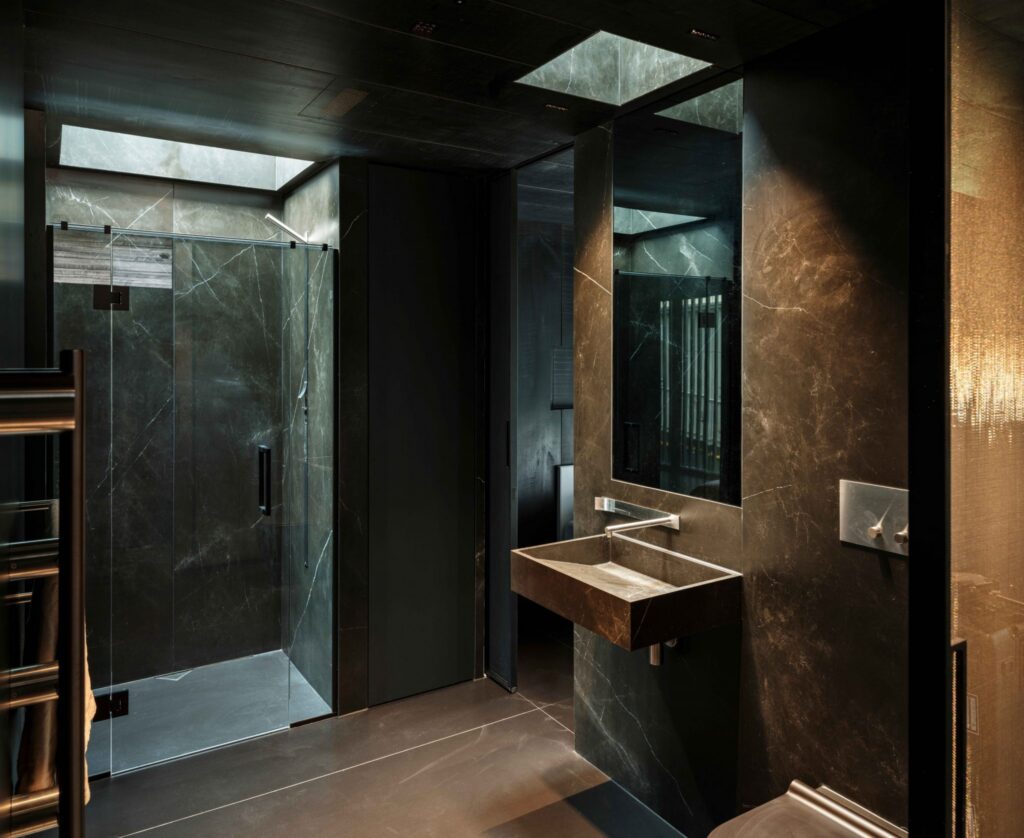
In the 2025 Home of the Year, Bunker House by Chris Tate Architecture, the bathroom is sculptural, moody, and tactile. Skylights illuminate a palette of depth where large format tiles and rich dark tones prevail. Image: Simon Devitt
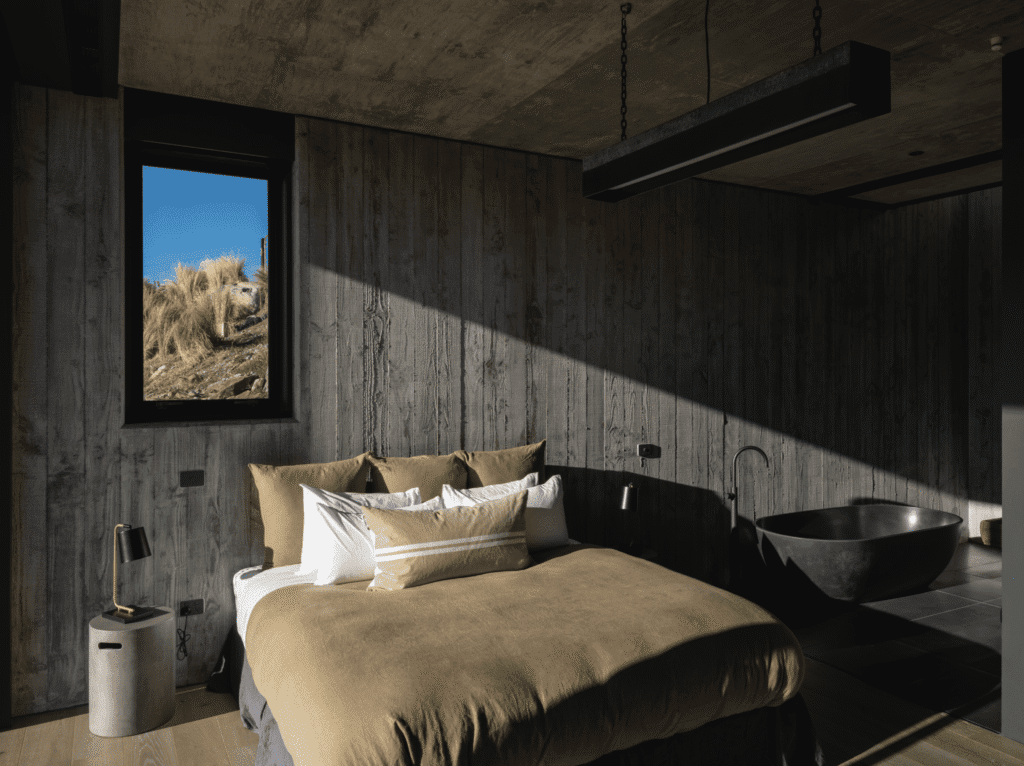
In this partially subterranean home by Dalman Architects near Lake Tekapo, a freestanding bath becomes a sculptural element of the bedroom, its proximity to the windows allowing for full views of the remote landscape beyond when bathing. Image: Simon Devitt

As we look towards the future of bathroom design, one thing appears certain. Rather than relying on overt statements, architects and designers are increasingly crafting spaces where atmosphere emerges through careful proportion, thoughtful material choices, and the subtle choreography of light.

In this way, the bathroom is becoming a place where architecture is experienced at its most intimate — a room where the smallest details shape how we begin and end each day.

Latest video features

In the Coromandel, a home with a humble profile and a thoughtful design makes the most of a stunning location.

Built with awe-inspiring attention to detail, this Arrowtown home is a fresh interpretation of a familiar Otago rural vernacular.

This sculptural Northland bach is a perfect north arrow on a remote farm high above the sea.

With the sun on its bow and the community at its stern, this is a house in which the elements are always front of mind.

Trending articles

Arts and Books

Martino Gamper x Objectspace

Objectspace launches its 2026 programme with a major new commission by Italian designer Martino Gamper, whose work has long explored the cultural and social life

Architecture For Sale

Geode House, Waiheke Island

This award-winning cabin on Waiheke Island by architect Vaughn McQuarrie and interior designer Sara Fraser of Sartoria is on the market for the first time.