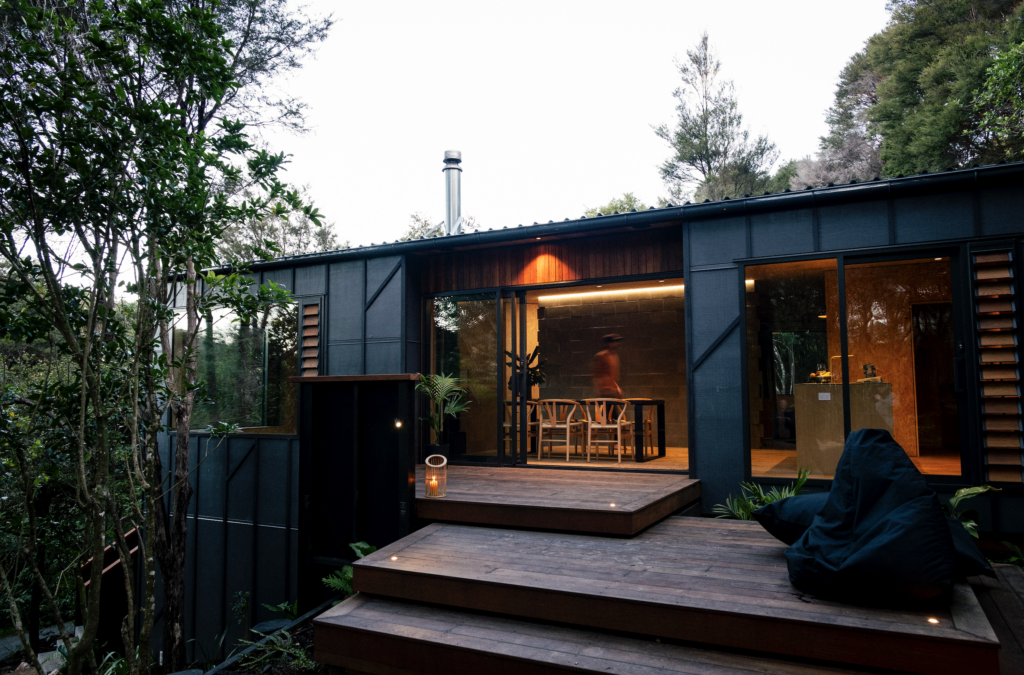
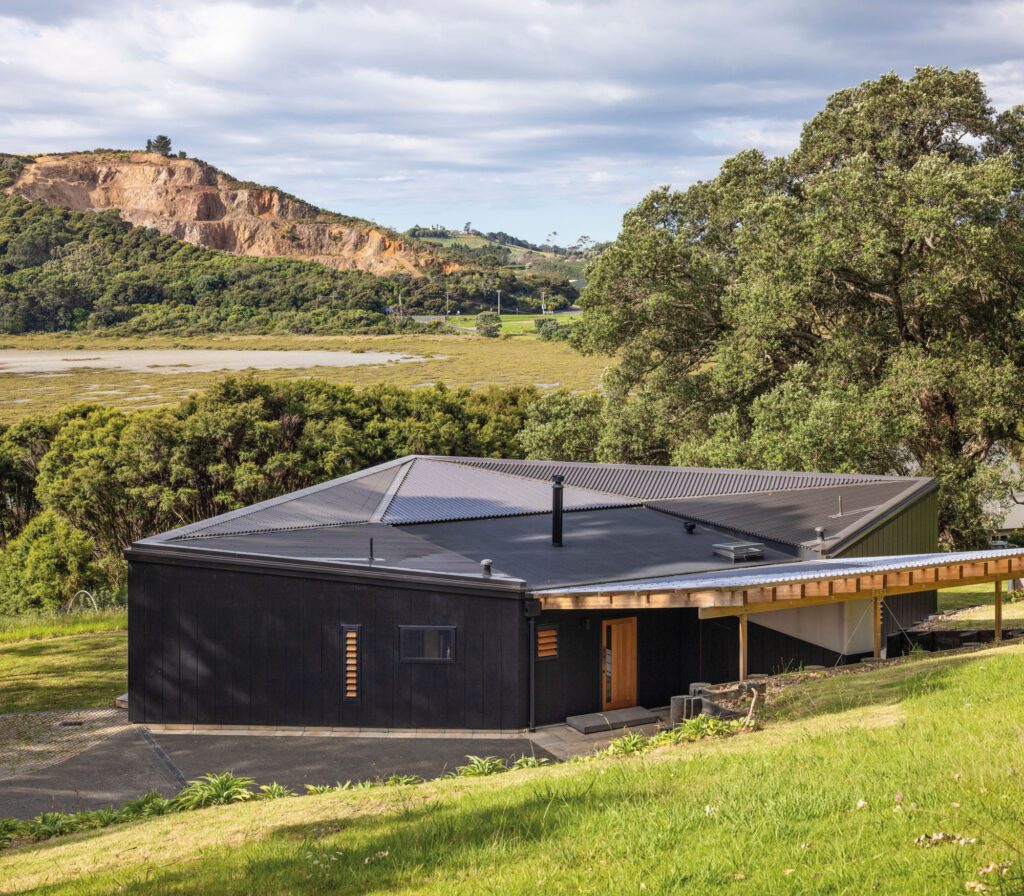
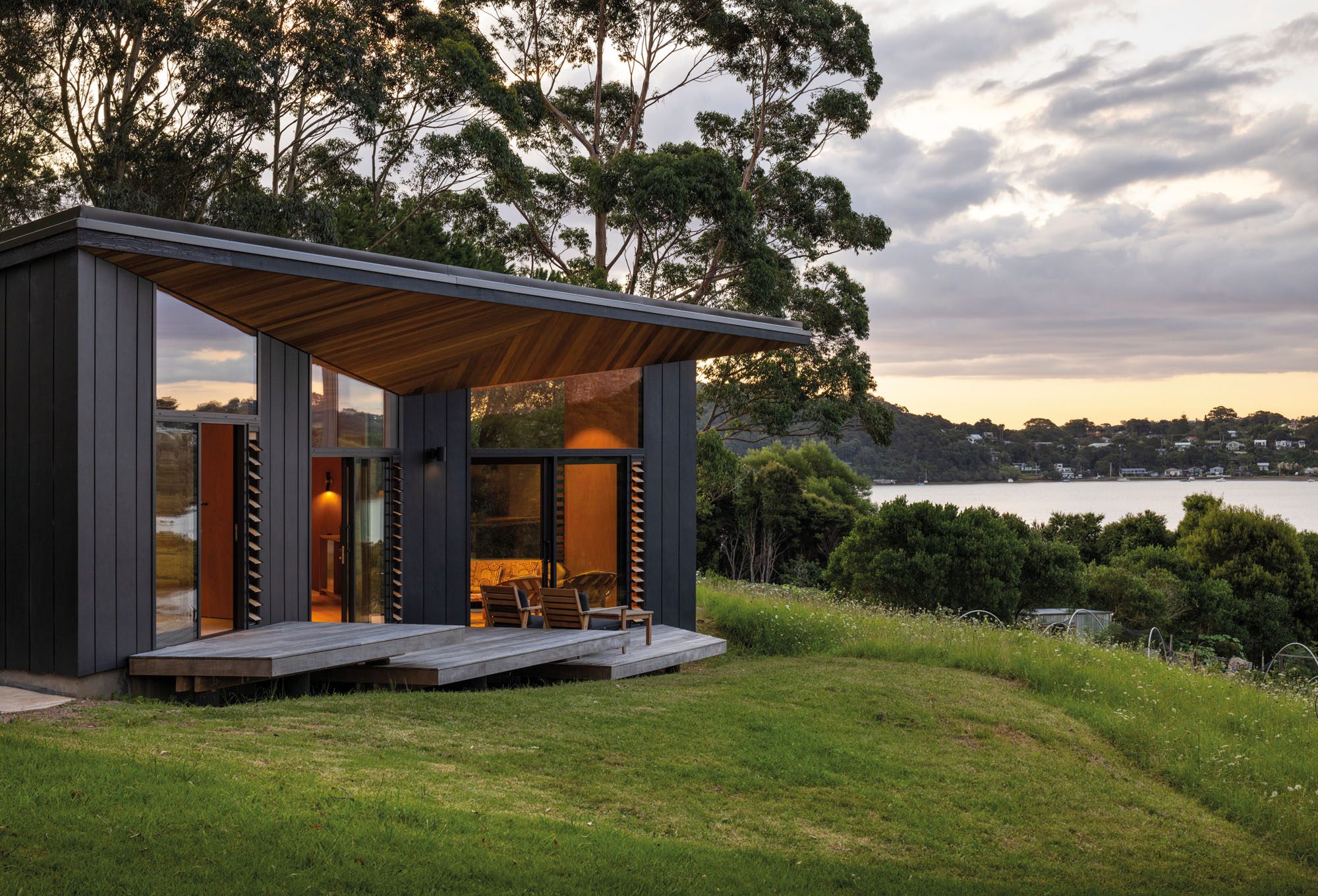
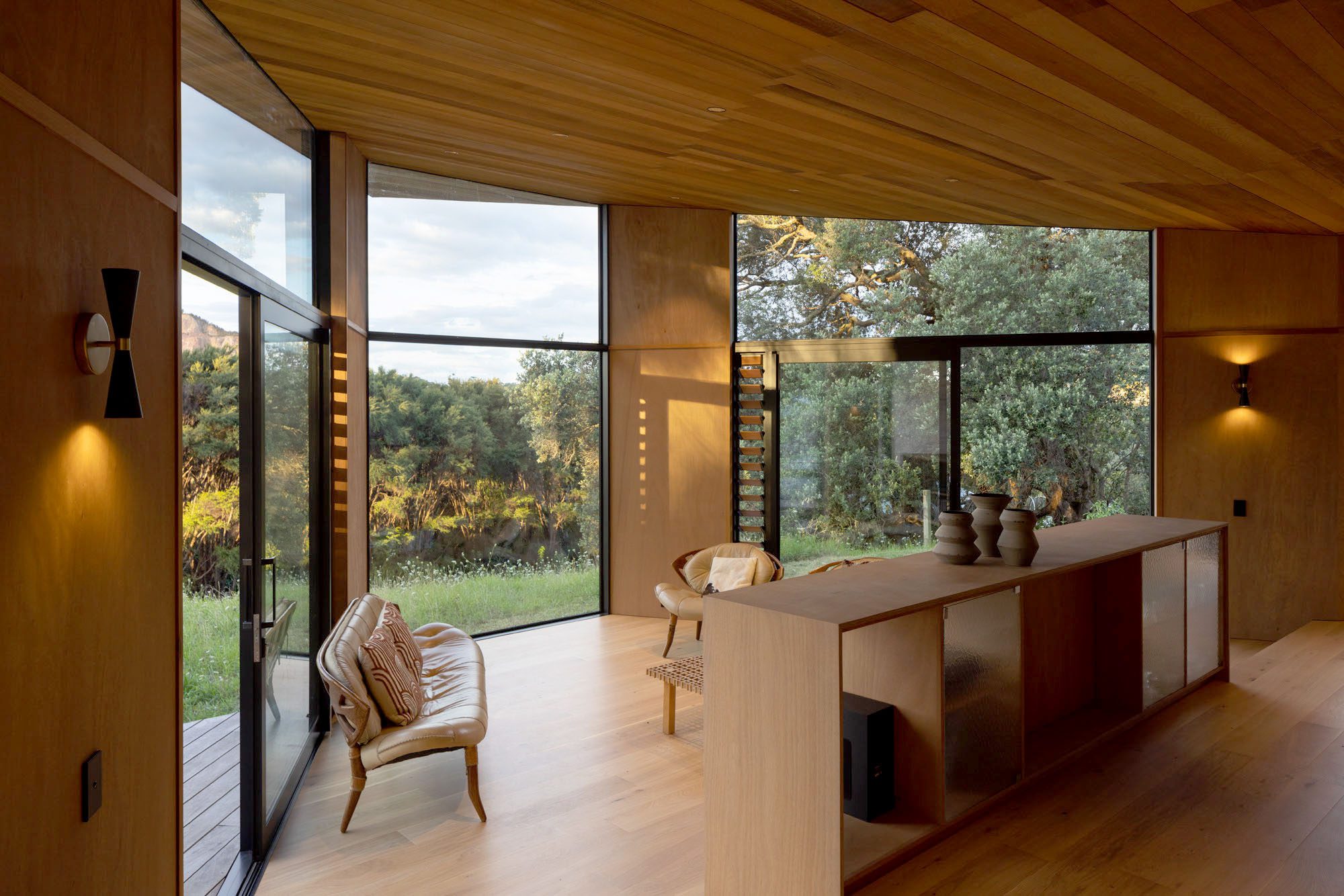
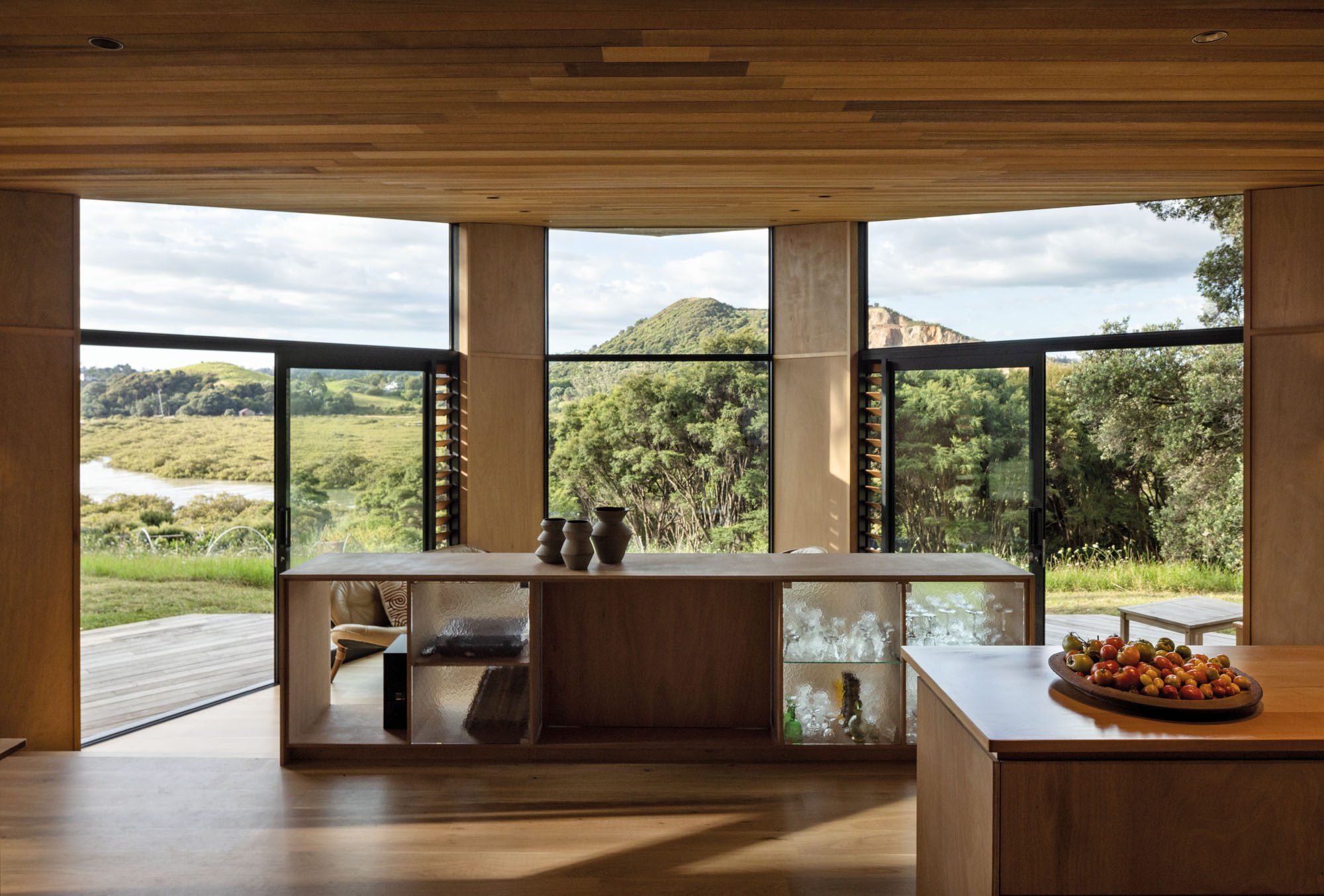

A 150m² off-grid home for two on Waiheke Island. Birdlife abounds; vegetables are grown and harvested on site year-round. It’s quiet, yet connected to the gentle hum of island life, and private in turn. A mature pōhutukawa and the sea beyond are the anchor points for a home that unequivocally becomes part of the ecosystem of its site.
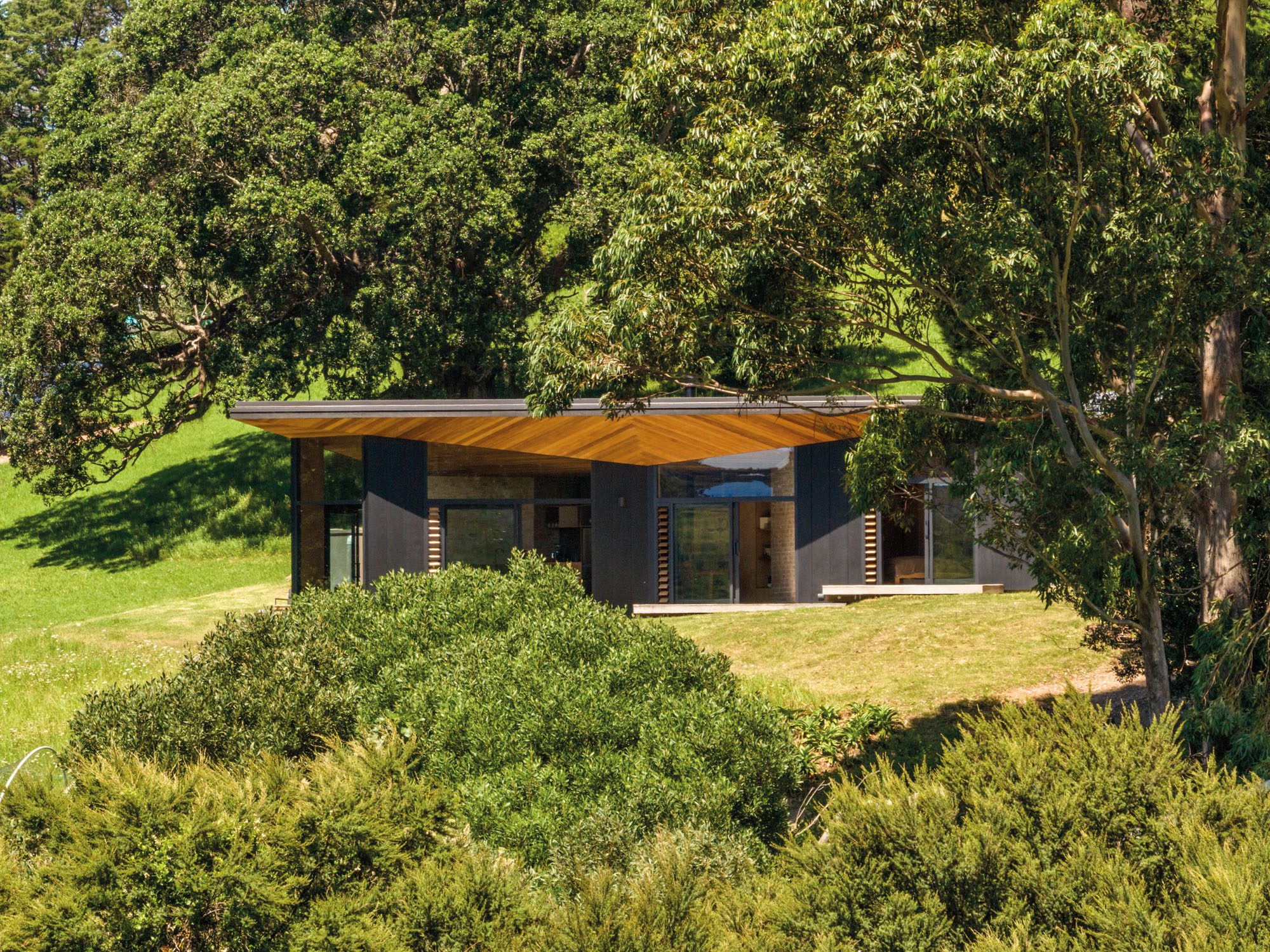
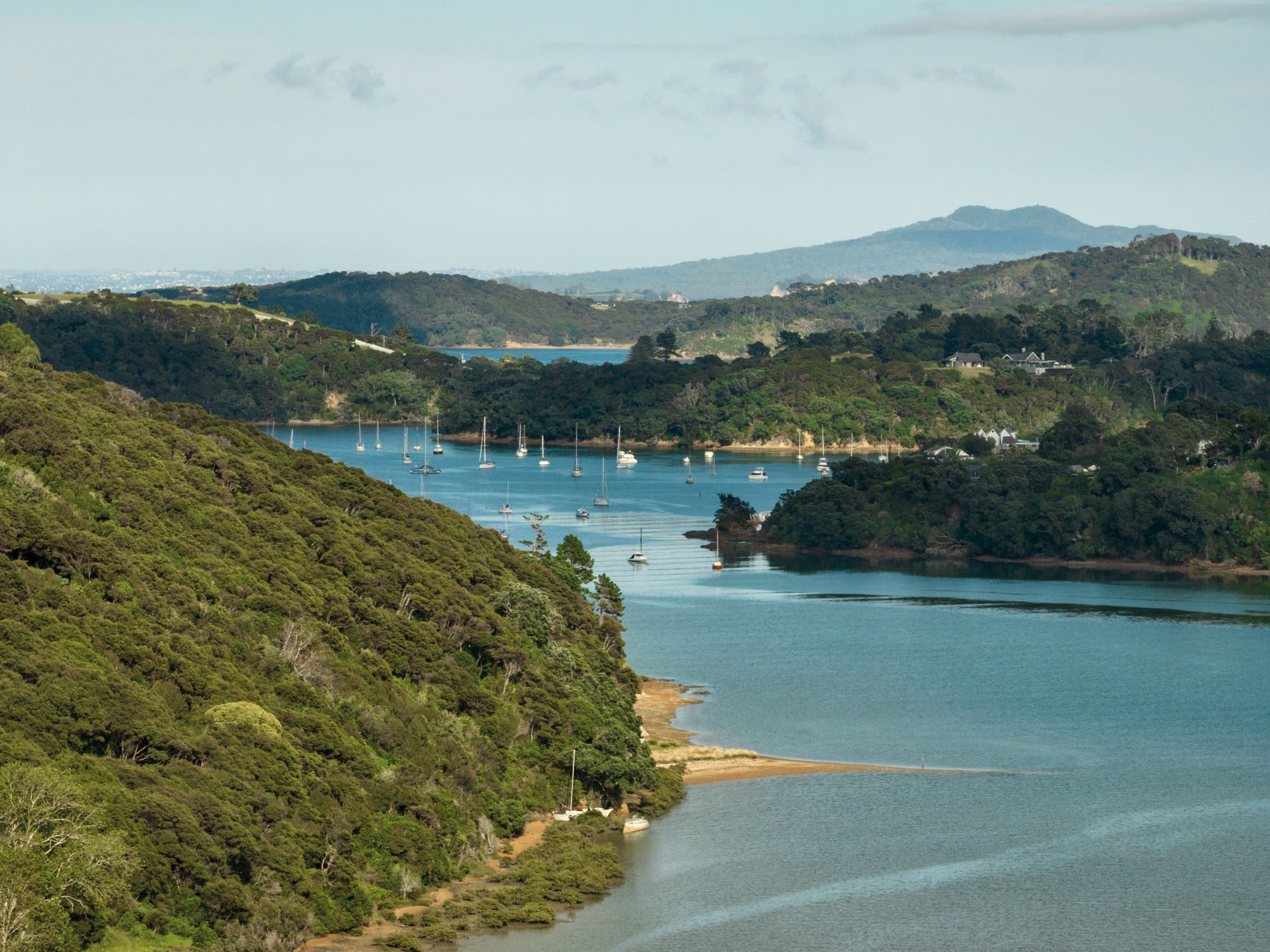
On a sunlit slope above Anzac Bay, a small house folds itself gently into the Waiheke landscape. It is a home shaped by memory, by seed pods and seabirds, by the flight of paper — and the intuitive creativity of its architect.
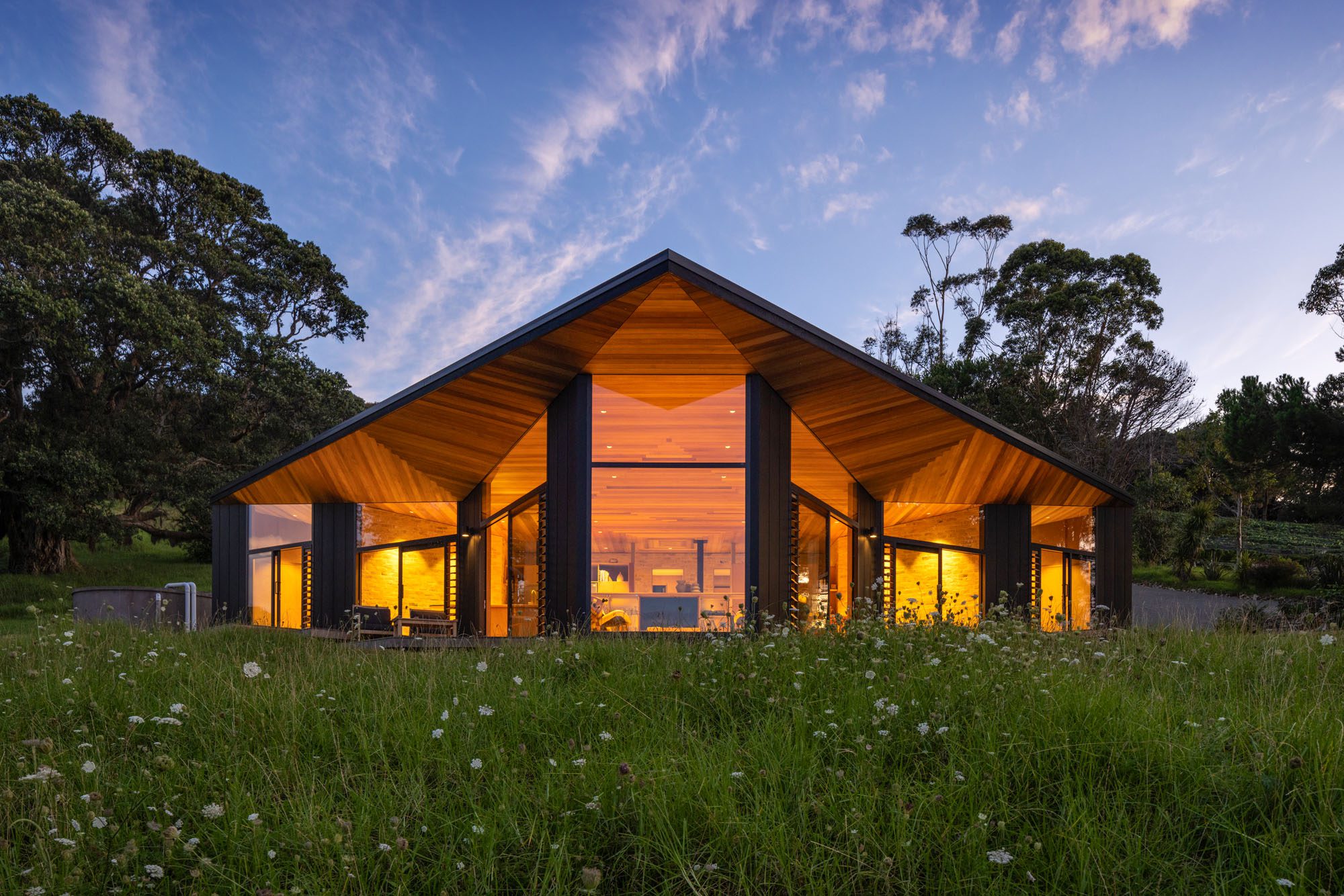
When architect Vaughn McQuarrie first walked around the site, he bent to pick up a fallen pōhutukawa seed pod. In that instinctive, unnoticed moment, a design was born. The pod’s four-pointed shell, opening out to reveal points like a compass, echoed the clients’ wish: a house that might somehow resemble a bird in flight.
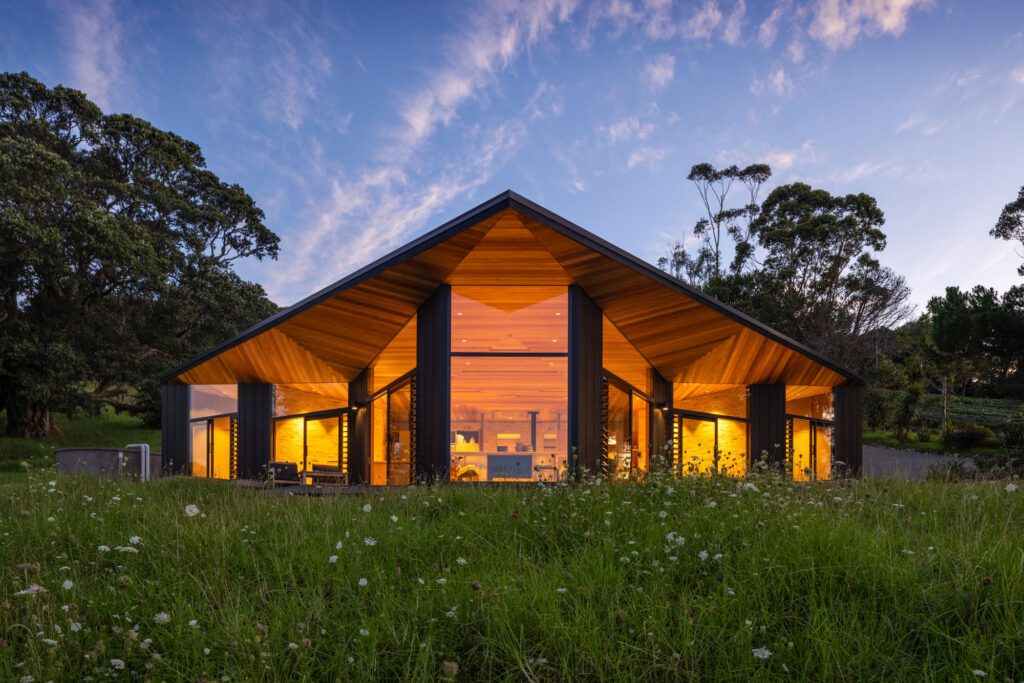
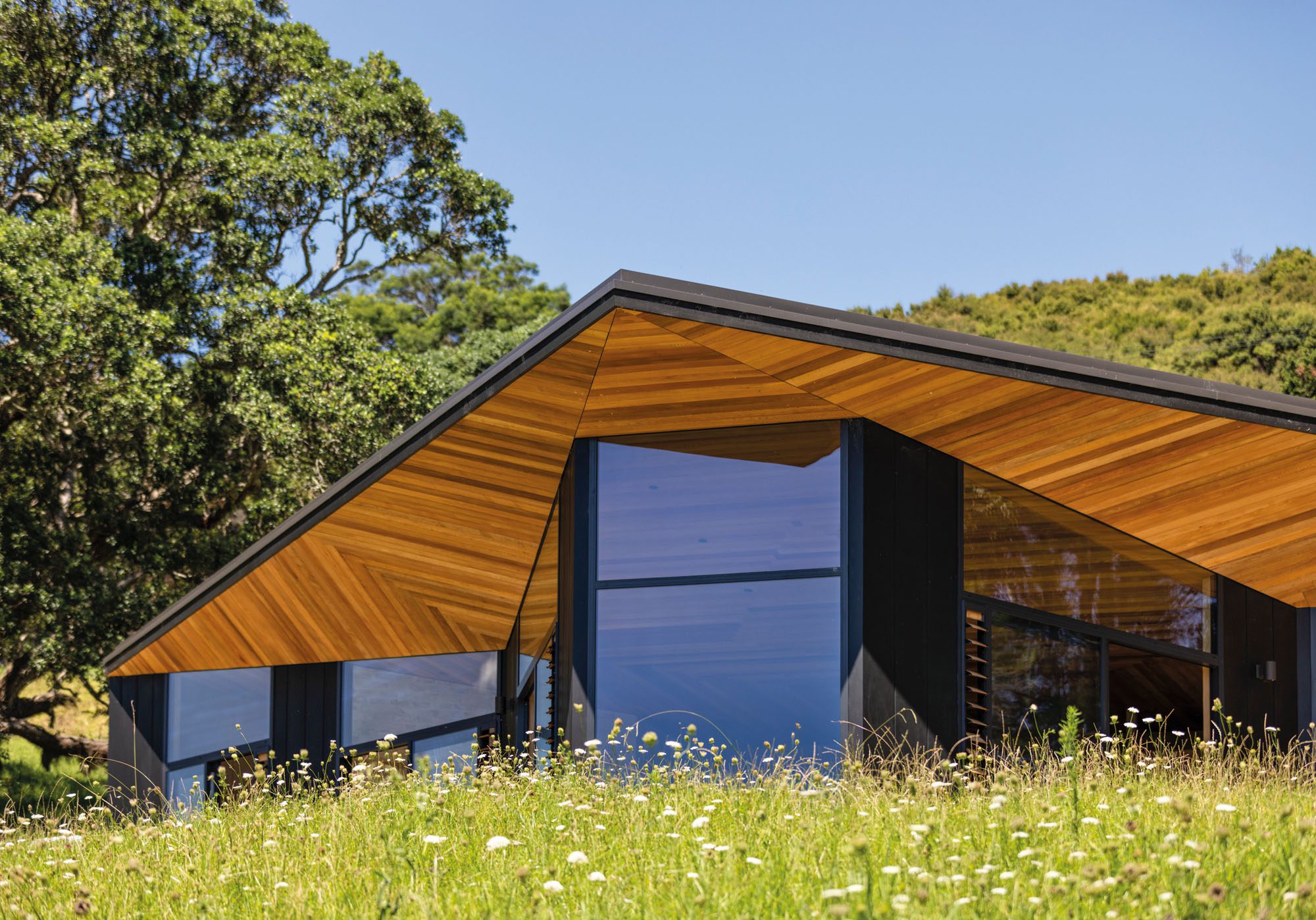
Vaughn folded a square of paper, turning the corners inward, then outward again, so it resembled wings lifting. That paper model became the essence of the home: a form drawn upwards at four points, its roofline soaring like feathers caught on the wind.
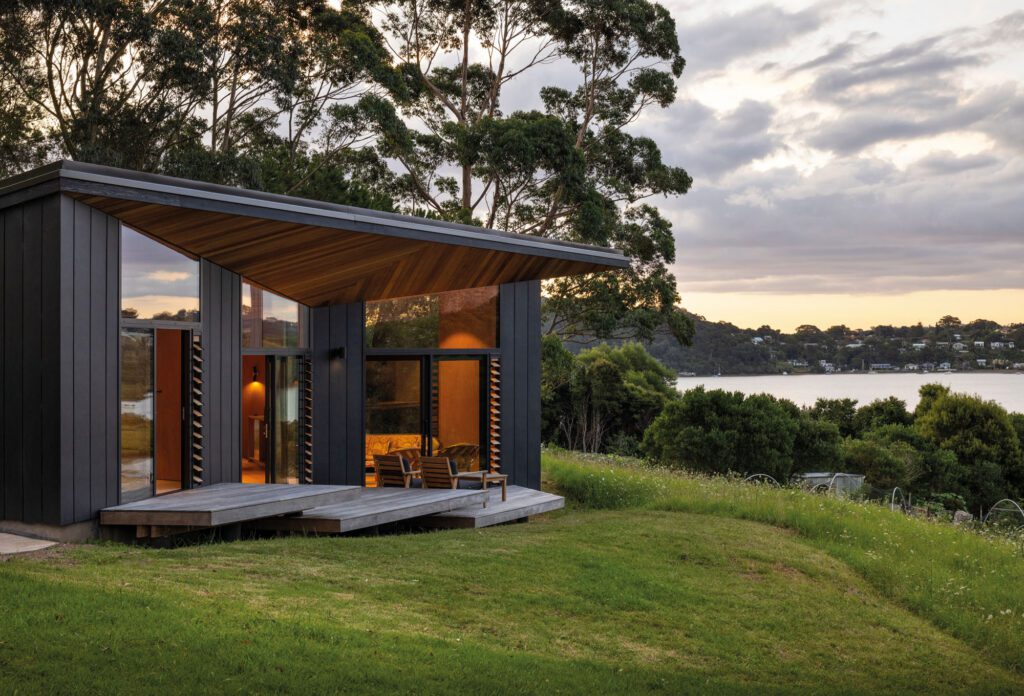
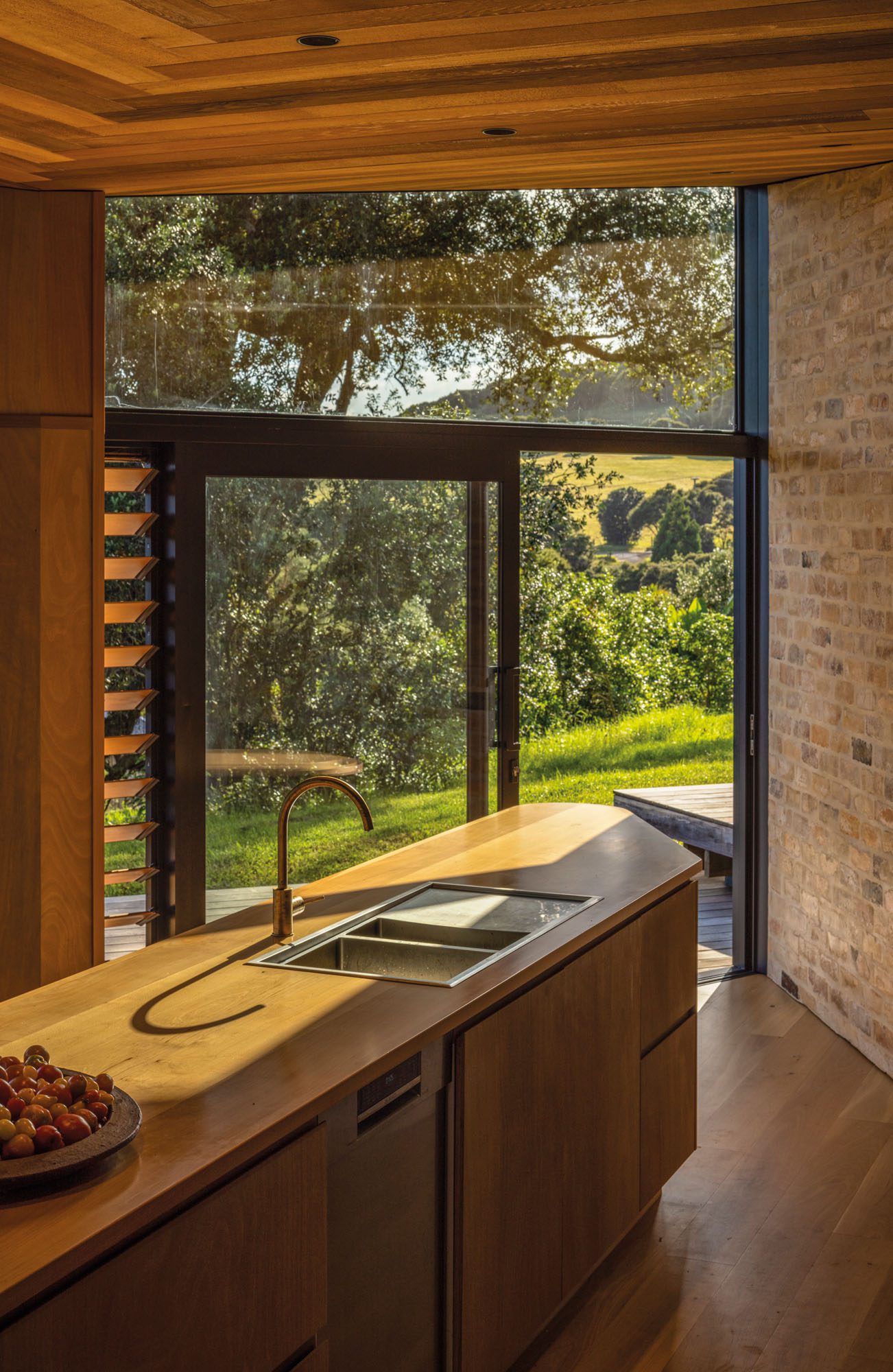
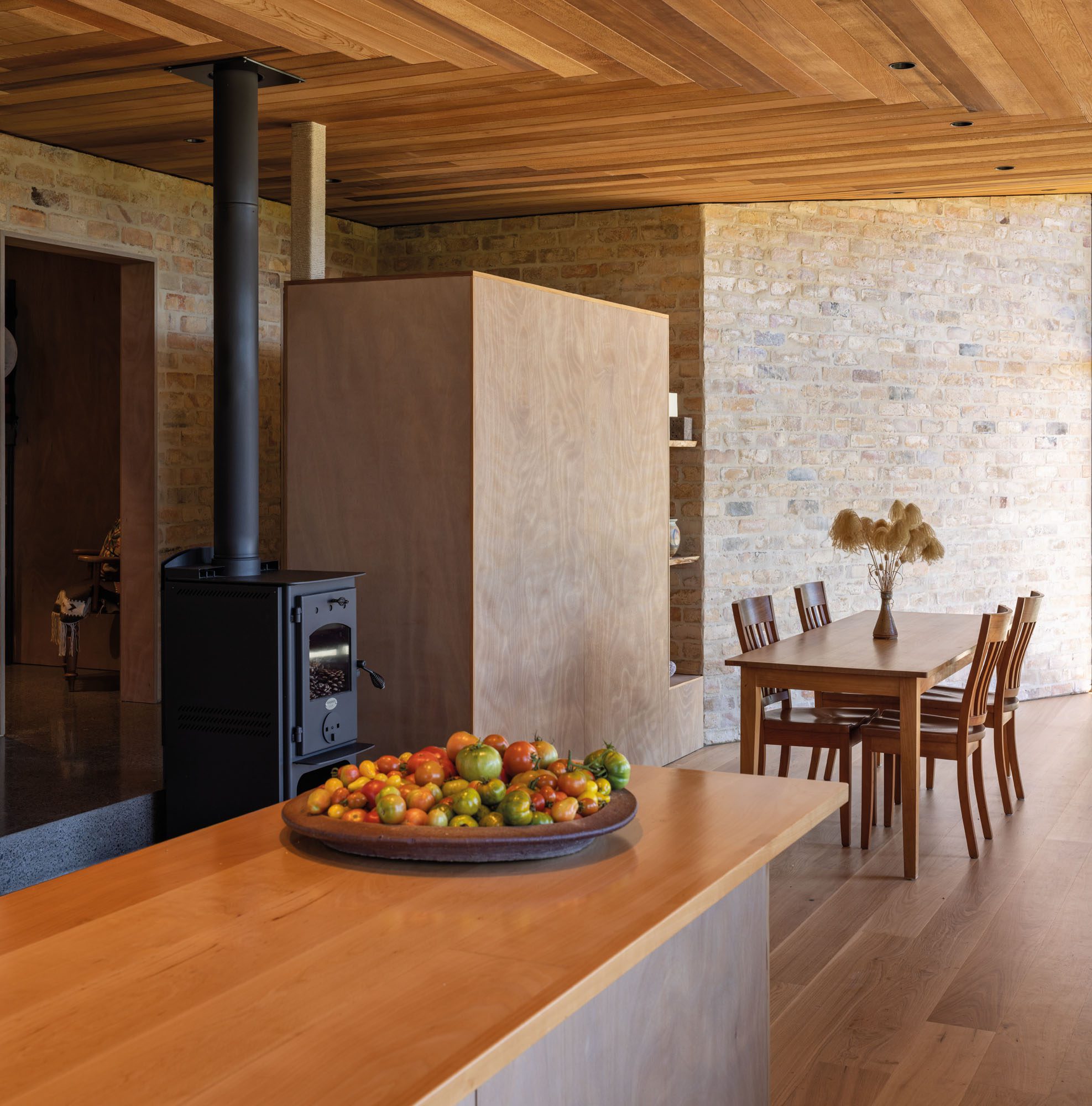
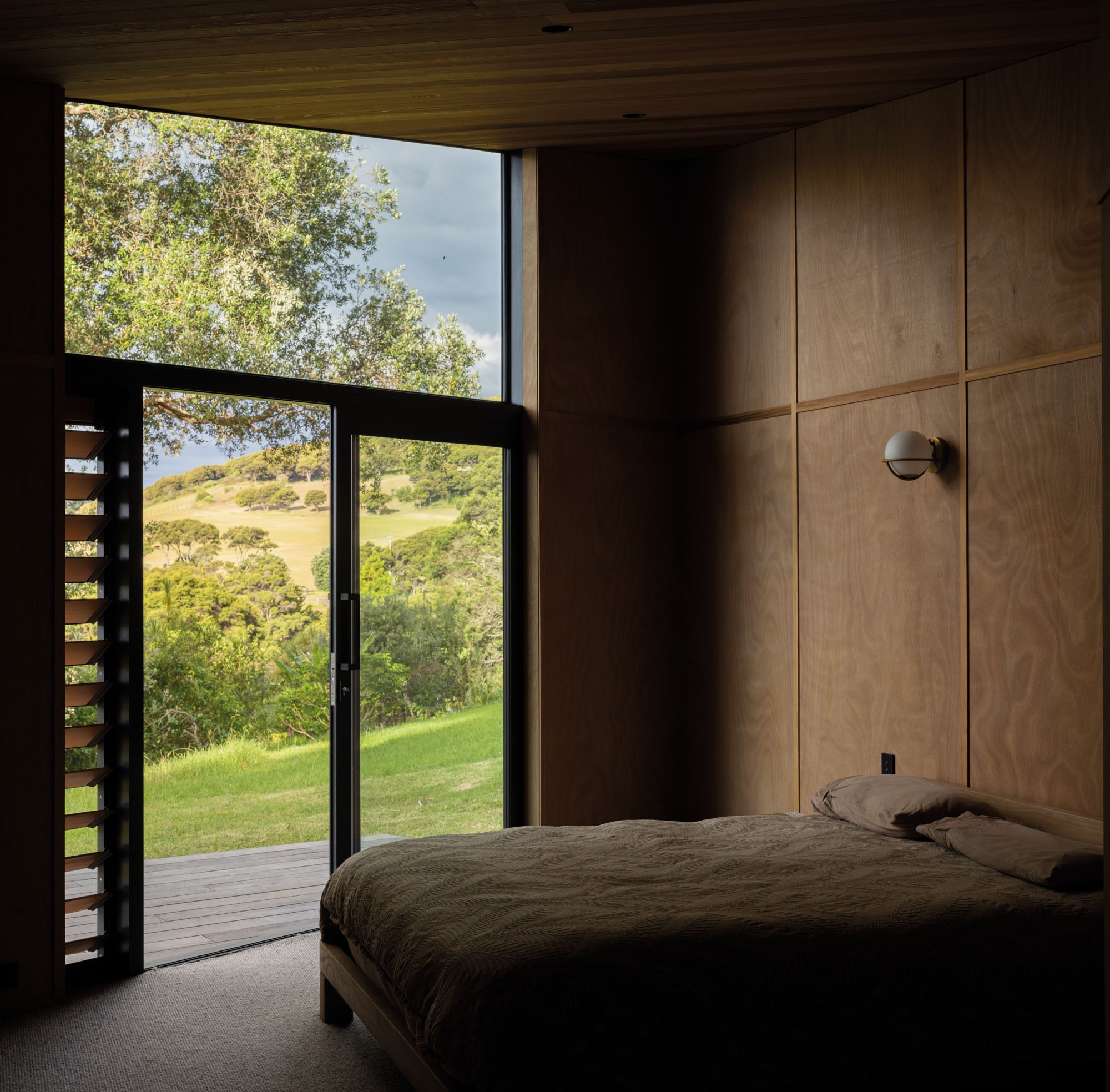
The plan is deceptively simple. Two bedrooms flank the centre: one facing an old pōhutukawa; the other, the sea. Between them, the living spaces cascade gently down the slope, the kitchen to the east, the dining room to the west, the living room stepped down to embrace the view; at every moment, this design breathes with the site.
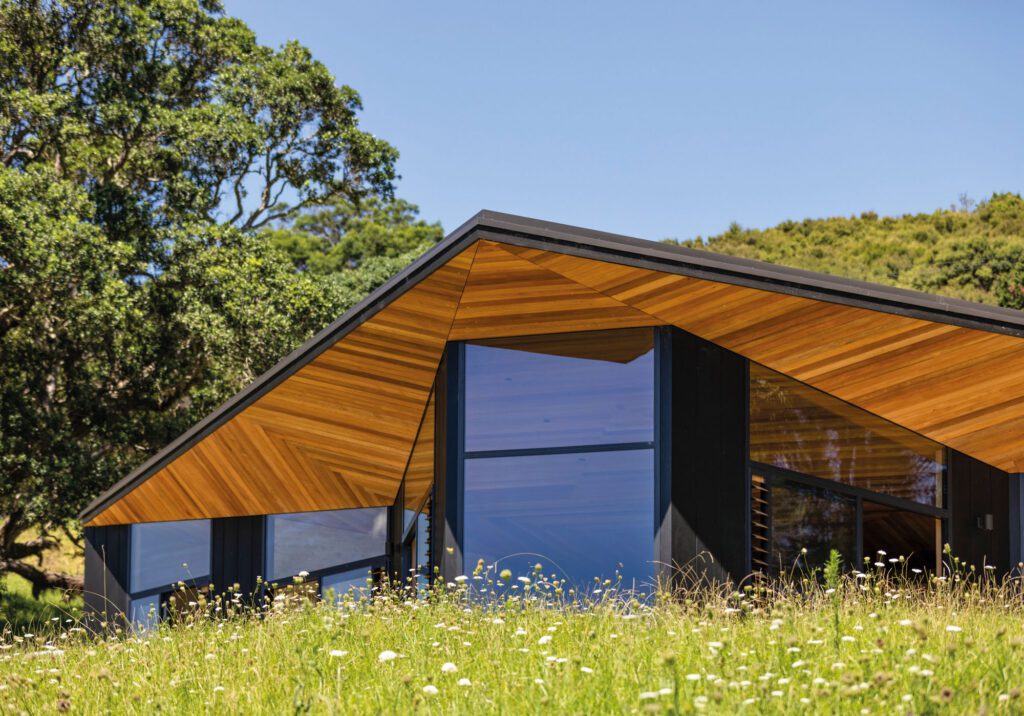
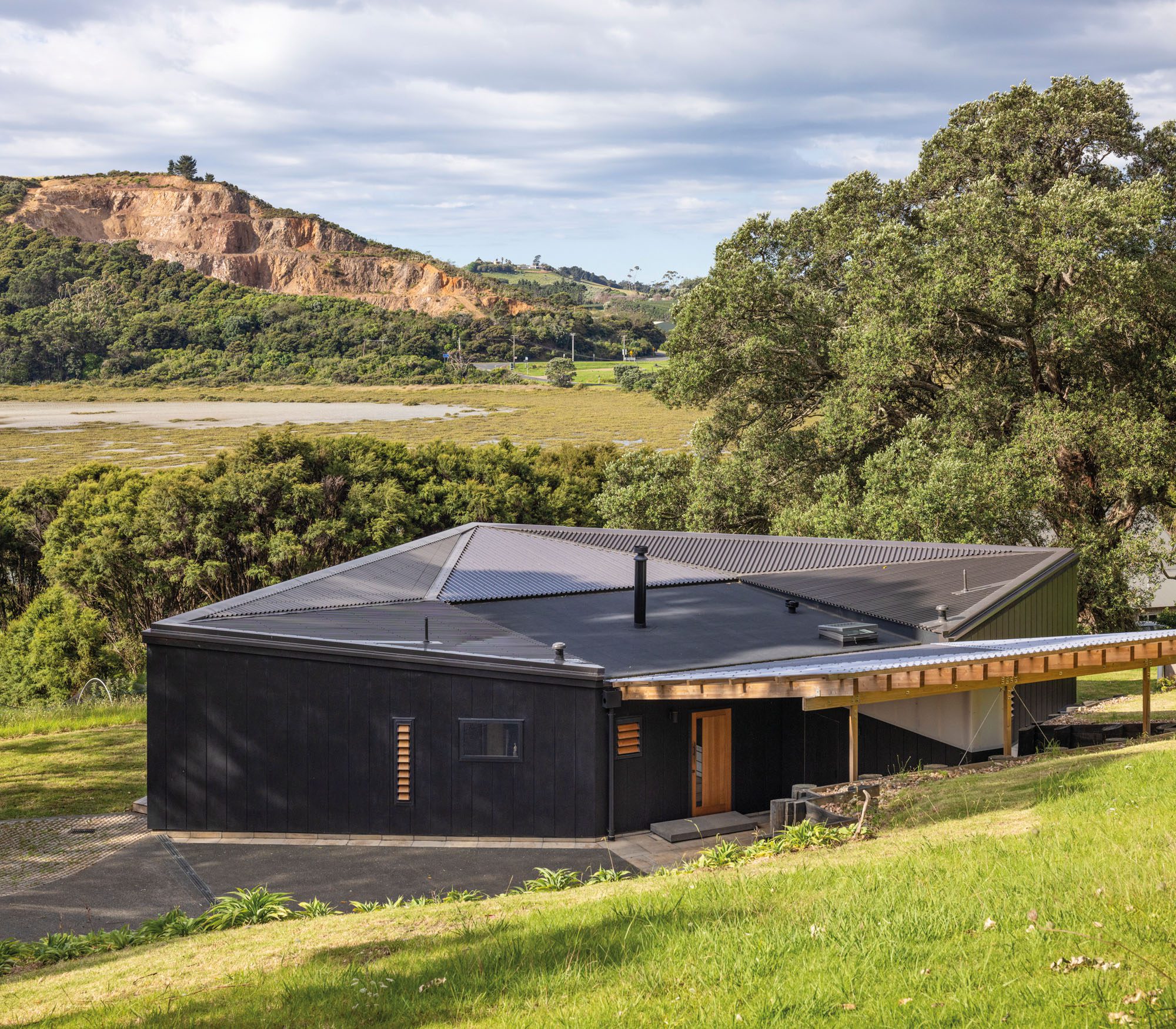
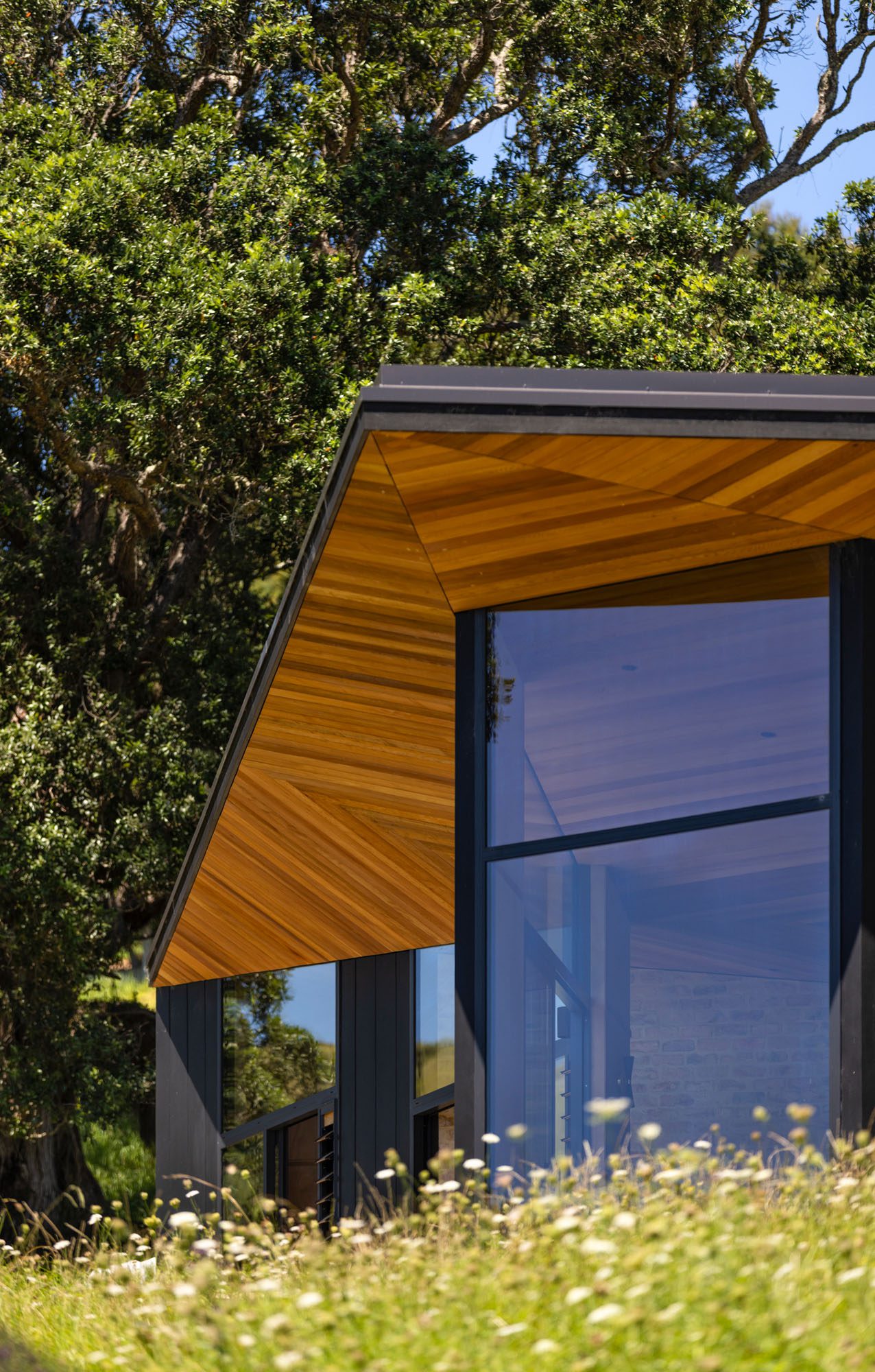
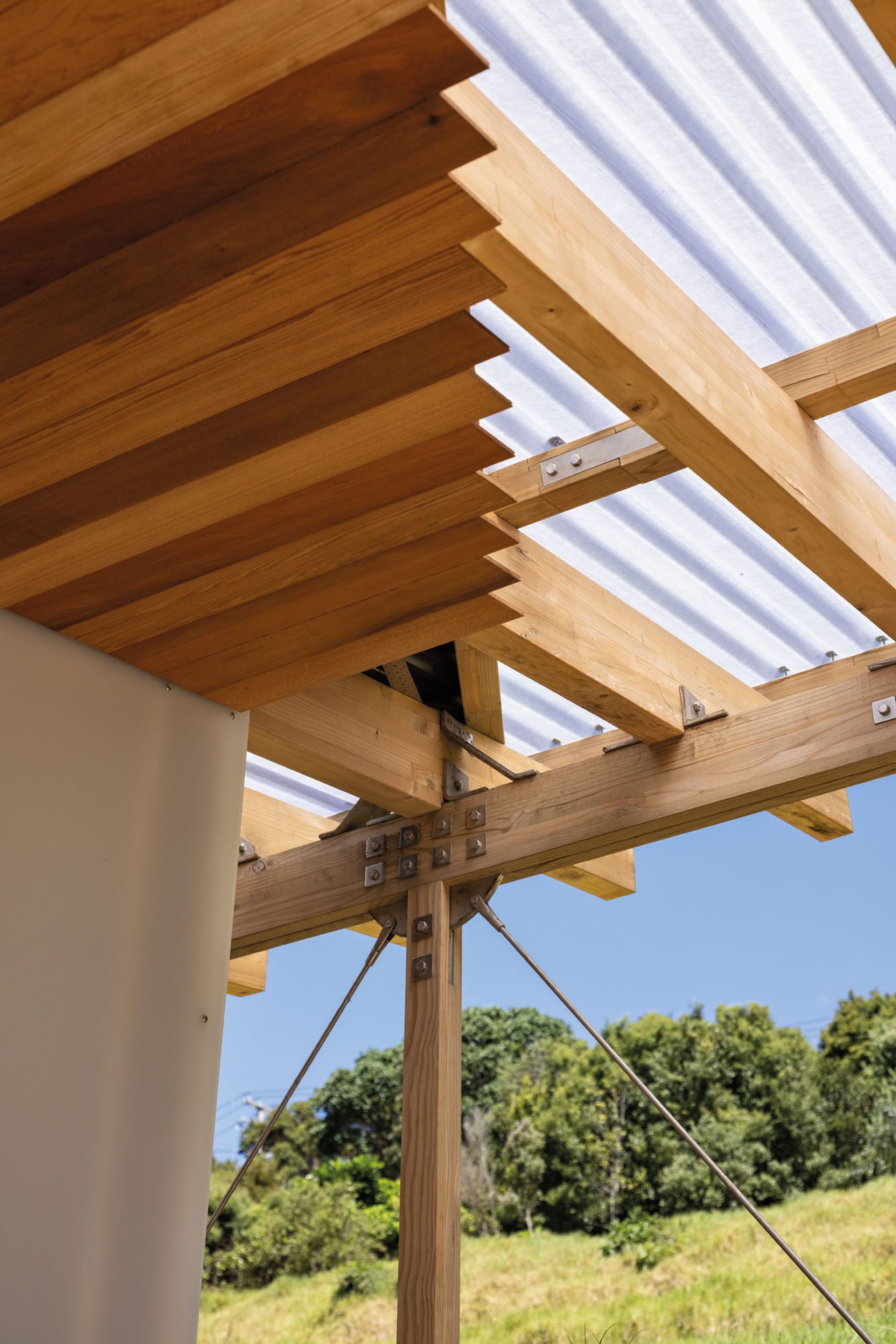
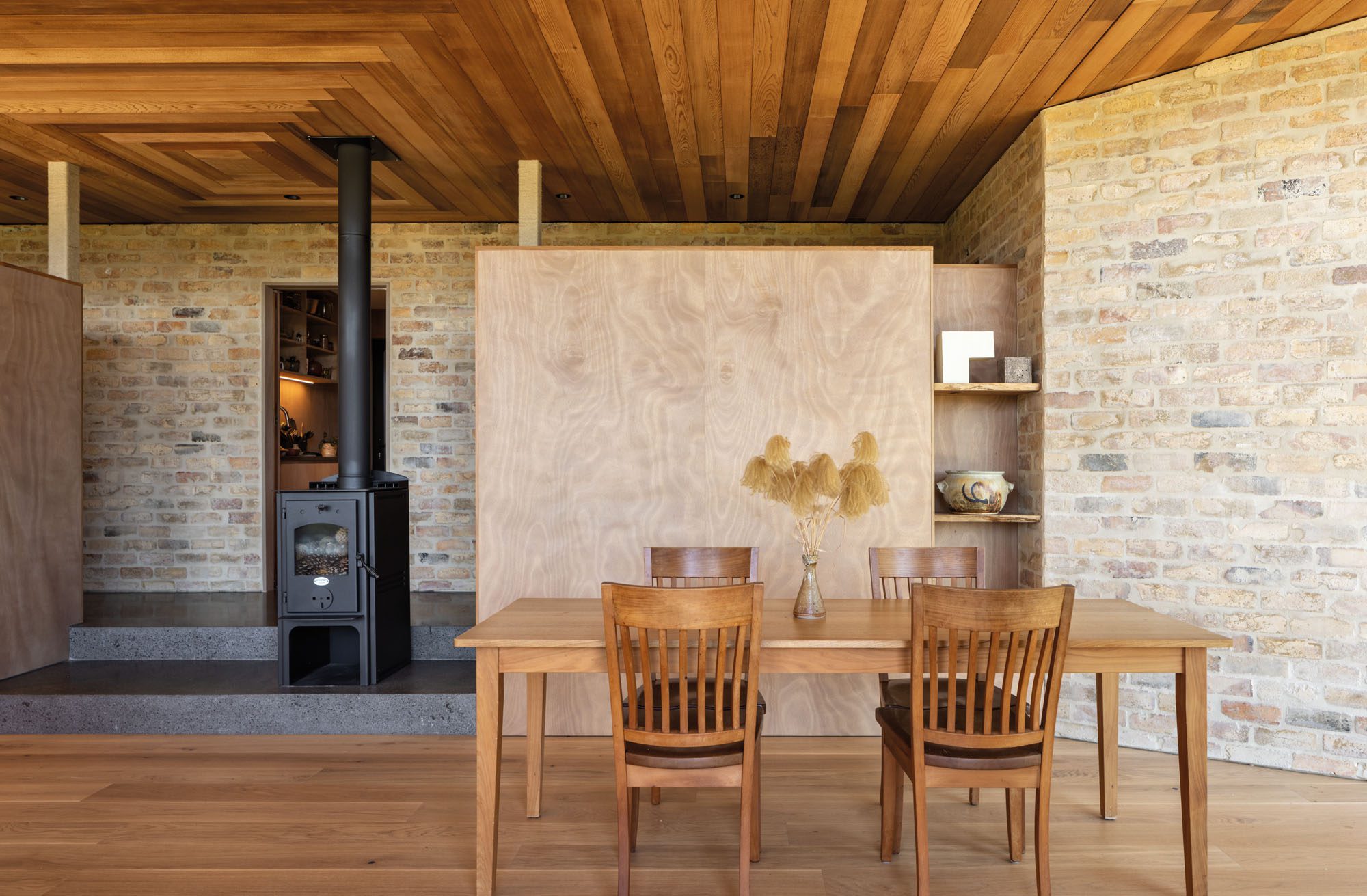
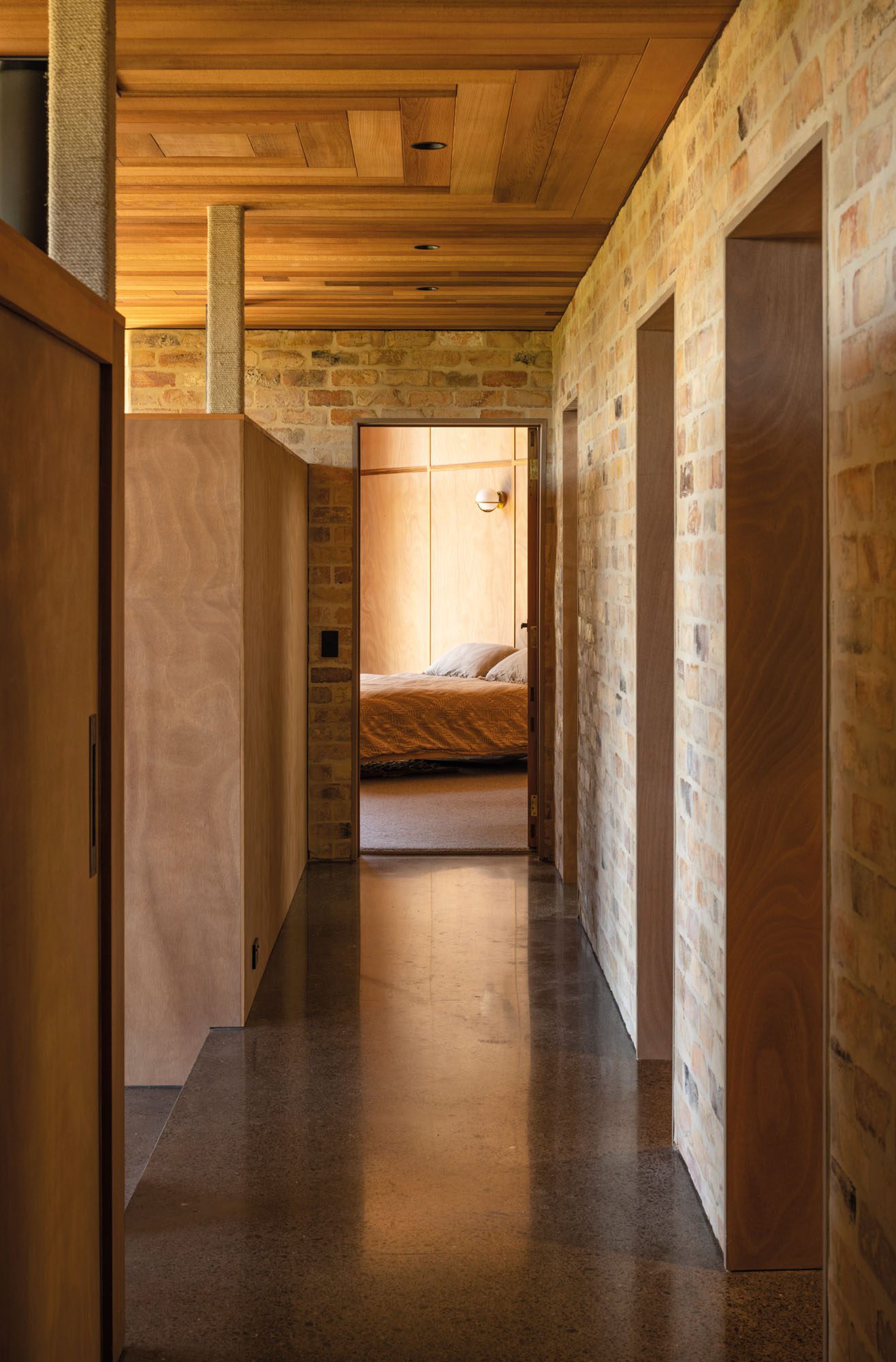
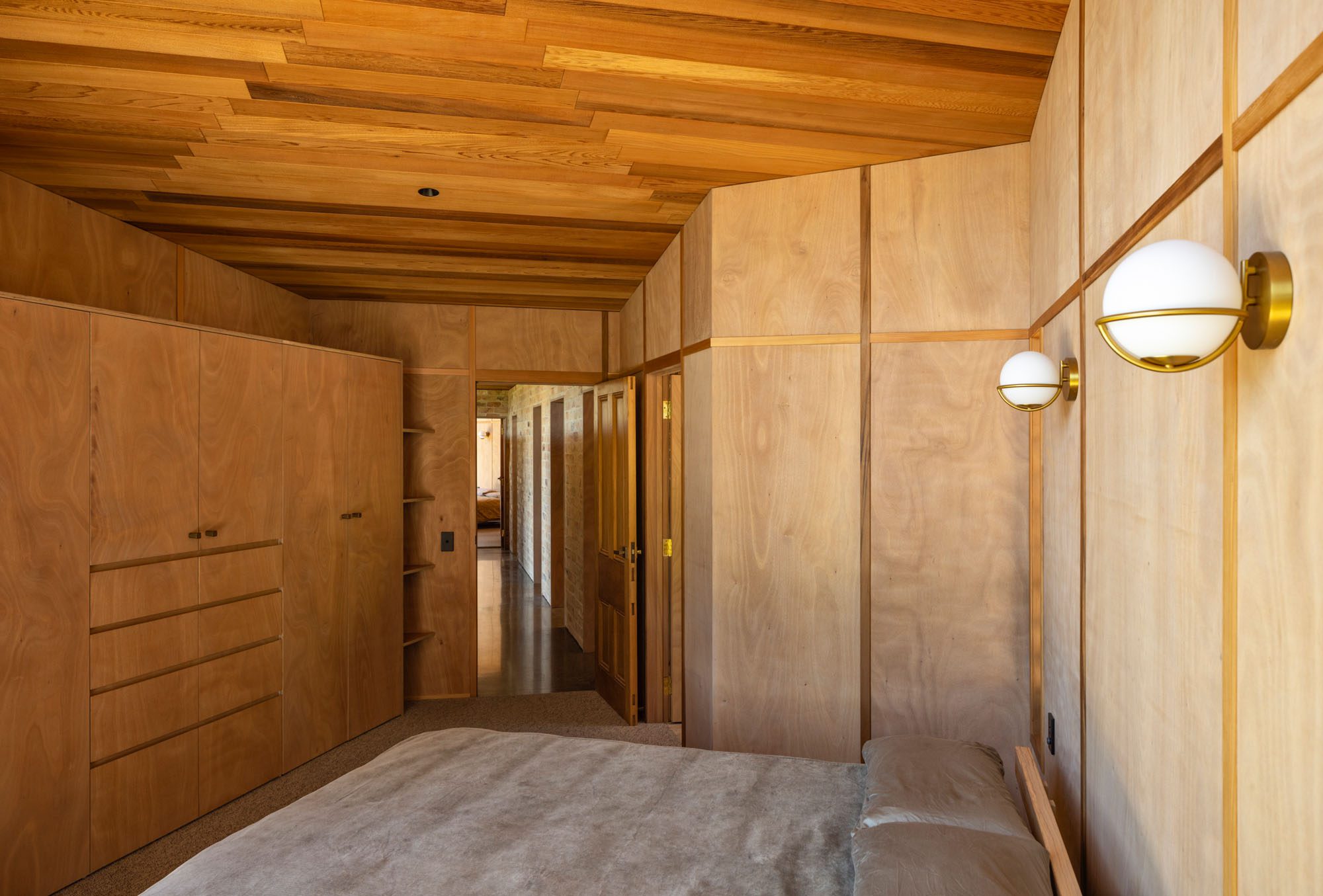
Clad in black fibre cement, the house recedes, allowing the ceiling to command attention, from inside and out. The cedar soffit fans outward in precise strokes — each board a feather, each apex a direction. At the southern point, the timber gives way to a translucent polycarbonate exposing the structure: a tail bone, a moment of intrigue and an invitation. Step beneath it, and you arrive in the mudroom, where reclaimed brick walls are grounding, weathered and storied. Every material inside is influenced by this: the timber floors, cabinetry and benchtop are designed to create a soft synergy around the earthen tones of the brick.
Modest in size at 150m², the home is off-grid and entirely self-sufficient. Powered by the sun, it harvests rainwater while wastewater cycles below ground. A small woodburner is the only heat source. High windows frame the sky and birdlife. Nothing is wasted, and everything sings.
For owners Joy and Brett McDonald, this house is deeply personal. Built by their son-in-law, and paying heed to Brett’s architect father’s butterfly-roof designs, it is layered with family and craft. “It’s like living in a work of art,” Joy says. And it is. Light, quiet, elemental. This home doesn’t impose, it lands softly and sits gently as if ready to take flight — despite its innate permanence and careful integration into the lively flora and fauna of its site.
Words: Clare Chapman
Images: Simon Devitt
This feature first appeared in Homes of this Decade 2015-2025, which was published by Nook Publishing in 2025.