
Herne Bay Villa Renovation

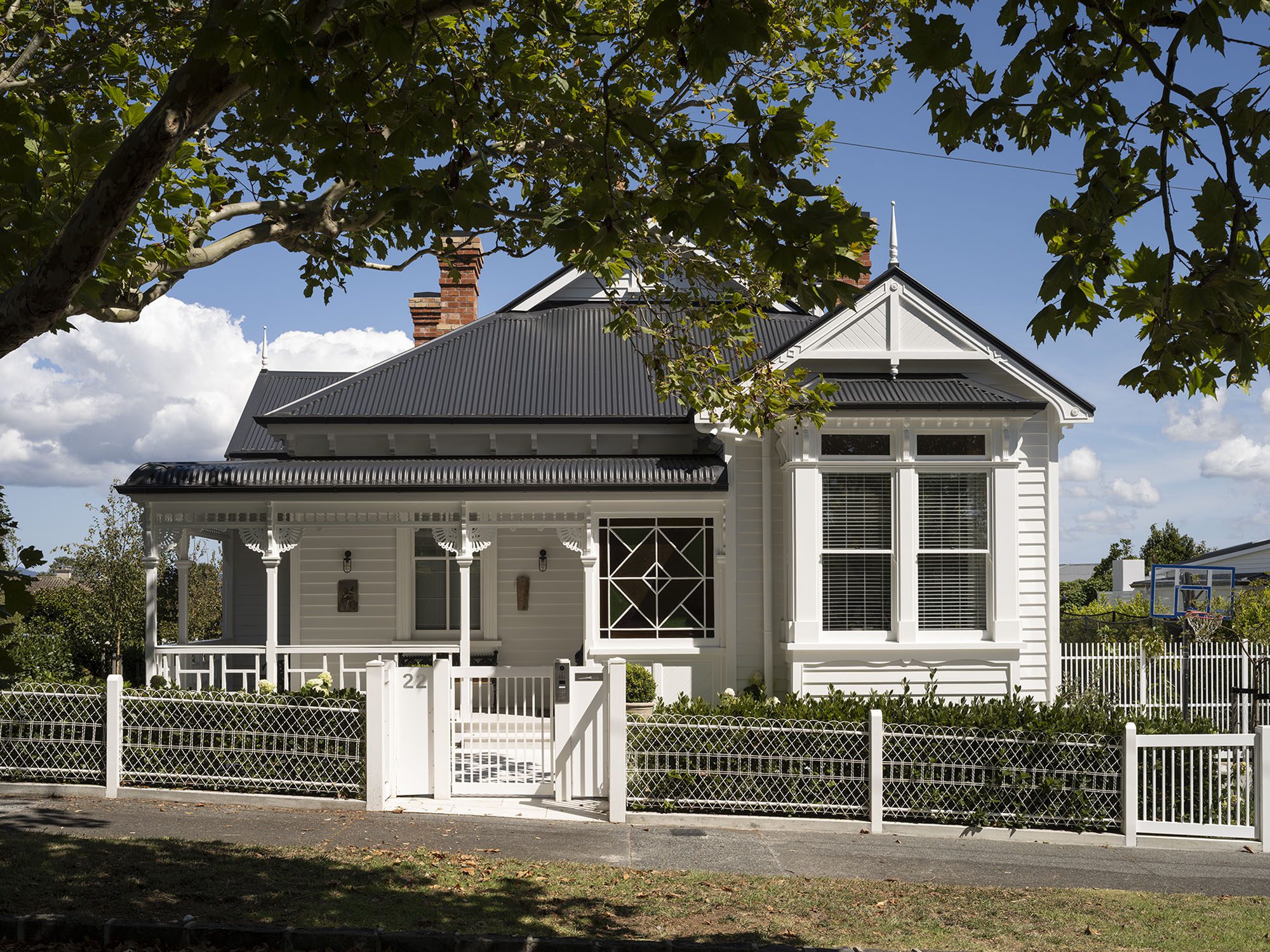
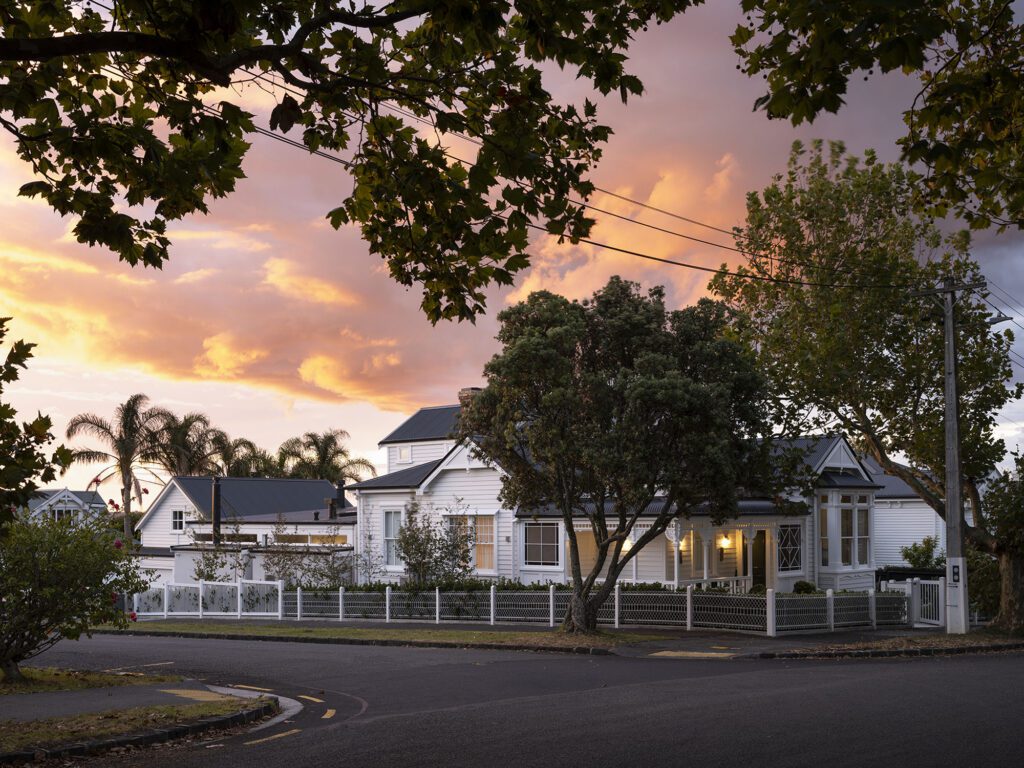
In one of the most stringent heritage-zoned streets of Herne Bay, Hoxha Bailey Architects faced an arduous task: securing approval for a substantial addition to a prominent double-fronted villa.

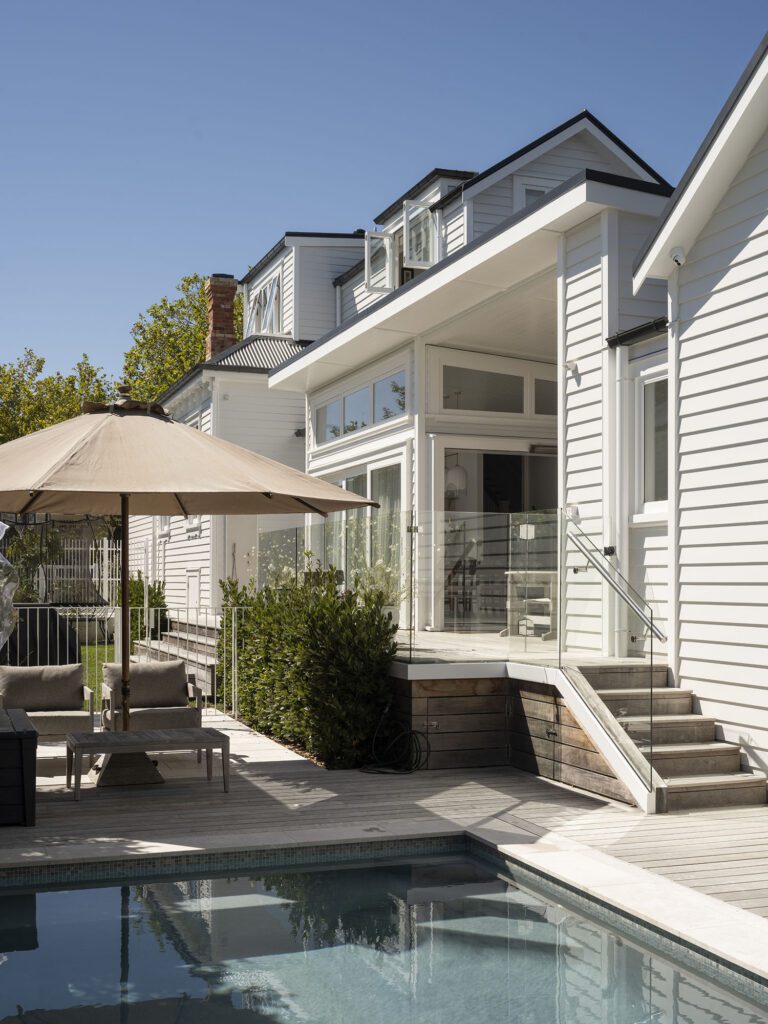
The extension incorporates a new gabled form housing a garage and loft accommodation, linked to the original villa by a contemporary pavilion that opens to a private north-facing garden and poolscape, designed by Aaron Bell-Booth.

After initial pushback from the council’s heritage team, architect Jason Bailey’s clients made the decision to persevere. It would take several years — and ultimately a formal hearing — before the plans were accepted in full. 

It was a green light long in the making, and one well worth the wait. “The clients presented us with a very comprehensive brief,” Jason recalls. “As a family of five, they were thinking carefully about how the house would need to evolve as their children moved through different stages of life.” 

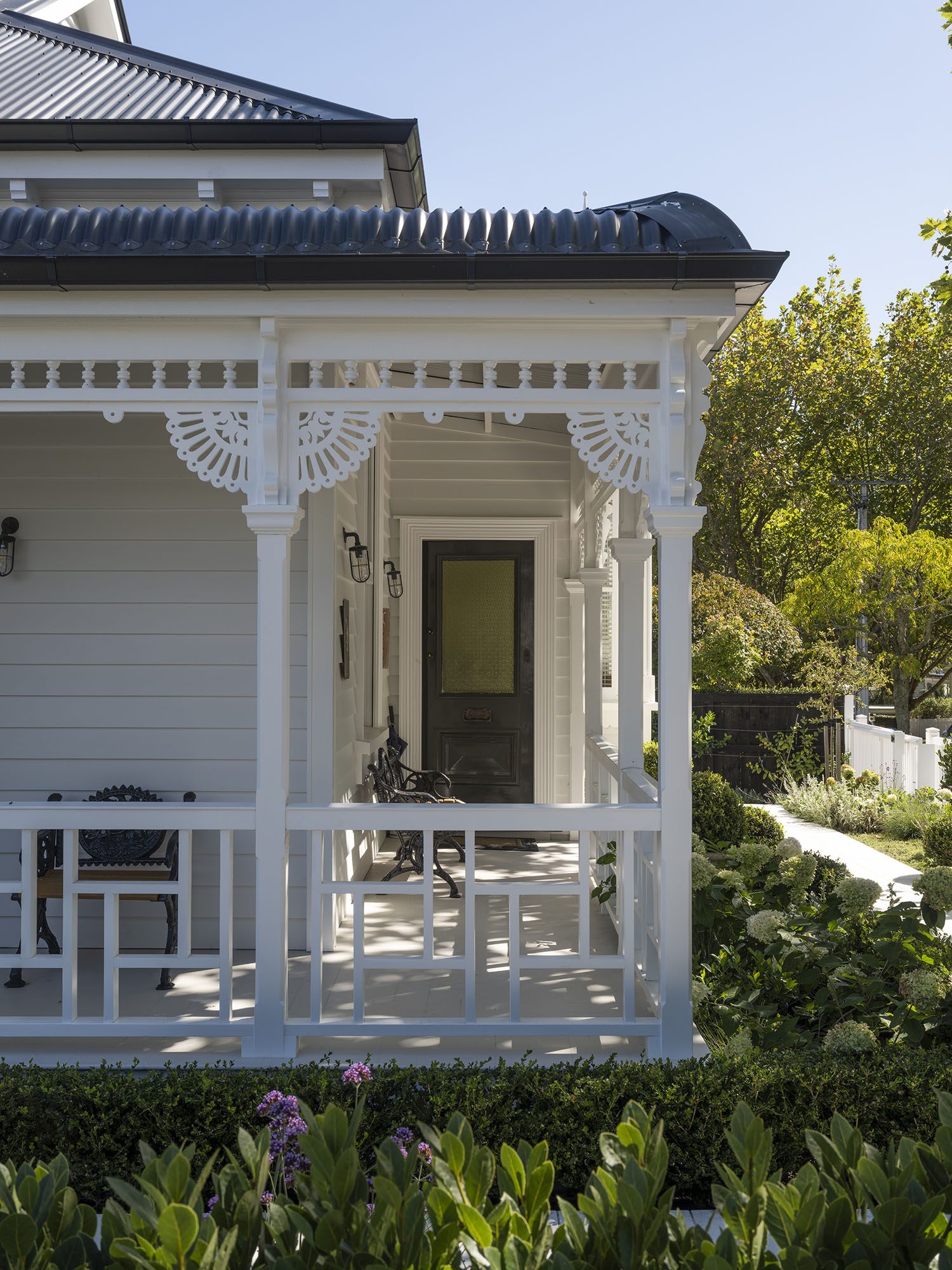
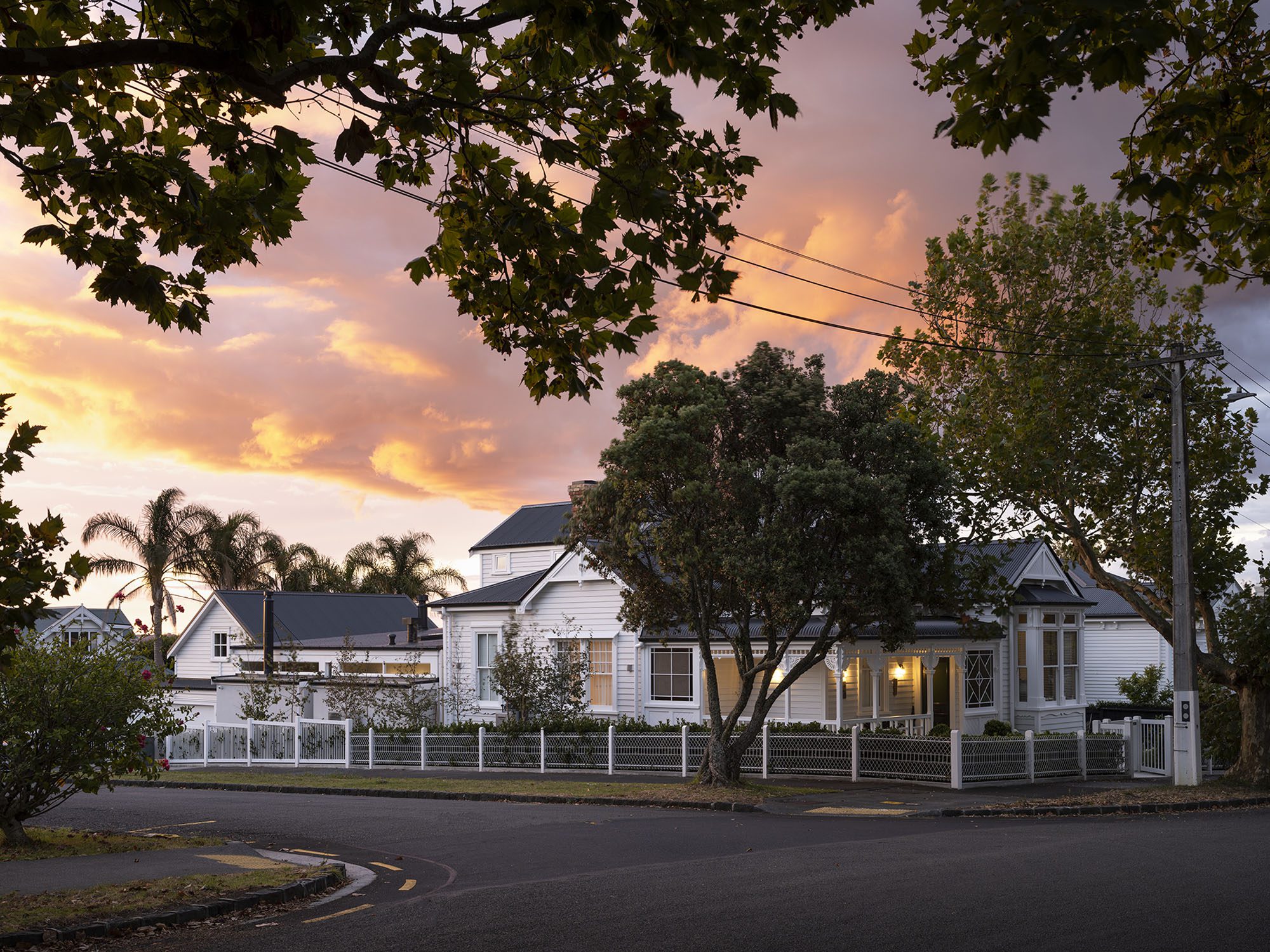
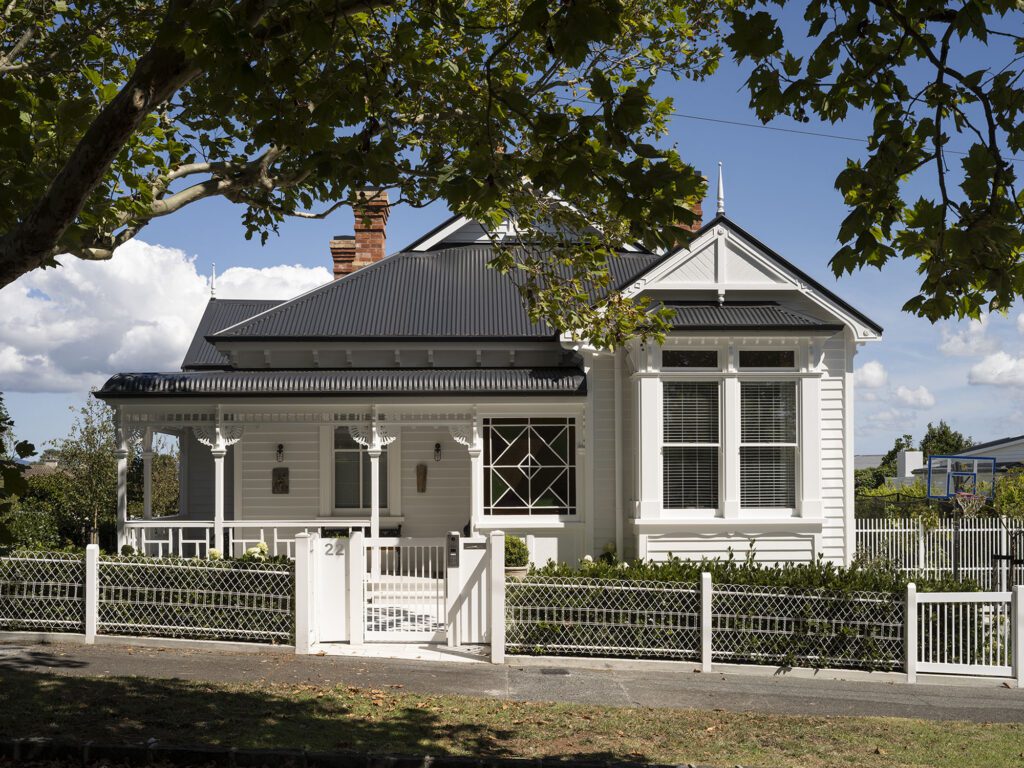
The original villa required significant restoration work, prompting a fundamental question: how to extend the house while maintaining the architectural legibility of the original form. “The villa had some beautiful features — a square bay addressing the primary street frontage, a generous wraparound verandah with traditional fretwork and detailing, and original chimneys,” Jason says. “We felt strongly that these should be restored and clearly expressed as the original part of the house.”

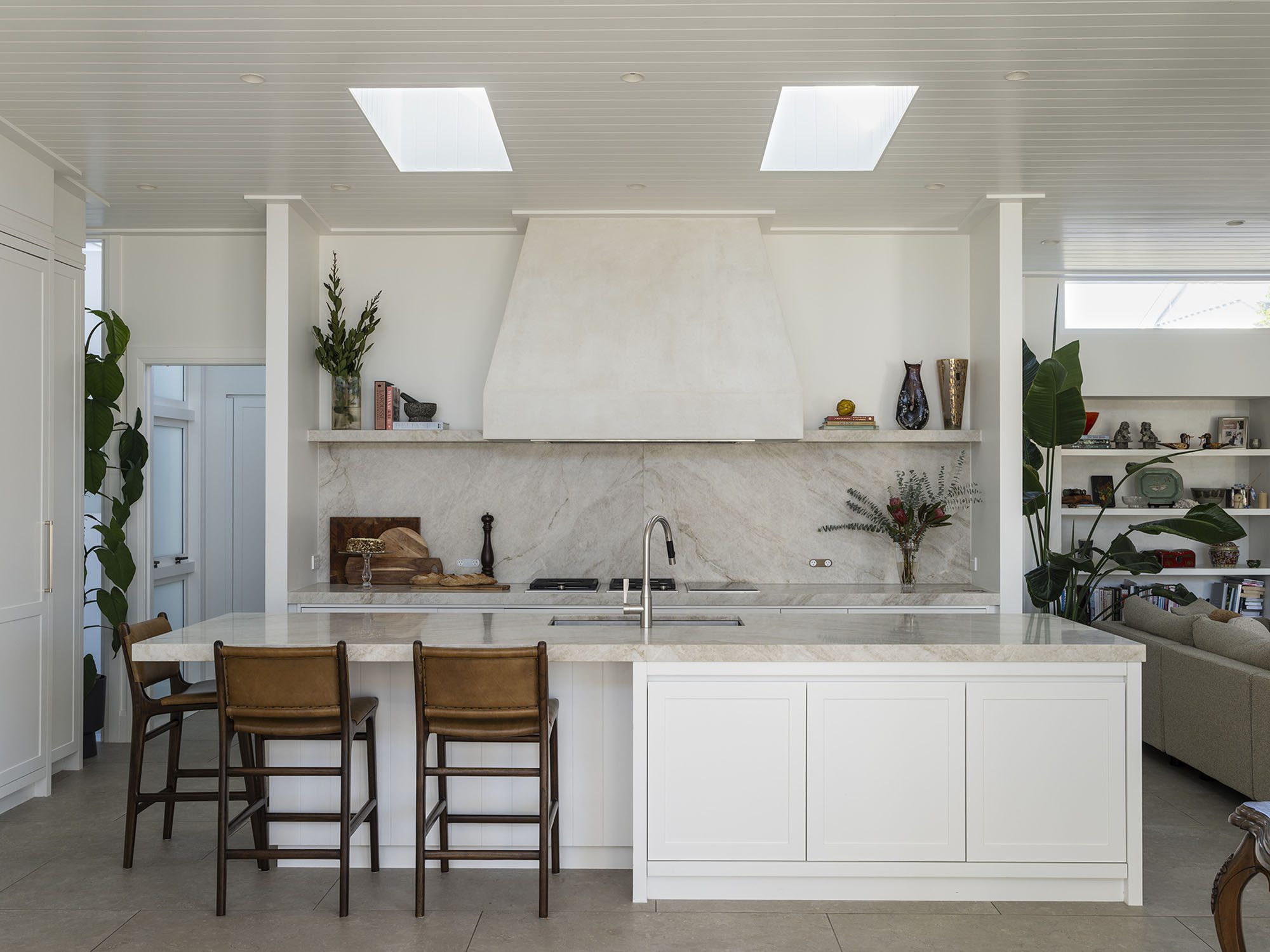
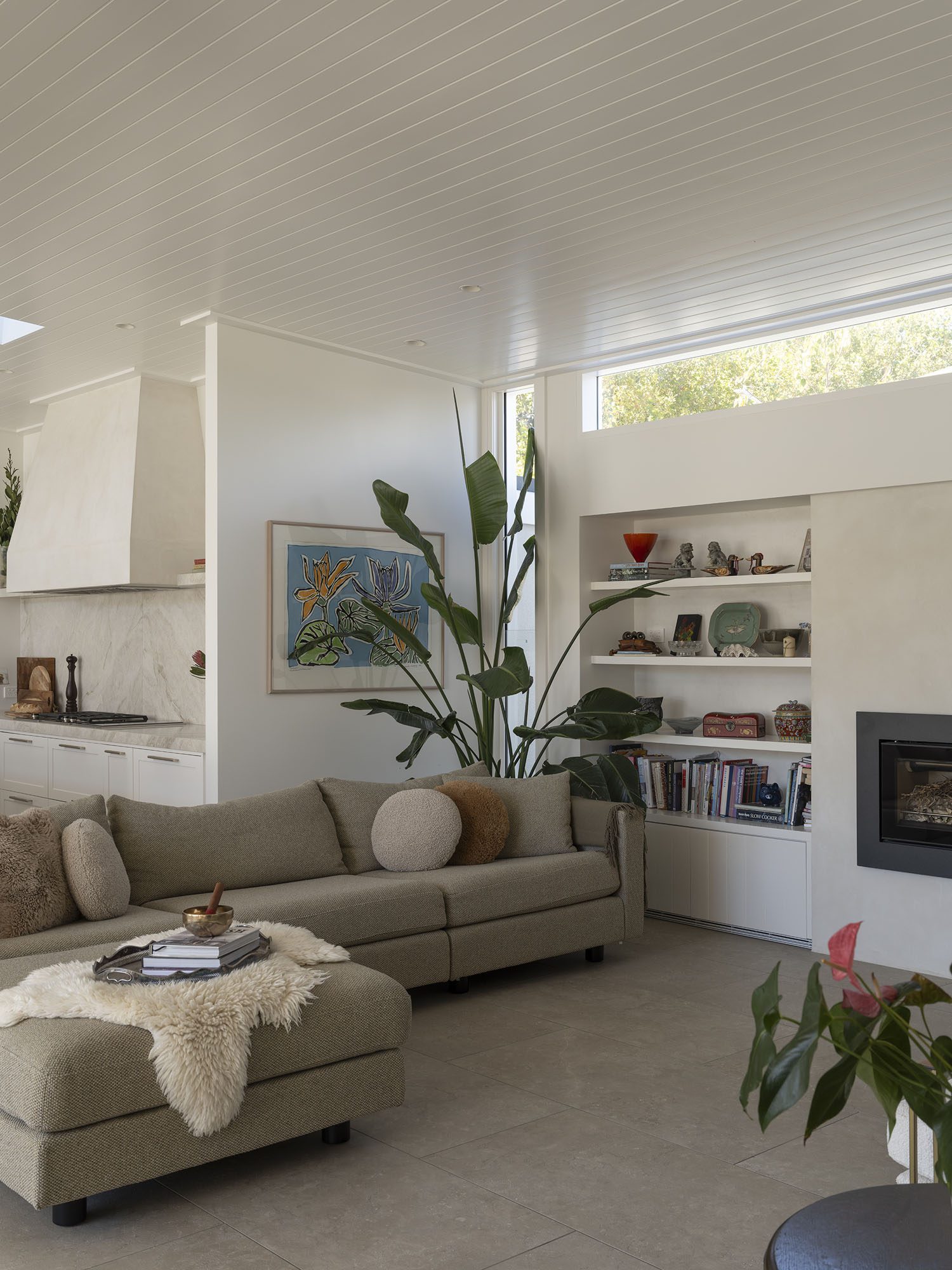
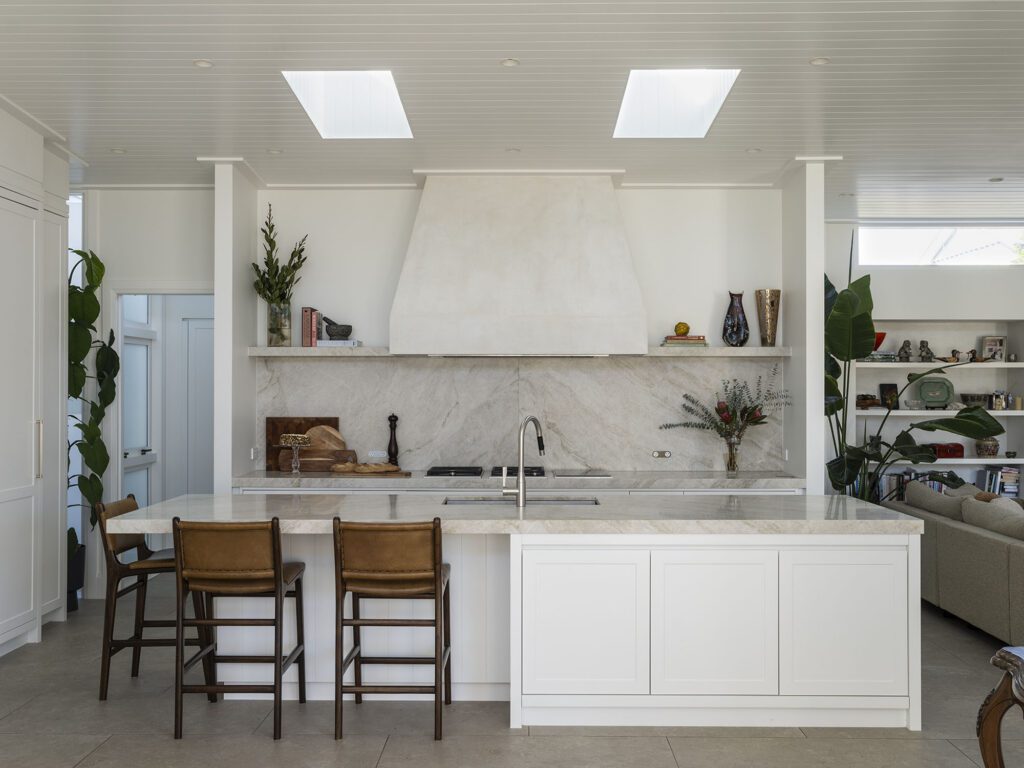
The kitchen, a collaboration between CV Interiors and Bespoke Kitchens, brings together a palette of elegant neutrals and subtle textures.
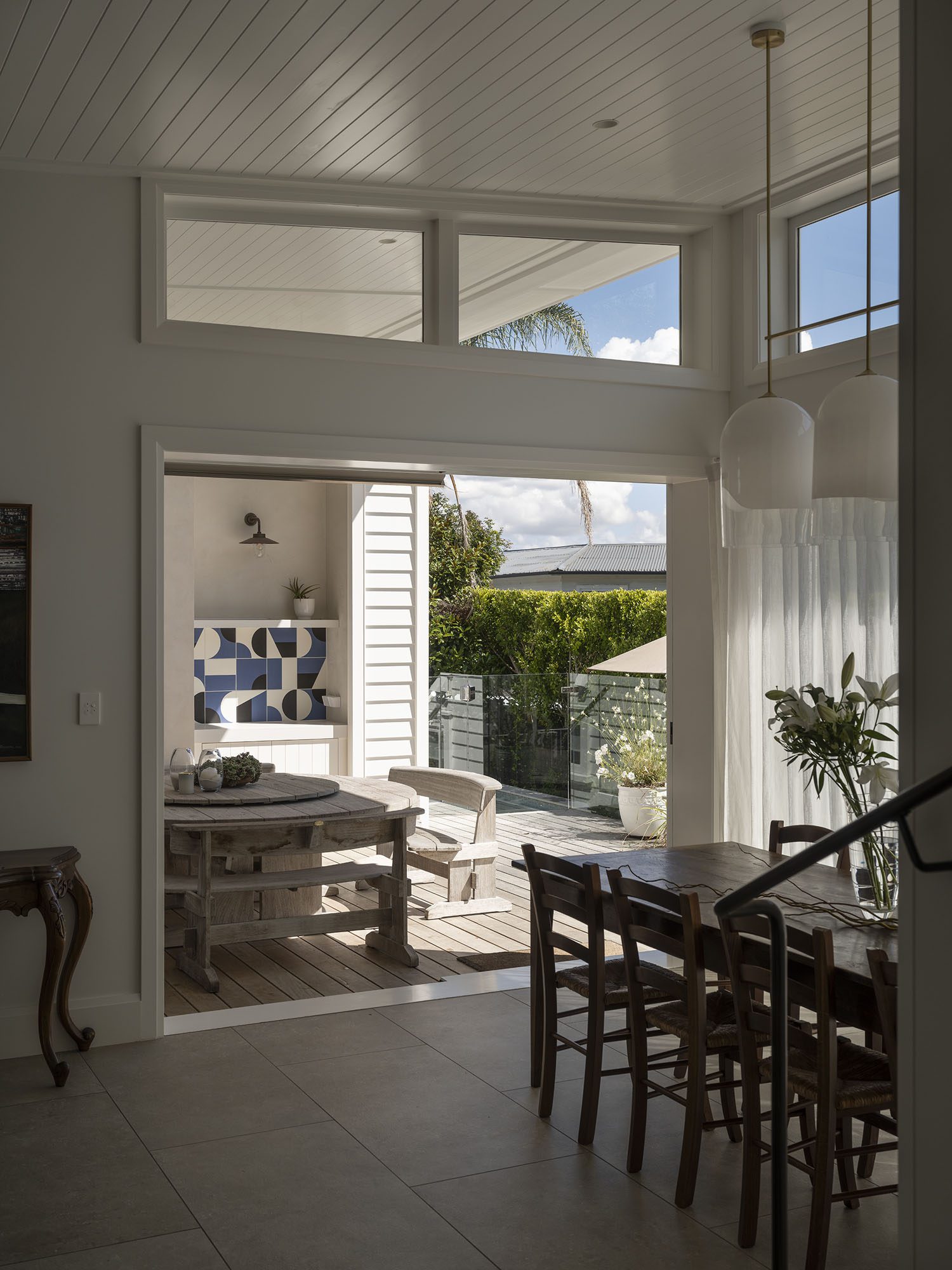
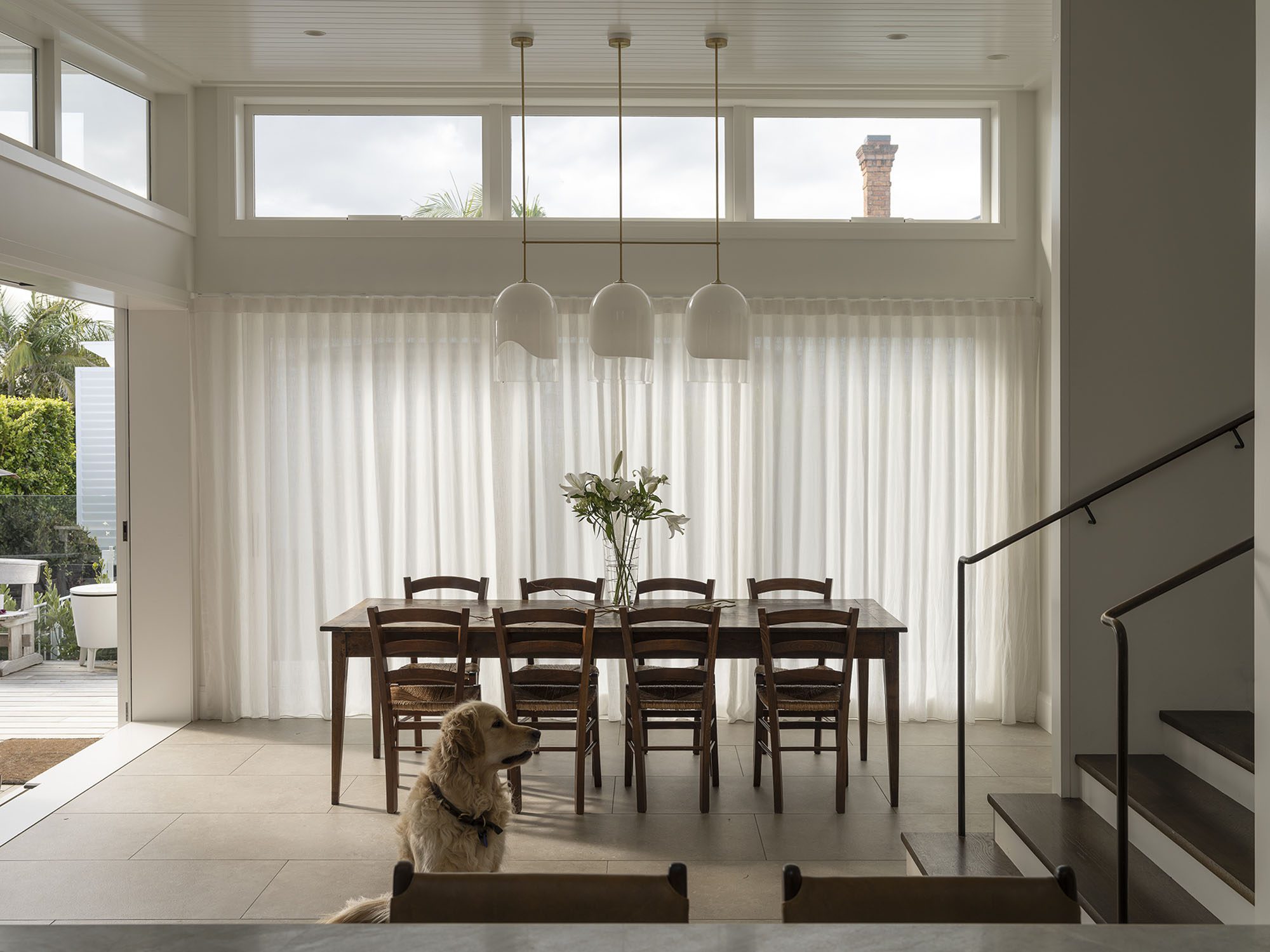
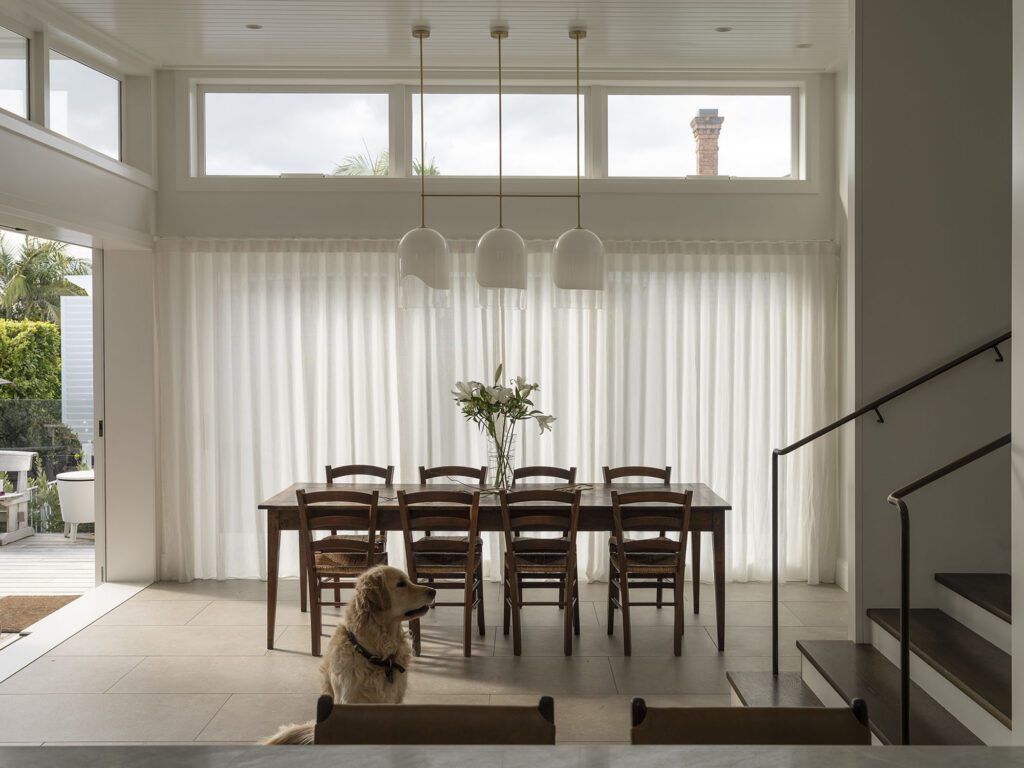
The dining area features a custom pendant above a French antique table. Light linen curtains introduce a softness to the space.

The long, east–west site drops gently toward the west, a condition that informed the project’s four-part strategy. First, the careful restoration of the original villa; second, a partial second storey above it; third, a gabled form at the rear of the site housing the garage and semi-self-contained loft accommodation; and finally, a new flat-roofed pavilion acting as the linking element between the two main forms.

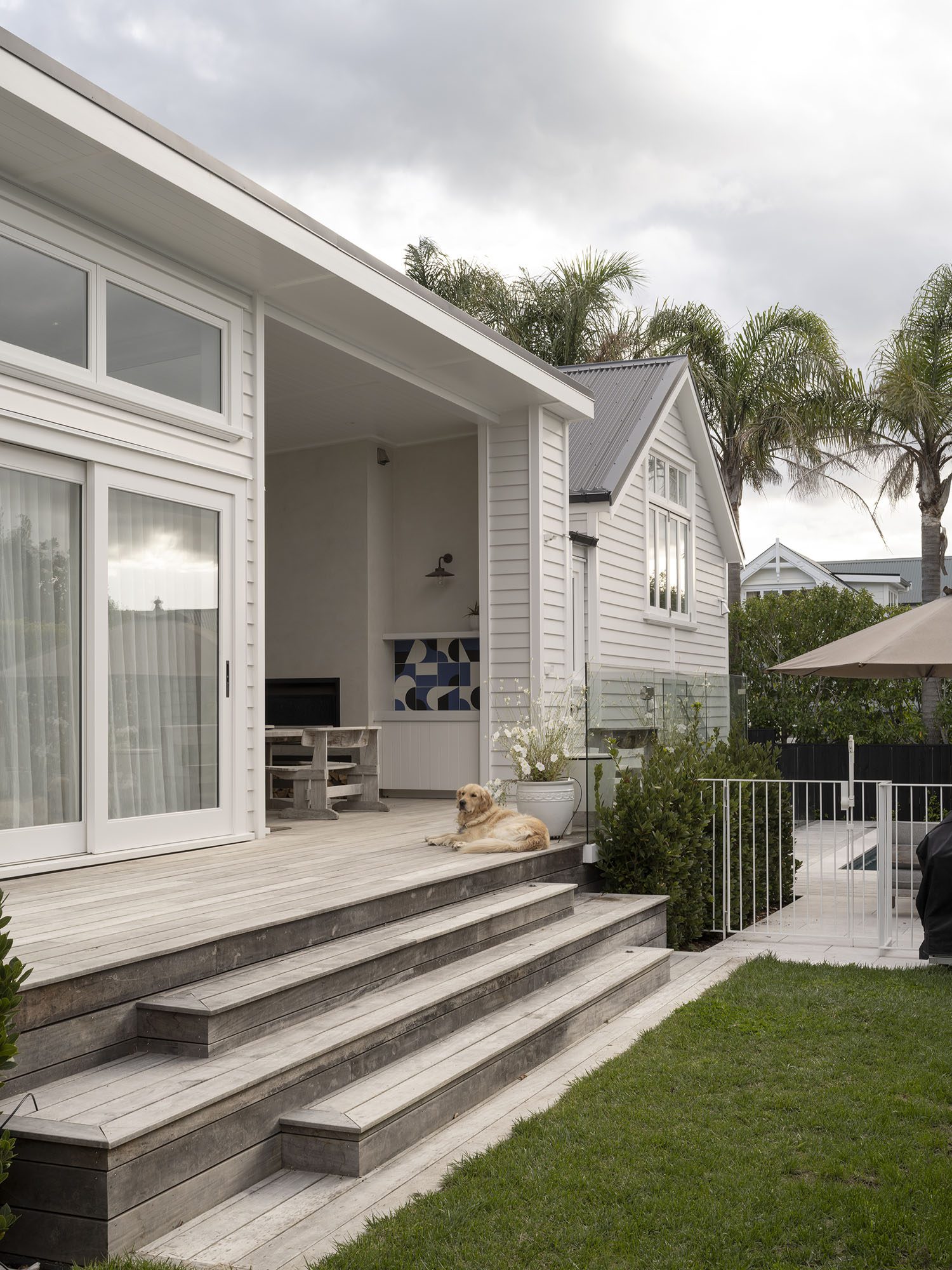
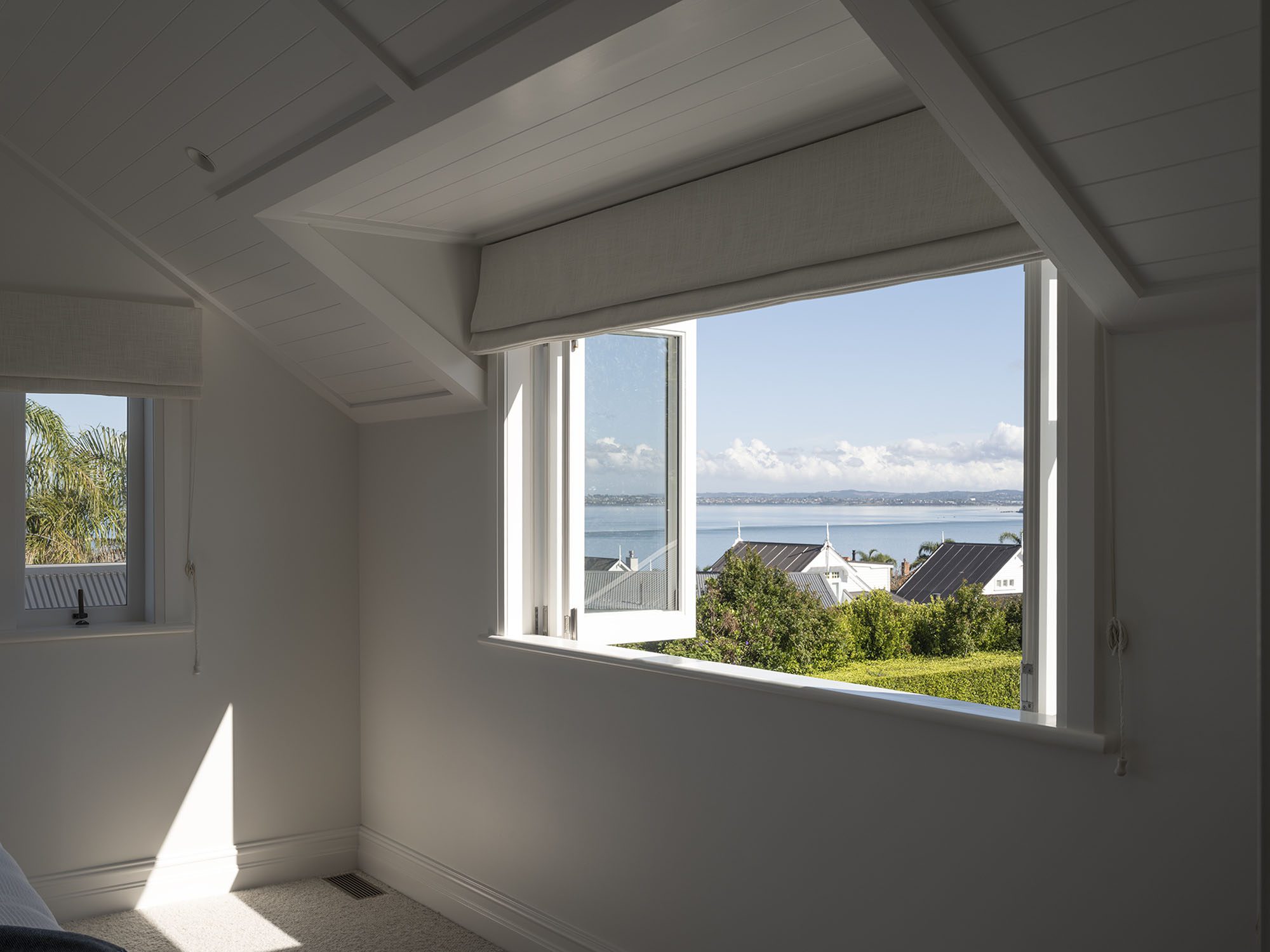
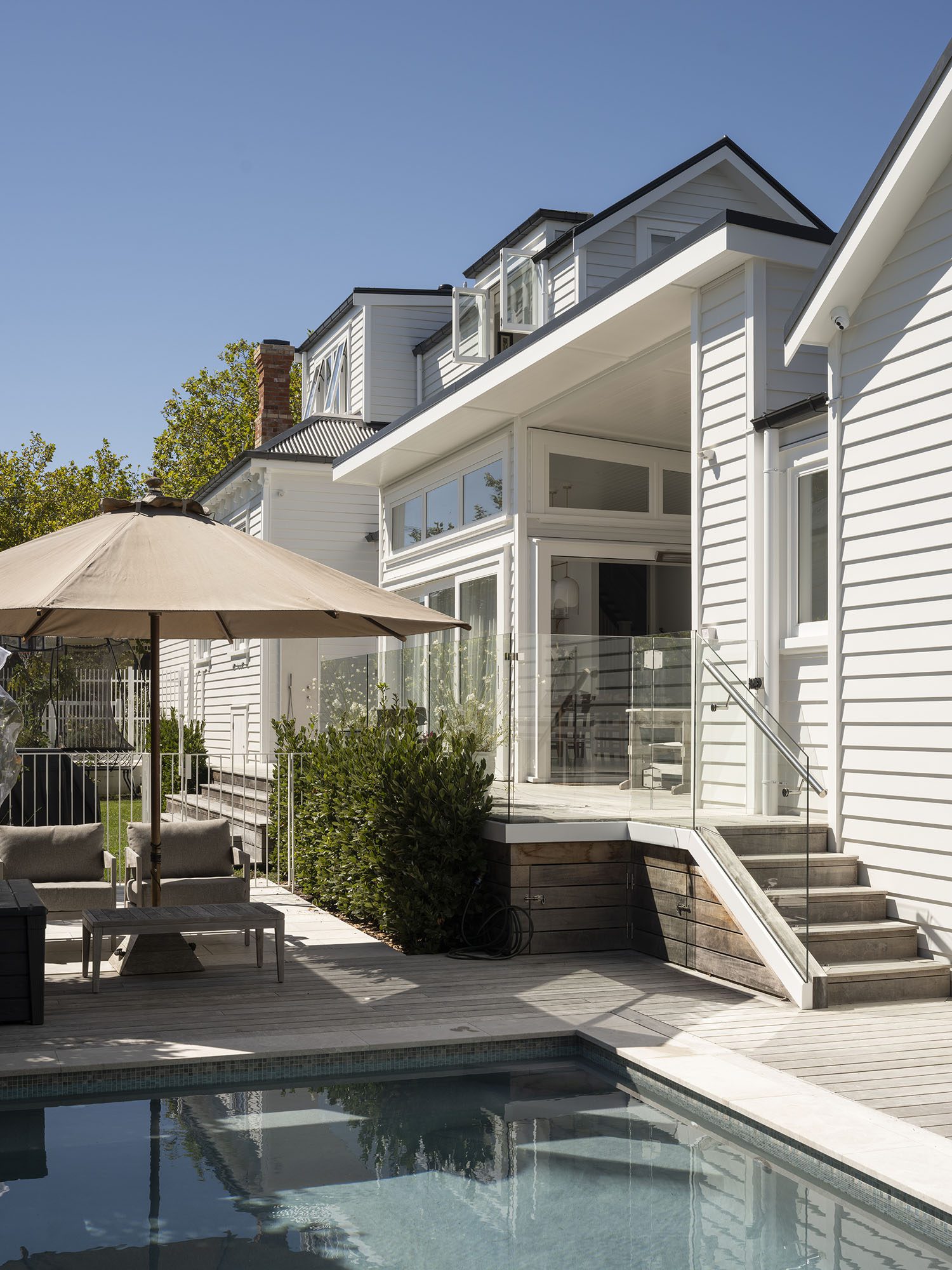
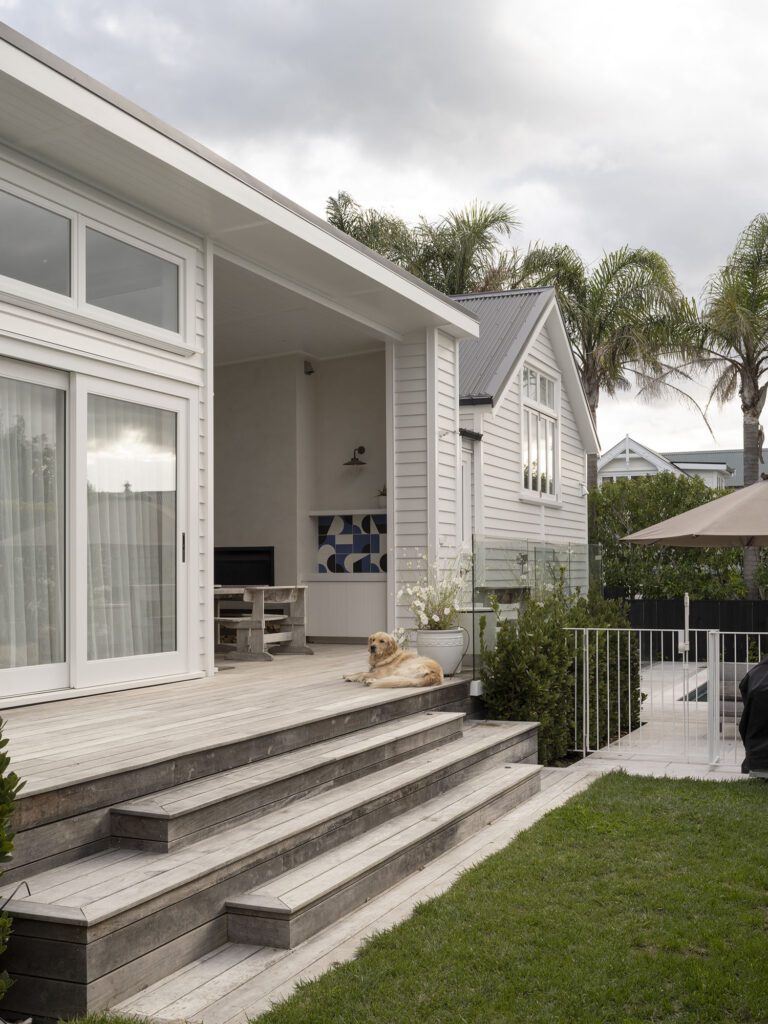
This L-shaped linking pavilion steps down with the natural contours of the land, allowing the architects to carve out a private, north-facing courtyard complete with lawn and pool, while ensuring the original villa remains the dominant and legible form to the street. Importantly, the arrangement also allows the partial upper storey to retain harbour views over the flat roof — a priority for the clients. “Early on, they hired a cherry-picker one weekend so we could assess the view,” Jason says. “Much to the amusement of the neighbours.”

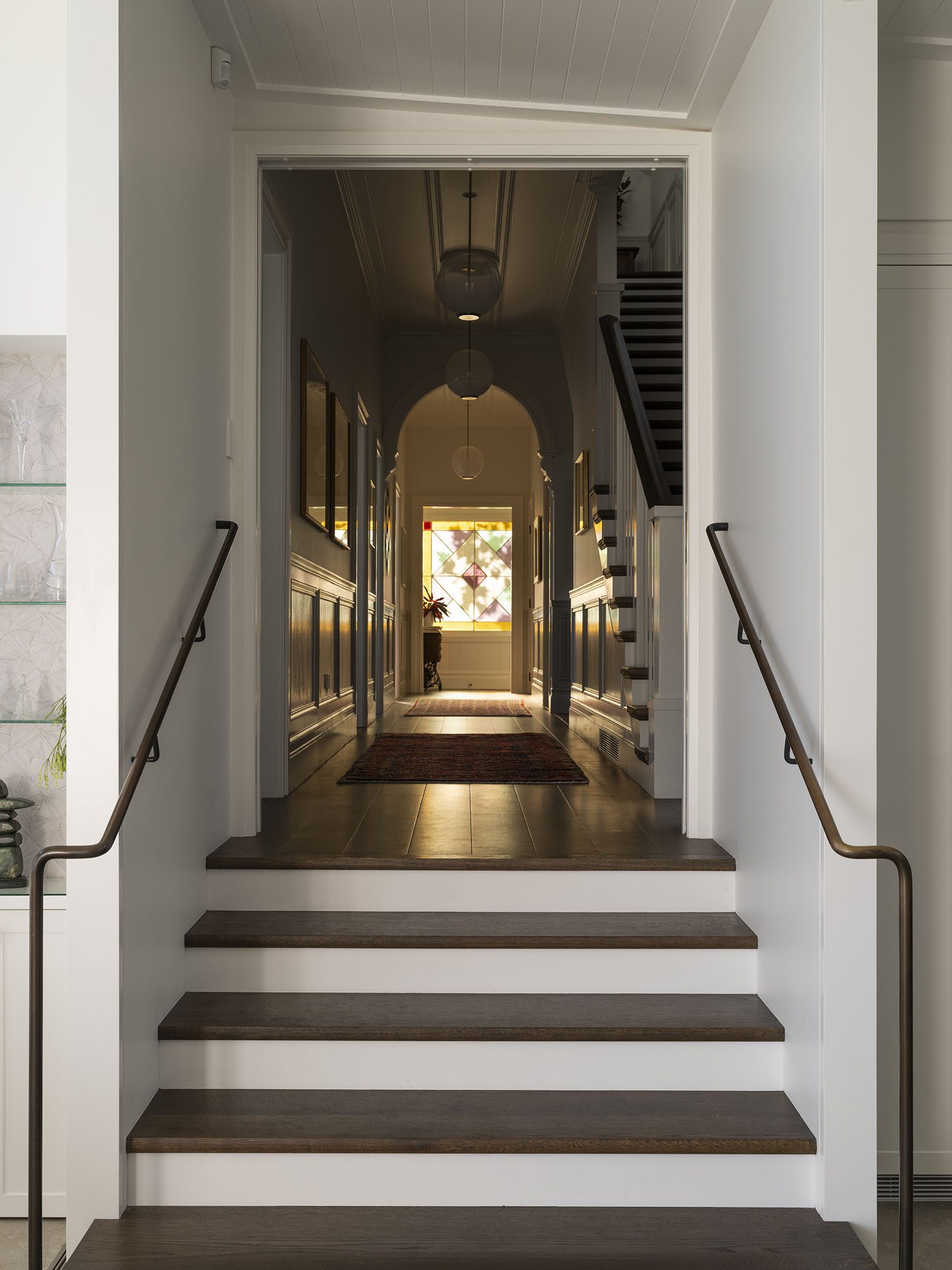
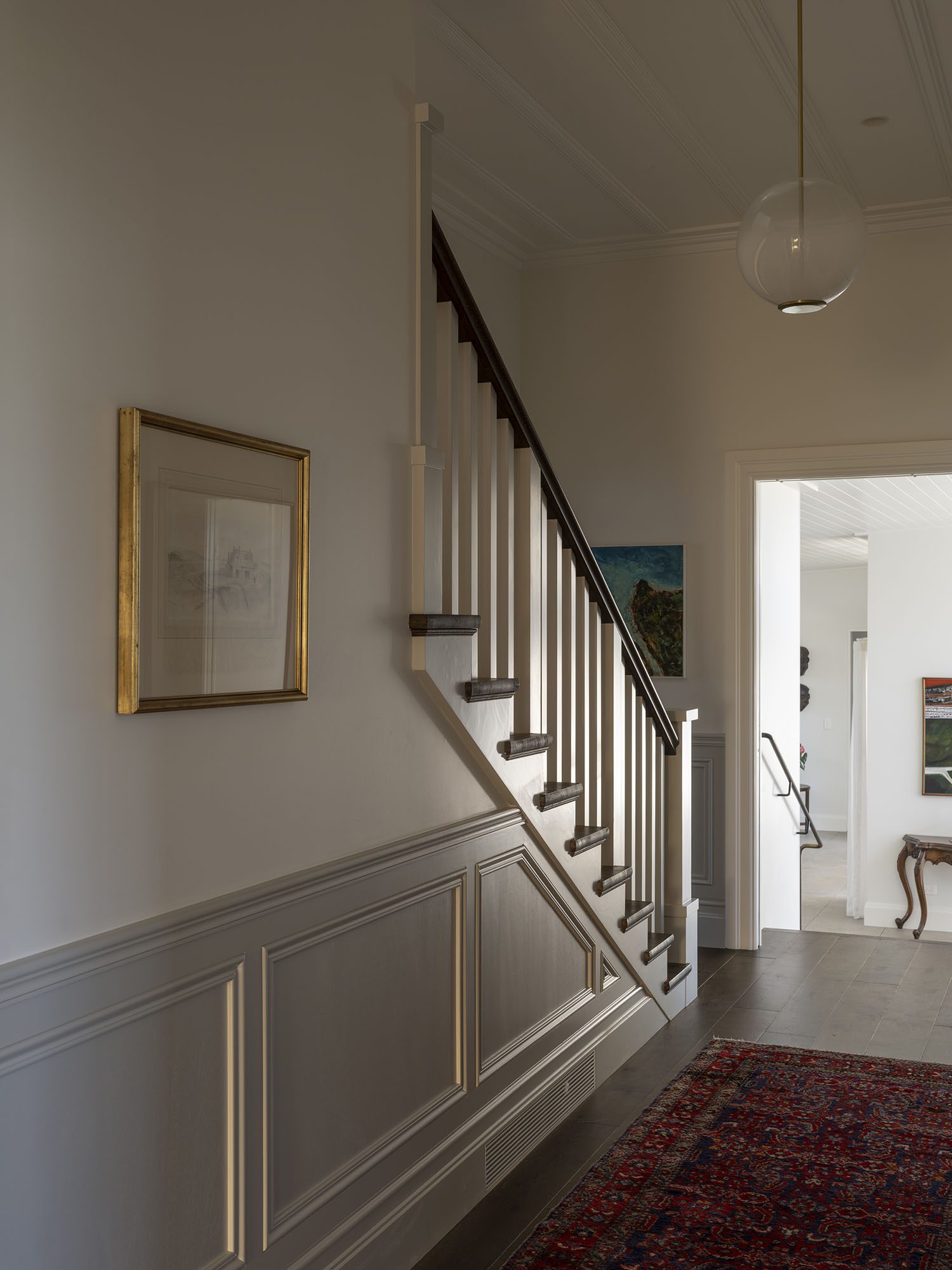
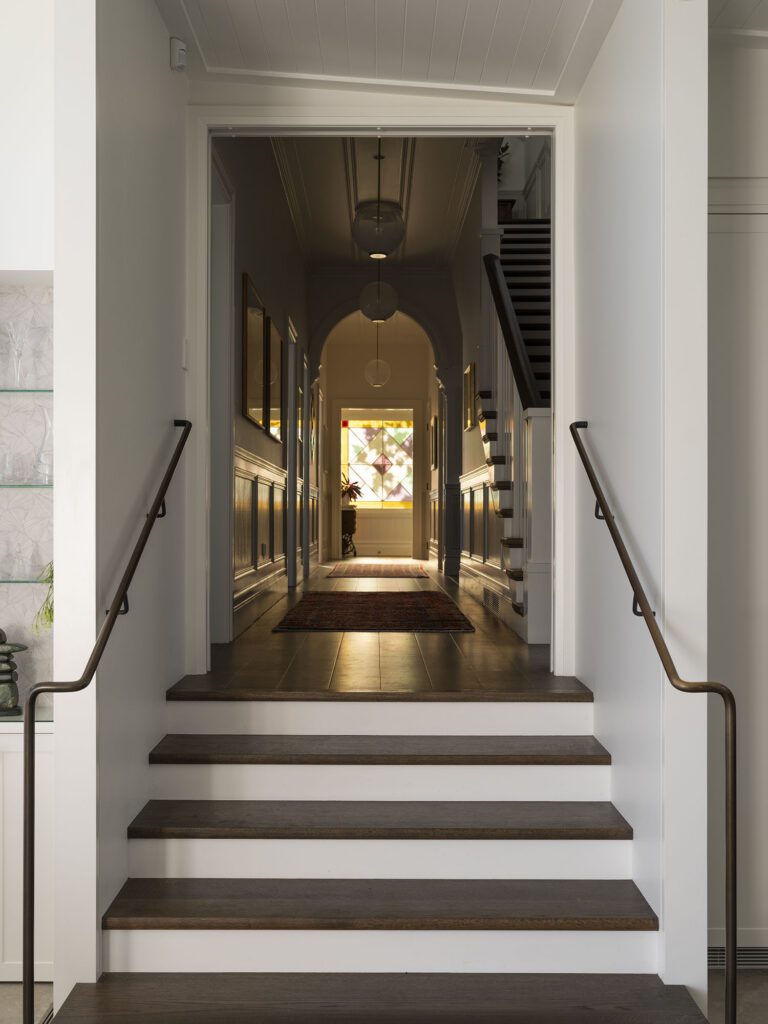
The original villa layout was retained; bedrooms peel off the hallway, while a traditional stair was introduced. The addition is stepped down the site, marking the transition between old and new. Flooring is from VidaSpace.

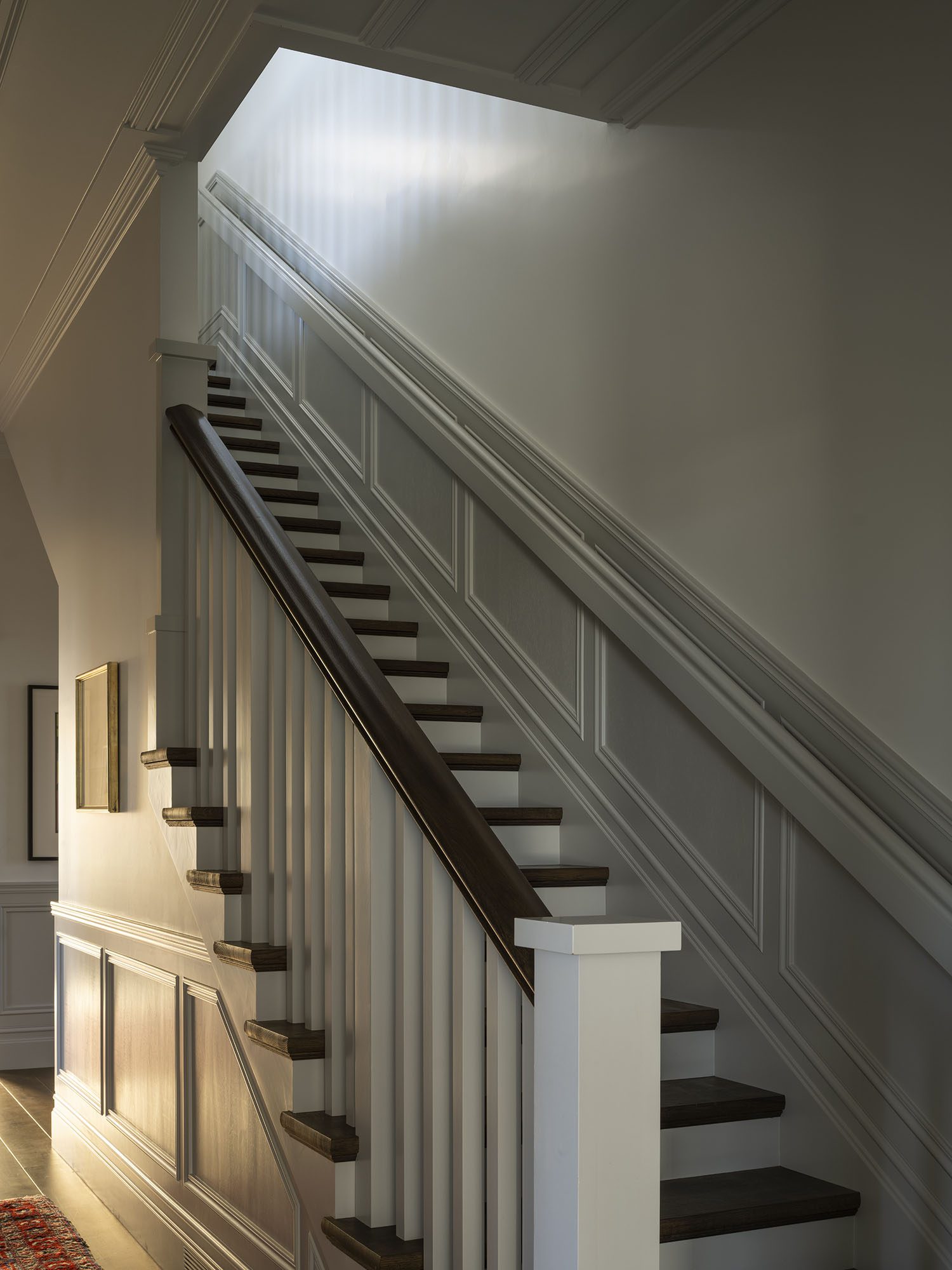
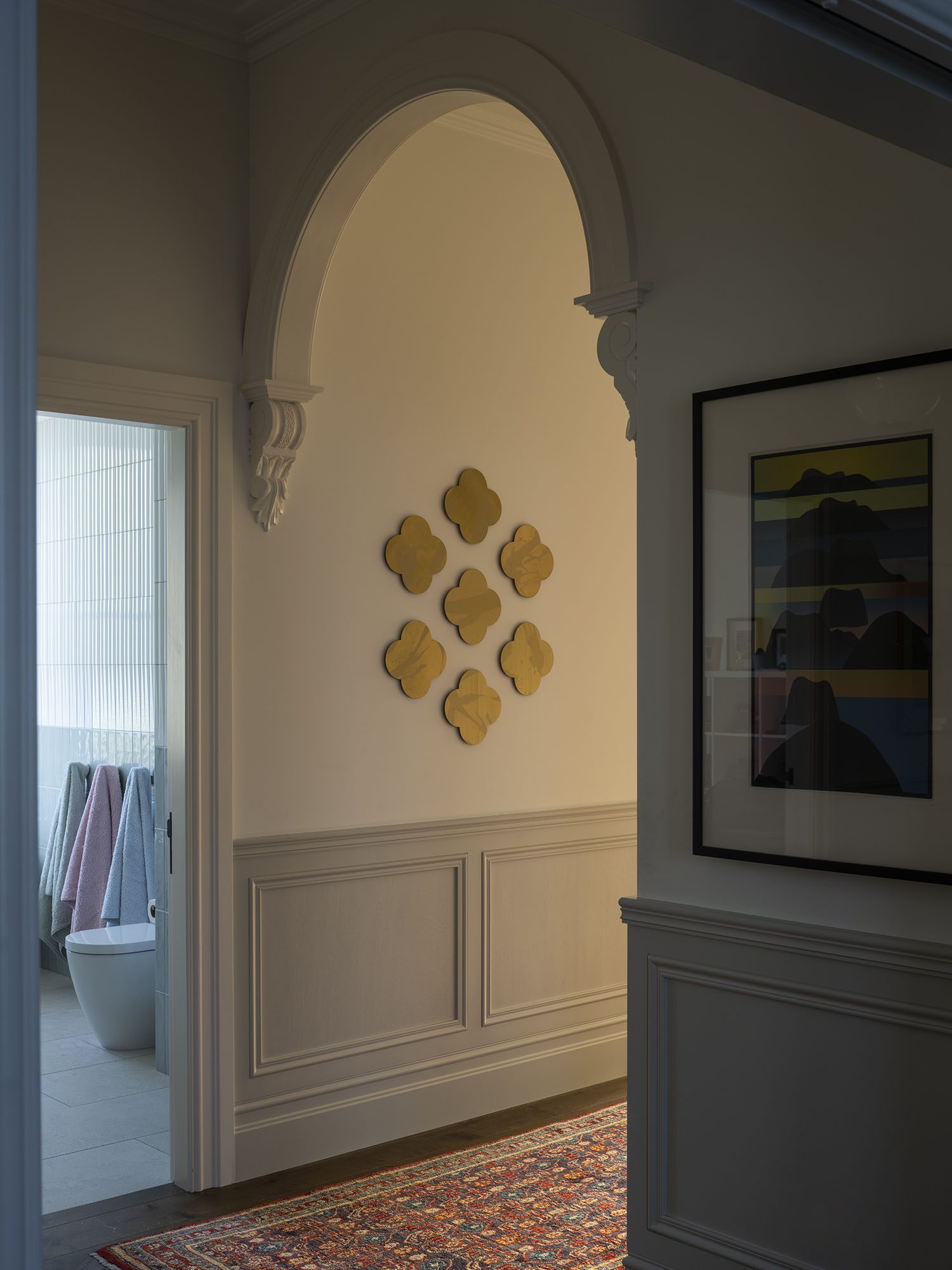
Inside, the original plan remains largely intact, with bedrooms peeling off the central hallway. A new stair has been carefully inserted, detailed in a traditional manner that, at first glance, feels convincingly original. The transition to the pavilion is clear: stepping down, the house opens into a light-filled, contemporary living space. The kitchen is washed in daylight from overhead skylights, while clerestory windows and expansive north-facing glazing connect the interior to the sheltered outdoor spaces beyond. A covered outdoor room forms the smaller arm of the L-shape, linking directly to the pool.

Interiors were overseen by Celine Vernezy of CV Interiors and carry a restrained European sensibility. “The clients had spent time living in the south of France and were drawn to a more traditional feel, which suits this style of home,” Céline says.

The poolscape and lawn are concealed from the gaze of passers-by by the form of the new pavilion.
The double-fronted villa occupies a prominent site in Herne Bay.

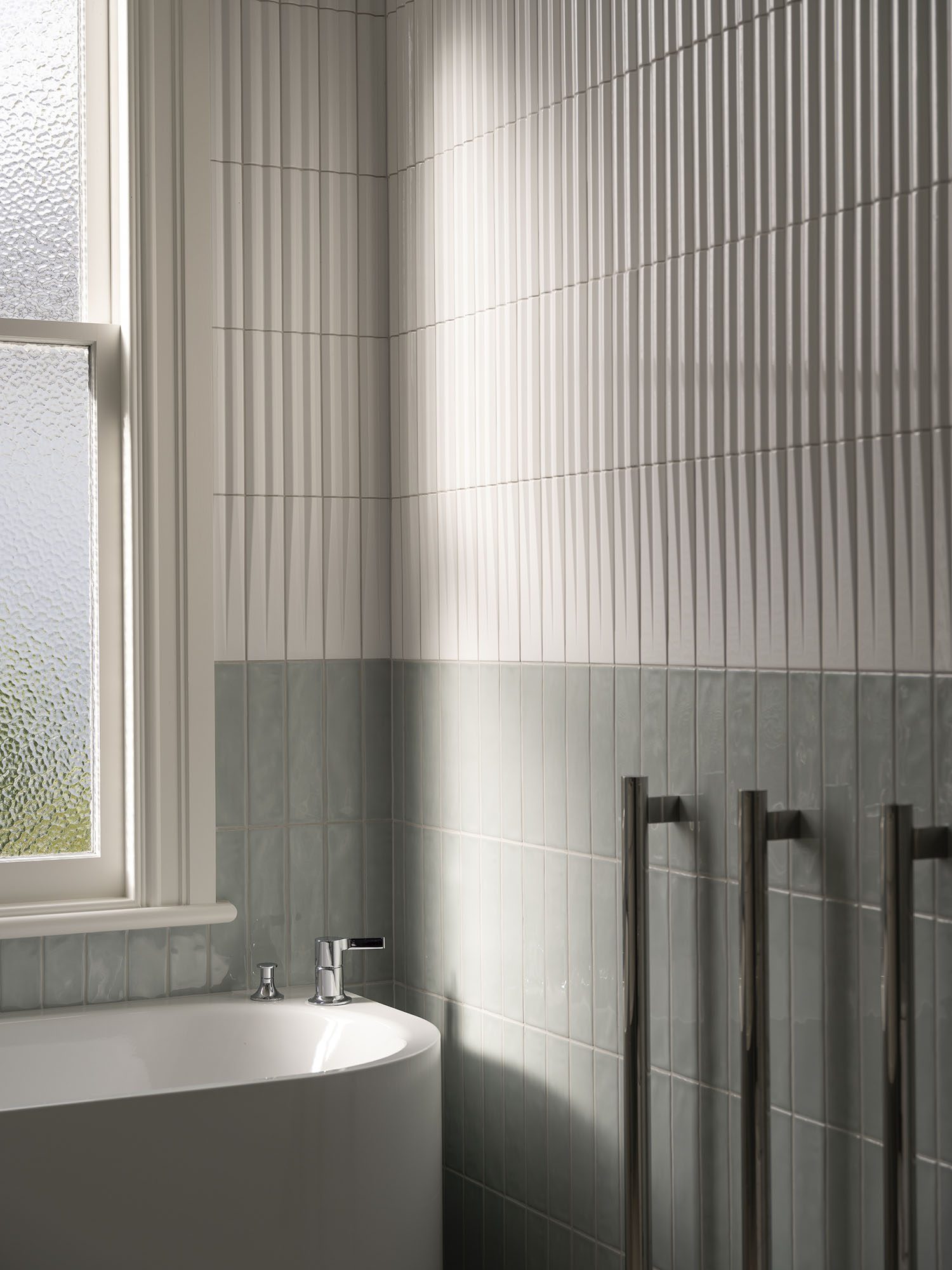
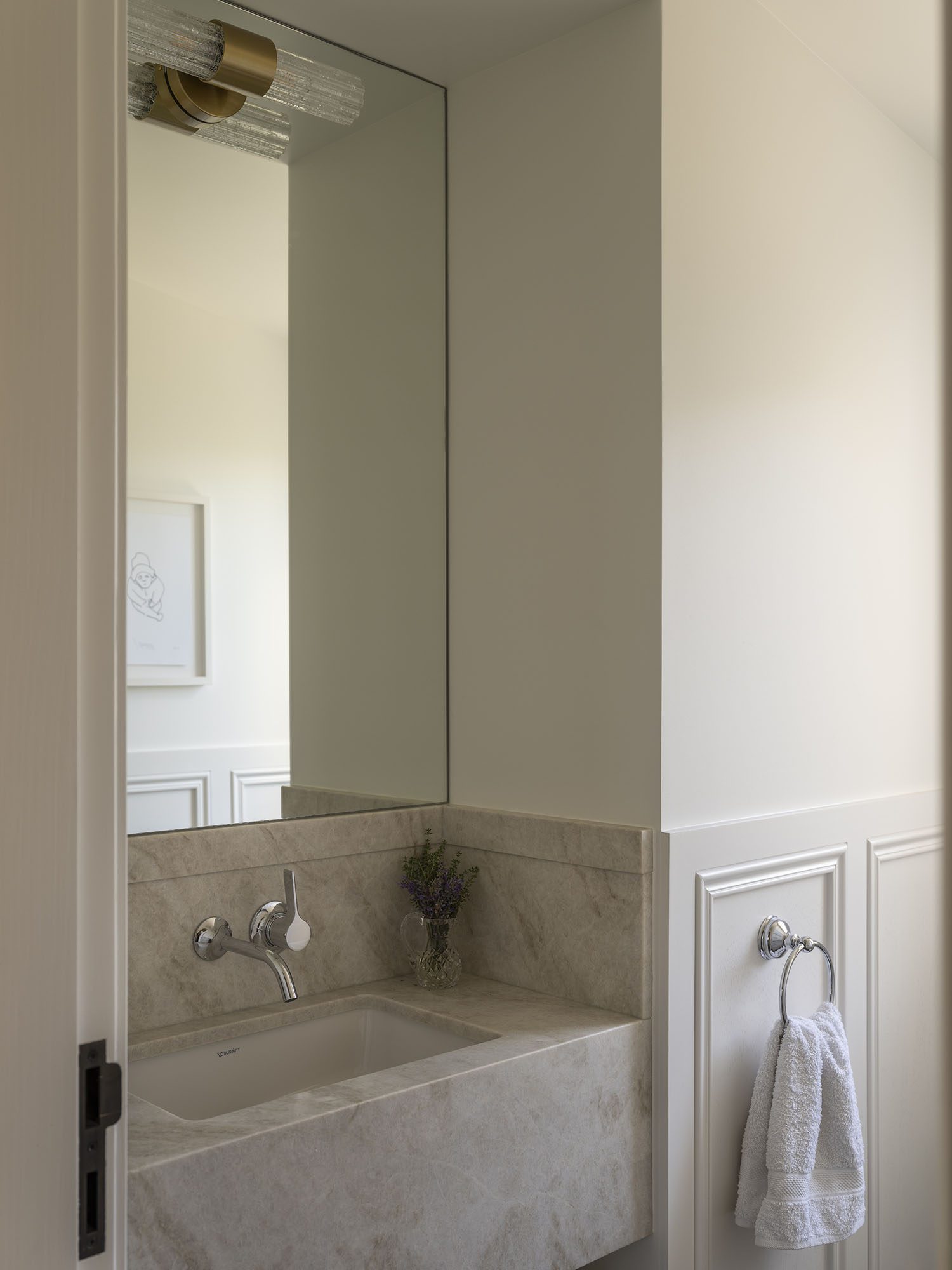
Throughout, the material palette is elegant and cohesive. The kitchen — a collaboration between CV Interiors and Bespoke Kitchens — brings together neutral hues and layered textures: Taj Mahal stone benchtops and splashback sit against Venetian plaster walls, complemented by taupe-toned cabinetry. In the main bathroom, softly toned green tiles paired with fluted off-white surfaces create a calm, restorative atmosphere. Elsewhere, French-style wall panelling lines the hallway, while in the dining room a Murano glass triple pendant hangs above a French antique table. Soft linen curtains temper the light, and generous wall space and considered shelving allow the clients’ art collection to take centre stage. 

Words: Clare Chapman
Images: David Straight

Project Credits

Architecture: Hoxha Bailey Architects

Build: Shore Build

Interiors: CV Interiors

Kitchen: CV Interiors & Bespoke Kitchens

Landscape: Aaron Bell Booth

Paint: Resene

Latest video features

In the Coromandel, a home with a humble profile and a thoughtful design makes the most of a stunning location.

Built with awe-inspiring attention to detail, this Arrowtown home is a fresh interpretation of a familiar Otago rural vernacular.

This sculptural Northland bach is a perfect north arrow on a remote farm high above the sea.

With the sun on its bow and the community at its stern, this is a house in which the elements are always front of mind.

Trending articles

Homes

Herne Bay Villa Renovation

In one of the most stringent heritage-zoned streets of Herne Bay, Hoxha Bailey Architects faced an arduous task: securing approval for a substantial addition to
Homes

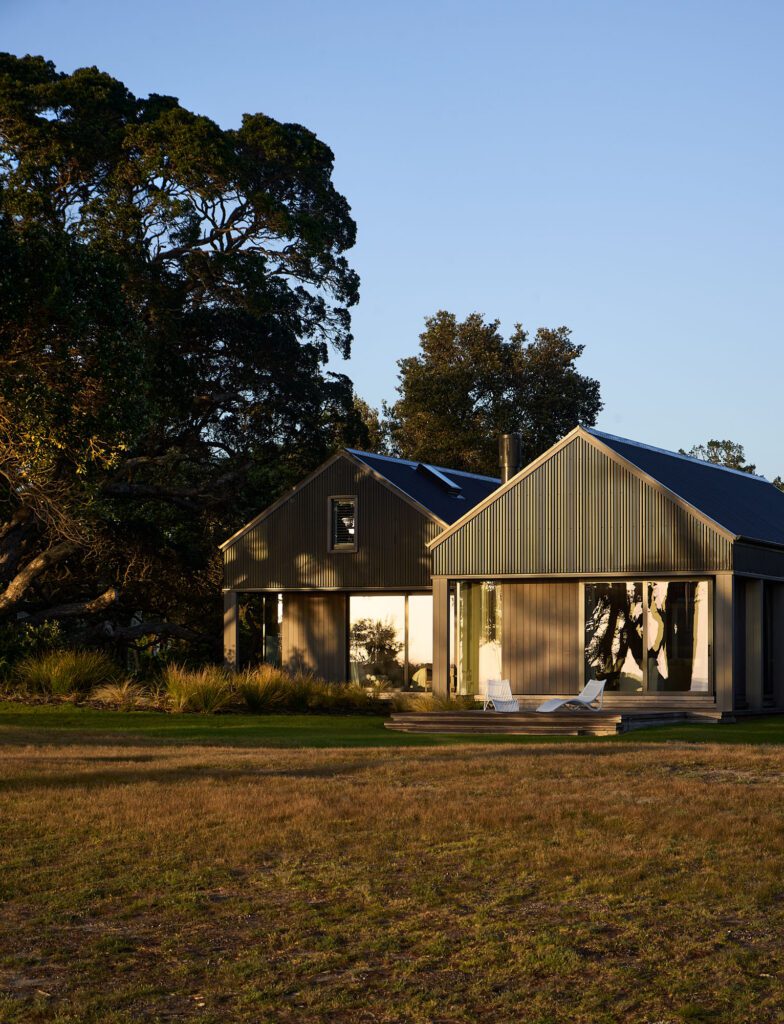
Pōhutukawa House

Inspired by a very internationalist, robust coastal home for an award-winning film, this beach house by Sumich Chaplin Architects offers ambience and plenty of drama.
Homes

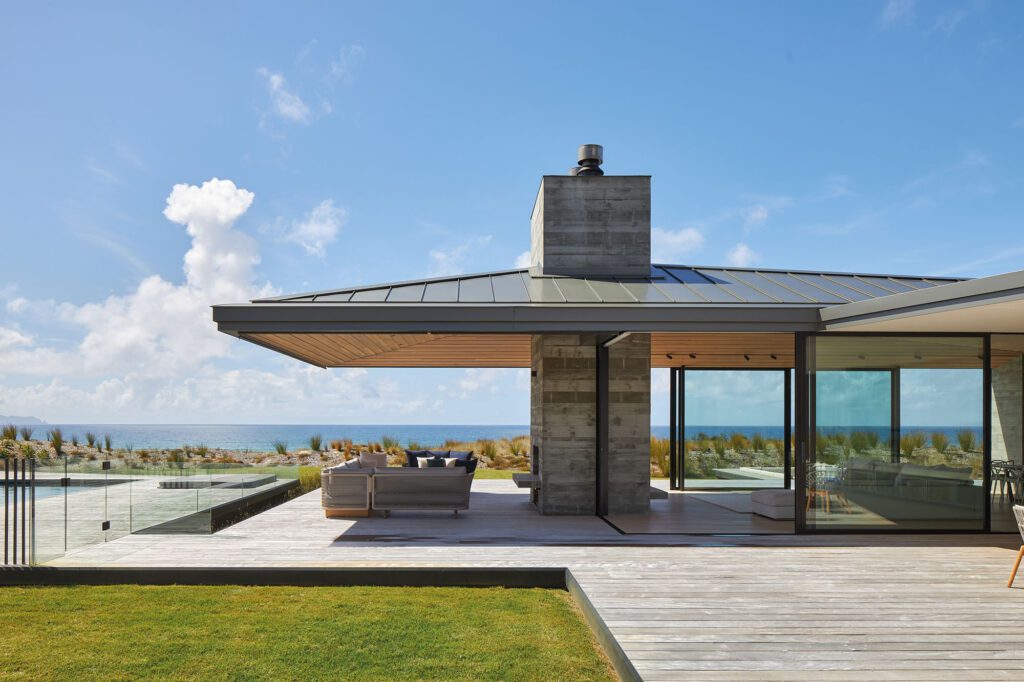
Pacific House

Expressive geometries, a high level of craft, and connections with its landscape elevate a small number of materials into a polished, relaxed home full of
Design News

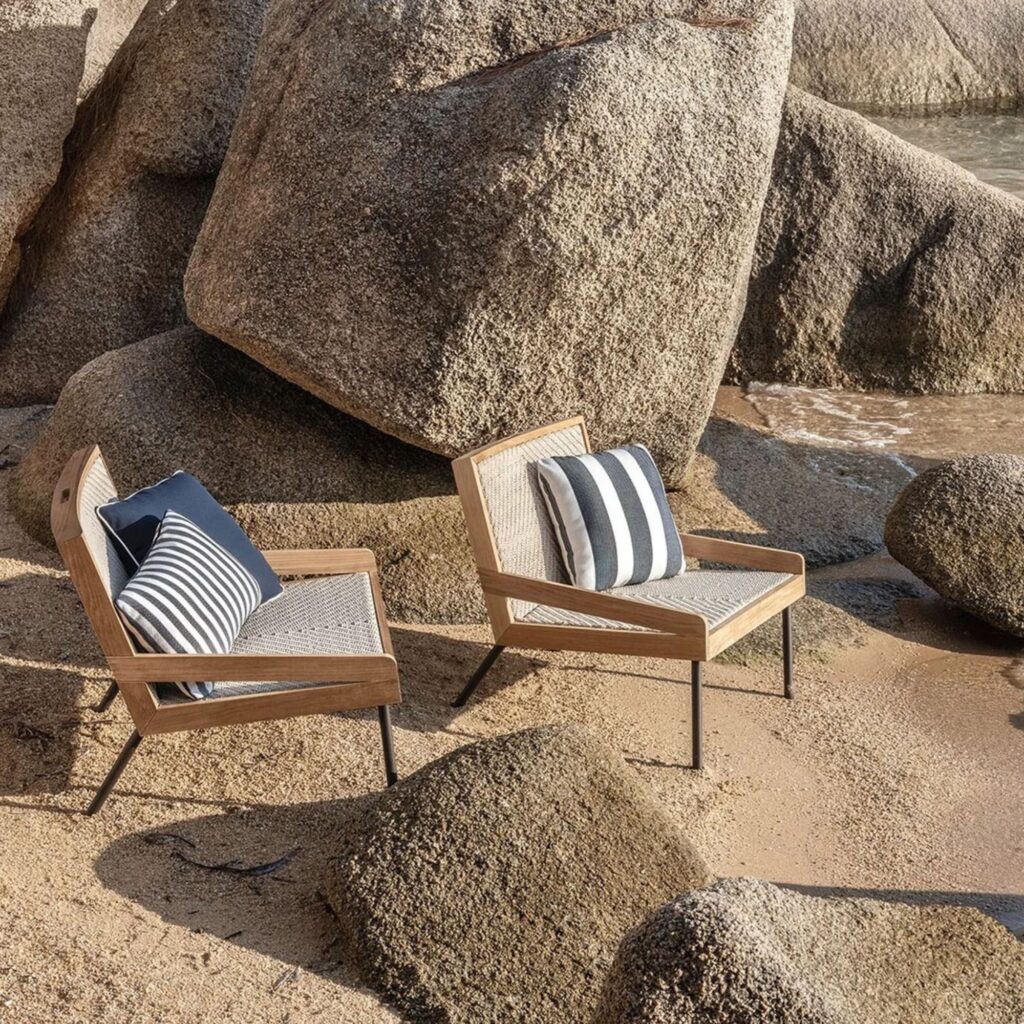
Allaperto Nautic

Immediately inviting, with a silhouette defined by clean lines, the Allaperto Nautic armchair evokes the sensibility of classic nautical design without ever feeling literal.