
Maungakiekie House

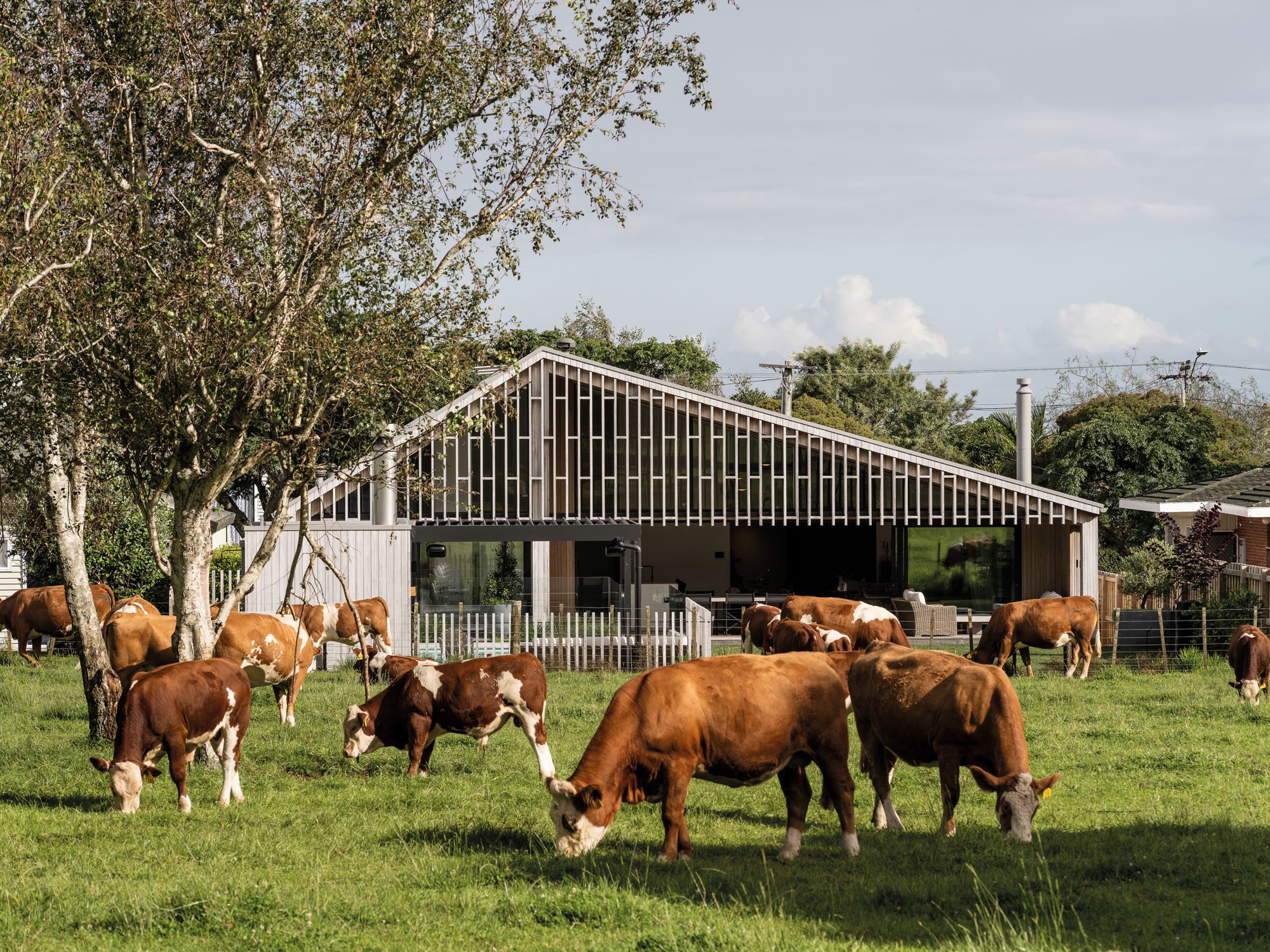
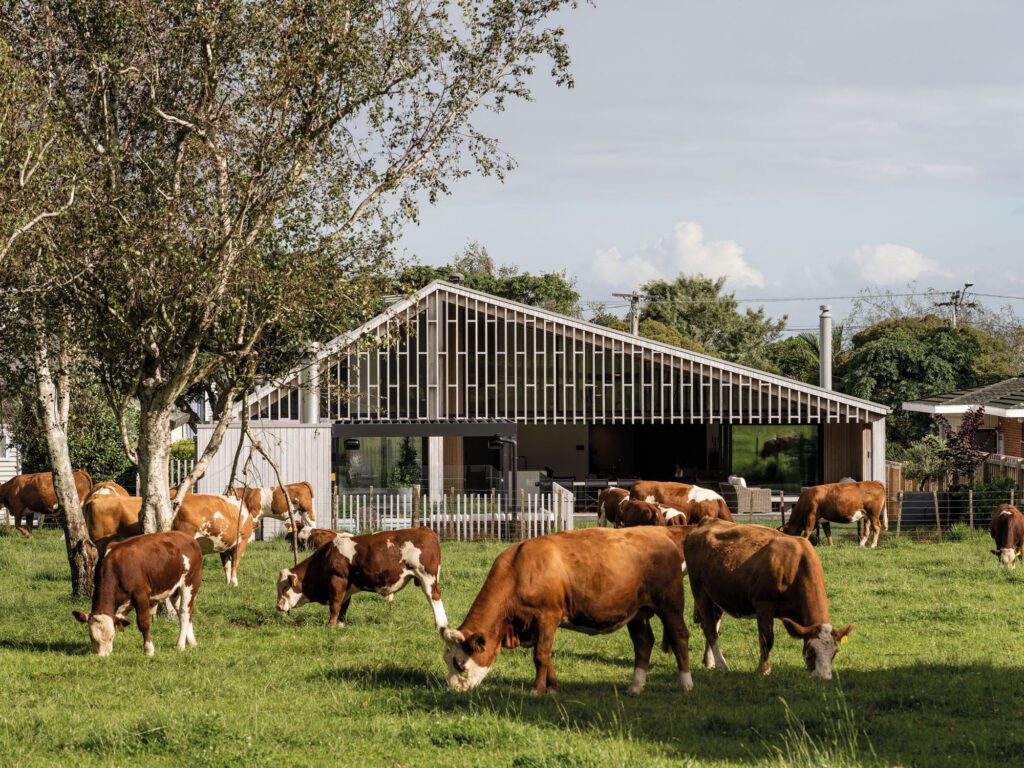
A home for a family of five on the edge of a park. A bucolic landscape, a busy city road, and a house the intermediary; a unified buffer between. A vertical timber-wrapped face, private to the street and open to the pasture.

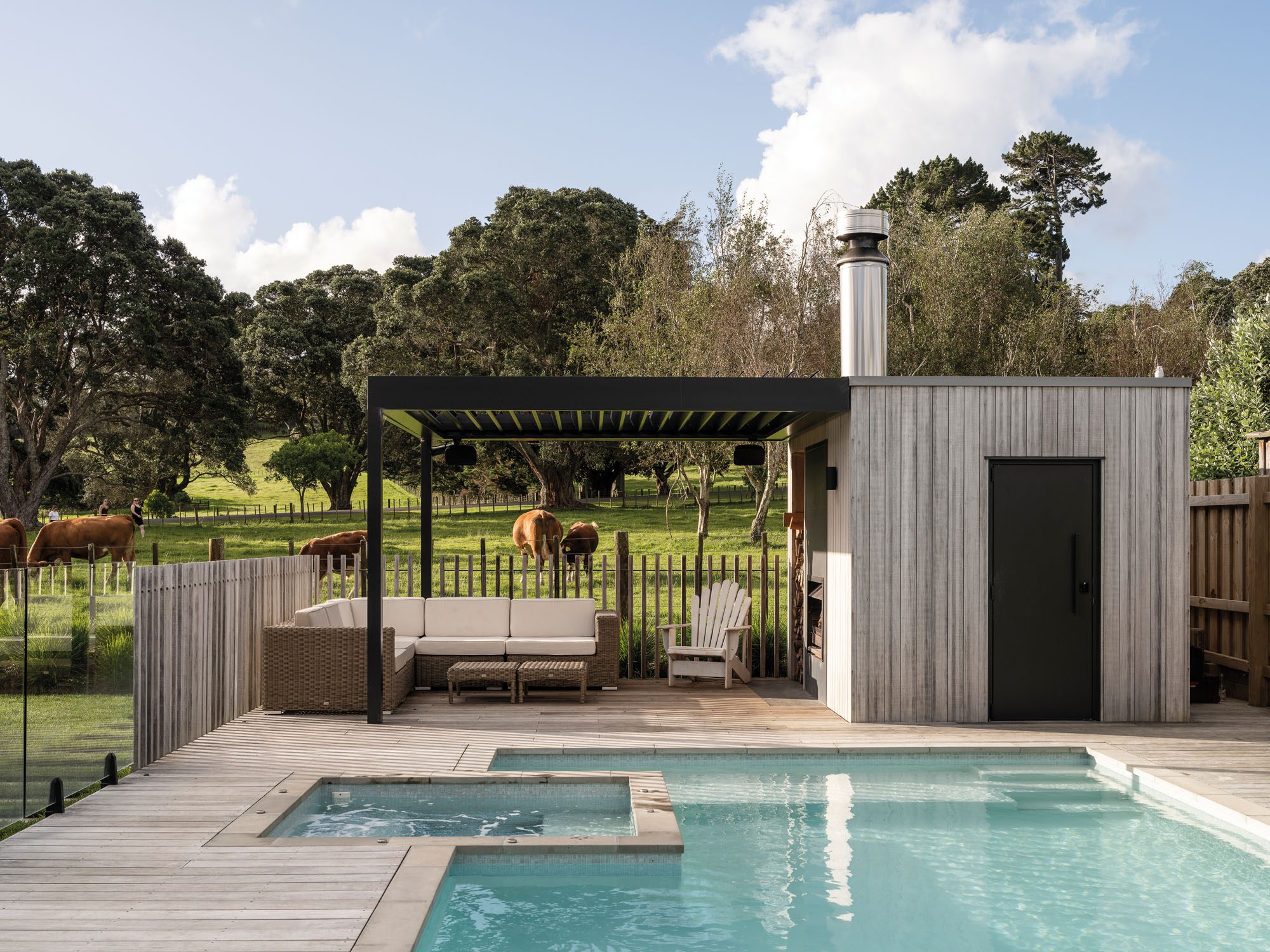
Bordering Cornwall Park, where the incessant chatter of Auckland dissolves into vast swathes of green, this family home by Space Division takes on two distinct characters: the urbanity of our largest city and the slower pace of a rural property. They never quite seem to merge, at least not visually, somehow meeting in silence between street and park within a building of clear conviction.

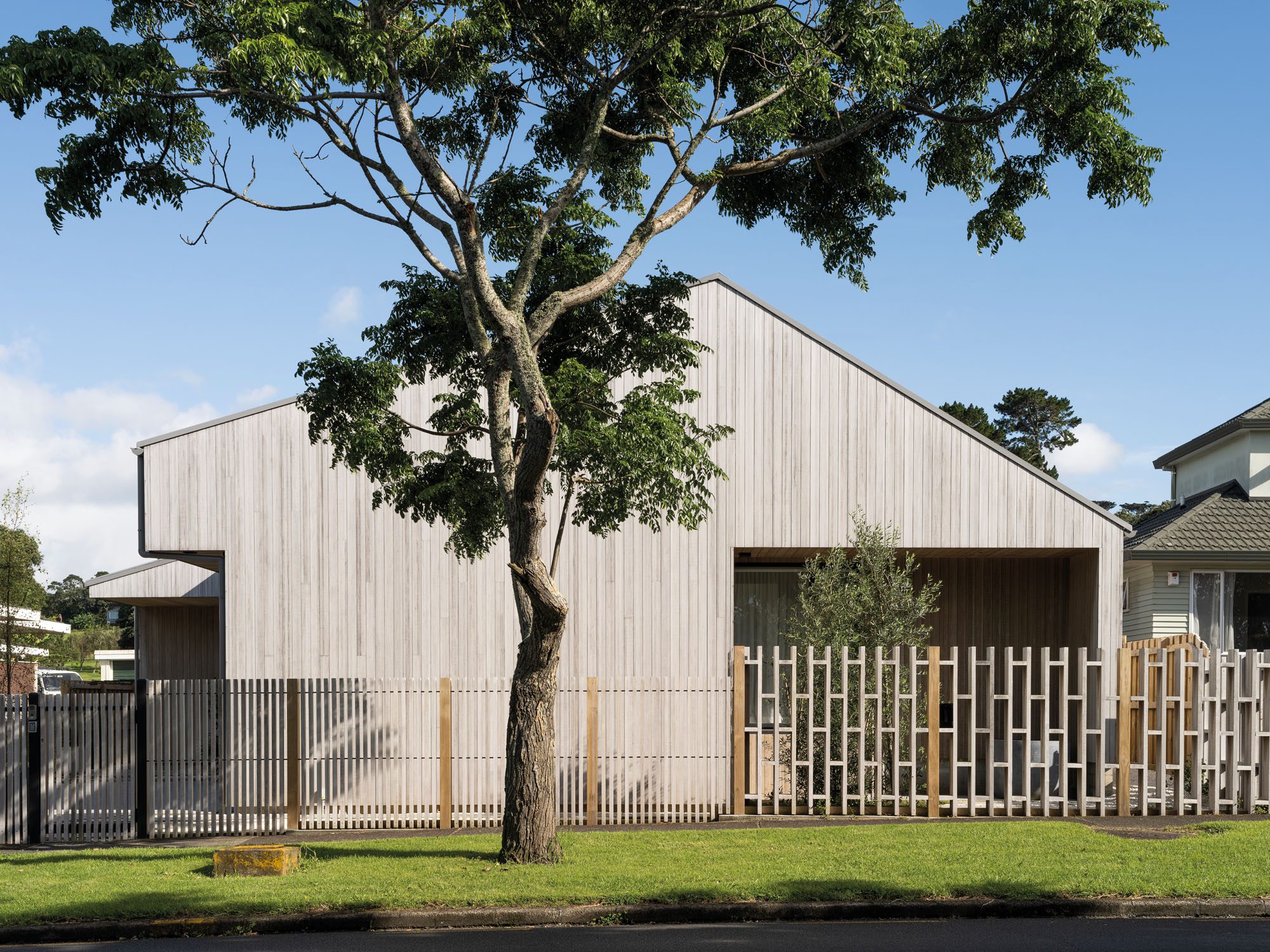
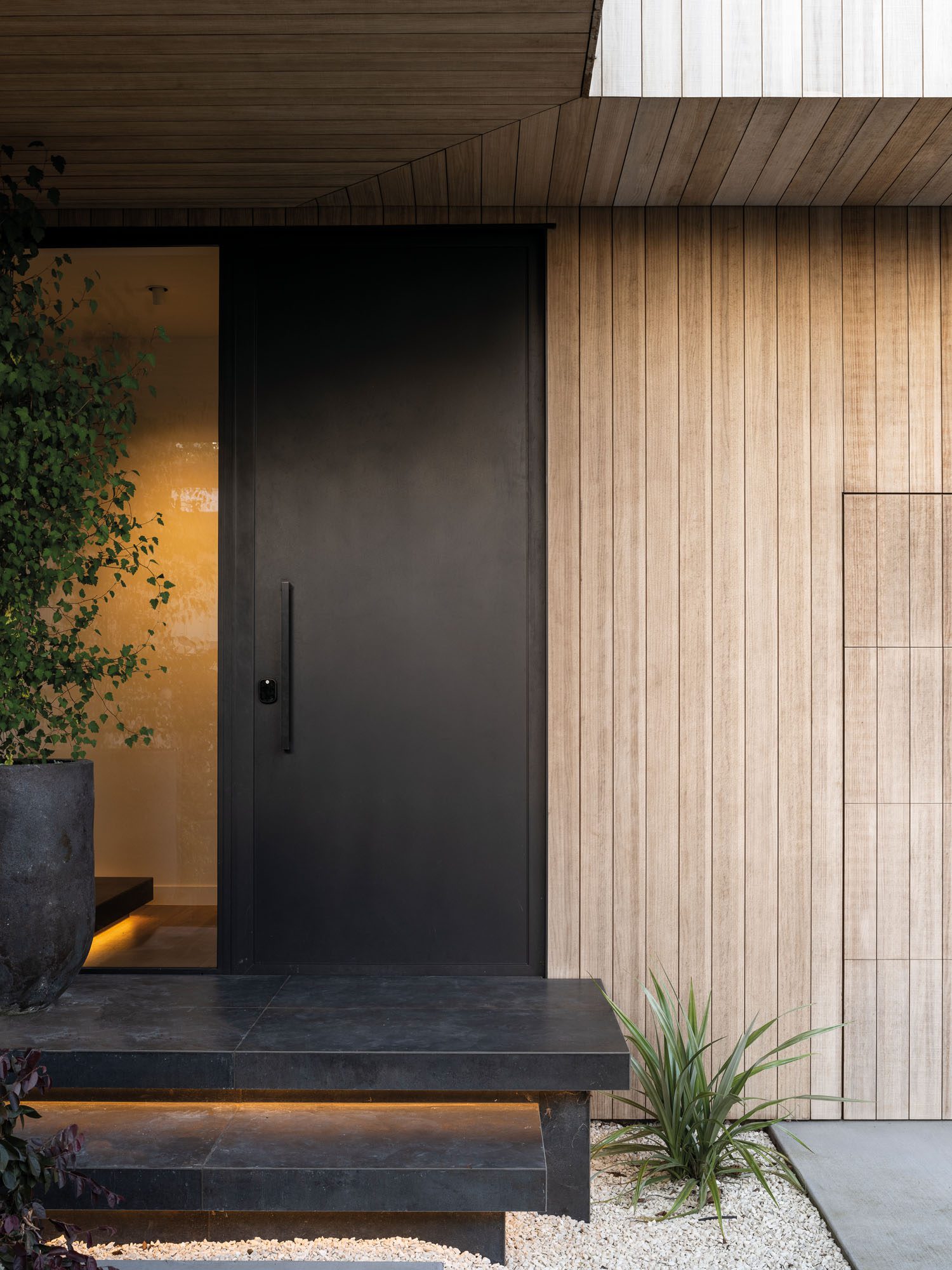
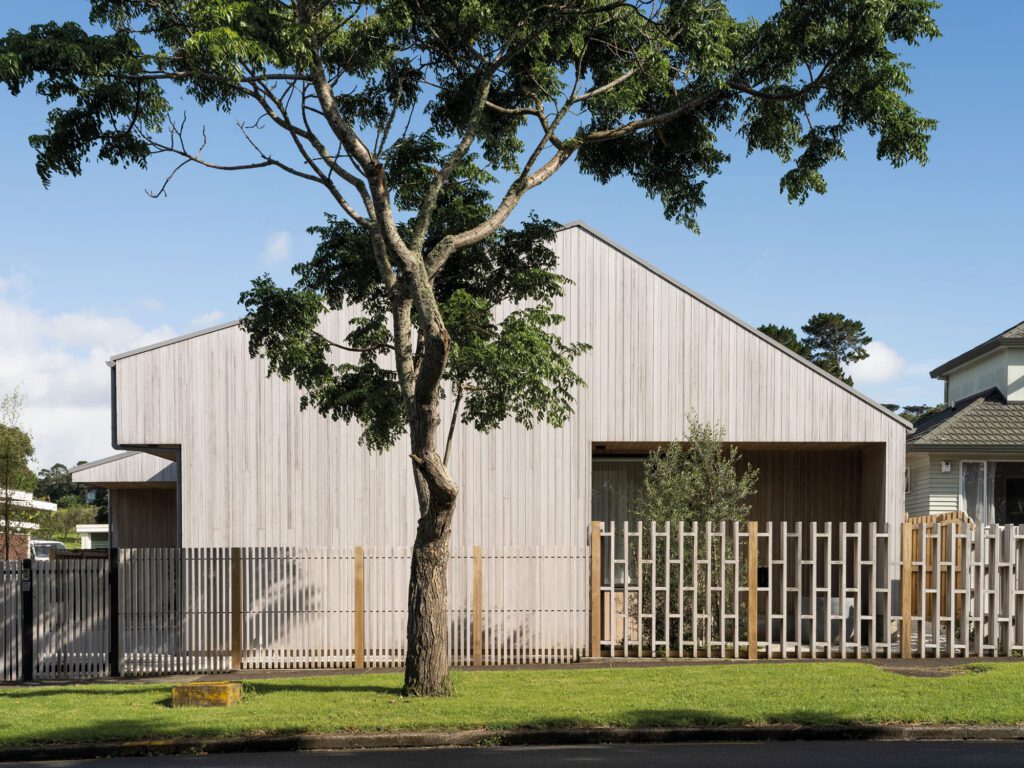
An asymmetrical gabled form to the street is closed to passers-by. Vertical timber cladding is structured and rhythmic against a mature tree on the berm.

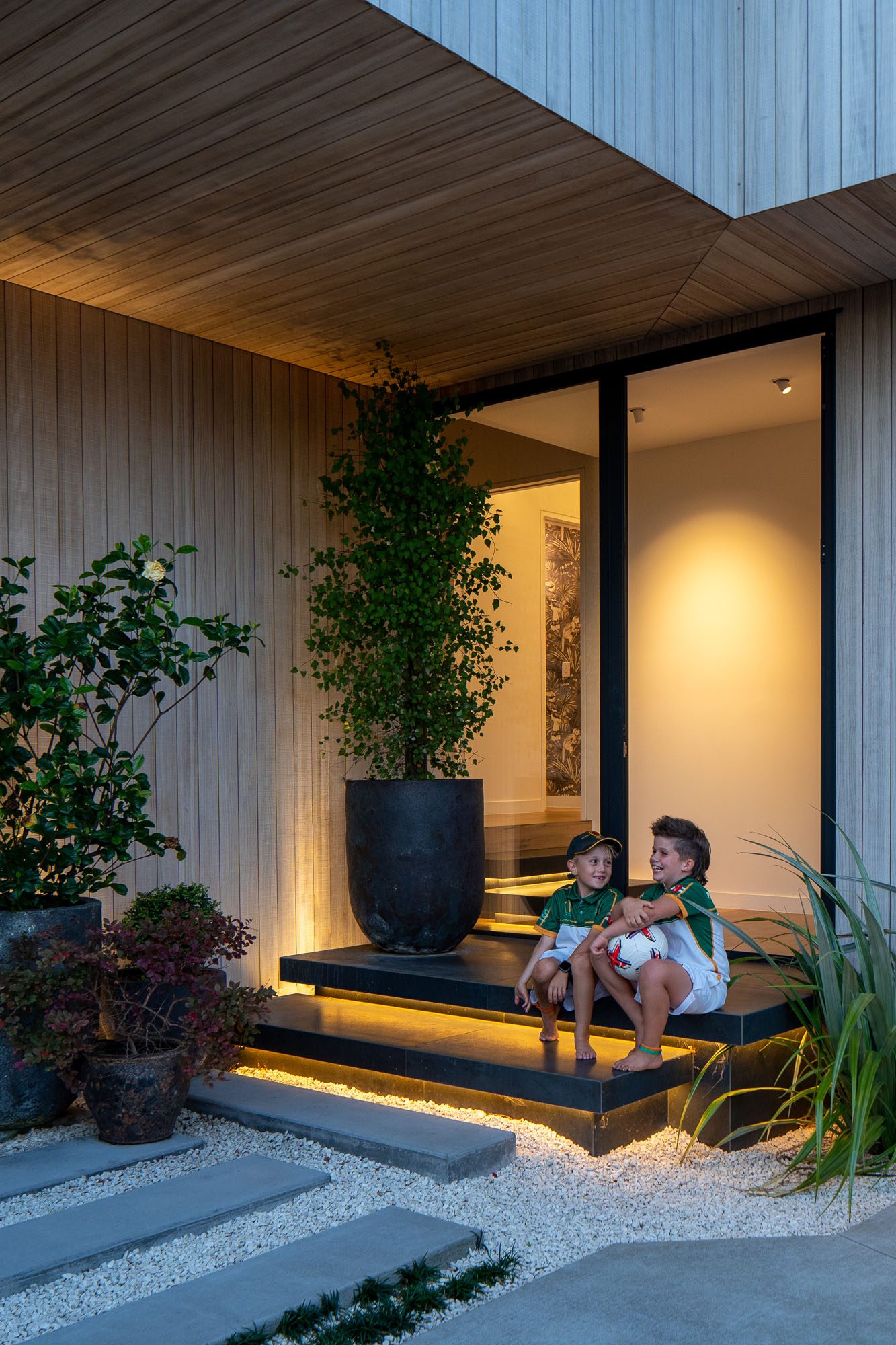
From the road, a relentlessly busy arterial route, there’s little to indicate the joyful spaces that unfold beyond. Wrapped in vertical timber, its asymmetrical gable is suggestive of familiarity, at a quick glance akin to a child’s sketch of ‘home’, off-centre and askew but entirely recognisable. Here, that asymmetry speaks to something quite poetic; spaces are carved away beneath, their voids folding into shadow. Within one, a single window; a requirement of planning rules. 

A mature tree on the berm seems to bring this closed façade alive, its intertwining boughs reaching skywards against the pristine verticality of the timber cladding. There’s a theatricality in nature’s hand set against the discipline of this elevation.

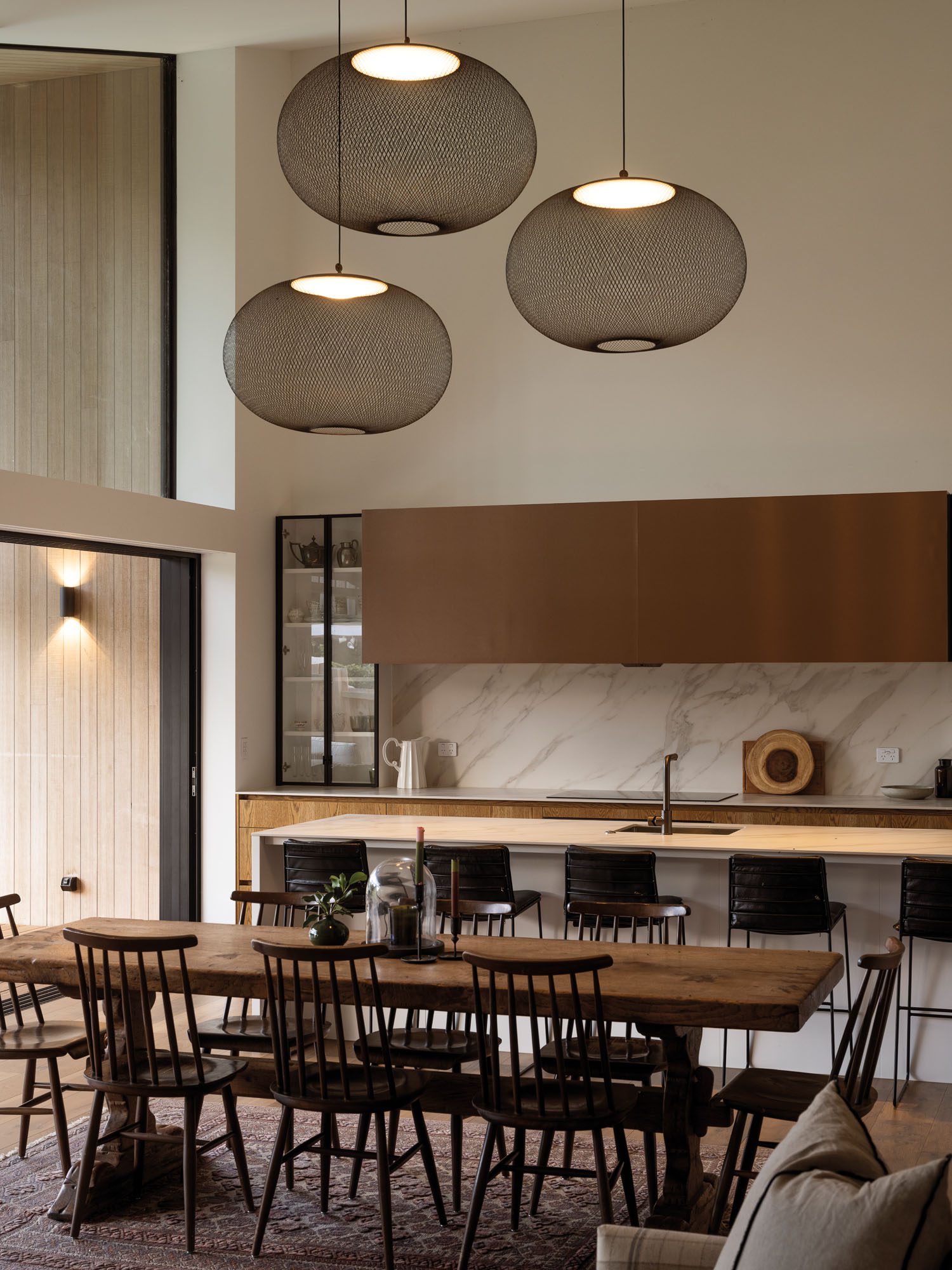
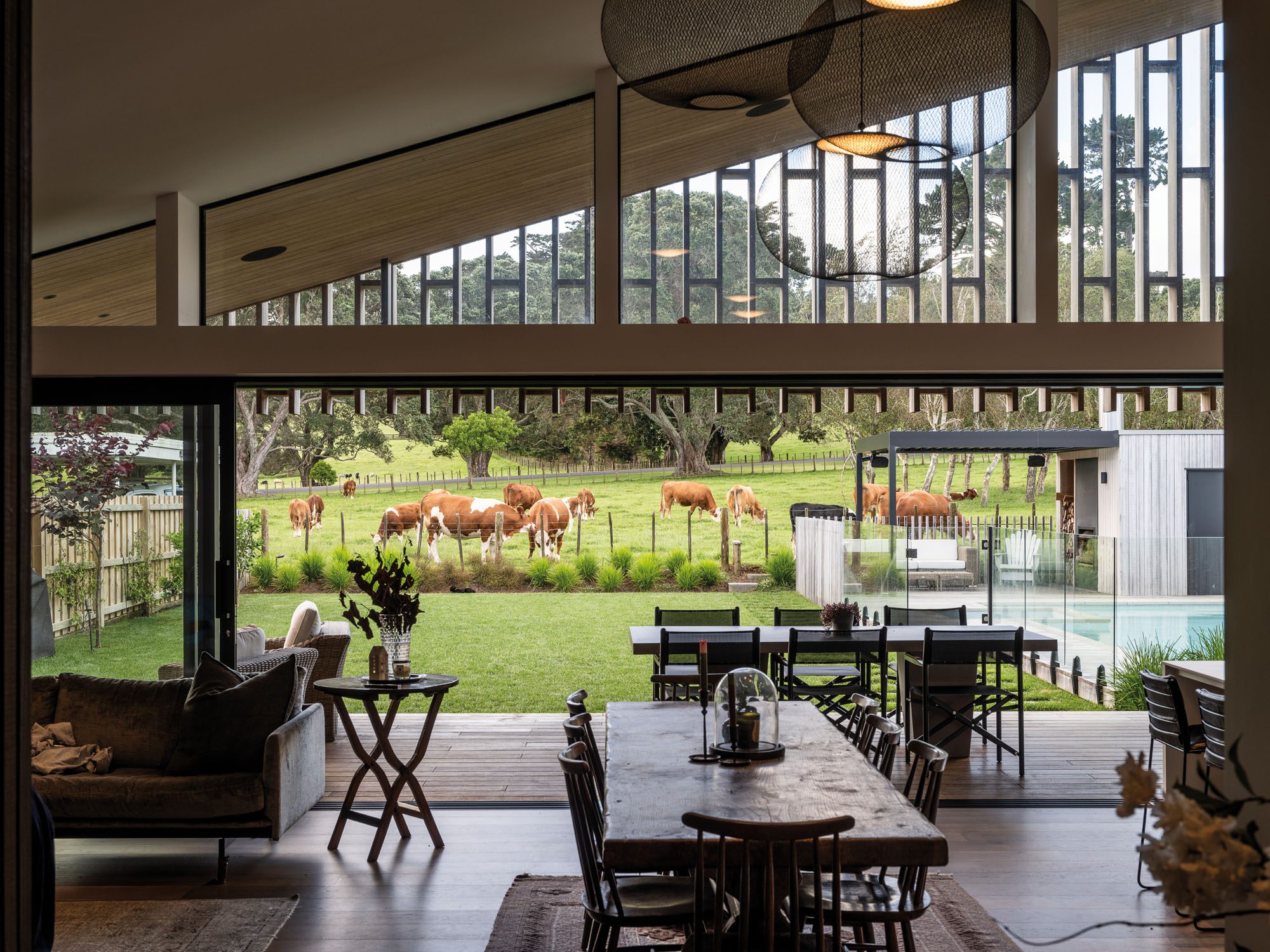
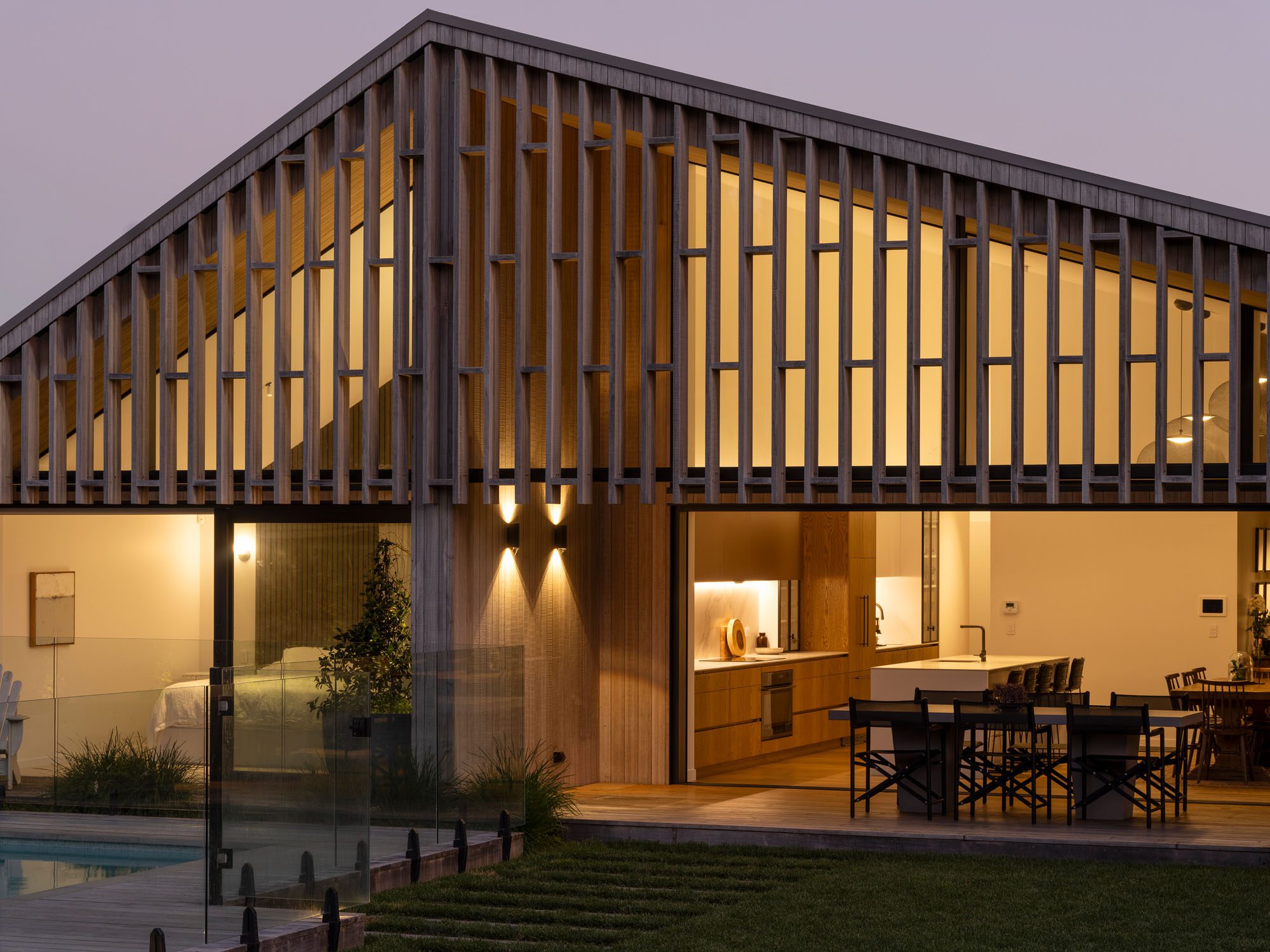
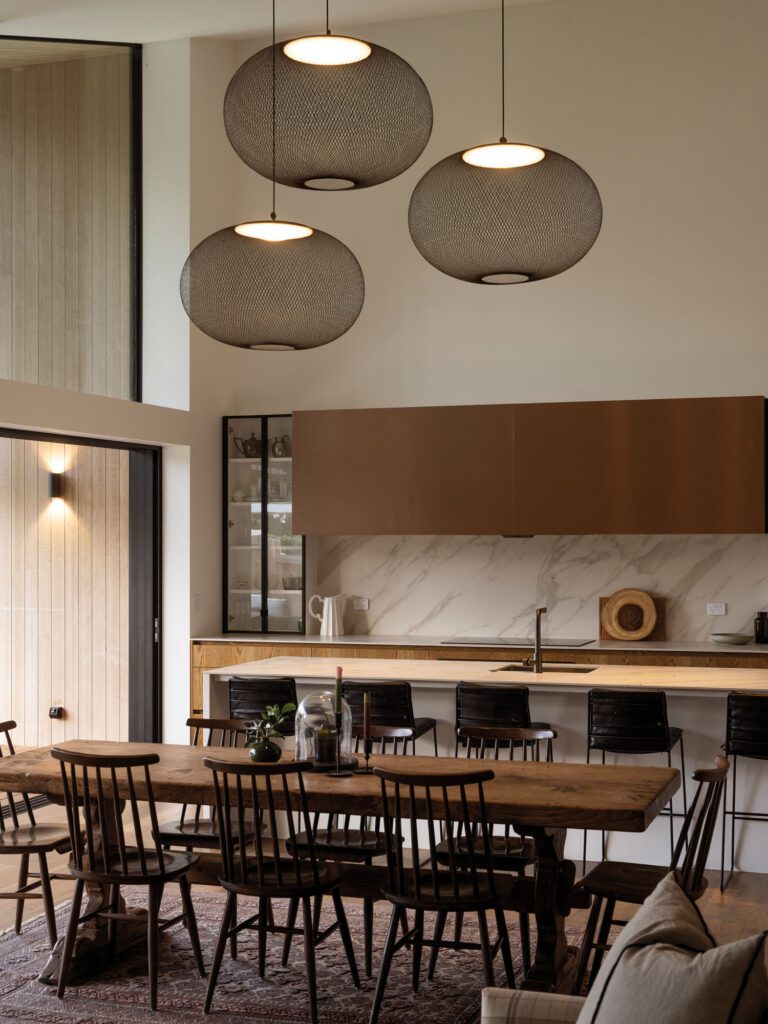
Ceilings rise to five metres in the kitchen, creating an unexpected sense of volume that opens to the bucolic scene beyond.

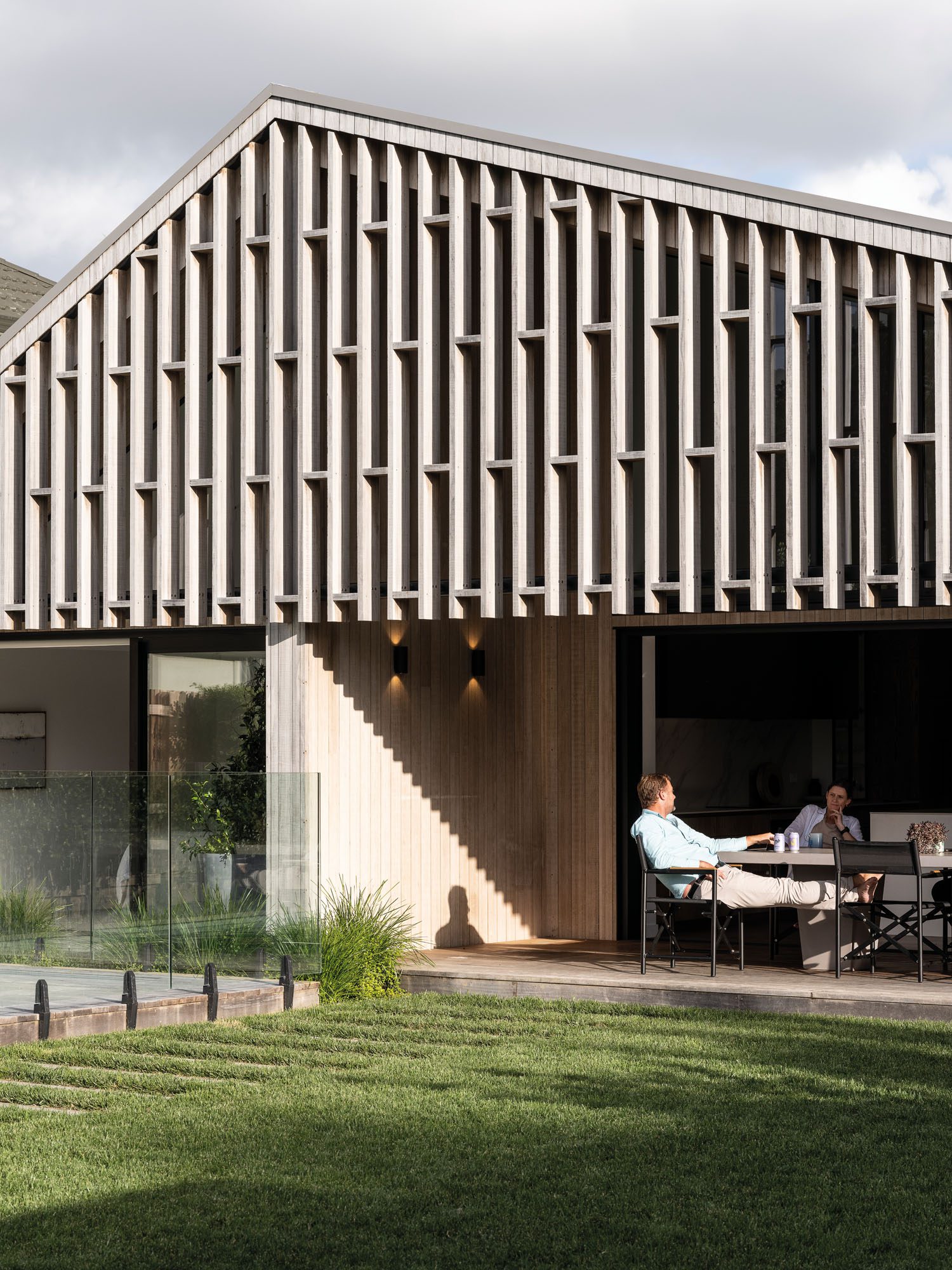
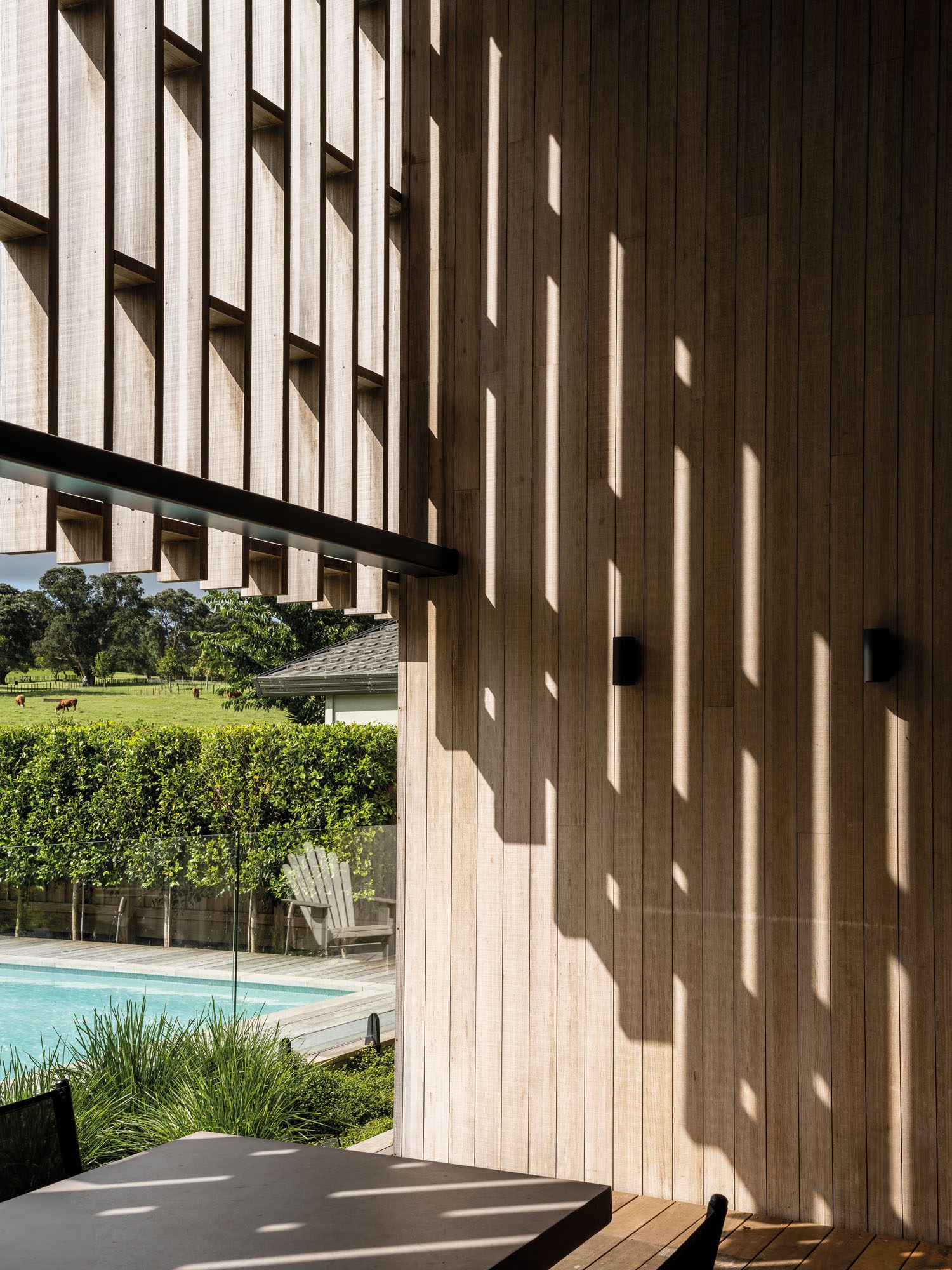
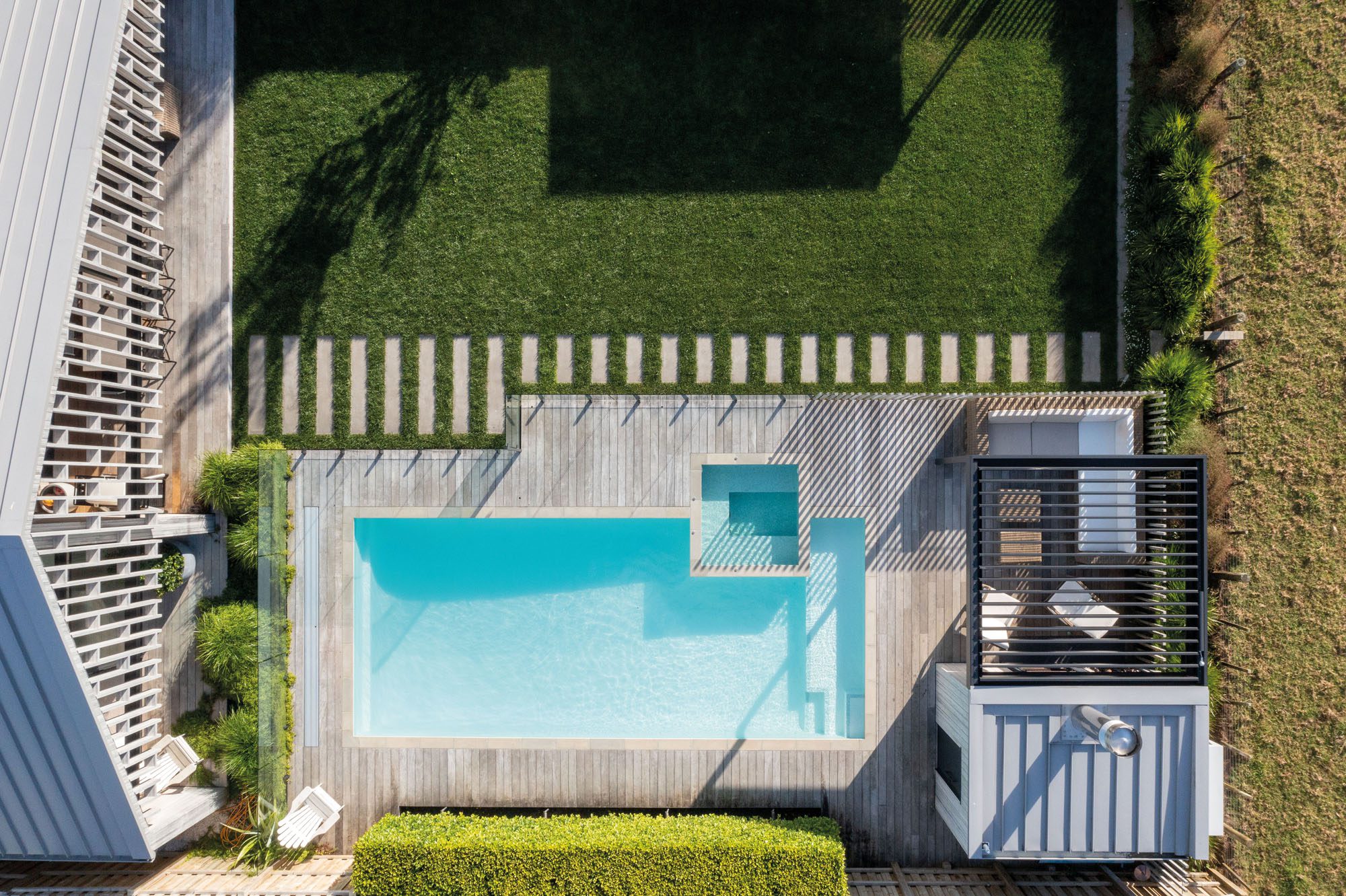
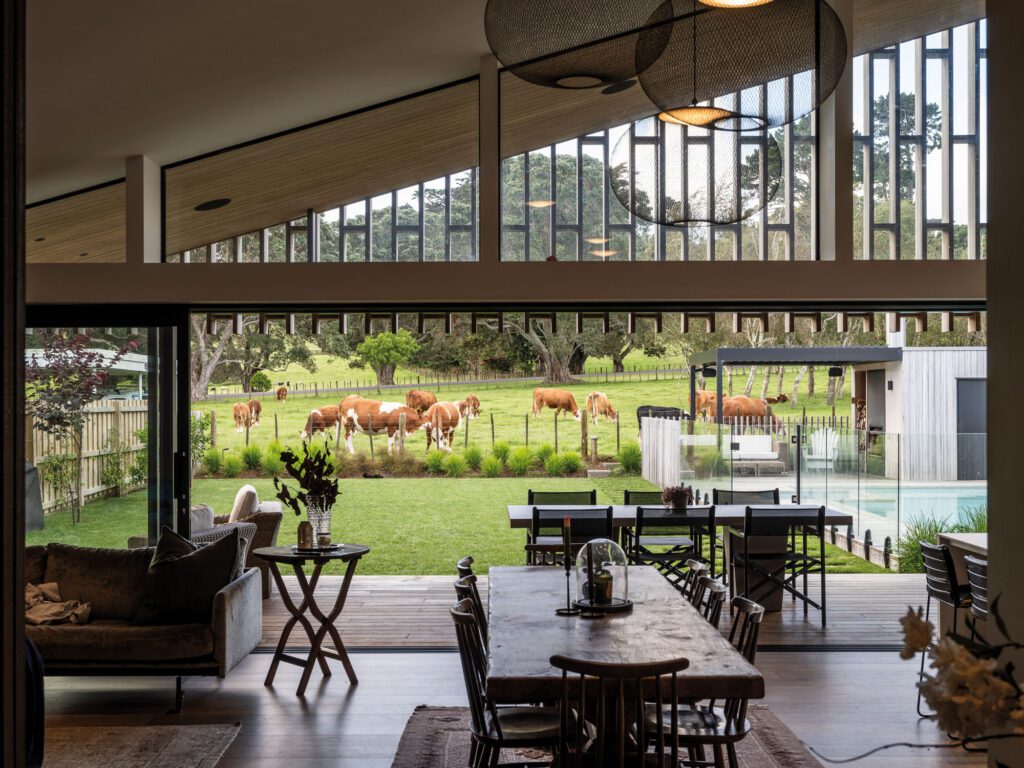
The interior programme is equally as well considered, transitioning from city to park within moments of stepping inside. A hall continues the vertical timber language of the exterior, guiding visitors towards the combined kitchen, dining and living spaces where the rural aspect comes into its own, framed like an artwork. Ceilings reach up to five metres, articulating a sense of space that belies the footprint. A deep deck steps into the landscape, sheltered by an intricate timber screen — its abstract pattern inspired by the park’s post-and-wire fences — casting shifting shards of dappled light inside.

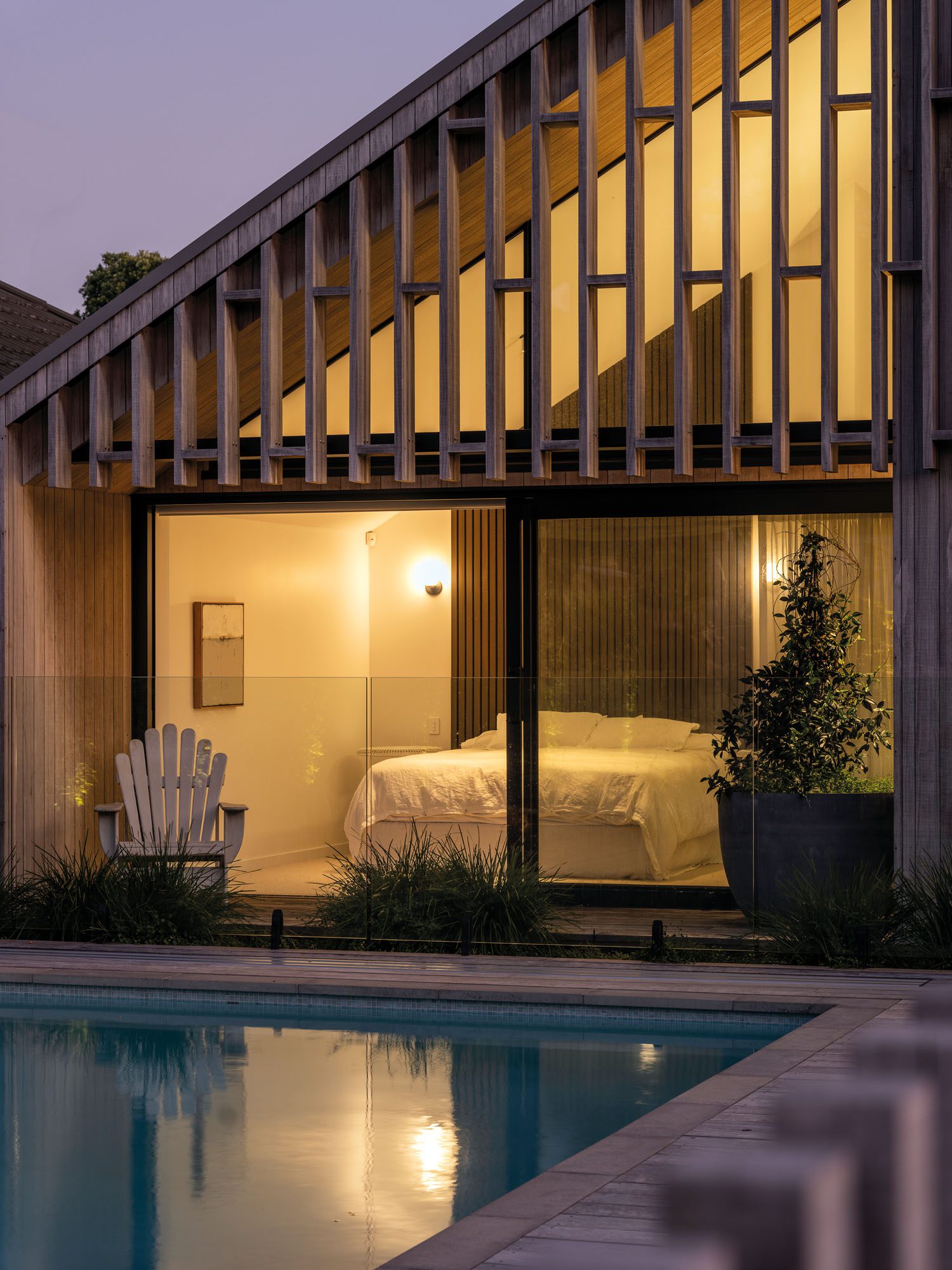
An intricately detailed timber screen shelters the deck and defines the park-facing elevation.

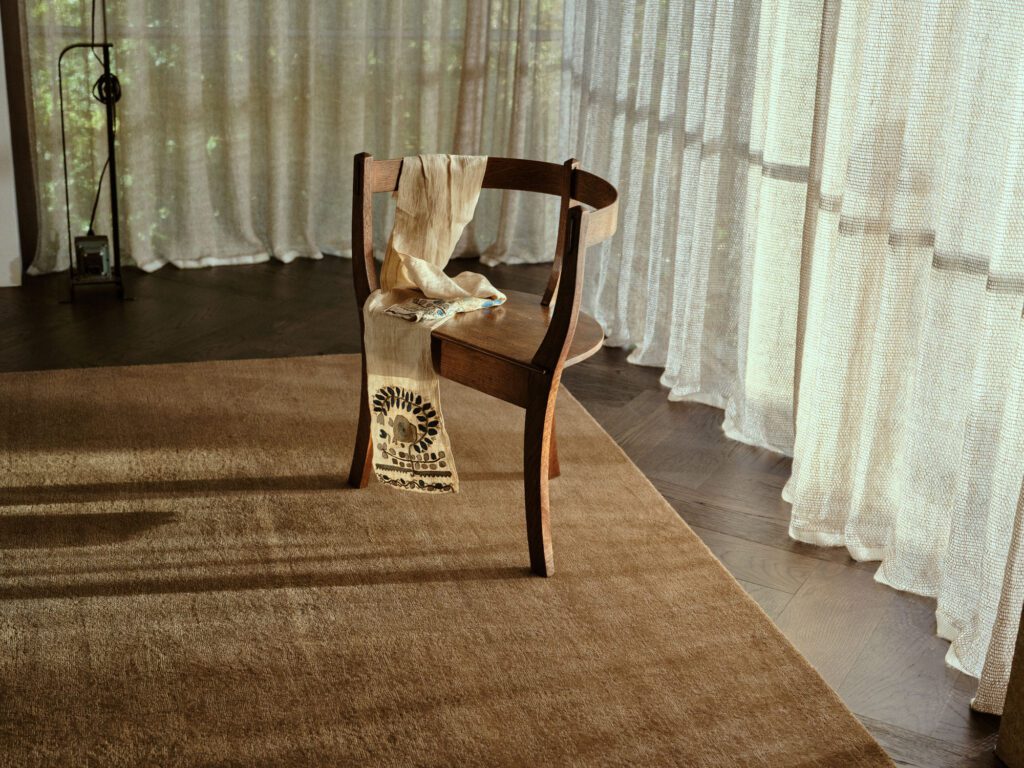
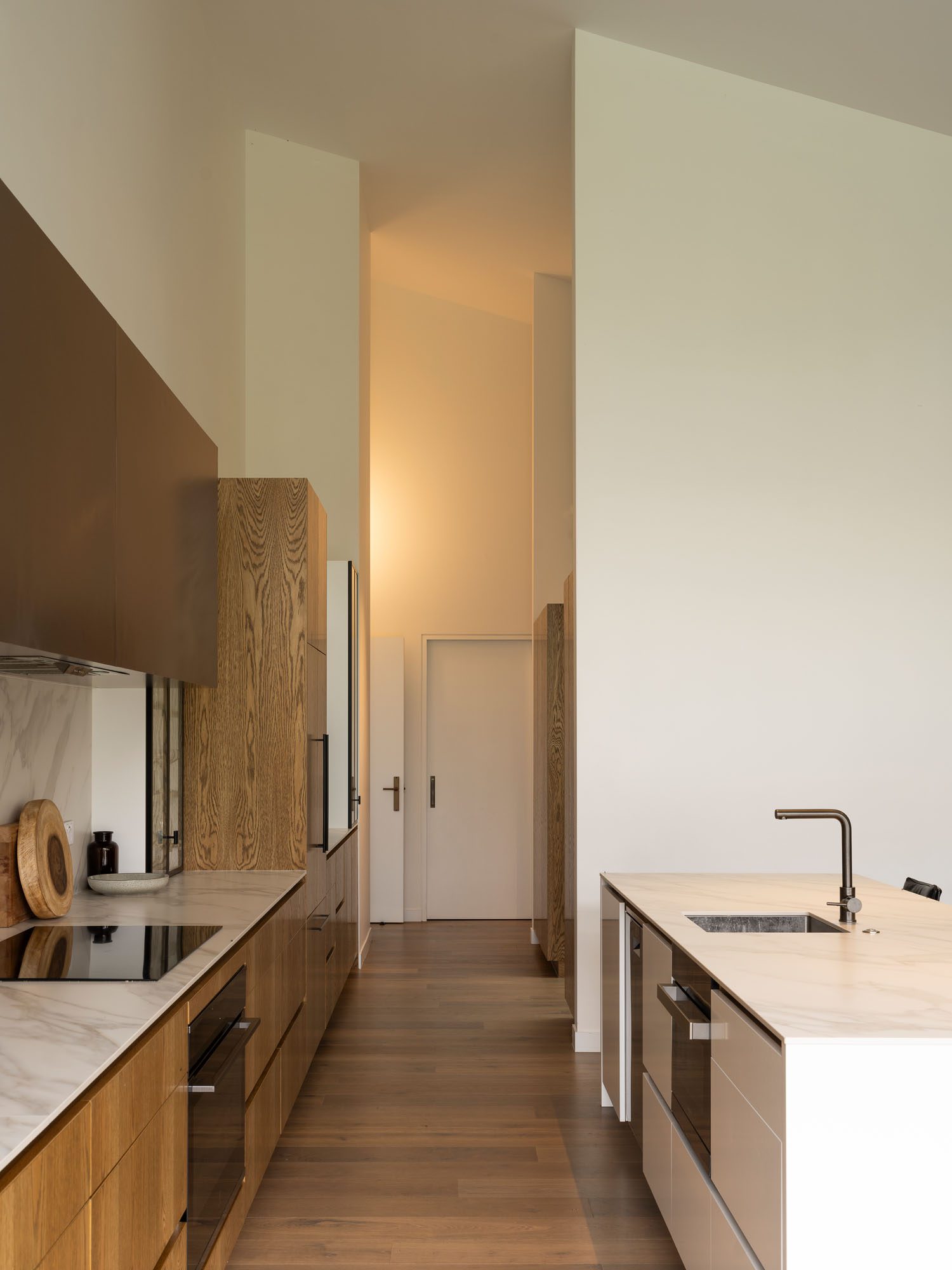
Internally, the palette is warm and restrained: oak cabinetry, antique rugs, and a mix of furniture that leans equally into comfort and clarity. There is craft here, but nothing overly precious. An open fire warms the heart of the room. 

A central spine separates public from private spaces, while the living wing unfolds into the park; on the other side, bedrooms, bathrooms, and an office and gym are tucked out of sight. Guests, whether fleeting or staying for dinner, are held in the public realm while the private rooms are left uninterrupted.

At dusk, the park gates close, and the property is enveloped in a tranquillity that feels far from the pulse of central Tāmaki Makaurau.

Words: Clare Chapman
Images: David Straight

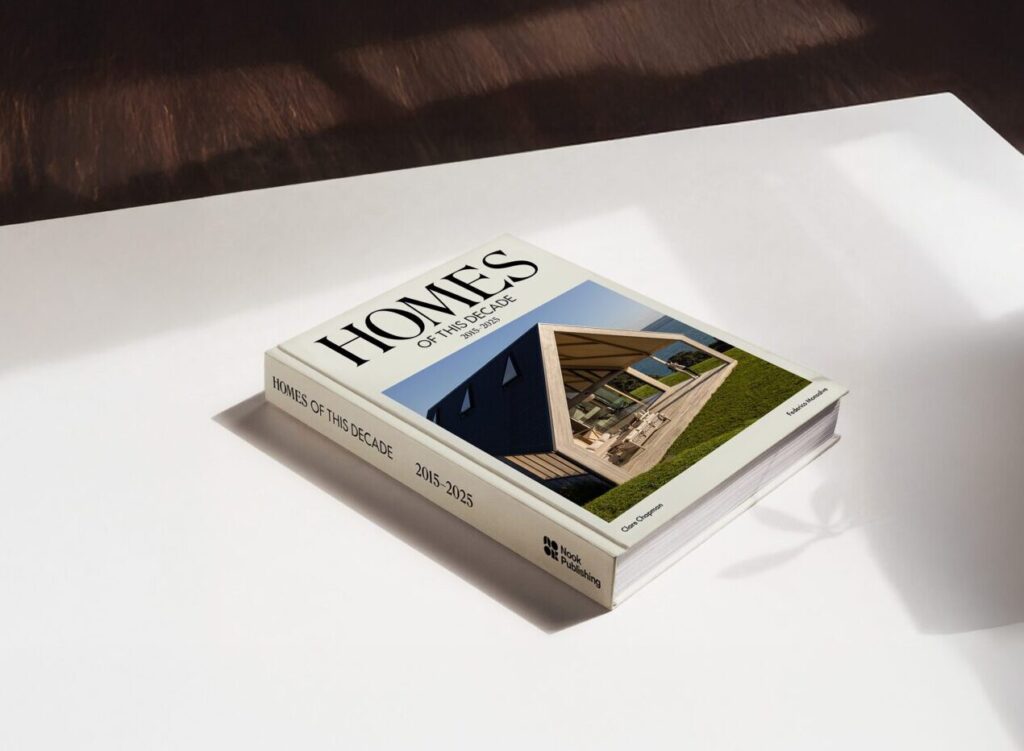
This feature first appeared in Homes of this Decade 2015-2025, which was published by Nook Publishing in 2025.

Latest video features

In the Coromandel, a home with a humble profile and a thoughtful design makes the most of a stunning location.

Built with awe-inspiring attention to detail, this Arrowtown home is a fresh interpretation of a familiar Otago rural vernacular.

This sculptural Northland bach is a perfect north arrow on a remote farm high above the sea.

With the sun on its bow and the community at its stern, this is a house in which the elements are always front of mind.

Trending articles

Arts and Books

Martino Gamper x Objectspace

Objectspace launches its 2026 programme with a major new commission by Italian designer Martino Gamper, whose work has long explored the cultural and social life