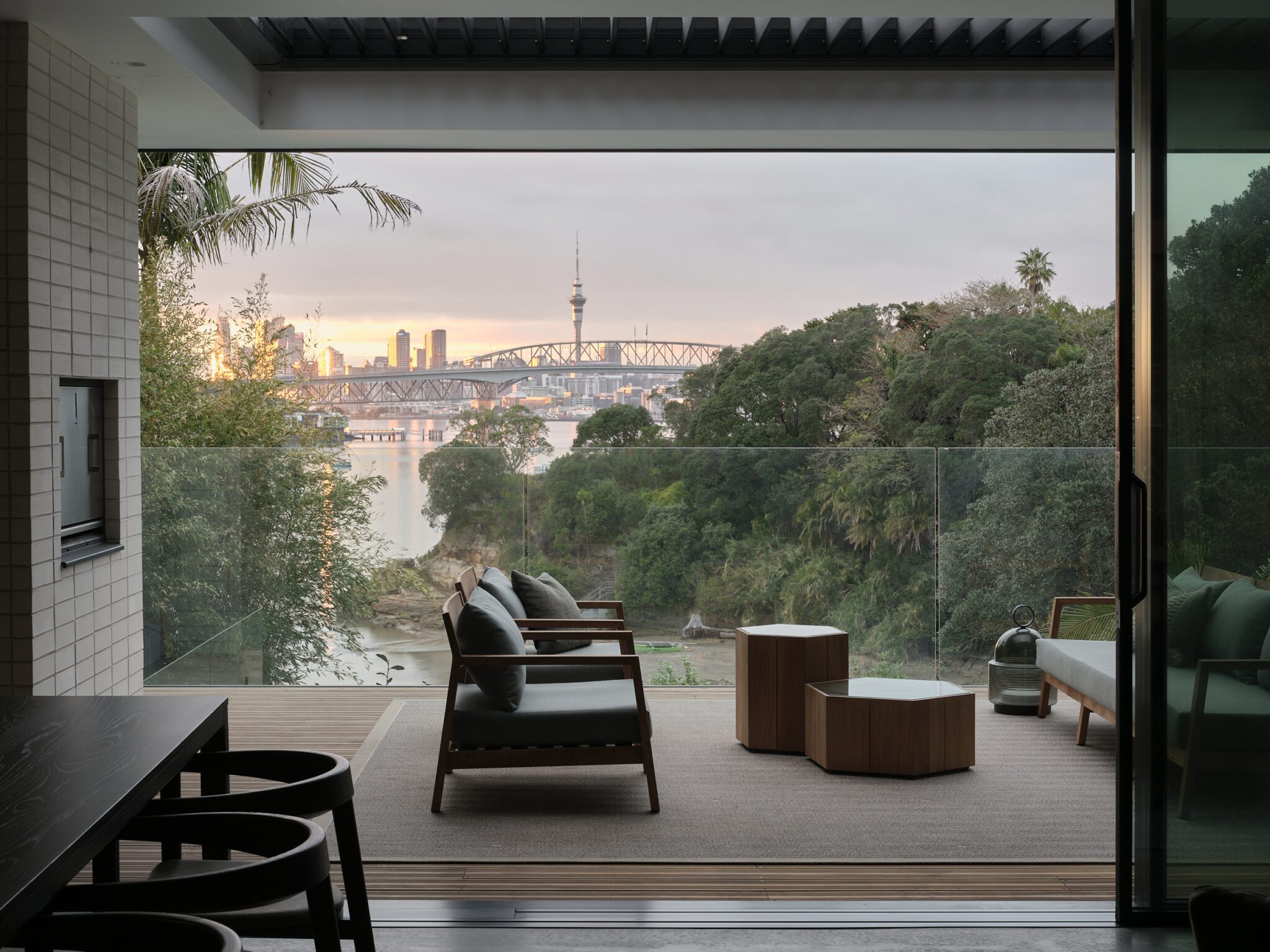
A mature pōhutukawa and Scandinavian influences have come together in this jaw-dropping property on Auckland’s North Shore.

From the cradle of a small bay, a steep hill climbs skyward, its narrow, curvy road lined by colonial and modern homes. It is a neighbourhood full of leafy character and, although the architecture firmly spells comfort, there is still a strong traditional, European mood that feels in equal parts old-fashioned and relaxed.
There are exceptional but somewhat low-key eateries and a cosy little wine bar nearby. Some nights, a full jazz band can be heard from the bowling club down the street as swing dancers do their triple steps, flips and lifts, shoulder checks, and Apple Jacks for a crowd of retirees.
Someone has planted decorative shrubs on the traffic island, complete with a handwritten sign politely asking neighbours not to pick the flowers. It’s all charmingly suburban. In among this beachside fabric, a long driveway deposits you in a mix of dense housing and mature trees, all trying to coexist while squeezing privacy and dappled light into the equation.

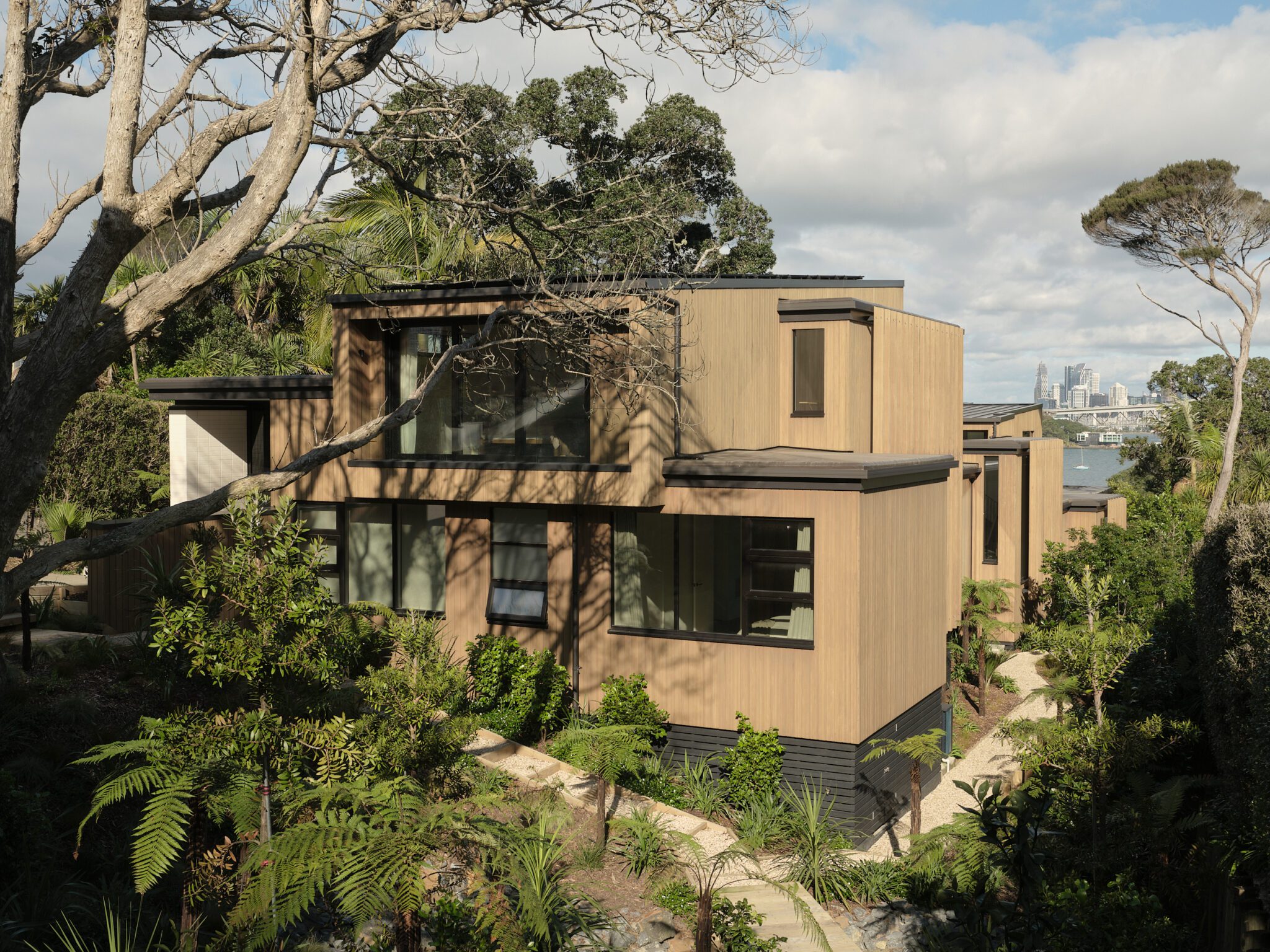
The site, as interior designer Alex McLeod from at.space explains, “is a beautiful, long section that stretches from the street right down toward the bay. It’s very much a journey — being ensconced in the bush and having that view as well, but still feeling connected to place.”
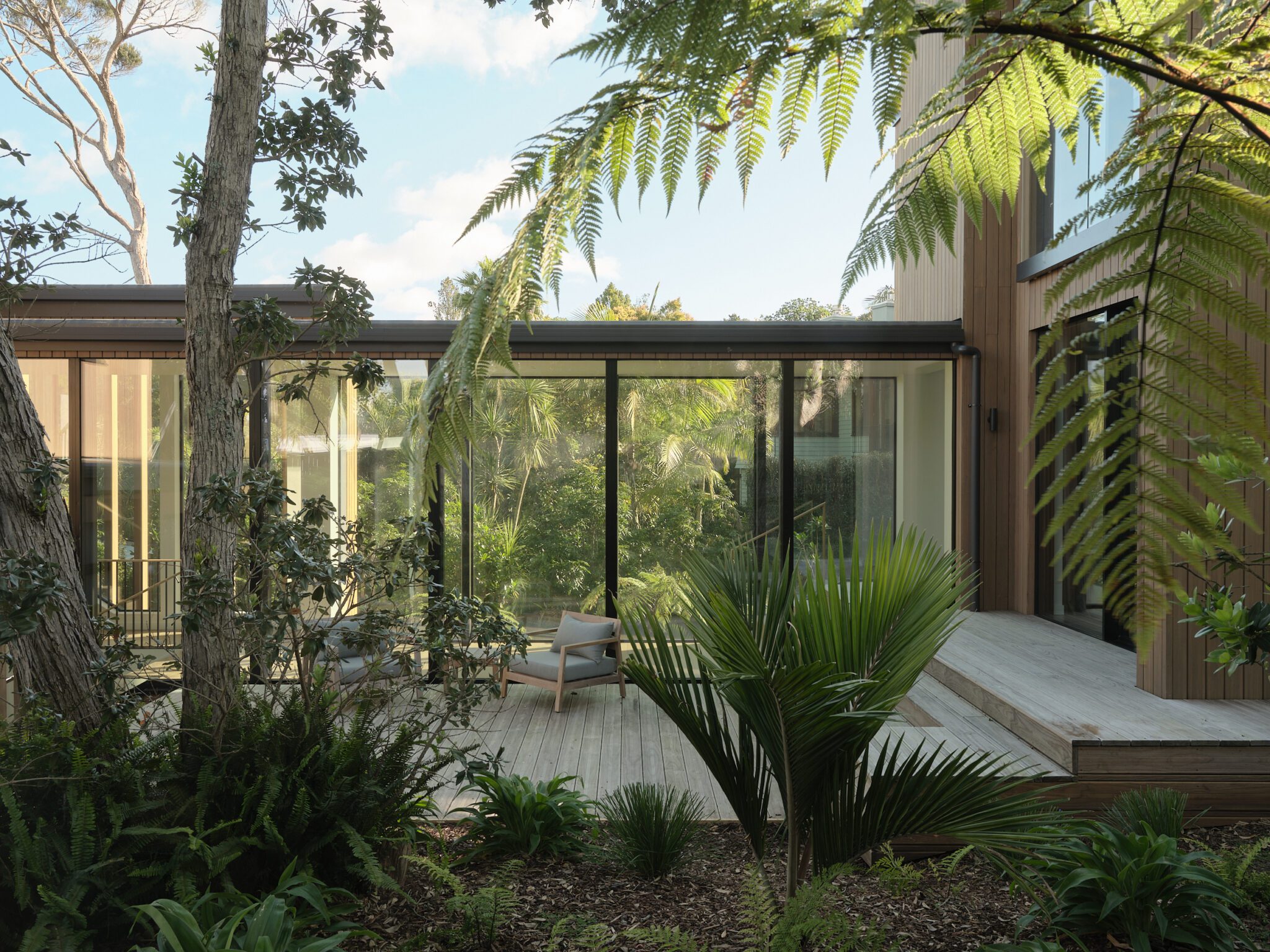
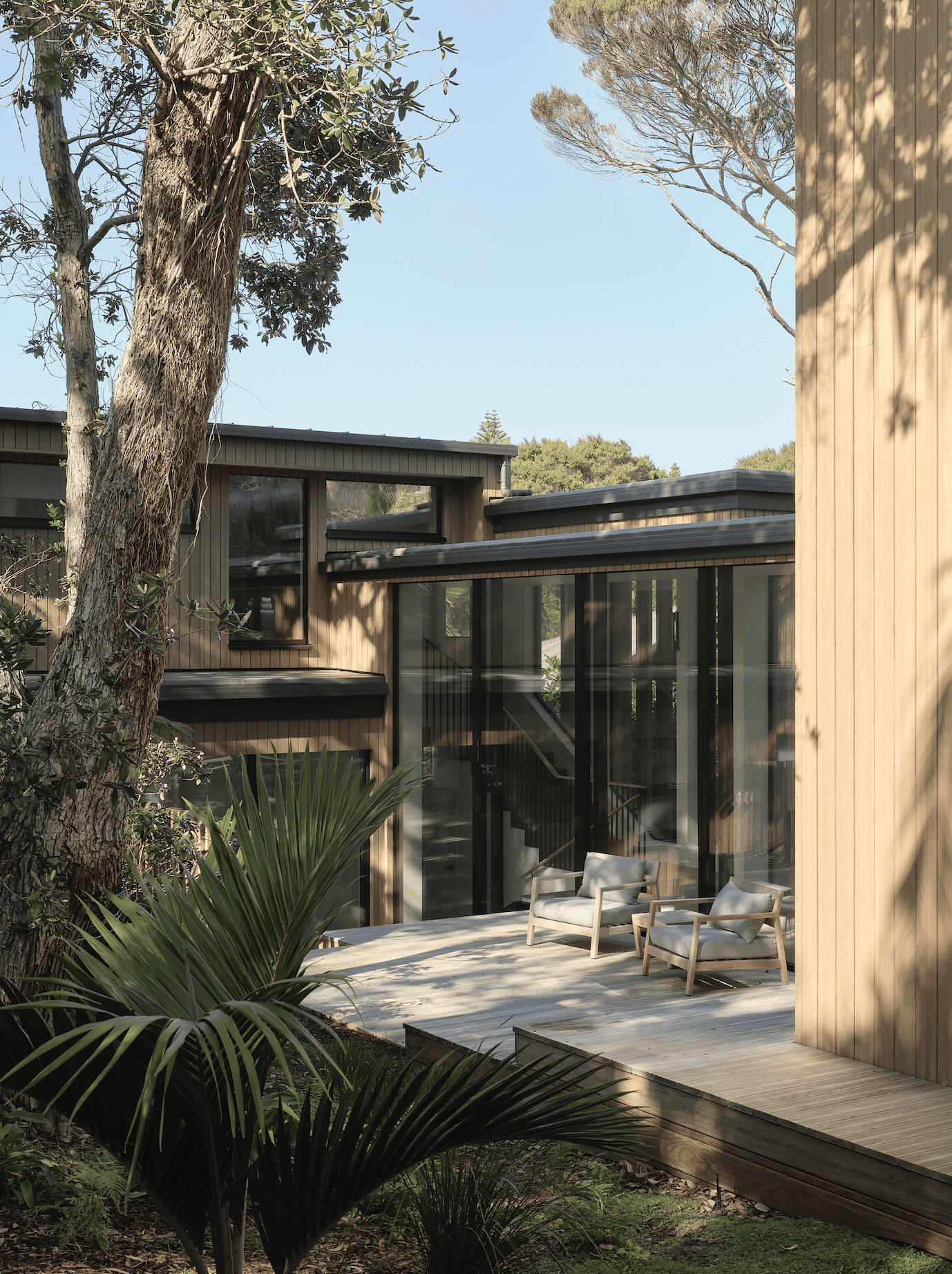
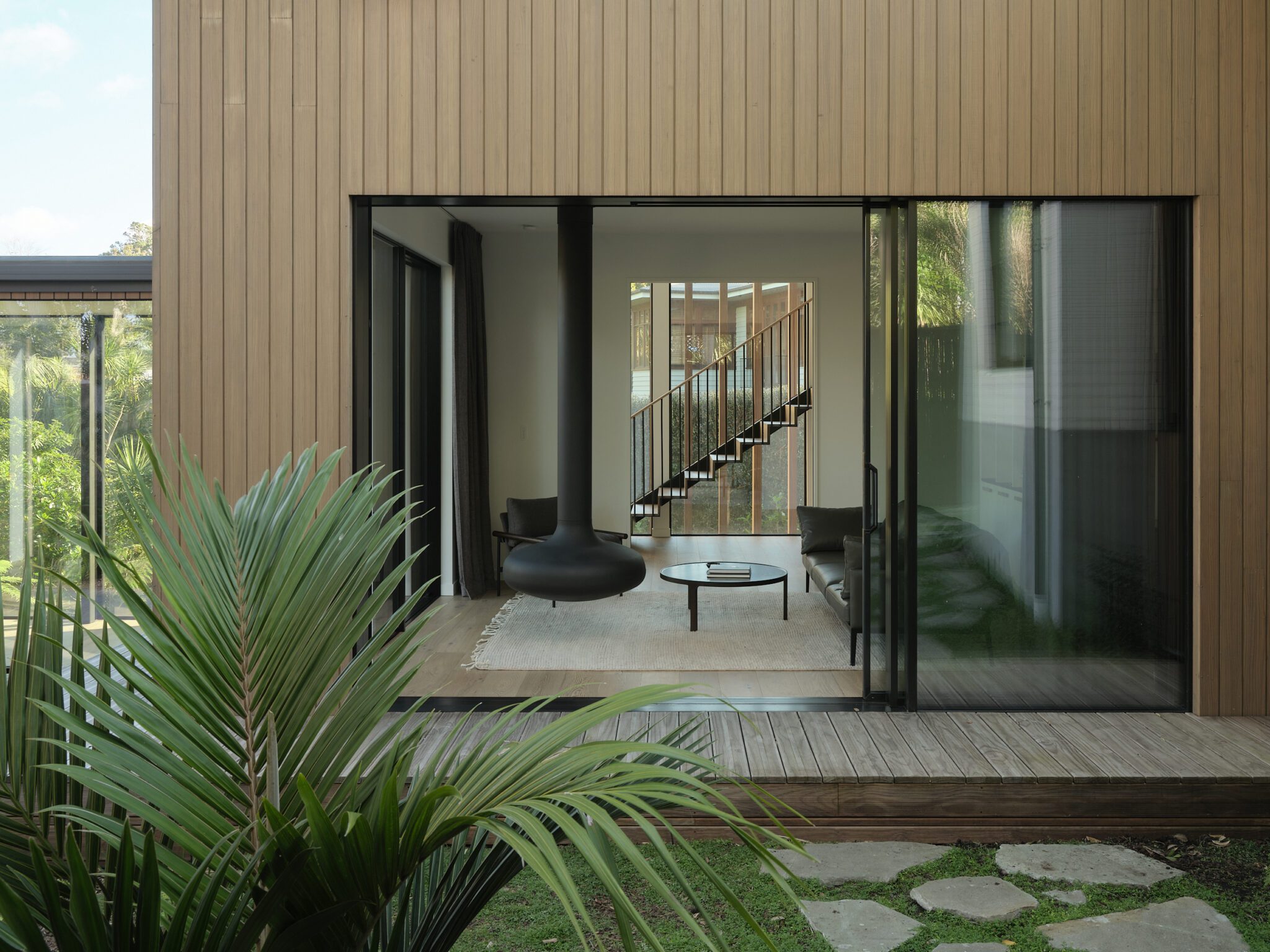
At its heart, “there’s this huge, mature pōhutukawa,” says Alex, pointing at an imposing tree flush with the north-east boundary. “The house was designed to sit around and protect it, so there’s this lovely outdoor courtyard that takes in the canopy.”
Designed by Jones Architects, the home unfolds in two distinct, two-storey wings — one housing the kids’ and guest rooms, library, and gym; the other, the main living spaces and primary suite. Between them lies the sheltered courtyard, where light filters through the pōhutukawa leaves.
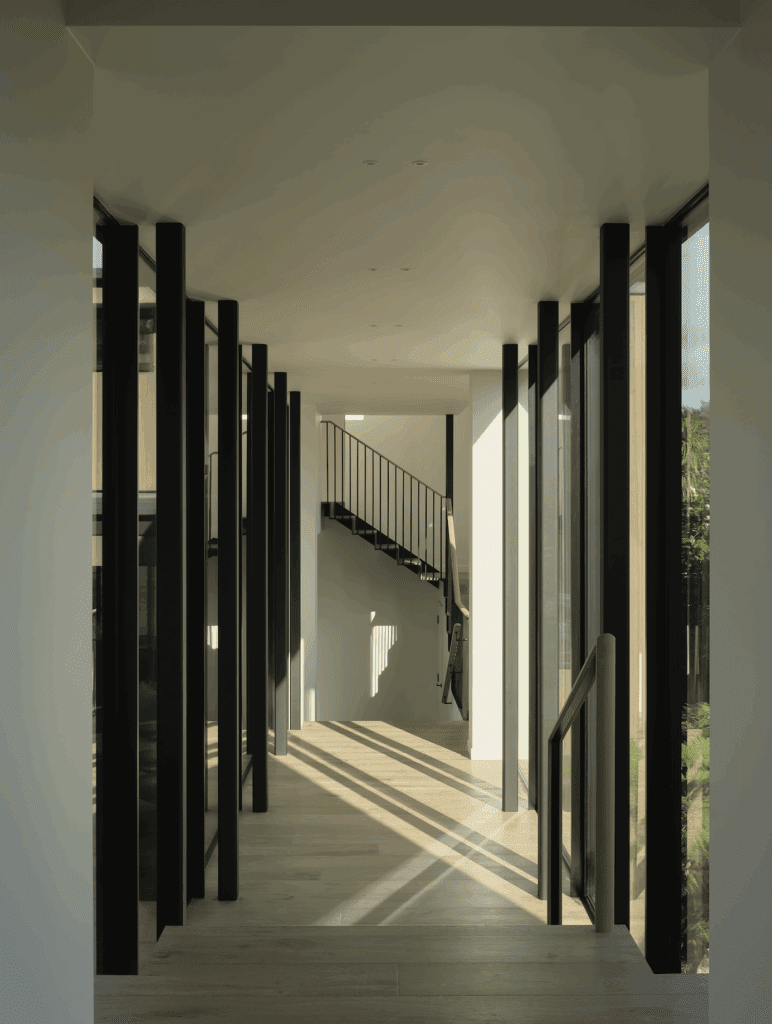
A glazed gallery runs the length of the courtyard, connecting the two halves in a slow, elegant procession. “As you walk from one end to the other,” Alex notes, “you’re almost outside. Both sides of that gallery are glazed, so it’s this beautiful, shifting experience of light.”
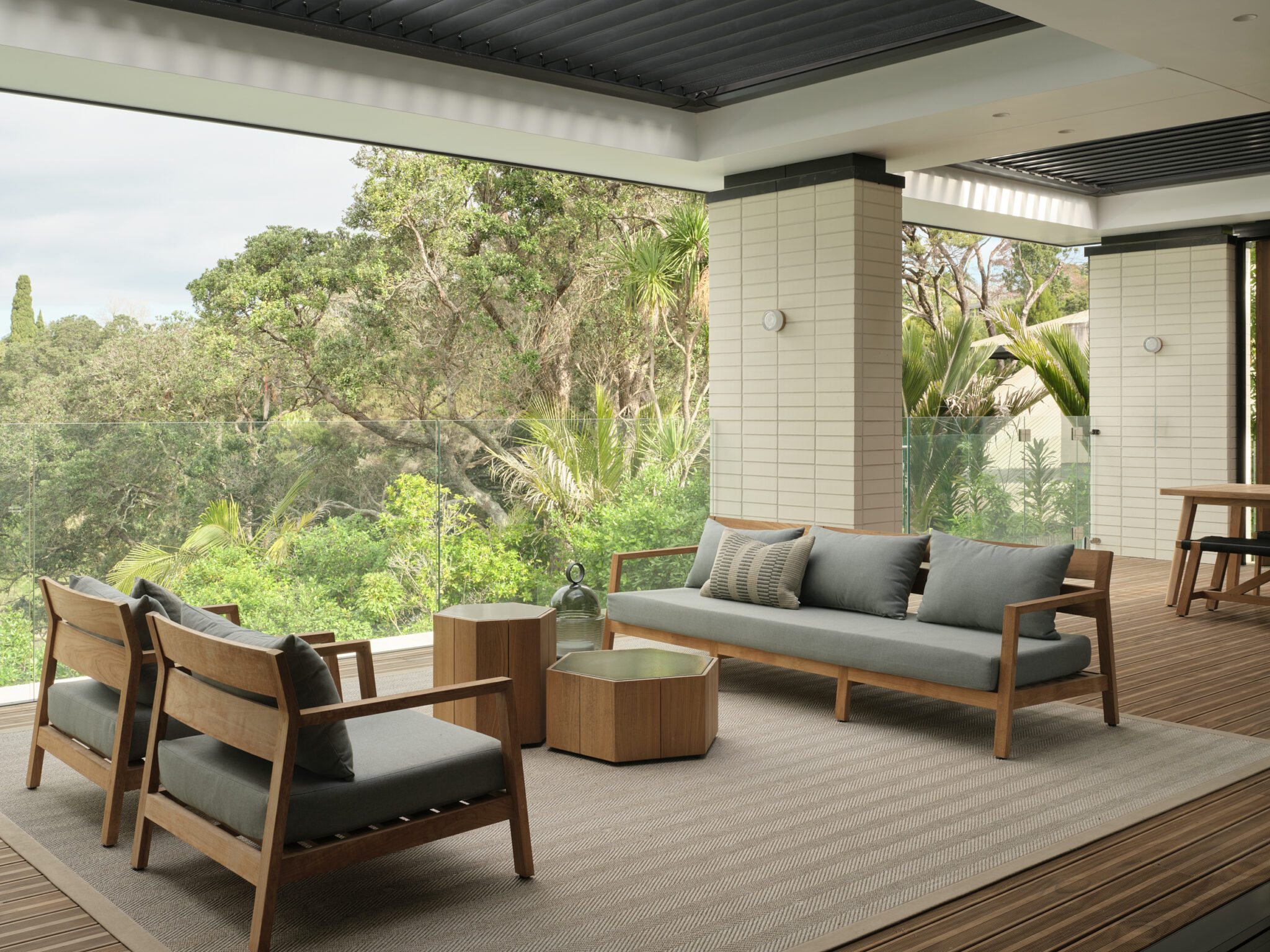
The home overlooks the ocean, the Auckland Harbour Bridge, and the city lights. It’s a journey, Alex says, from the garage high on the hill to the water below. “It creates a sense of sanctuary. The owners are busy career people who wanted to come home and have a sense of calm and of being connected to their context.”
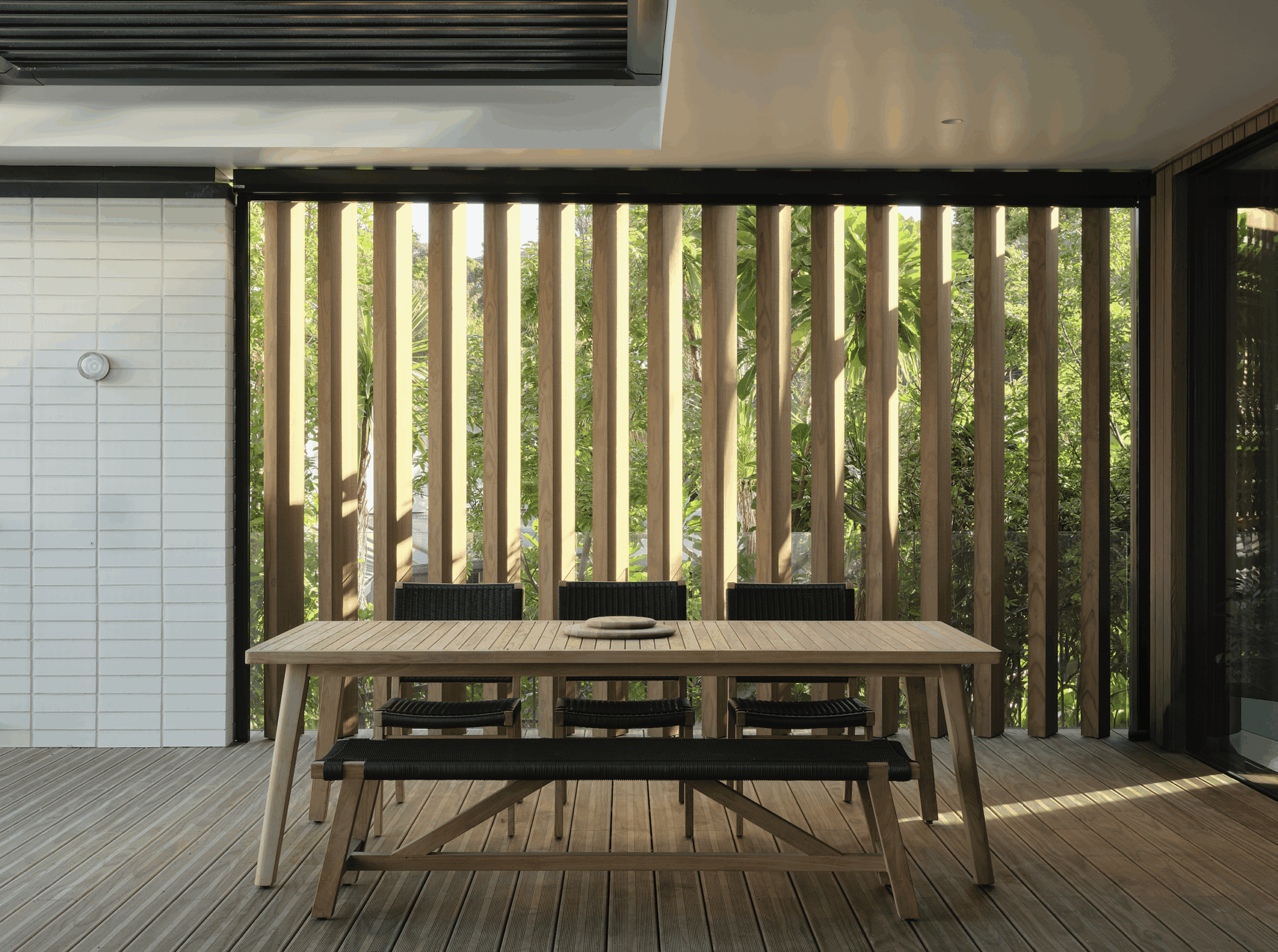
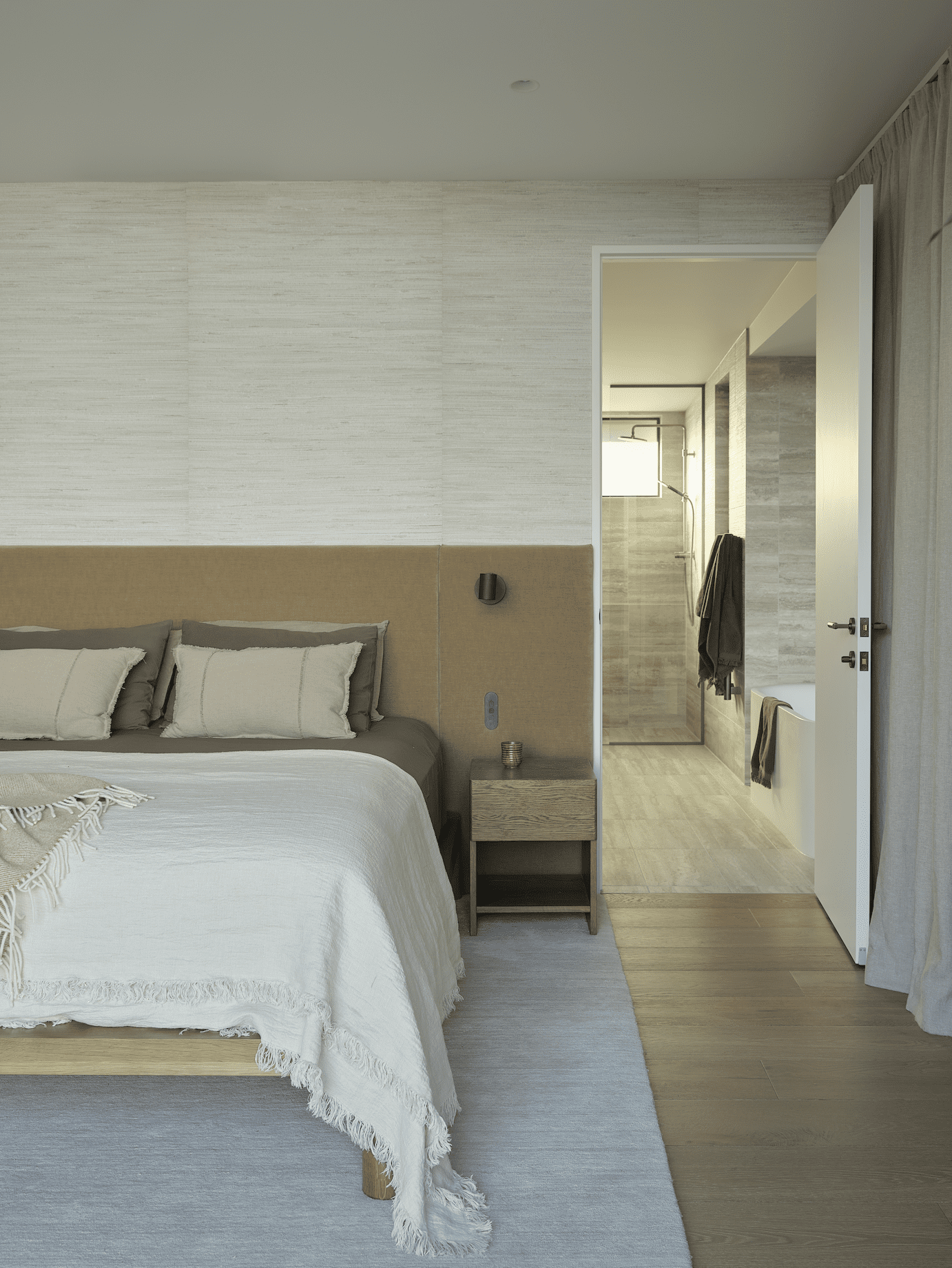
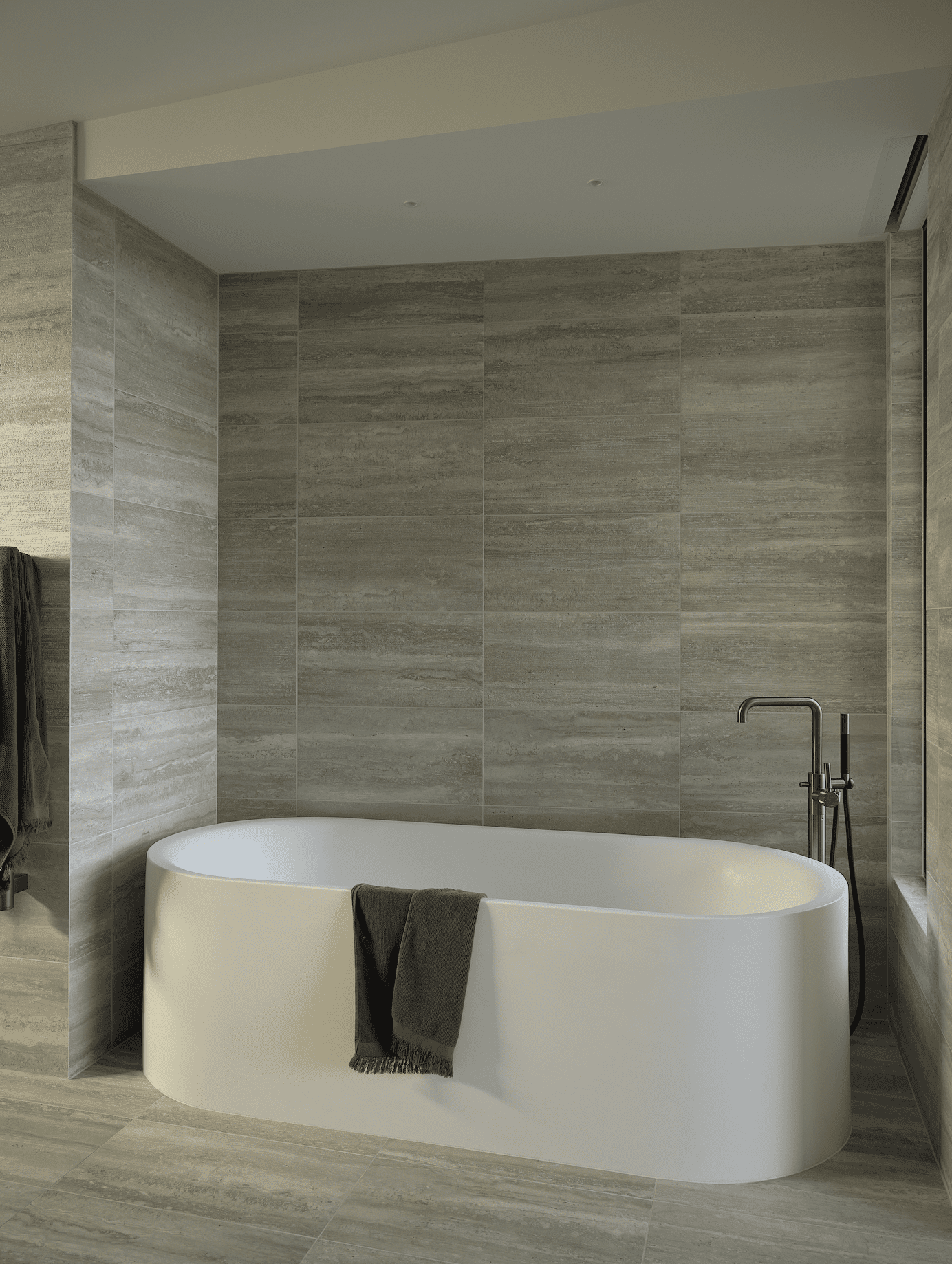
Calmness is an overarching theme here. Every move and material has been chosen for its textural warmth, for its grounding colour, or for the ability to transition smoothly rather than make abrupt changes. “The brief was very much to try and have this connection of two different materials throughout,” says Alex. “They loved beautiful natural timber, with the grain coming through, paired with softer, classic finishes.”

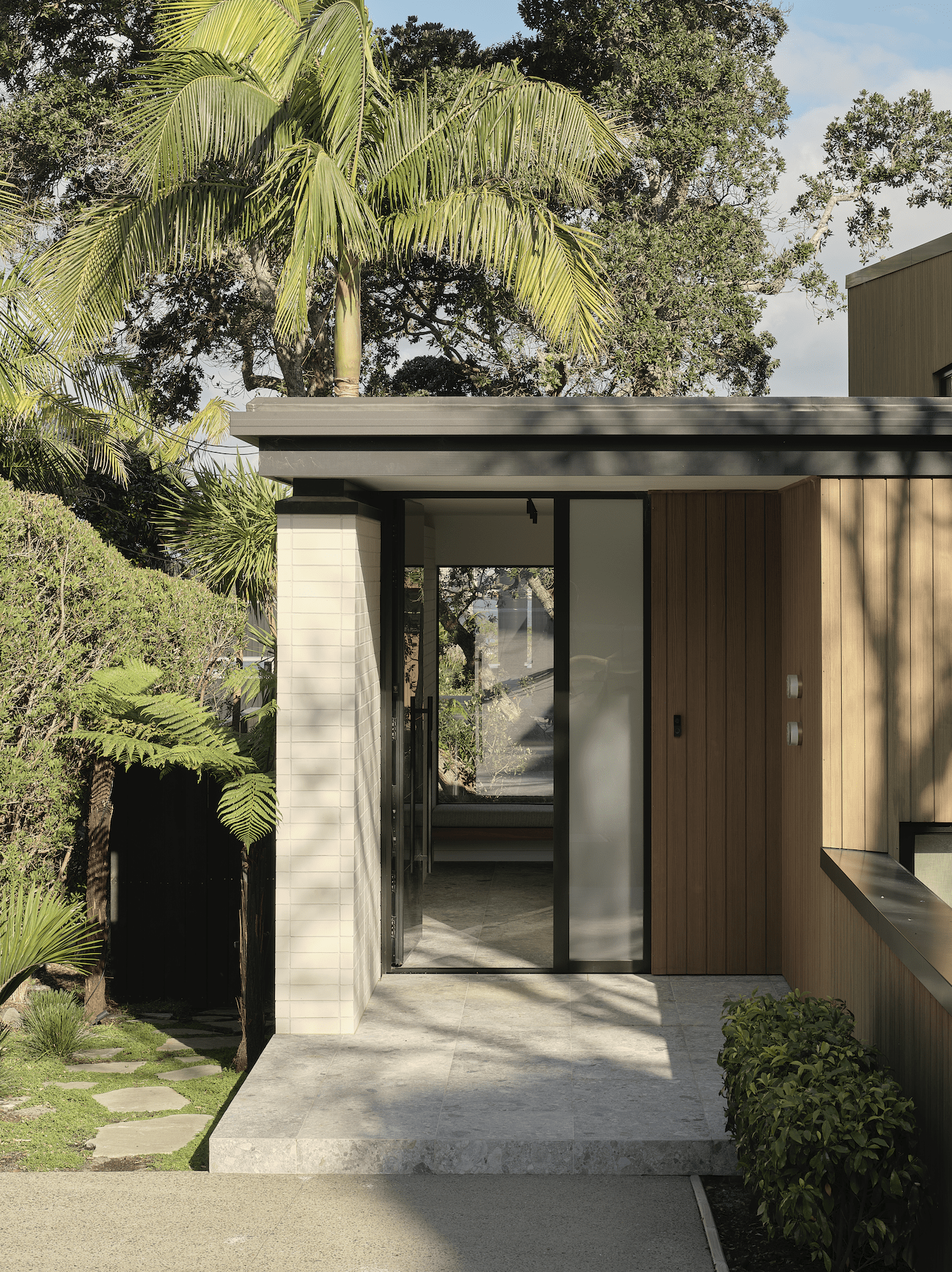
This sense of tactility begins right at the entry, where Eco Outdoor Shuttle Fleck tiles meet white brick and plenty of timber, setting the tone for a house that celebrates natural contrast.
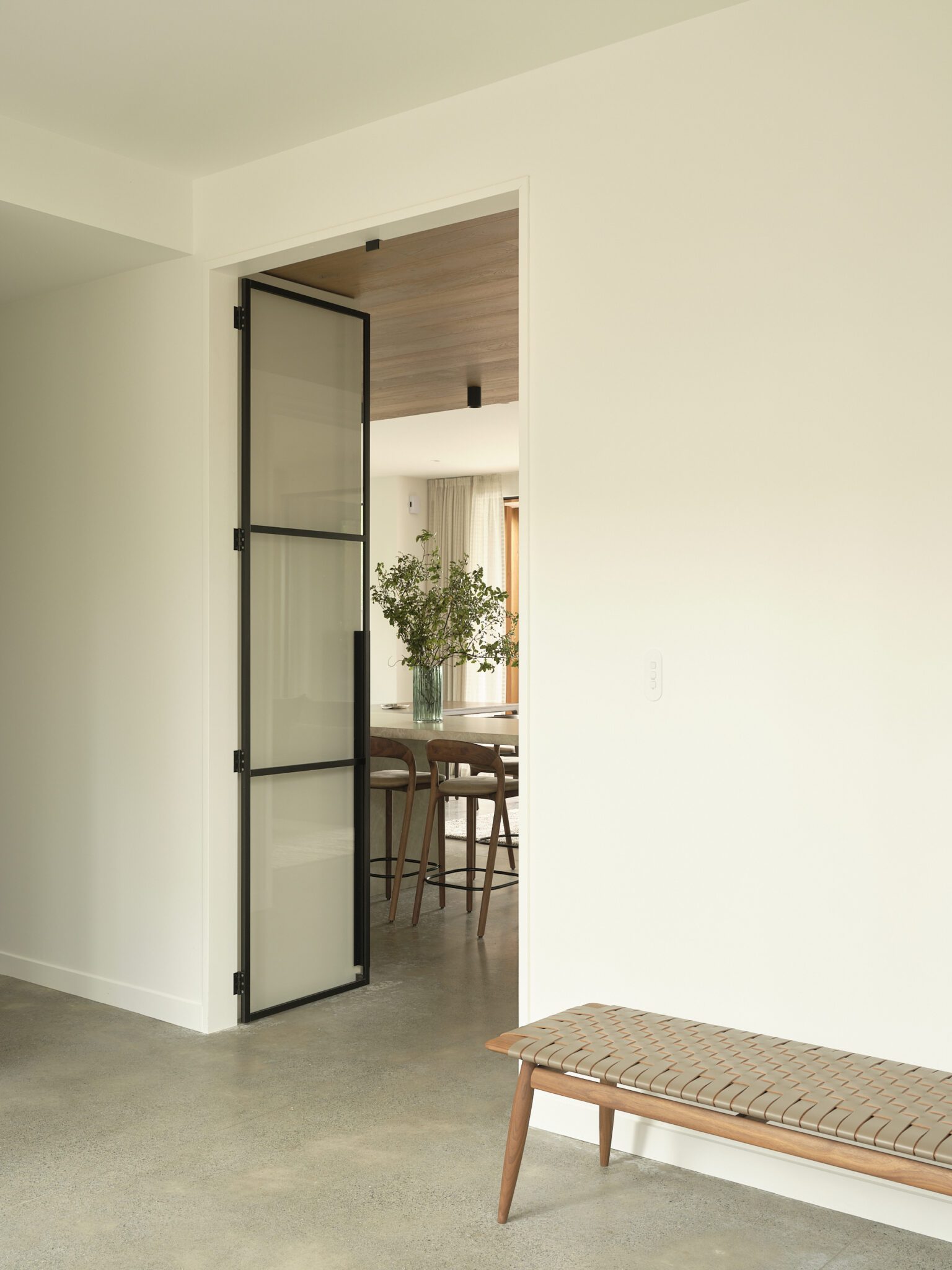
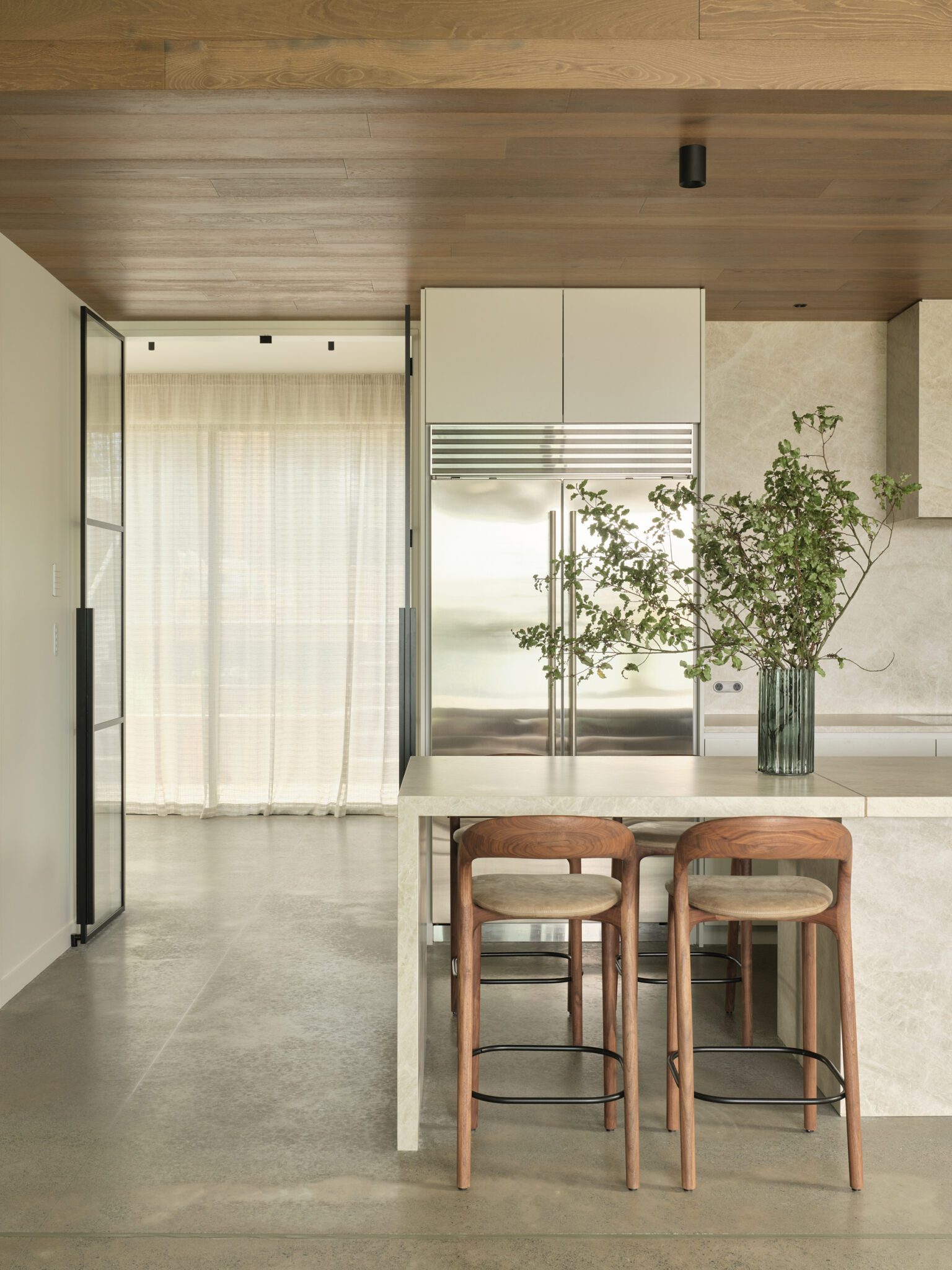
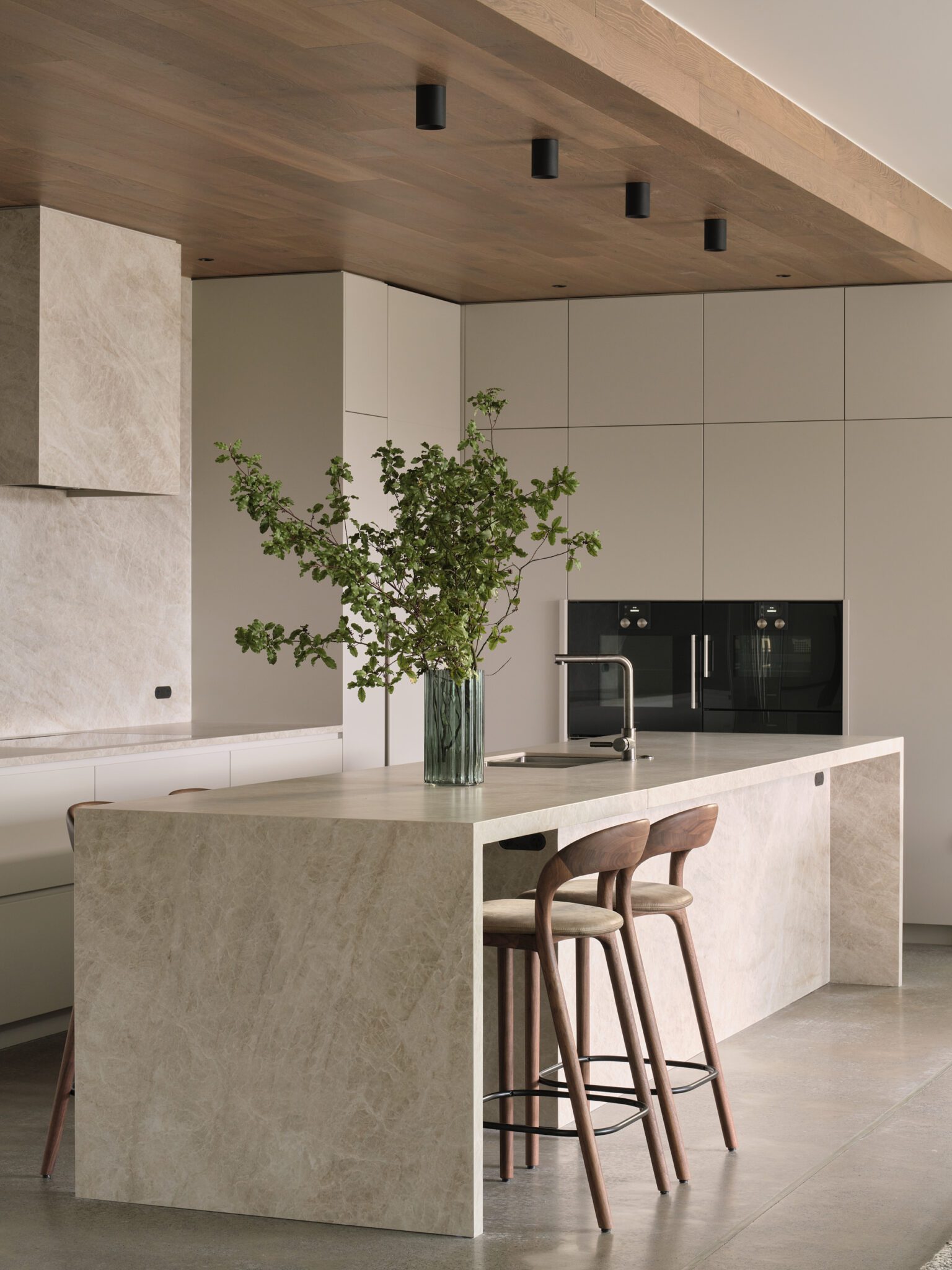
The kitchen continues the story: pale, pumice-toned joinery paired with Yamuna Florim stone benchtops, the veining echoing the tidal views of the harbour beyond. To offset the stone’s coolness, timber-lined ceilings add overhead compression and warmth, making the space feel intimate and connected to the other areas of the home that use the material.
“The colours for this living space,” Alex says, “are about having that sense of light and dark working together, without being too abrasive.” If it all sounds a tad Scandinavian, there is a reason — the owners have close ties to the Nordic region.
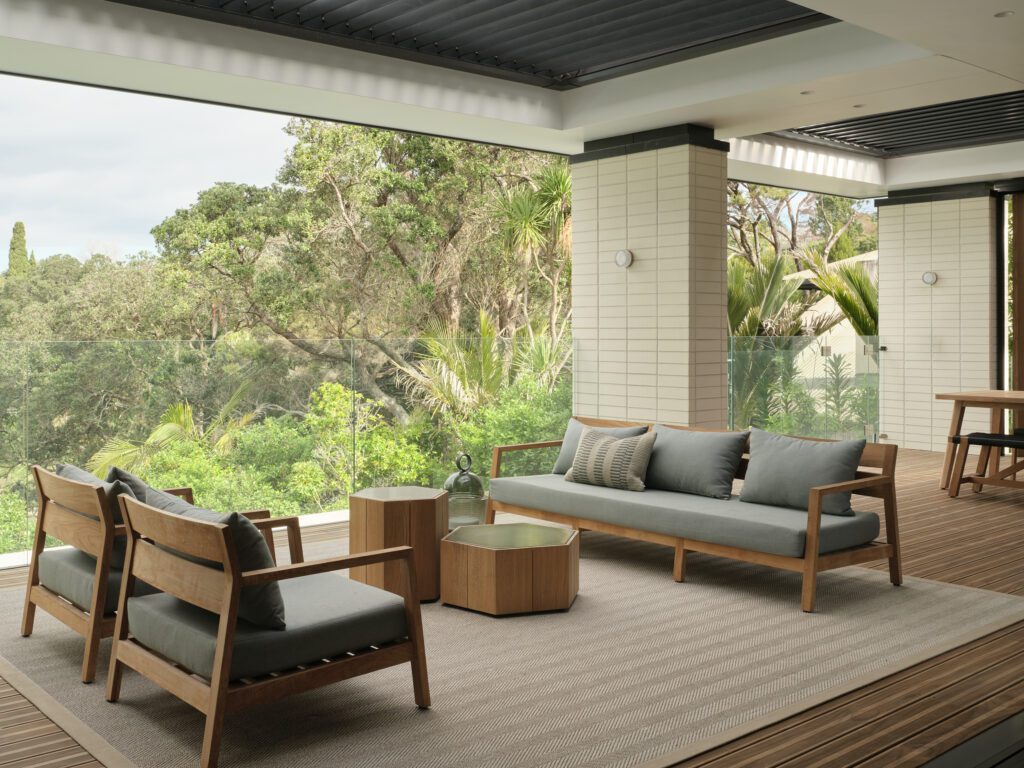
“One of the important things about the project was that connection to Scandinavia,” continues Alex. “Having lived there myself, [I had] that nice connection of knowing the culture and trying to weave it into the design — as well as tying it really deeply to New Zealand makers and the story of their surrounding environment.”
The palette includes soft linens, woven wall coverings, and matt metals such as aged iron and signature brass. These embody values that have shaped Scandinavian interiors for centuries: honesty, simplicity, and quiet endurance.
In Nordic climates, defined by long winters and limited daylight, people historically turned to pale woods and light-reflective surfaces to preserve brightness, while textured natural fabrics introduced warmth without visual noise. In New Zealand, the interpretation is often sunnier — a reflection of the coastal light and beachy context.
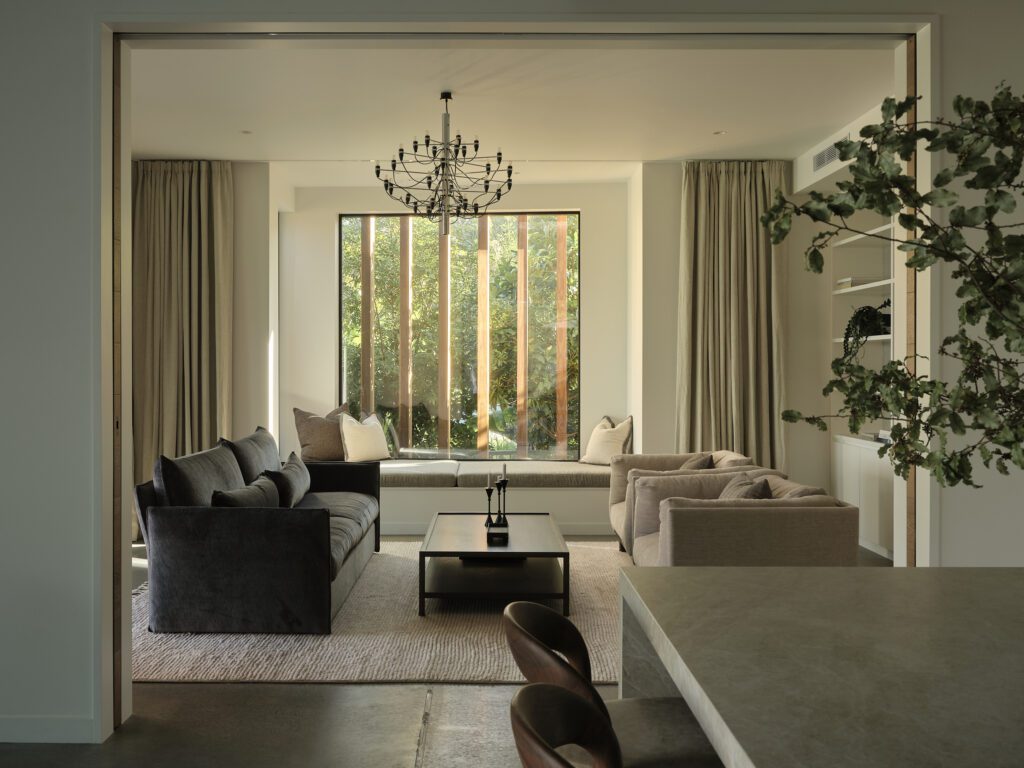
This fusion of Scandi and European New Zealand makes sense, as both interior traditions have a preference for ‘honest’ or ‘democratic’ durable finishes and, on the whole, a cultural aversion to gloss and ornament. They also share a love of nature (friluftsliv), and a cultural commitment to calm, uncluttered living — favouring simplicity not as minimalism for its own sake but as an environment that supports well-being and calm.
The material selections in this home mirror that bicultural ethos: organic surfaces that age gracefully, a restrained, earthy (or is it beachy?) palette that balances clarity with comfort, and tactile layers that soften space while furnishing the quiet, enduring practicality for which Scandinavian design is known.
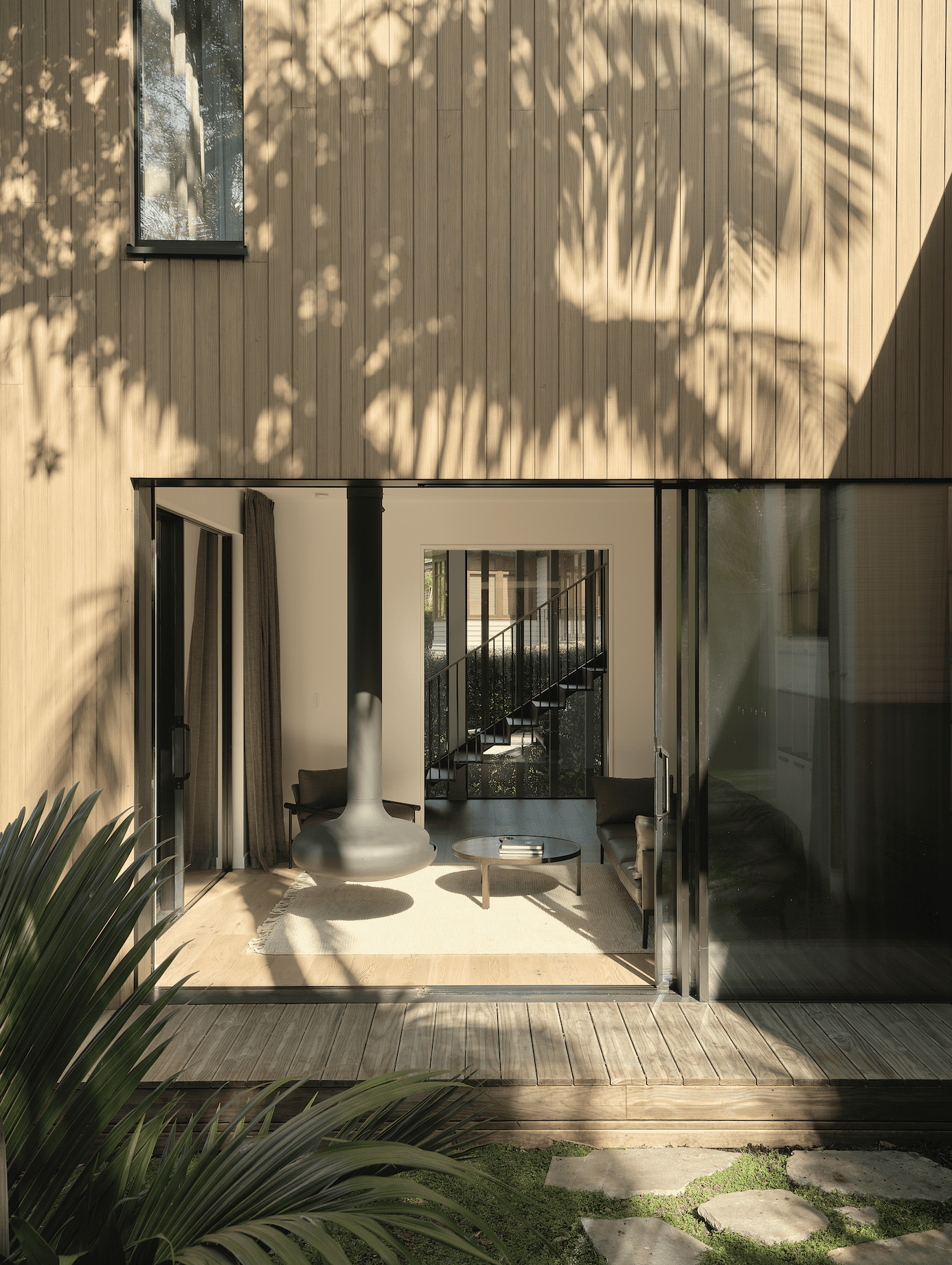
As you move through the house, those qualities are reinforced by the progression of materials underfoot. The upper levels have timber flooring, which transitions to a soft, putty-toned concrete at the lower level.
The library, slightly moody in tone and overlooking the courtyard, with glimpses of the sea, uses darker textures and finishes — a foil to the brightness outside — while the guest suite is rich, with velvet curtains, soft wool fabrics, and a thick hand-knotted rug.
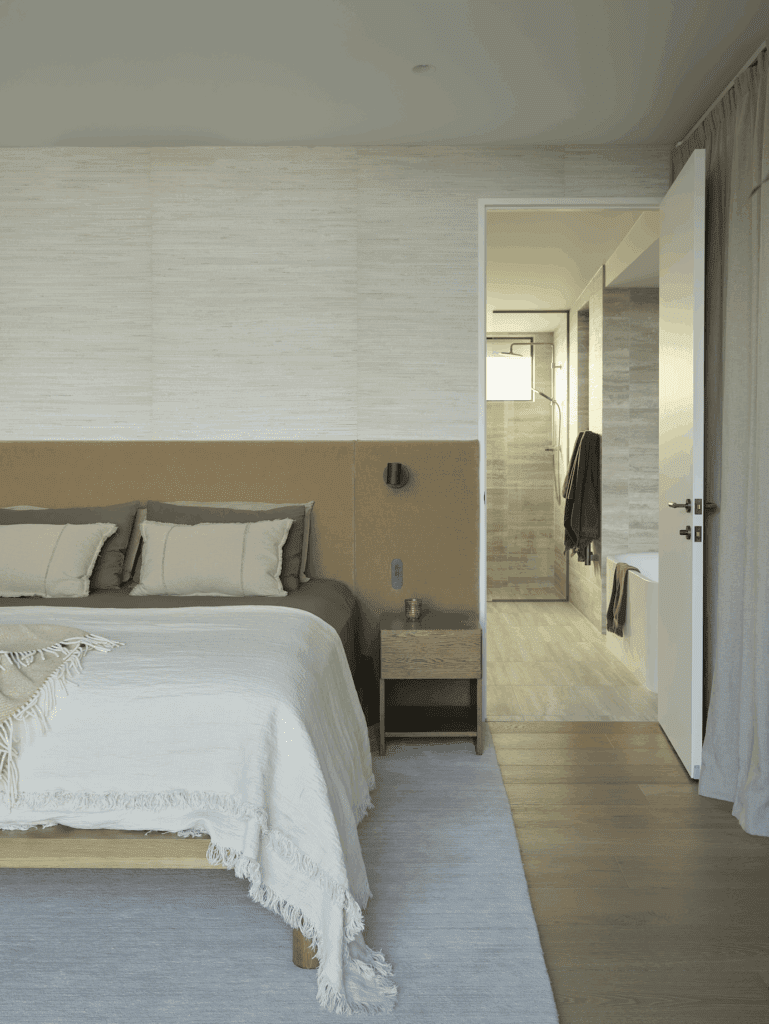
The primary bedroom, with its stunning harbour views, is wrapped in a delicate rice paper wall covering that catches the light.
Throughout, the lighting — a mix of inbuilt LEDs and wall fittings — is subtle and atmospheric, shifting with the day. “The light play through the stairwell is just magic,” Alex says. “It changes constantly — it’s one of those spaces you never tire of walking through.”

Add to this a highly curated material palette of a number of local furniture pieces and coverings by Simon James and Woodwrights, and you have an interior that soothes as much as it impresses.
“It was lovely to develop the palette over time instead of being in a rush,” Alex reflects. “The clients were involved all the way through. They really wanted this [to be] a New Zealand–made project, something that felt personal, connected, and enduring.”
Interiors: at.space
Architecture: Jones Architects
Build: Lindesay Construction
Tapware: Plumbline
Flooring: Forte
Cabinetry: VidaSpace & DBJ
Lighting: ECC & Lightplan
Words: Federico Monsalve
Images: Sam Hartnett