
There are two types of drama in architecture: the coveted drama of the built form — the scale, materiality, and flourishes — and the drama you don’t want: unforeseen problems, delays, and complications. This project in Auckland’s Ōrākei had both.
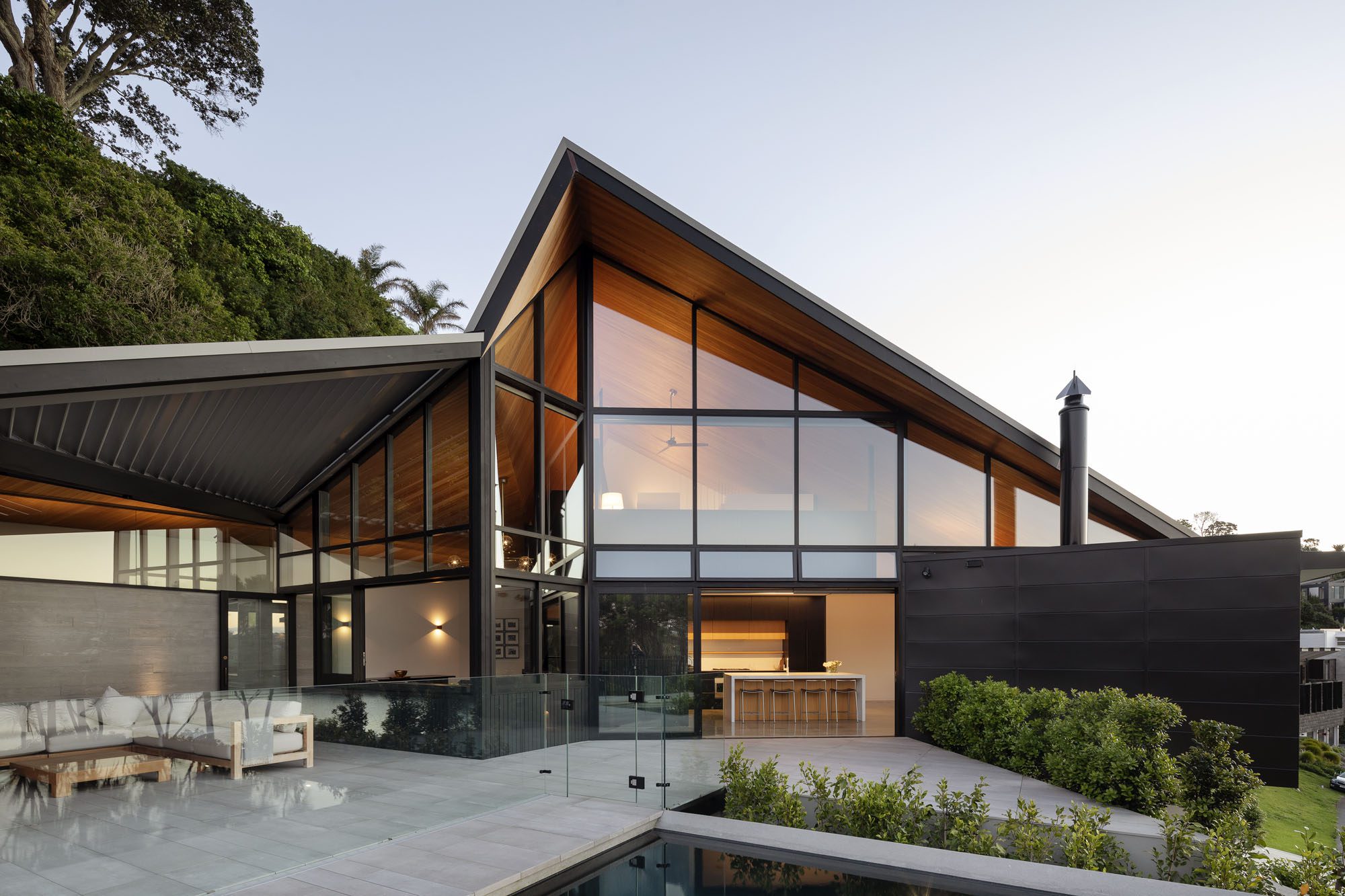
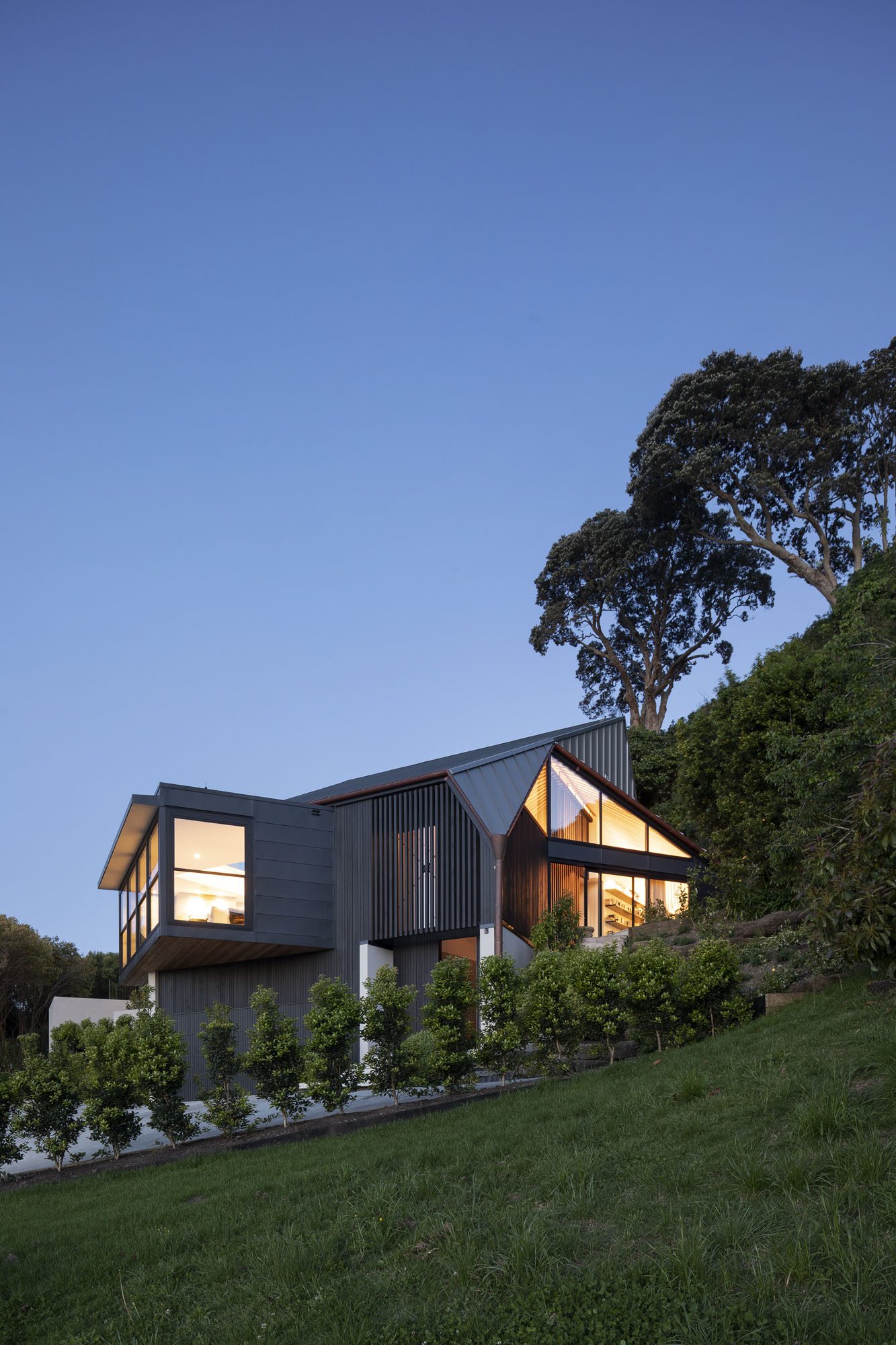
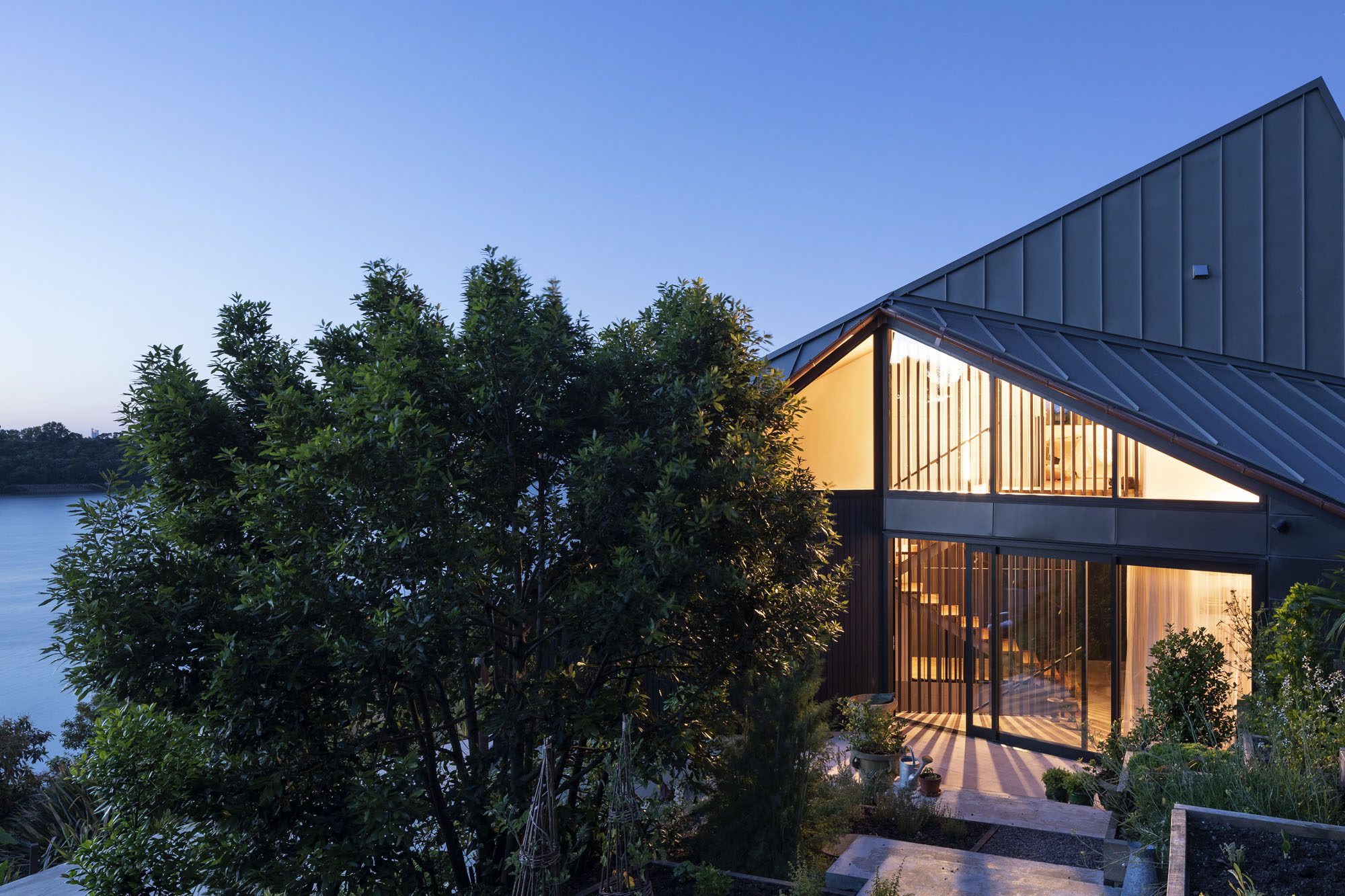
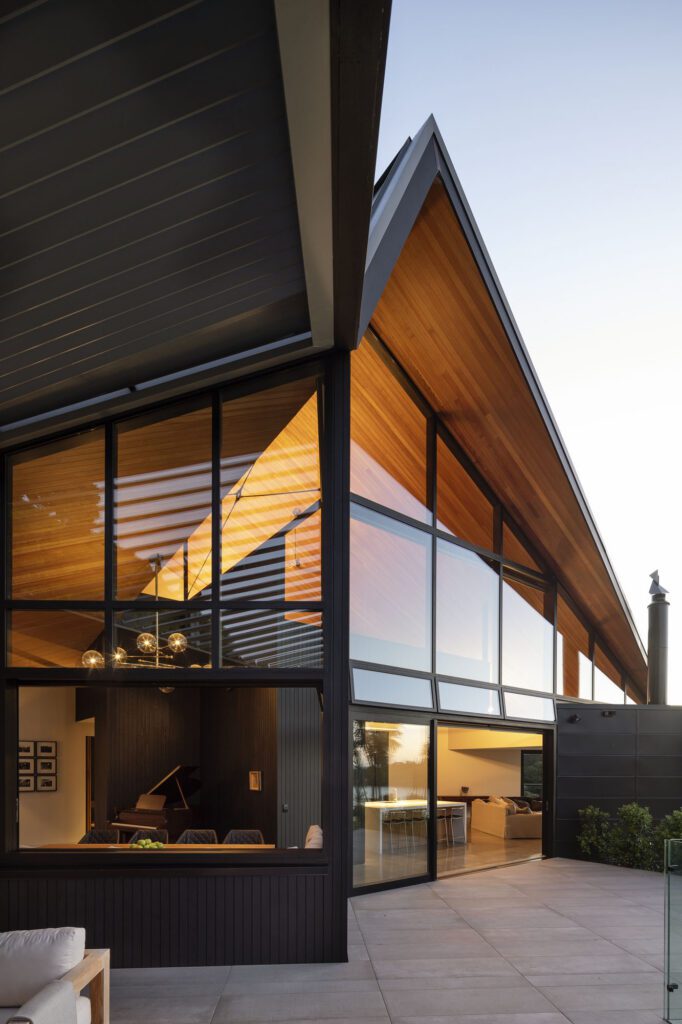
Auckland architect Wendy Shacklock was commissioned to create an elegant home on a wedge-shaped site in the blue chip suburb. She started with the notion of a dramatic roof, an origami-like creation of gables and folds.
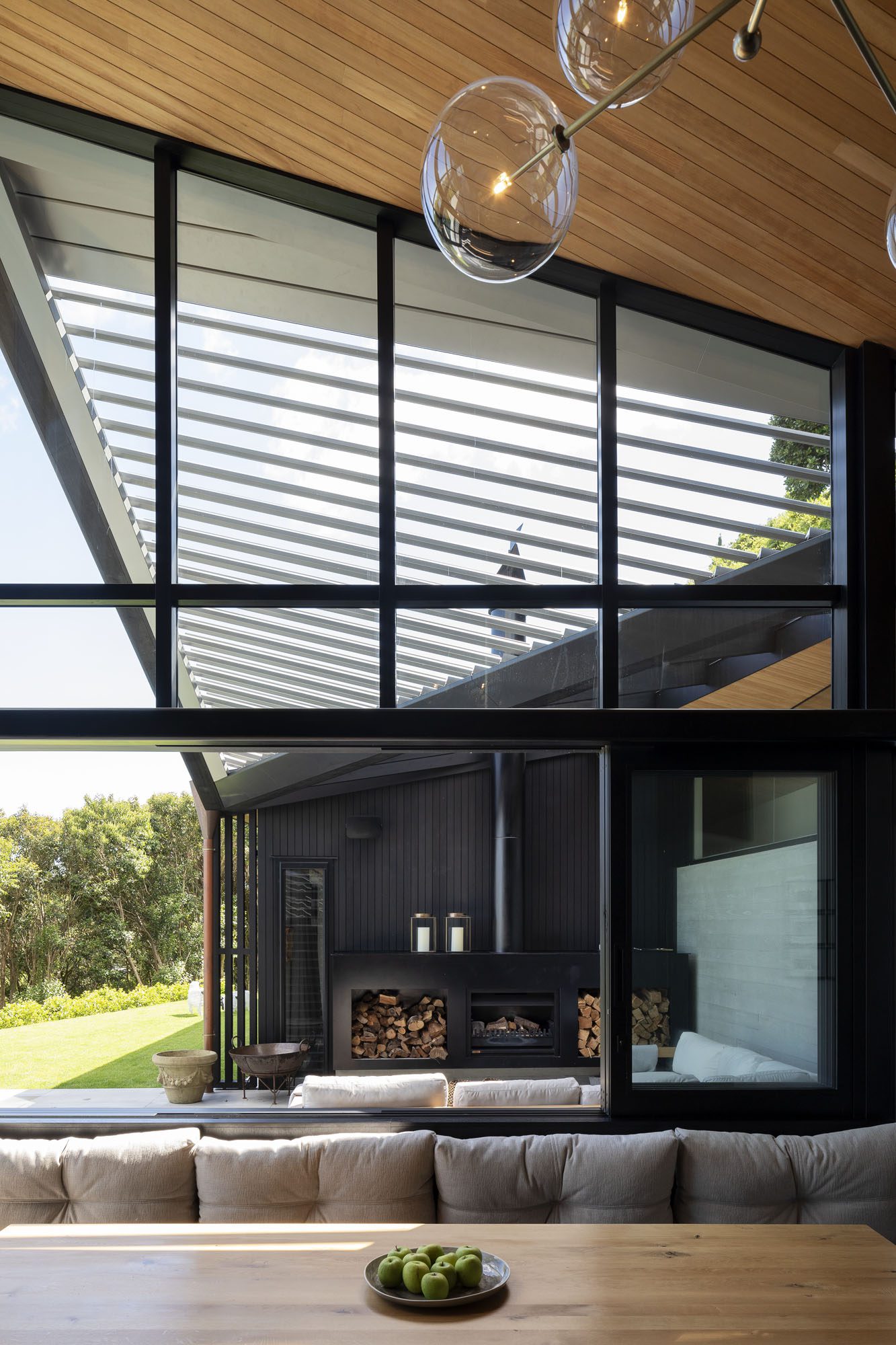
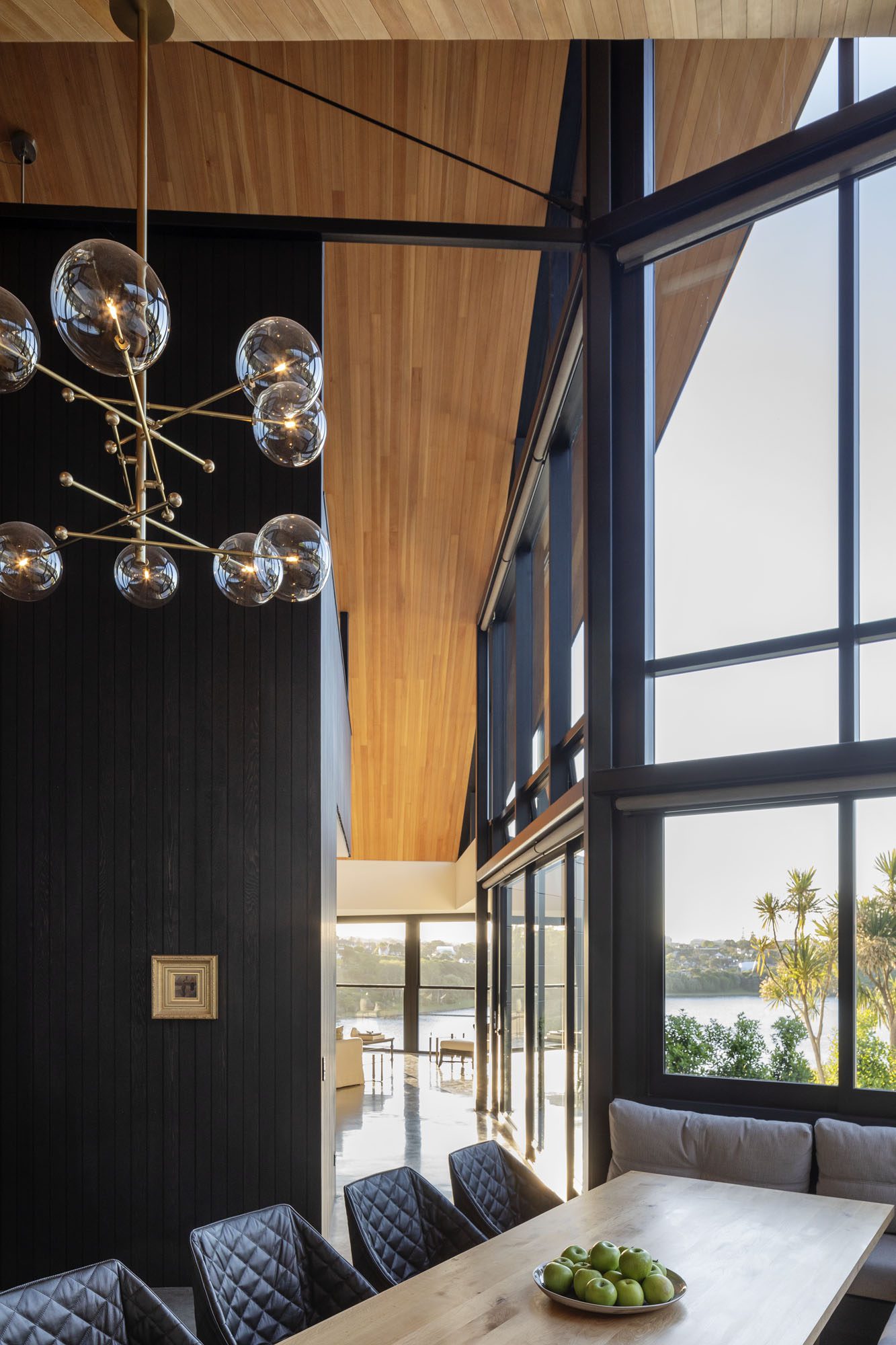
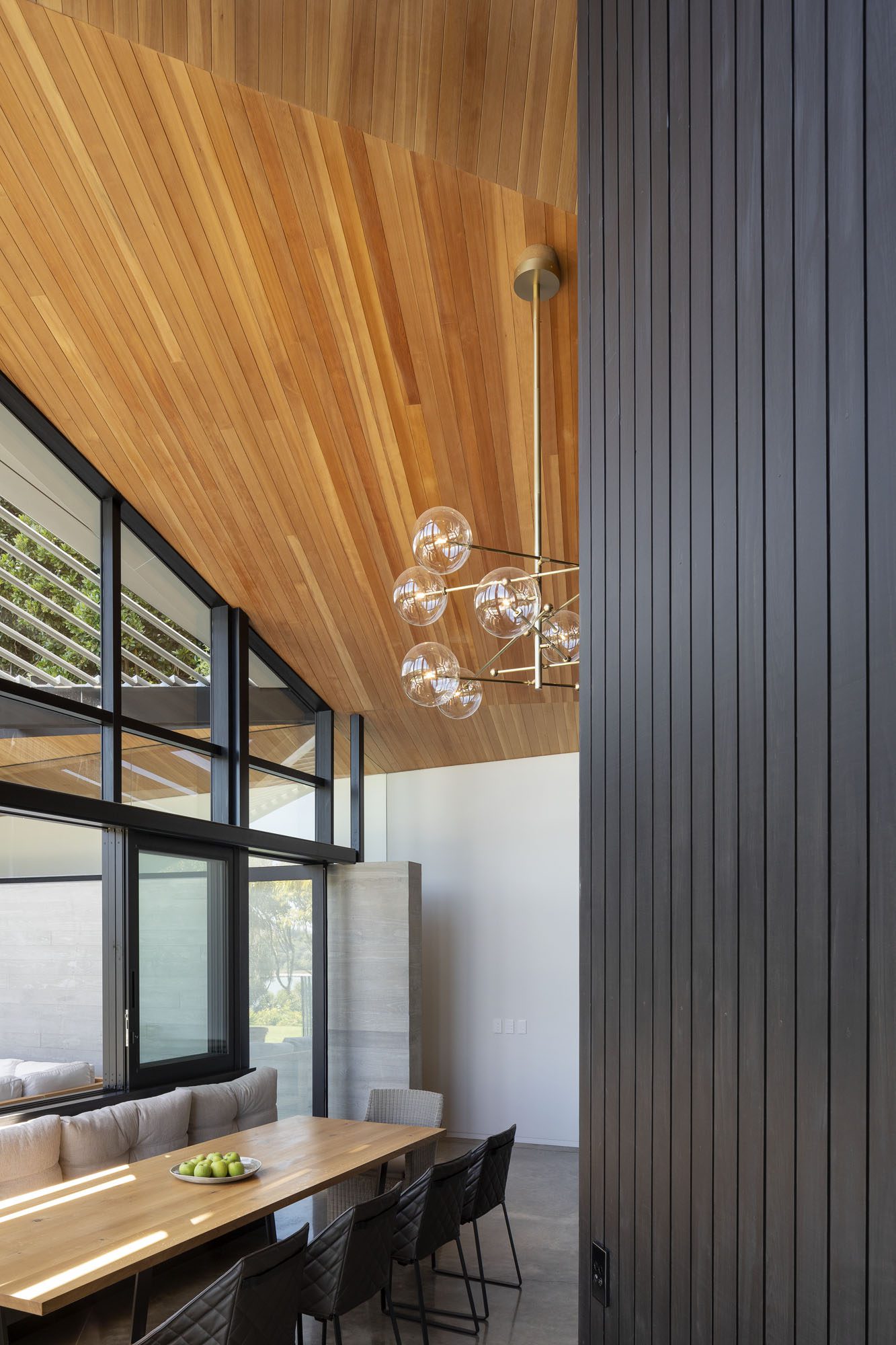
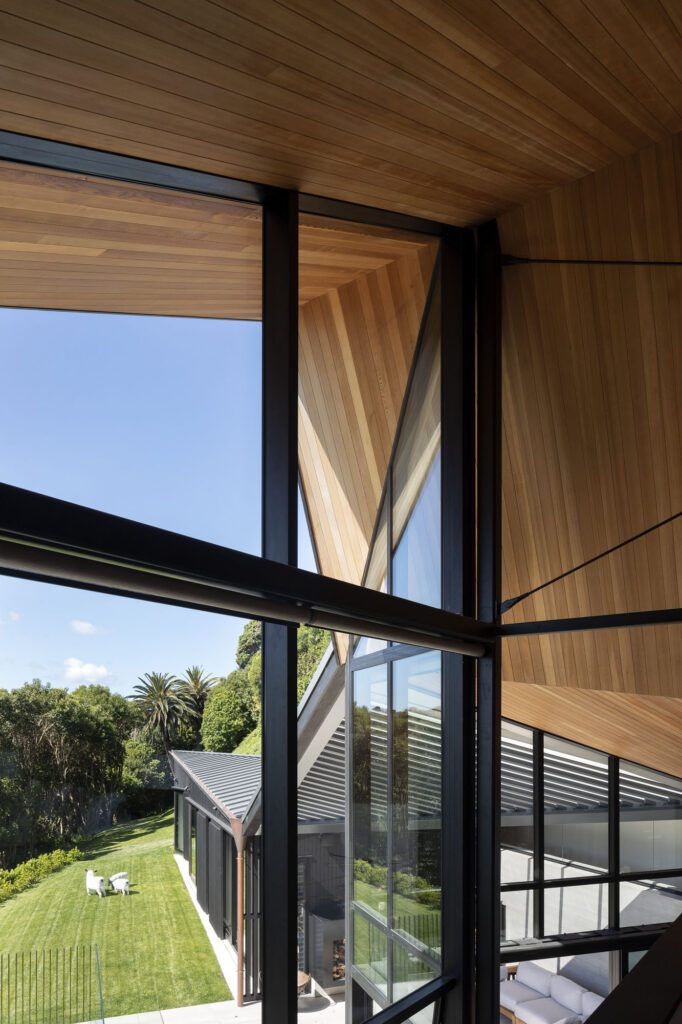
“I do like height in spaces and I wanted some drama,” explains Wendy, who conceived the roof to rise and fall so that it soars in public places but also lowers to create more intimate private interiors. “When I looked at the site and the cliff, I knew we needed some scale.”
Breaking ground on the 3000m section was when the not-so-good drama arose. Archaeologists had investigated the land for historical significance, and cleared it for development. Being on the inner slope of a volcano, piles and beams had to be installed to secure the land and the building that would be constructed on top of it. A level platform had to be fashioned by excavating a metre on the cliff’s edge, while raising the ground on the water side. The work started, then stopped very quickly when bones were discovered.
“The digger driver was very spooked!” says Wendy. Thankfully, when the experts returned to investigate, it was confirmed the section wasn’t an historic burial site; the bones were from old middens and work was allowed to continue.
The clients didn’t want a tall, apartment-like home, which might have been the default approach, just to maximise the views. That suited Wendy too.
“I don’t really like houses that are just about the view,” she says. “I wanted this house to be more of an experience. Besides, the westerly view, the big view, was tricky sunwise.”
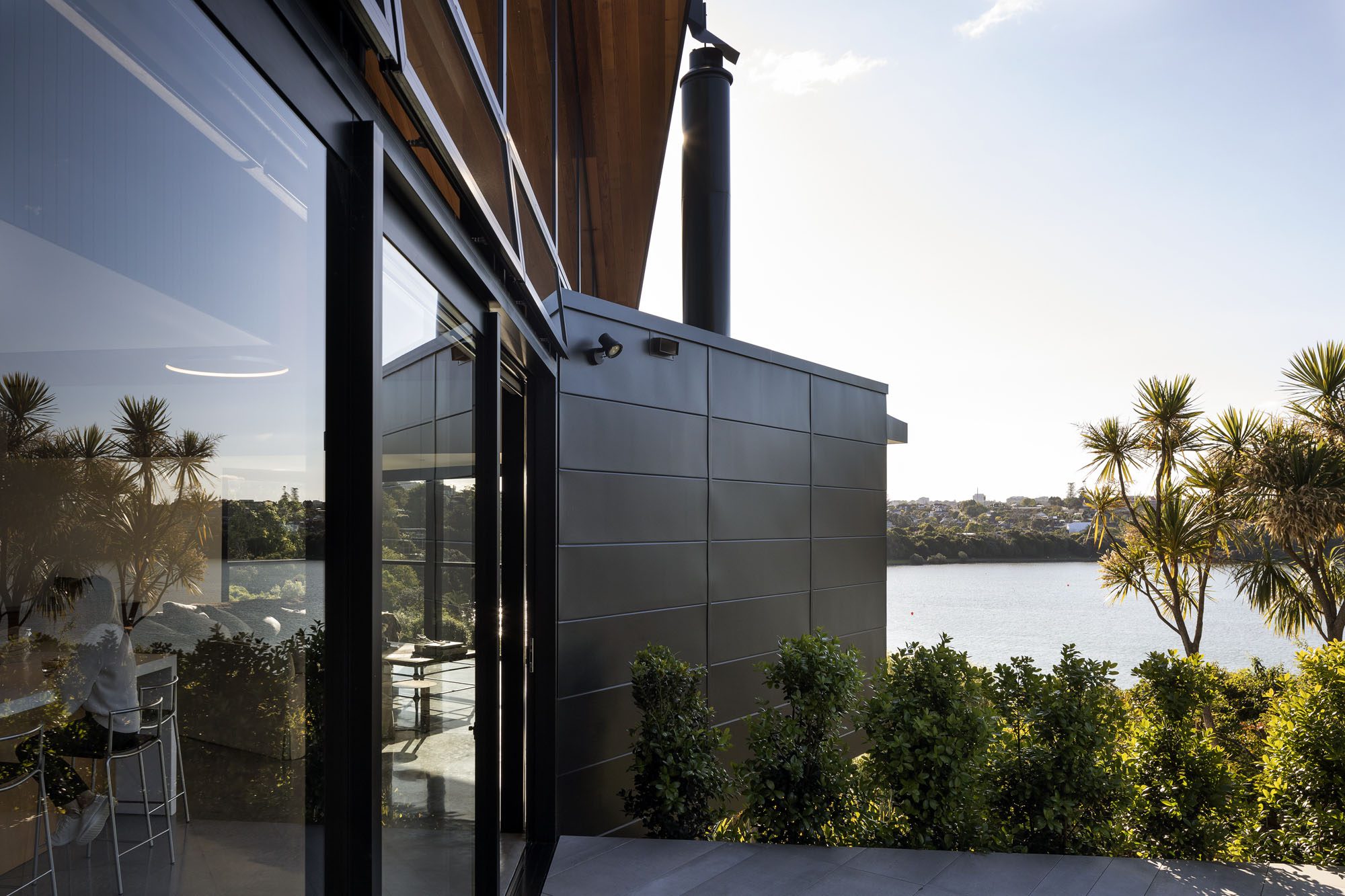
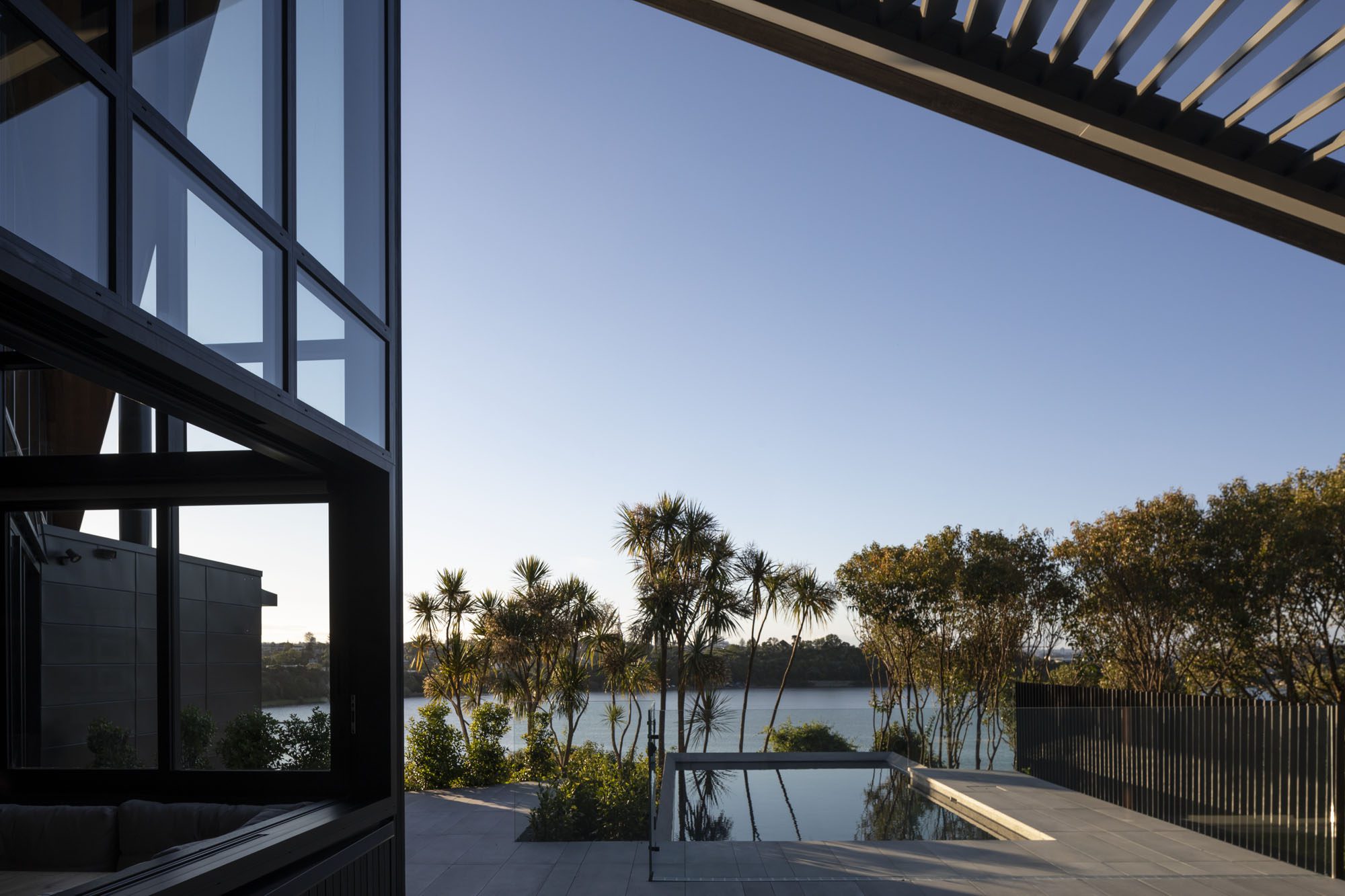
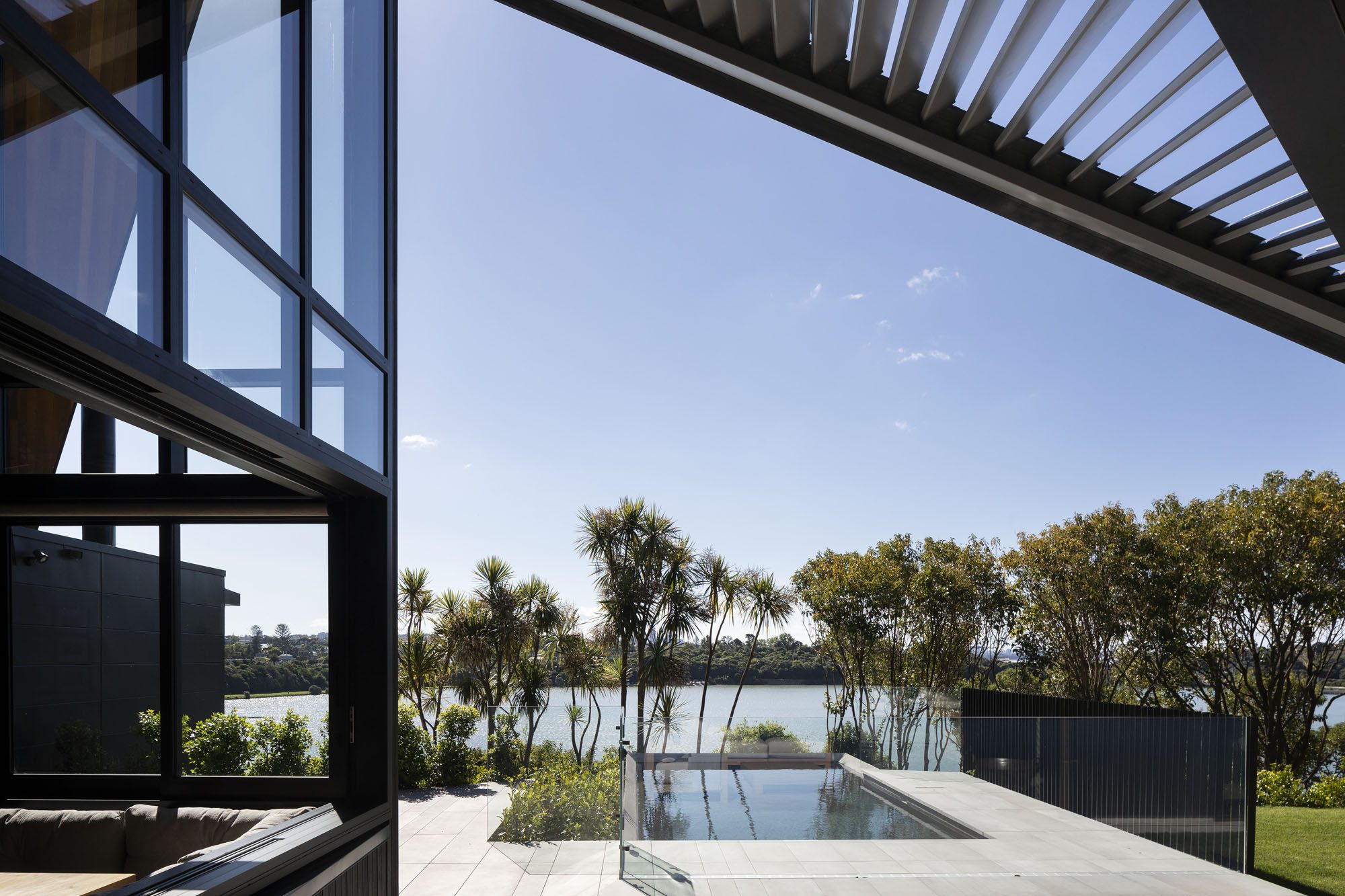
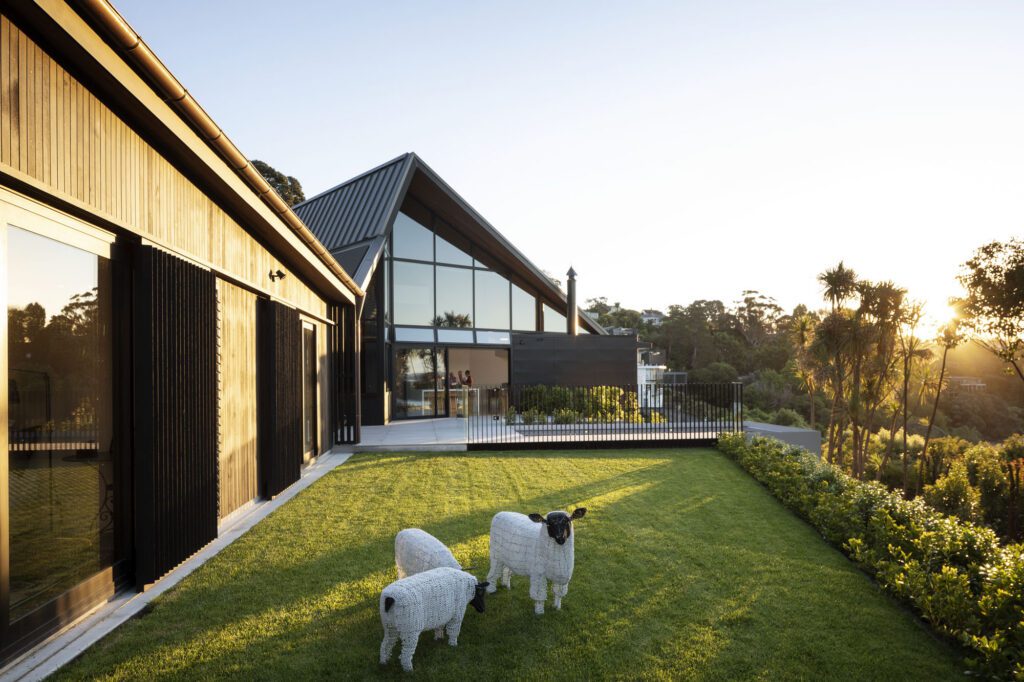
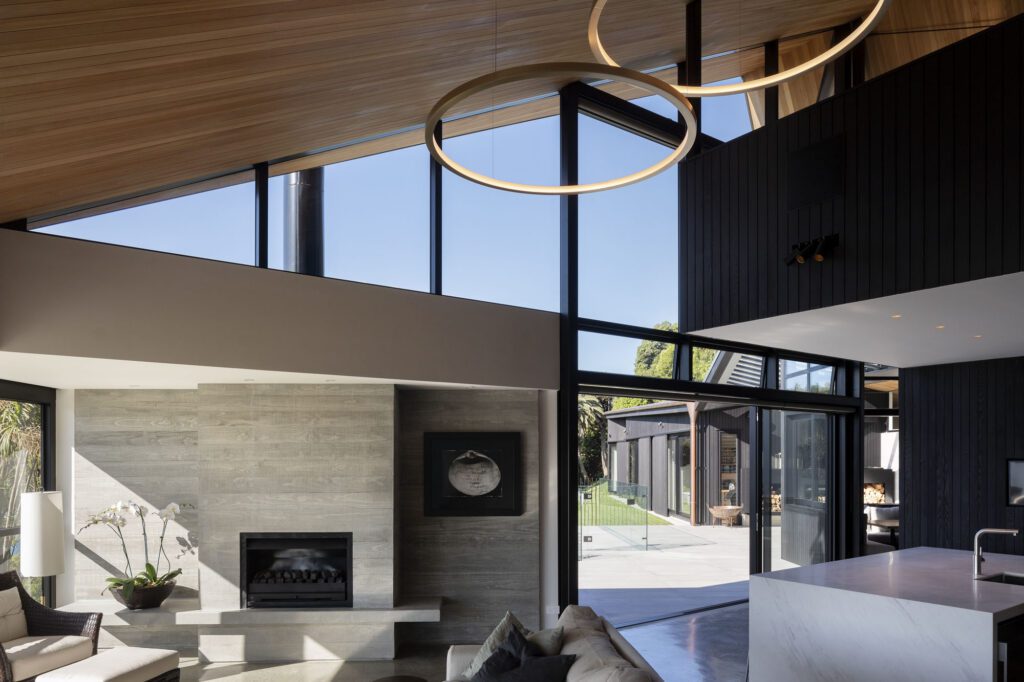
The plan was instead oriented to the north for thermal comfort and to make the most of the narrowness of the west-facing, waterfront site. The dwelling stretches the length of the site and nestles into the hill; the roof starts low over a westerly bay window and rises up to wrap over the kitchen and a mezzanine floor. At the front door, an irregular fold makes a welcoming gesture over the entryway. The living room cantilevers above the garage. The bedroom wing tapers as it gets to the edge of the site, preserving the width of the lawn and the vista.
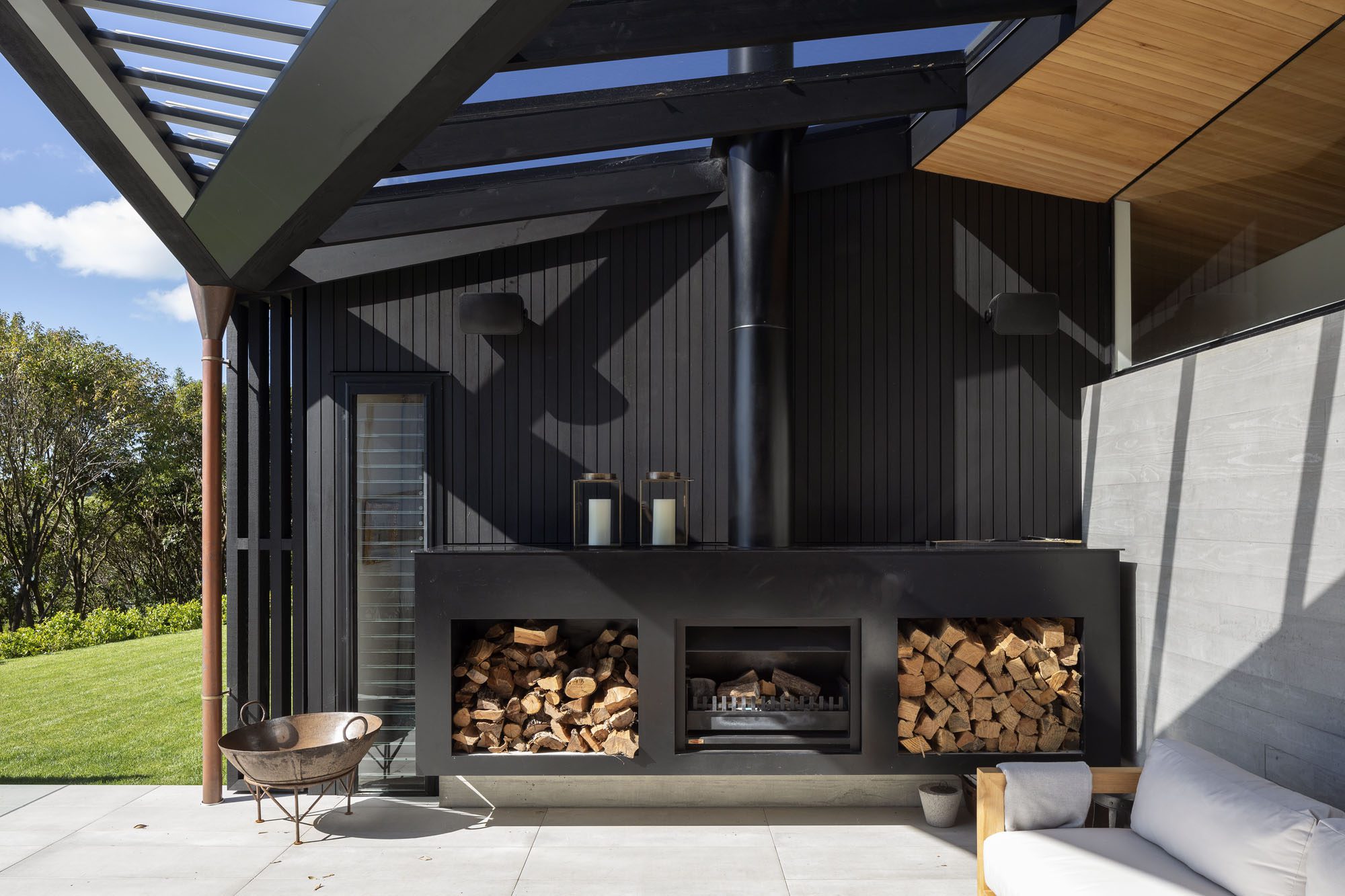
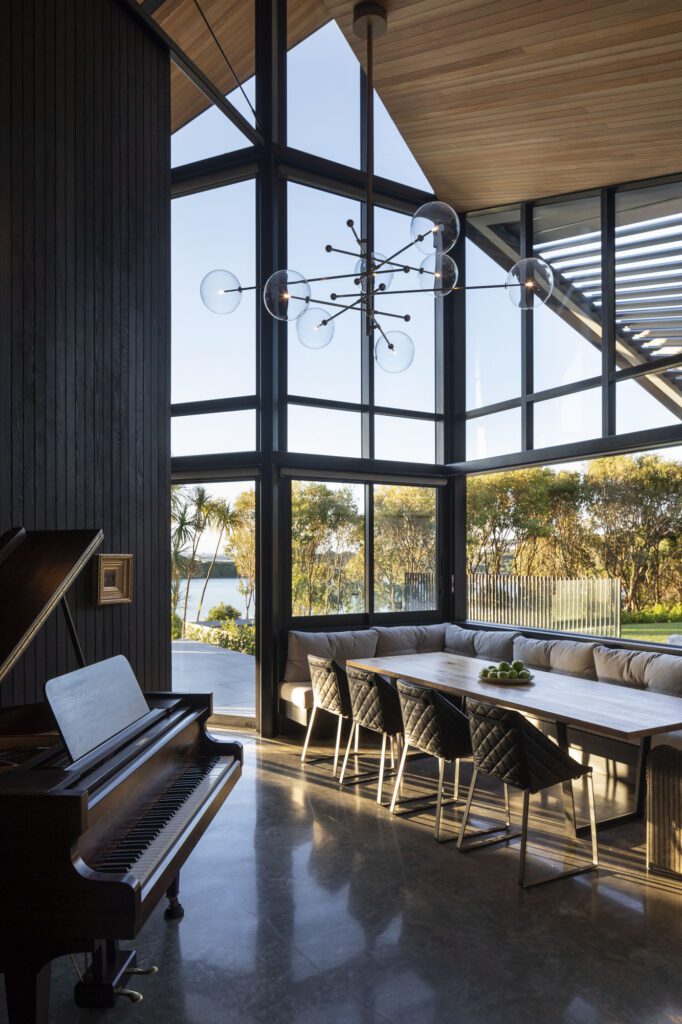
“It’s a weird shape because of the site, but we ended up with some nice spaces,” Wendy says of the plan. “While there are not a lot of right angles, it all developed really rationally.” The dining room feels like a cafe with its banquette seating, clerestory windows that let the morning sun in and Ash-lined ceilings. It opens up to a large fireplace, concrete walls that were poured in situ, and al fresco seating.
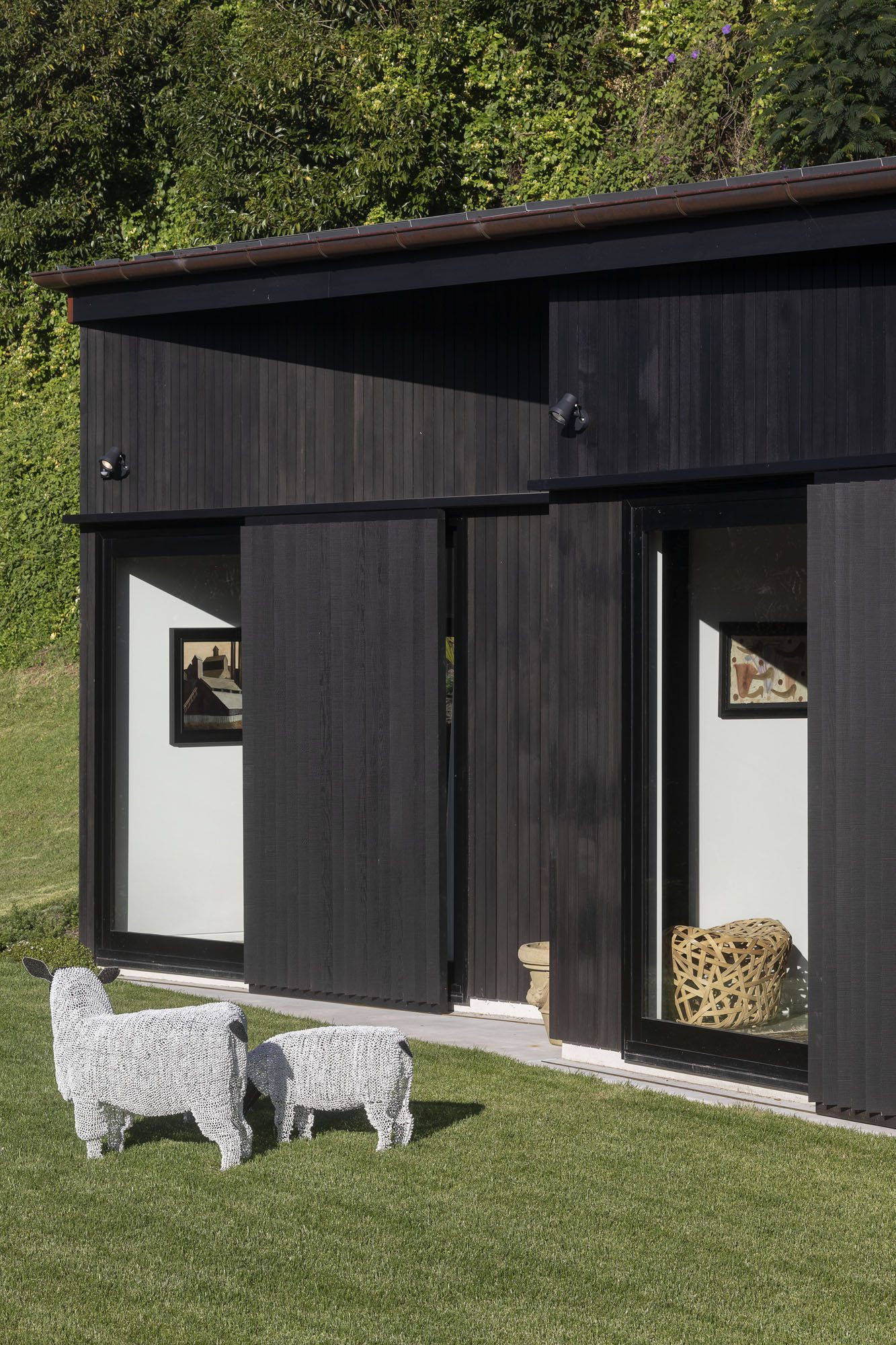
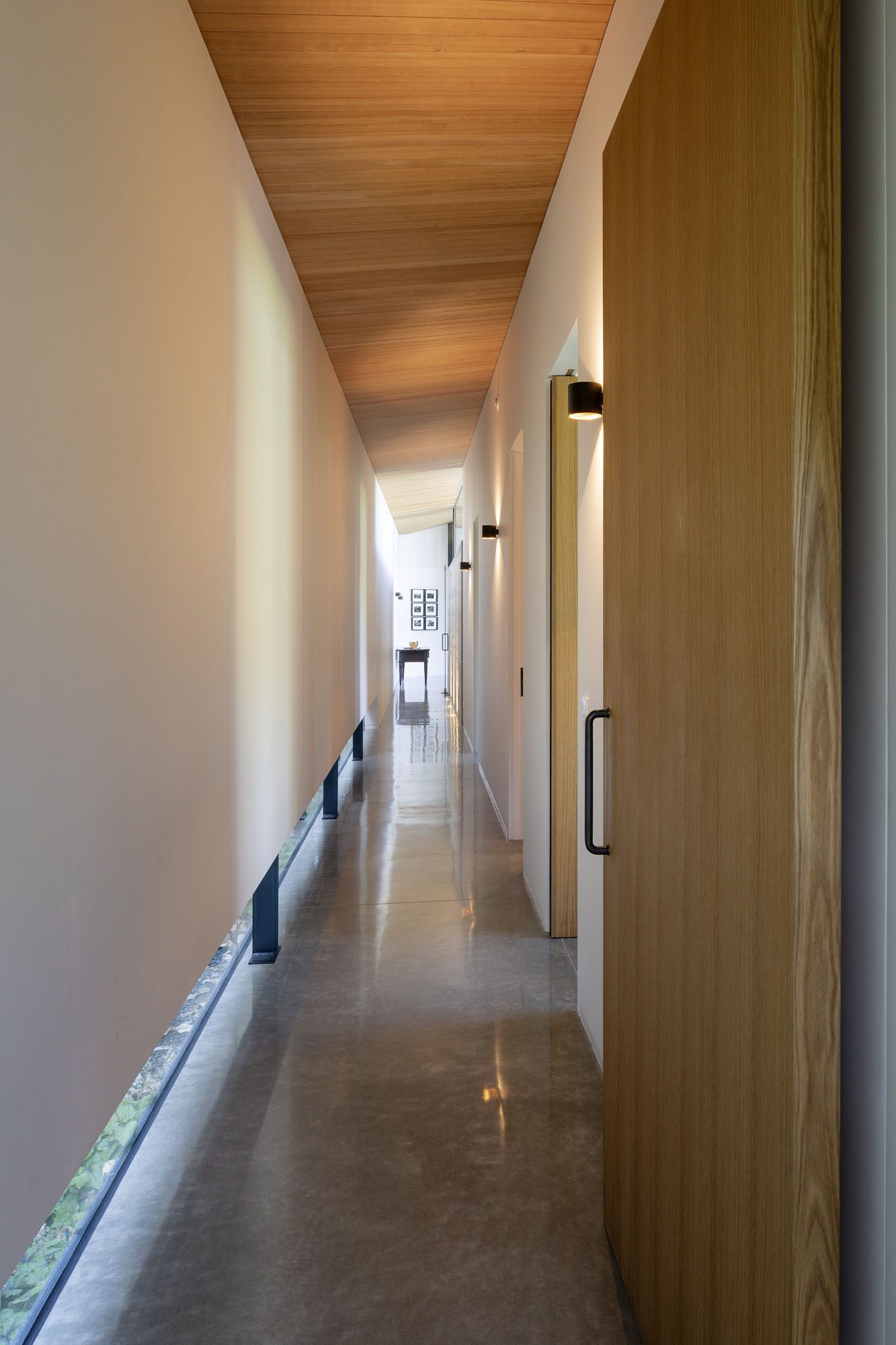
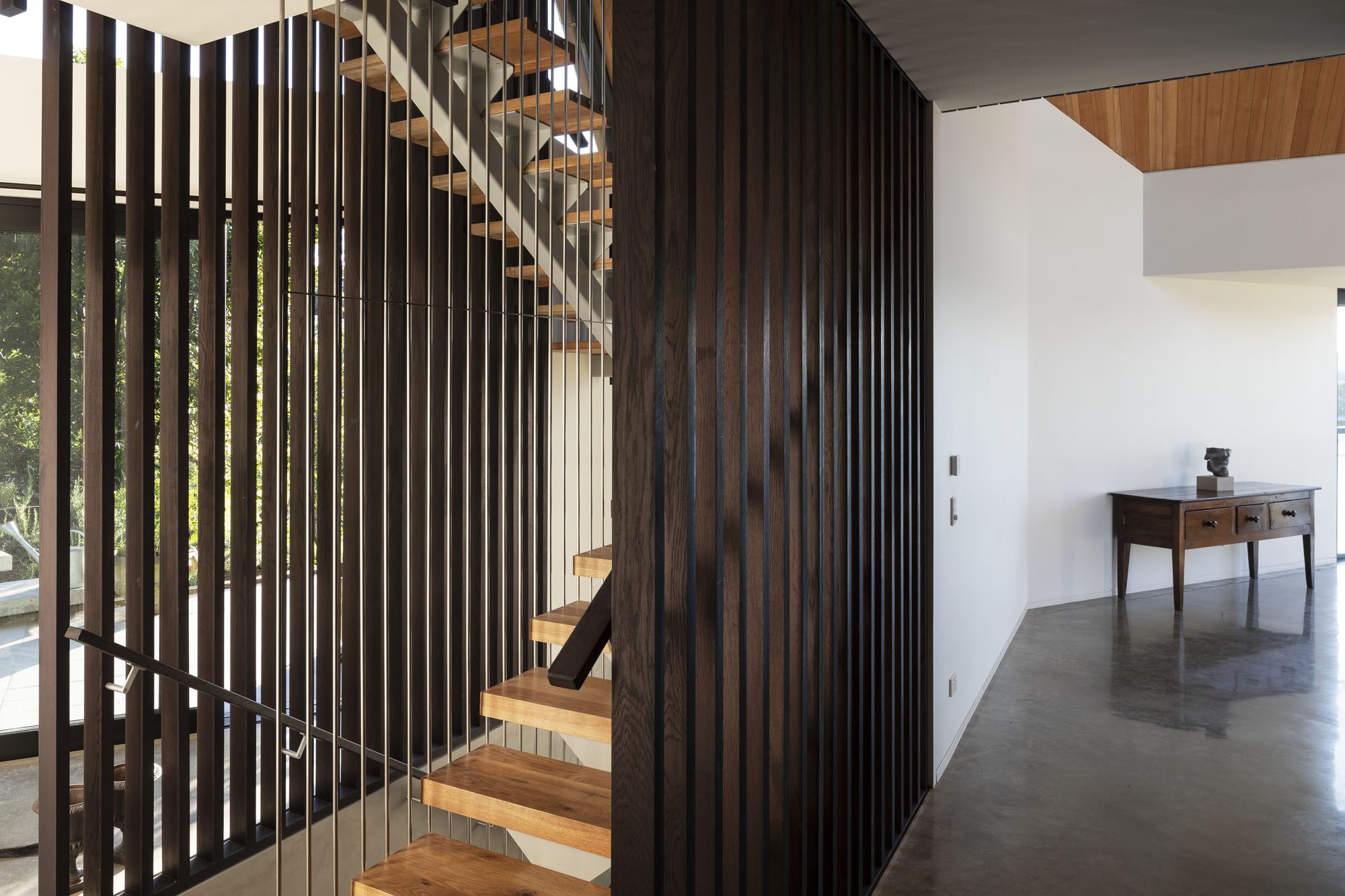
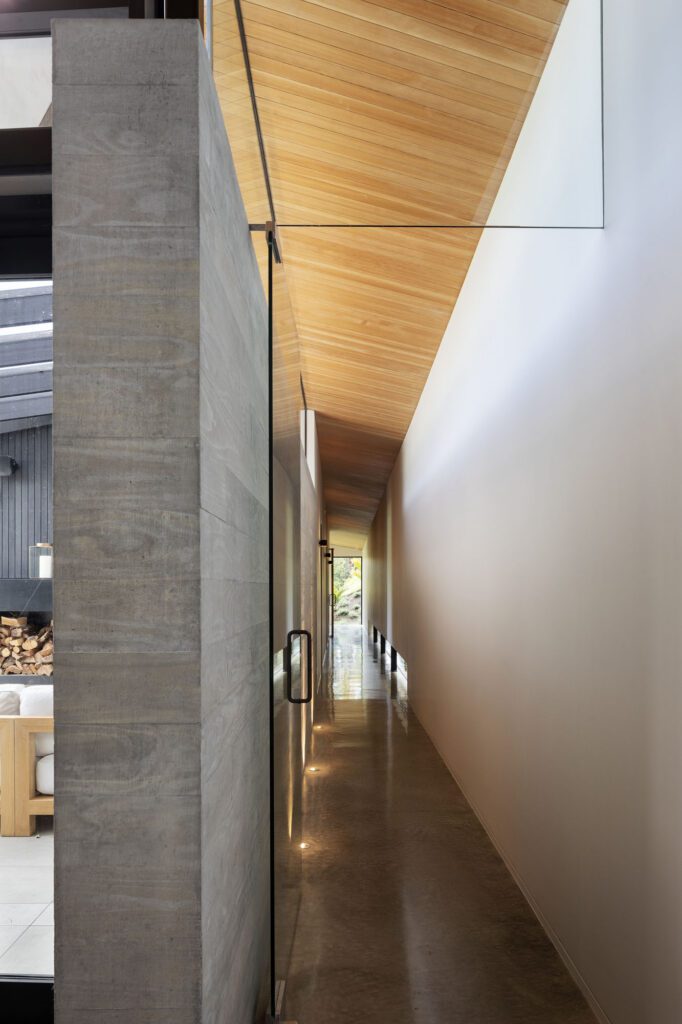
The textural concrete walls run along part of the internal hallway too, along with windows at the bottom not the top, which lend a lovely light to what would have been a dark space. The bedroom wing is retreat-like, with each room opening to the garden. Exterior screens constructed with triangular battens are movable and protect the bedrooms from the westerly sun.
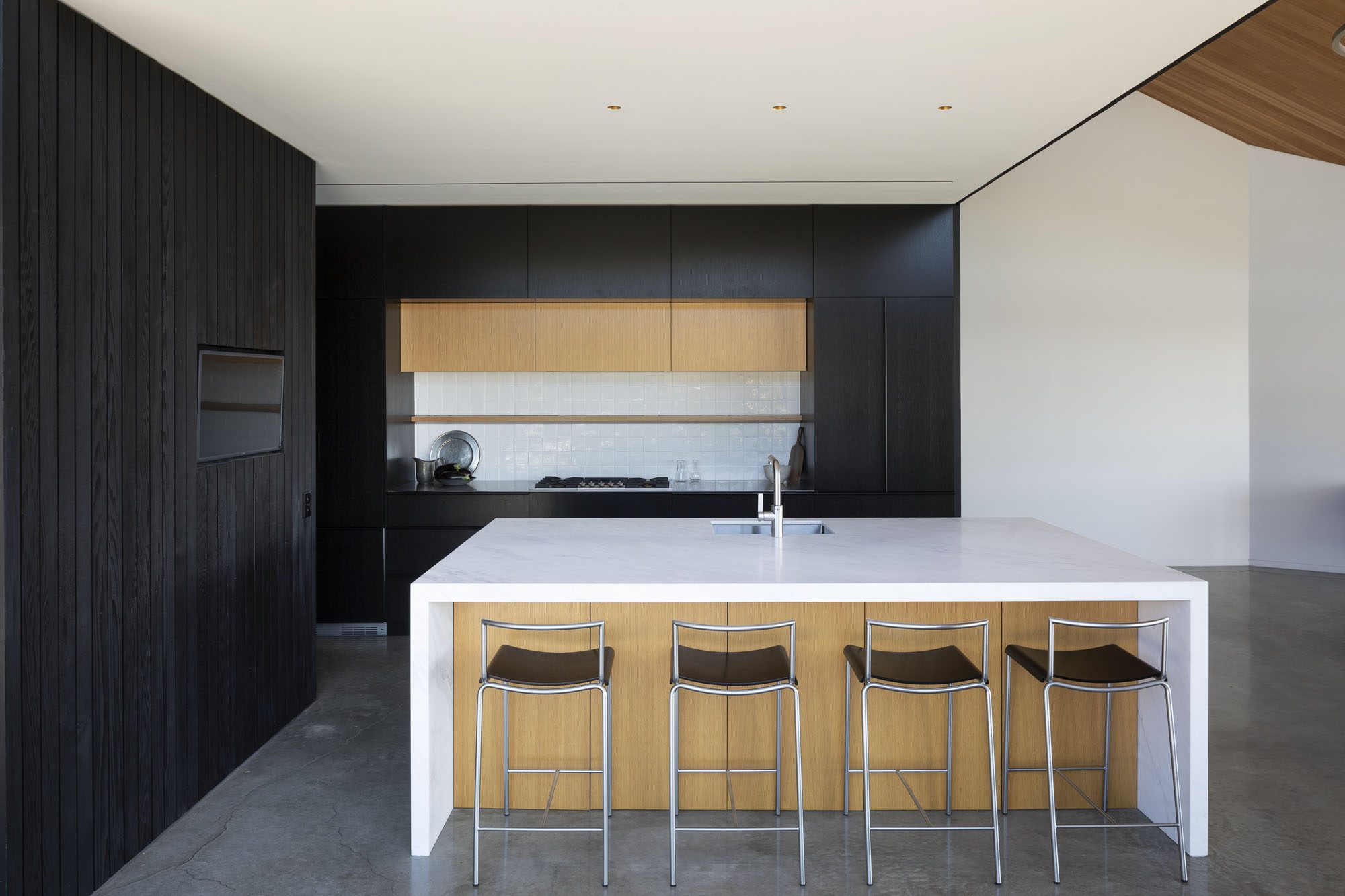
Back in the living wing, the kitchen is emblematic of the monochromatic colour scheme, with its black cabinetry and generous white island with grey veins.
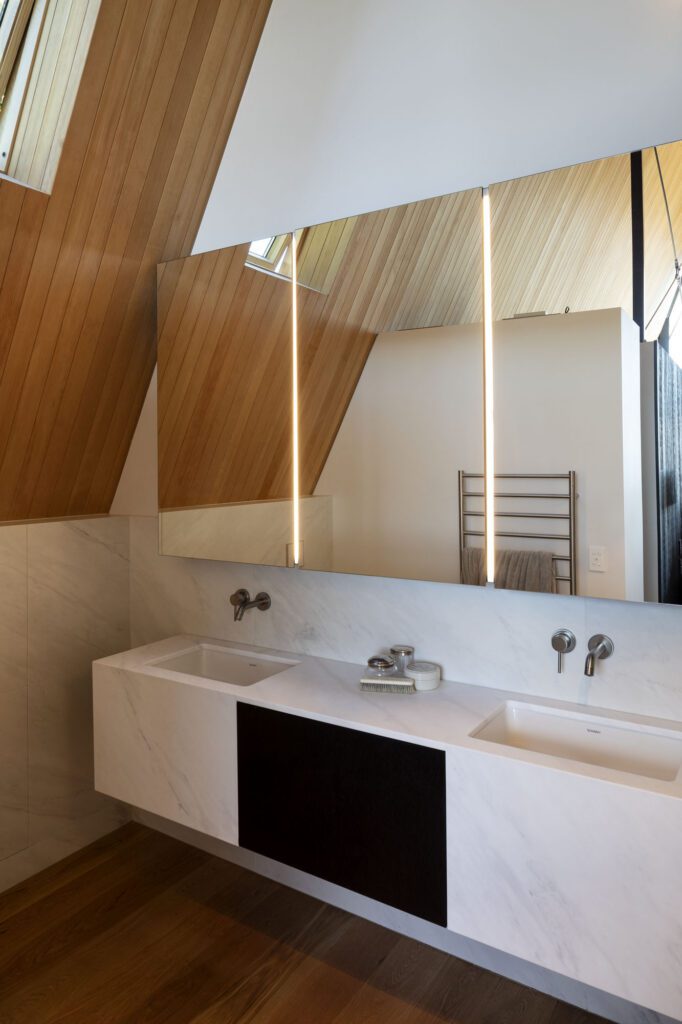
“There was enough going on without introducing colour. By bringing the exterior materials and colours inside, it keeps it calm,” explains Wendy. “It gives the architecture an integrity.”