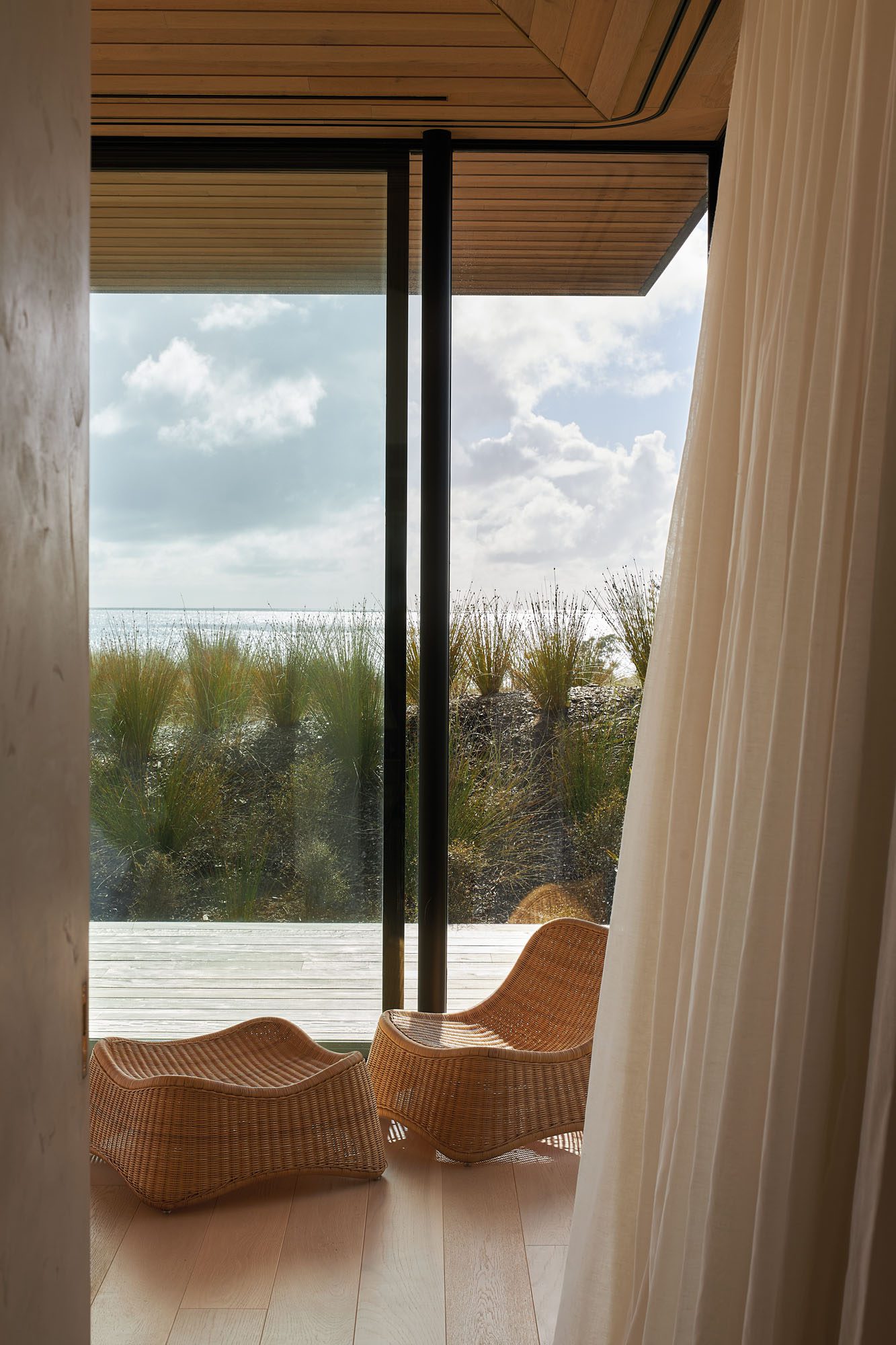


Expressive geometries, a high level of craft, and connections with its landscape elevate a small number of materials into a polished, relaxed home full of moments of wonder and surprise by Julian Guthrie Architecture.
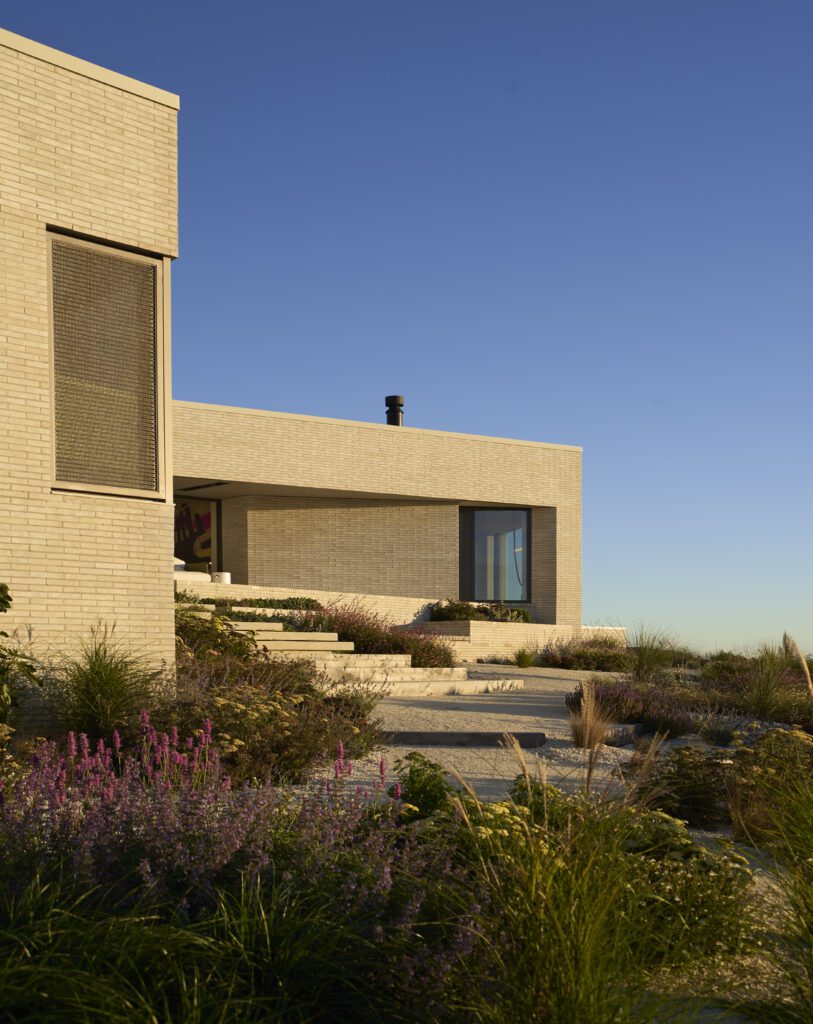
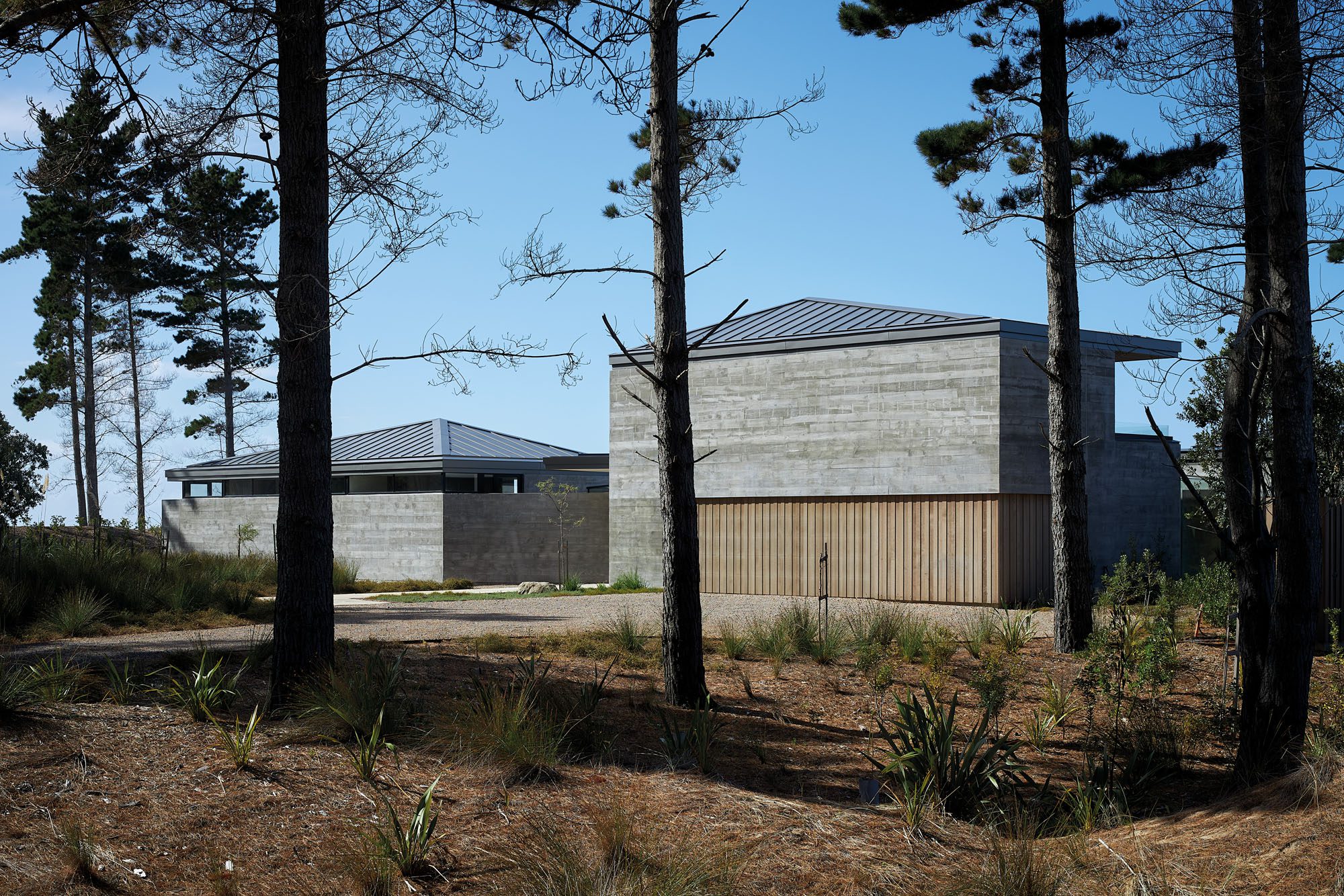
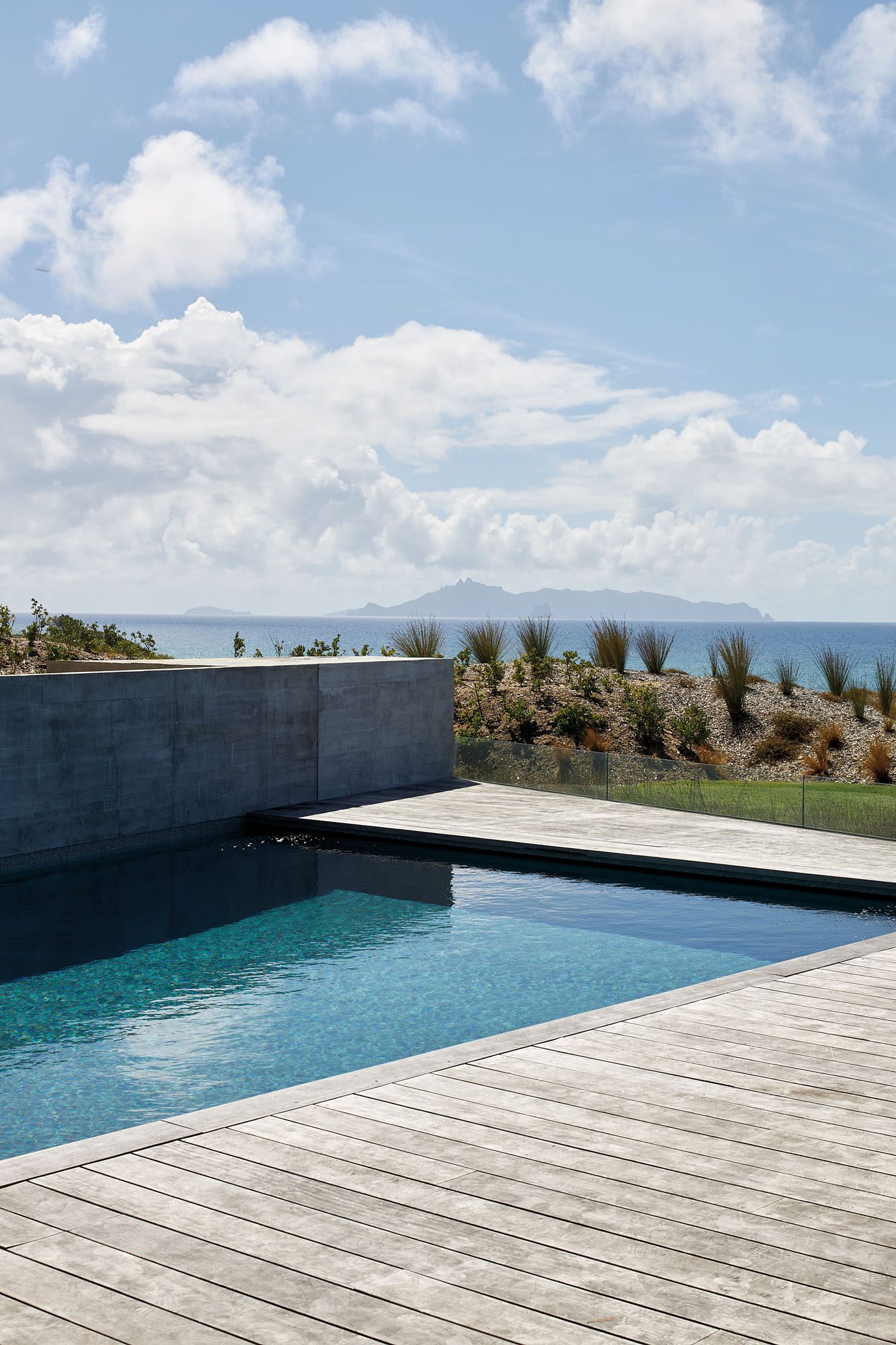
Near the border of Auckland and Northland, a long, meandering driveway dips towards a cluster of sand dunes by the sea. At its end, a house emerges — bunker-like in its concrete solidity, with a wrap-around timber garage door that reveals little of the experience that lies within.
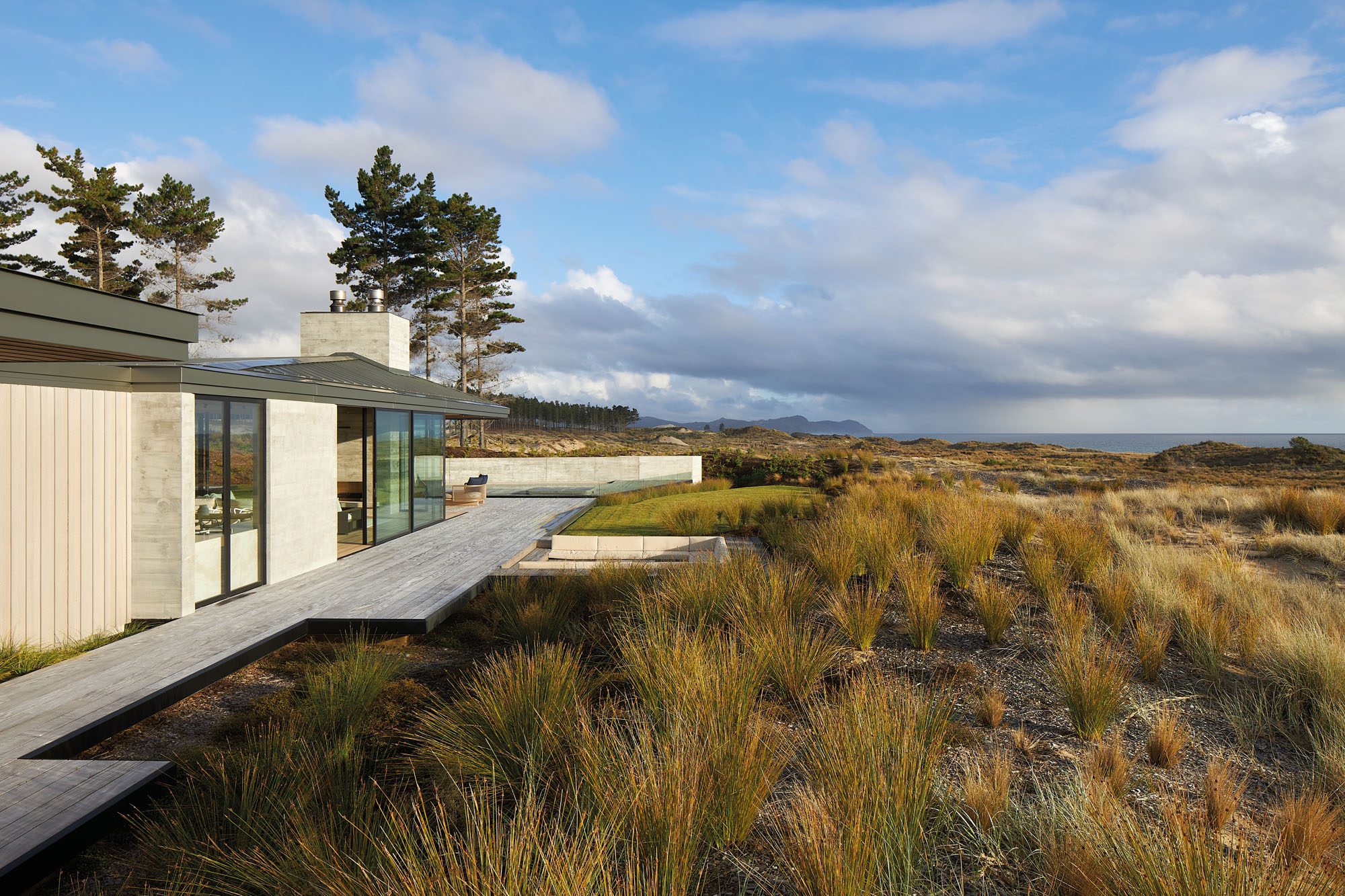
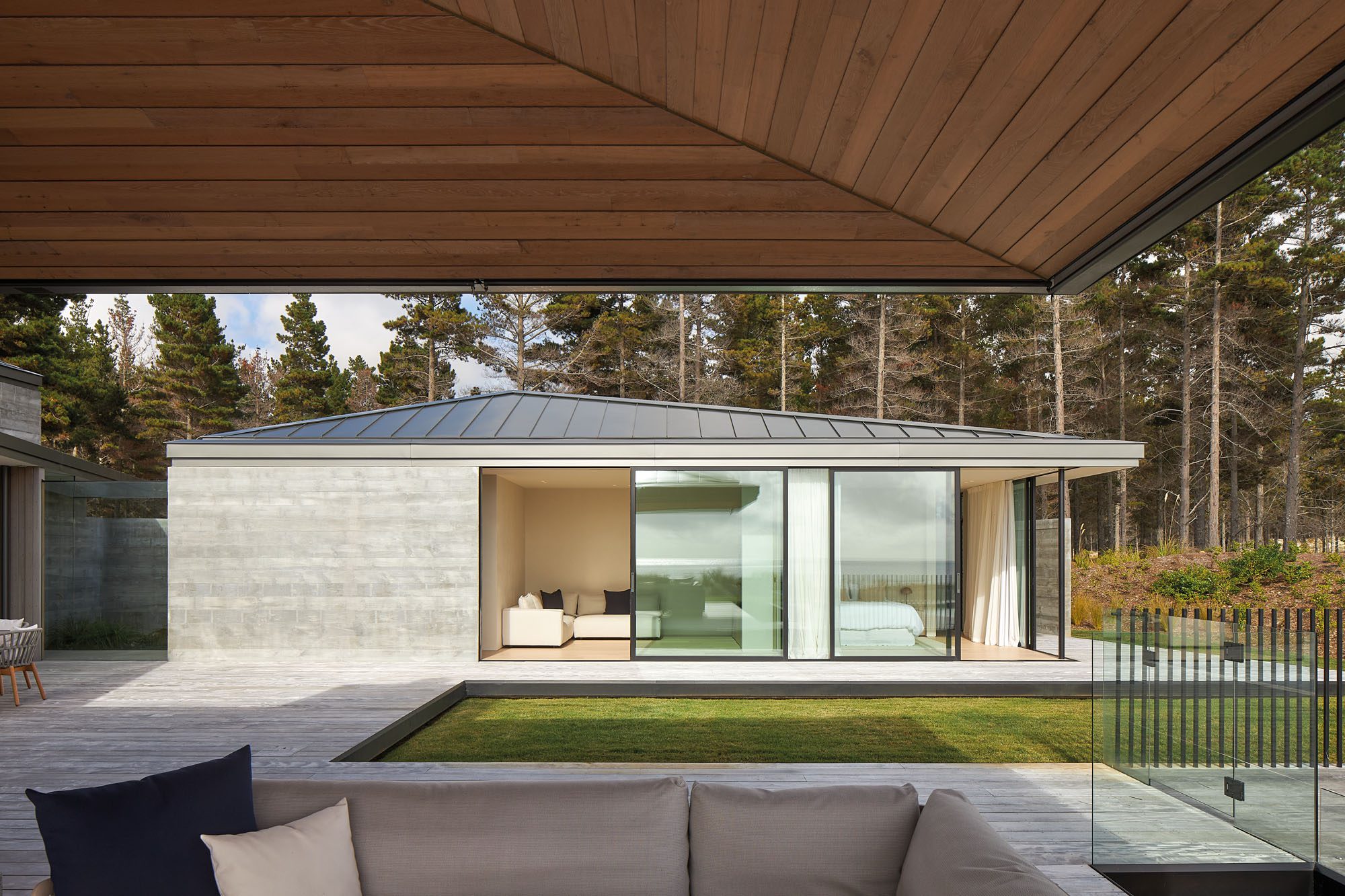
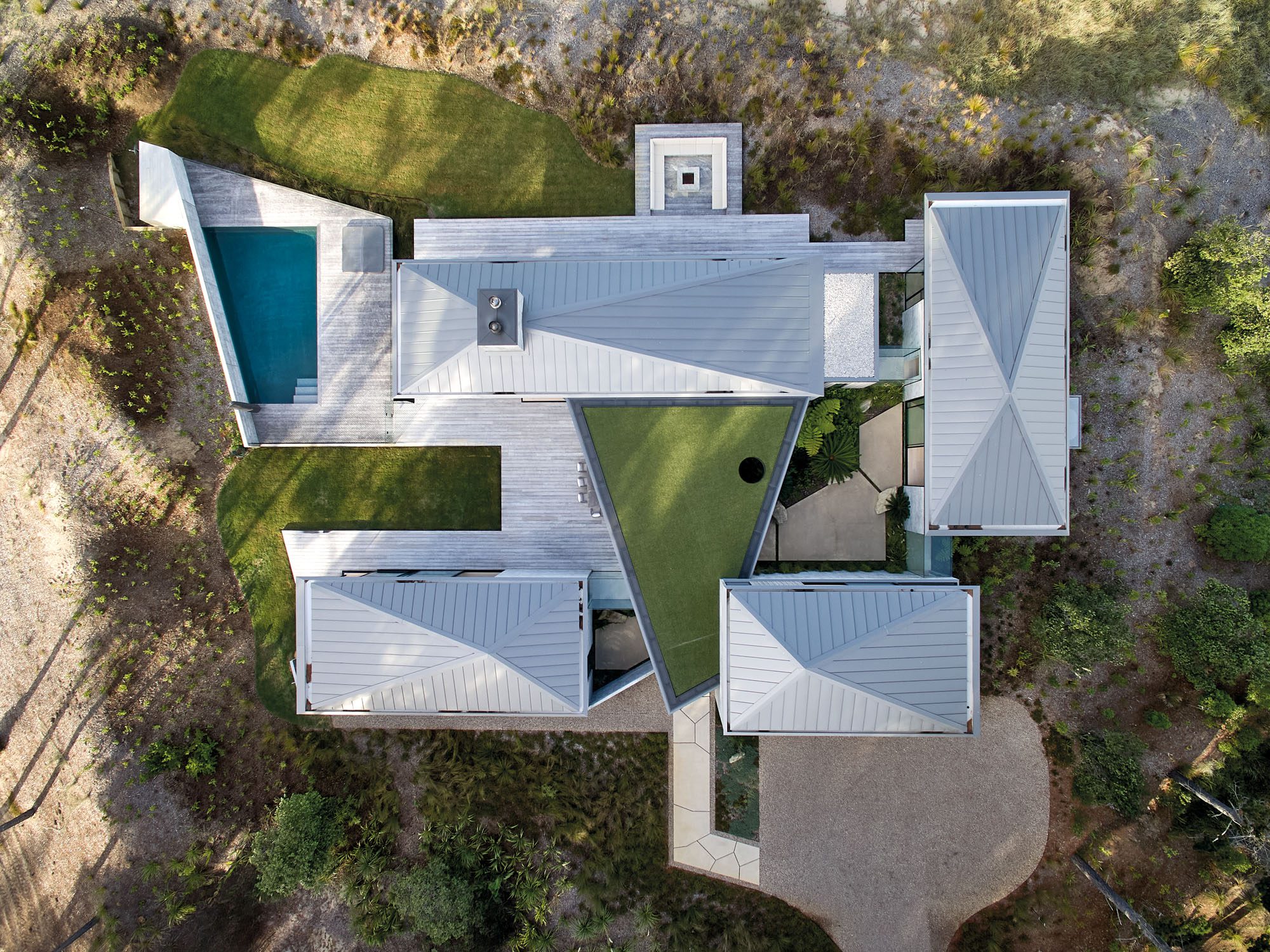
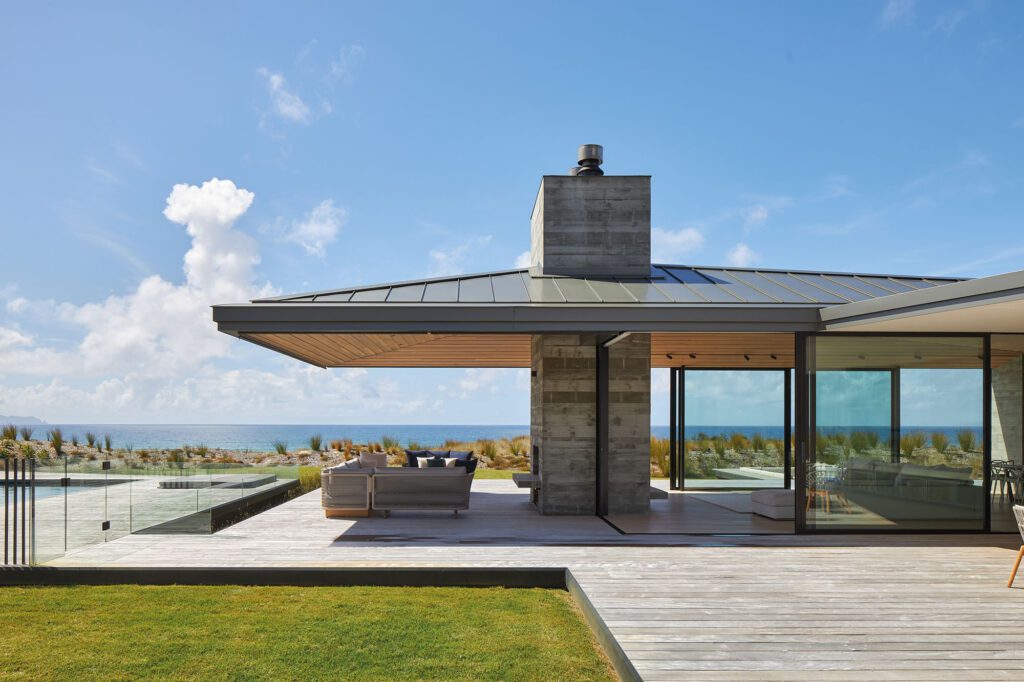
This is a large home, mostly on one level but with a basement and a bedroom that rises above. It unfolds across four pavilions arranged along three sides of a quadrangle, with the open, sea-facing north side ensuring every part of the house enjoys expansive views.
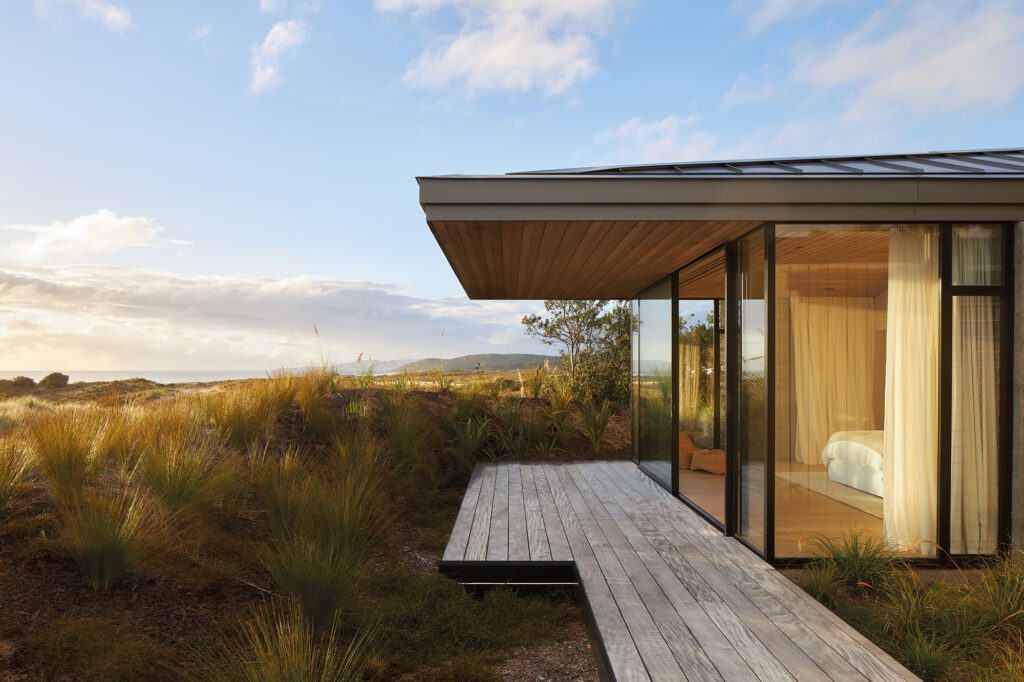
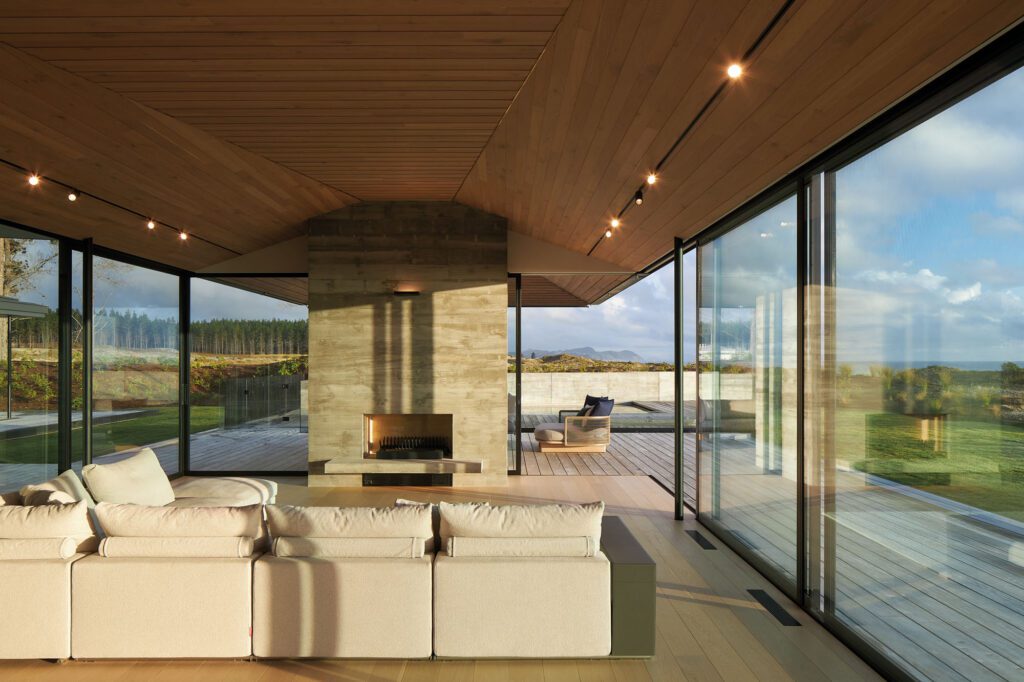
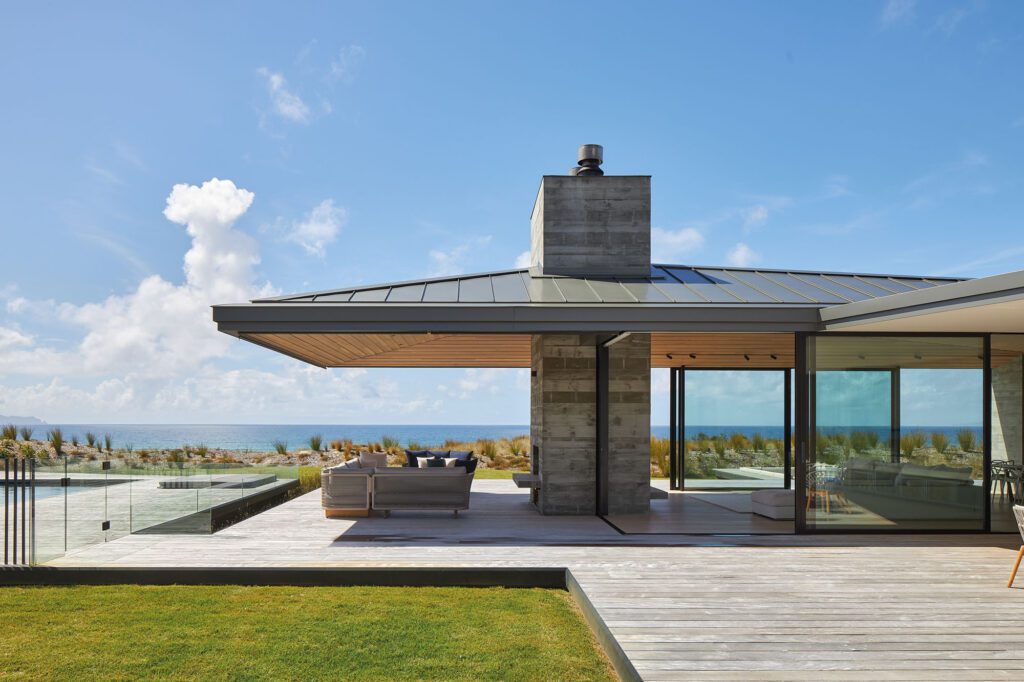
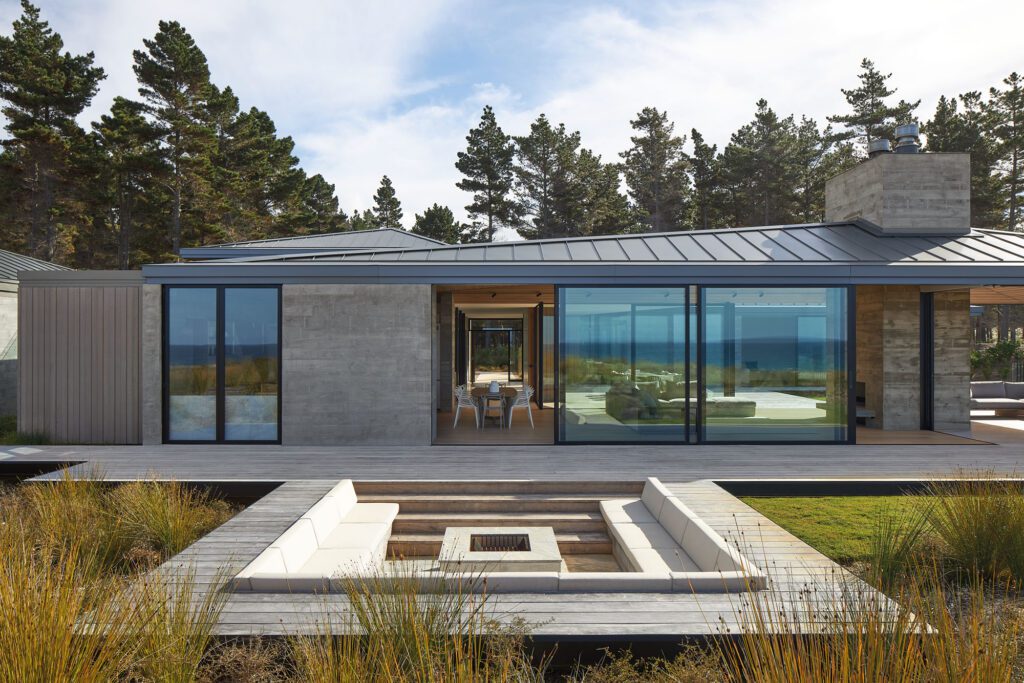
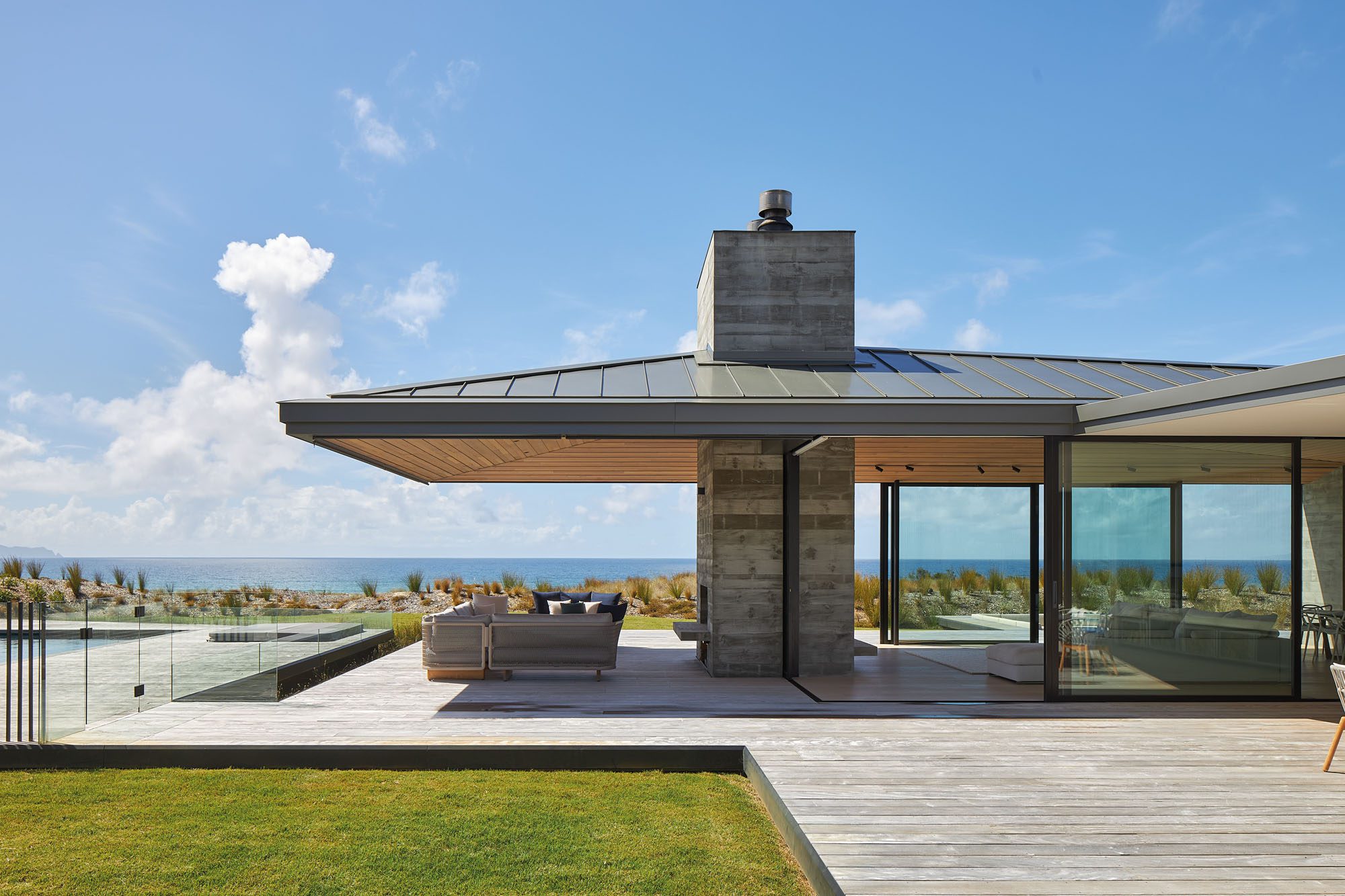
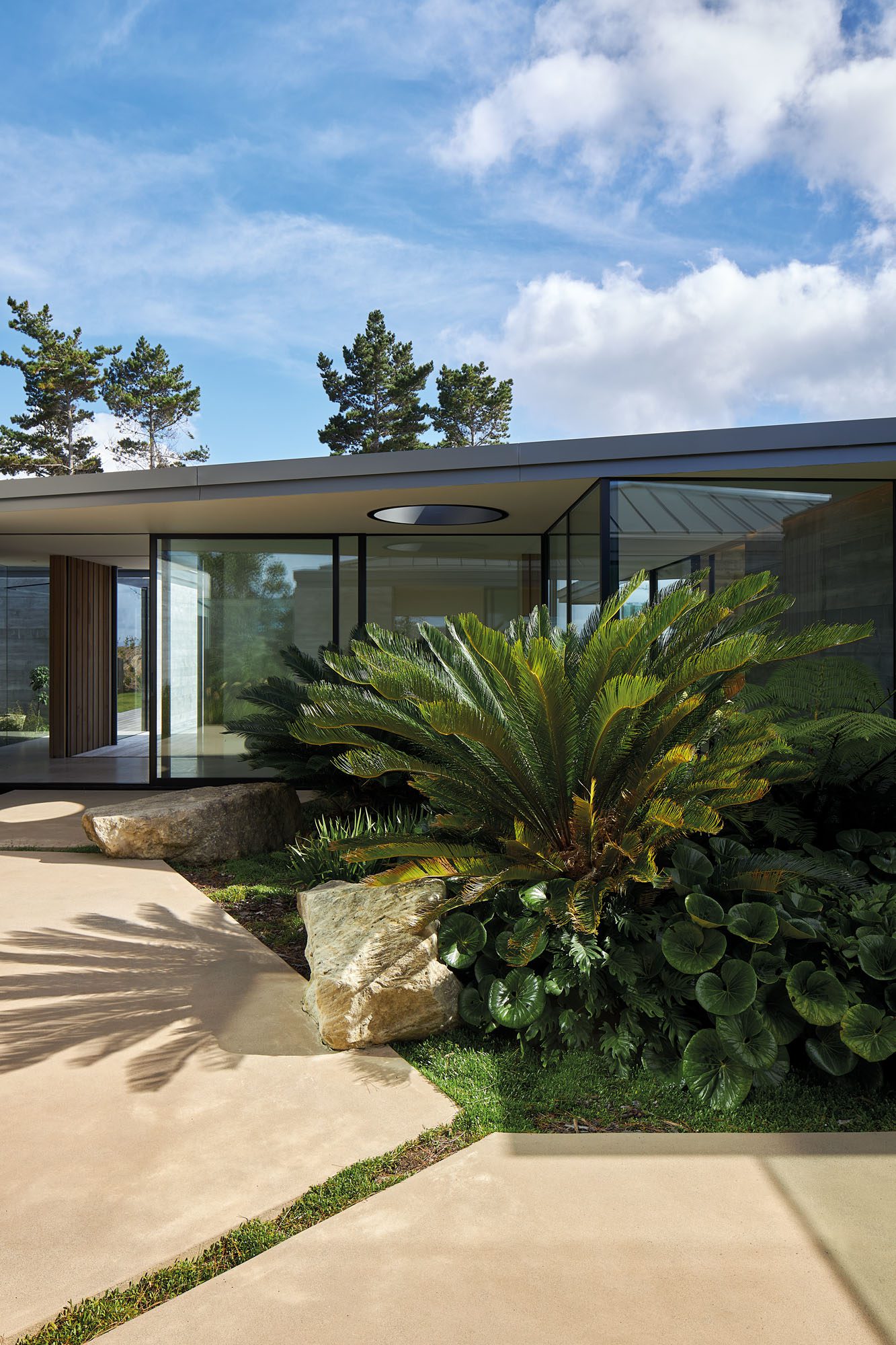
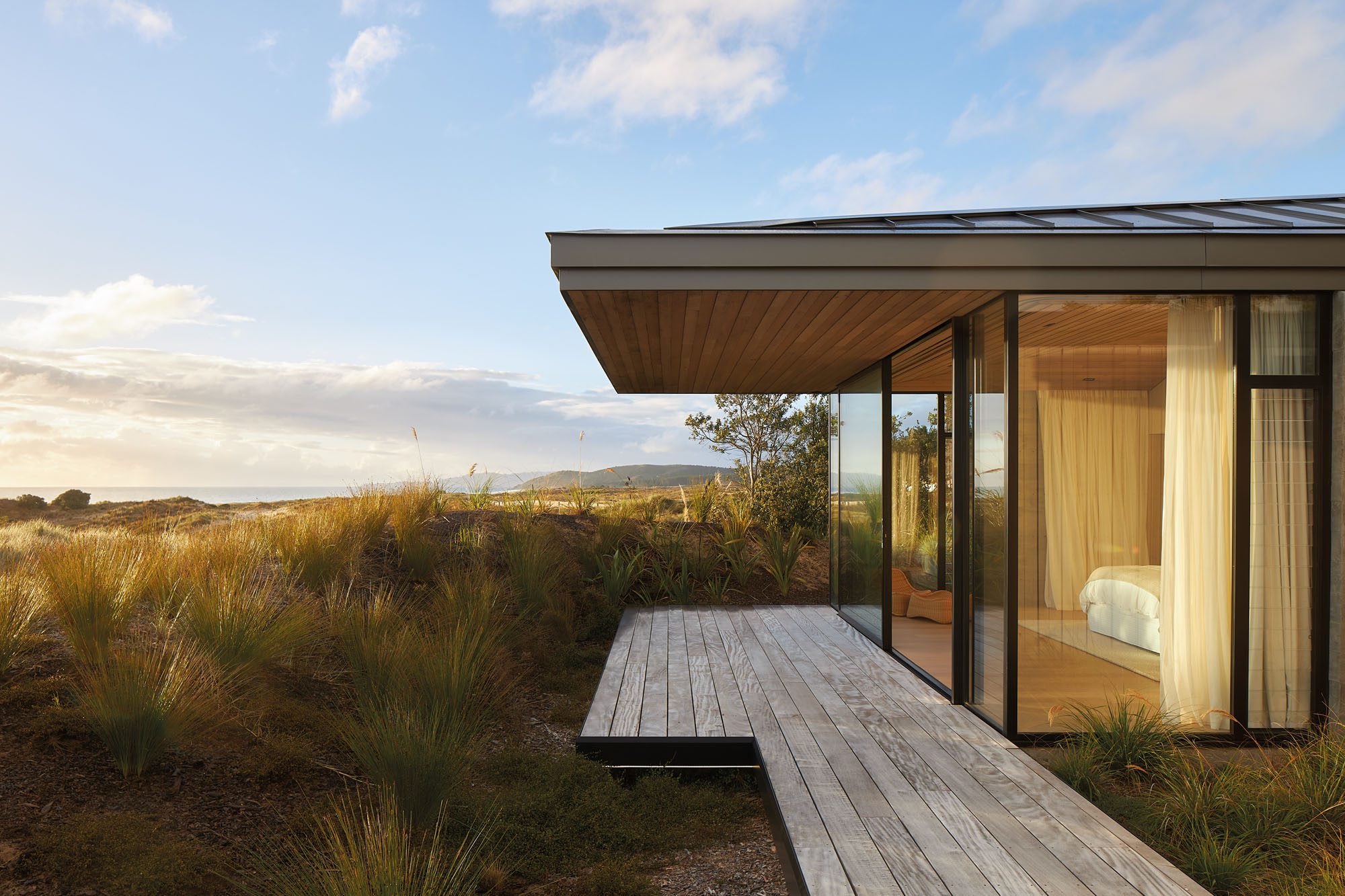
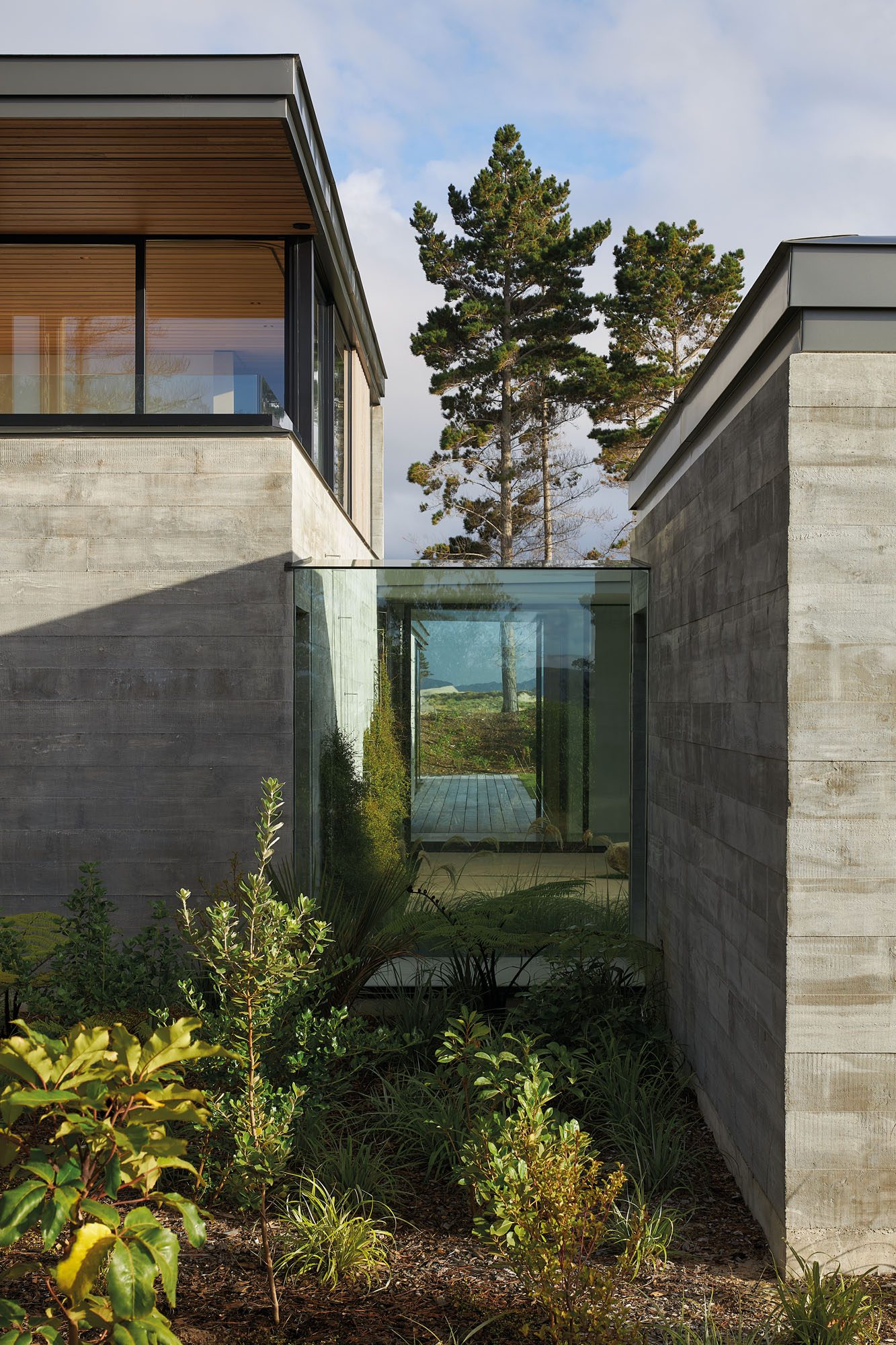
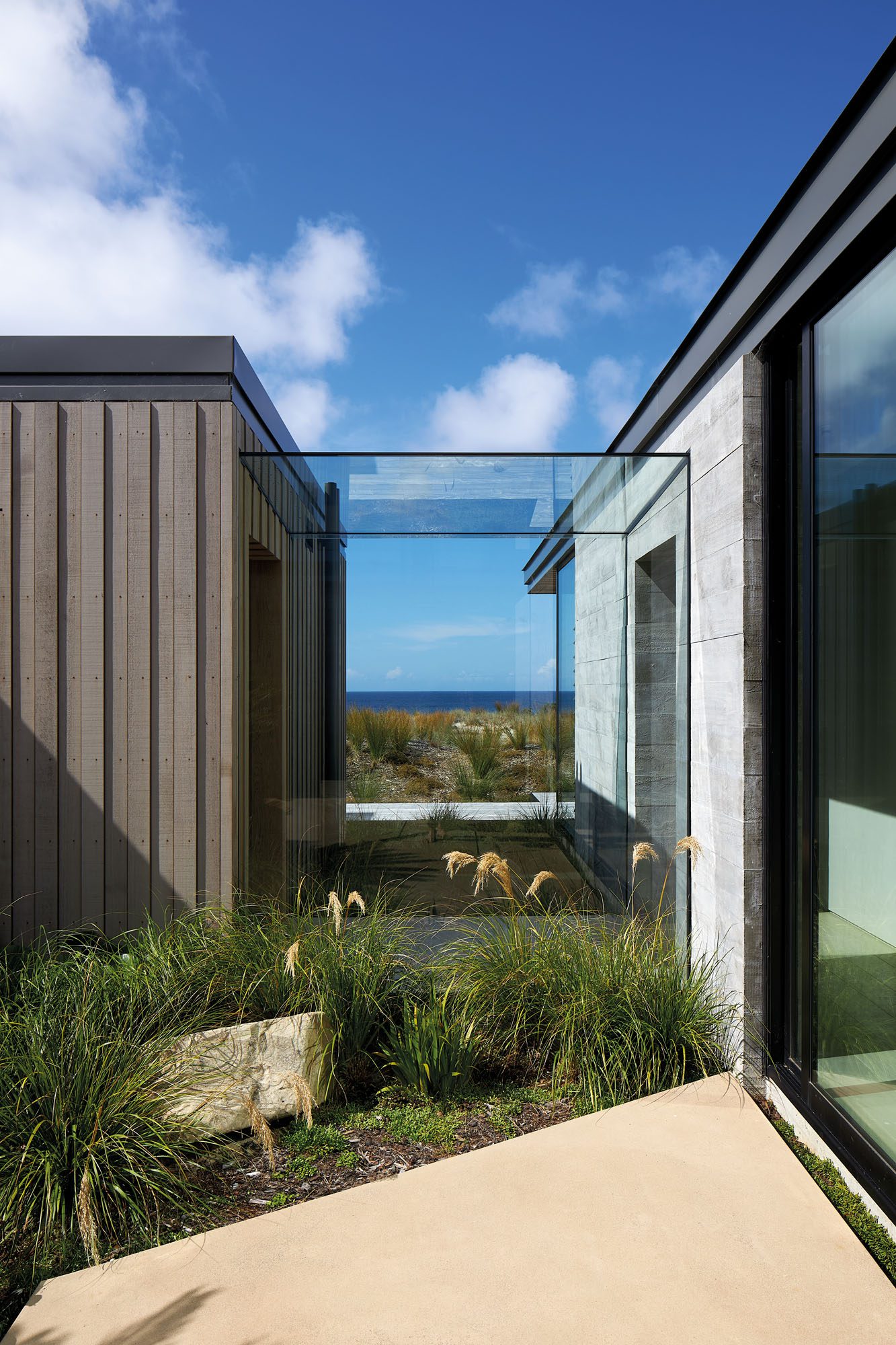
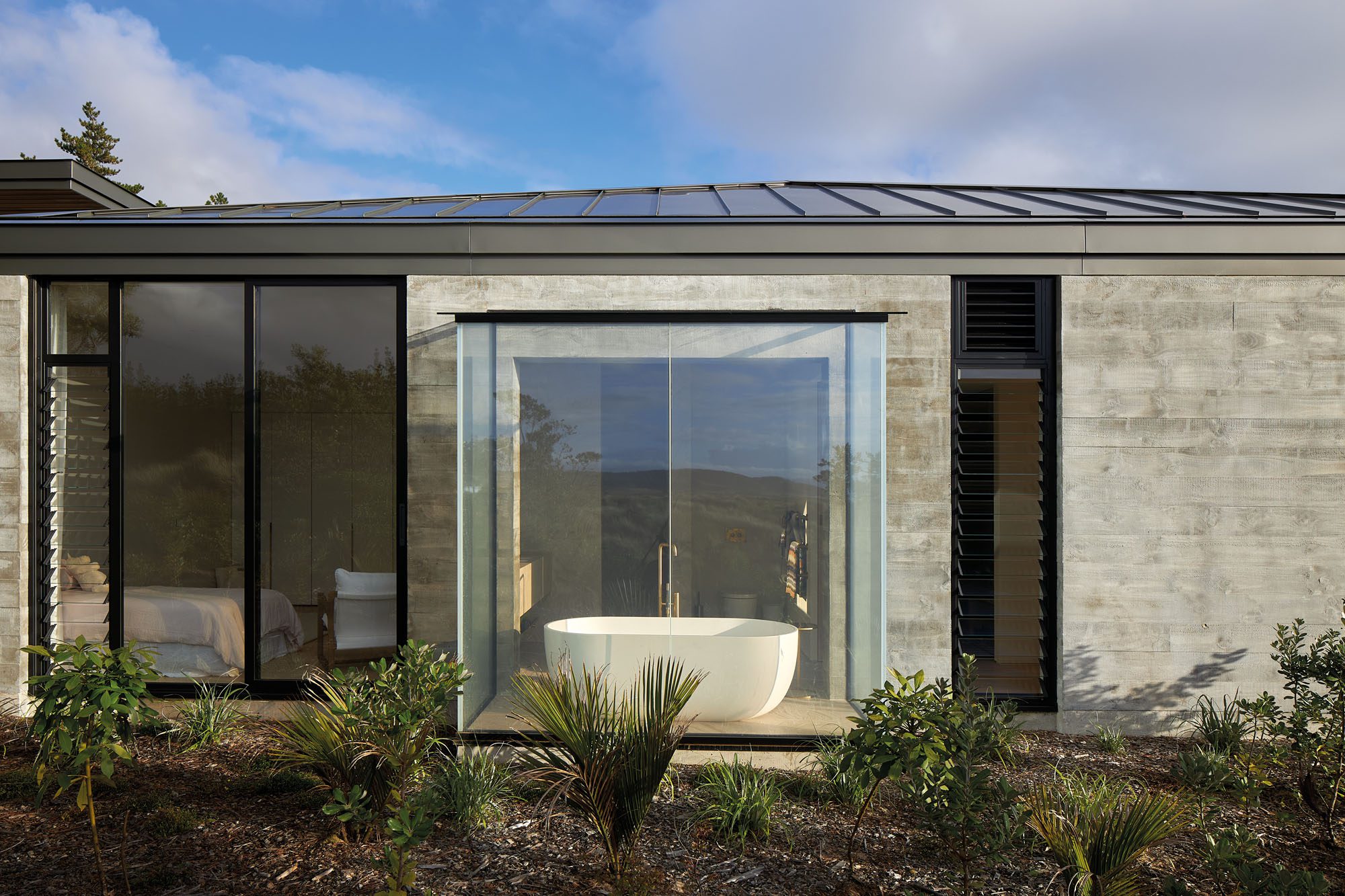
To strengthen this connection with its surroundings, the design embraces transparency. Glazing is abundant, and the links between pavilions take the form of entirely glass-clad tunnels. This is a house that looks out — designed to dissolve its boundaries and immerse itself into the landscape.
Courtyards, terraces and decks wrap around the pavilions. Some are timber-clad; others are lush with toetoe, sago palms, creepers, native tussocks, and boulders, while tall pine trees form a natural screen to the south-west.
At its heart, this house is about connection: between its inhabitants, with many nooks and enclaves to retreat to; between its architectural forms, where pavilions overlap in expressive geometries; and between its main materials — concrete, timber and glass — brought together with precise, crafted detail. Each element joins the next with intention: sliding into concealed pockets, interacting in ways that highlight their contrasts and create something new in their union.
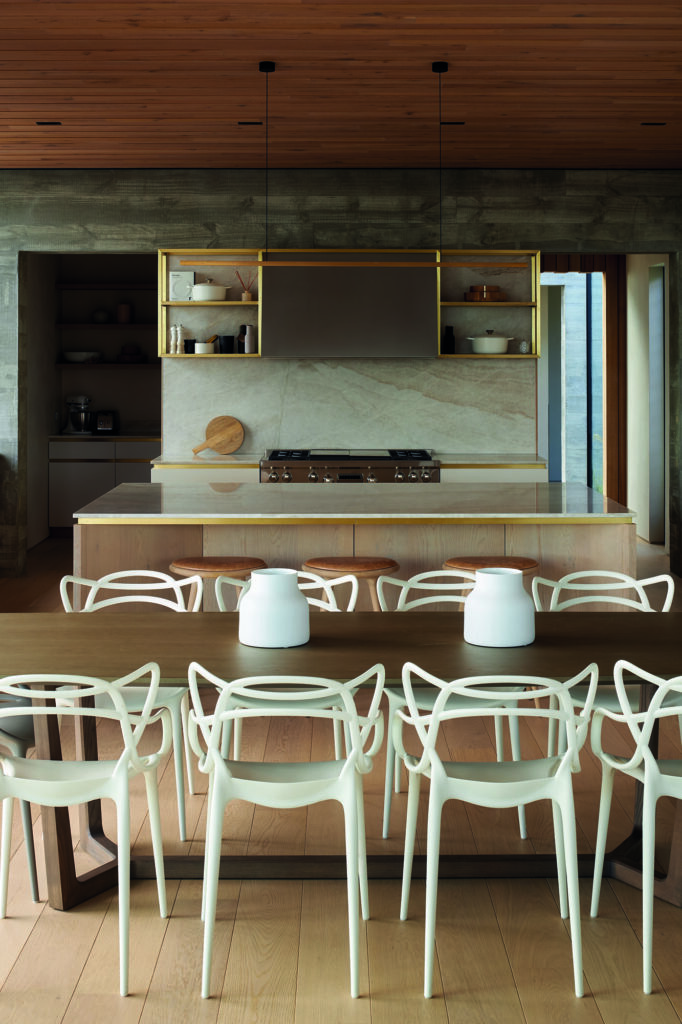
A muted palette of exposed concrete, limestone and bleached oak echoes the sand and driftwood of the coastal setting, while touches of soft brass add warmth and depth to the house’s interior. Roofs are clad in wide-profile, pre-coated aluminium in a schist tone. Above the main courtyard, a triangular canopy clad in artificial turf — complete with a circular lightwell — playfully resembles a golf course.
Words: Federico Monsalve
Images: Simon DevittWilson
This feature first appeared in Homes of this Decade 2015-2025, which was published by Nook Publishing in 2025.