

Dune’s Edge

Set on a long, narrow site — one of the final sections available within a tightly held beachfront subdivision in Papamoa — this family home takes full advantage of its coastal position while negotiating a demanding footprint.

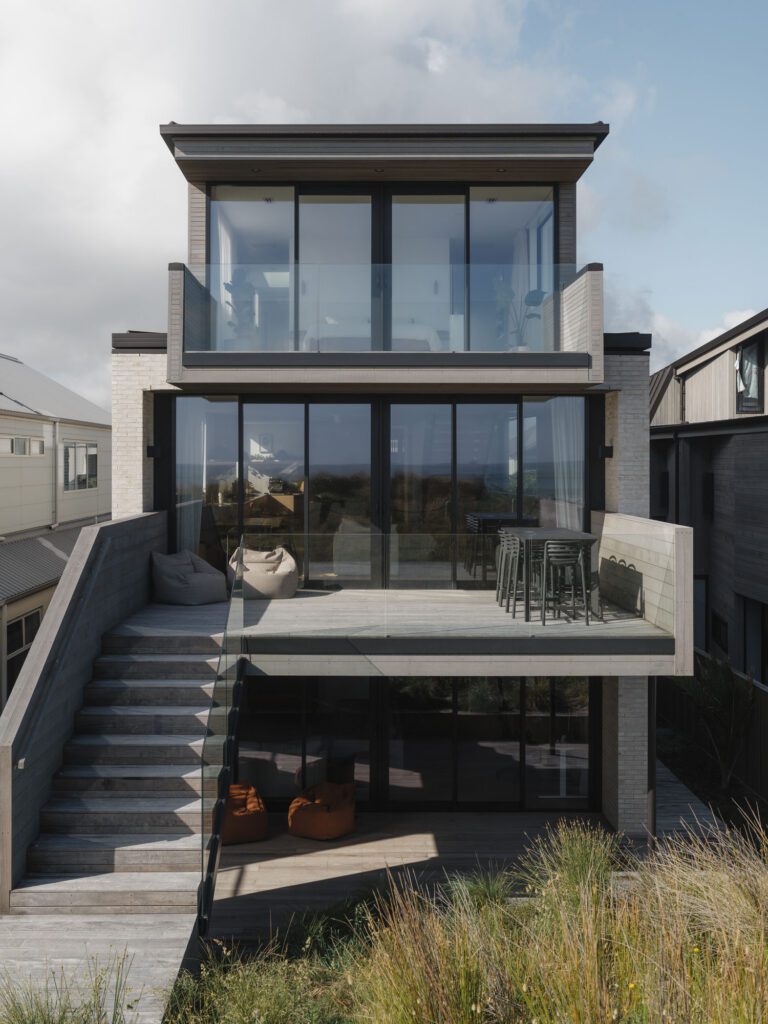
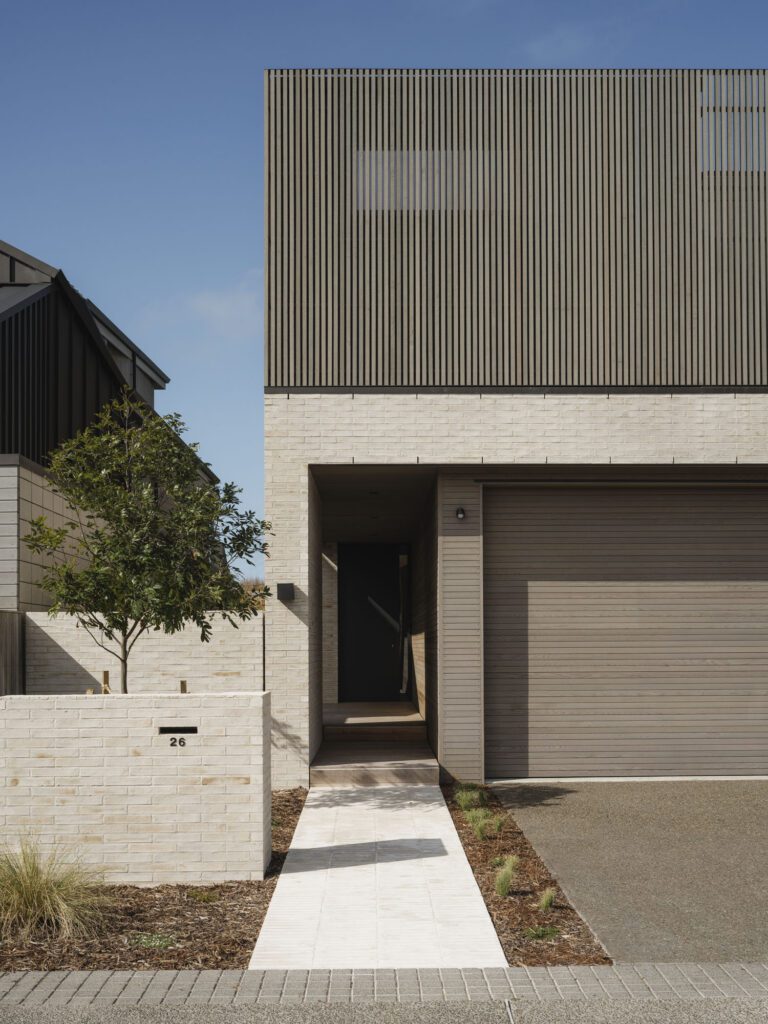
The rear elevation presents a pared back, sculptural face to the street.

With neighbouring houses close on either side and the beach just beyond, the project called for precision rather than excess.

The owners, who relocated from Auckland to the Bay of Plenty with their young child, were keen to fully embrace the rhythm of beachside living. With one of the clients working within the construction industry, the project moved at pace — a momentum architect Jeremy Brick of Studio Brick Architects relished. Based locally, Jeremy is well acquainted with the constraints of compact coastal sites.

Sandy-toned brick meets a timber screen that echoes the tones of the coastal grasses beyond.
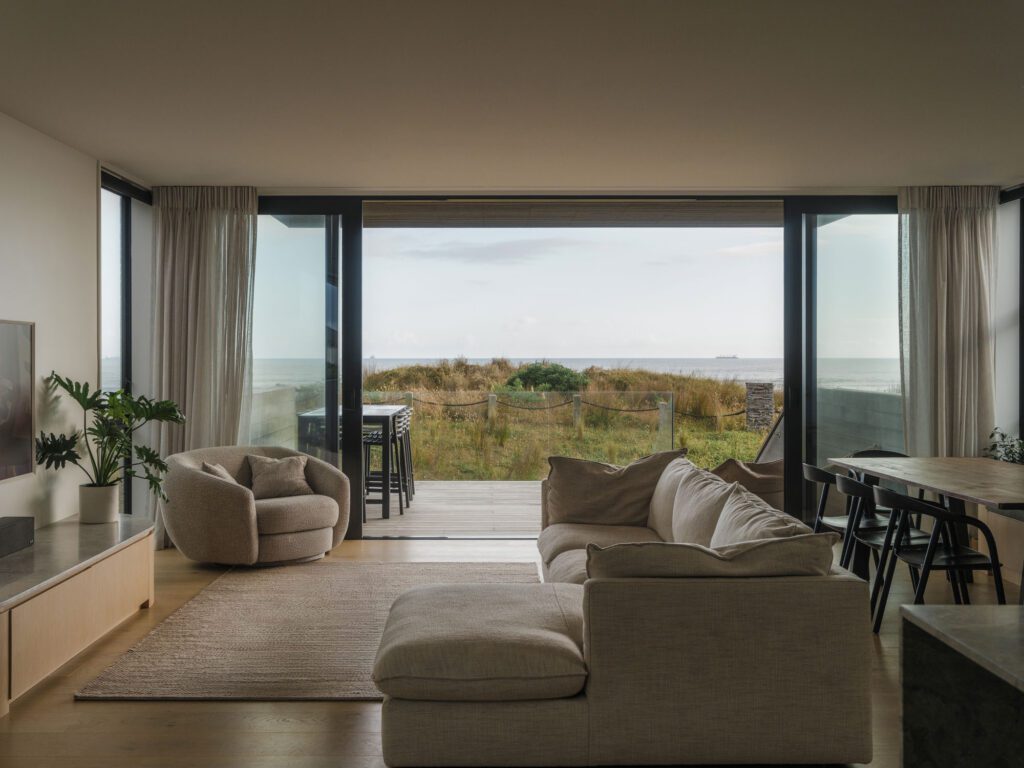
The main living area is located on the middle level, allowing for views across the dunes to the sea.

“A lot of the architecture in this area leans towards a ‘more is more’ approach,” Jeremy says. “Here, the intention was to strip things back and create a beautiful object — simple, crisp, and well-defined.”

The site’s proportions and proximity to the coast led naturally to a vertical solution. Planning rules allowed for a three-storey home, enabling Jeremy to stack the programme and deliver a generous plan within a tightly bordered envelope.

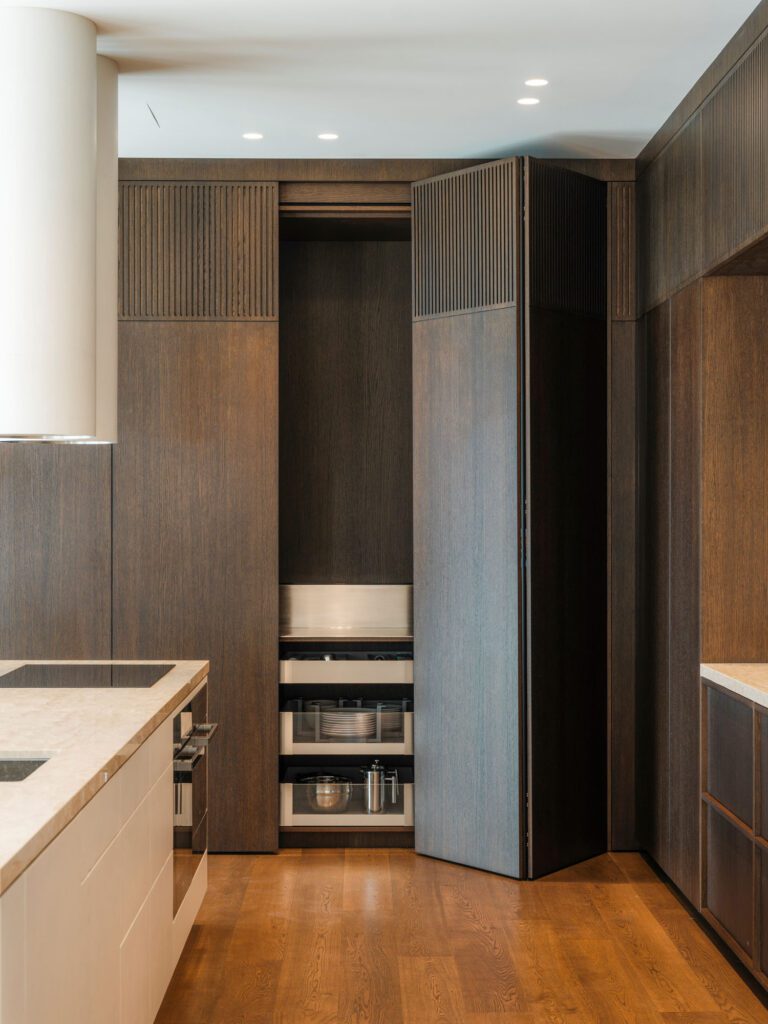
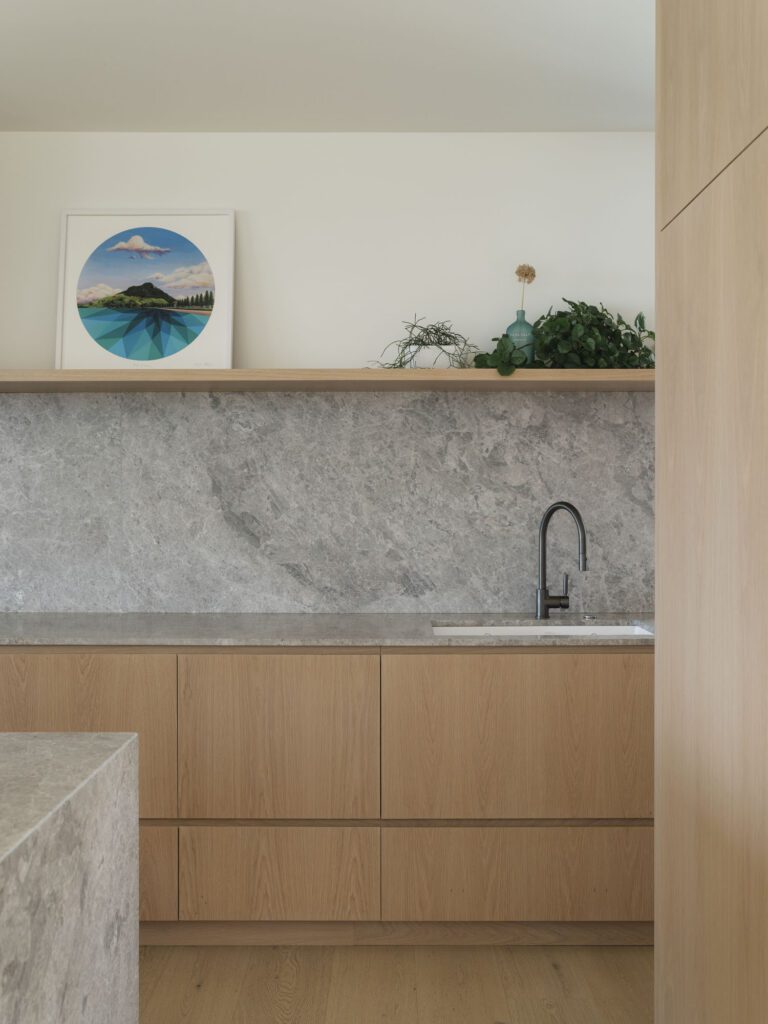
The kitchen is restrained in its detailing, blonde timber cabinetry, tundra grey stone, and minimalist shelving feel sleek and contemporary.

At ground level, service spaces, including laundry, storage, and a rumpus room, open onto a grassed dune that blocks sightlines from the beach. This organic buffer creates a sense of privacy, while a sheltered deck provides an alternative outdoor retreat, separate from the main living spaces above.

The middle level forms the heart of the home, housing the primary living area, kitchen, and three bedrooms. Elevated above the dunes, this floor enjoys a strong connection to the outdoors while maintaining a sense of enclosure from neighbouring properties.

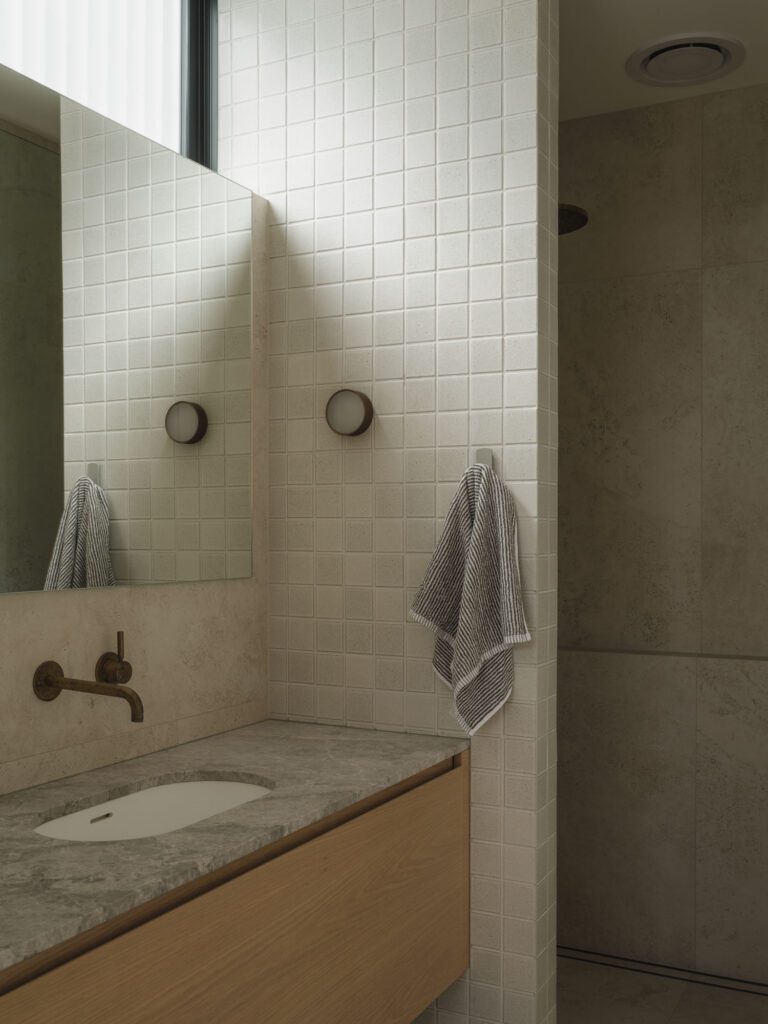
Bathrooms continue the design language of the kitchen with travertine-style tiling, tundra grey stone, and timber cabinetry.

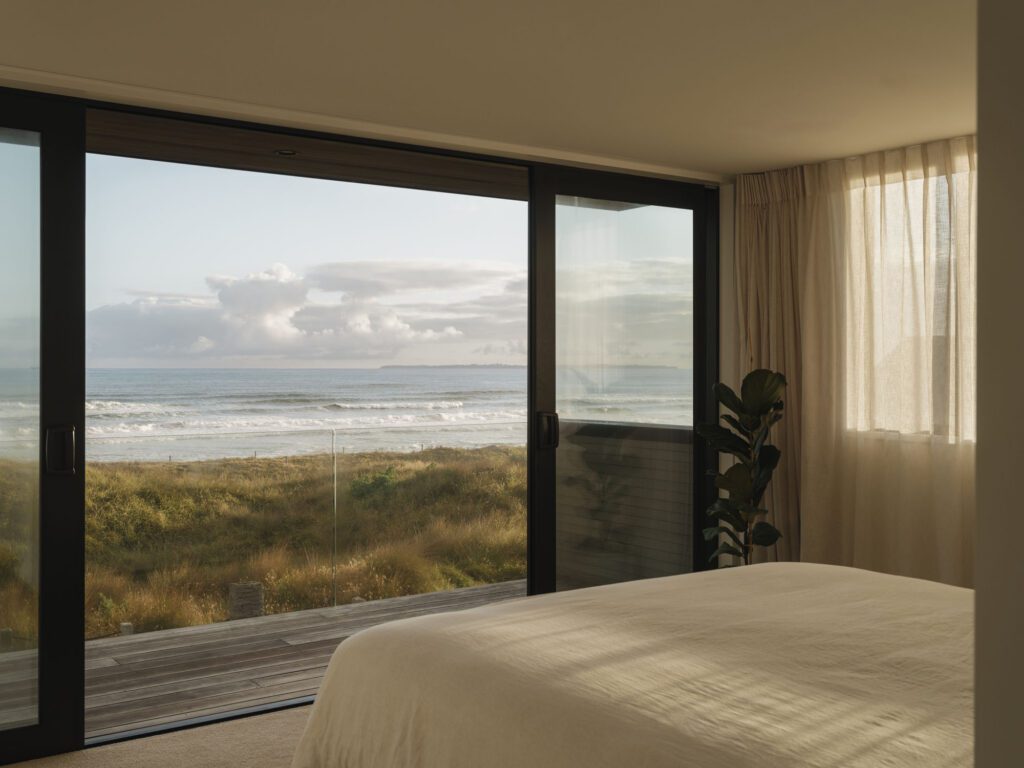
Above, the top storey is reserved entirely for the owners. Here, a glazed bedroom opens out to sweeping coastal views, with sightlines stretching towards Mōtītī Island in one direction and back to Mount Maunganui in the other. It’s a level that feels removed from the activity below — a private retreat lifted above the beachscape. At the rear, a home office occupies the street-facing edge of the site, completing the stacked plan.

An external stair on the beach-facing elevation breaks up the vertical mass, introducing movement and variation, while the street elevation presents a markedly different expression. “I enjoy working with blocks of cladding and simplifying them,” Jeremy explains. “Here we used brick paired with timber battens.” The timber screen wraps around the western elevation and continues down the side of the house, adding depth and texture while moderating sun and privacy.
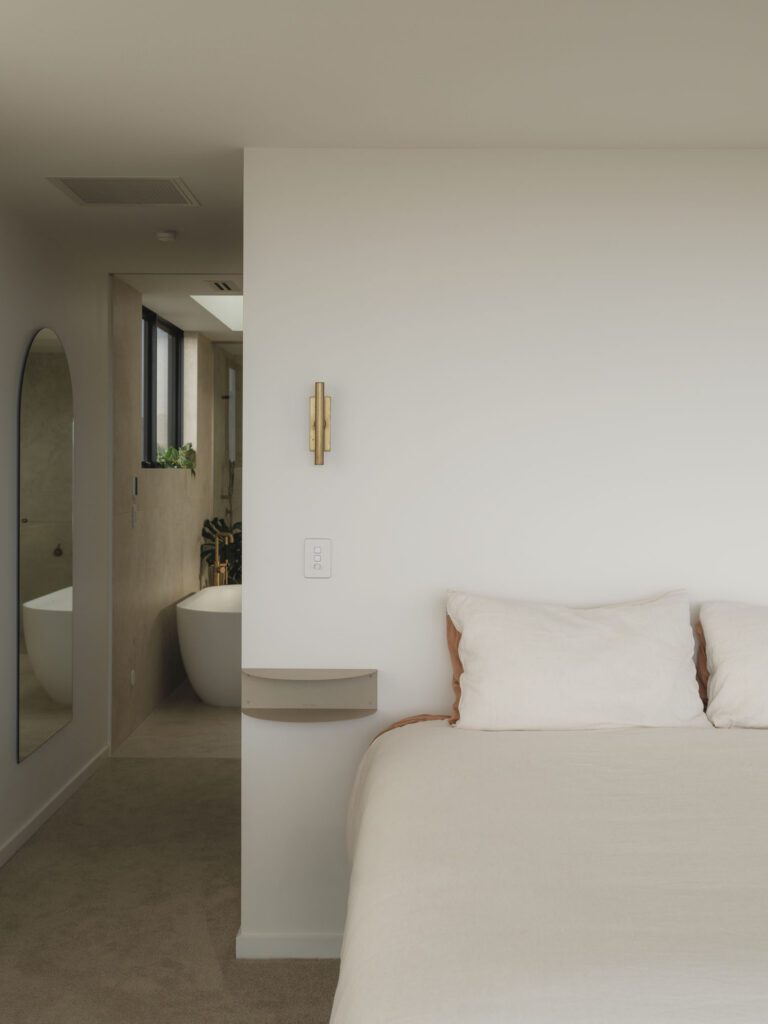
The bath in the primary ensuite was carefully placed to allow for ocean views when bathing.
The primary suite occupies the top floor, a private retreat for the owners with long views back down to Mount Maunganui and, in the other direction, to Mōtītī Island.

The brickwork was selected for its sandy tones and tactile surface, grounding the building in its coastal context, while the timber was stained to echo the colour of surrounding beach grasses, creating a palette that feels intuitively connected to place.

That material clarity continues inside. The interior needed to feel sleek and contemporary while remaining relaxed enough for everyday family life. Tundra grey stone anchors the kitchen, offset by blonde timber flooring and cabinetry that carry the coastal tones indoors. Minimal shelving and a pared-back approach to detailing keep the space focused and functional.

Bathrooms follow the same language, with travertine-toned tiles and stone benchtops linking back to the kitchen. In the main ensuite, the bath is positioned to take in views across the dunes — visually connected to the bedroom while remaining clearly defined as its own space.

Externally, detailing has been carefully controlled. Gutters and spouting are recessed, leaving nothing visible but clean lines and the gentle rhythm and curve of the timber screen. 

Words: Clare Chapman
Images: David Straight

Project Credits

Architecture: Studio Brick Architects

Build: Sarich Design & Build

Cladding: Canterbury Clay Bricks

Lighting: Nightworks Studio

Bathroomware: Plumbline

Latest video features

In the Coromandel, a home with a humble profile and a thoughtful design makes the most of a stunning location.

Built with awe-inspiring attention to detail, this Arrowtown home is a fresh interpretation of a familiar Otago rural vernacular.

This sculptural Northland bach is a perfect north arrow on a remote farm high above the sea.

With the sun on its bow and the community at its stern, this is a house in which the elements are always front of mind.

Trending articles

Architecture For Sale

Grey Lynn Light Catcher

Positioned within one of Grey Lynn’s tightly held streets, this reimagined villa by Jose Gutierrez Architects presents a compelling opportunity to acquire an award-winning piece

Design News

Leopald by Poliform

Inspired by the chair of the same name, the Leopold armchair is distinguished by a generous and enveloping cushion, enclosed in a minimal wooden structure