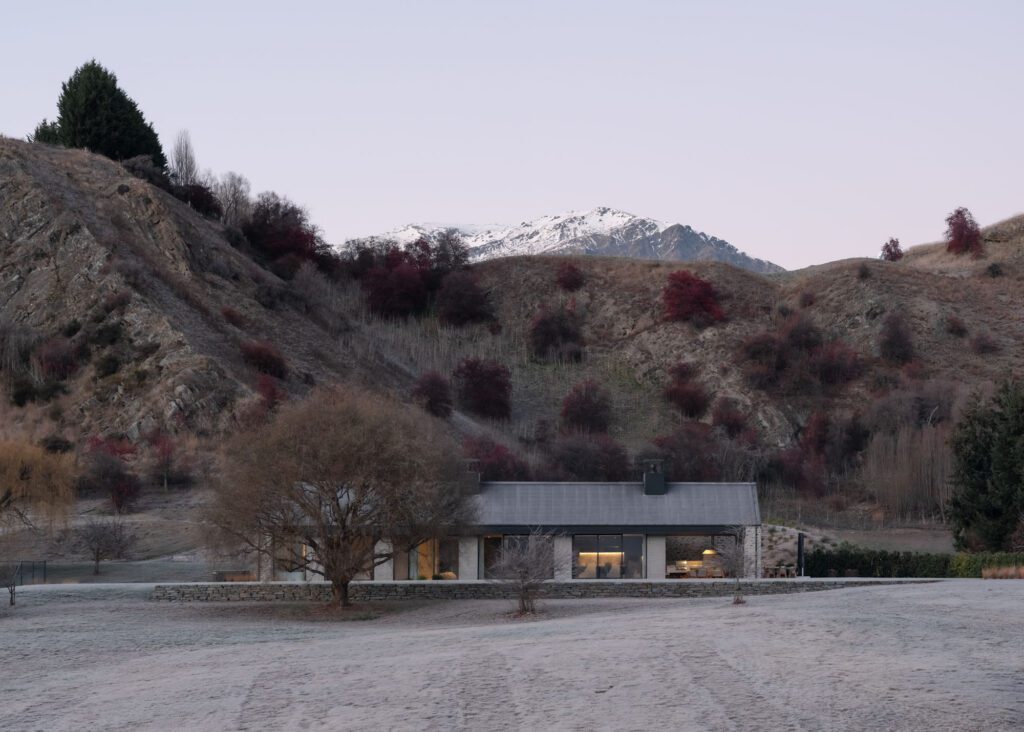
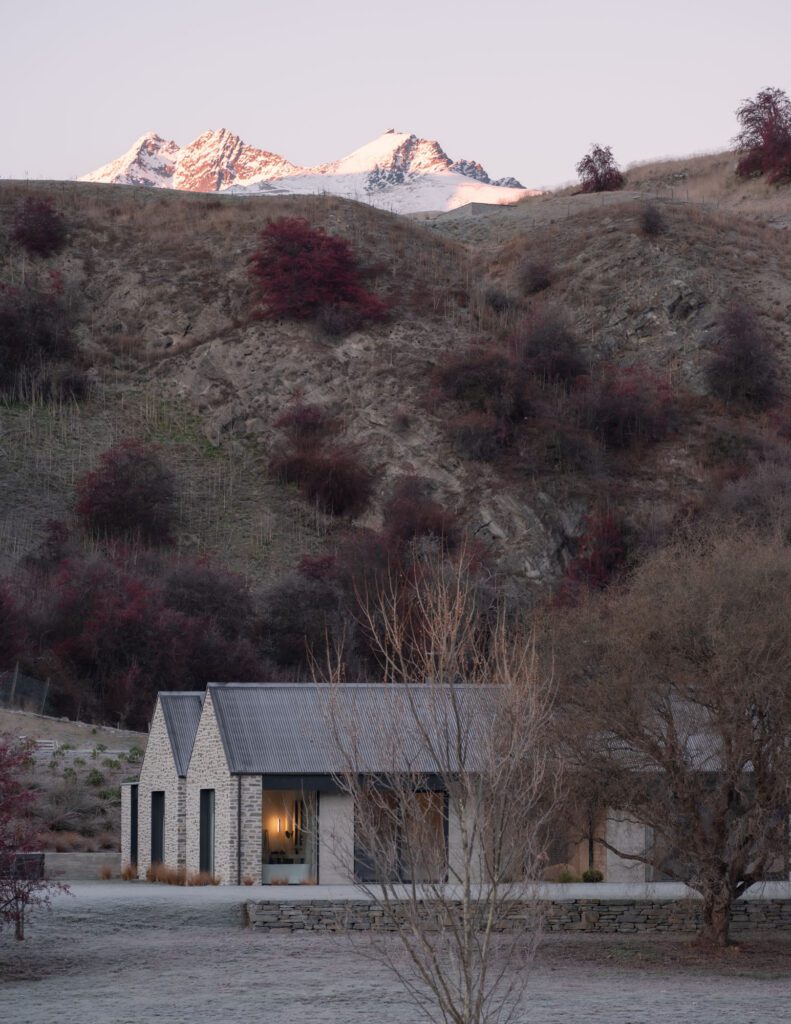
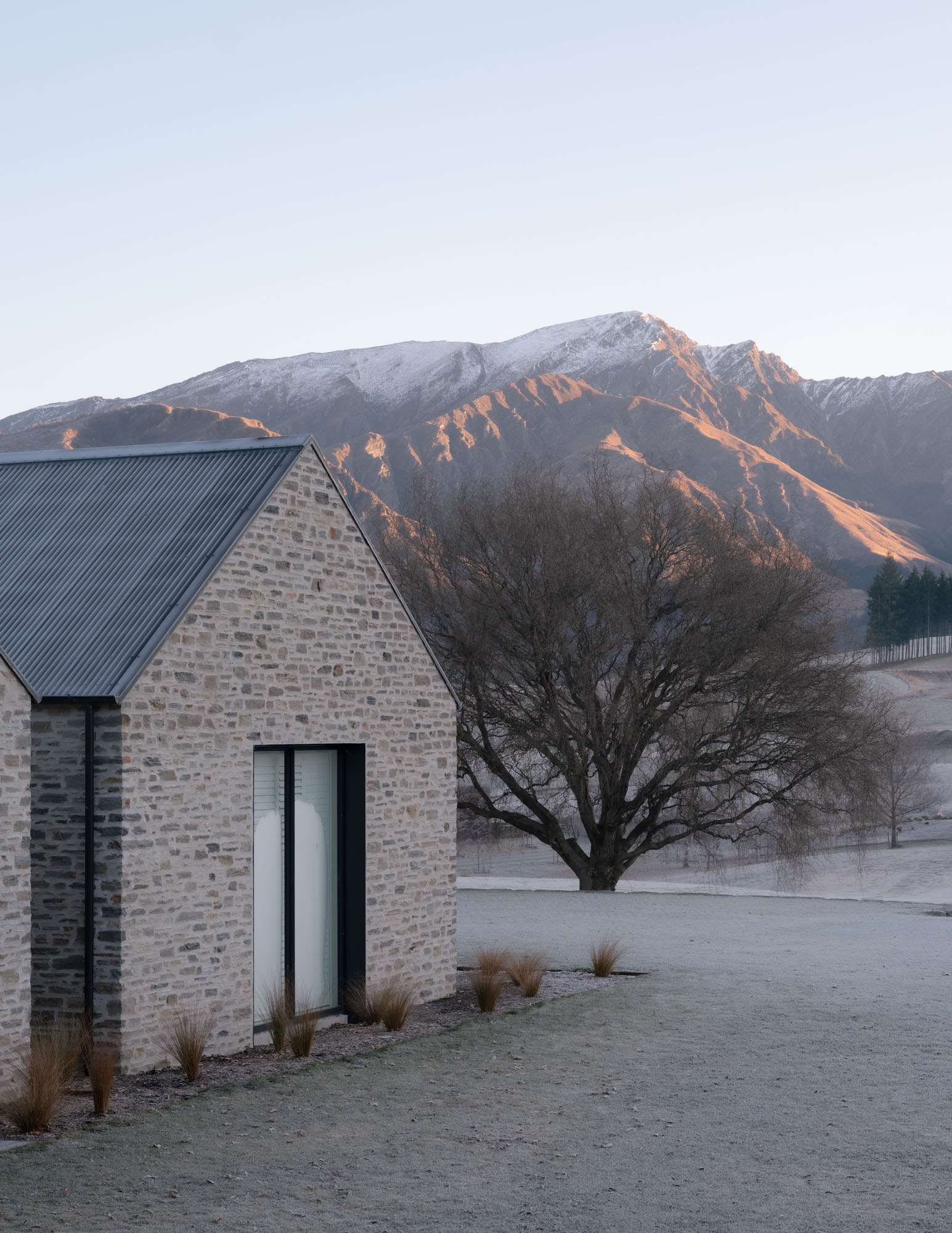
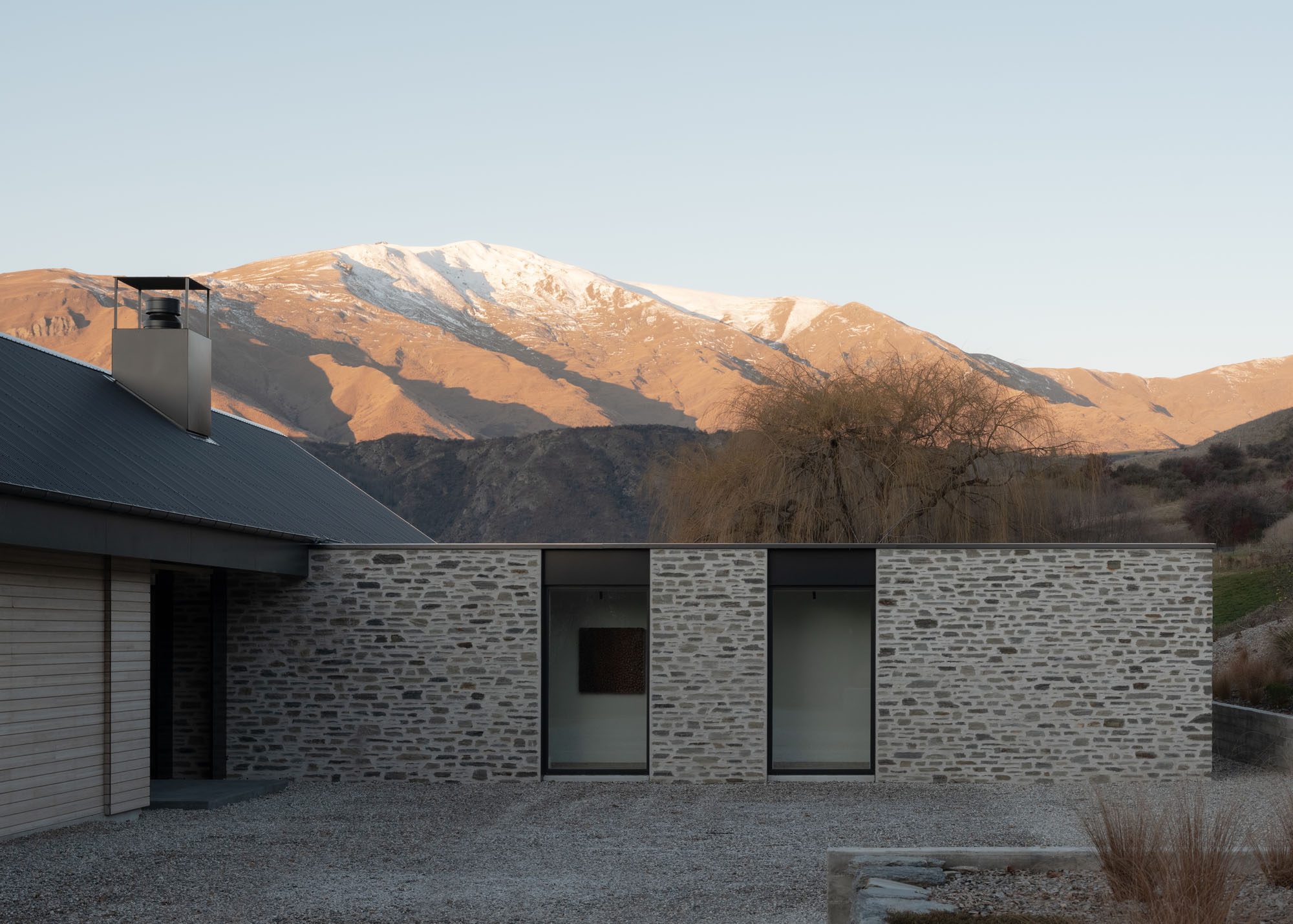
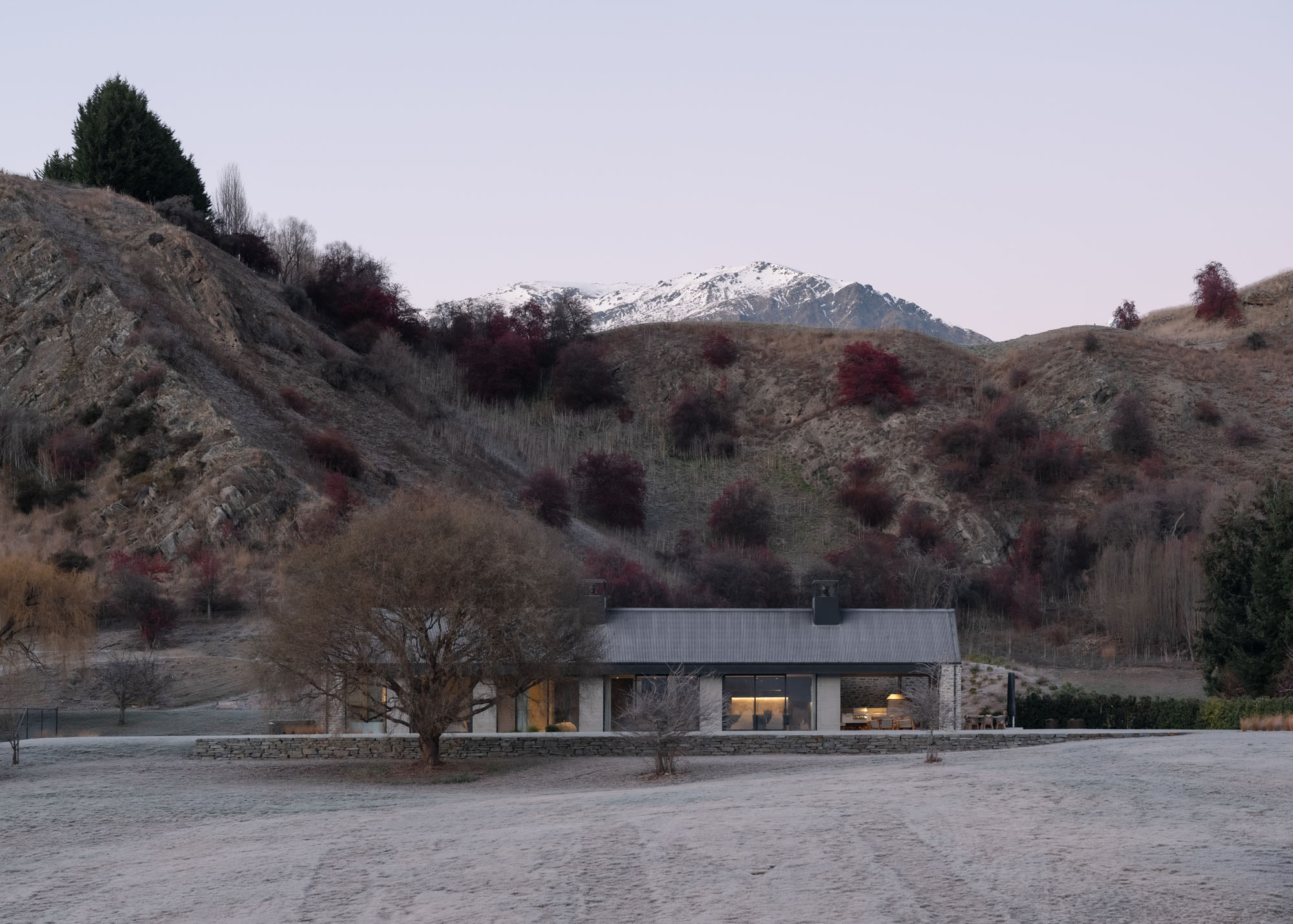
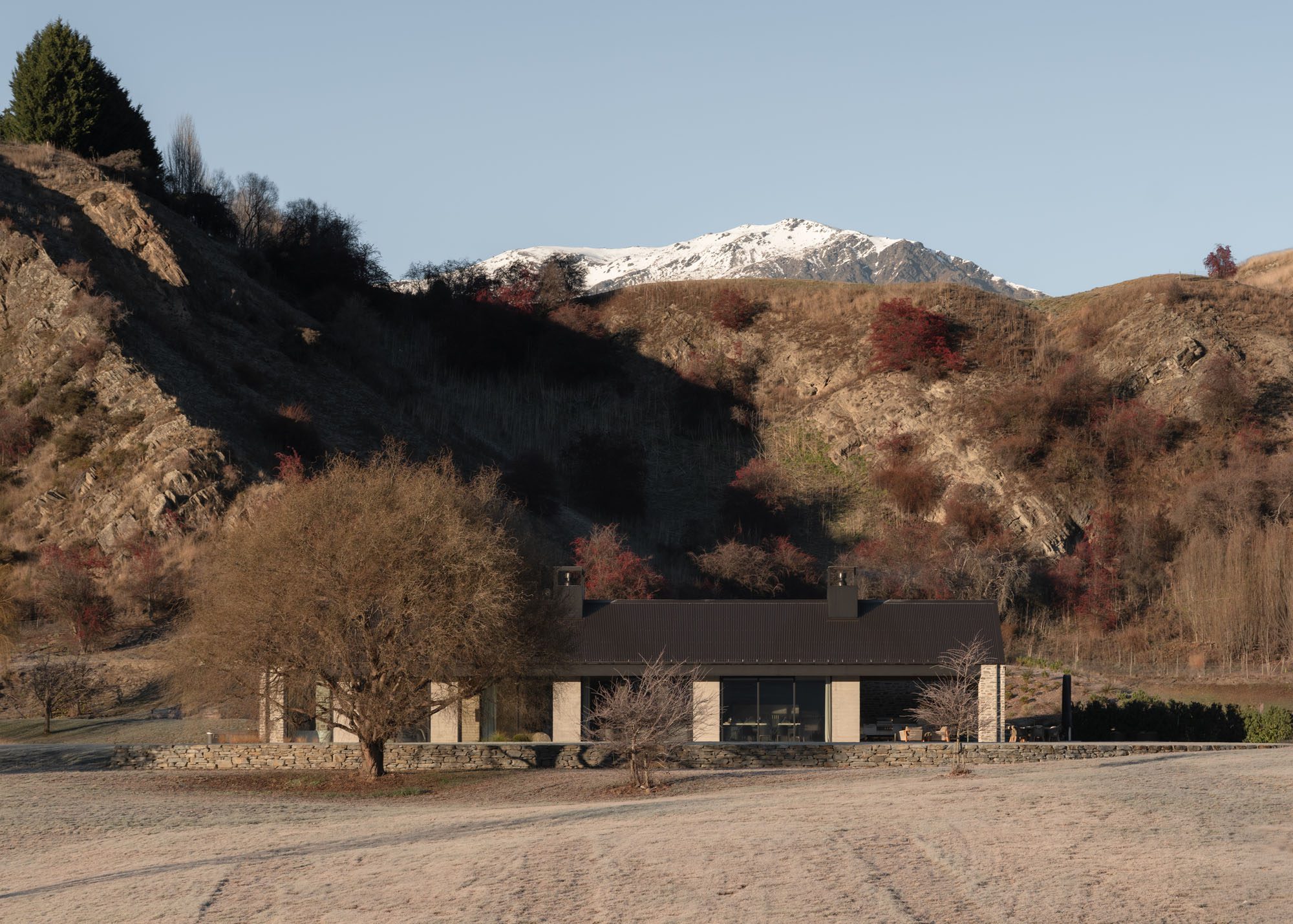
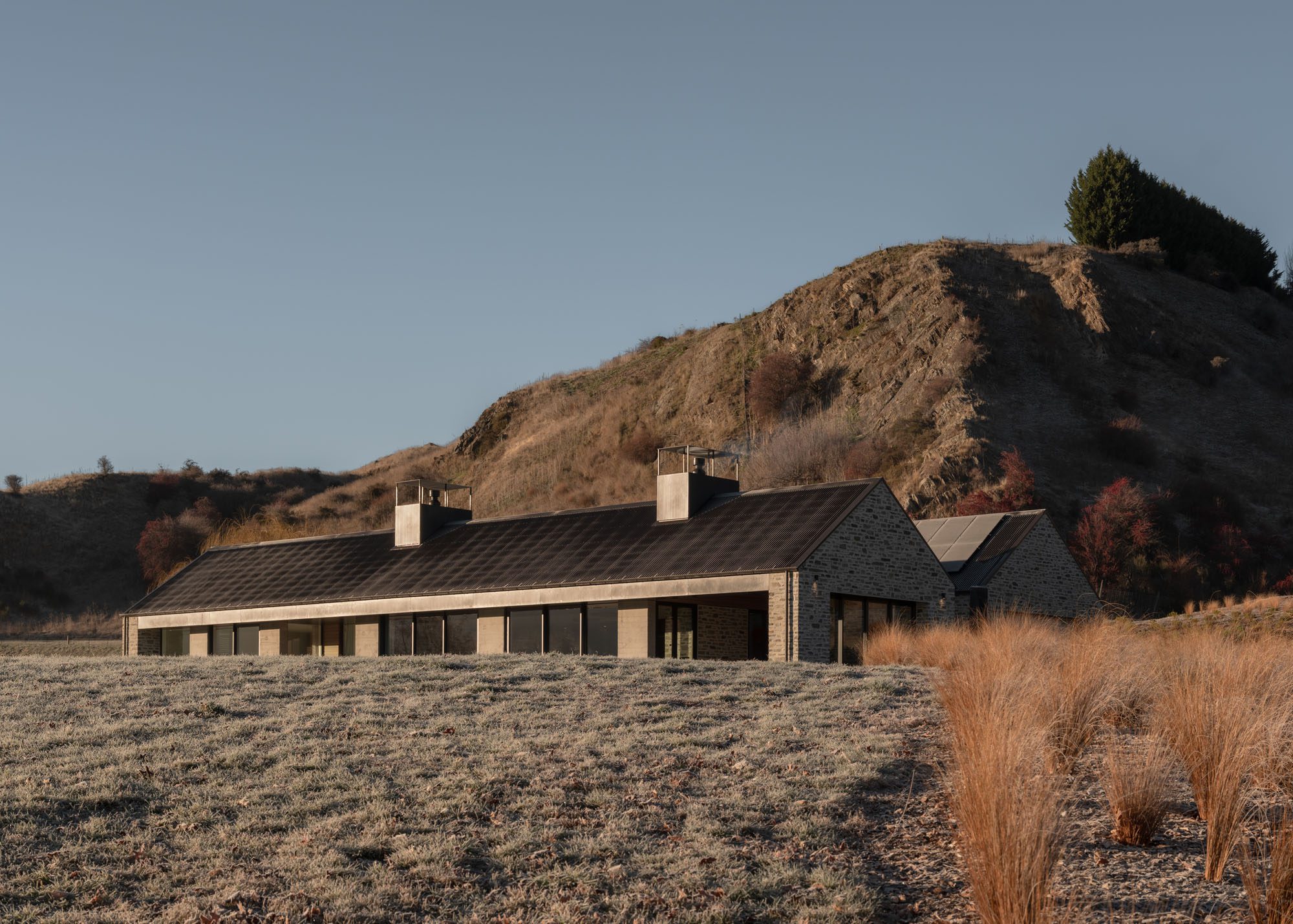


Tucked into the expansive alpine landscape outside Arrowtown, this home takes its cues from the rugged vernacular of Central Otago, sharpened with a distinctly contemporary edge.
In a place defined by extremes, from glistening frosty mornings and snow in the depths of winter to sun-bleached summers, this home had to respond to both the permanence and the scale of the mountains that surround it and the region’s wildly fluctuating climatic conditions.
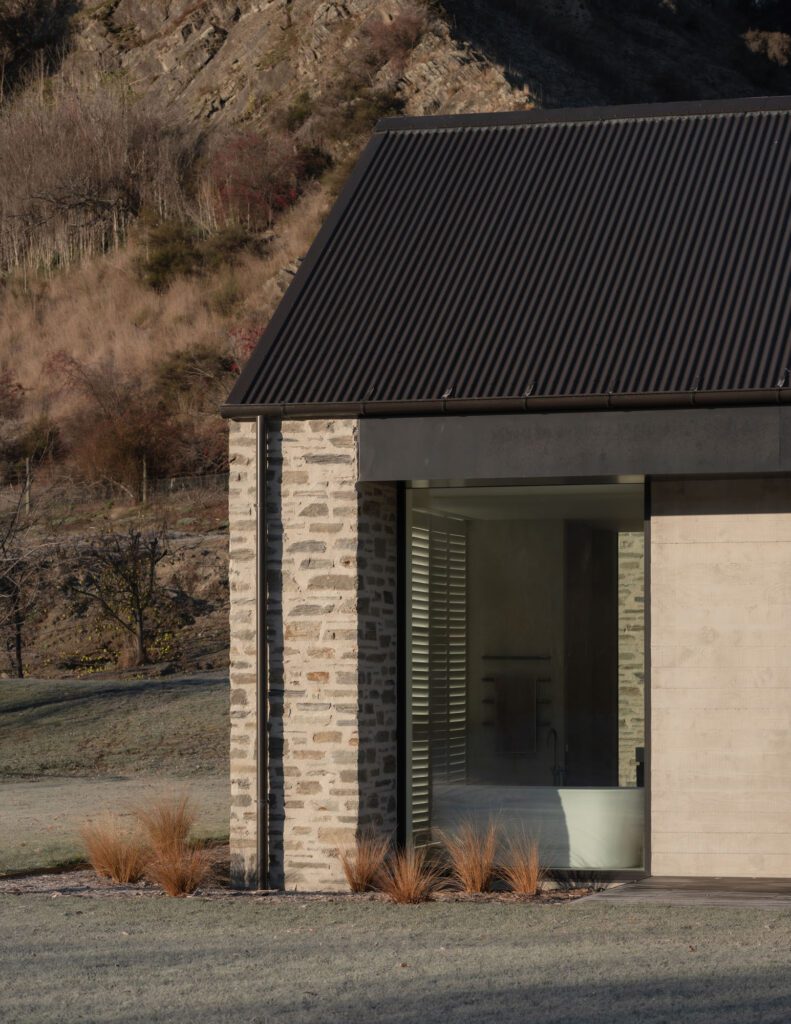
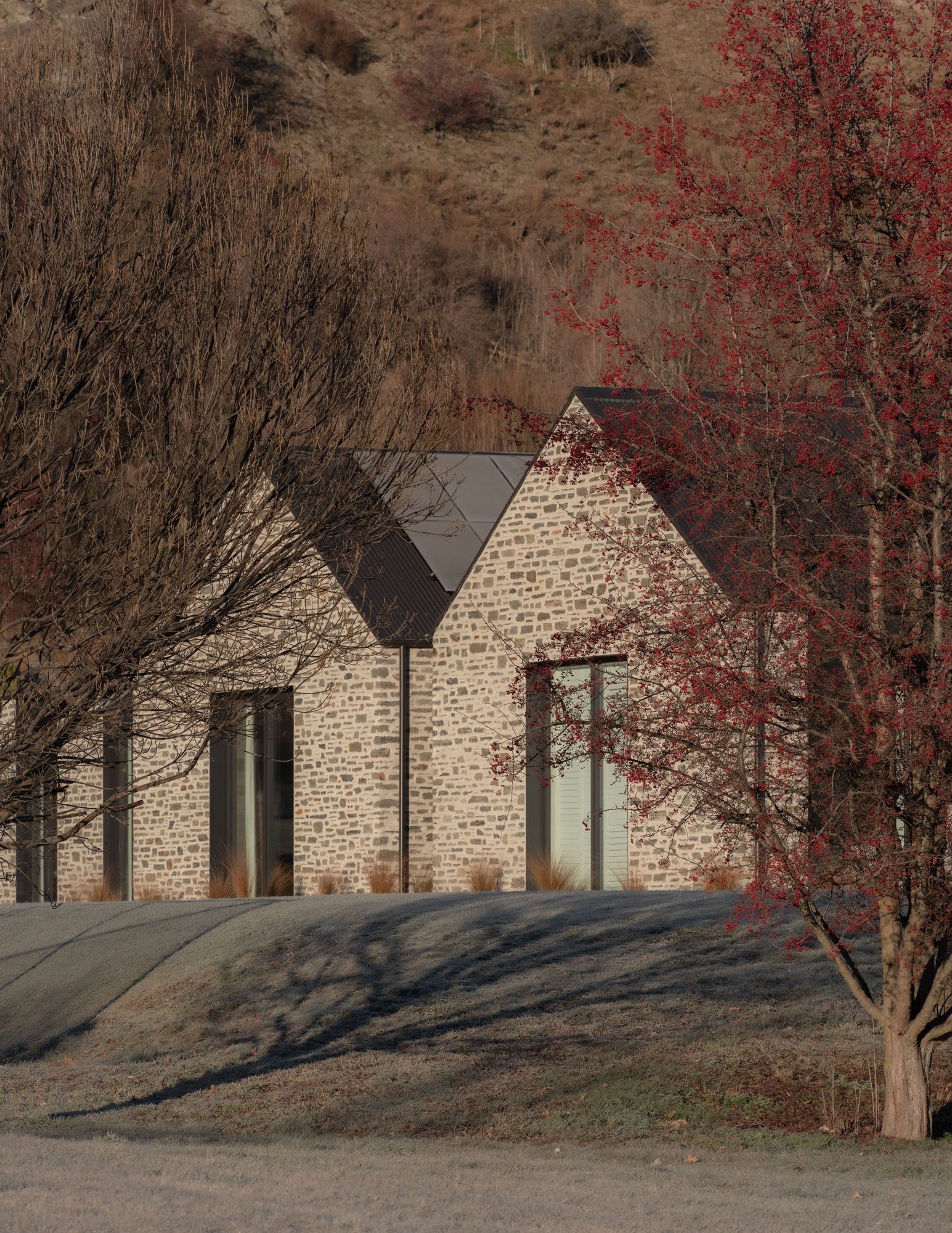
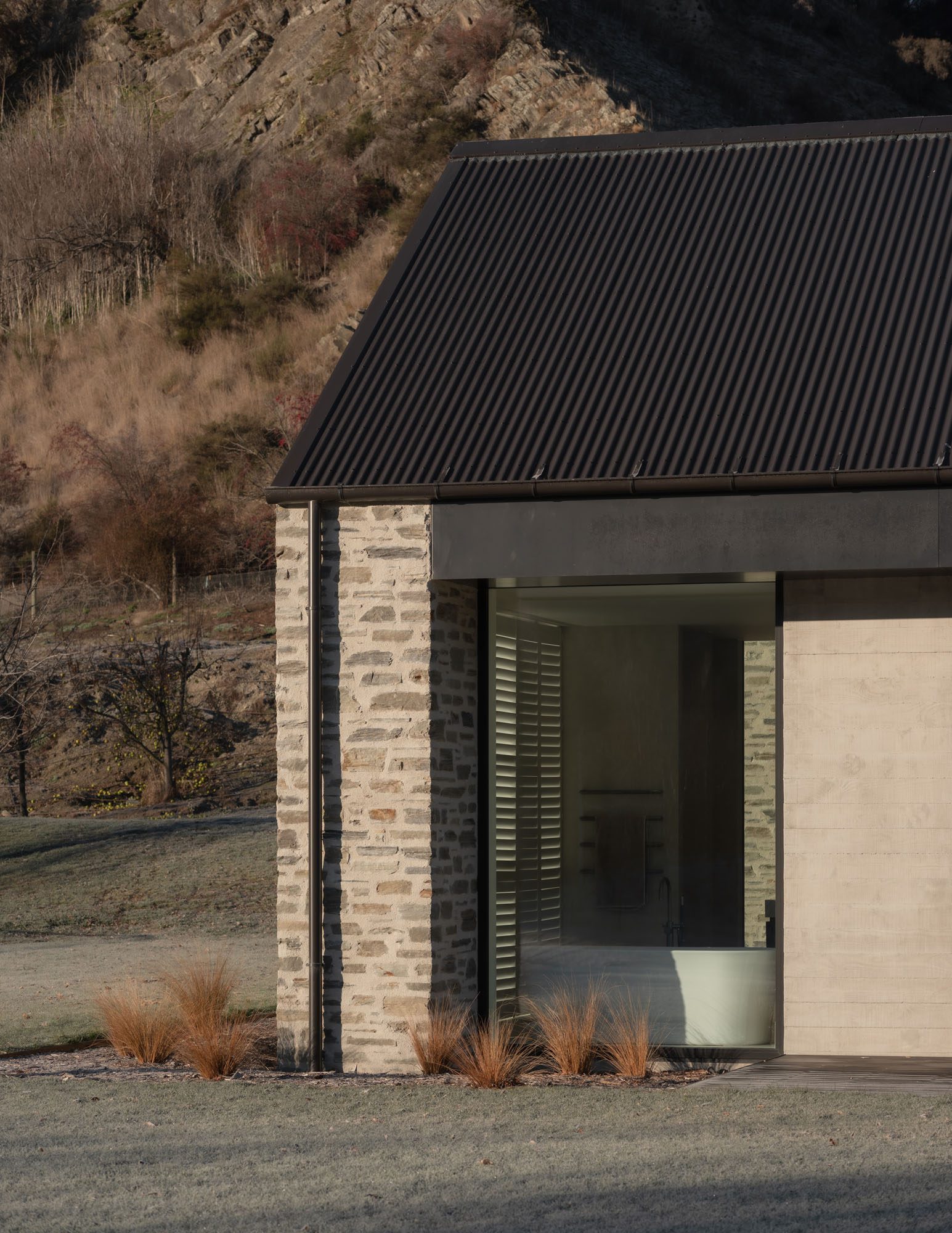
At once robust and refined, the response by local architecture firm Yoke was to draw on the area’s vernacular of schist and gables, while introducing a series of subtle refinements that speak to a more contemporary sensibility.
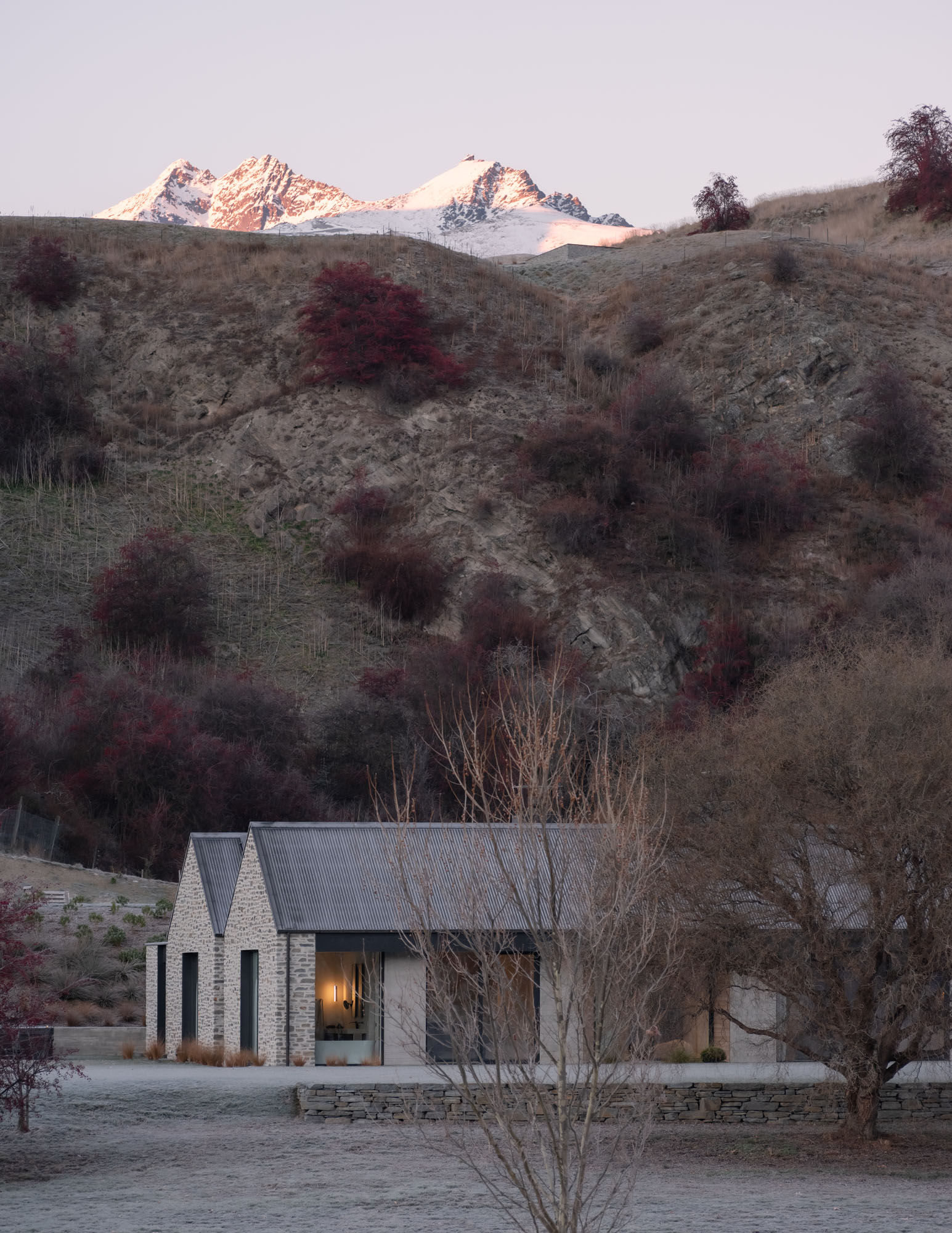
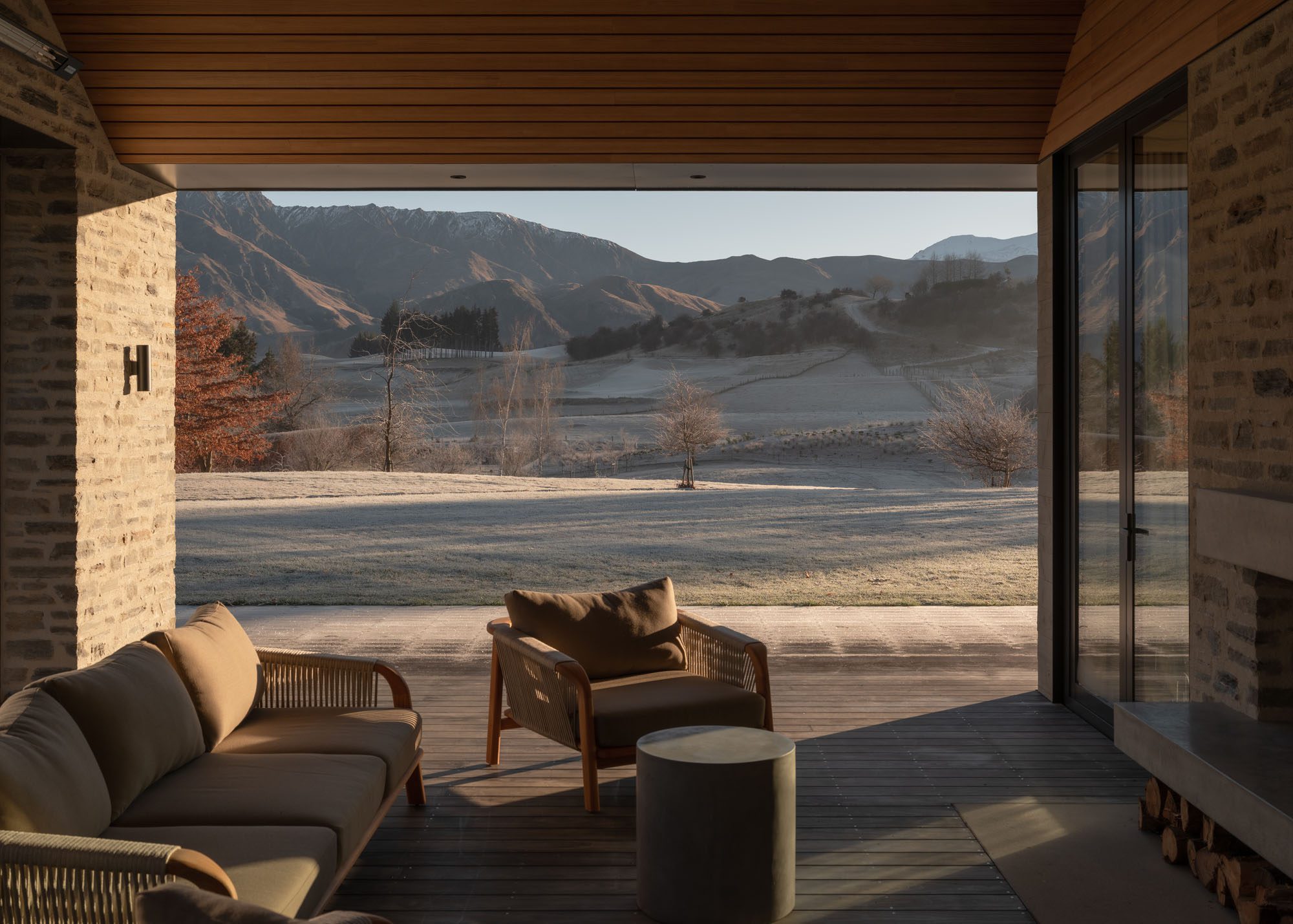
The views from the site are immense and far-reaching, taking in a sweeping panorama from Coronet Peak to Crown Peak. The building platform is nestled at the base of a steep terrace, with The Remarkables rising behind. There’s plenty of natural drama here, yet the home seems to speak a quieter language — one of subtlety and composure, offering a calming counterpoint within the rugged mountainscape.
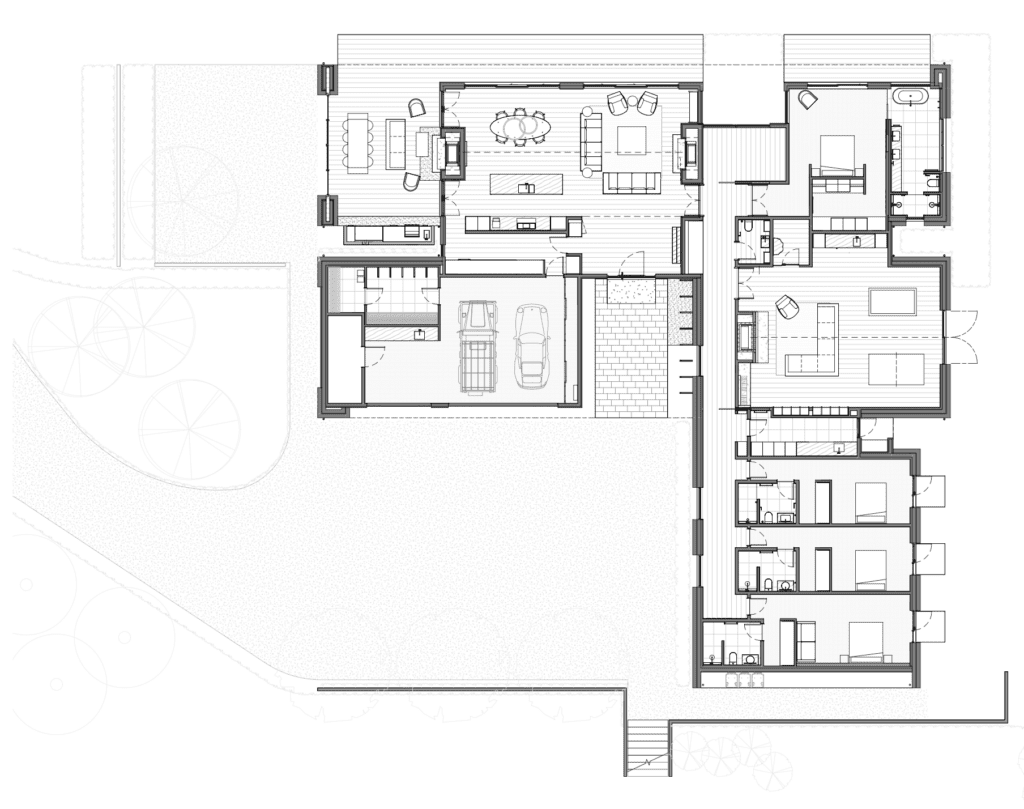
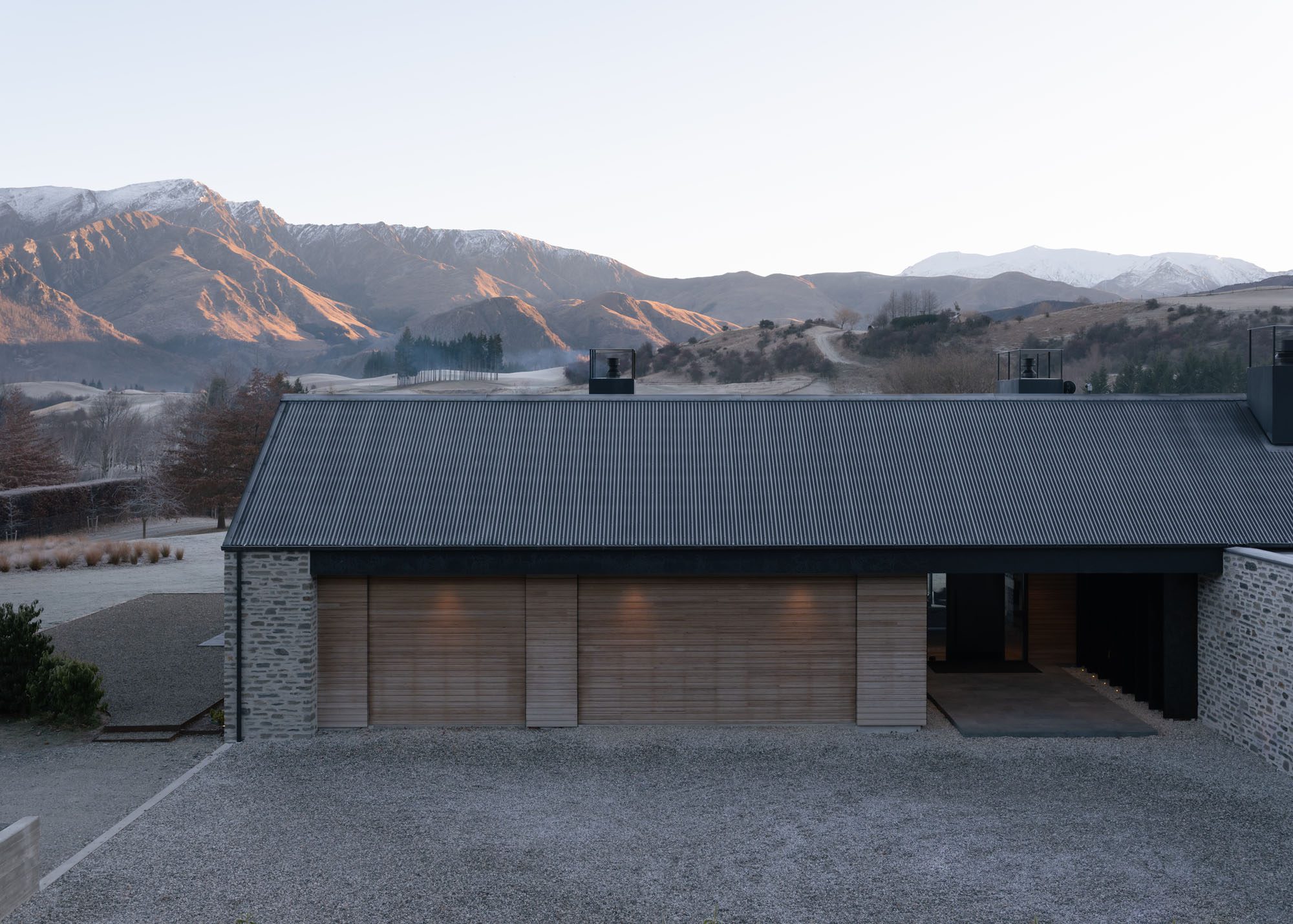
Two gabled forms sit side by side, with a lower volume that settles into the hillside at the rear of the house. It’s large by any measure, but cleverly broken down into a sequence of spatial experiences that feel intimate and welcoming.
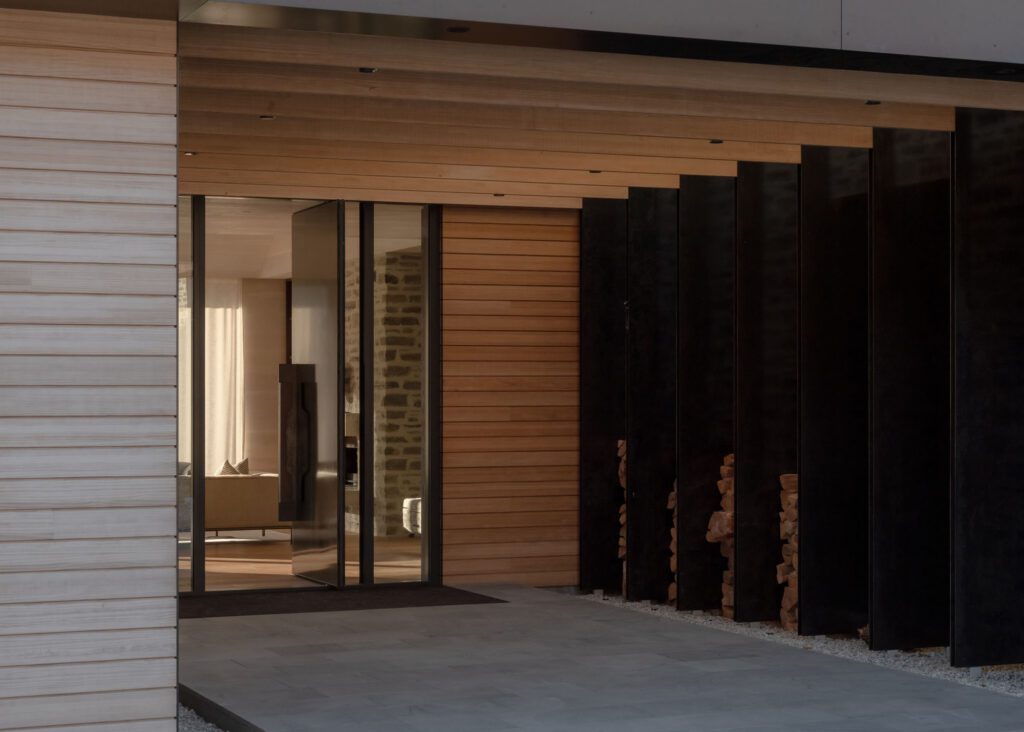
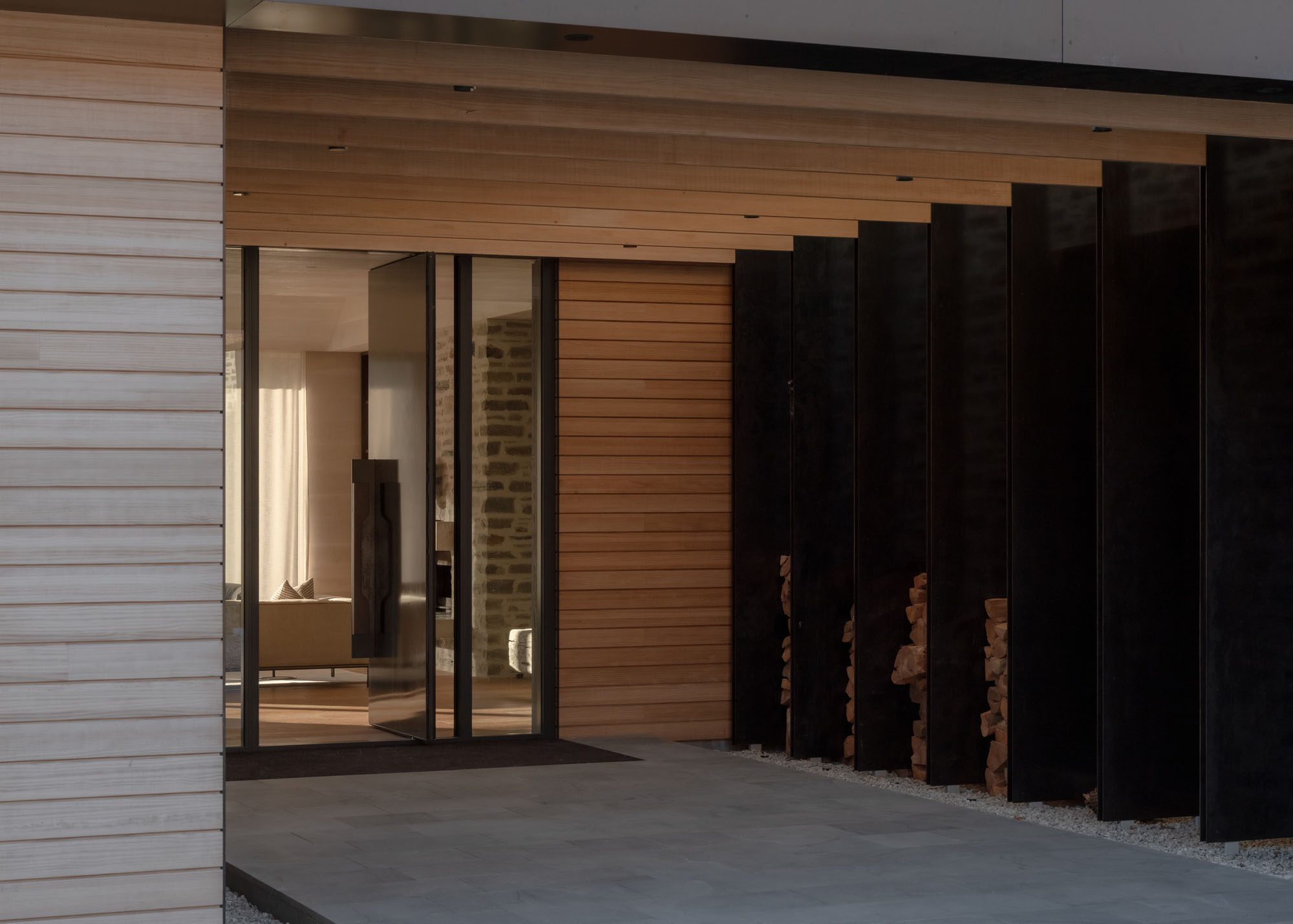
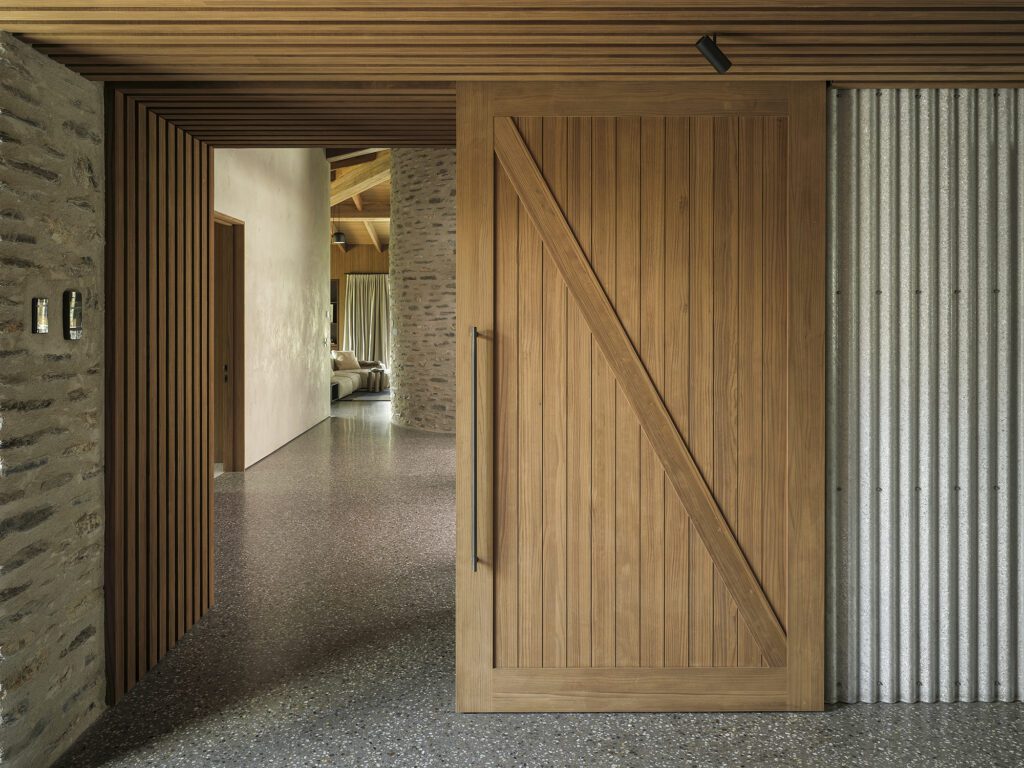
Arrival is by a way of a long, meandering tree-lined drive that deposits the visitor into a carefully orchestrated entry courtyard. Bluestone paving leads into a dramatic foyer, where steel fins frame stacks of firewood and a skylight allows natural light to pool in the space. A large steel door opens to reveal the beauty of the view beyond. There’s a sense of relaxed opulence — but not ostentation — here that carries through to every element of this home.
“Initially, we were designing a much smaller cottage, a holiday home,” architect Thomas Ibbotson explains, “but that quickly pivoted into designing a permanent home for our clients, who decided they wanted to live here year-round.”
Entertaining was a central part of the brief.
“They also liked the Central Otago vernacular but were clear that they wanted to add a modern twist,” he says. “We looked to achieve that with the two bold schist-clad gables that anchor the composition and contain the main living spaces. These are juxtaposed against the low-slung guest wing.”
The clients were particularly interested in using Cluden stone — a locally sourced schist — referencing the stone cottages that have dotted the region since the late 19th century. “We’ve complemented that with Abodo timber, which will silver off and age naturally over time in the protected areas at the rear of the house. Where there is harsh sun, we’ve used precast concrete panels with a board-form finish to soften the concrete and speak to the timber used elsewhere.”
Combined with crisp metal detailing and large expanses of glazing, the result is a palette that feels grounded in the region’s rural traditions but current in its execution.
“When you’re designing for large, rural sites like this, scale and proportion become really important — acknowledging the scale of the landscape, and breaking the building down into smaller moments,” Thomas explains.
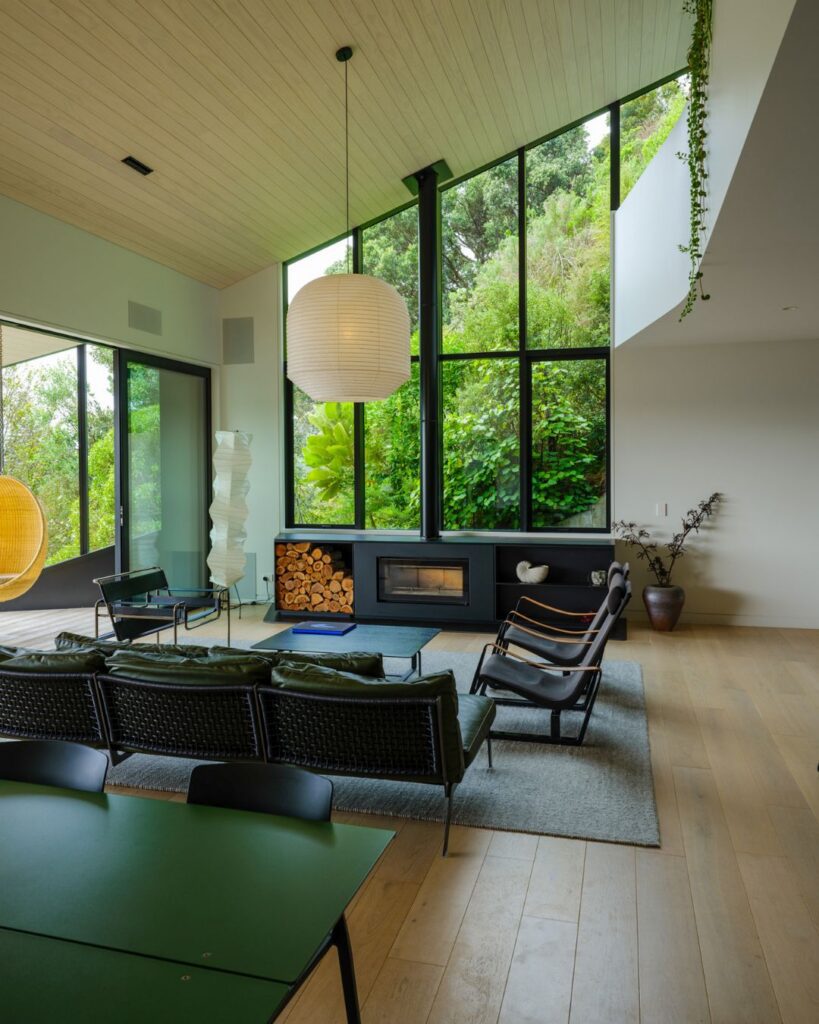
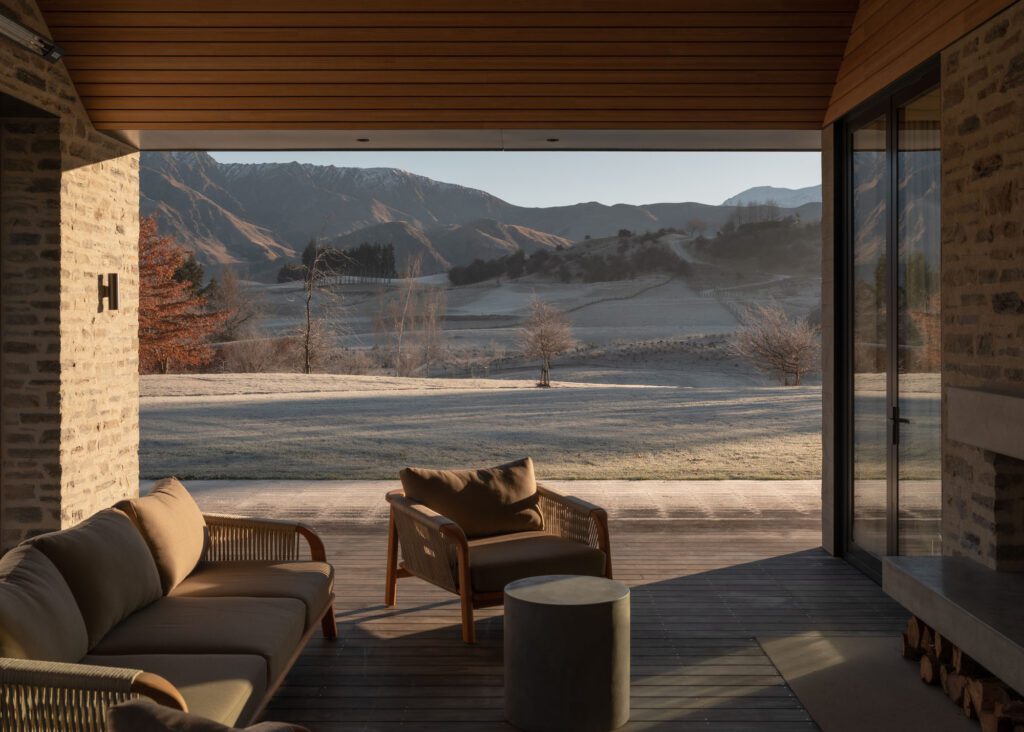
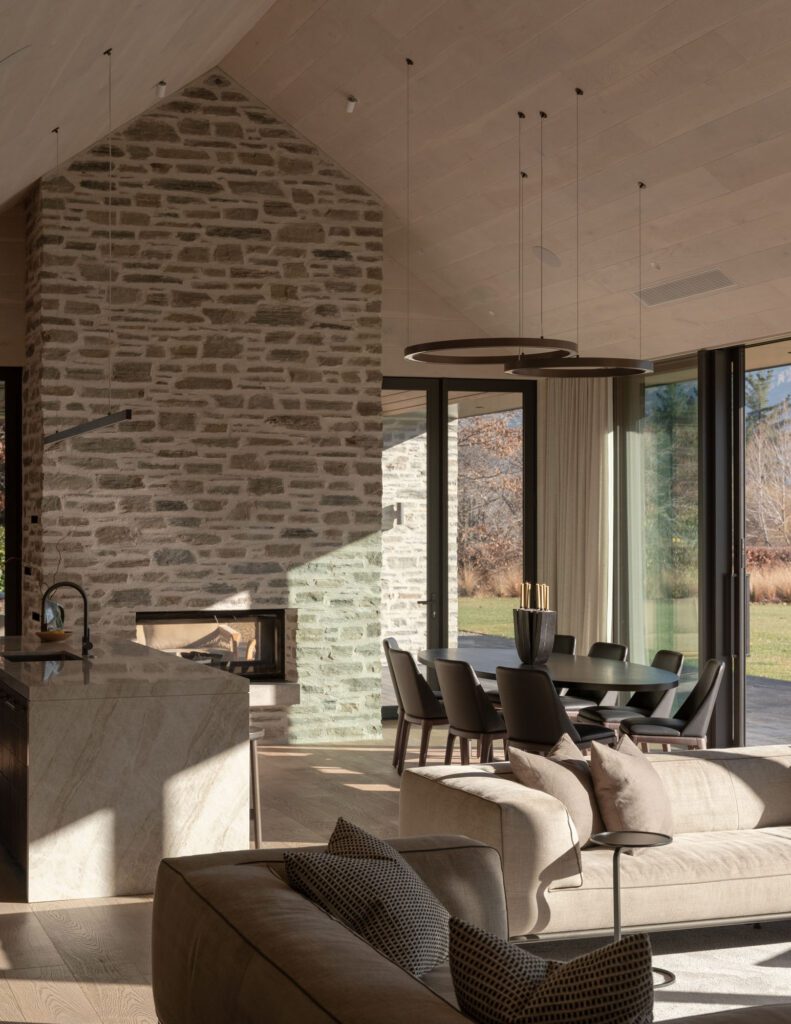
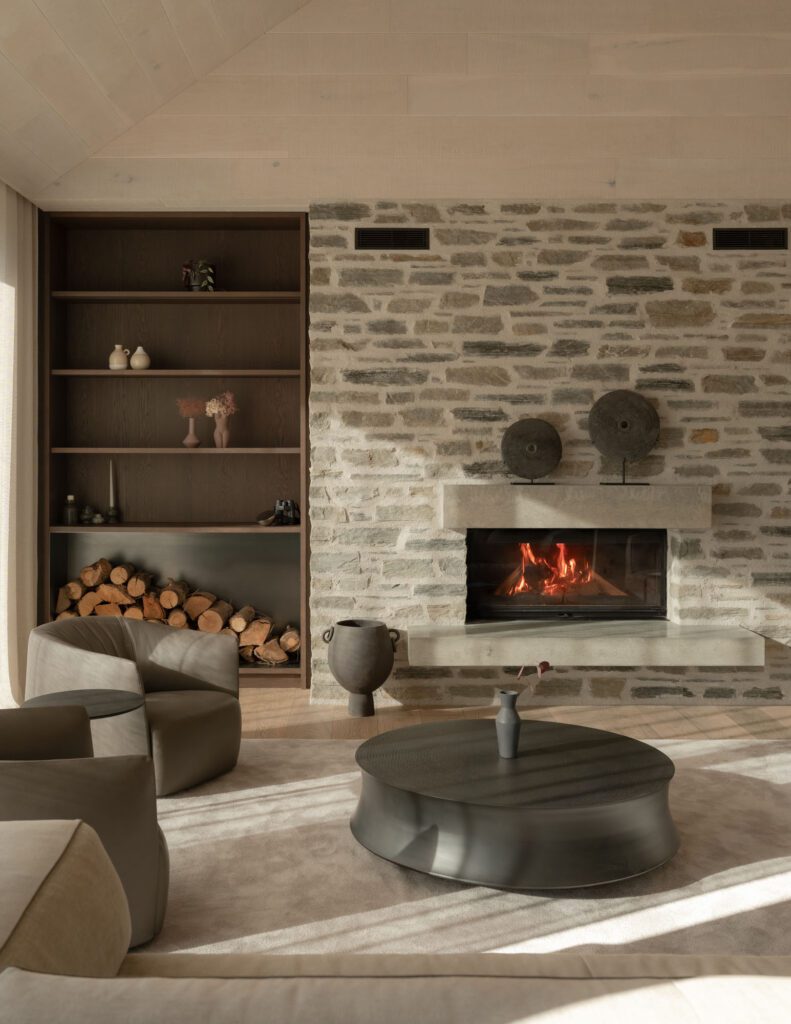
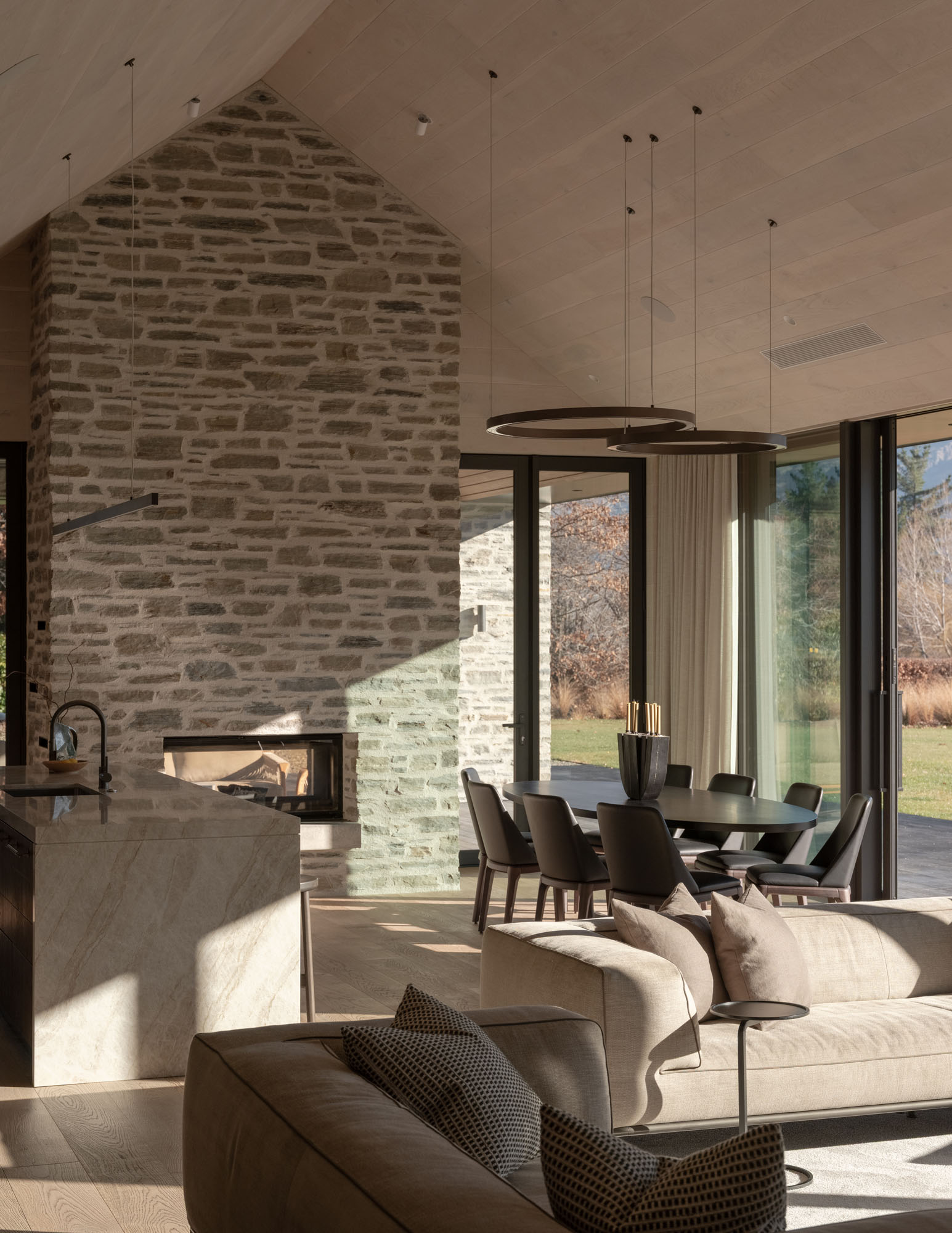
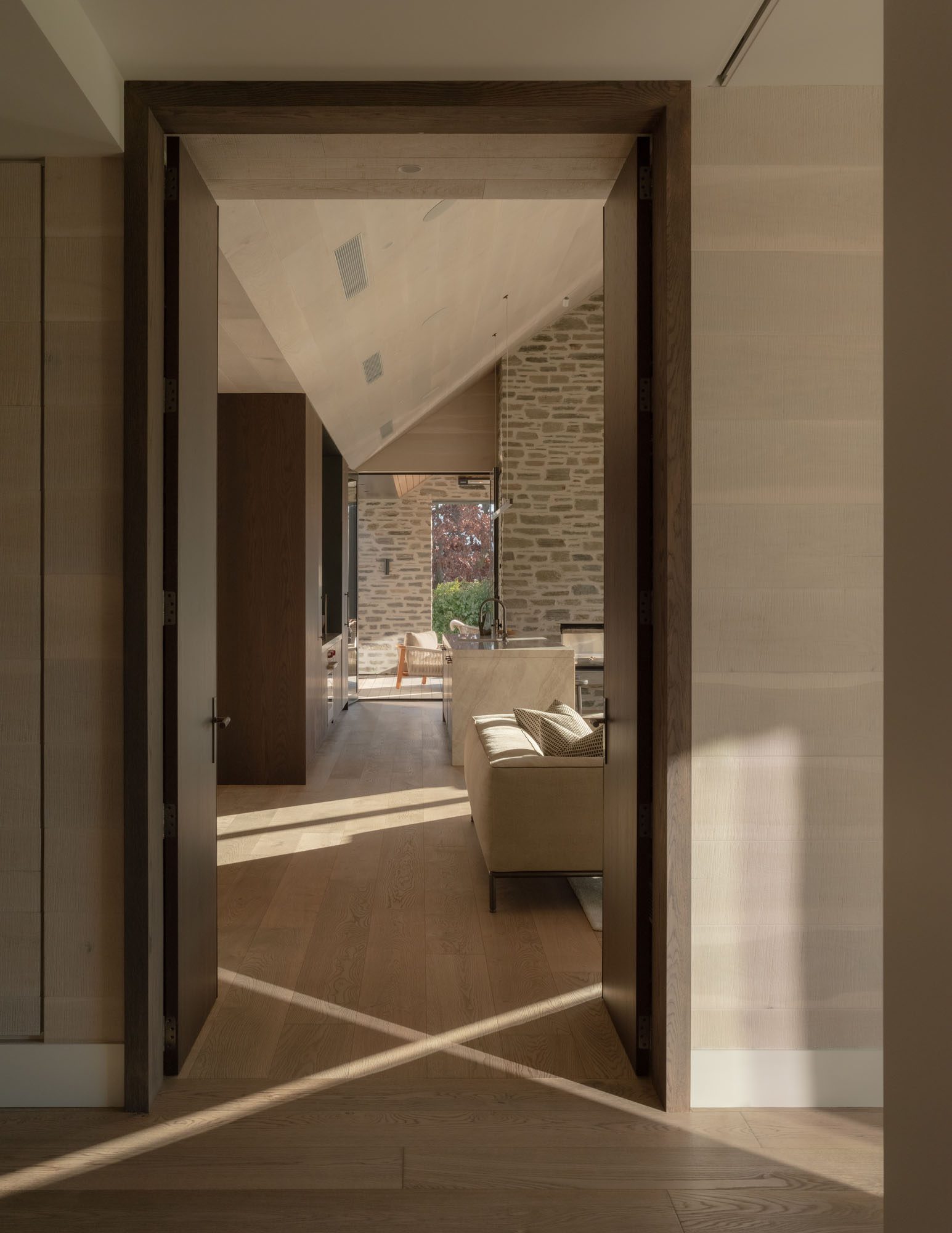
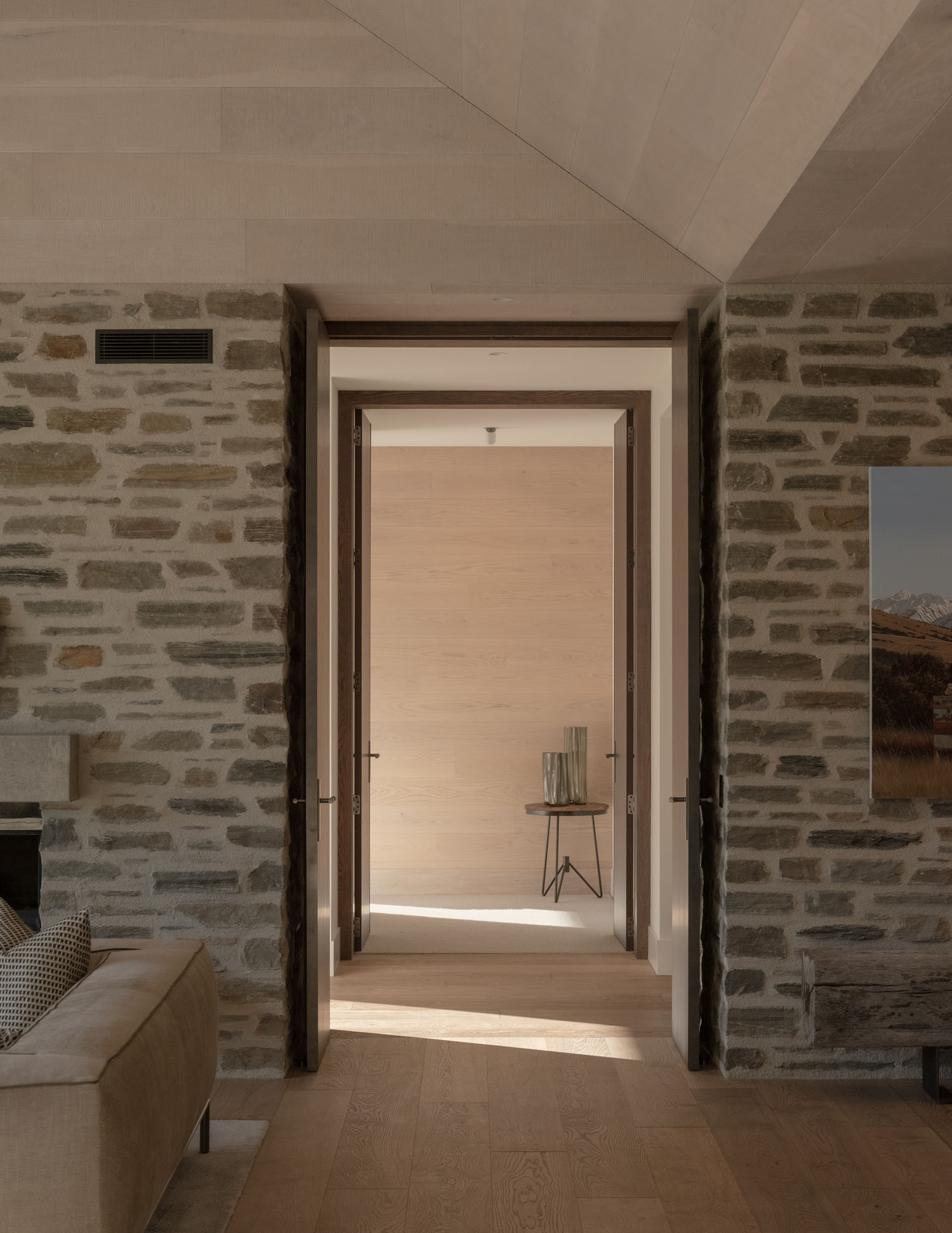
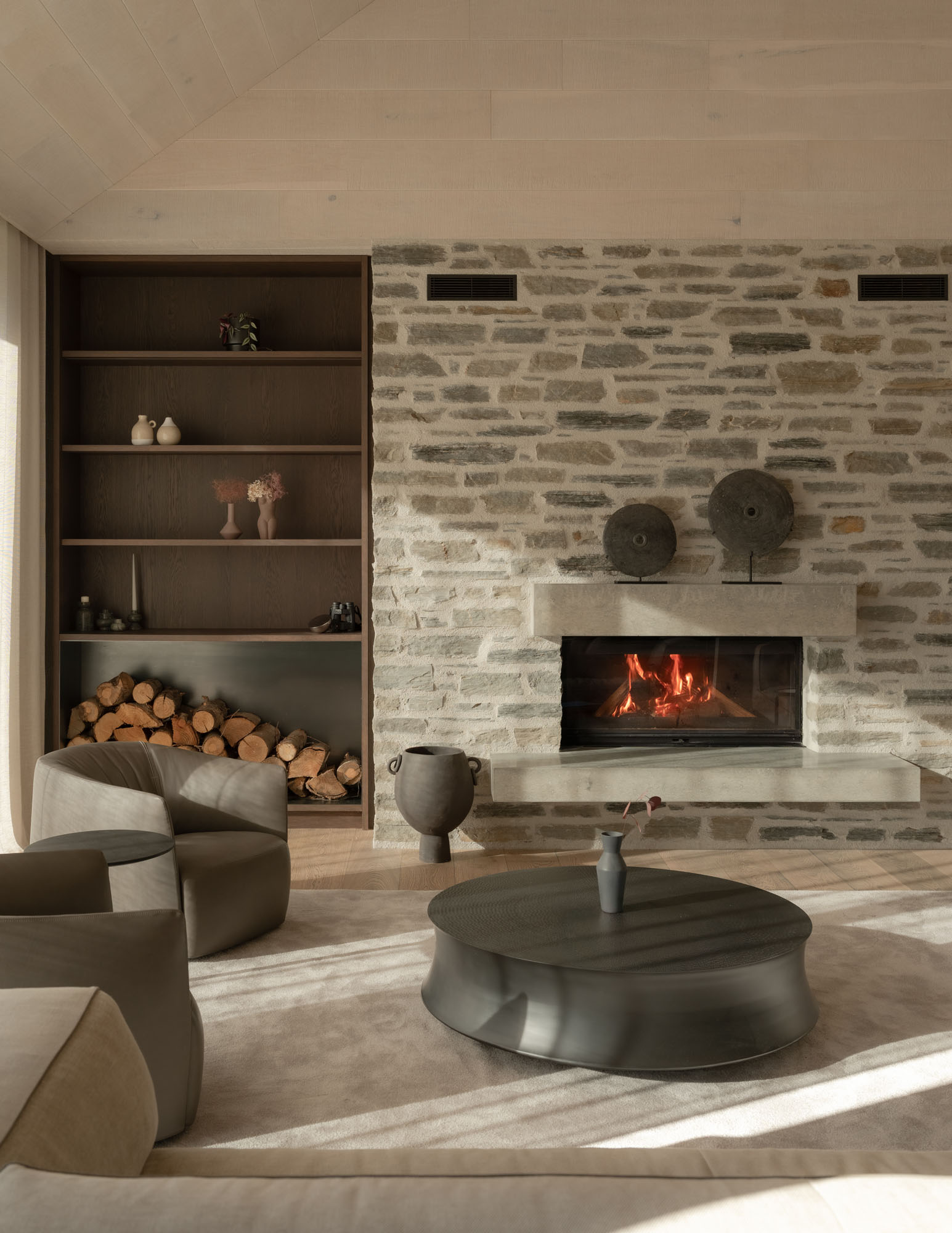
In this case, those moments are diverse. Step inside and the main living area is anchored by two substantial schist-clad fireplaces that bookend the large space. To the west, the stone follows the roofline, drawing the eye upwards and beyond to a sheltered loggia and the mountains beyond. To the east, the stone element is deliberately lowered, creating a more intimate zone within the otherwise voluminous room. Between them, the living room stretches out towards expansive glazing that frames views of Coronet Peak and the surrounding hills.
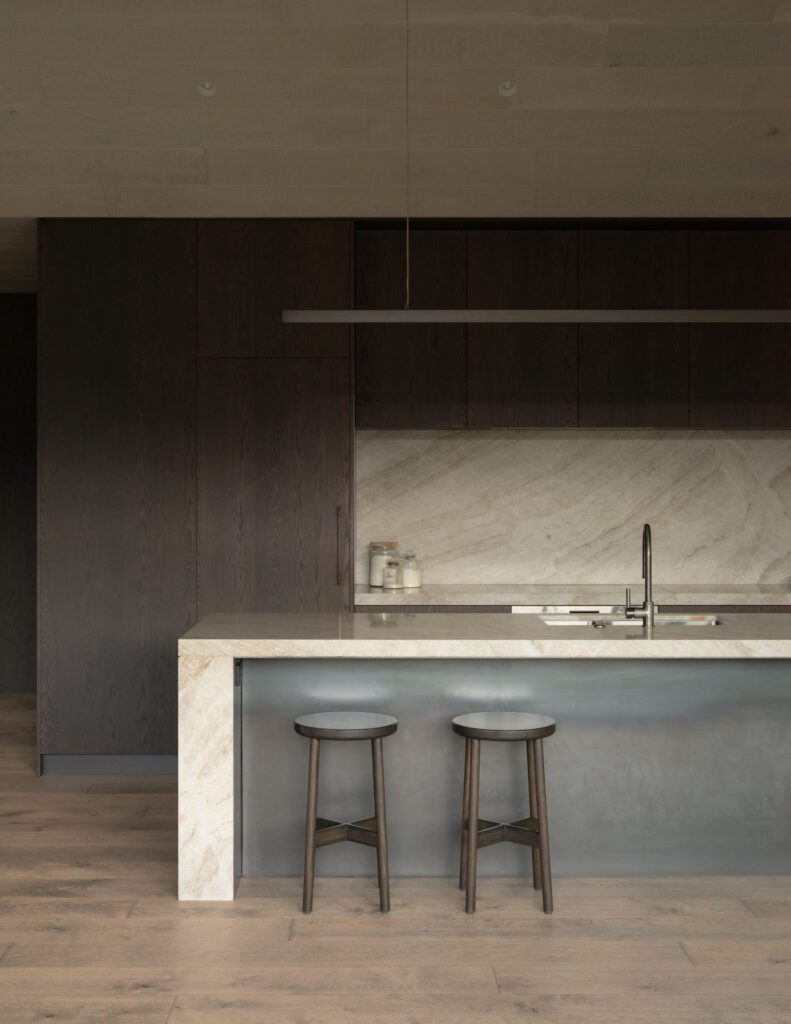
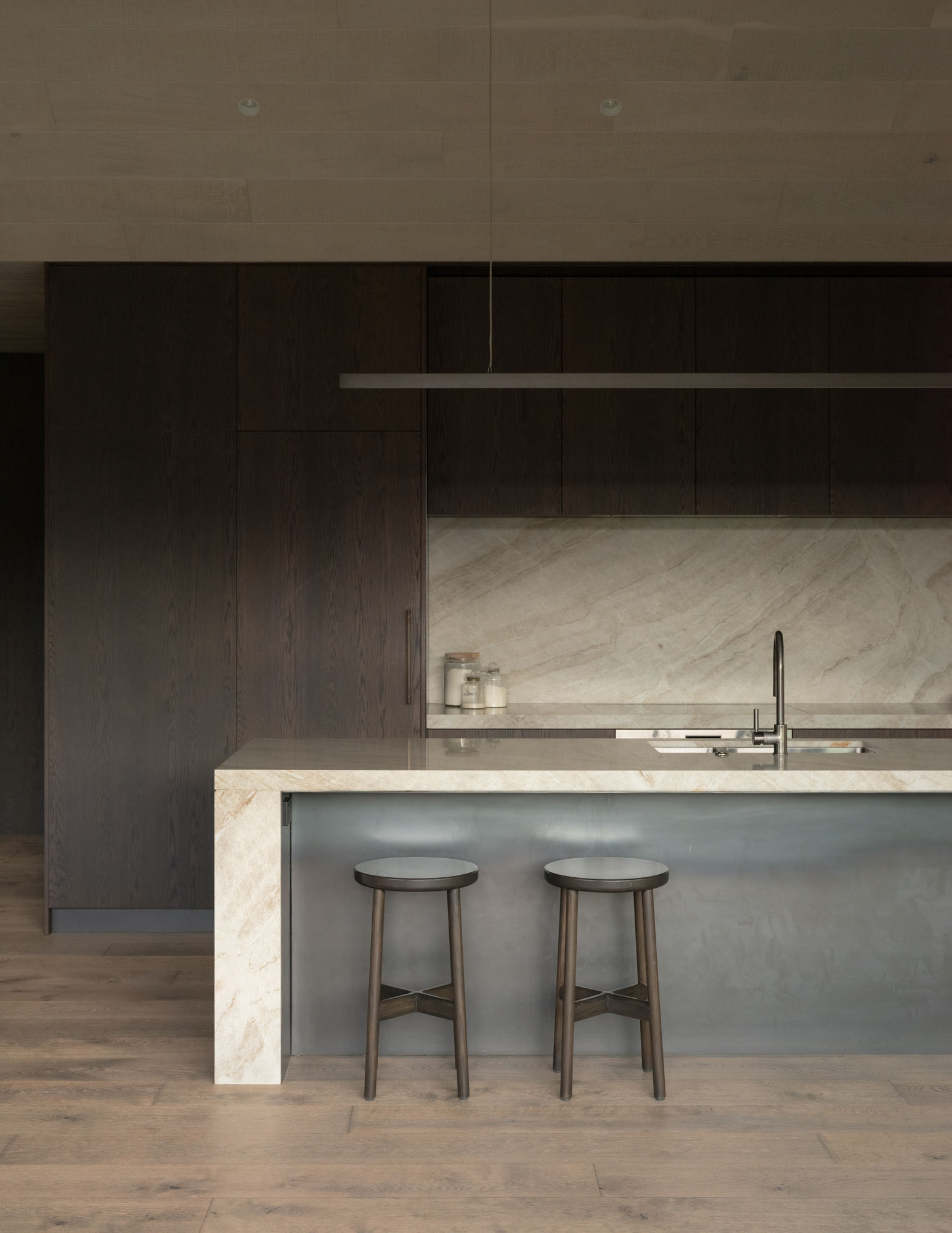
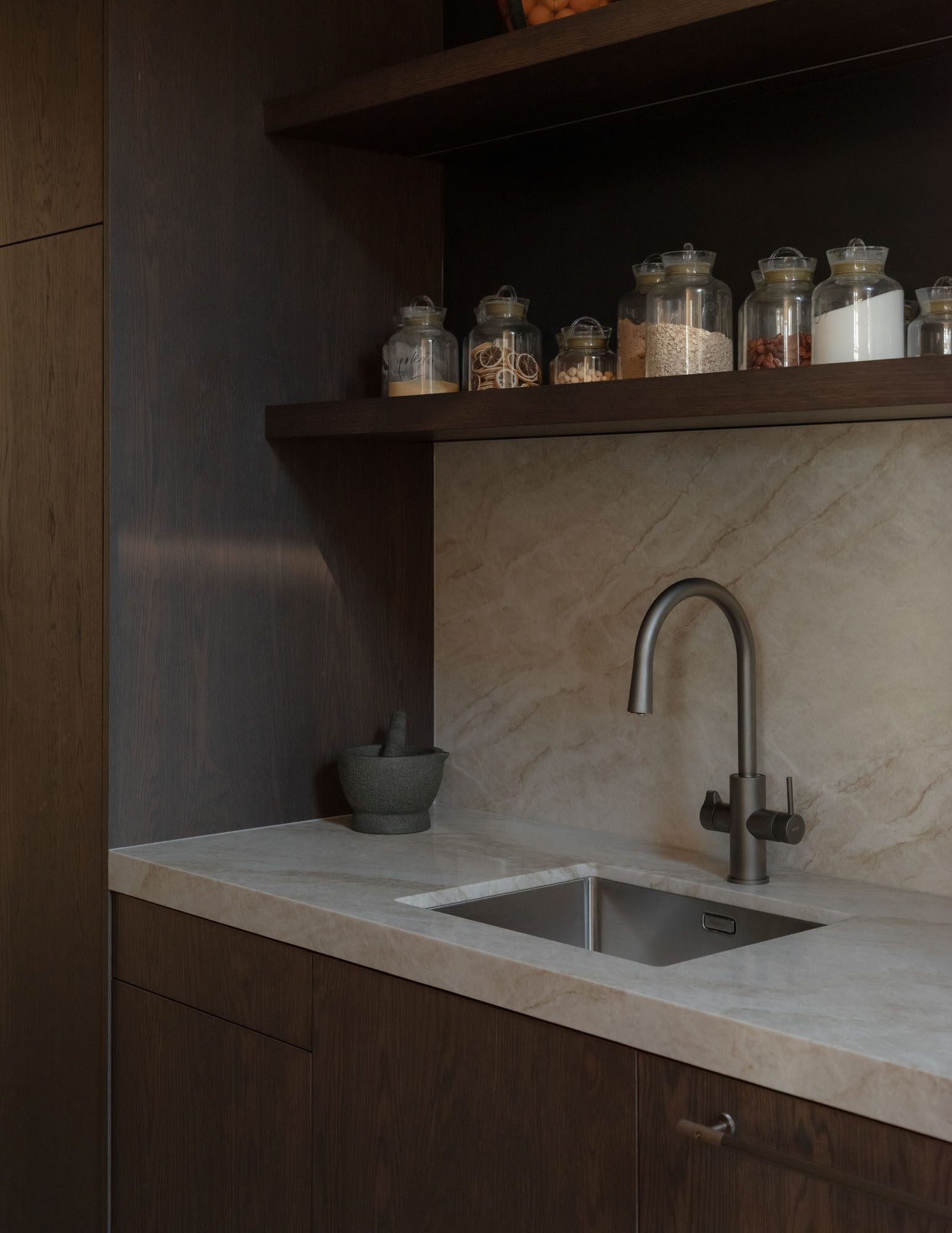
The kitchen is defined by a Taj Mahal stone island with a steel base, aged iron tapware atop. Behind, dark cabinetry frames the space. There’s an elegance and restraint to the composition that belies the intricate detailing.
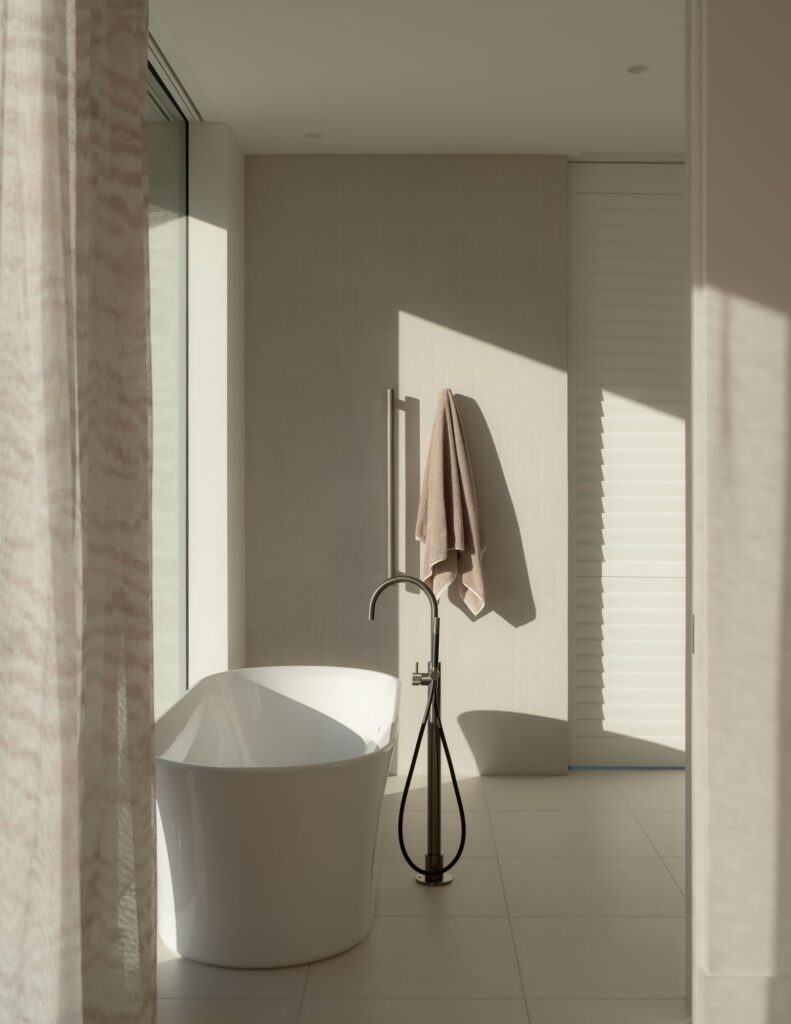
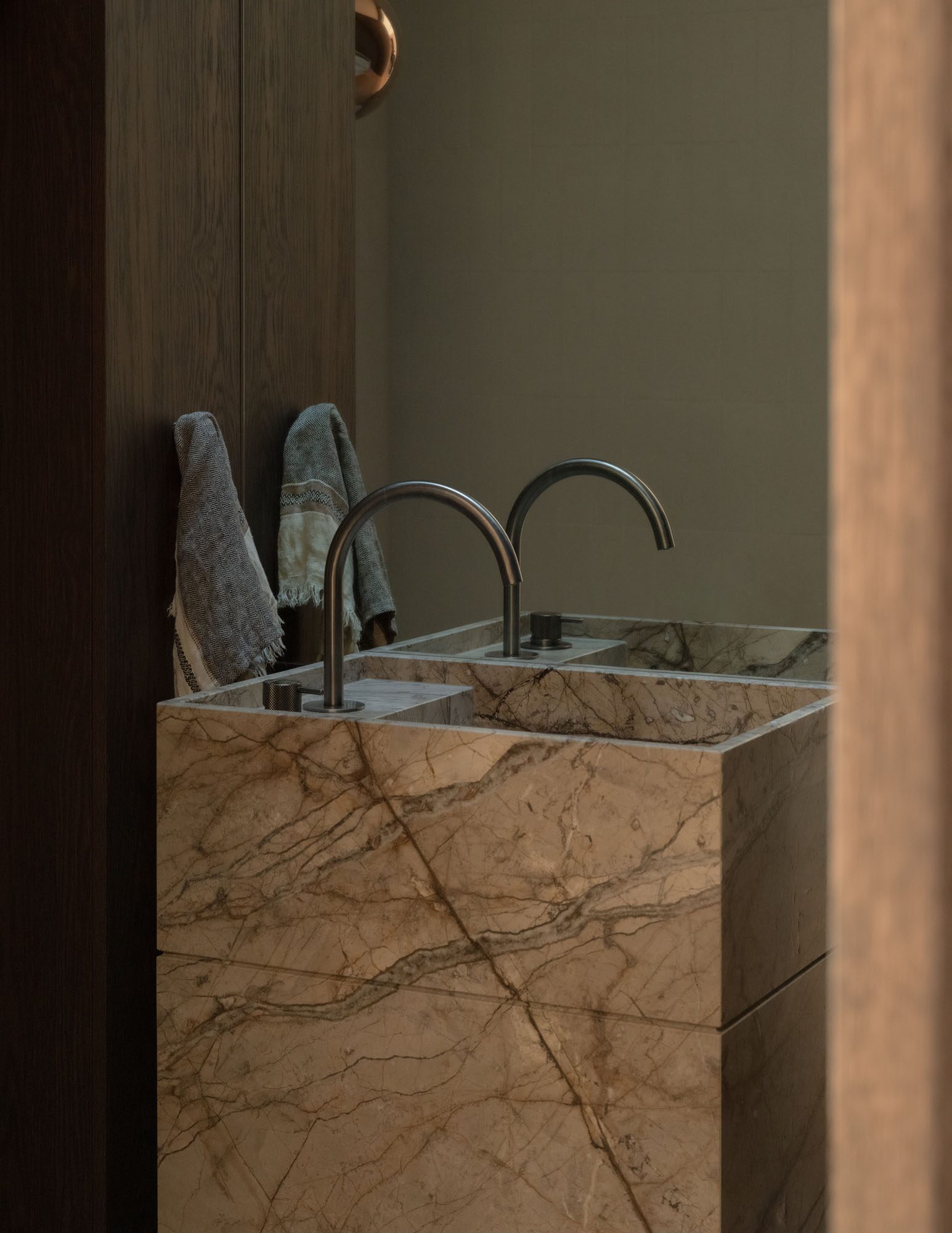
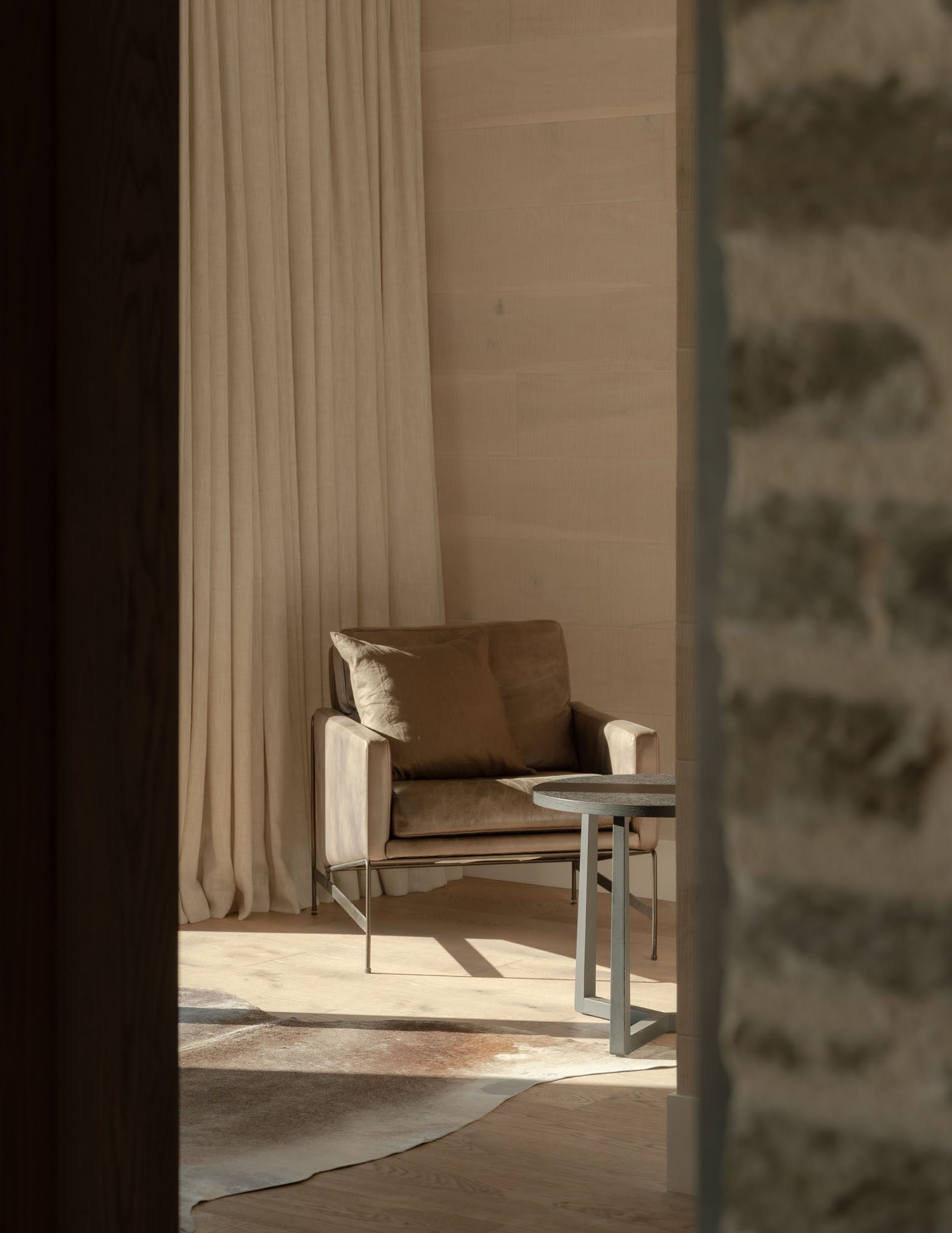
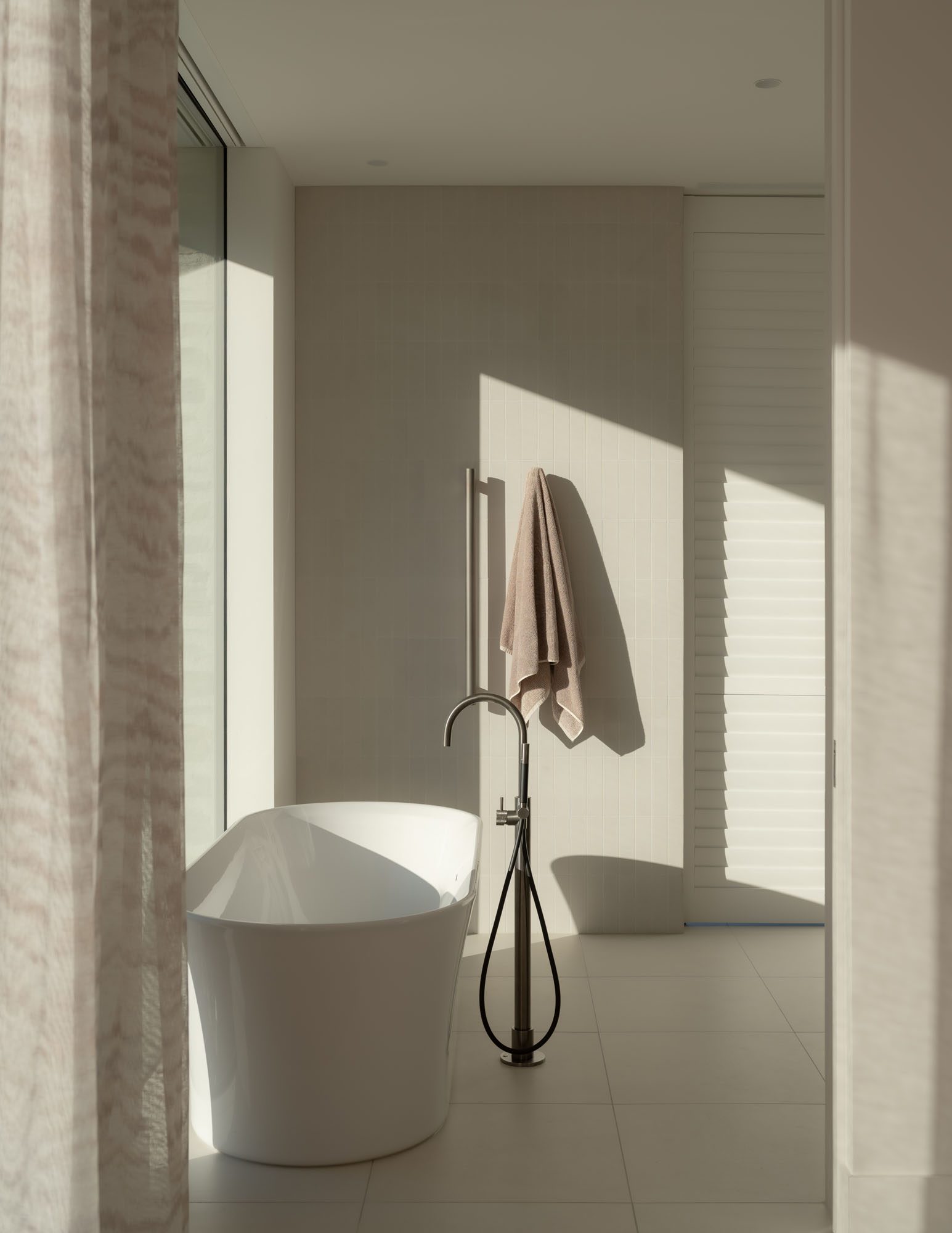
This refined material language continues elsewhere. Moving east through the first gabled form, a snug provides a transition between the living spaces and the primary bedroom. Here, full-height glazing establishes a strong connection to the idyllic rural landscape. In the ensuite, external timber shutters mediate the morning light.
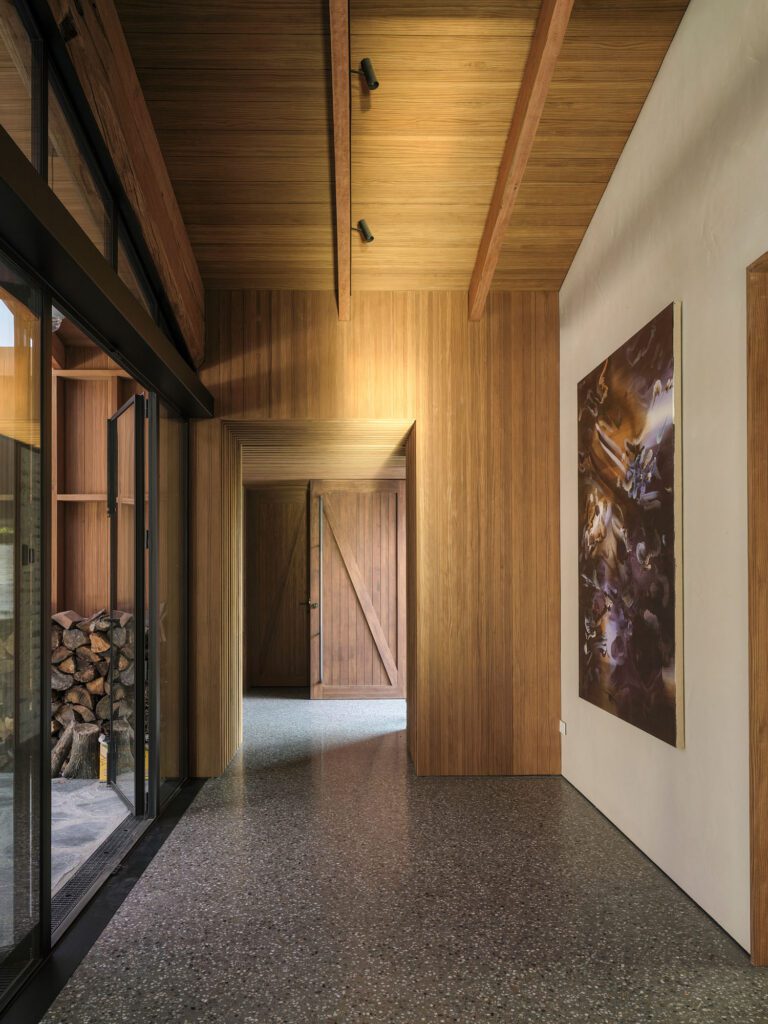
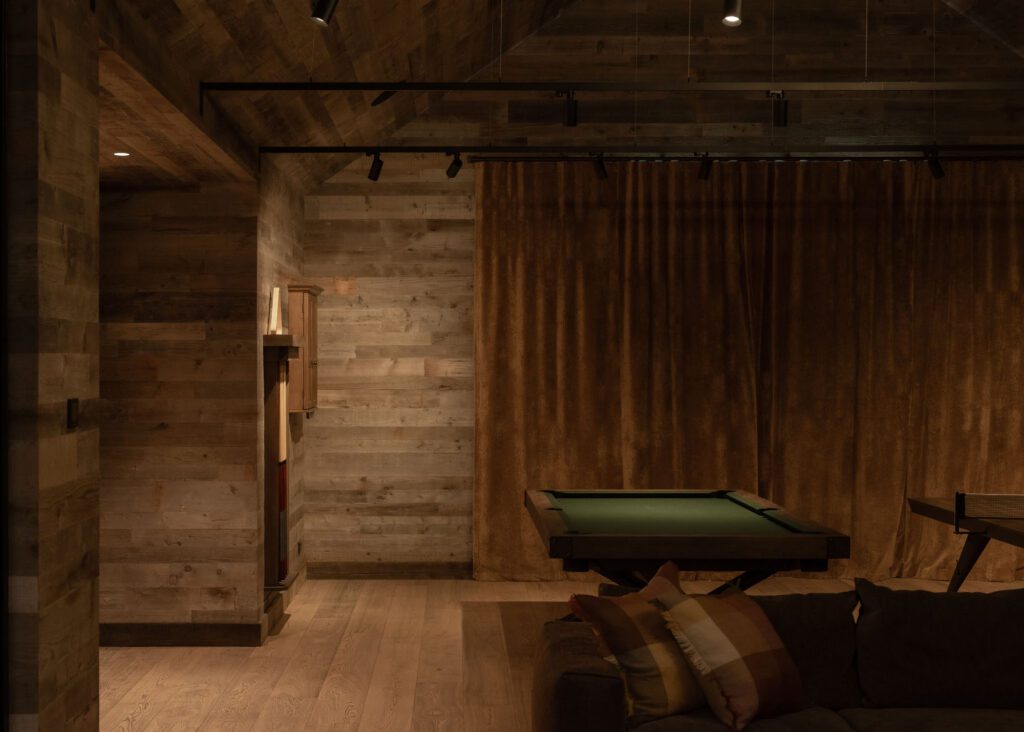
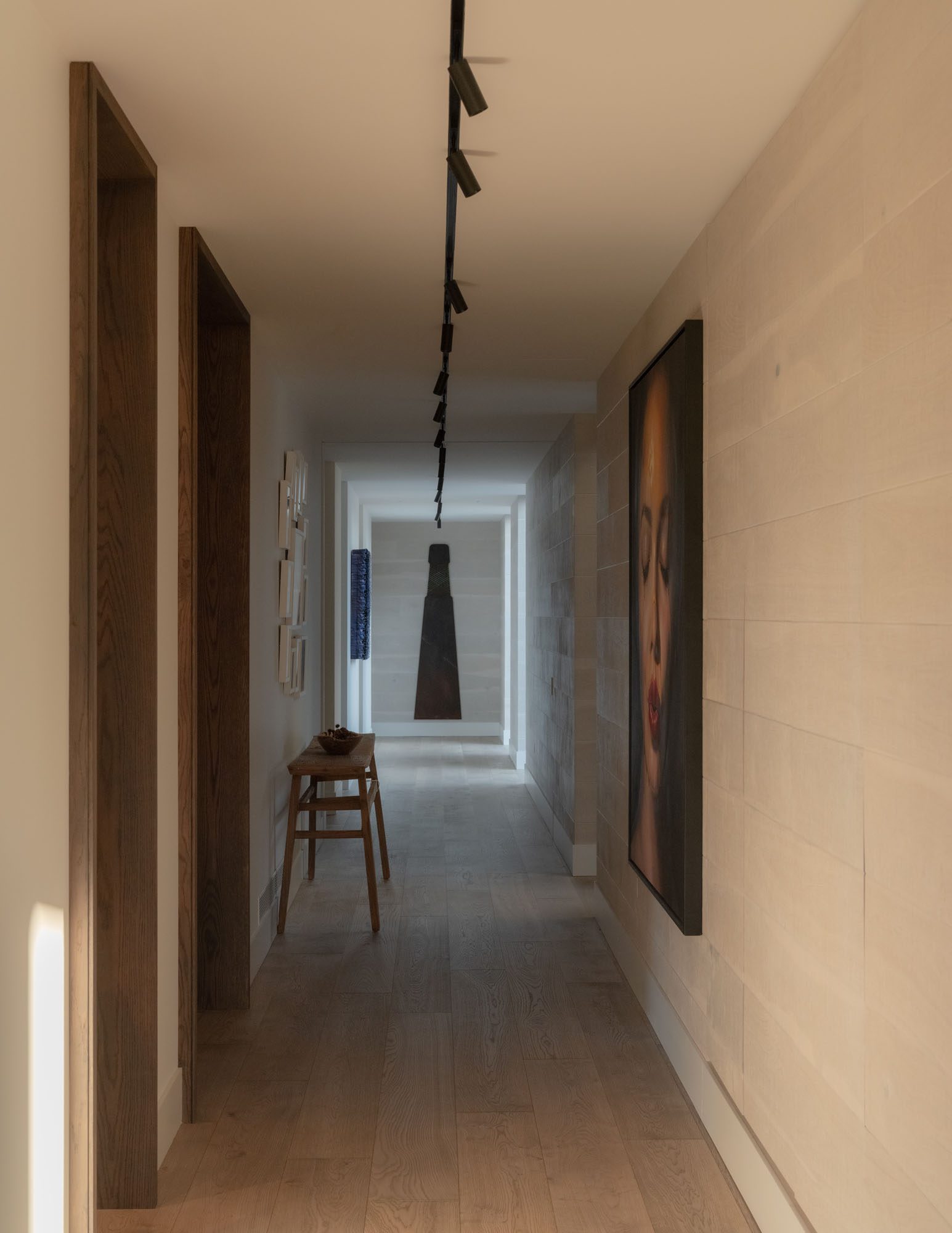
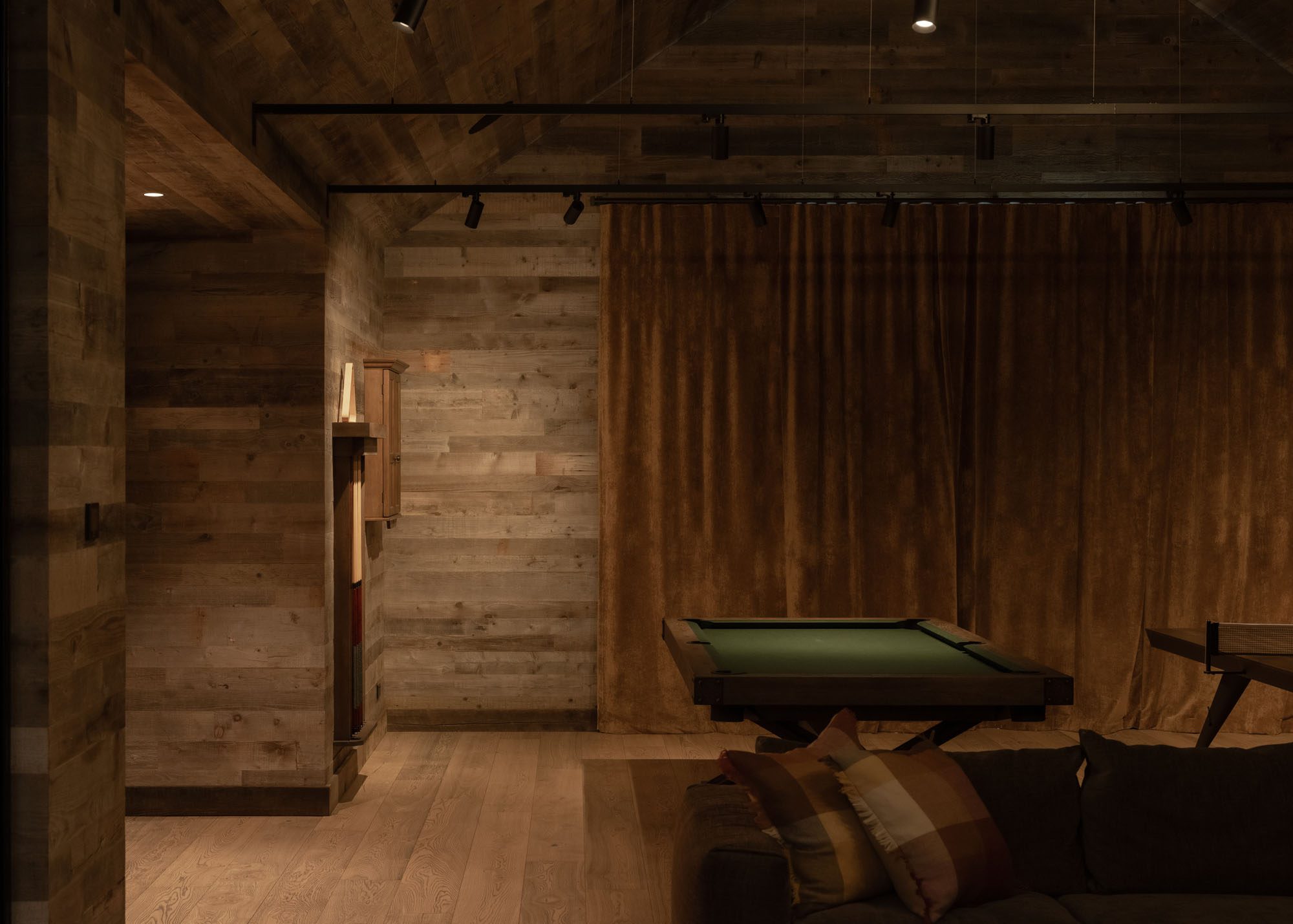
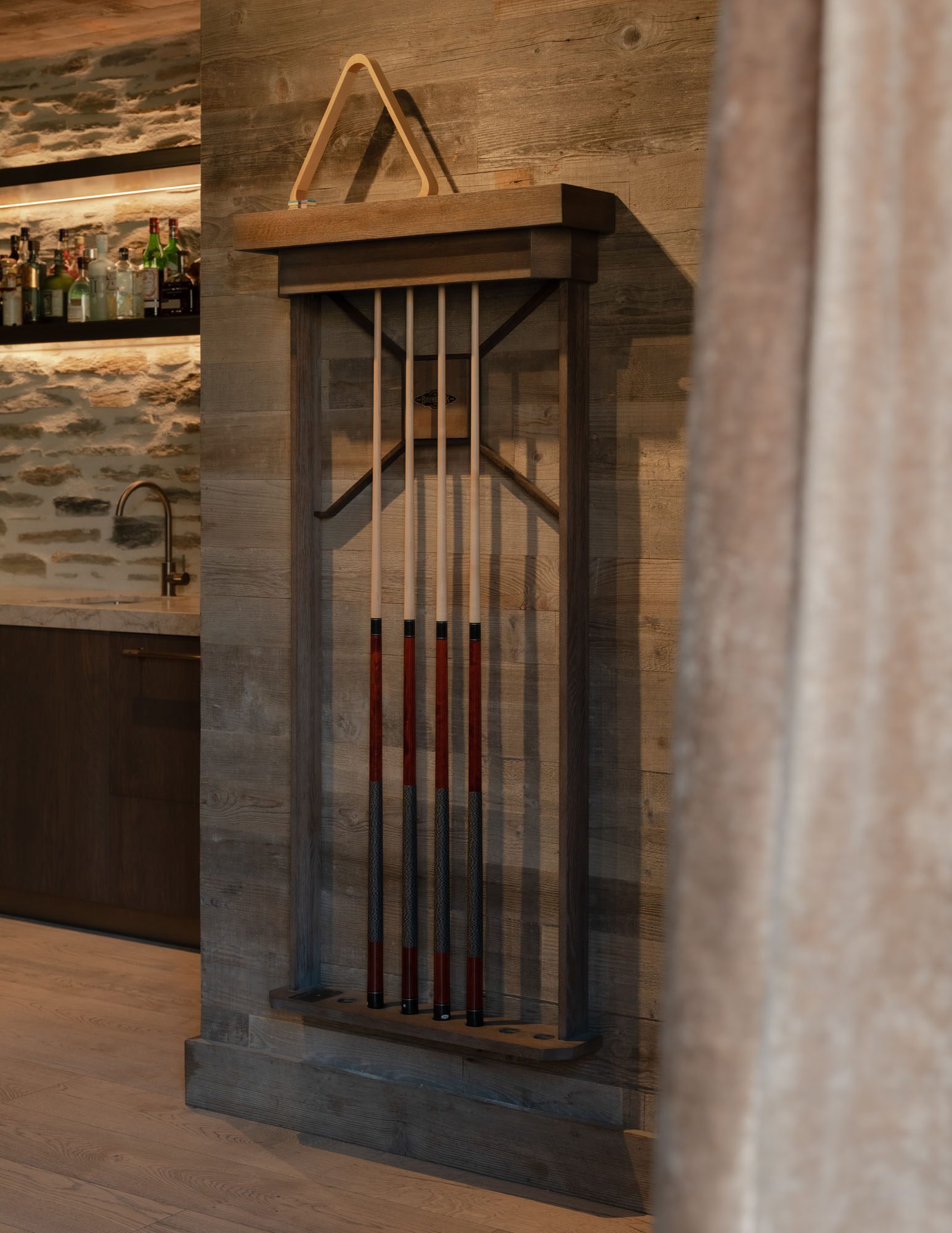
A long gallery then leads through the second gabled volume, connecting the home’s secondary living spaces — including an atmospheric games room — before extending into the lower pavilion that houses the guest bedrooms.
“The hallway became a really special element,” architect Camden Pyke explains. “It connects the spaces but also frames a beautiful mature willow tree that was already on the site.”
In contrast to the sweeping alpine views elsewhere, this moment offers a more intimate focal point. Dappled light filters through the canopy, creating a softer, contemplative experience.
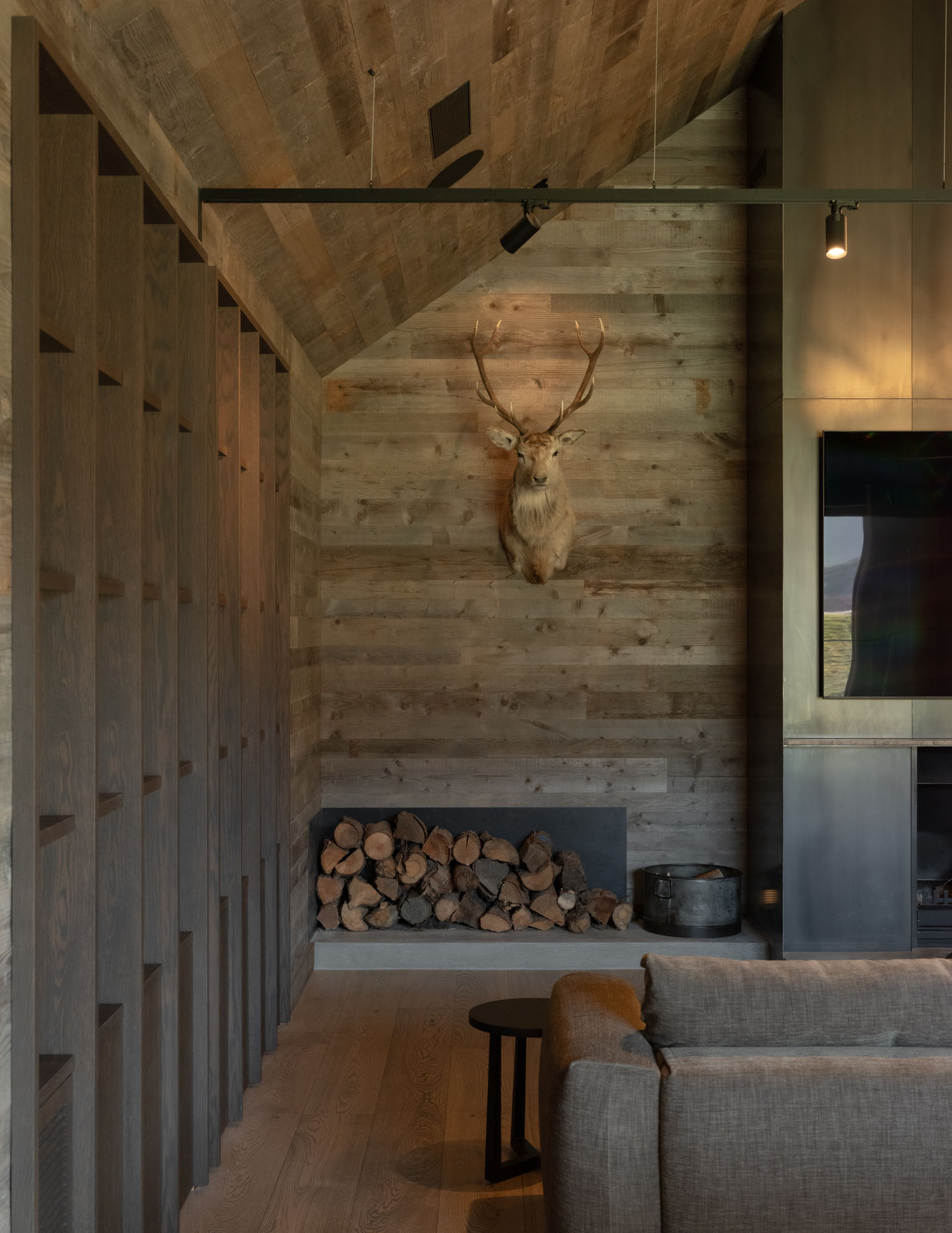
Throughout the interiors, timber-lined walls and ceilings soften the architectural forms, dissolving gently into the views beyond.
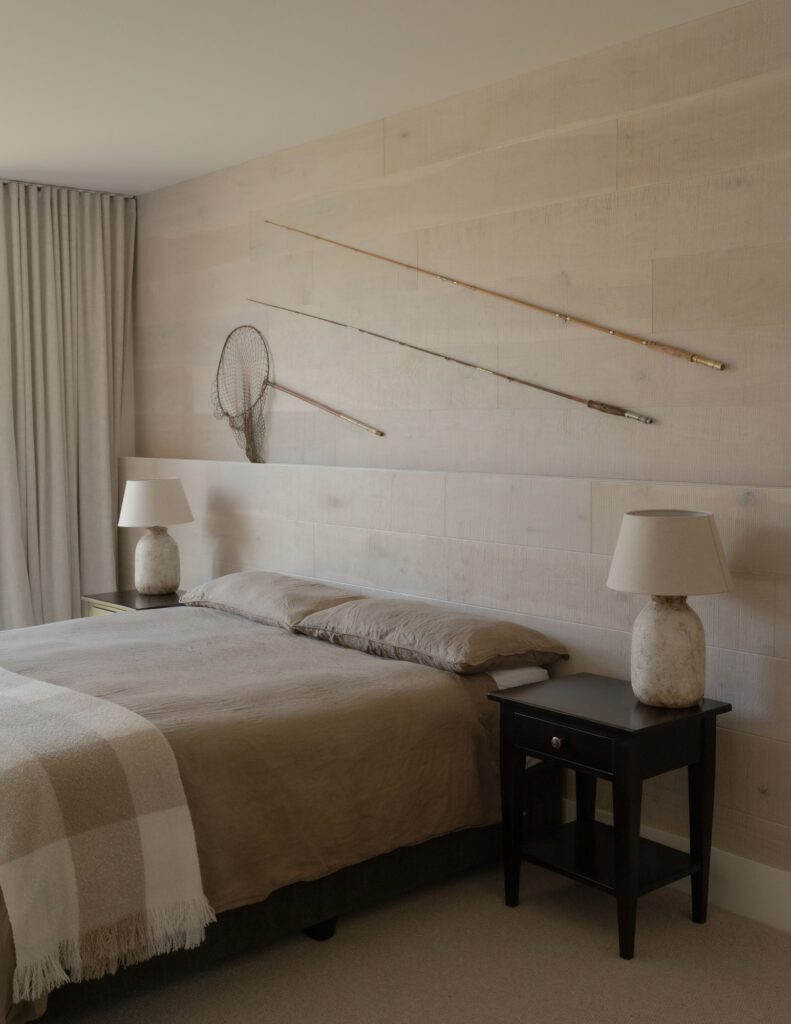
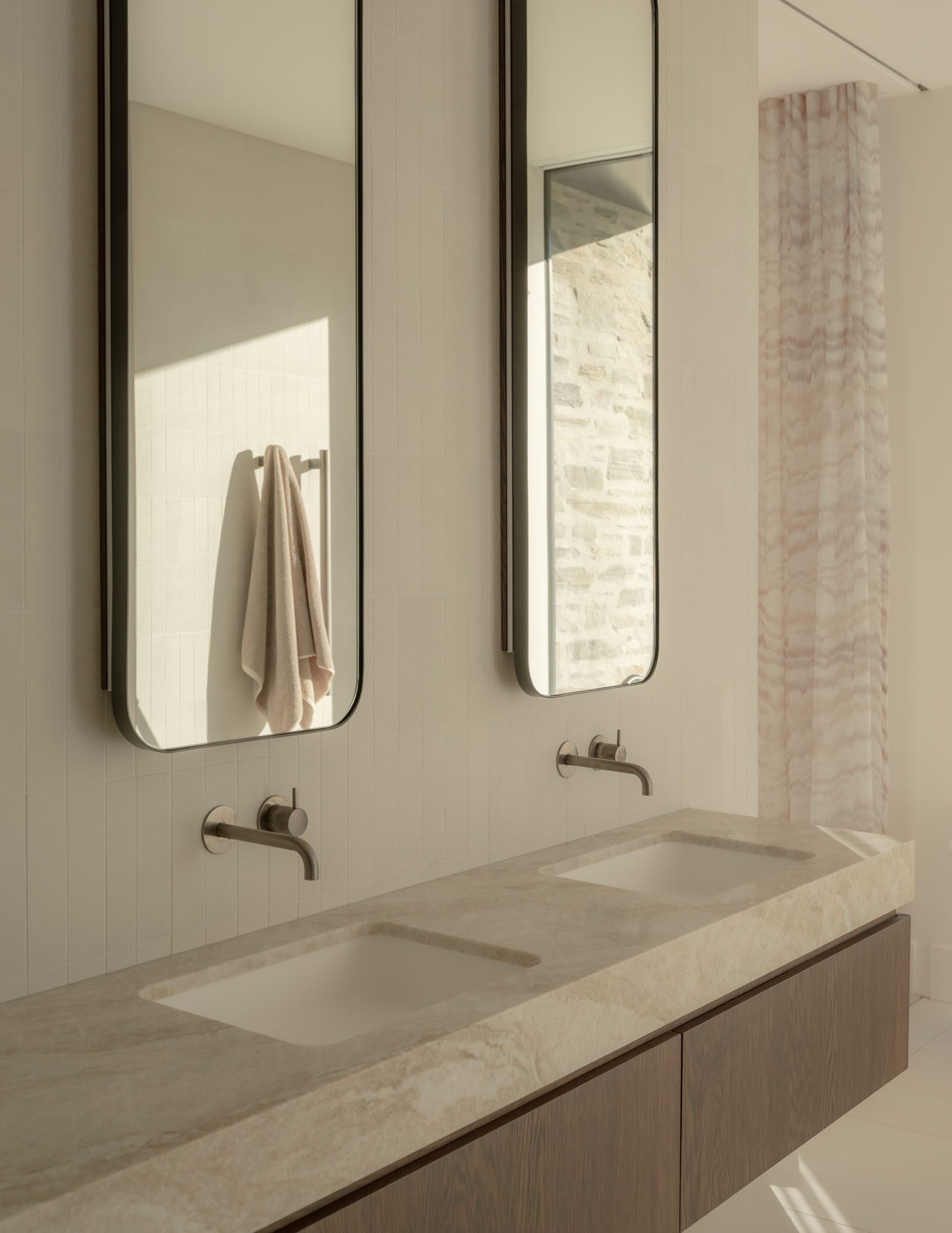
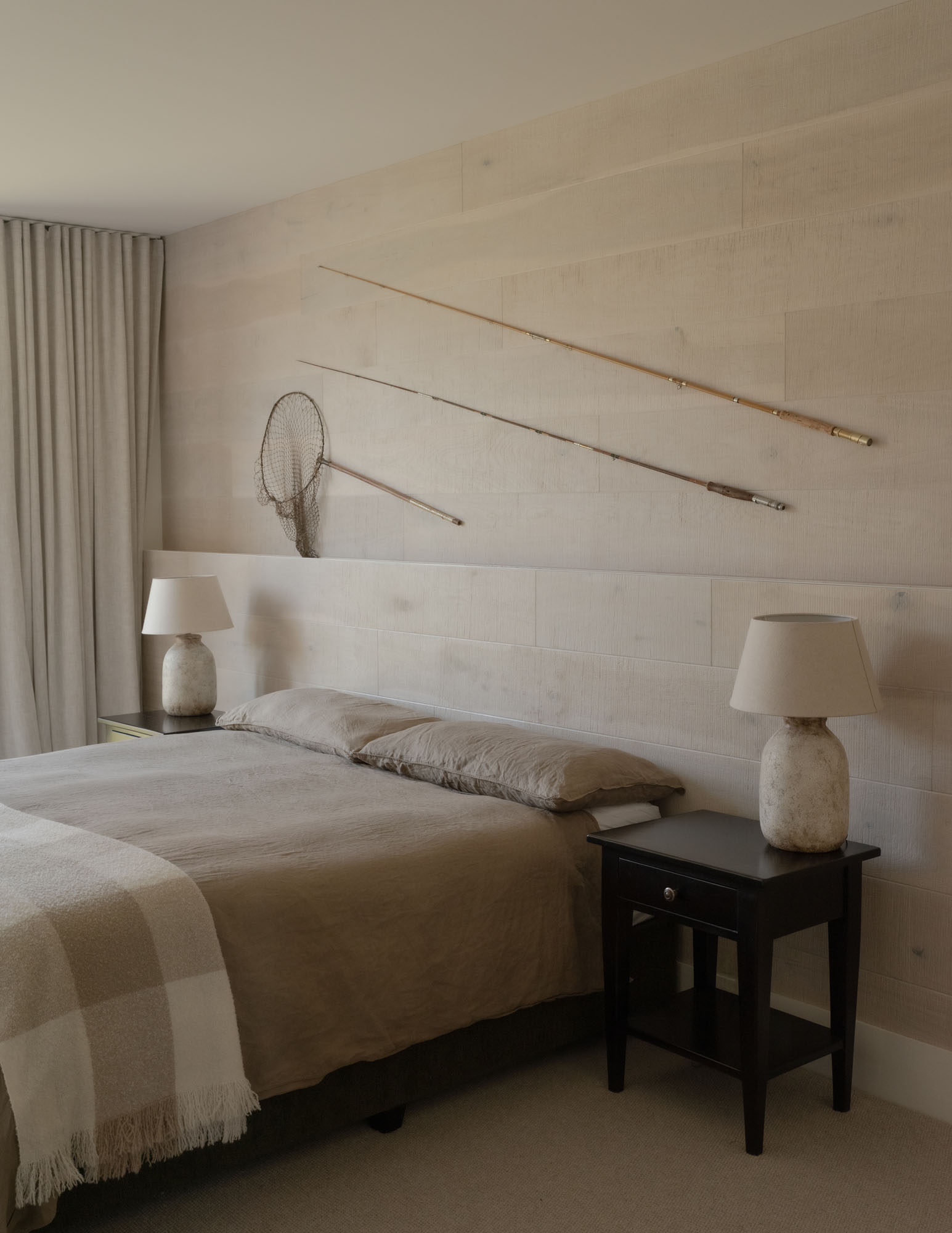
“Bedrooms and bathrooms draw from this light, warm palette, creating spaces that feel calm and indulgent,” Camden says.
Guest bedrooms are designed for shorter stays, each with its own ensuite and a generous bag drop area. Skylights introduce natural light into bathrooms and shower spaces, creating moments of openness.
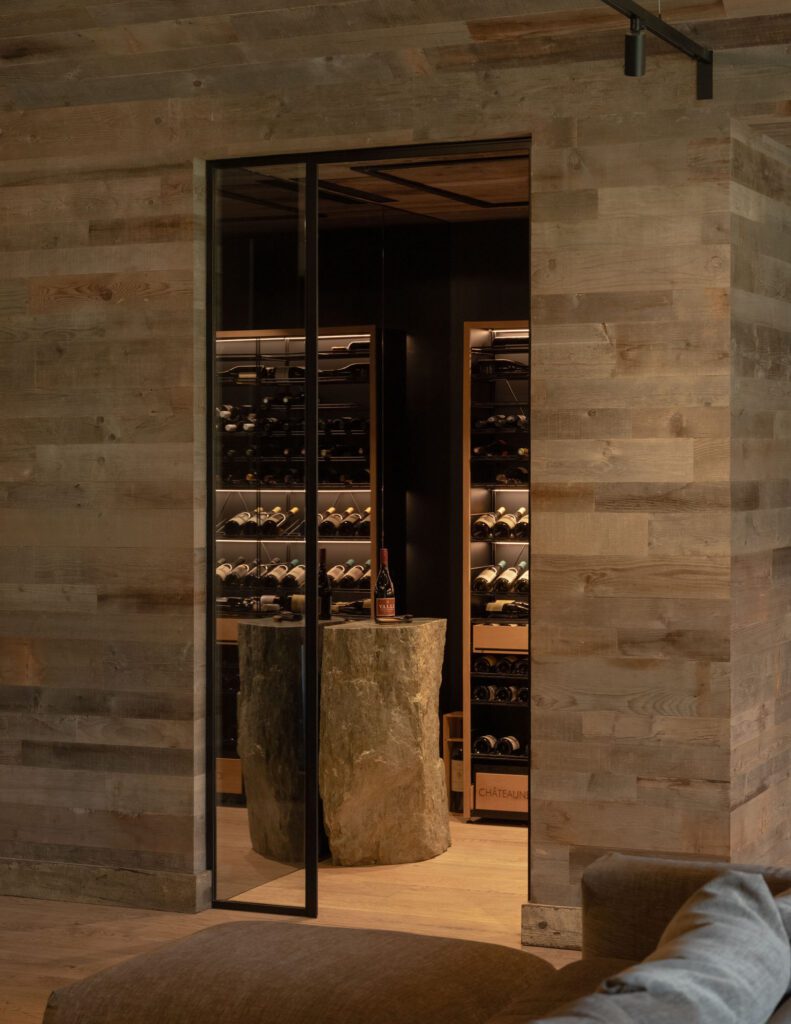
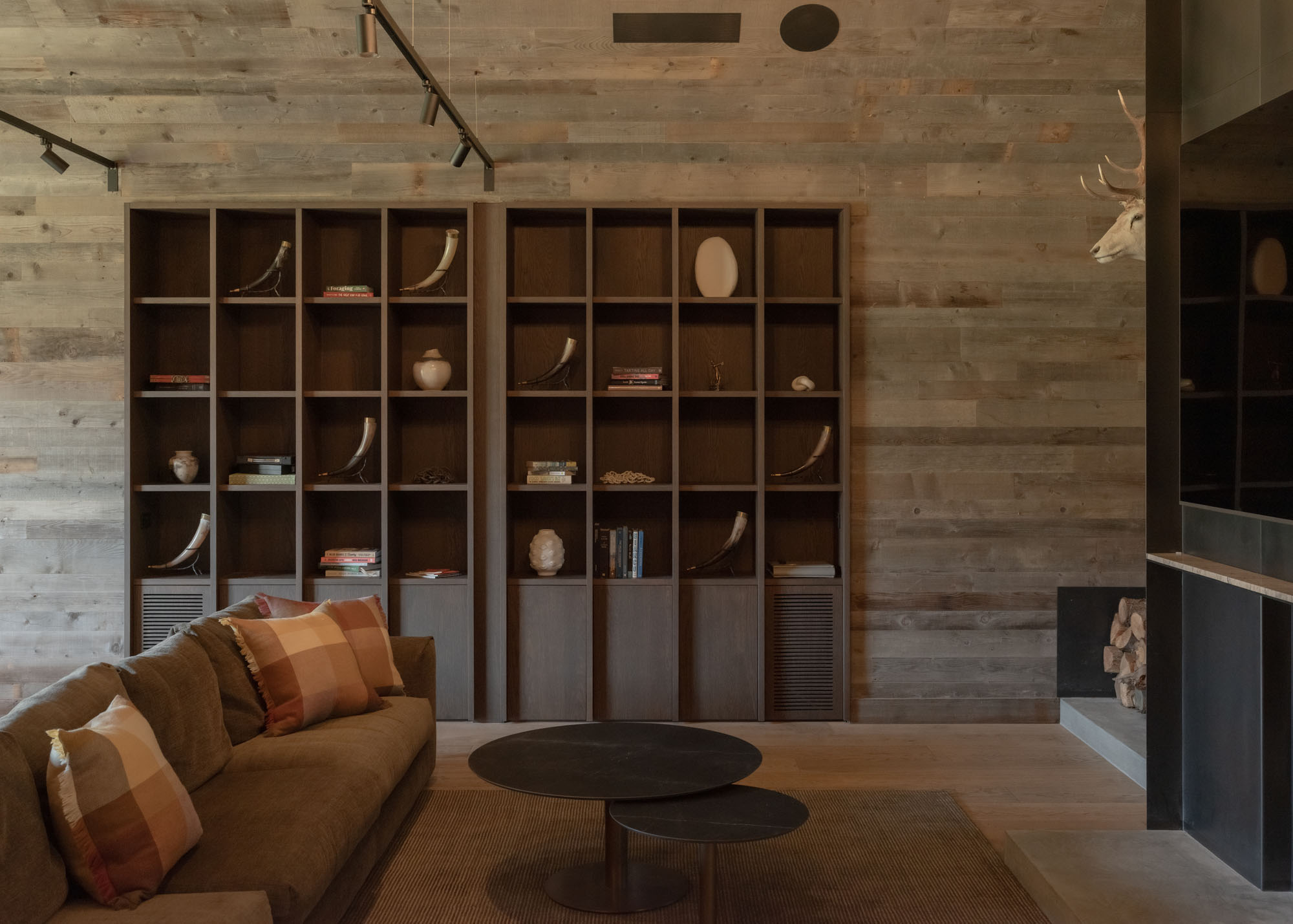
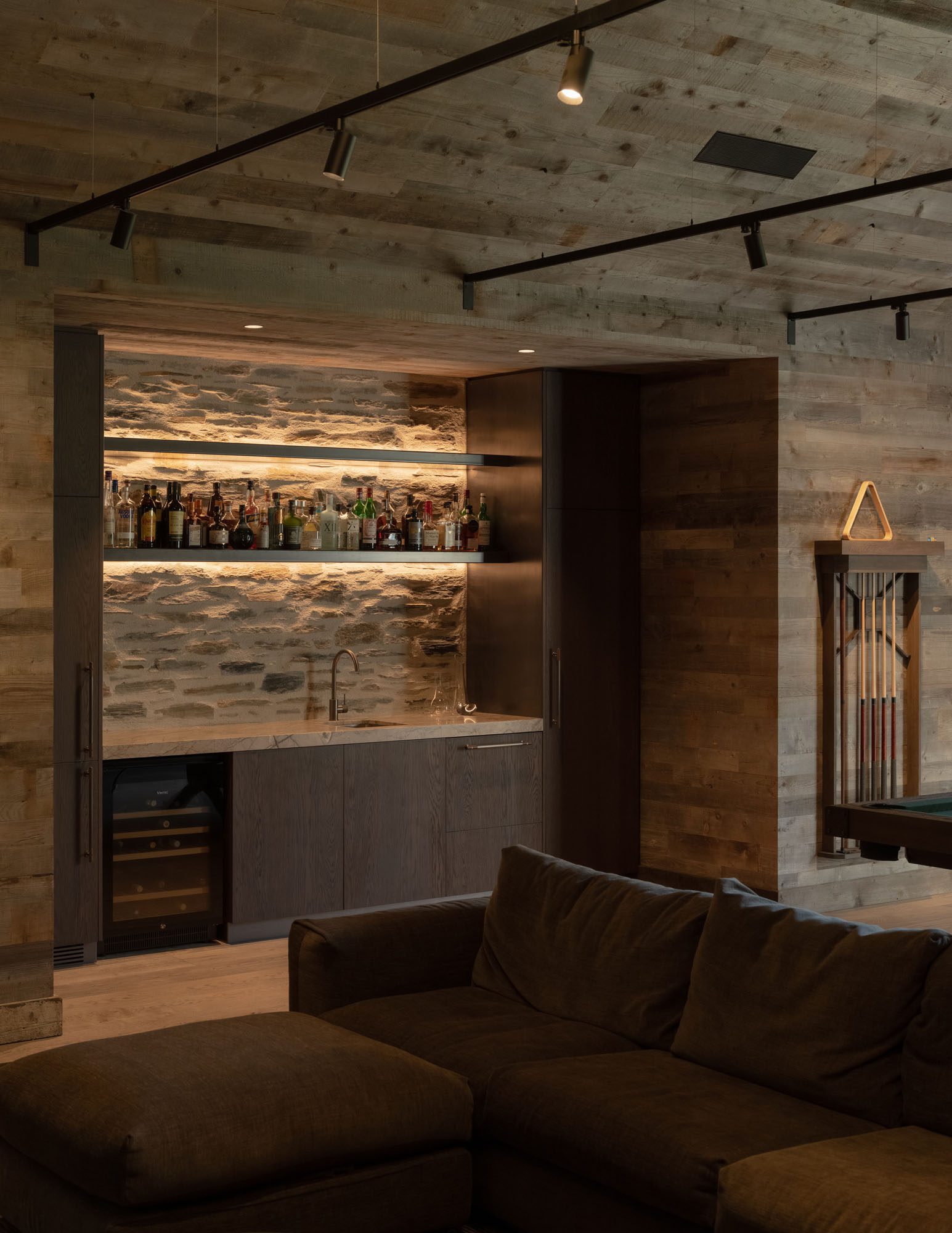
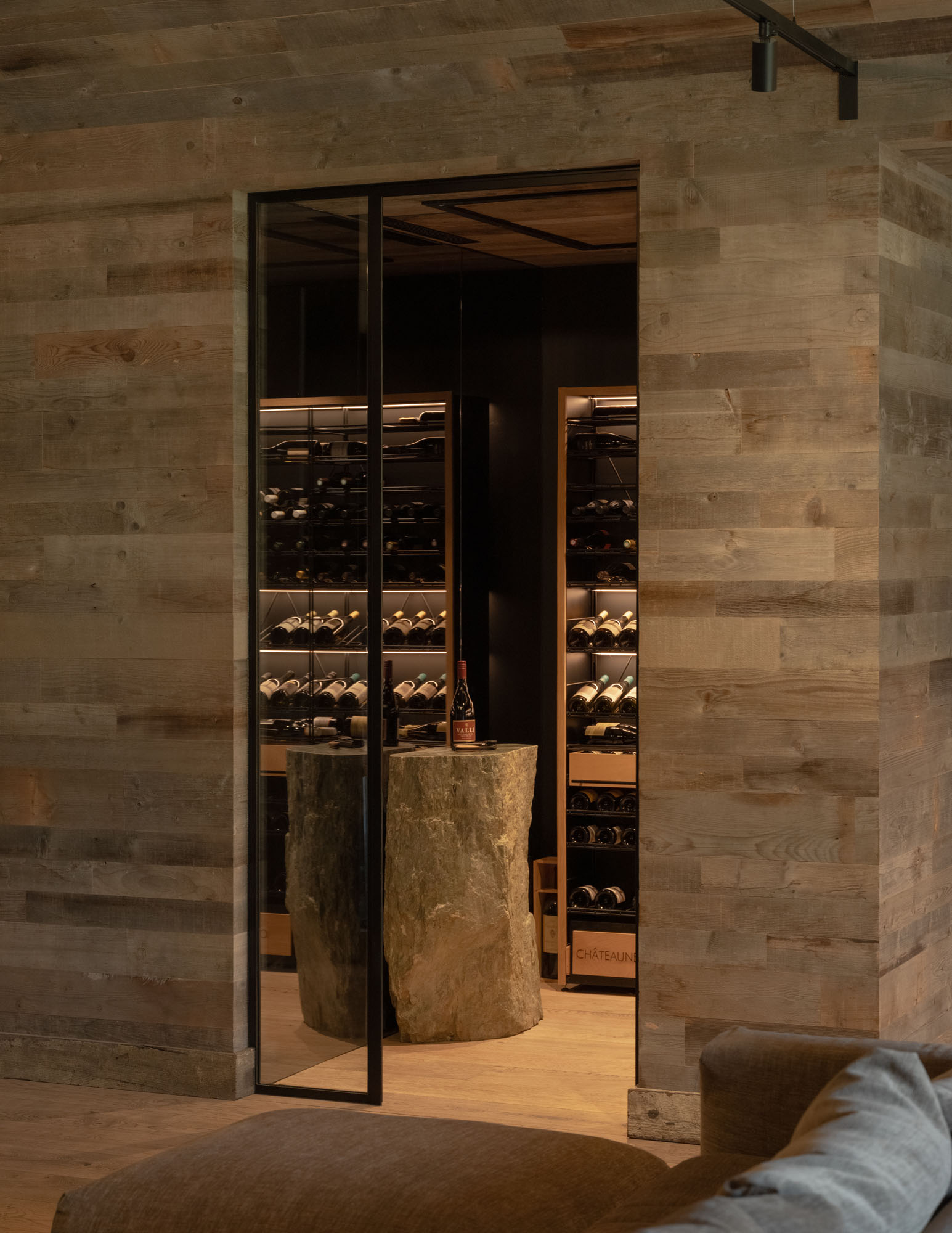
The games room is an exception. Here, the mood shifts dramatically. Darker tones and rich materials introduce a sense of drama; a large steel fireplace and a wine room framed by steel doors become the visual heroes. It’s large, akin to a space one might find in a luxury lodge, yet here it feels fitting.
“Overall, I think the home feels calm and comfortable,” Camden reflects. “It’s a very relaxed place to be. I particularly enjoy the way it sits in the landscape.
“It was important from the outset to create a home that felt in keeping with the local design story, but also one with a point of difference and that was of its place.”
In this case, the architects have achieved exactly that.
Judges’ Citation
Set within the rolling landscape near Arrowtown, this generous house draws confidently on the Southern Alps vernacular while refining it with a disciplined and highly contemporary sensibility. It sits comfortably among its neighbours, yet the arrival sequence — from a composed entry court to a generous, light-filled threshold — signals a home of greater design thought and spatial precision.
Two schist-clad gables anchor the principal rooms, while living spaces open northward and extend west to a sheltered loggia that mediates between interior and alpine landscape.
Materials are soft, warm, and assured, creating an atmosphere of relaxed luxury.
Then, unexpectedly, the games room shifts tone entirely: darker, more theatrical.
In the most contested category, this house rose to the fore by being traditional yet playful, balancing restraint with moments of genuine surprise and delight.
Project Credits
Architecture: Yoke
Build: Triple Star Construction
Words: Clare Chapman
Images: Biddi Rowley
Timber: Abodo
Key Furniture: Studio Italia
Kitchen Tapware: Plumbline
Kitchen Lighting and Cabinetry Handles: Powersurge
Wine Room Doors: Southern Steel Windows