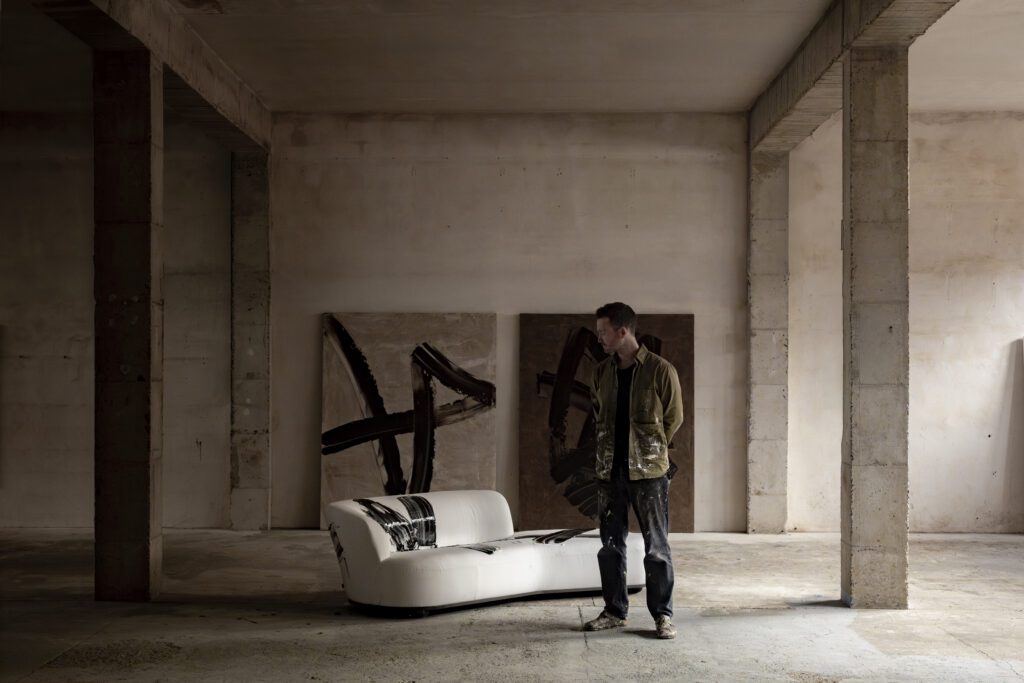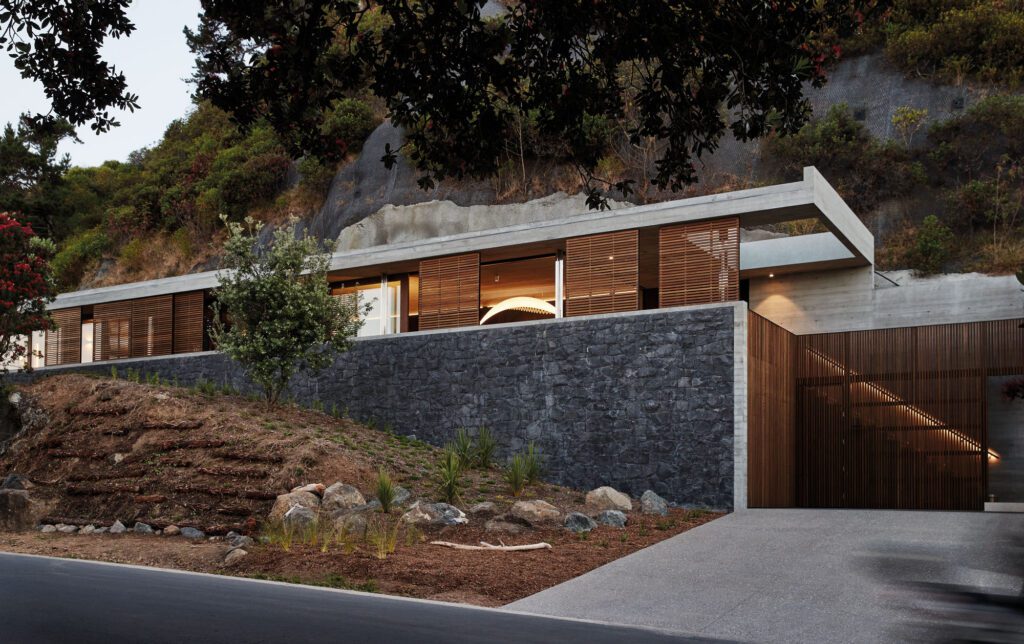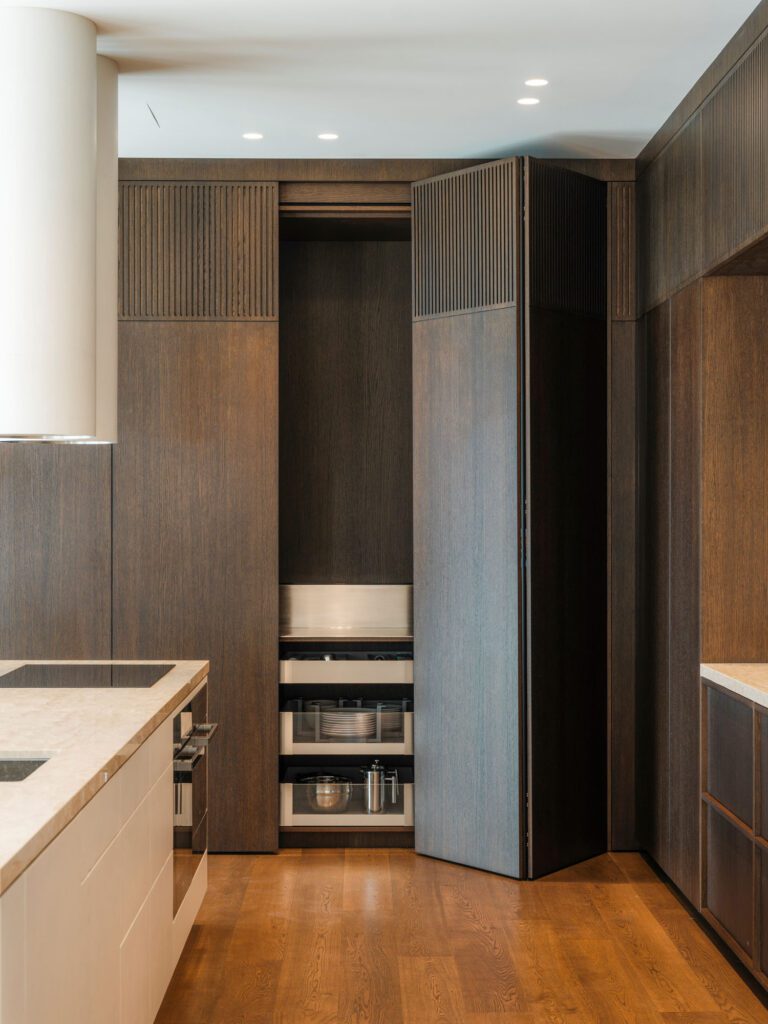
Auckland architect Mark Frazerhurst has turned his hand to sculpture. The result is much like his buildings: precise, angular, and compelling — objects that reveal more the longer you spend with them.
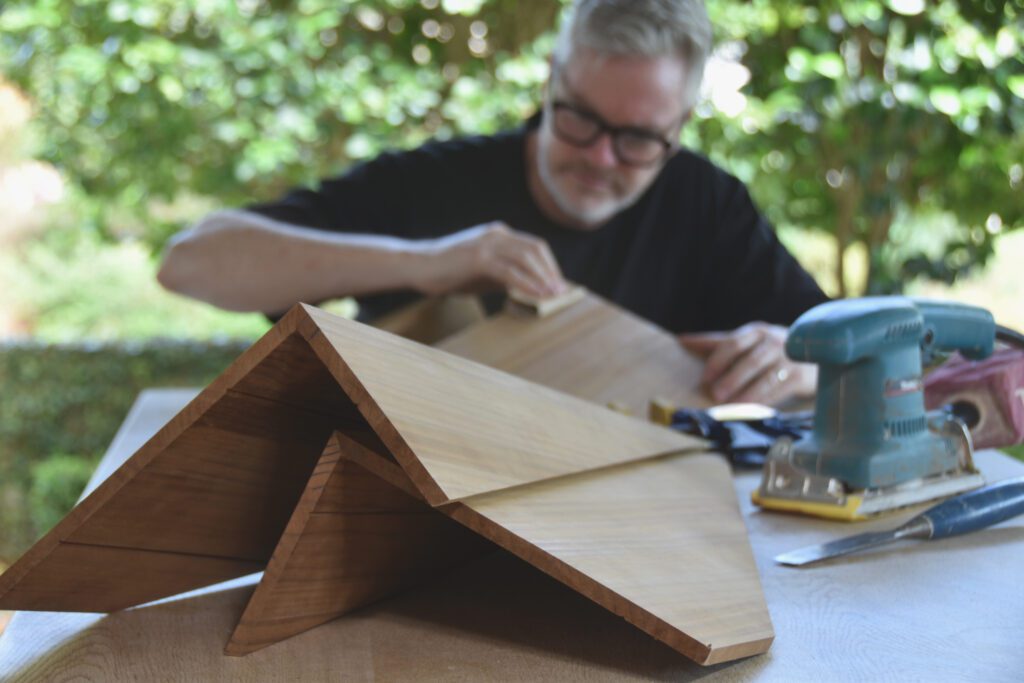
While architecture remains Mark’s primary practice, it was the tactile immediacy of making — and woodwork in particular — that caught his attention a couple of years ago. The catalyst came during the design and construction of a house for his parents, a project known as Angle Grinder. Amid the rhythm of building, Mark found himself drawn to the offcuts left behind: narrow lengths of timber panelling, surplus to requirement but rich with potential.
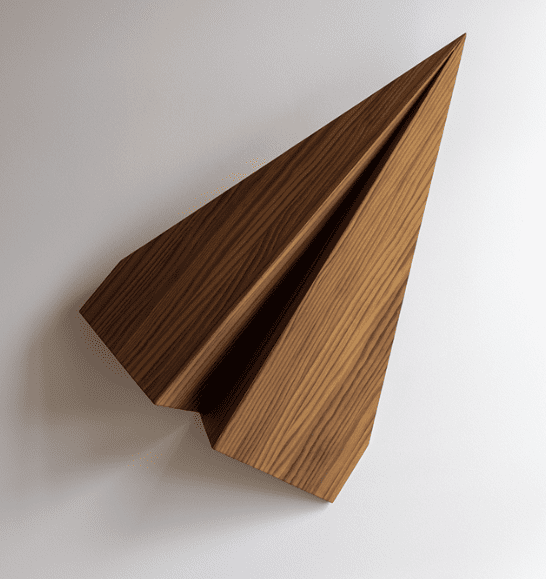
“I wanted to create something that referenced my father’s interests,” he says. A retired pilot, his father has long been fascinated by aeronautical forms and the poetry of flight. Mark’s response was to imagine a dynamic object capable of animating a static space — something with a sense of movement, speed, and direction. The result was Dart 01: a sculptural wall piece formed entirely from timber offcuts, its crisp geometry and wing-like planes a subtle nod to aviation.
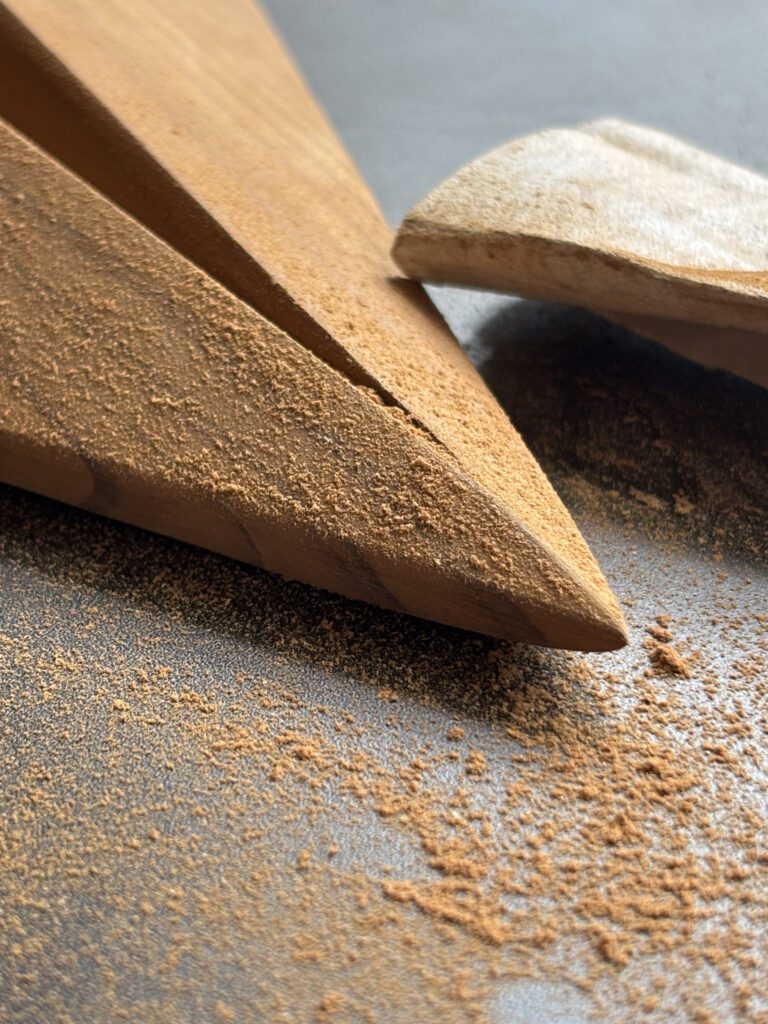
That first piece marked the beginning of a parallel practice — one that sits comfortably alongside his architectural work. “I really enjoy the physical act of taking an idea, first in mind, then on paper, and following it through to the creation of a tangible object,” he says. “Architecture, art, and sculpture overlap. For me, it felt like a natural progression.”
There is, too, a philosophical alignment. Mark’s architecture is characterised by clarity, restraint, and a careful consideration of material; values that carry seamlessly into his sculptural work. These are objects that are crafted, tactile, and composed; thoughtful rather than decorative. They are also resolutely waste-less. “I like the idea of doing more with less,” he says. “Using what would otherwise be disposed of, and turning it into something refined, soulful: a collectible piece that still feels grounded and human.”
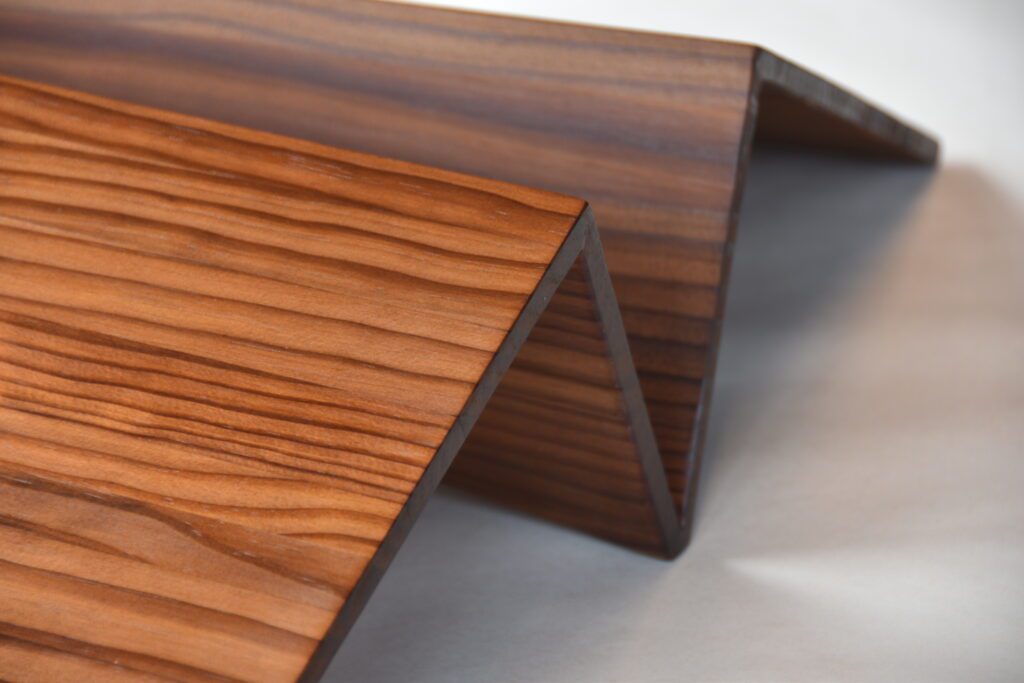
Since that first piece, Mark has continued to refine the process, now working with local supplier Abodo to utilise offcuts generated during the production of their thermally modified timber. These narrow tongue-and-groove ‘shorts’ become the starting point for each piece. The edges are removed to create squared boards, which are then laminated to form larger panels. From there, geometry takes over: edges are mitred to precise angles, wing planes shaped into triangular forms.
The process is slow, deliberate, and deeply hands-on — something Mark relishes. “It’s the handcraft that I enjoy most,” he says. “Taking a material that’s familiar in one context and manipulating it into a form we usually associate with another medium. There’s something satisfying about watching geometry and complex mitres come together. It’s trigonometry, really.”
That process, he notes, mirrors architecture more closely than one might expect. “Designing and making a small sculpture follows the same pattern as designing a building,” he says. “Concept. Sketch. Establish constraints. Sketch again. Plan. Integrate external inputs. Detail. Cost. Refine. Document. Adjust. Make. Learn. Enjoy.”
In that sense, his sculptural practice feels like a distillation — a chance to explore the same ideas of form, economy, and craft at a more intimate scale.
Dart 01 is available in three sizes and three finishes, and handmade to order from frazerhurst.com