

Tractor House

The latest Studio John Irving Architects addition to the Tara Iti golfing compound is a restrained, single-level courtyard house with an old red tractor at its heart.

Low against the ground, this pavillion home in Tara Iti seeks stealth from the beach and shelter from the winds.

‘Irvingsville’ is the playful moniker that comes up in conversation when the high number of projects that architect John Irving seems to have completed in the exclusive golfing community of Tara Iti is mentioned.

First came the Cottages and later the Bunker Bar — two highly public spaces used for temporary accommodation and as a hospitality spot by visiting club members. 

“The clients I met yesterday are staying in the four-bedroom cottages that we did there,” says the architect. “The night before, they were drinking in the Bunker Bar — it’s a pretty powerful business card.”

John’s firm has also completed several residential projects and other amenities within a few hundred metres of each other at Tara Iti: the Glider house, Sandiland, restaurants, and gyms. It acted as the local studio in charge of helping bring to fruition American ‘startchitect’ Tom Kundig’s Te Whare Tupu Kirikiri.

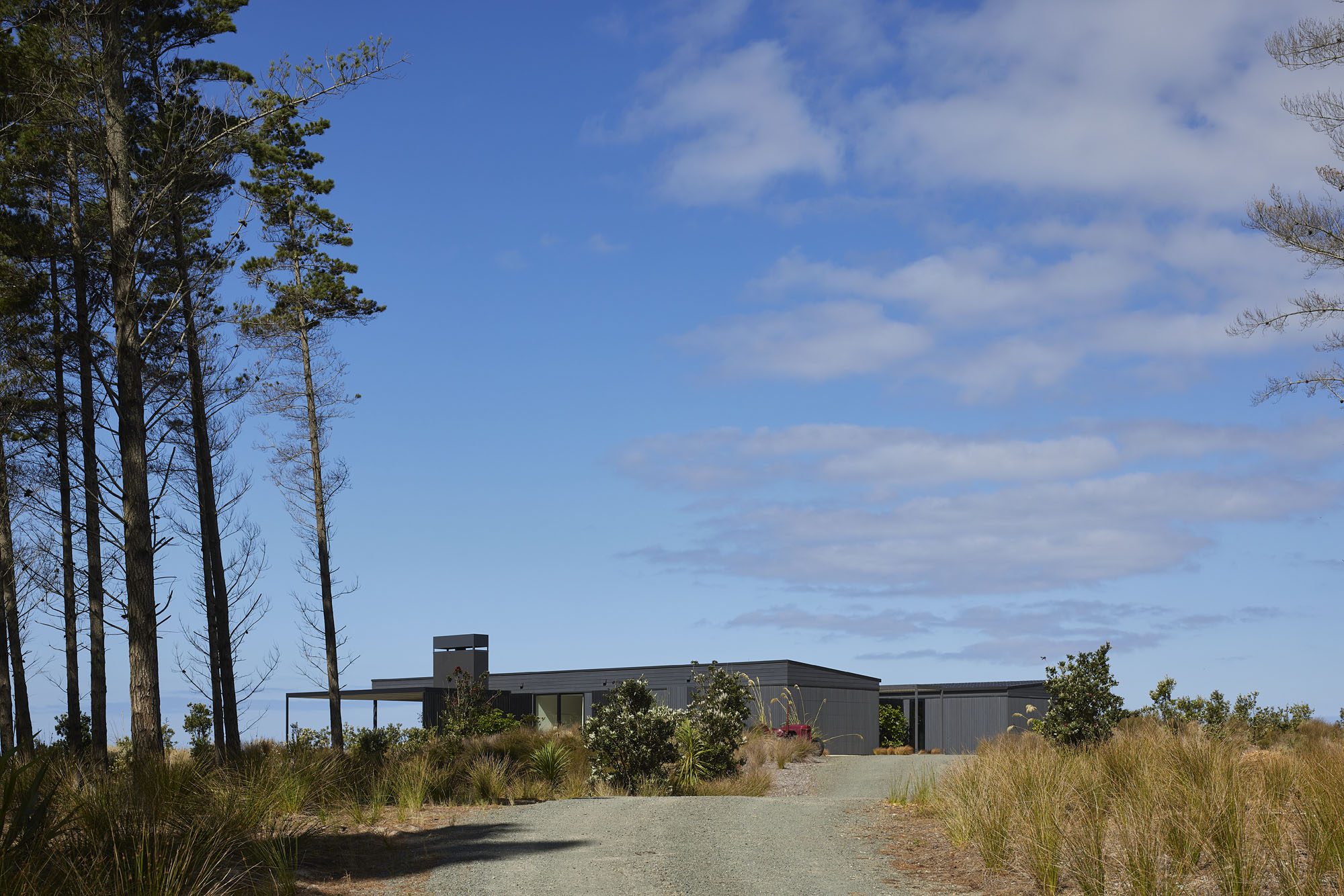
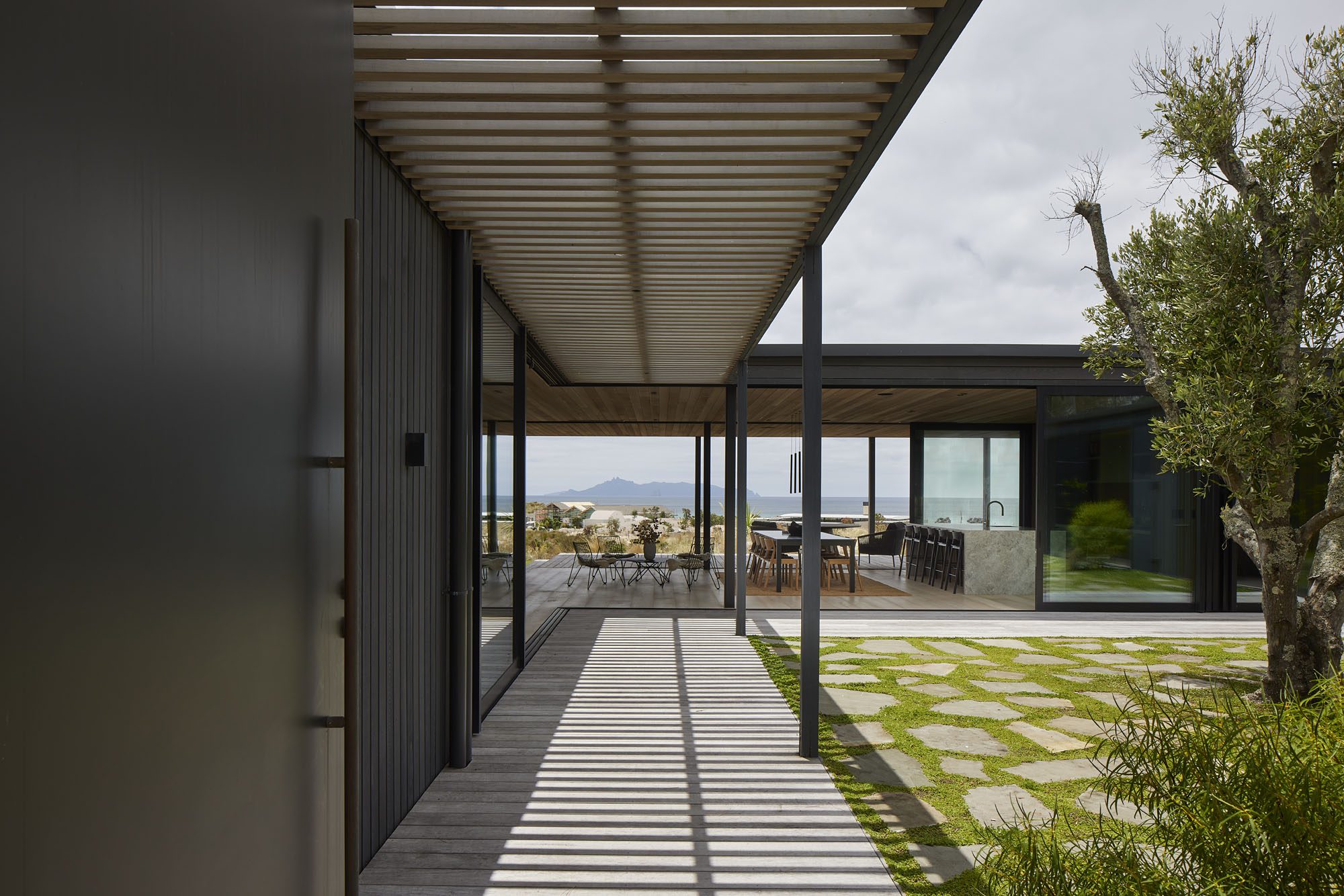
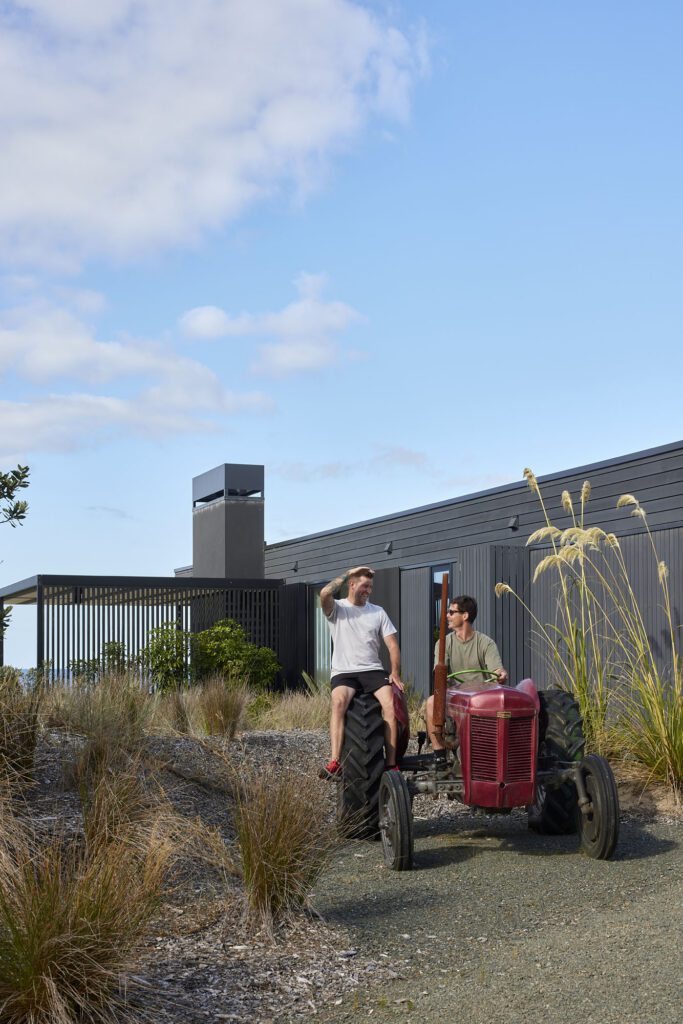
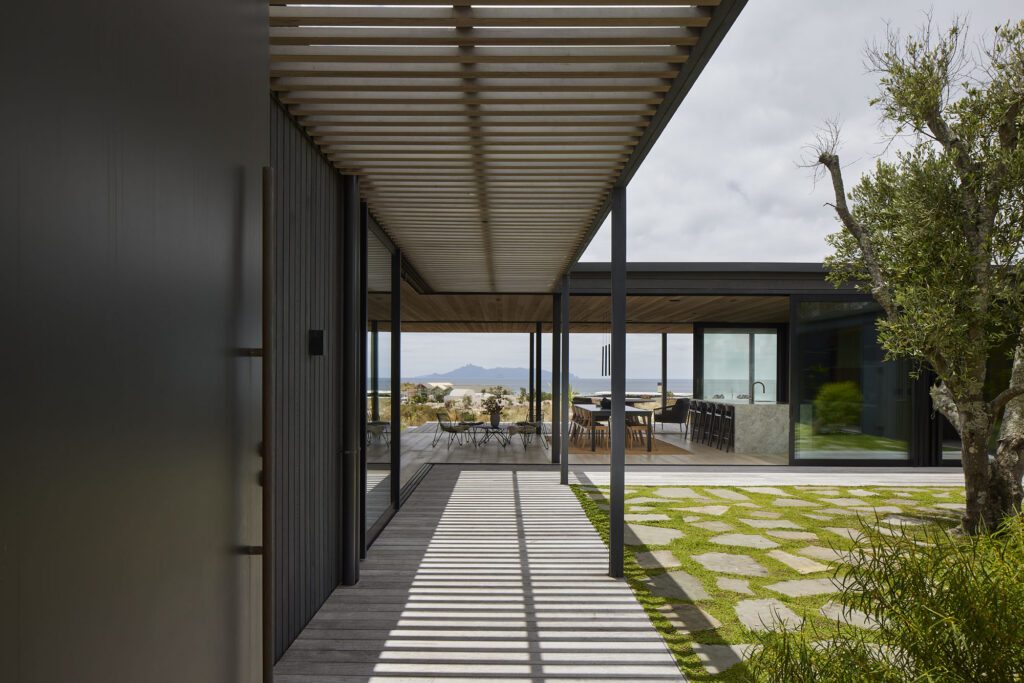
The plan is a simple U-shape. An external walkway unites each segment of the single-storey pavilion. The old red tractor that inspired the home's name.

“It’s the gift that keeps on giving, really,” John says about this particular piece of paradise on the frontier between Auckland and Mangawhai. “It’s like a sort of video game,” John reminisces, “looking down into this sort of utopia that you’ve been involved in.”

So, is there a desire to keep repeating certain stylistic moves that have worked for this particular context?

“I get easily bored,” John says. “I can’t just do the same thing over and over again.” 

He hints at variety being at the core of his portfolio, mentioning a recent client tour through three of his projects under construction. Even though they share a certain natural materiality and a desire ‘not to be too shouty’, they have very different roof forms. 

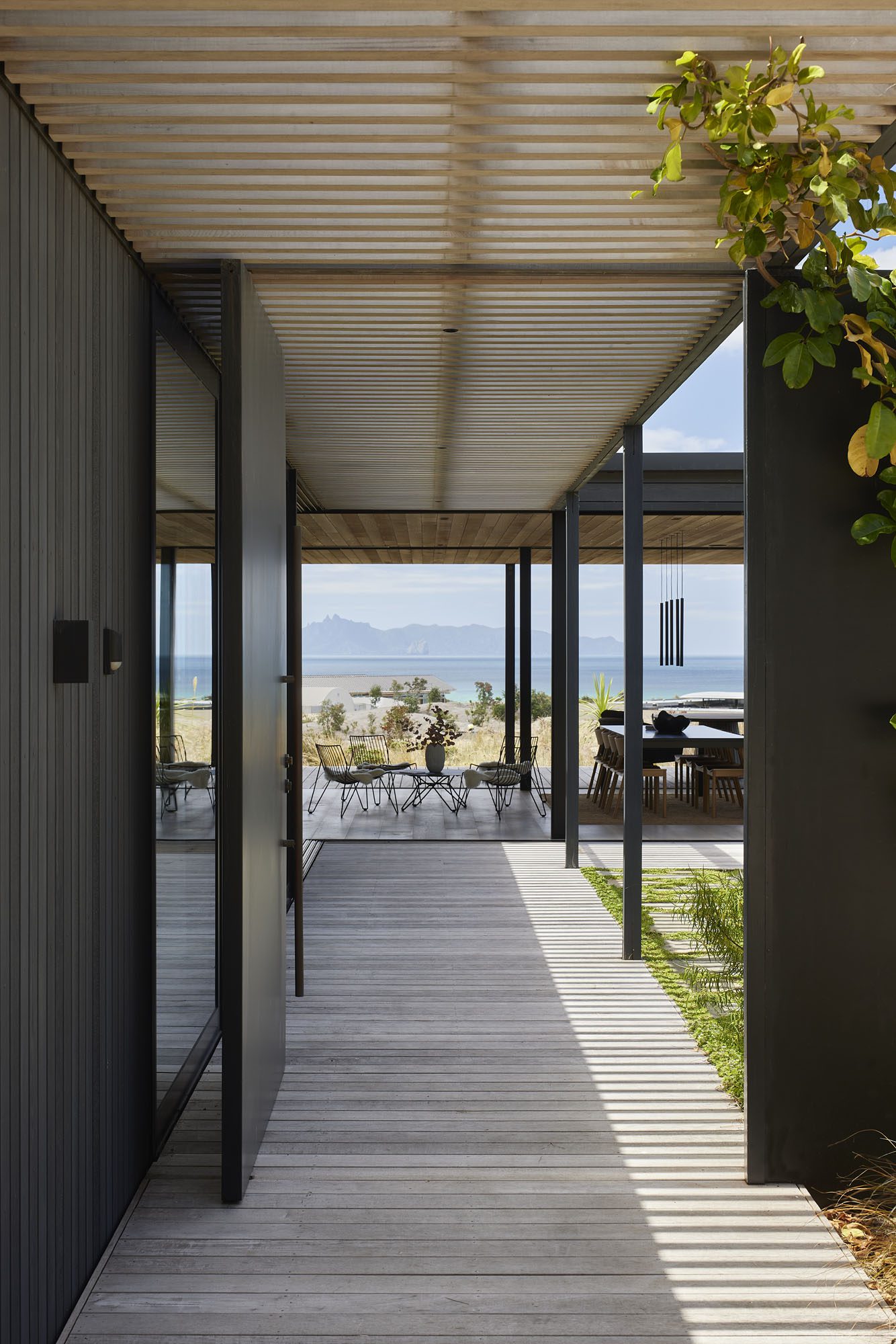
There is an uninterrupted view through to the ocean from the entry.
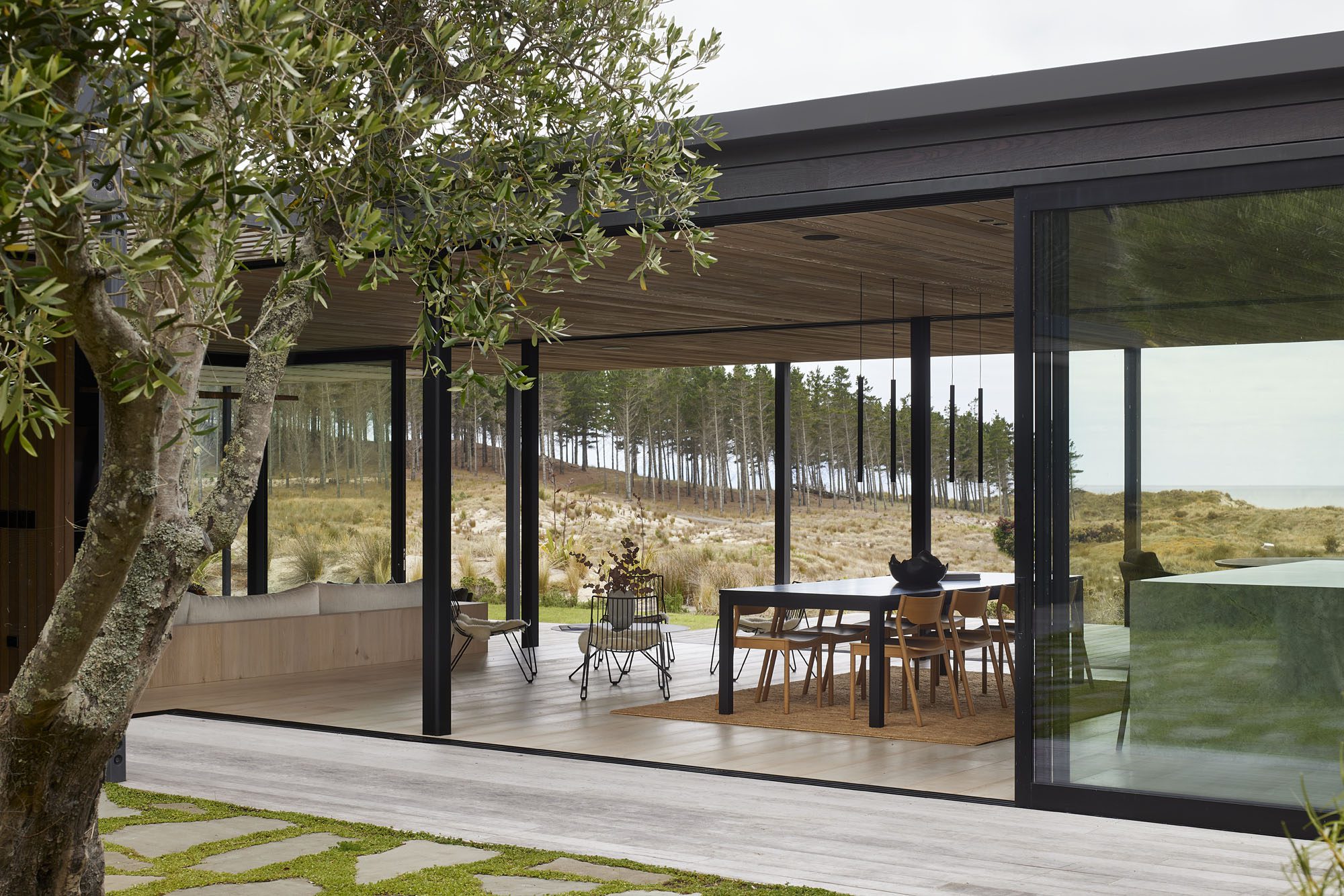
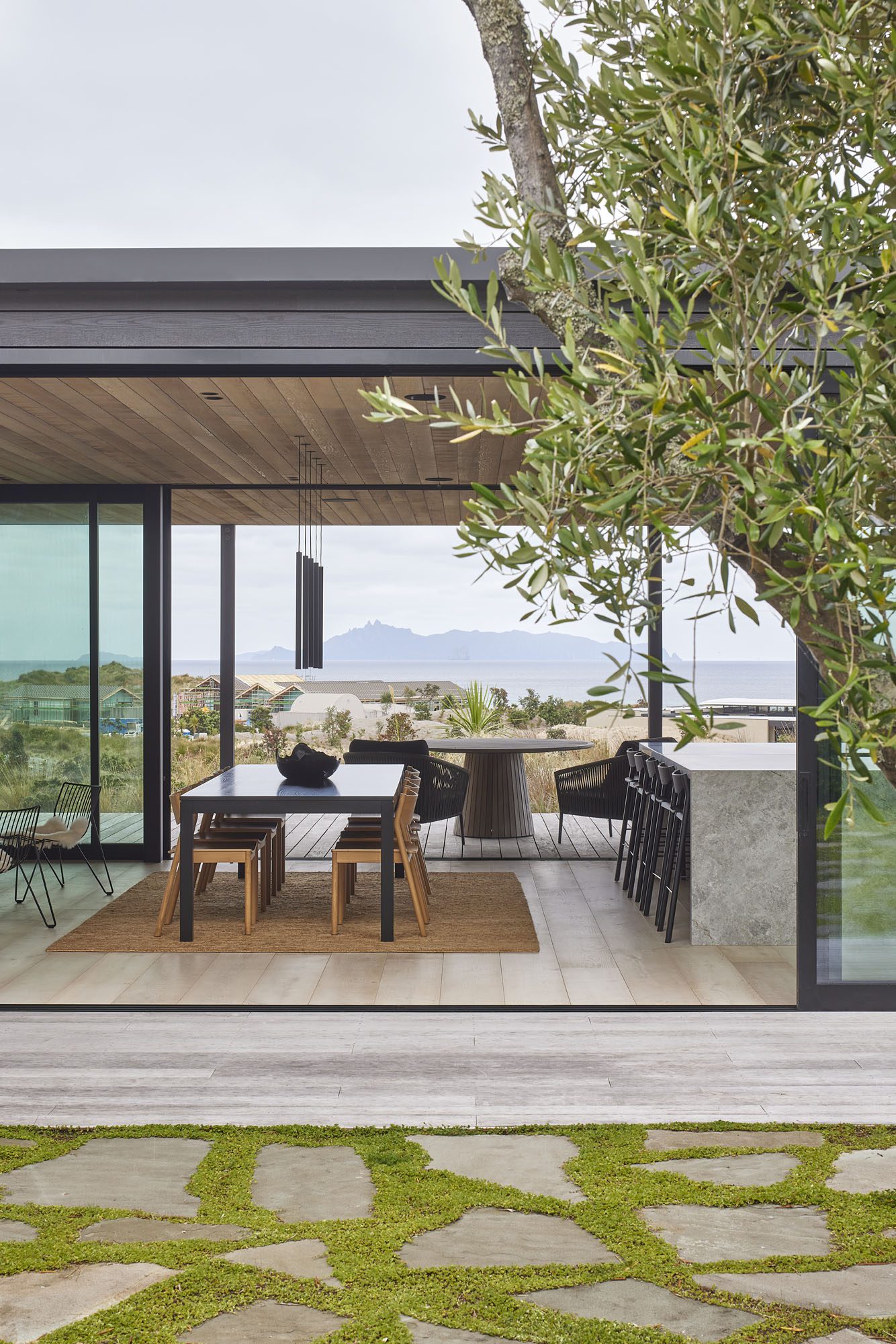
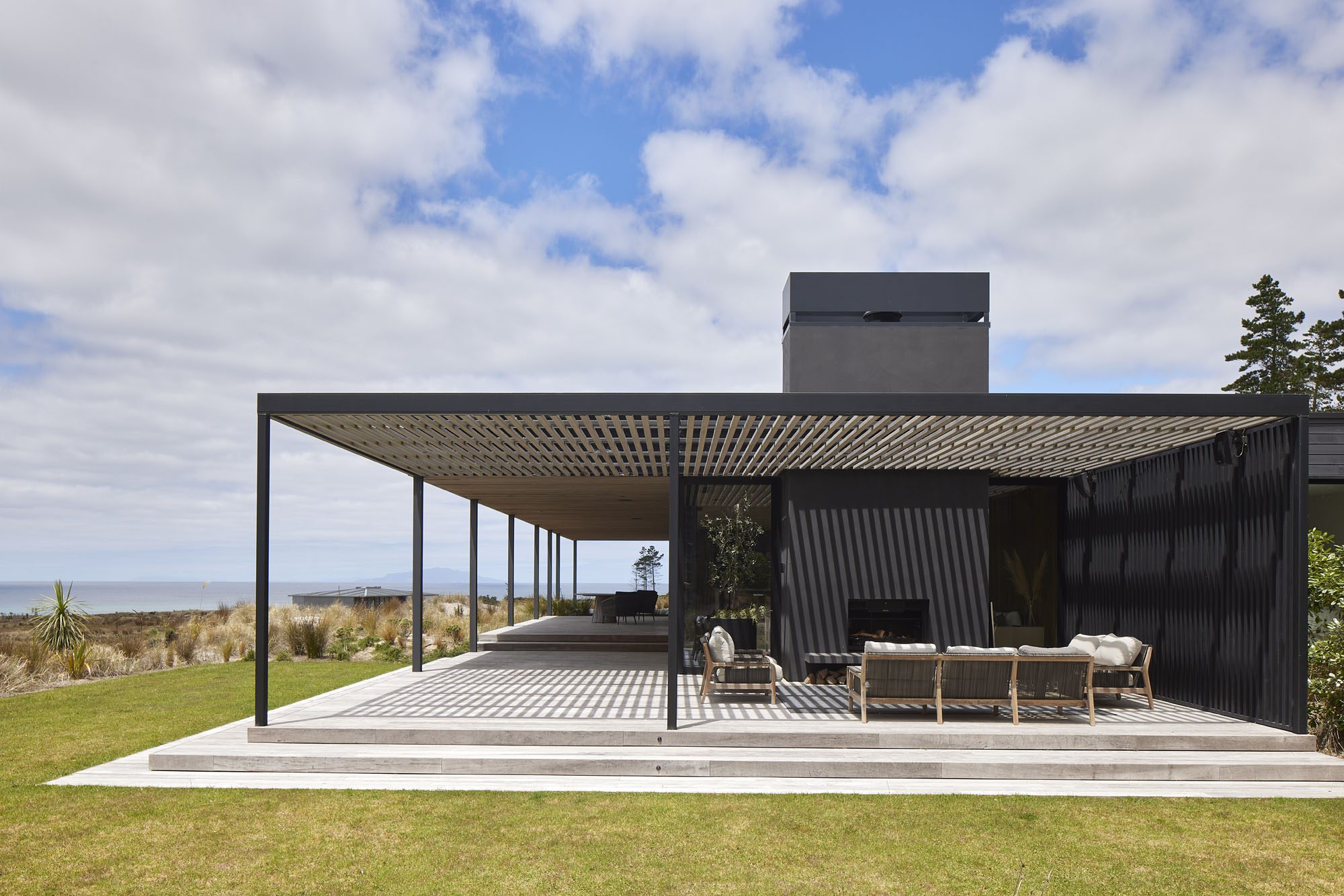
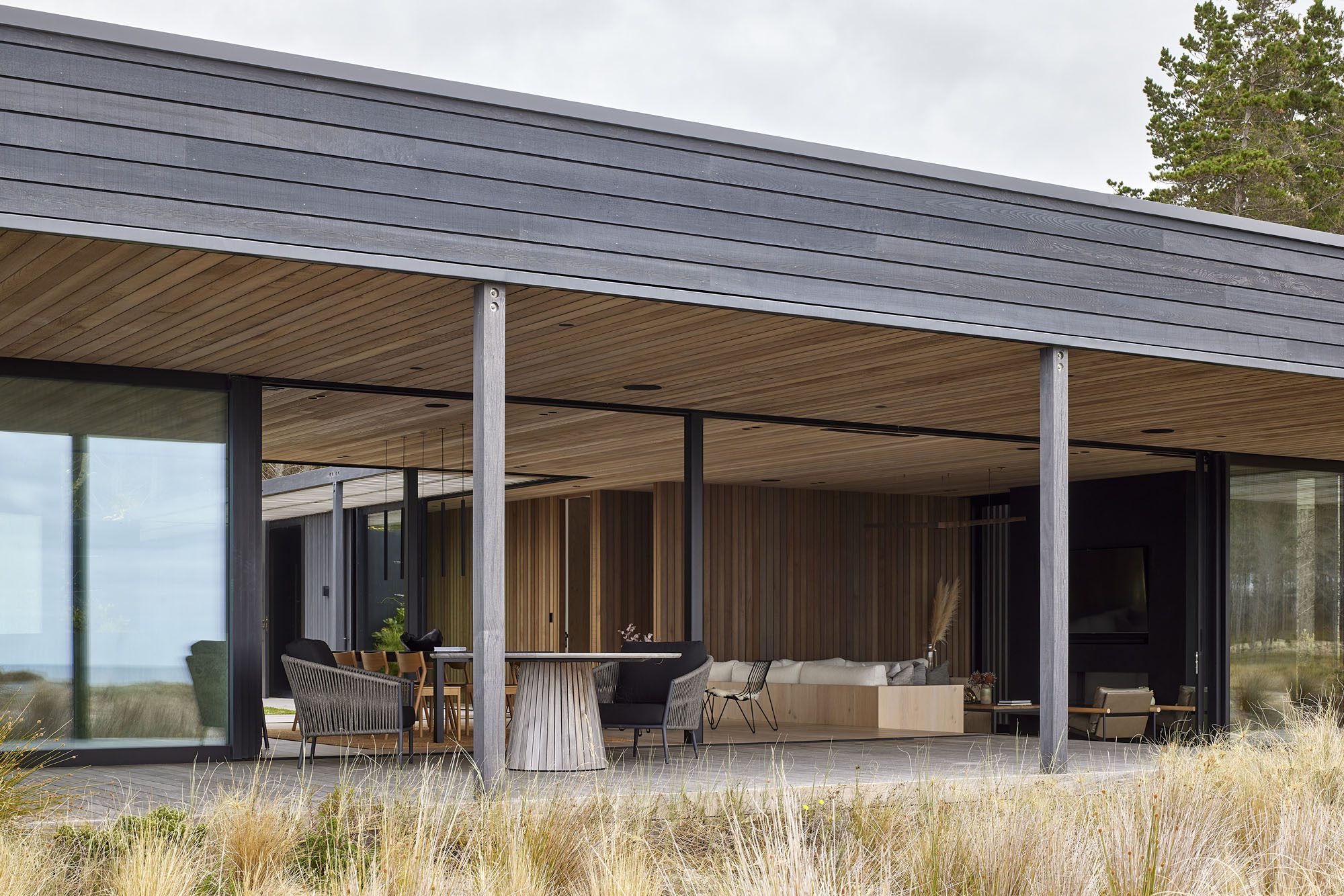
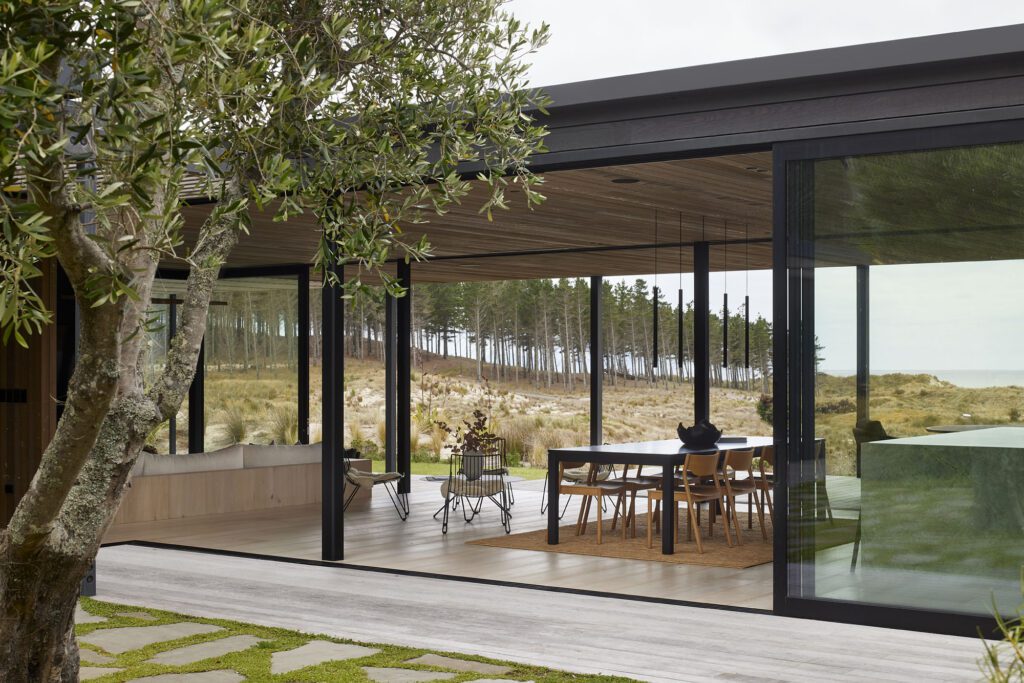
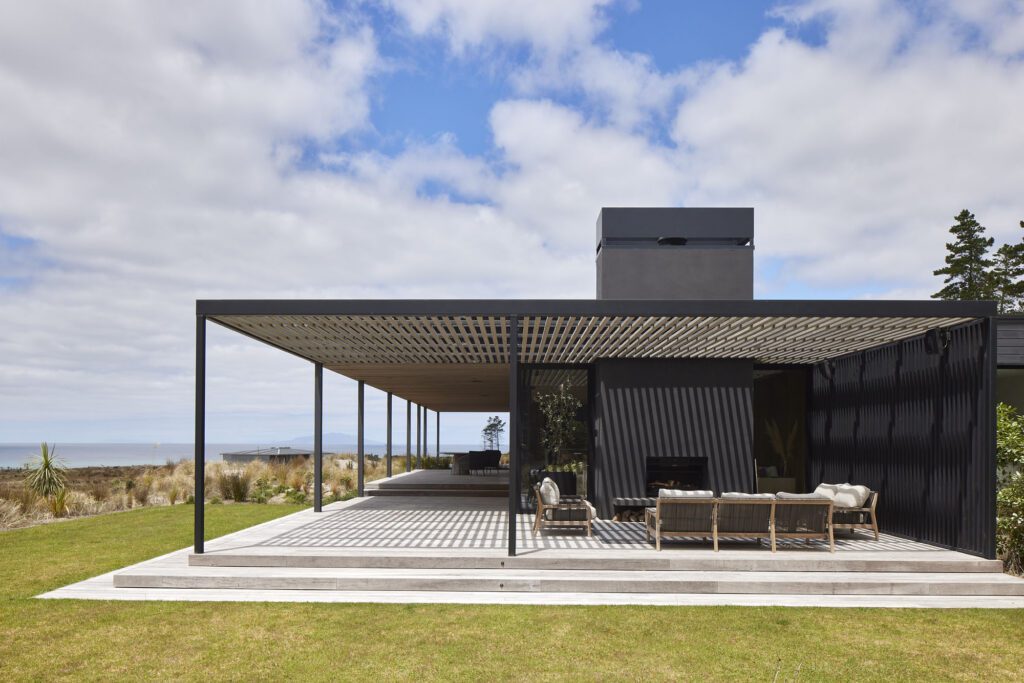
The house centres around a sheltered courtyard, and the internal living spaces spill out onto ample covered outdoor living areas facing the ocean.

As to this latest addition to the Tara Iti beachfront, the Tractor House, John quickly confesses, “I like this house a lot. It’s kind of on the smaller side — although, at 324 square metres, ‘small’ is really a relative term.” 

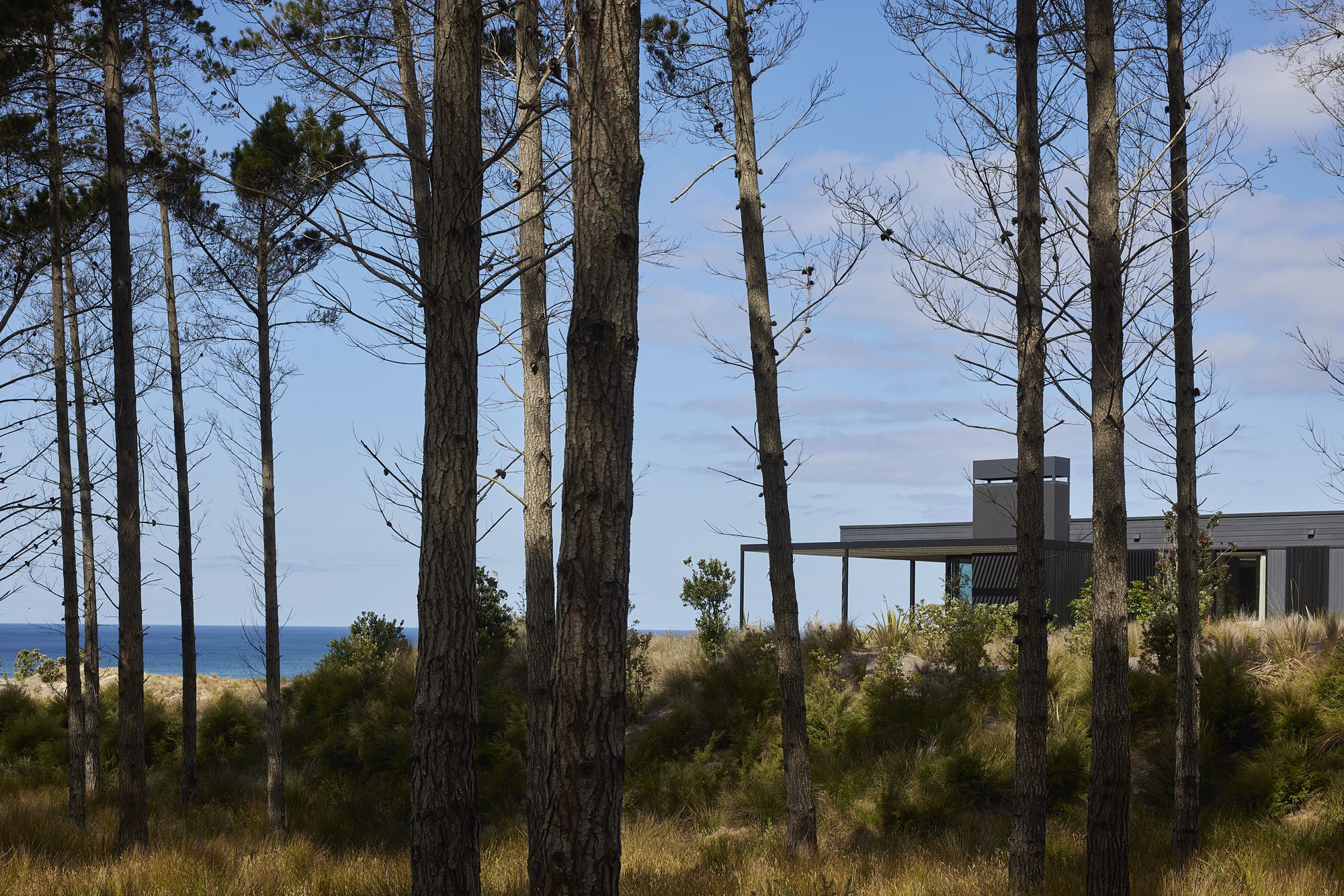
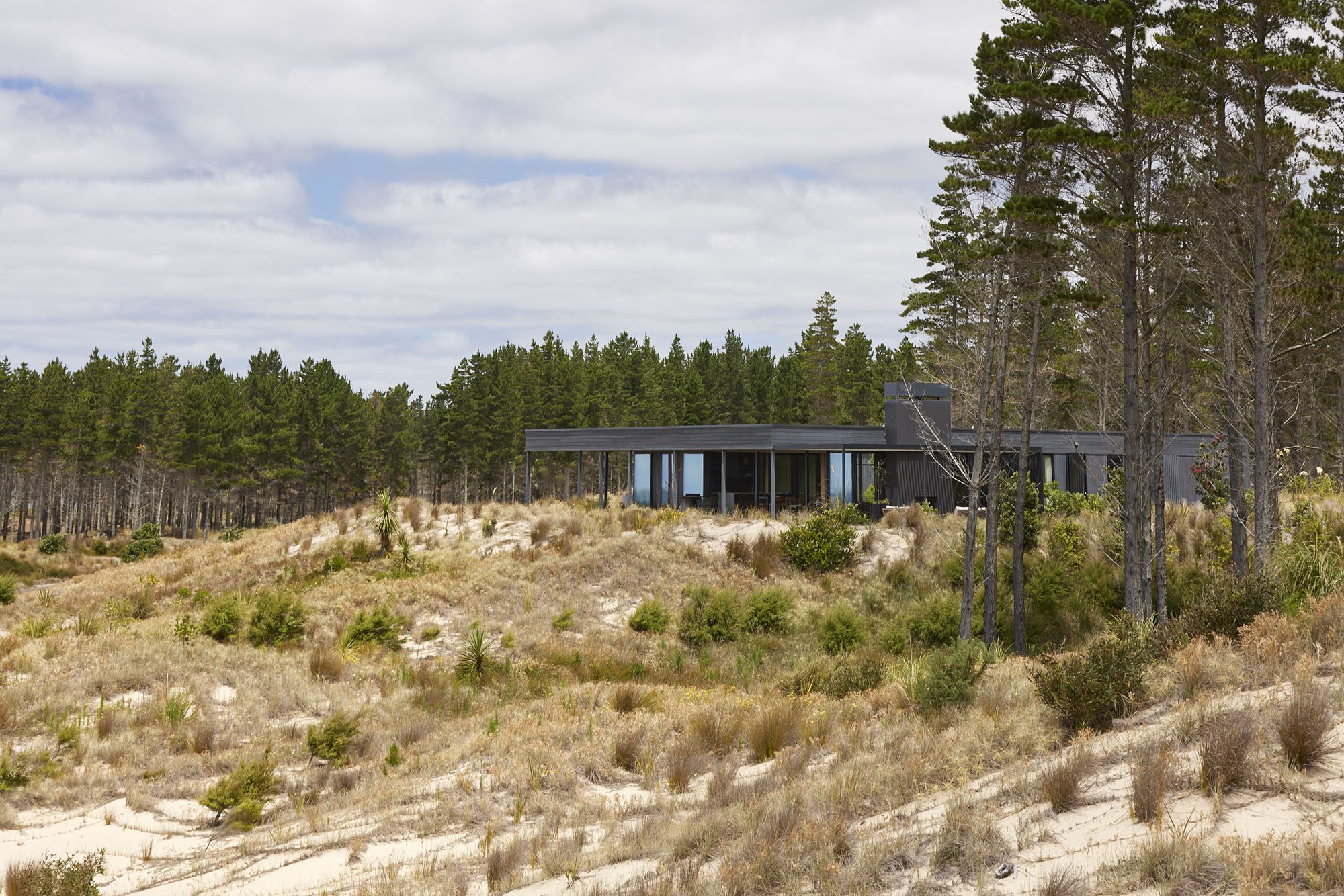
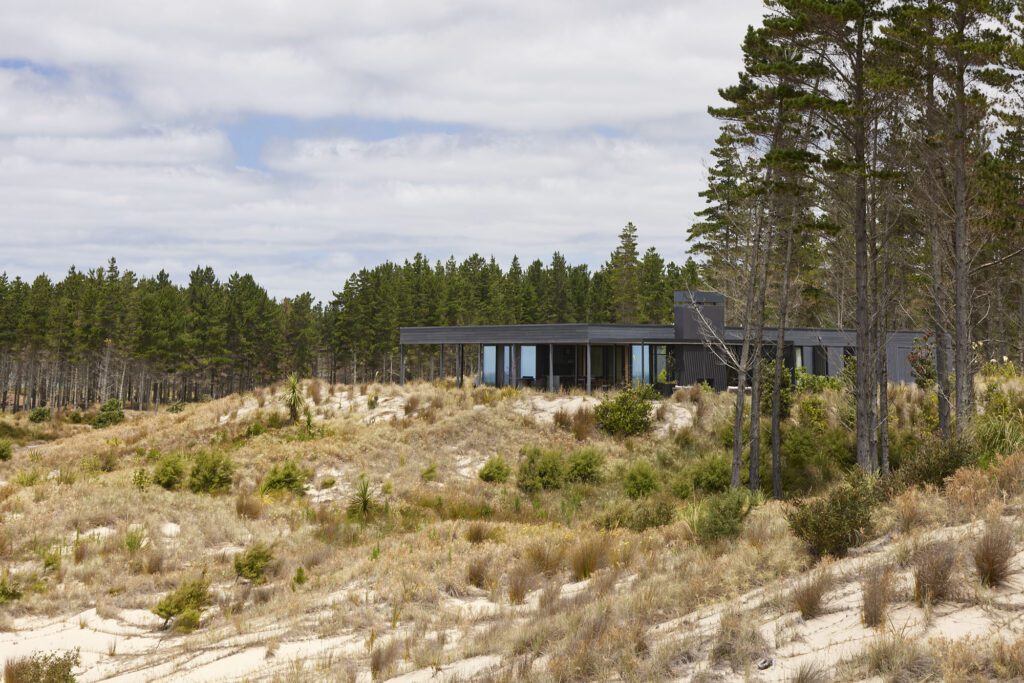
Set within the dune system of the Te Arai coastline at Tara Iti, the house sits among pine shelter belts and native coastal planting. A restricted 40-by-25-metre building platform informed the footprint and placement, encouraging a compact, efficient plan with minimal visual impact. 

“There are houses that can almost overwhelm you,” the architect reflects, “but this one doesn’t feel overscaled. It works really nicely if it’s just the two of you there, and it’s got a simplicity about it. 

“You want houses to just sit there, not too dark, not too light — so they belong in the landscape.” 

The brief and site called for a clear architectural intent: a courtyard house, simple in form, carefully placed, and secondary to the surrounding landscape. The clients asked for strong connections to the view, privacy, open-plan living, seamless flow to the exterior, and spaces suited to entertaining. 

The architects worked with client Emma MacPherson toward an interior design and landscaping that felt coastal and inherently relaxed.

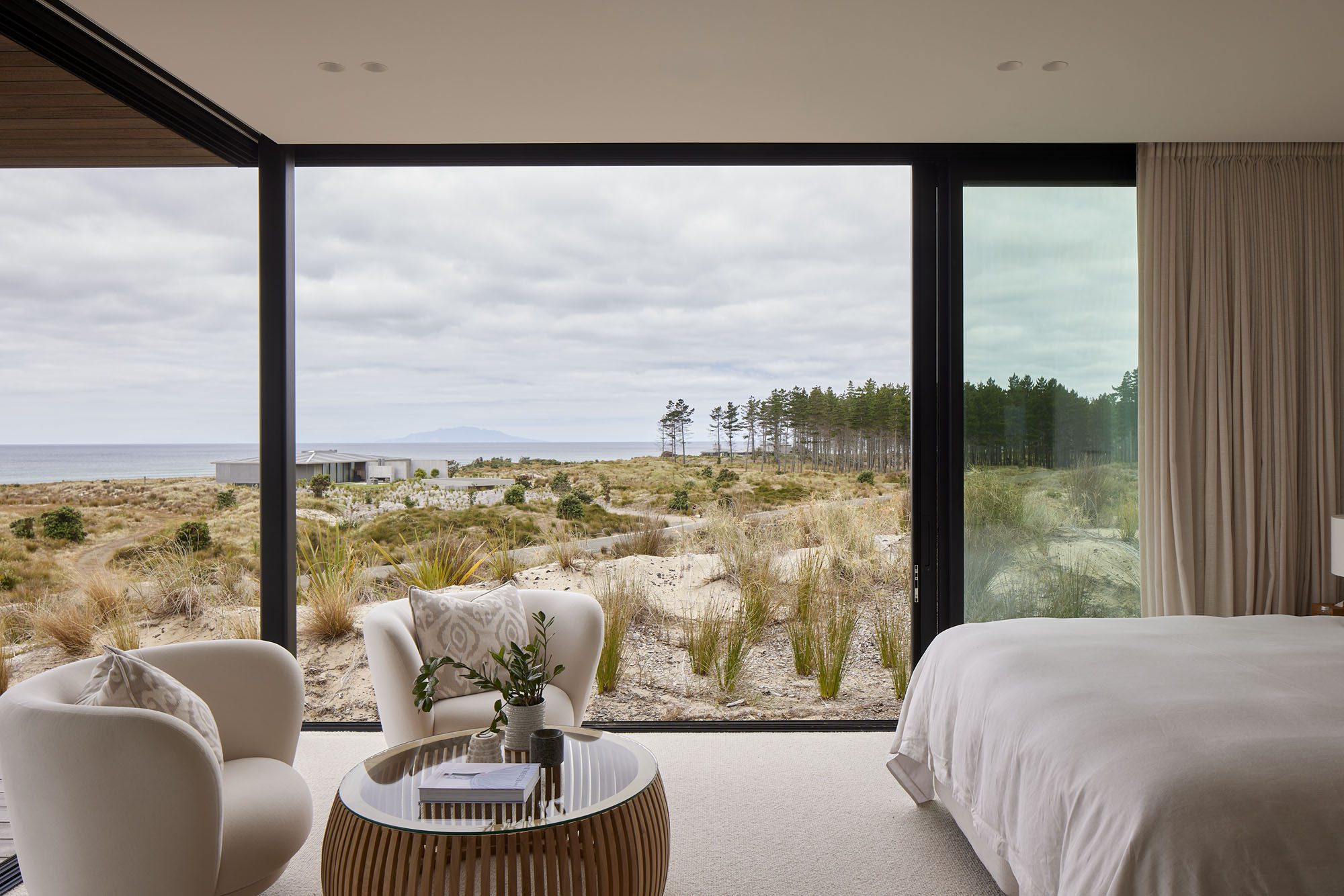
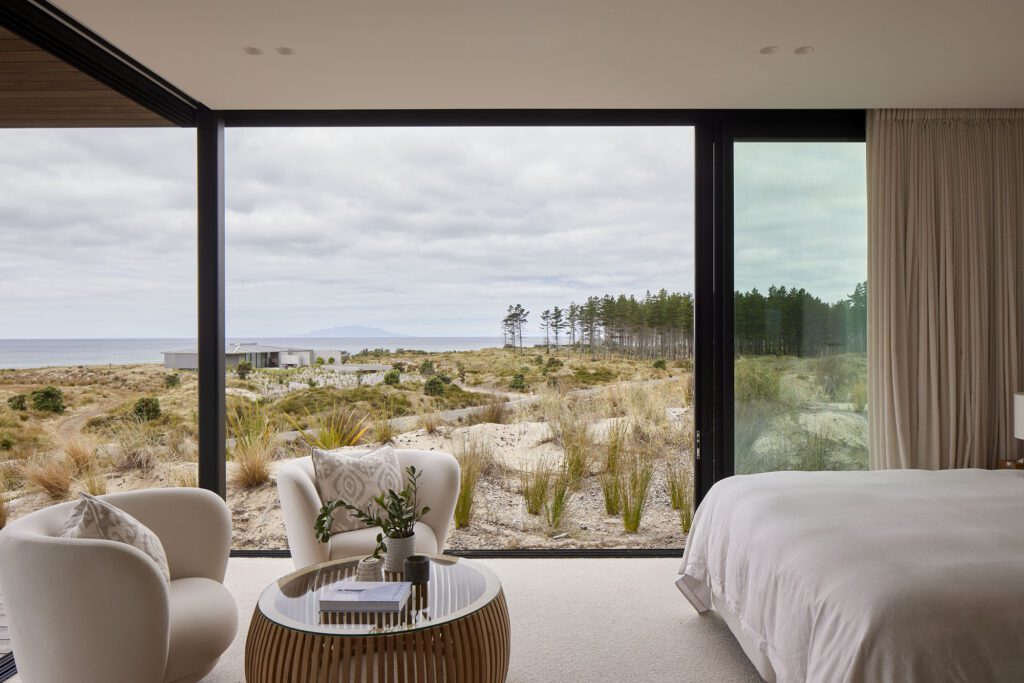
In response, the architect oriented the house directly towards the Hen and Chickens Islands, with all primary living areas aligned along a fully glazed north-east frontage. 

From the entry, there is an uninterrupted line of sight through to the ocean, framing the sculptural bravado of Sail Rock beyond. The plan is organised around a sheltered central courtyard, which buffers coastal winds and anchors the home. Internal living spaces open onto generous covered decks facing the sea, extending daily living outdoors. 

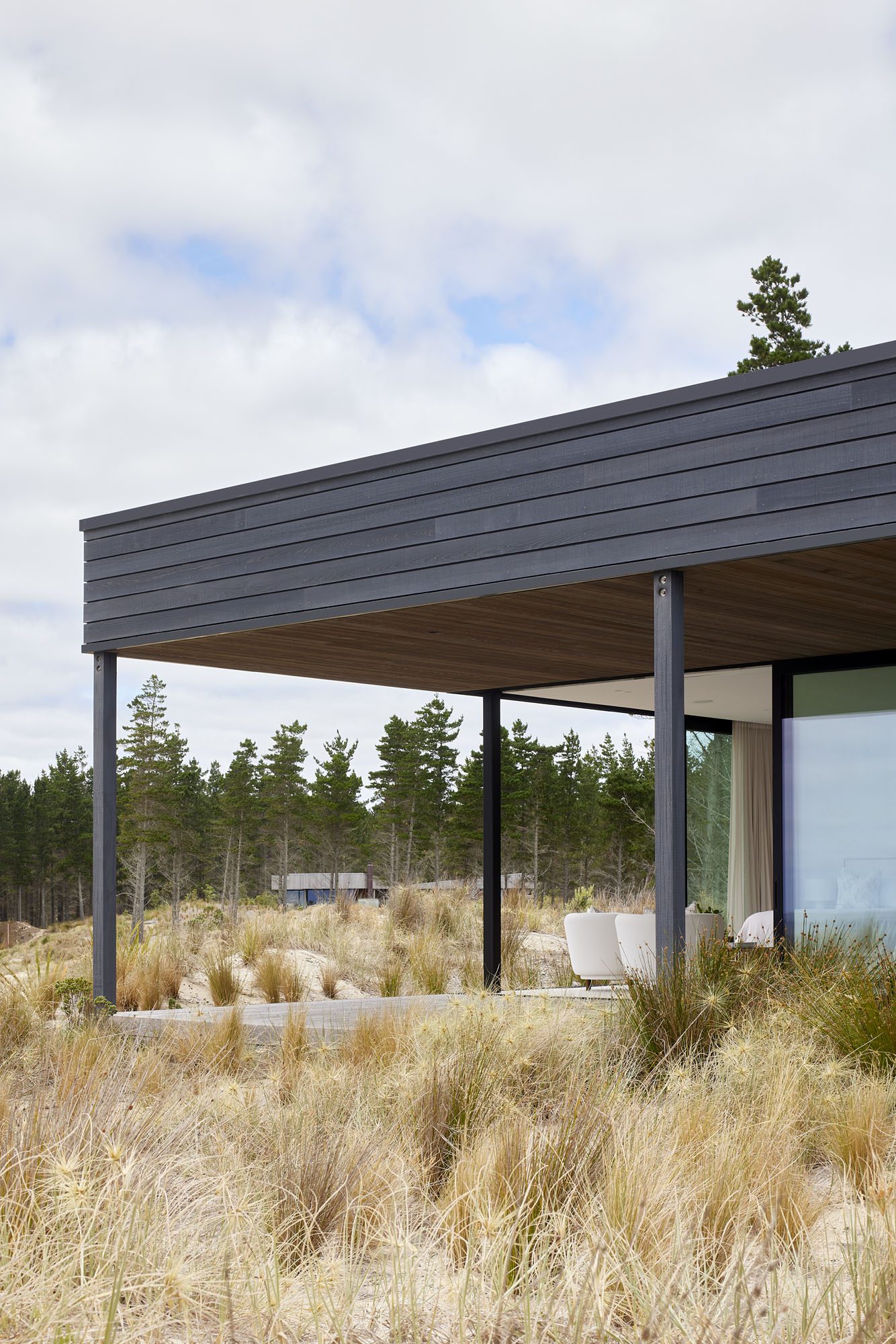
A four-metre cantilevered overhang defines the front elevation, providing shade and privacy while reducing glare when viewed from the beach — a critical requirement under the Tara Iti design guidelines. 

A 40x25 metre building platform restricted the size and placement of the building. Critical considerations of the Tara Iti design guidelines were low visual impact from the beach and subtlety in the landscape.
Swivel chairs in natural tones, sand-coloured curtains and carpets mimic the curvature and tonality of the landscape.

Material selection was driven by durability and context. Cedar weatherboard cladding was chosen for its performance in salt-laden air and its natural coastal palette, with wider horizontal rusticated boards at the fascia and narrower vertical shiplap boards articulating the walls. 

Anodised aluminium joinery and profiled metal roofing provide corrosion resistance and long-term reliability. 

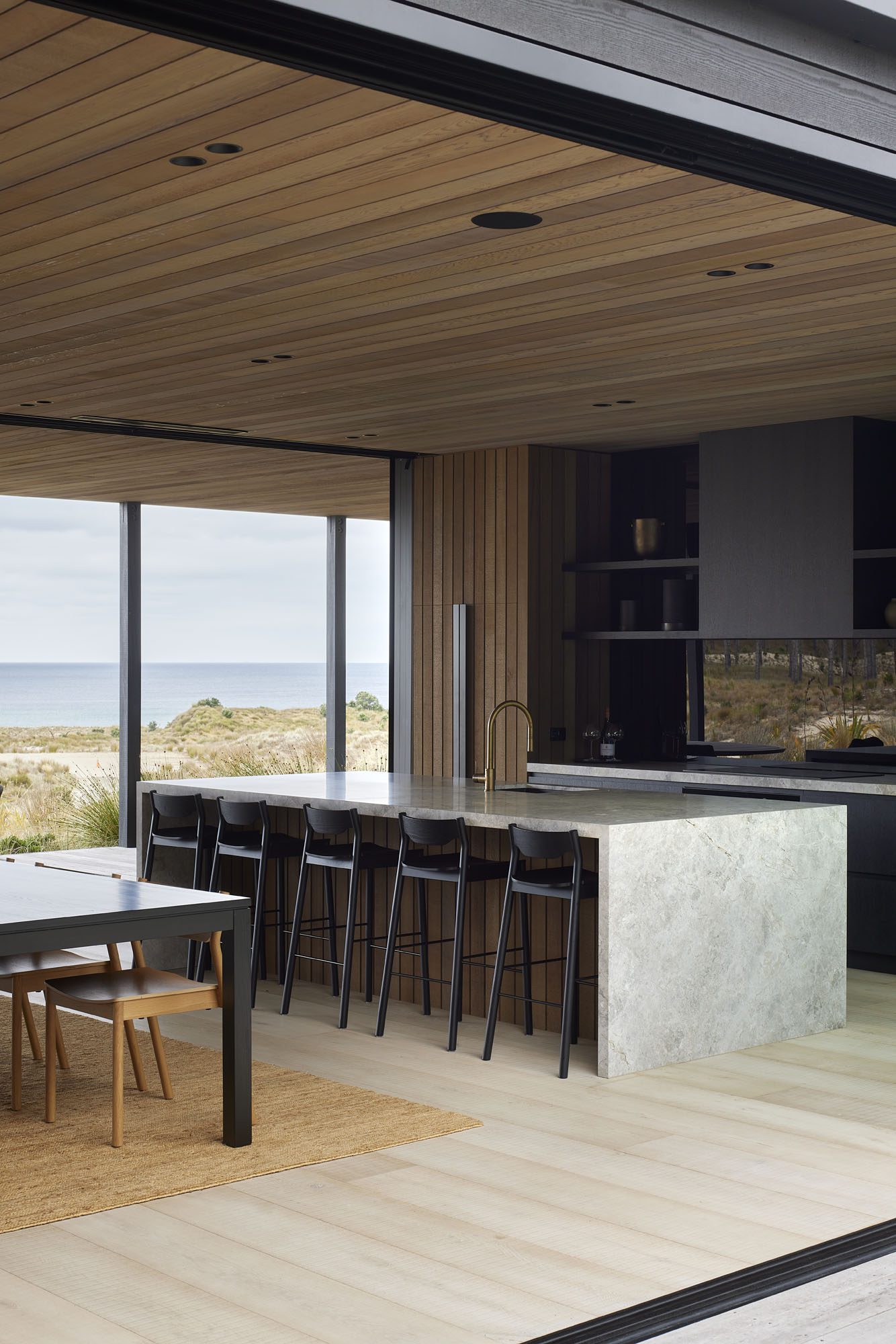
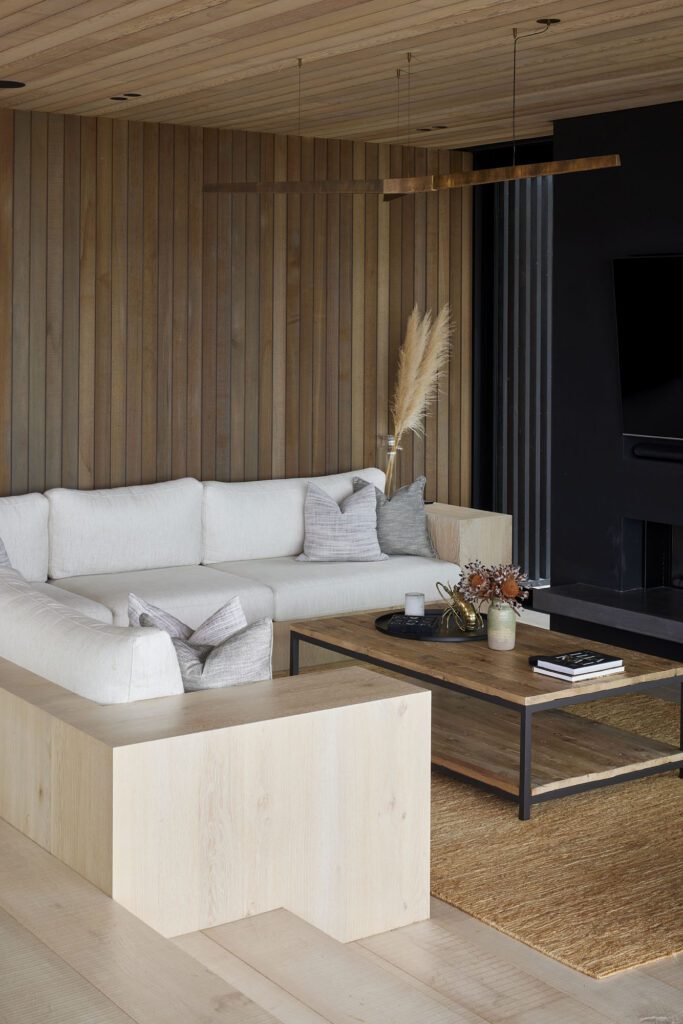
The interiors were a collaboration with one of the owners, Emma MacPherson, who, according to the architect, “was incredibly collaborative and hands-on”. Furnishings and textures seem to seek variety without eclecticism, with slender shapes and complementary materials that are subservient to the coastal tones that surround them. 

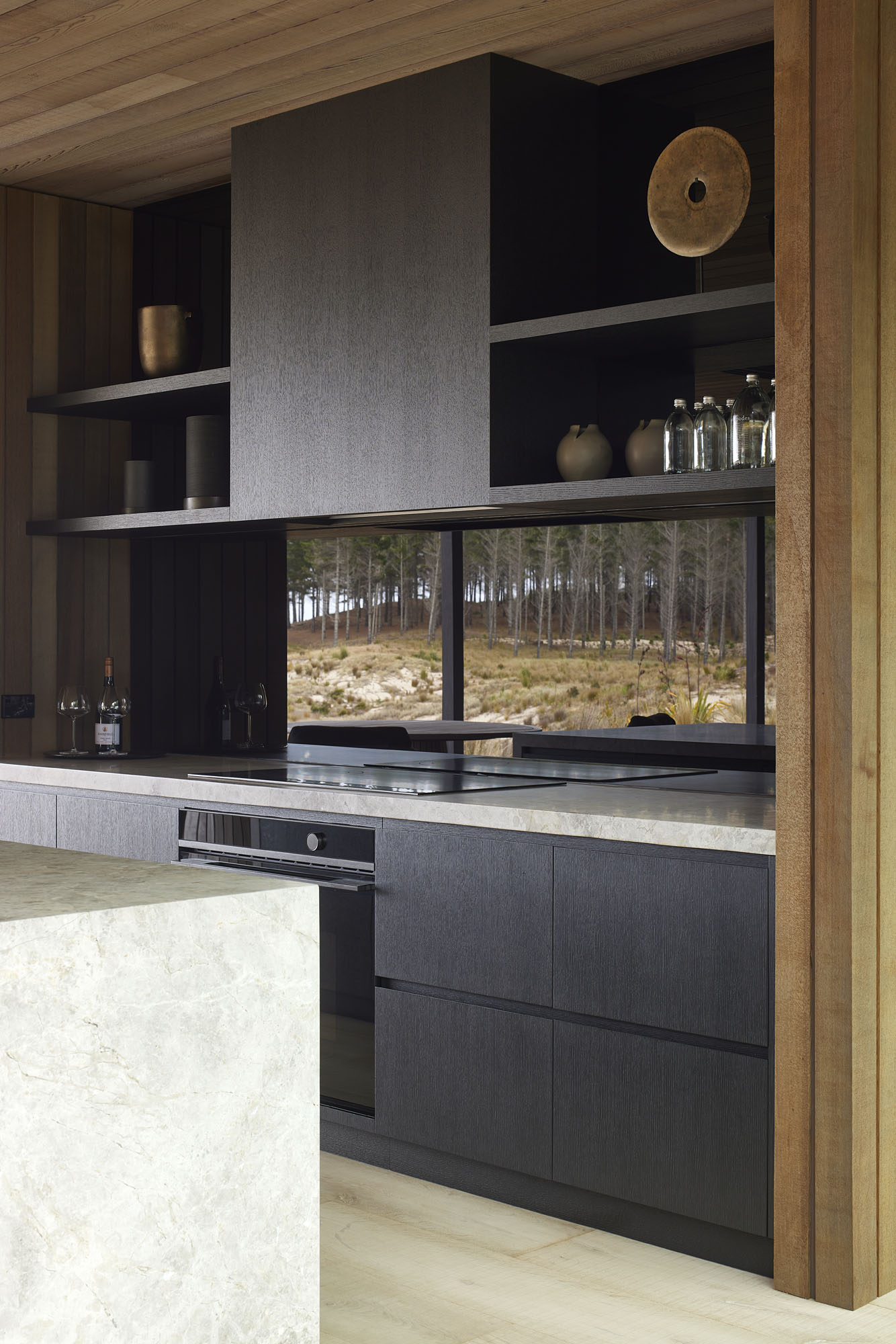
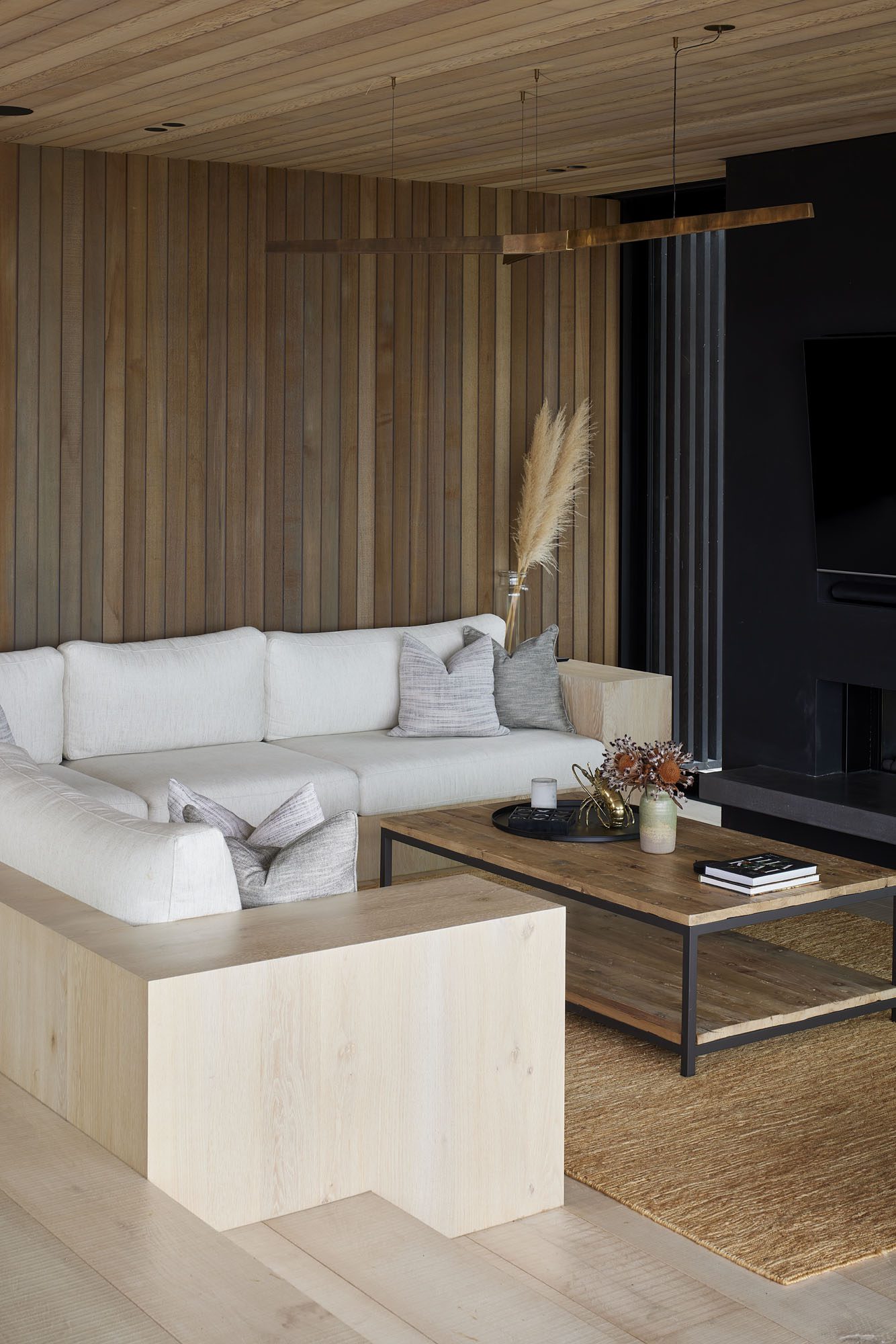
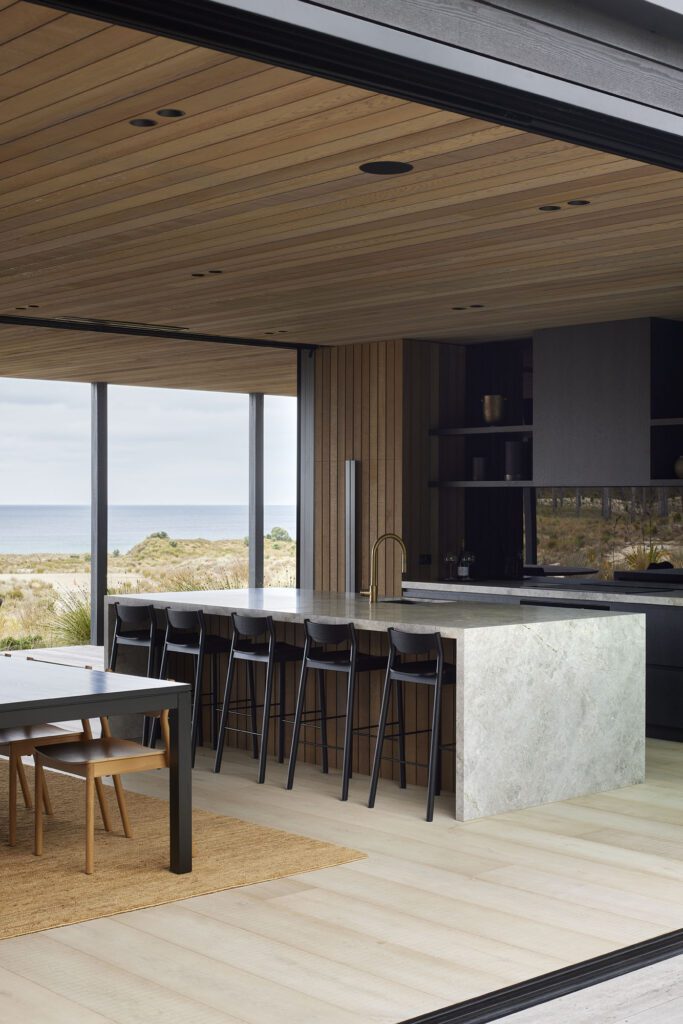
The main social area includes a height change into a semi-sunken living room, as well as a kitchen defined by stone, and connection both to the interior as well as to the sand dune that surrounds it.
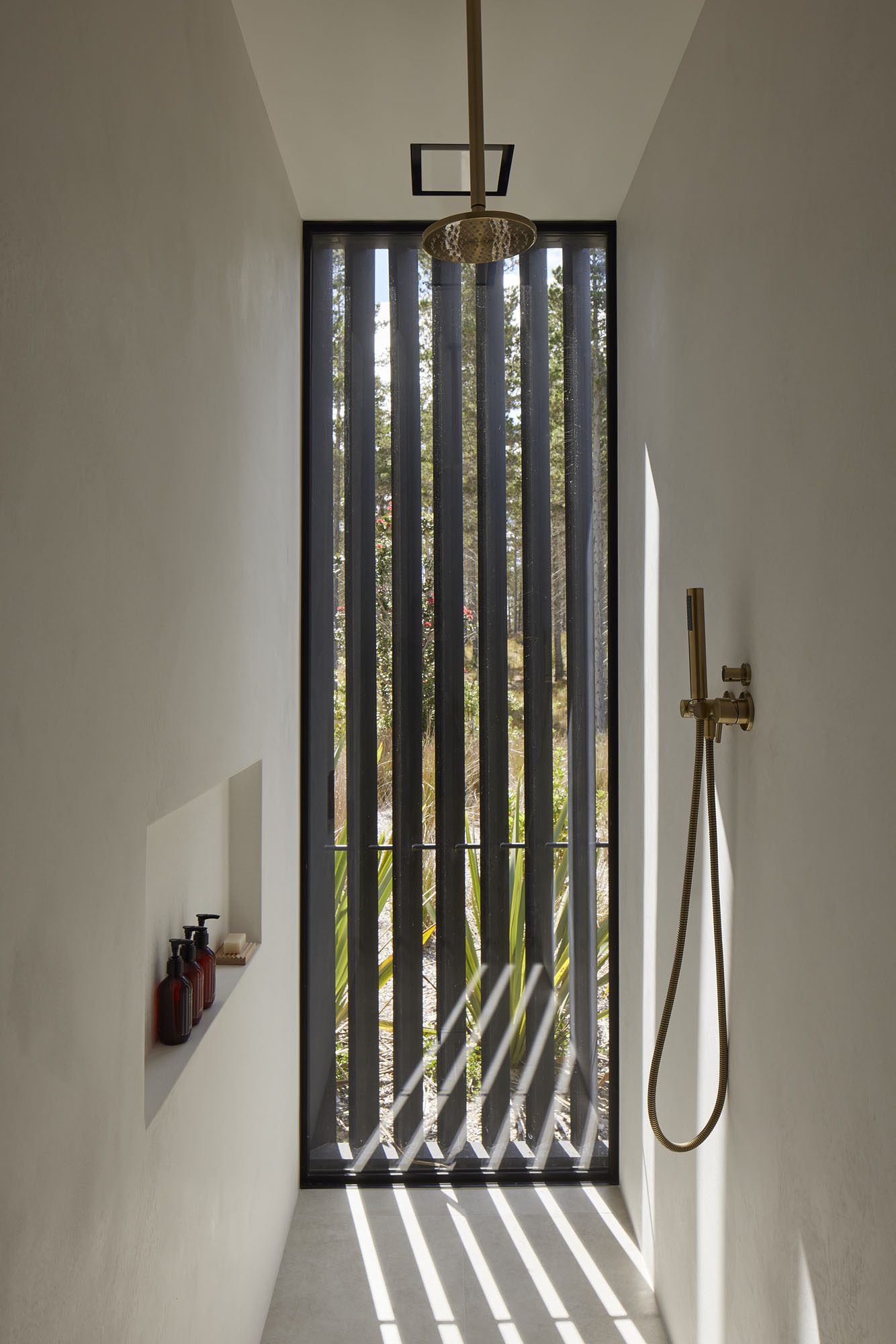
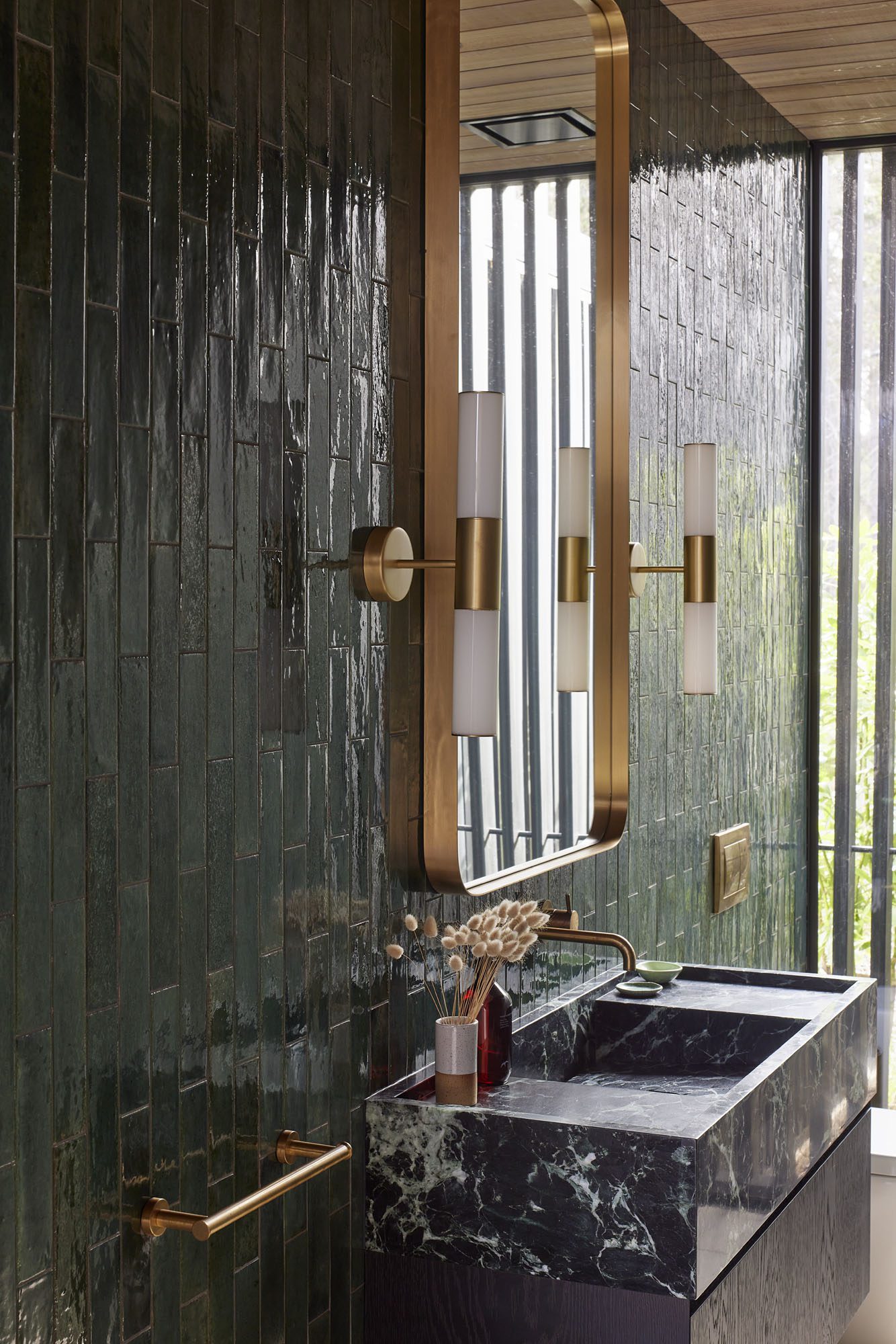
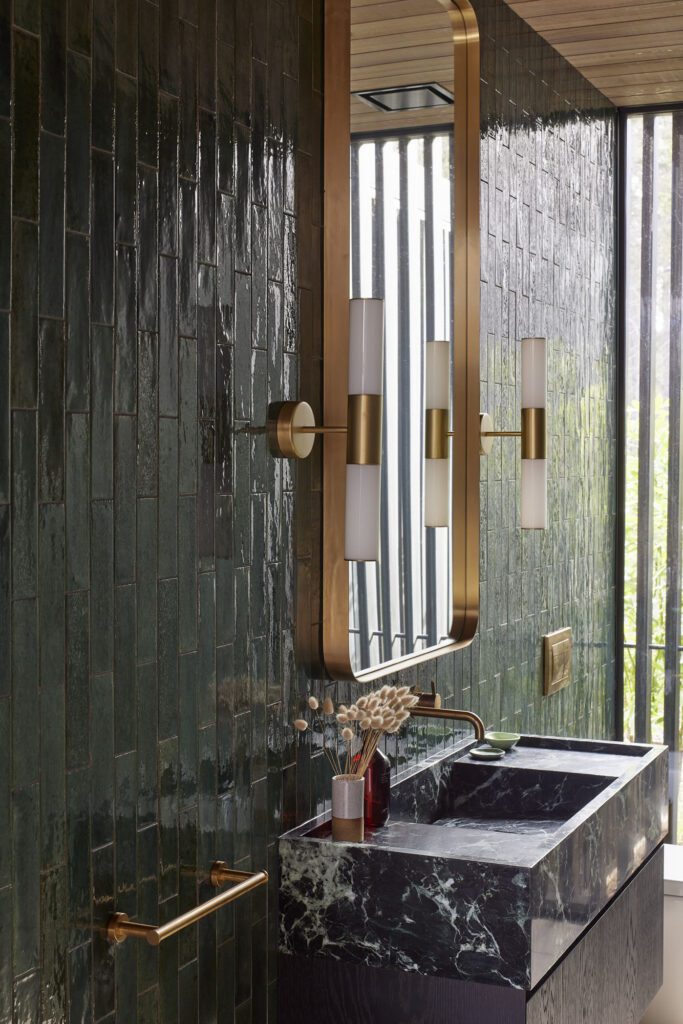
Green tiling and brass accents offer a touch of glam while stone with significant veining continues the bathroom's drama.

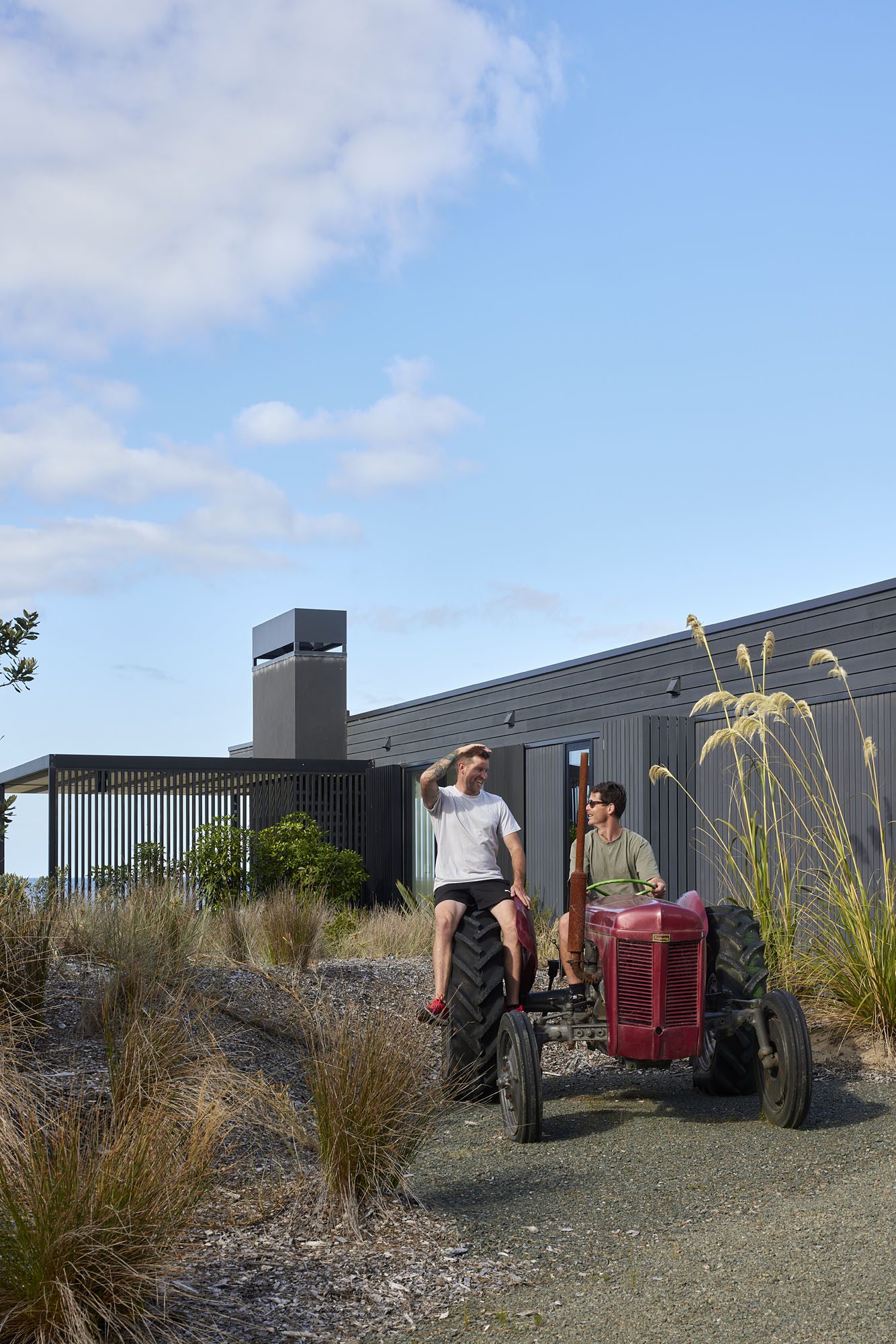
As for the origin of the project’s name: The Tractor House? As legend has it, a few times, when John phoned the clients — farmers from Hawke’s Bay — they mistook him for the tractor mechanic who was regularly needed to fix an unreliable machine. As a parting gift after the project was completed, the builders (Create + Construct) and John went halves in the purchase of an old, red Massey Ferguson tractor for the owners. 

“I don’t know what came over me, really,” John jokes. “I just thought it would be a really cool thing to do and I liked the clients, so we did it!” 

The beautiful, old machine, with its prominent grille, vertical exhaust pipe, and green steering wheel, marks the arrival along the driveway. 

“It became more of a sculpture than a machine,” the architect says, “but ‘Tractor House’ really stuck; it’s what everyone calls it now.” 

This project has resulted in a house that is technically resolved, quietly expressive, and closely attuned to both its owners and its peculiar setting. 

Words: Federico Monsalve
Images: Simon Wilson

Project Credits

Architecture: Studio John Irving Architects

Build: Create+Construct

Latest video features

In the Coromandel, a home with a humble profile and a thoughtful design makes the most of a stunning location.

Built with awe-inspiring attention to detail, this Arrowtown home is a fresh interpretation of a familiar Otago rural vernacular.

This sculptural Northland bach is a perfect north arrow on a remote farm high above the sea.

With the sun on its bow and the community at its stern, this is a house in which the elements are always front of mind.

Trending articles

Homes

Tractor House

The latest Studio John Irving Architects addition to the Tara Iti golfing compound is a restrained, single-level courtyard house with an old red tractor at
Homes

Textured Bach

A hillside sculpture in which to live and work, this family home and office — the 2024 City Home of the Year — is generous
Homes

Waimauku House

Named the 2023 Home of the Year, this expansive family home stretches across a quiet valley on the outskirts of Auckland. Conceived as both sanctuary