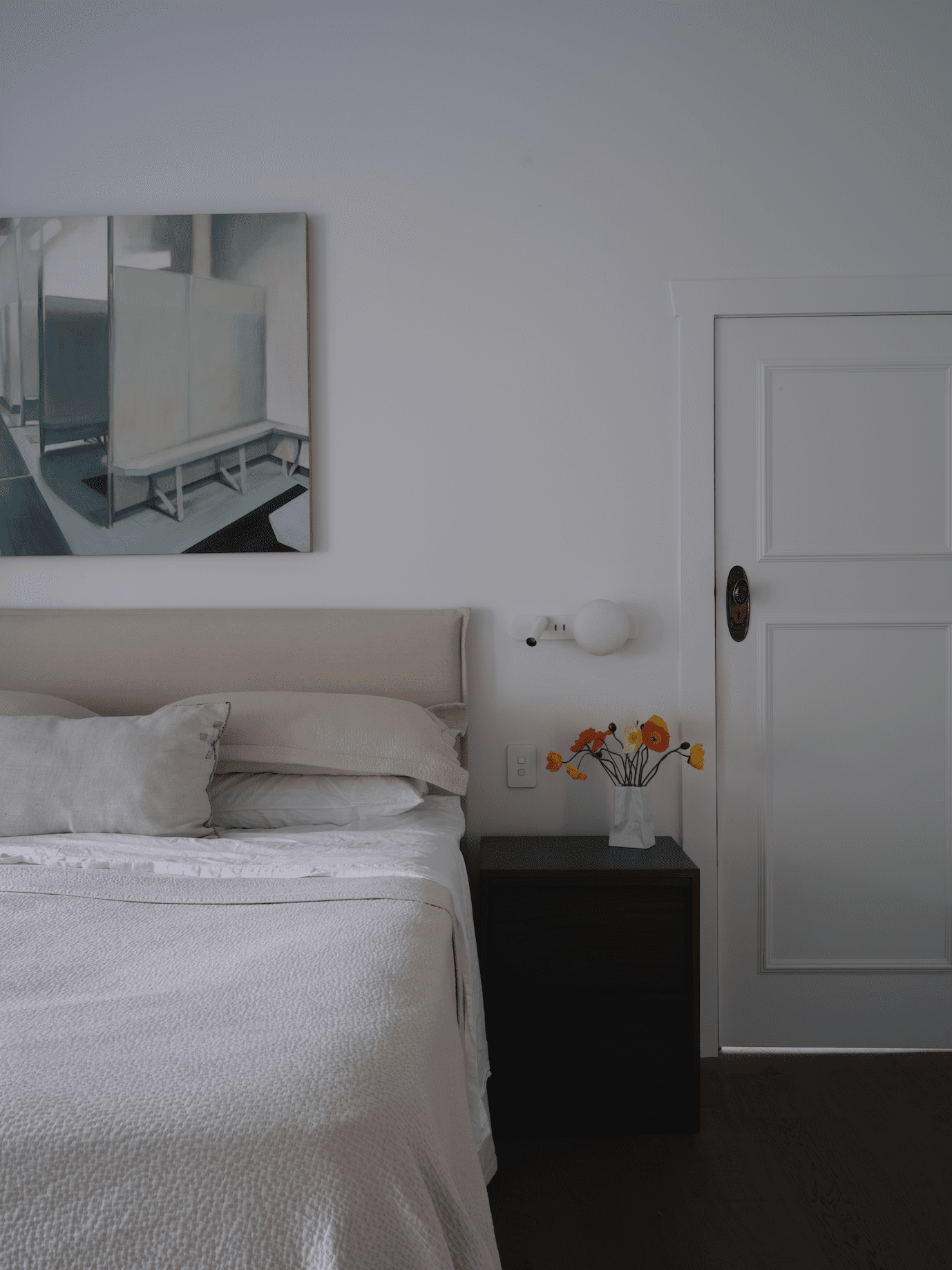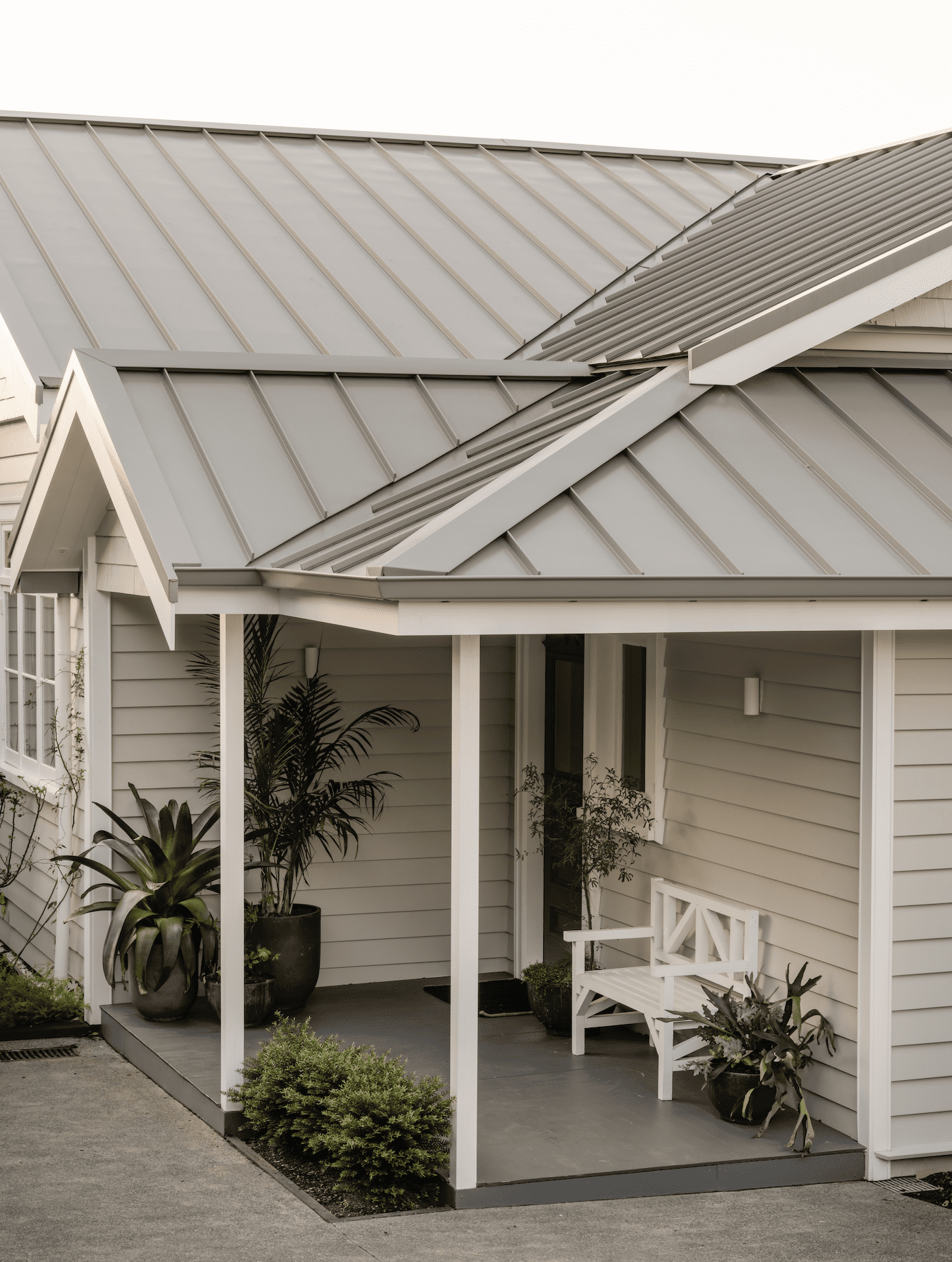
Managing the balance between architecture and ostentation can be a tightrope. It’s something that José Gutiérrez thinks deeply about. In this suburban setting — a character house on an arterial road — he was asked to craft an extension that was true to form but expressive of the owners’ personality. “New work with old soul” is the way José puts it.
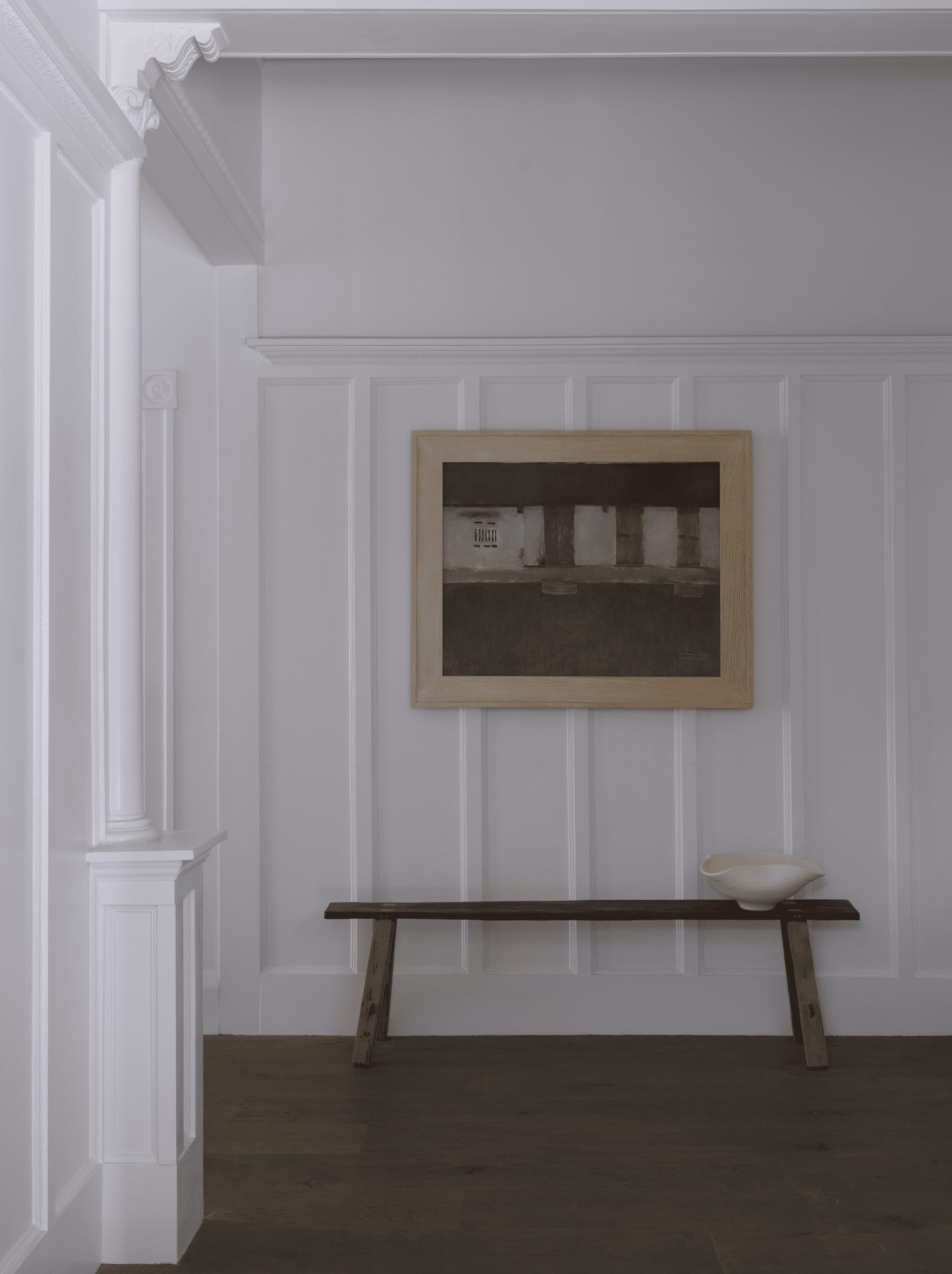
Built in 1927, this transitional villa has an elegance that was emphasised by small interventions that included the removal of the ‘choc-chip’ brickwork that footed posts at the entry, a ‘tickling’ of the portico, and the repainting of the weatherboards in palest grey. These changes harmonised with the clients’ wish for a calm, relaxing environment; a light touch that was thoughtful and considered.
The owners, who have lived here for 23 years, had quite a while to ruminate. “We bought just before we got married, so had a long time to marinate in the house and see what works,” says Leigh Richardson.
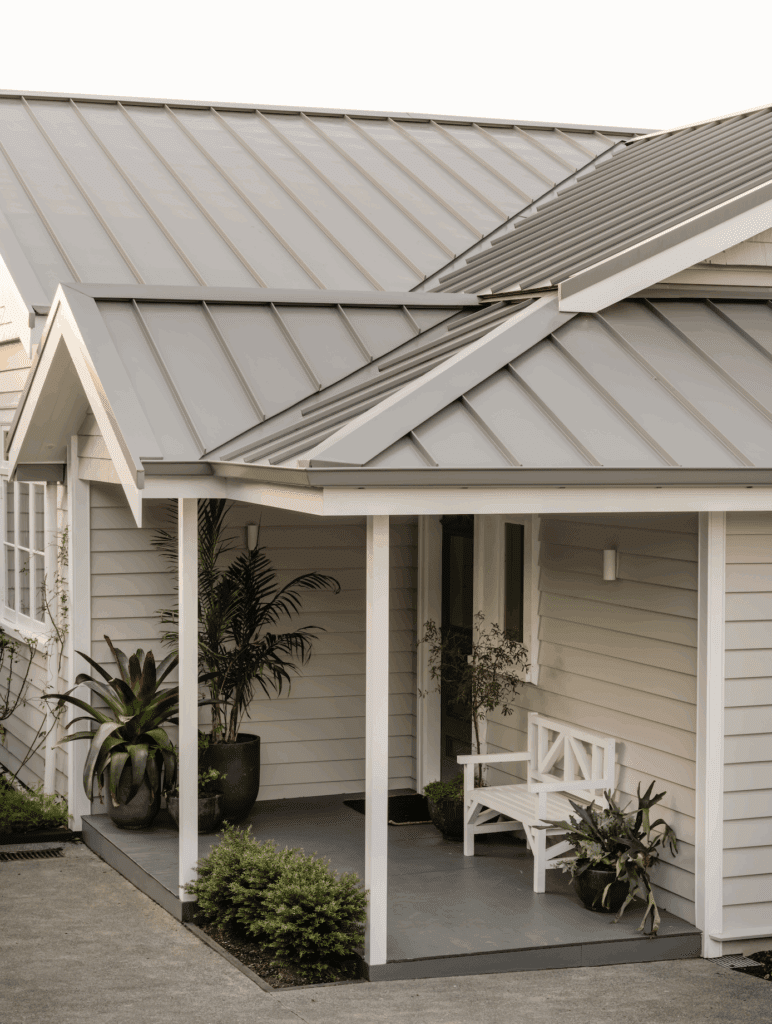
Beneath her appreciation of the decorative palette of pressed tin ceilings, stained glass door and window insets, and moulded plaster features, she enjoys the simplicity of minimalism.
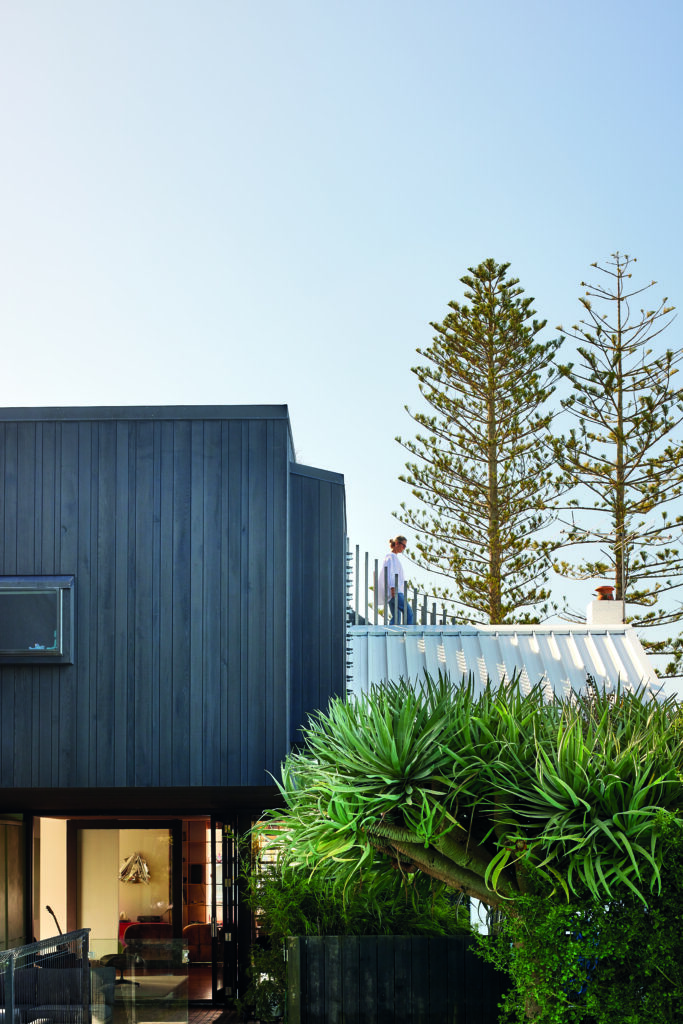
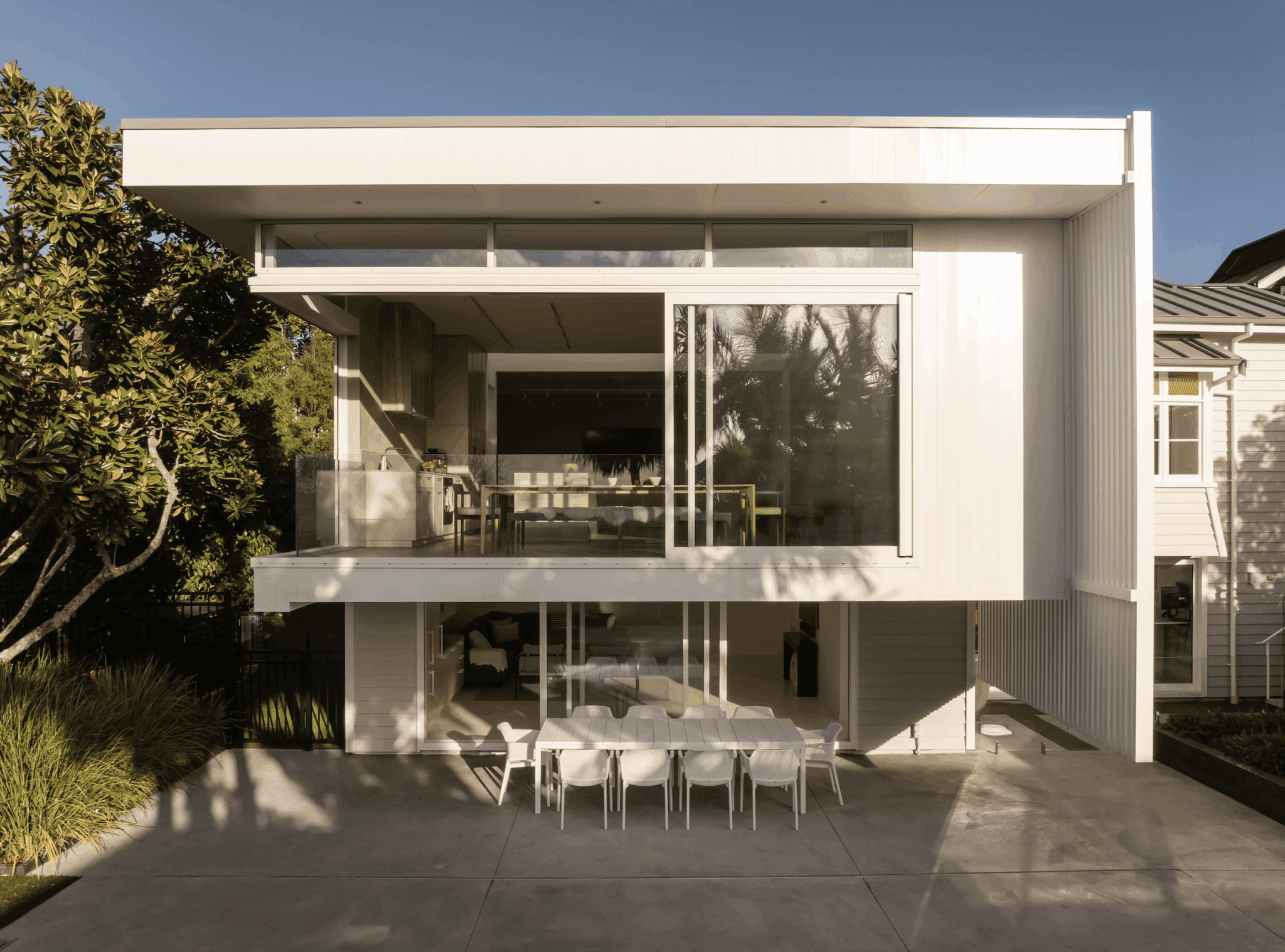
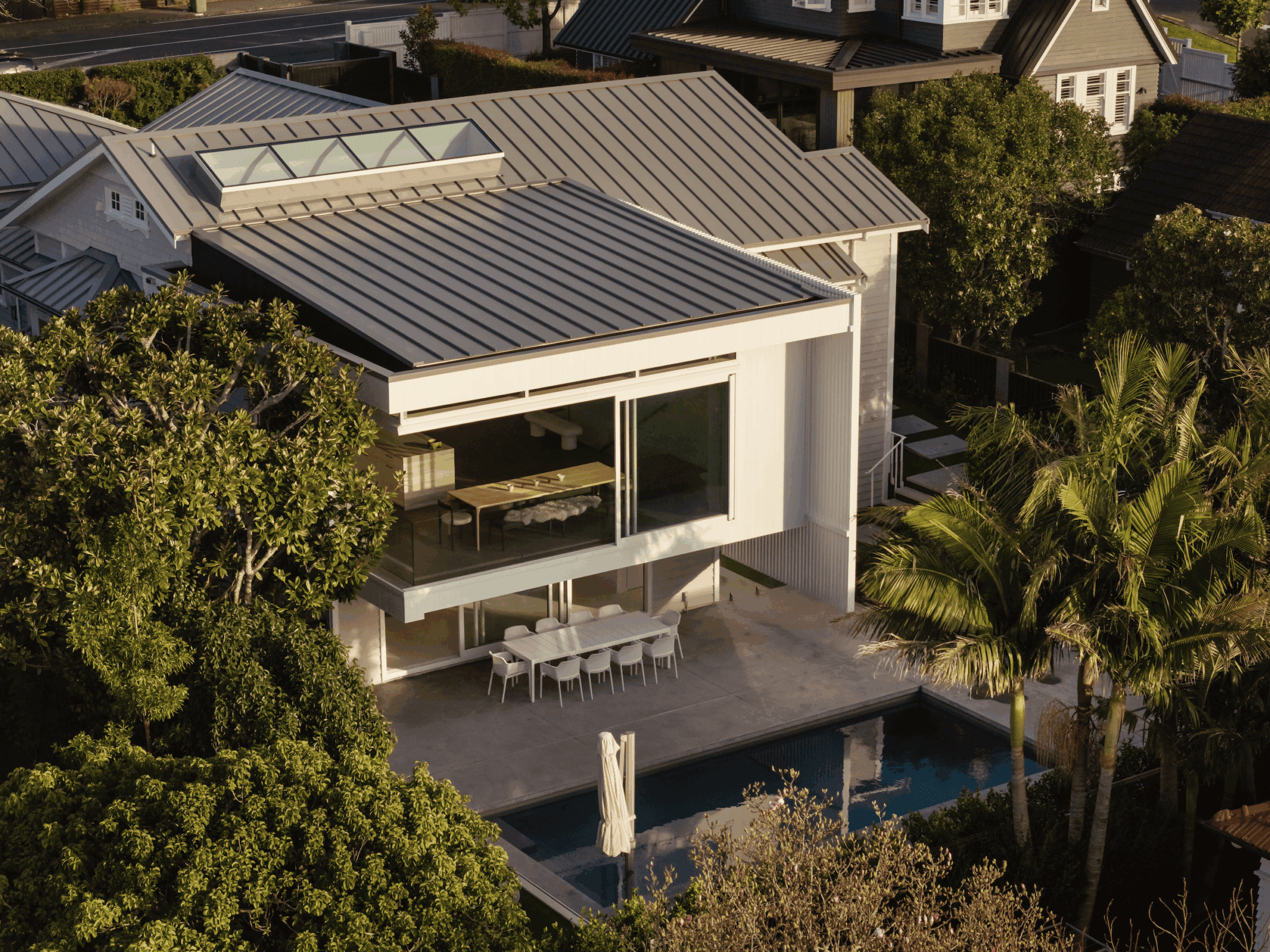
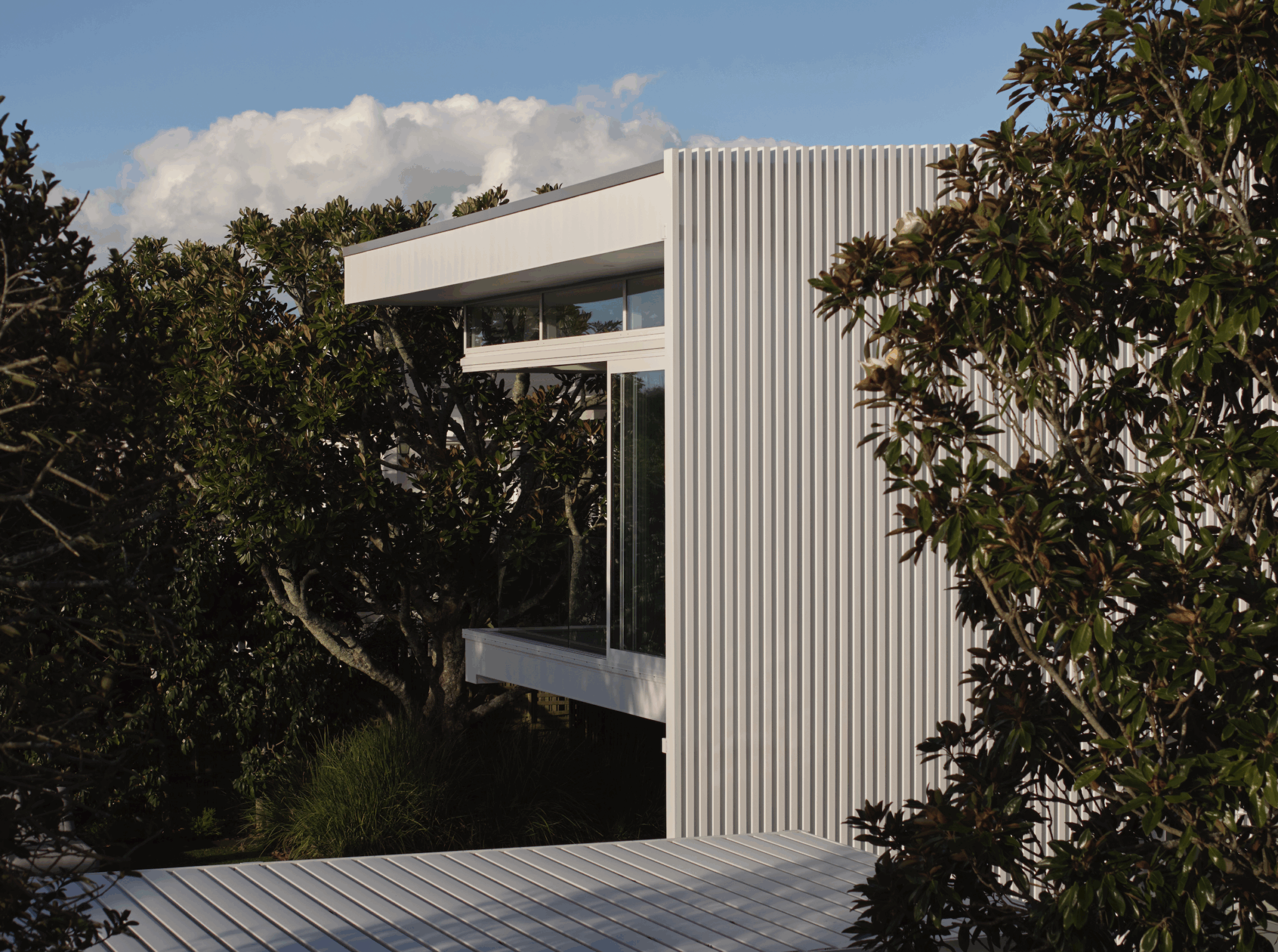
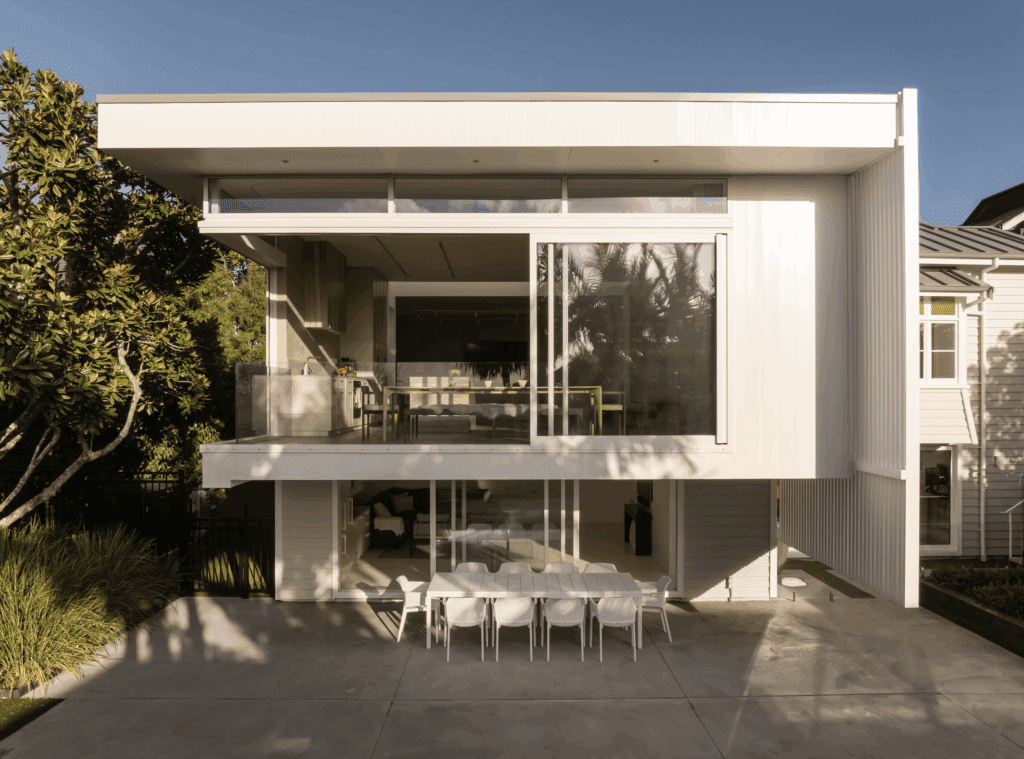
Given this parameter, José was free to deliver something bold and with drama that nevertheless keyed into the context. Where once was a clumsy addition and a kidney-shaped pool, now a glazed white, two-storey box cantilevers out towards a streamlined version. It floats above the patio, creating shelter without encroaching on the usable area.
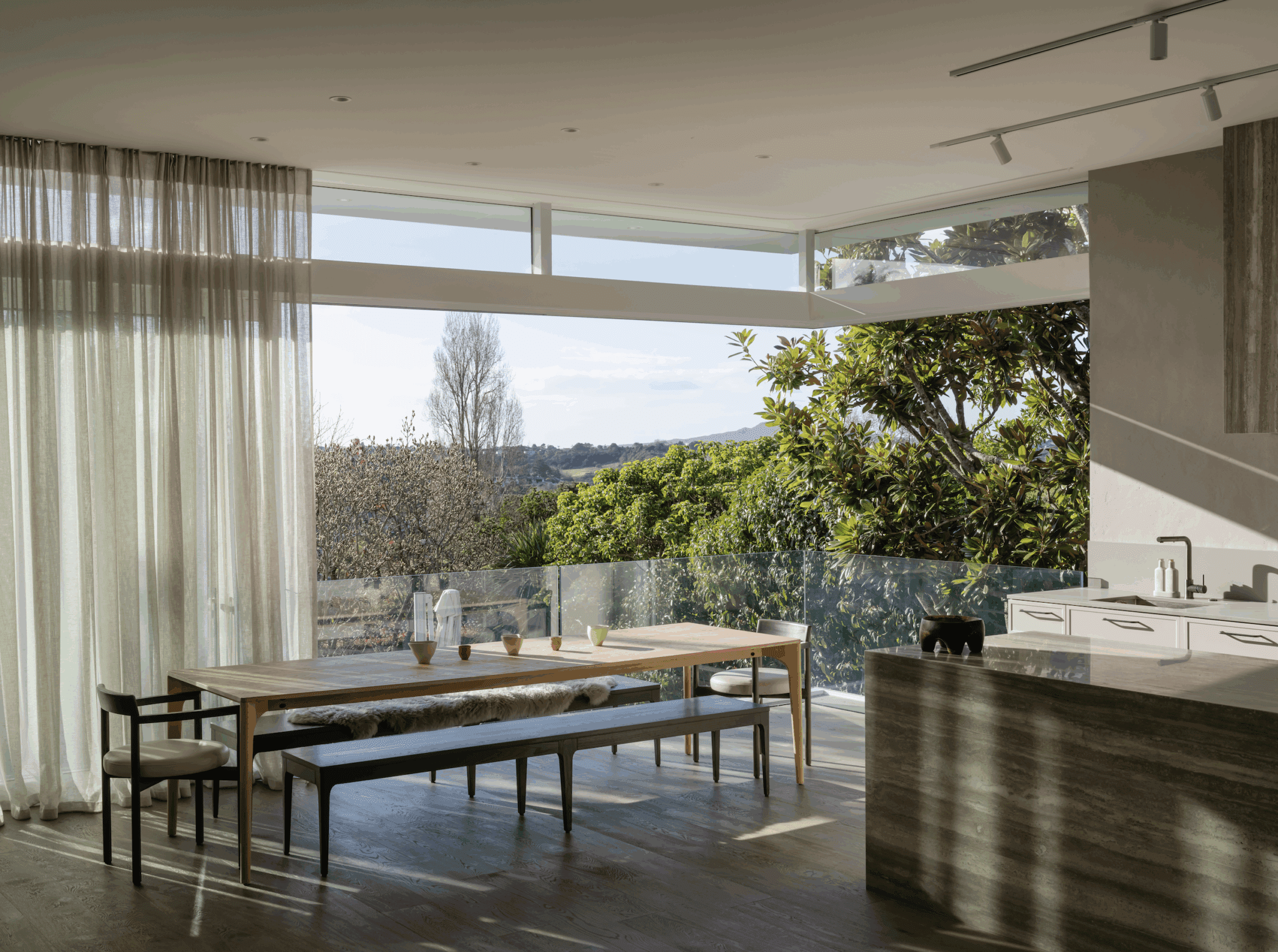
Concrete flows straight through as pool coping. Inside, a light well ceiling defines the line between old and new. “It brings light into the central part of the plan, but we also added a downstand to accentuate the transition,” says José. A frameless corner, where the sliders peel back, connects the interiors to the trees and a view out across the harbour. Outside, the horizontal planes of the north-facing elevation are a strong statement.
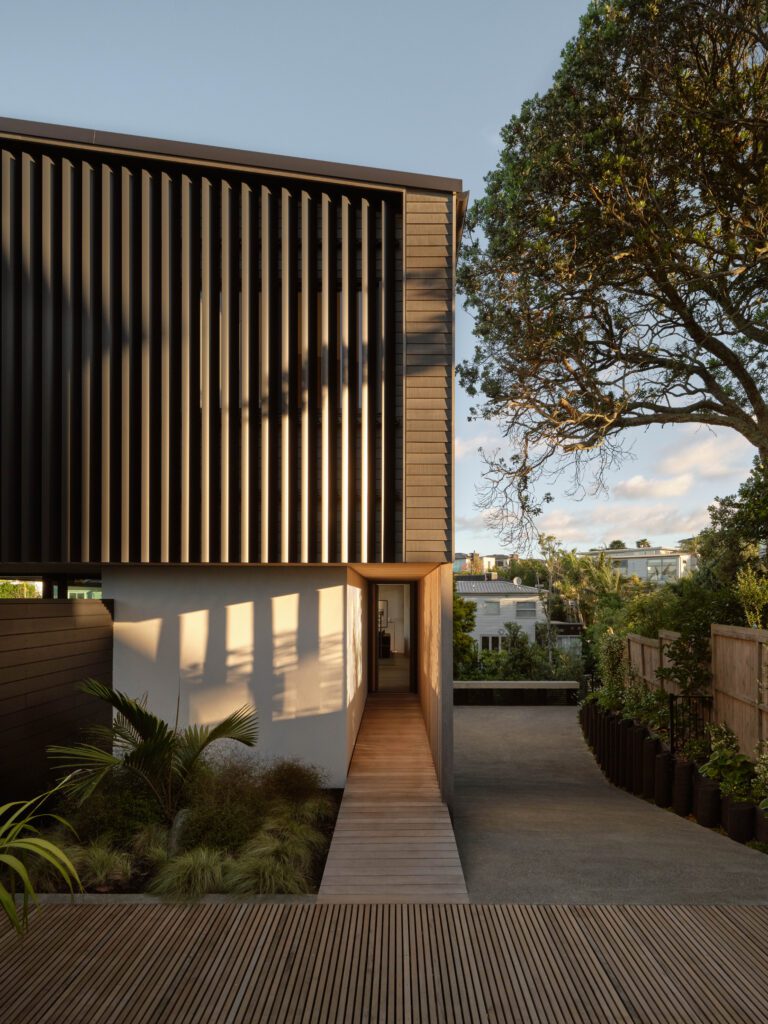
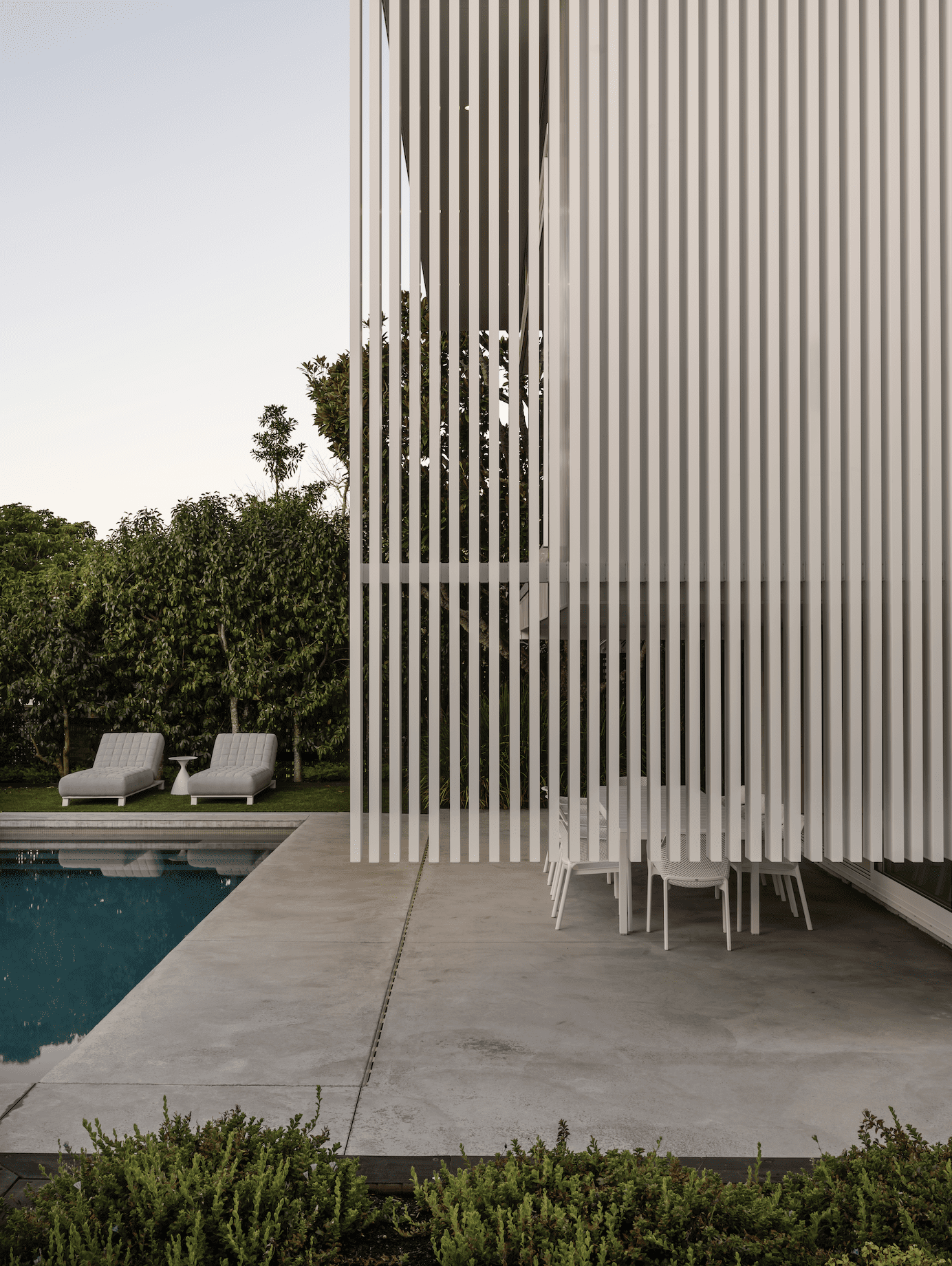
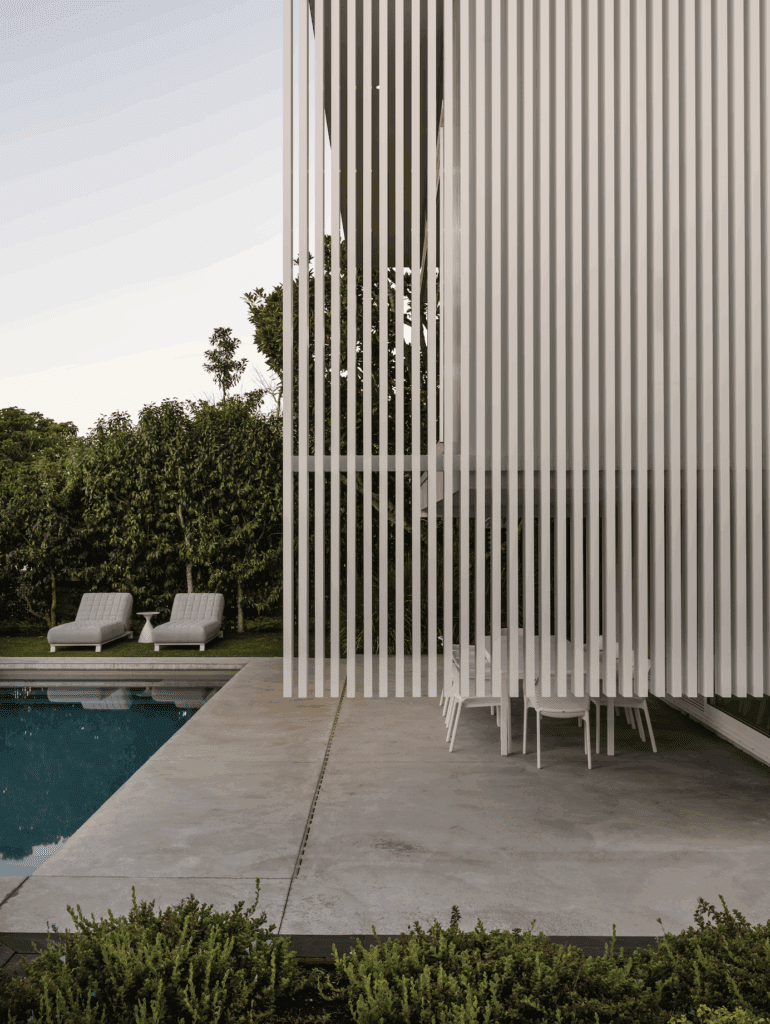
A waterfall of deep battens that stops short of the ground screens the west elevation of the box. José acknowledges that he is drawing a long bow when he says that he sees this as a bird’s wing. In his mind’s eye, it is a white heron.
“The ‘wing’ lightens the form and lifts it,” he says. “It creates a moment of tension between weightlessness and mass.” Shadows passing across the battens lend dynamism to the draped structure. “It’s not static; it’s like a moment in time,”he adds.
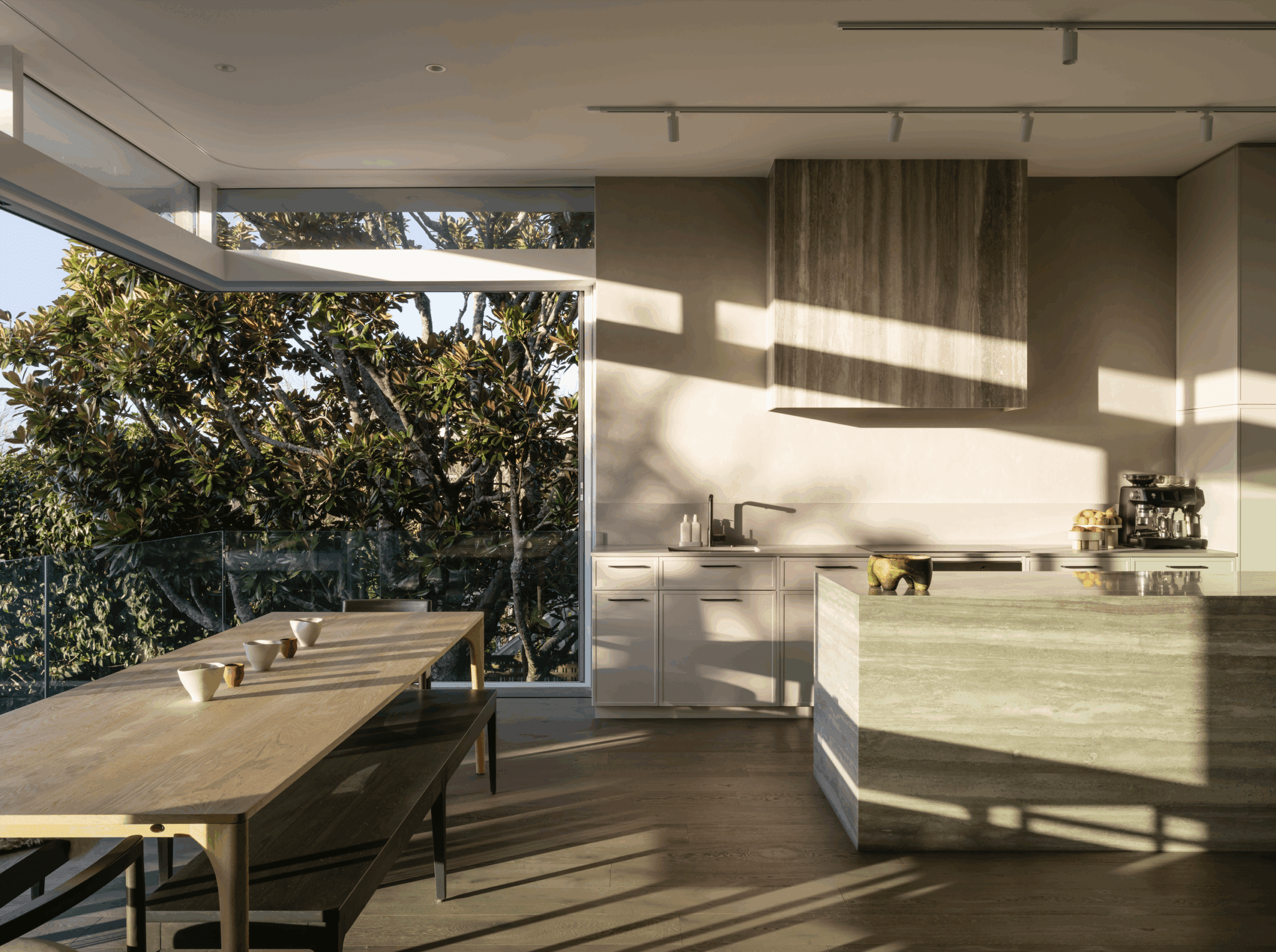
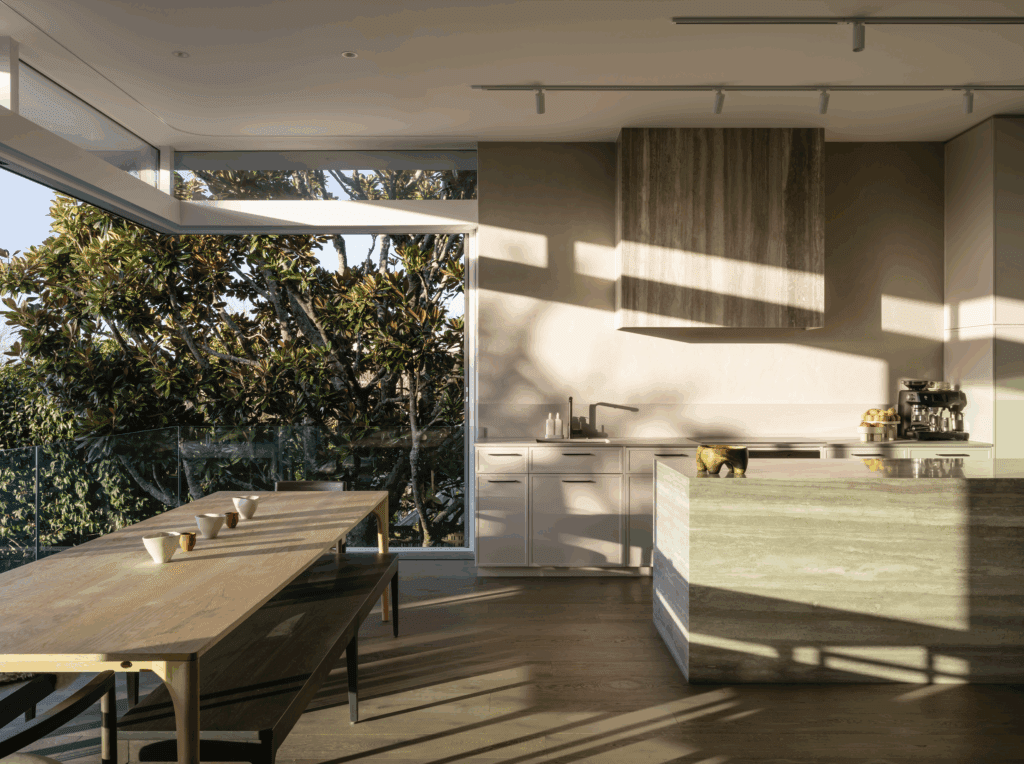
Shadows within the house fall through gauzy drapes to paint the day across newly laid walnut floors in the open-plan kitchen and dining room. A monolithic island is draped in travertine.
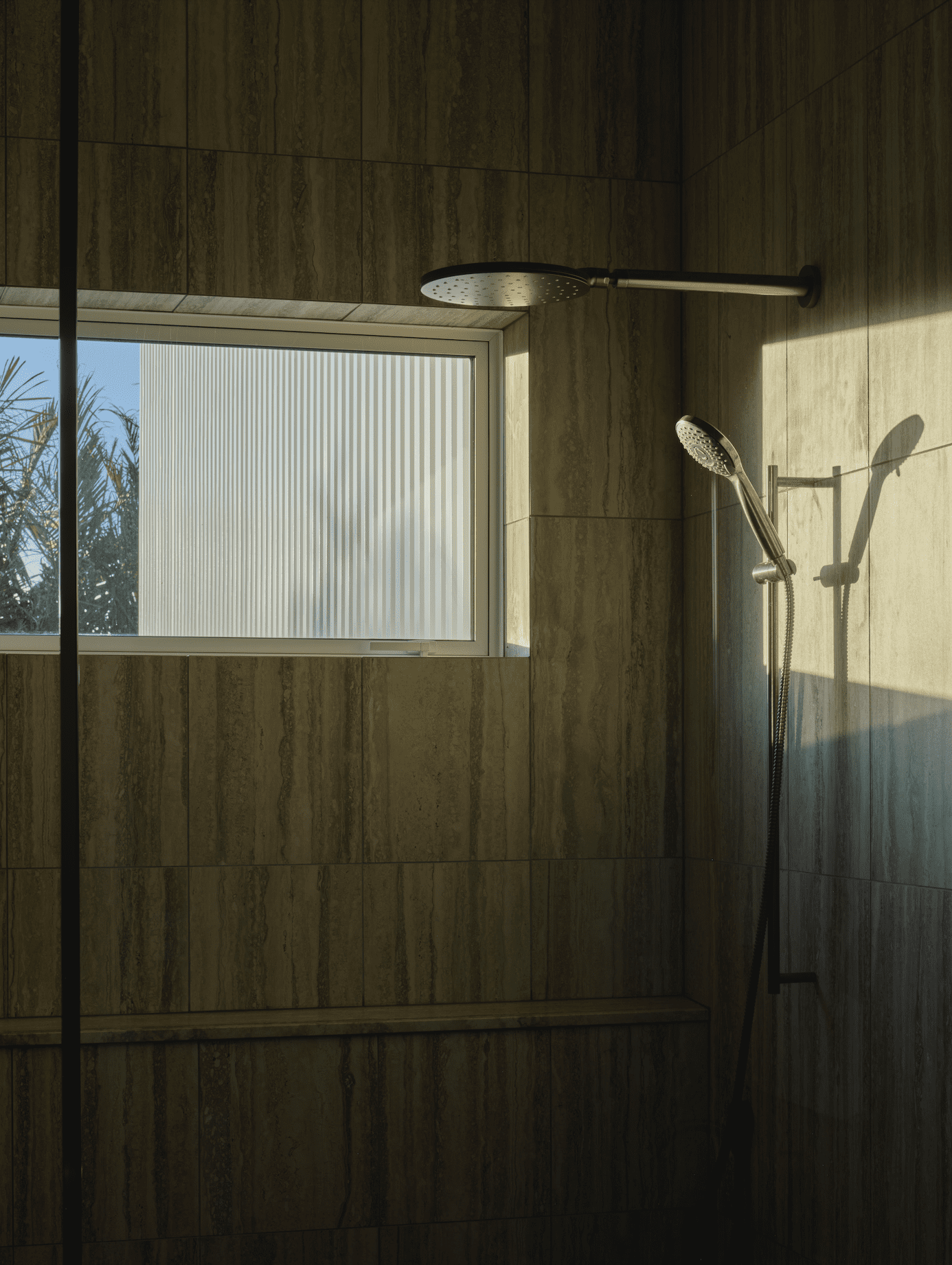
“That idea came from a hotel in Brisbane that had travertine all through the lobby,” explains Leigh. “I needed to have it in the kitchen and bathrooms — it’s so calming and beautiful.”
Simple detail on the cabinetry, blackened-brass handles, and a polished plaster finish on the back wall lend subtle texture.
The once-poky dining zone occupies a hero position near the windows. With the doors stacked away, the structural framework is an abstract edge against the sky.
“Sitting at the table, with the open-corner glazing, it feels as if you are up in the trees and flying,” says José. “The view towards Rangitoto provides a point of reference, giving a real sense of where you are in Auckland.”
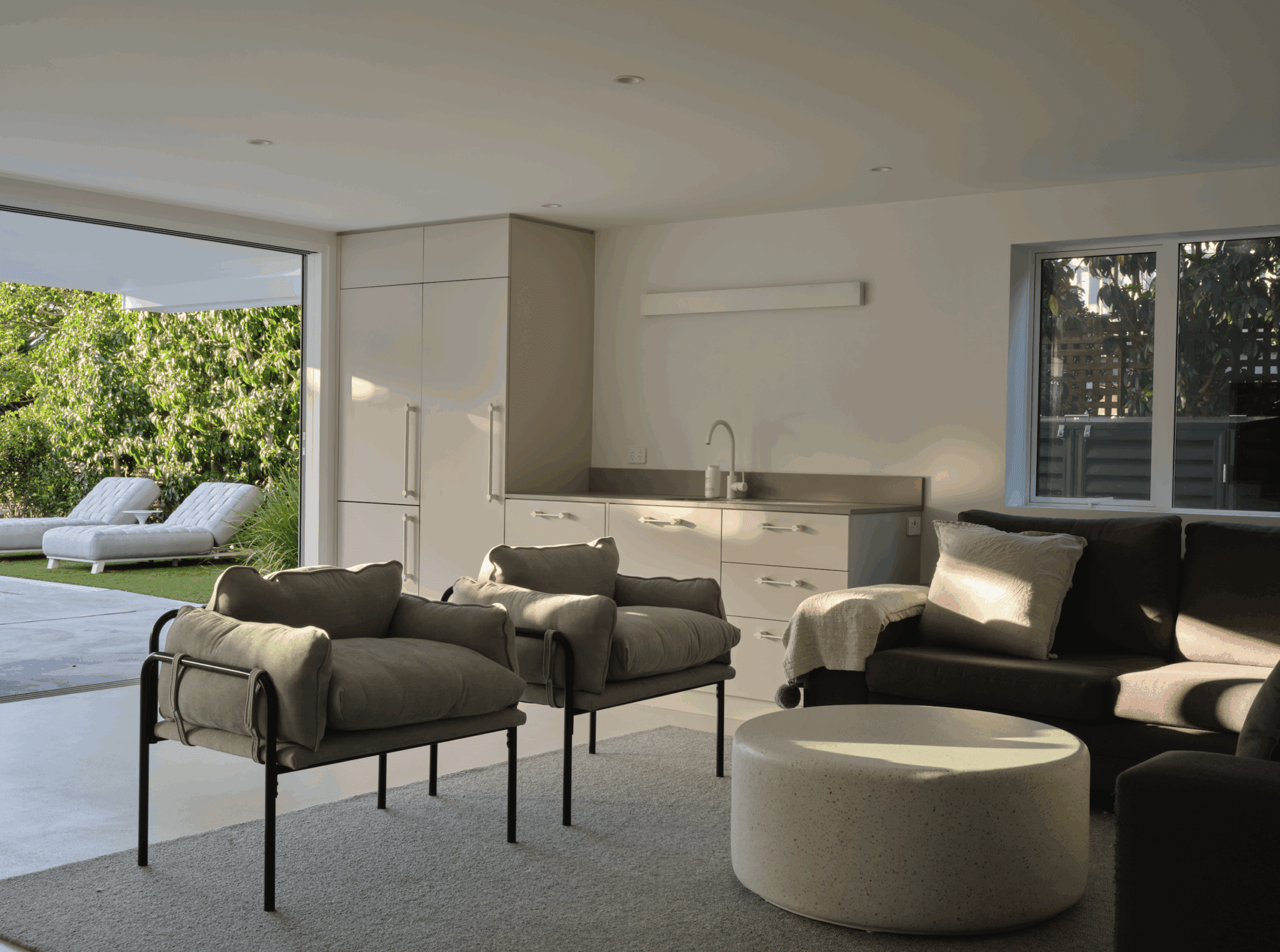
For the owners, who have maximised the architectural potential of their home, right here is where they long to be. In summer, Leigh likes to pack a resort bag and take it down to the pool cabana in the morning.
“I could easily stay there all day until the six o’clock news comes on,” she declares.
Shielded from the busy thoroughfare, this quiet sanctuary provides its own entertainment, sunrise and sunset reflected in the glass.