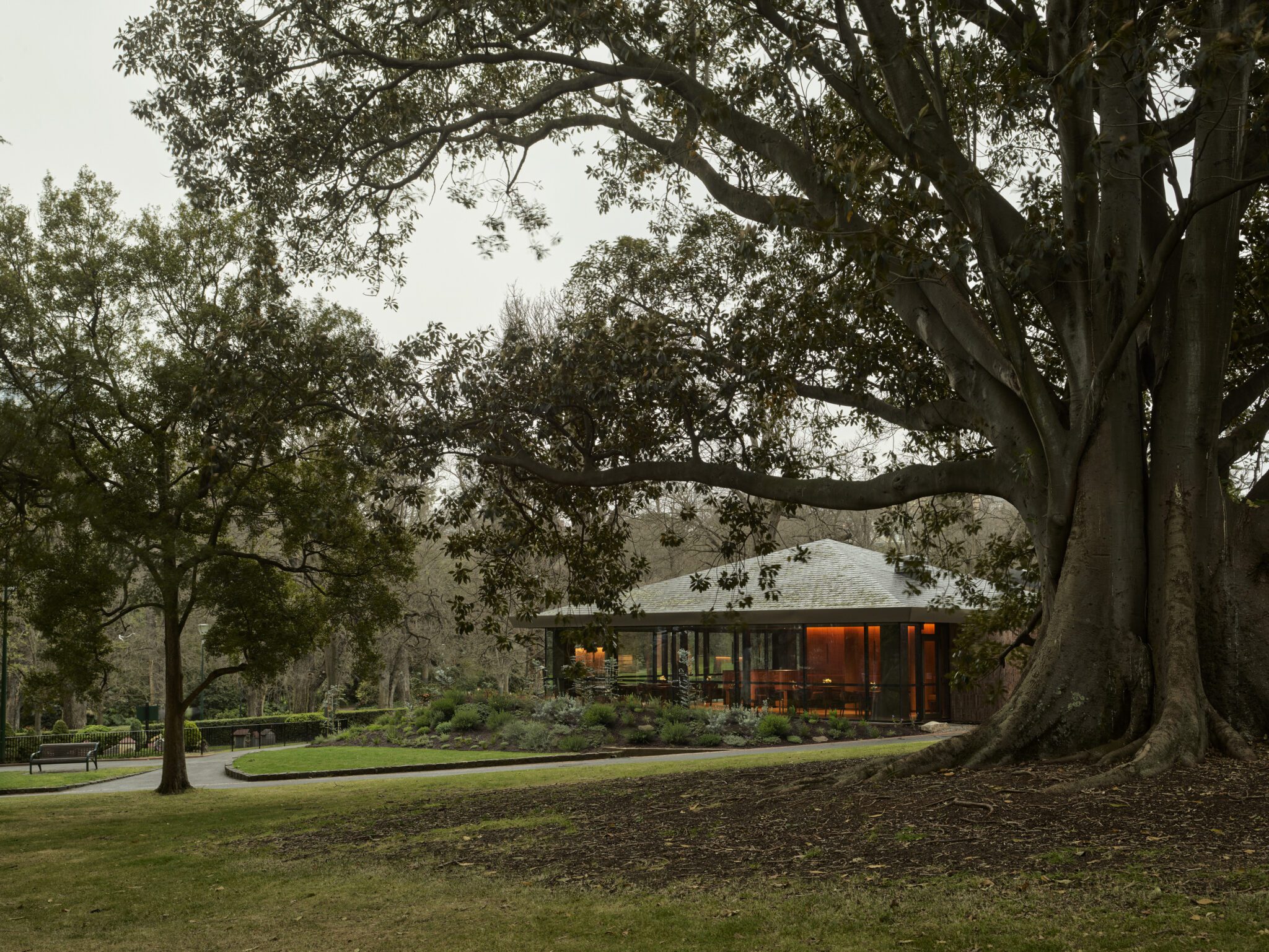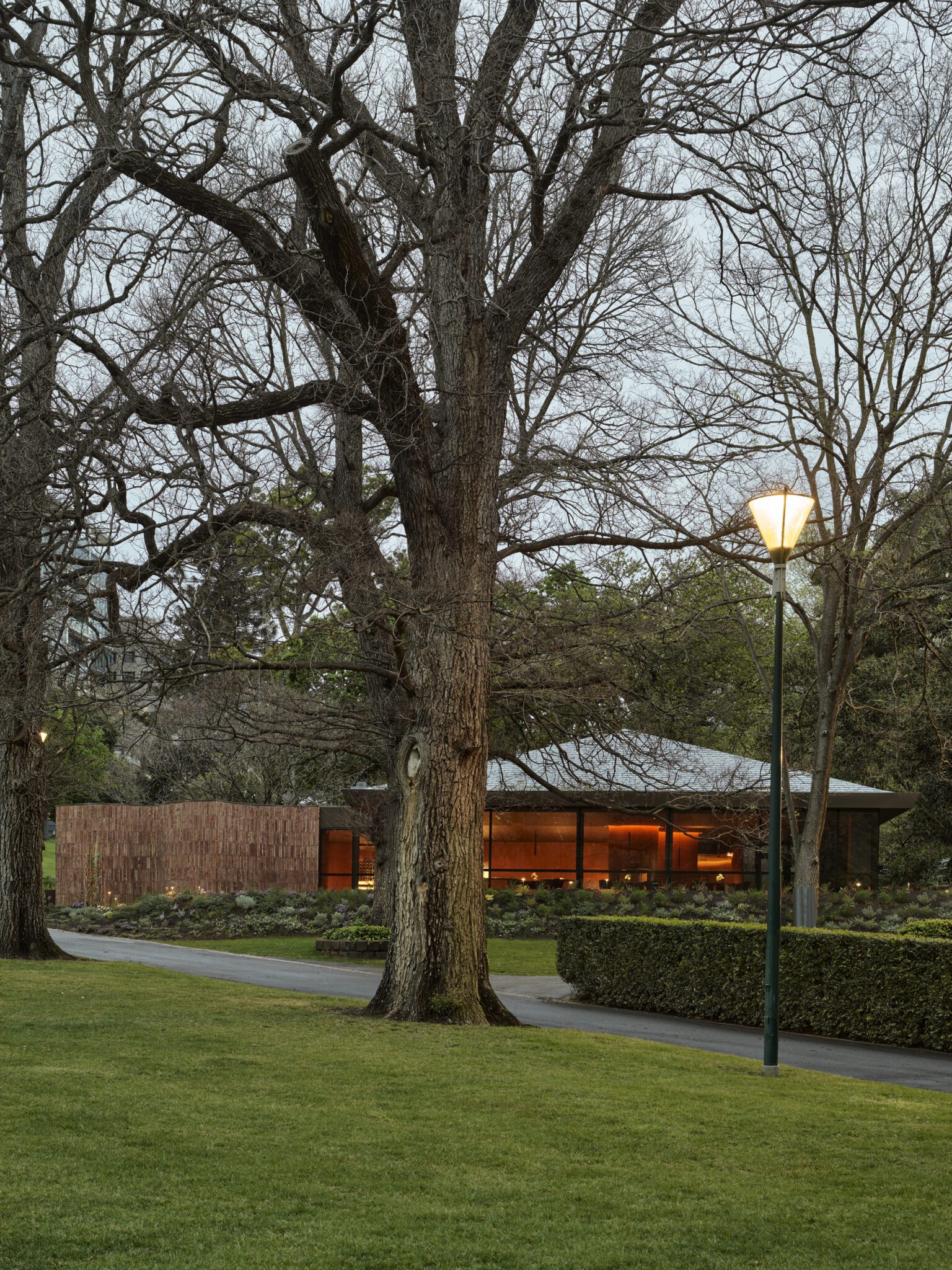
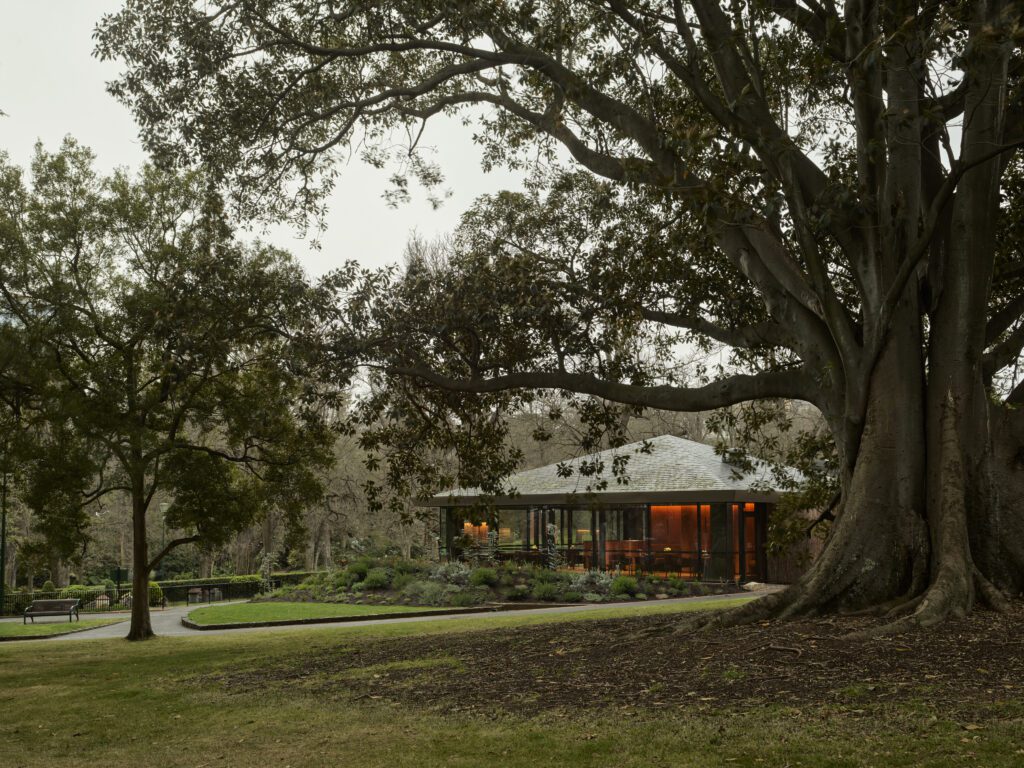
Nestled within Fitzroy Gardens in East Melbourne, a modest structure has offered respite and refreshments for more than a century. Since 1963, the humble pavilion has also been firmly embedded in the city’s culinary culture. Its latest iteration continues that tradition with a refreshing celebration of locality.
Yiaga — meaning ‘seek and find’ in the local Wurundjeri language — recently opened within the original pavilion, led by award-winning chef Hugh Allen. The intimate 44-seat restaurant places craft at the centre of the experience, from ingredients and glassware to the architecture itself. Designed by renowned Melbourne studio Wardle, the fit out is at once exacting and generous; expressive and consuming in its curves and detail.
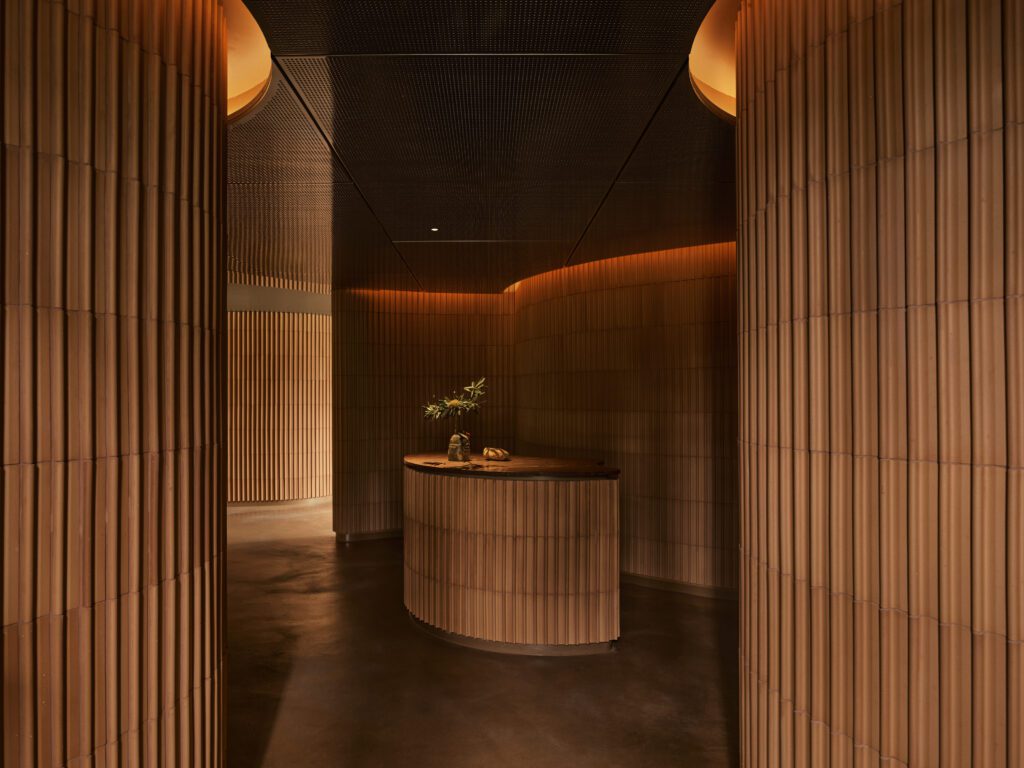
A meandering walk through the gardens establishes a gentle cadence; a step away from the city into the beauty of the natural surrounds, and a transition that carries through the threshold and into the dining room.
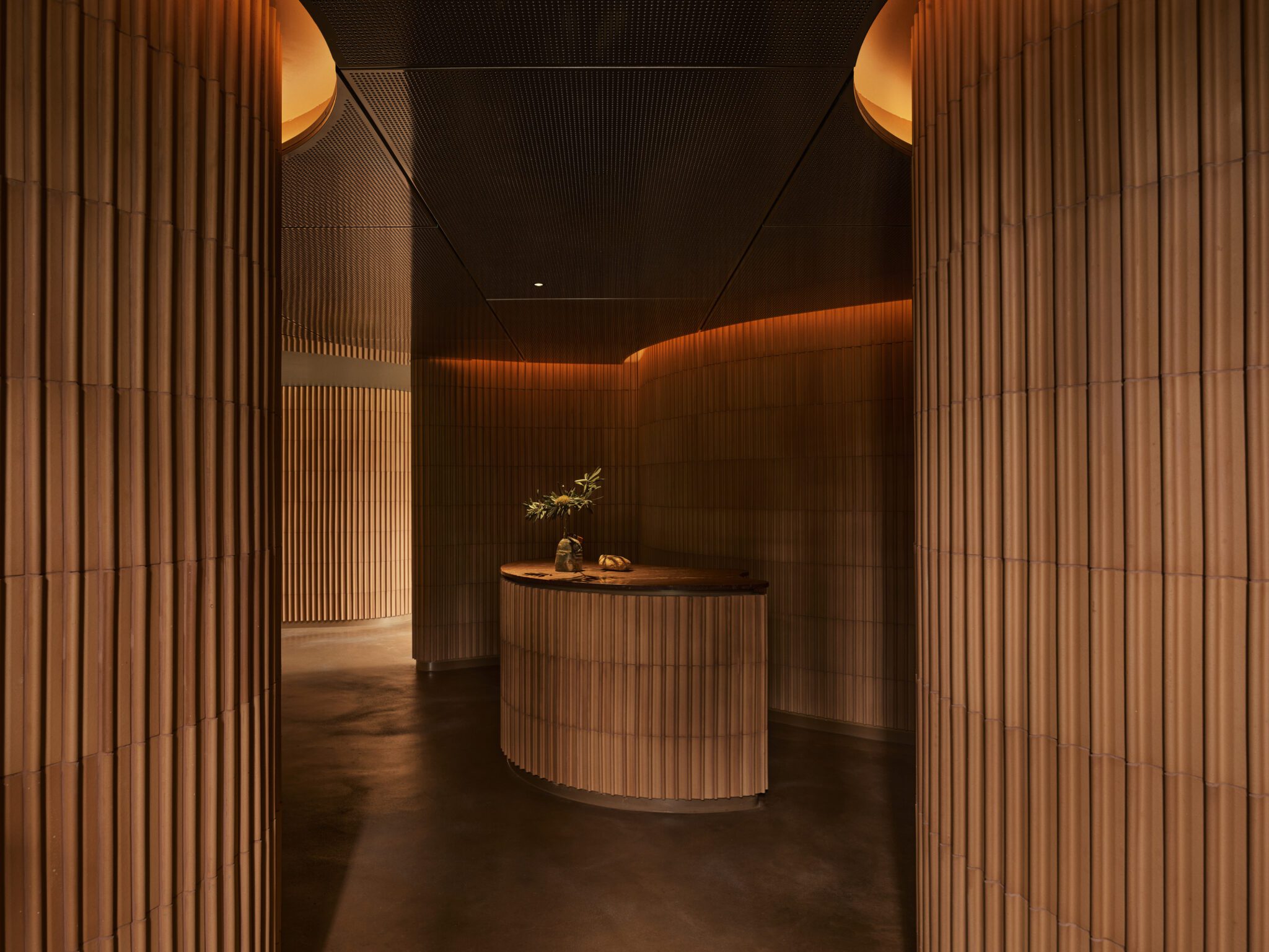
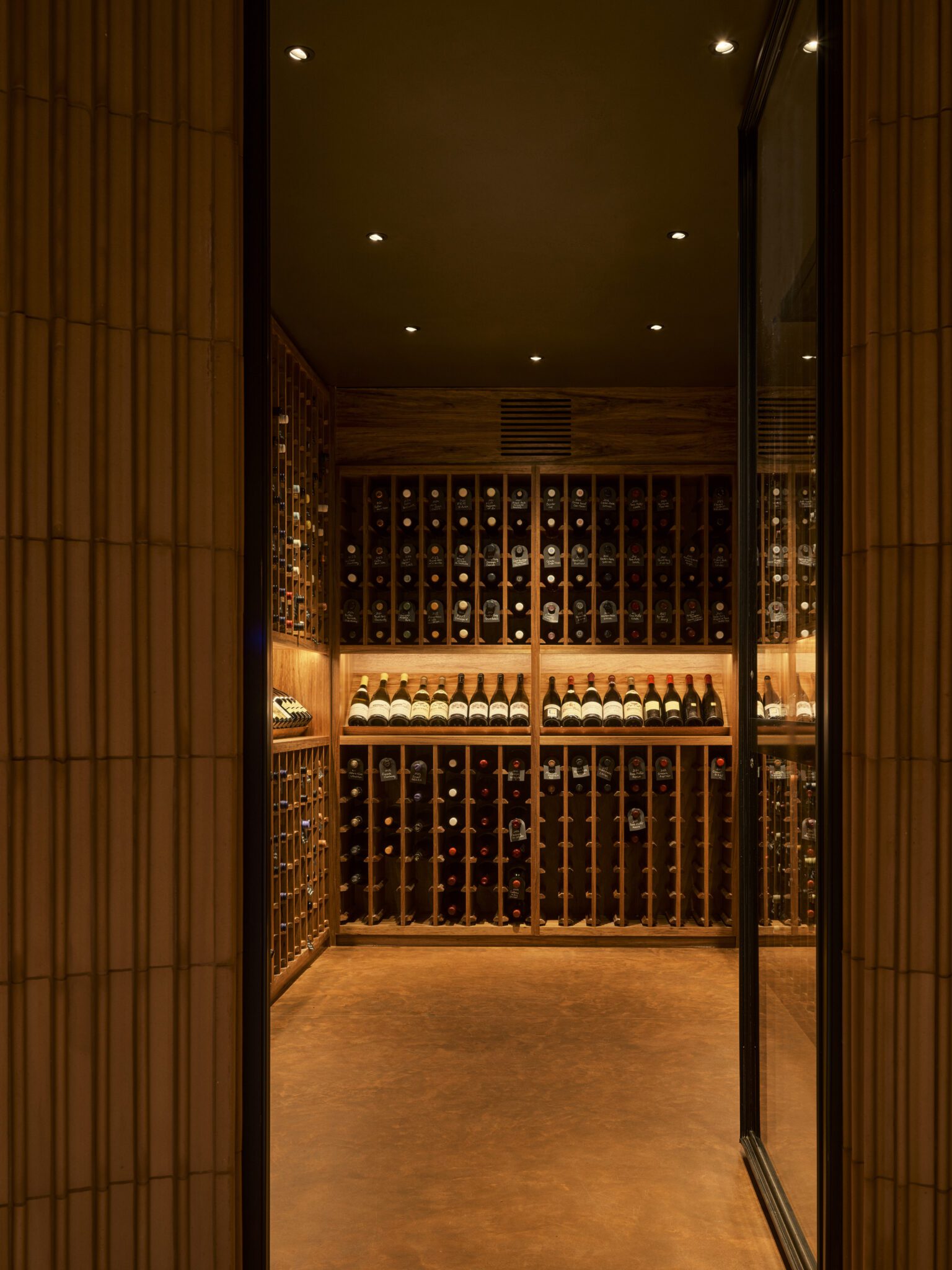
This layered arrival — garden, path, doorway, portal, reception, cellar — seeks to amplify the sense of occasion; places of pause in the overall experience.
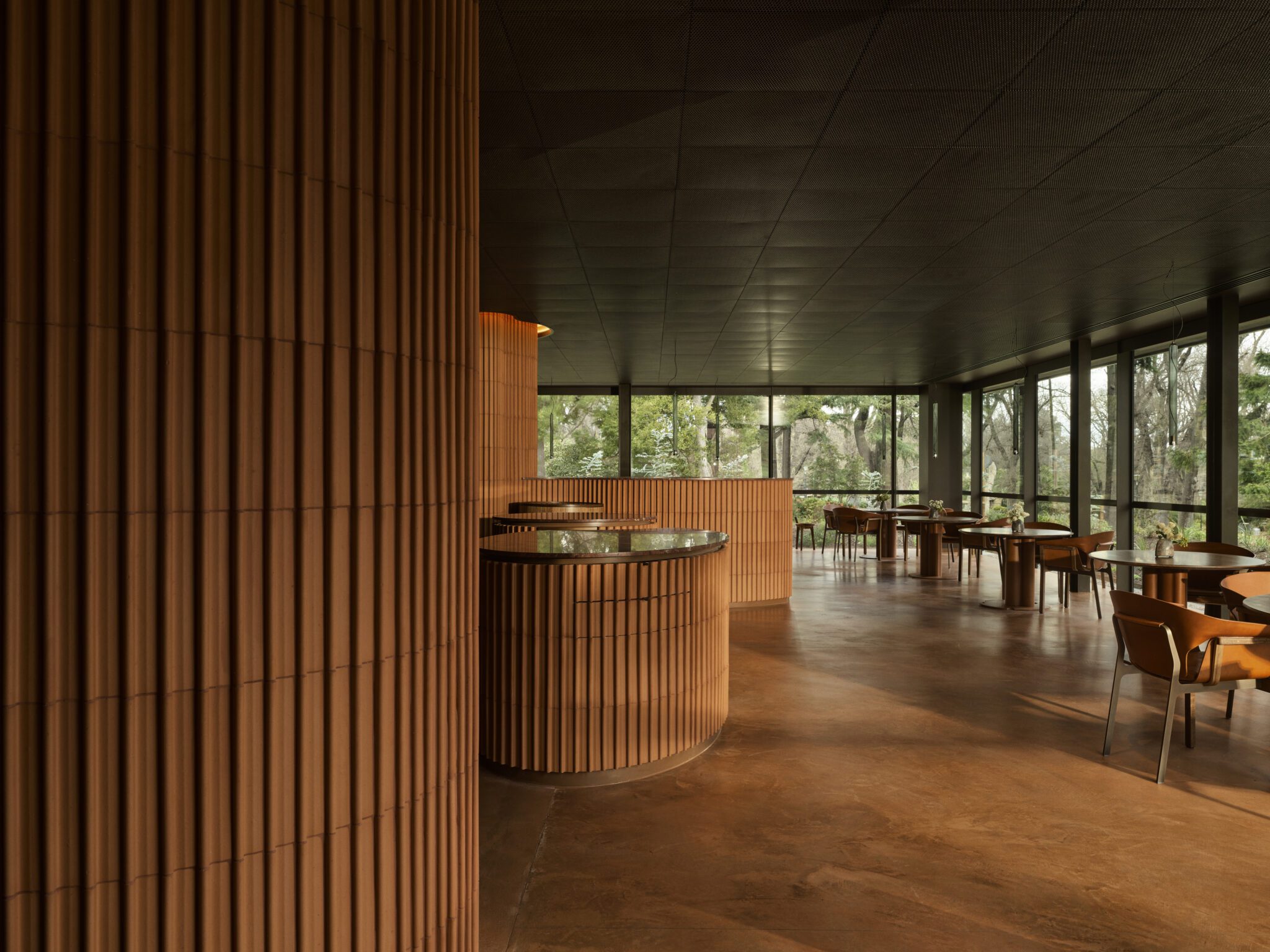
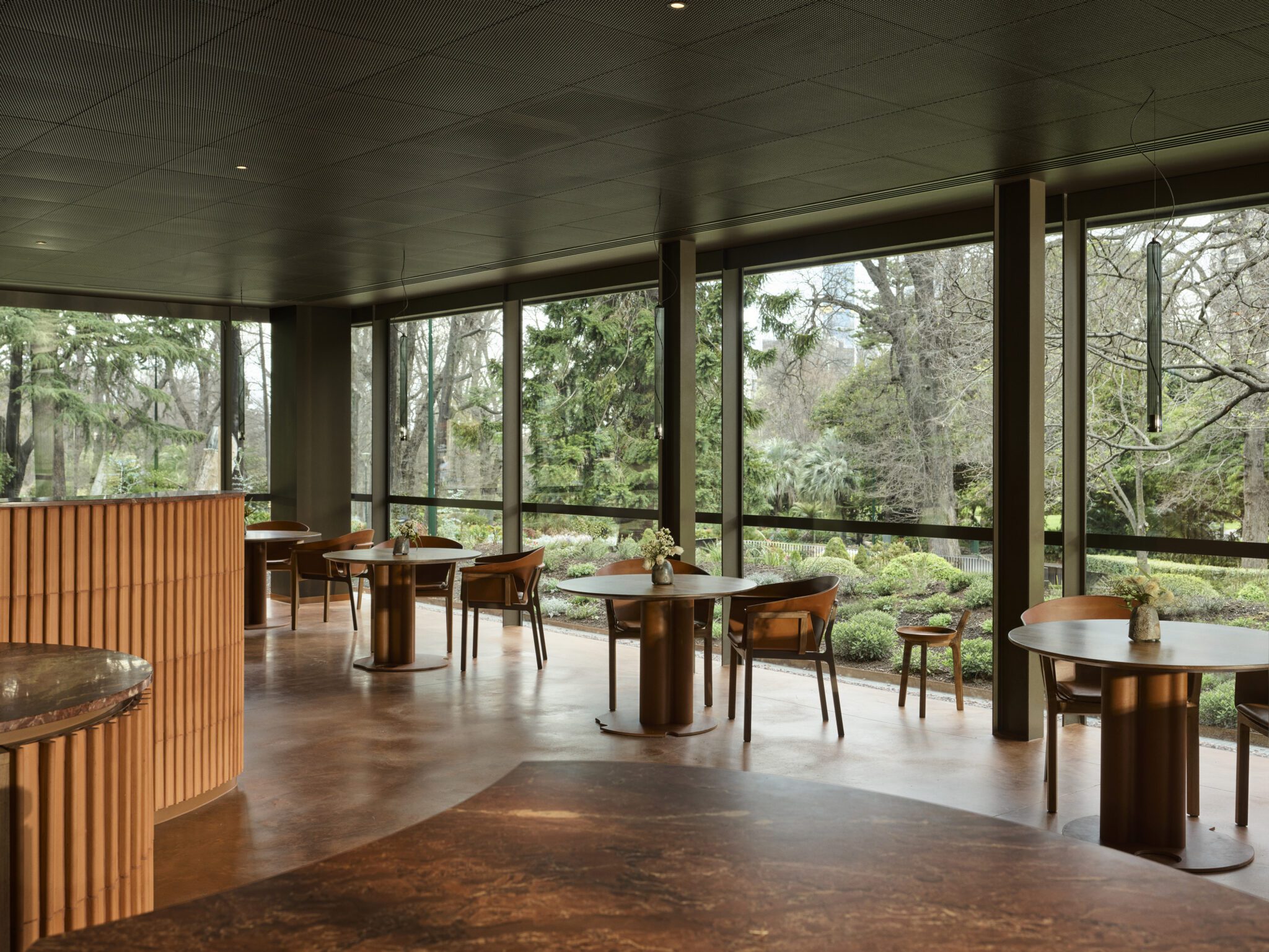
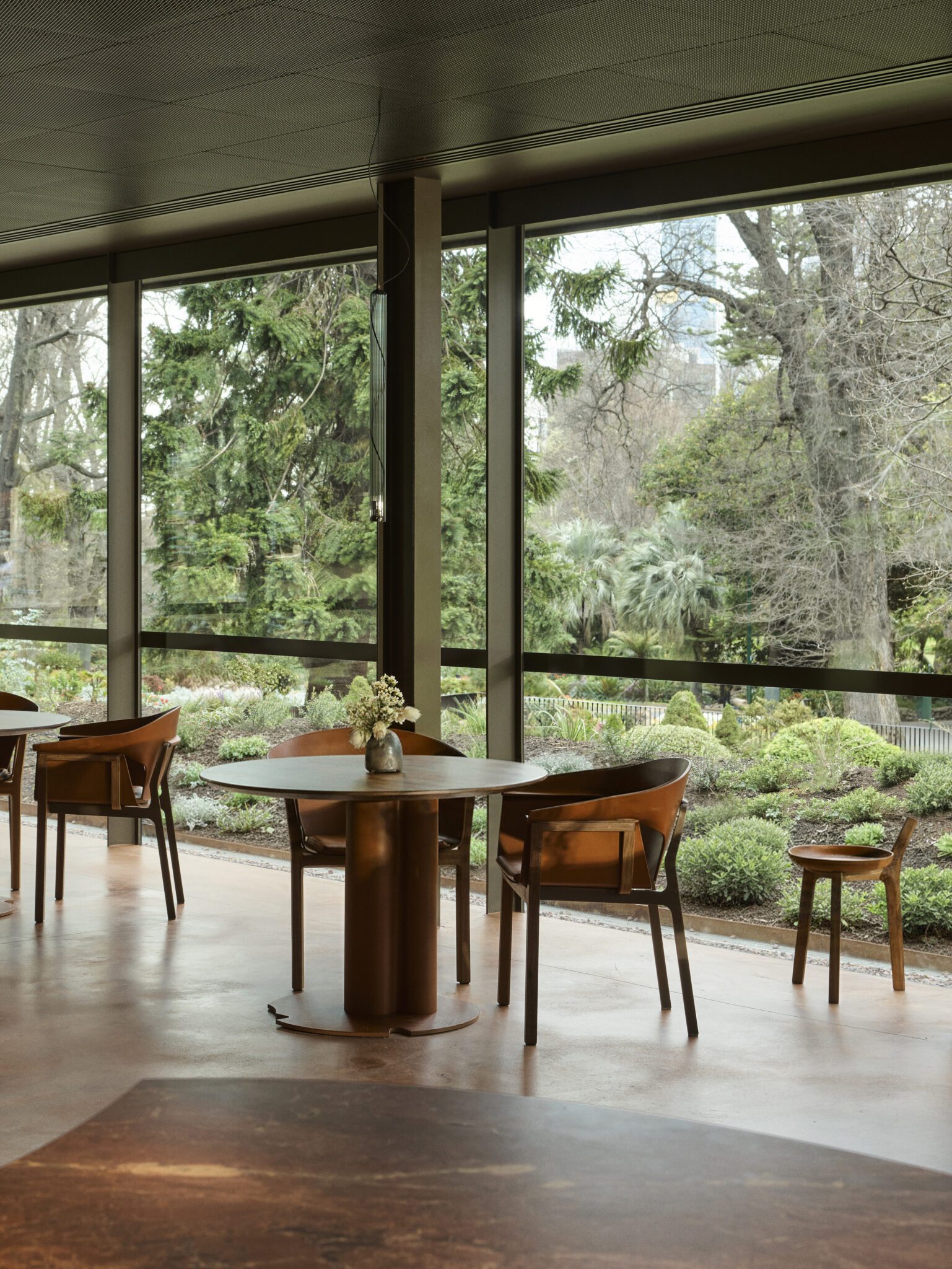
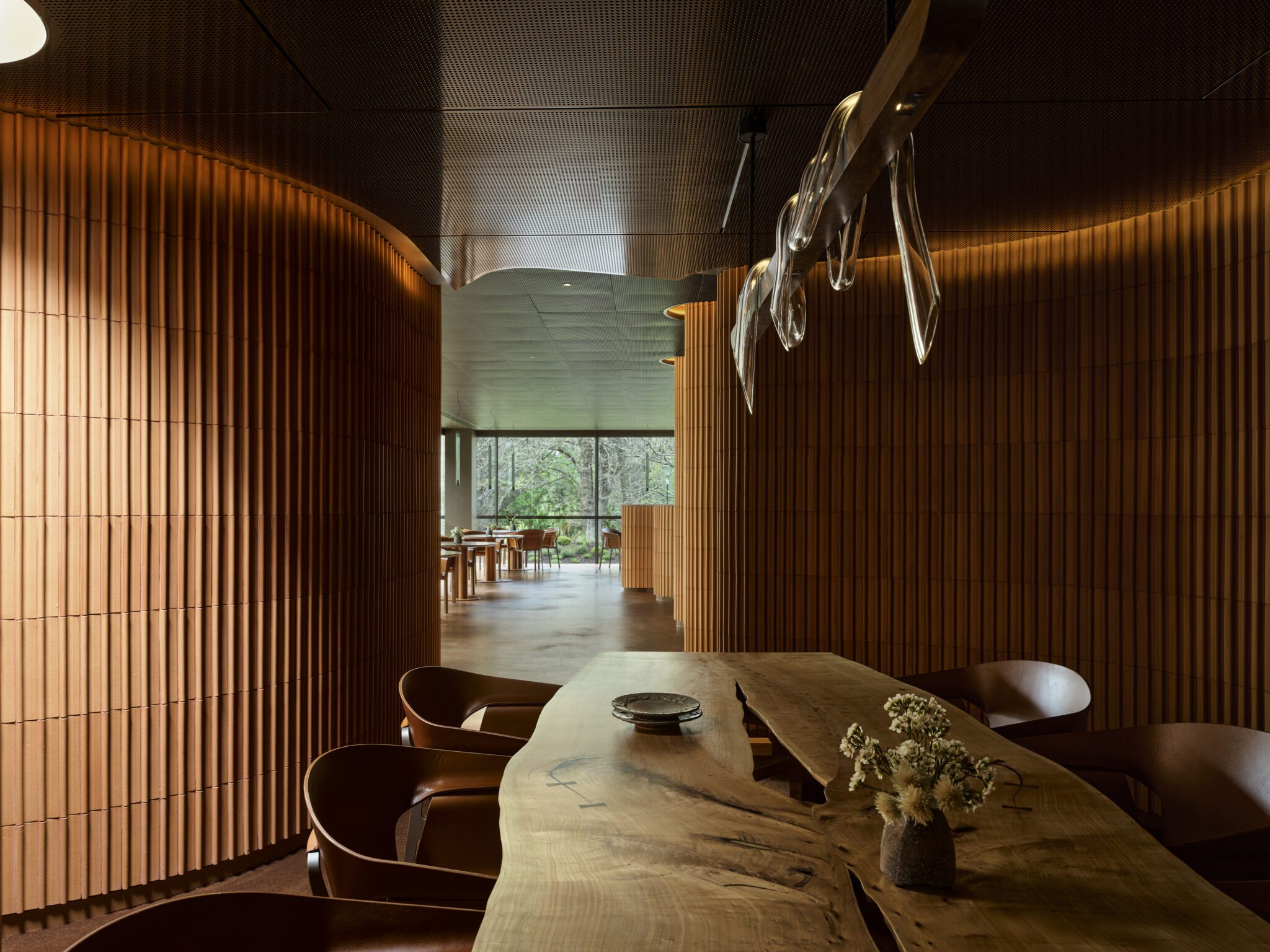
While the pavilion’s original structure and roof were retained, everything beneath and within has been carefully reworked. An open dining room and kitchen are positioned to sit directly within the landscape, with garden views a primary driver of the plan. Full-height glazing removes the boundary between park and interior, allowing light, foliage, and seasonal change to shape the atmosphere inside.
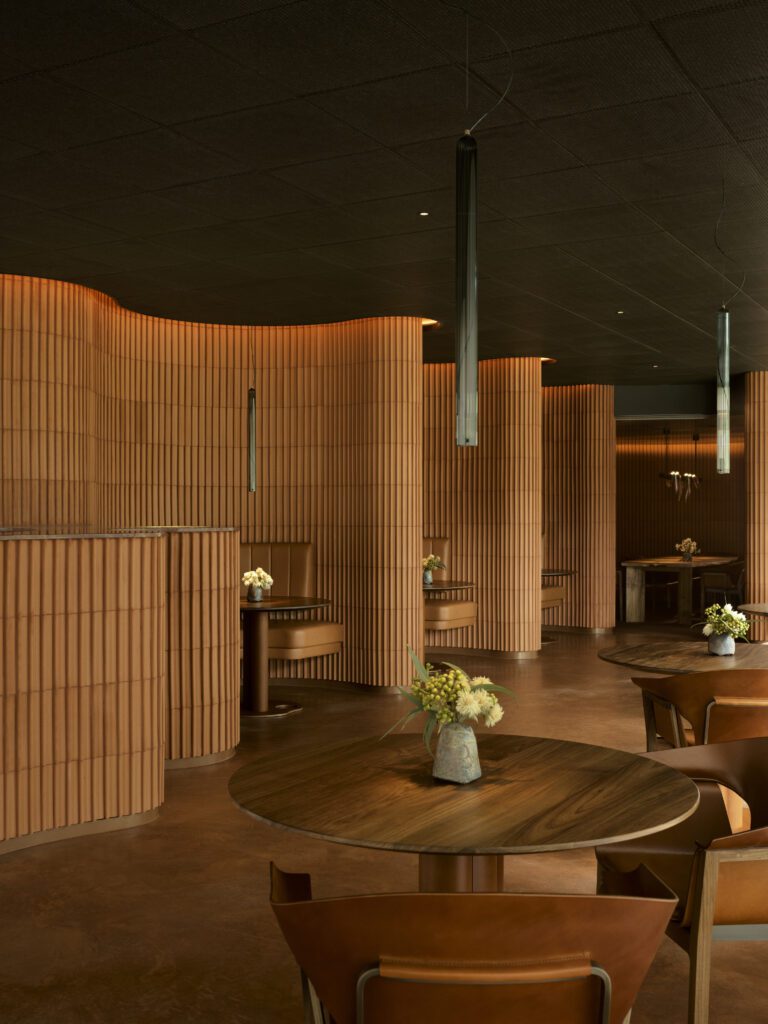
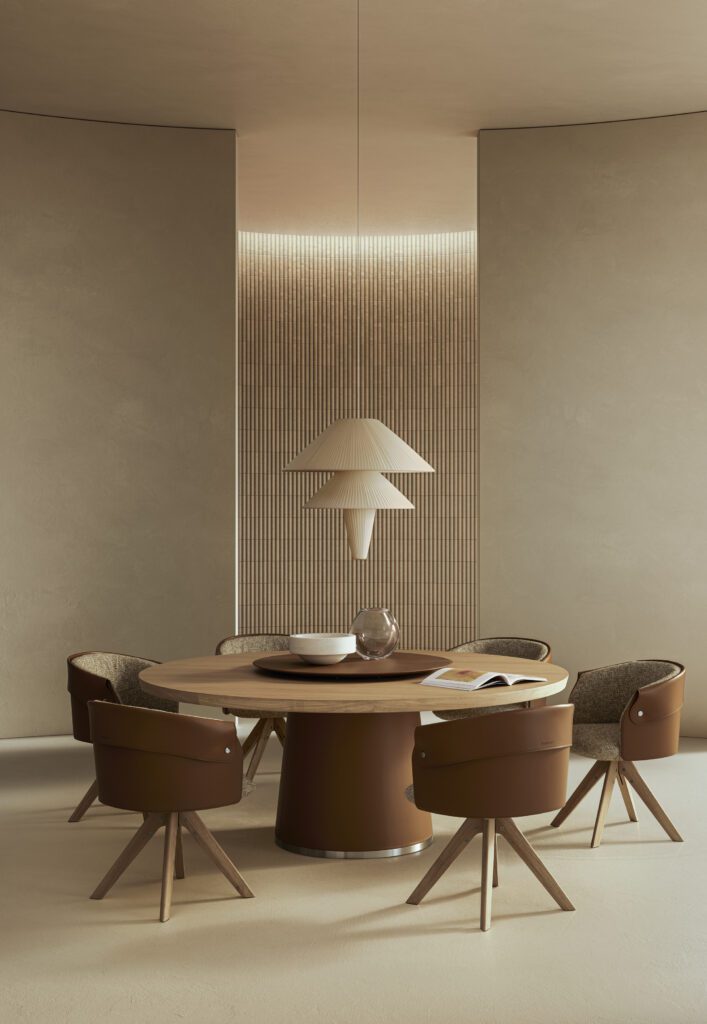
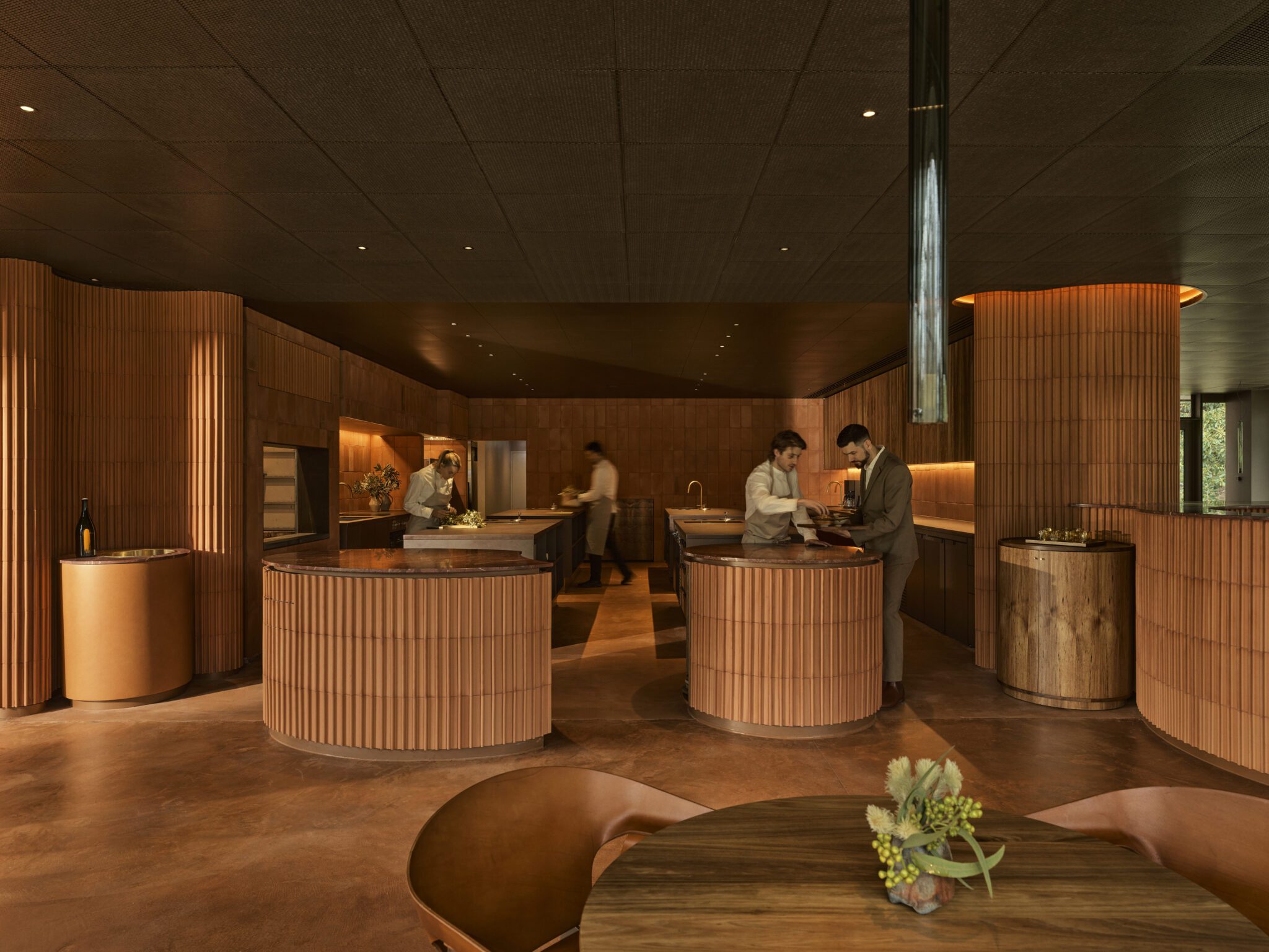
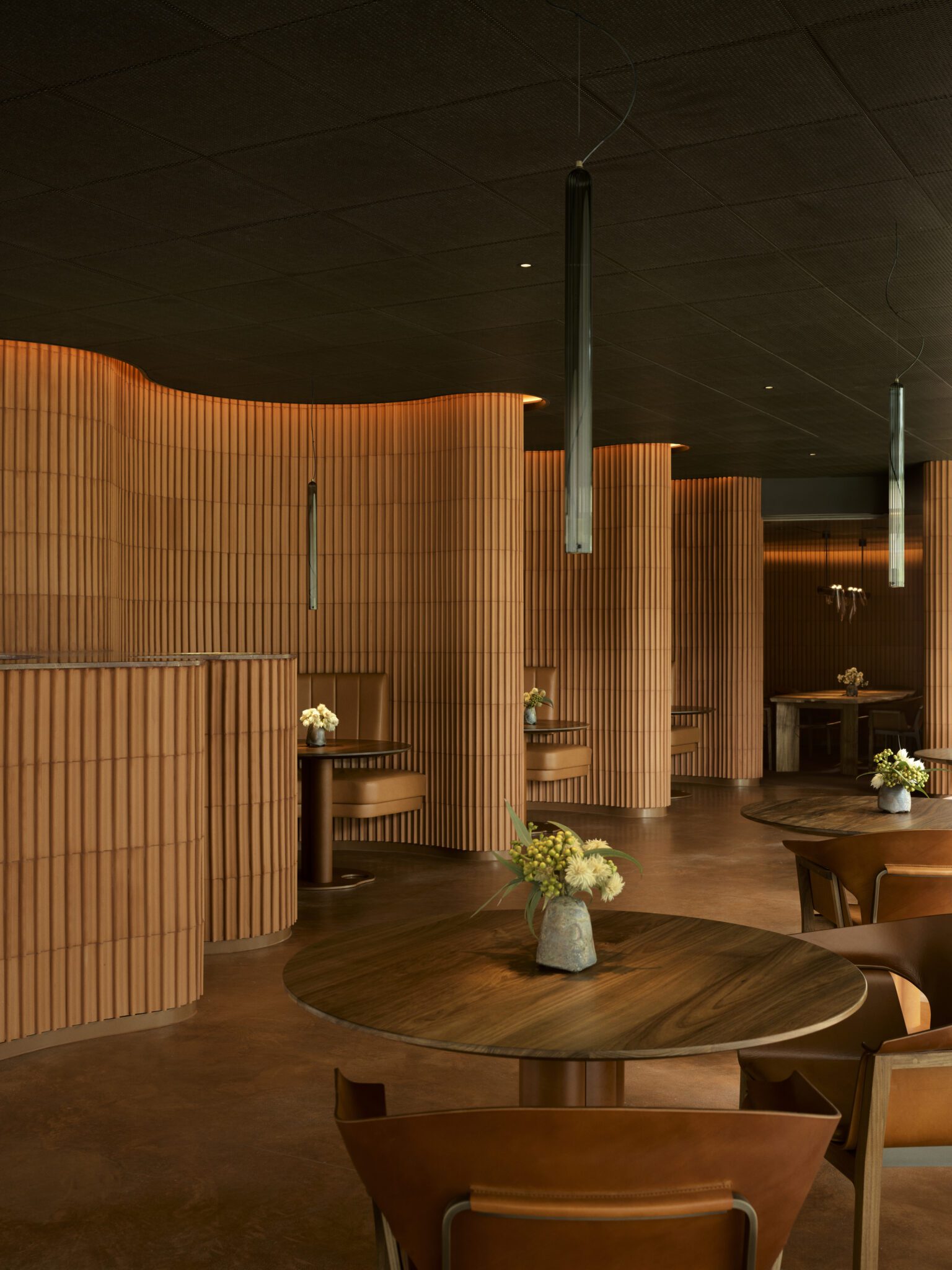
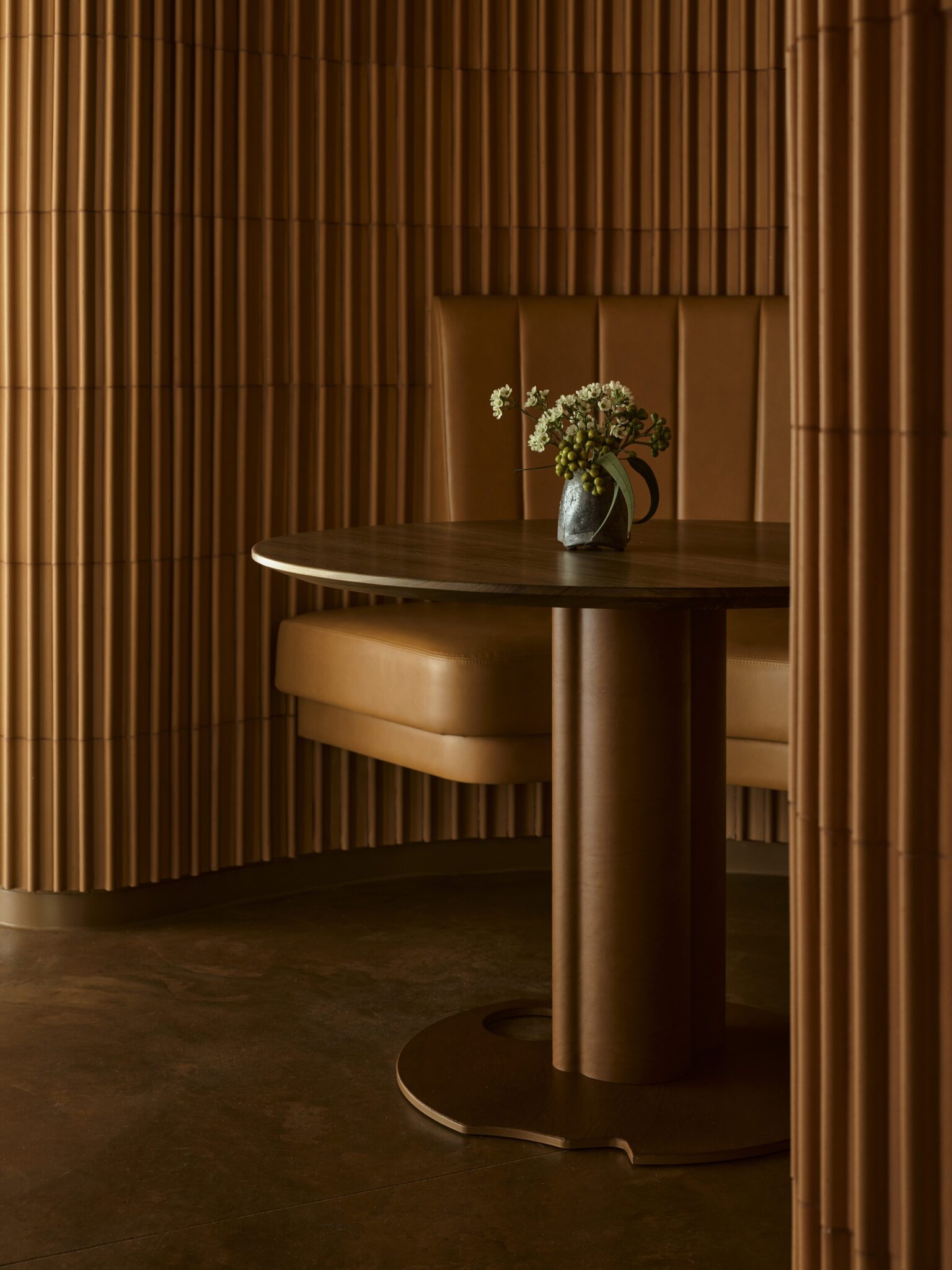
Material choices reinforce that connection. Finishes were sourced and made locally, reflecting the restaurant’s emphasis on provenance. Externally, deeply textured terracotta tiles and grout draw on the bark of the surrounding Scottish elm trees, grounding the building in its setting. Inside, terracotta continues, enclosing the space with warmth and weight.
The interior is anchored by a single continuous wall composed of more than 13,000 individually handmade tiles. Gently curving through the dining room, it defines a series of intimate seating zones while maintaining the openness of the plan. The effect is controlled and immersive.
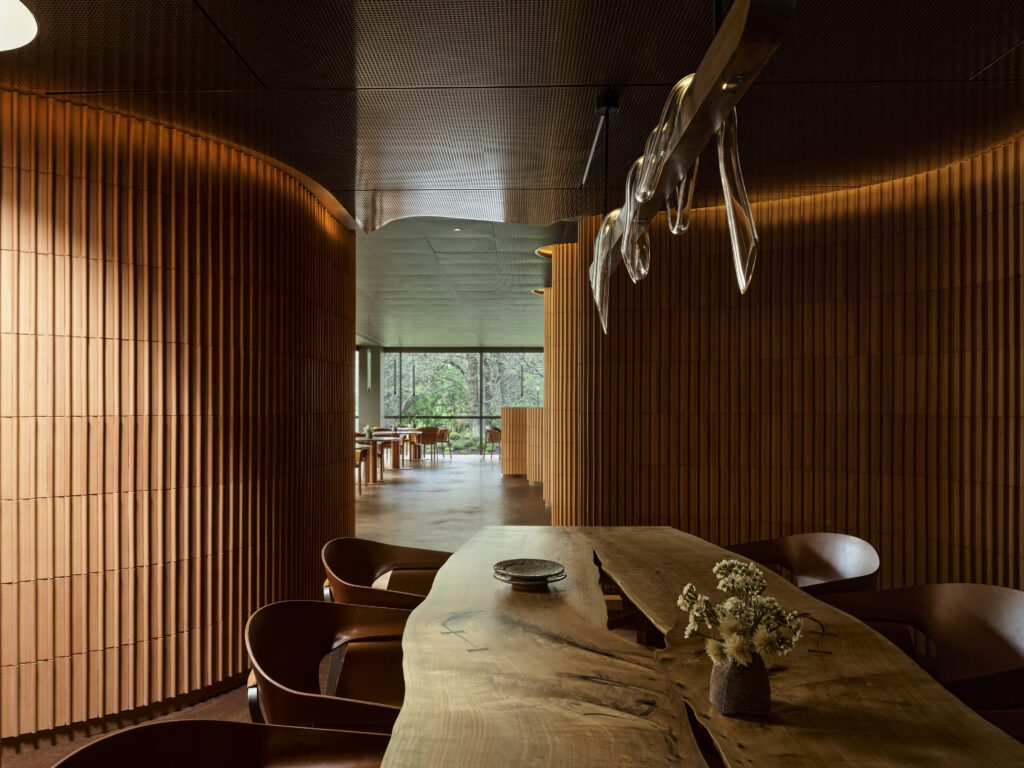
In its latest form, the pavilion remains what it has always been: a place of retreat. At Yiaga, Wardle’s architectural restraint and Hugh Allen’s culinary precision operate in parallel, each grounded in locality and resolved with compelling detail.