

Waimauku House

Named the 2023 Home of the Year, this expansive family home stretches across a quiet valley on the outskirts of Auckland. Conceived as both sanctuary and stage, it gathers a series of spaces in a linear procession — anchoring, protecting and embracing the rhythms of daily life.

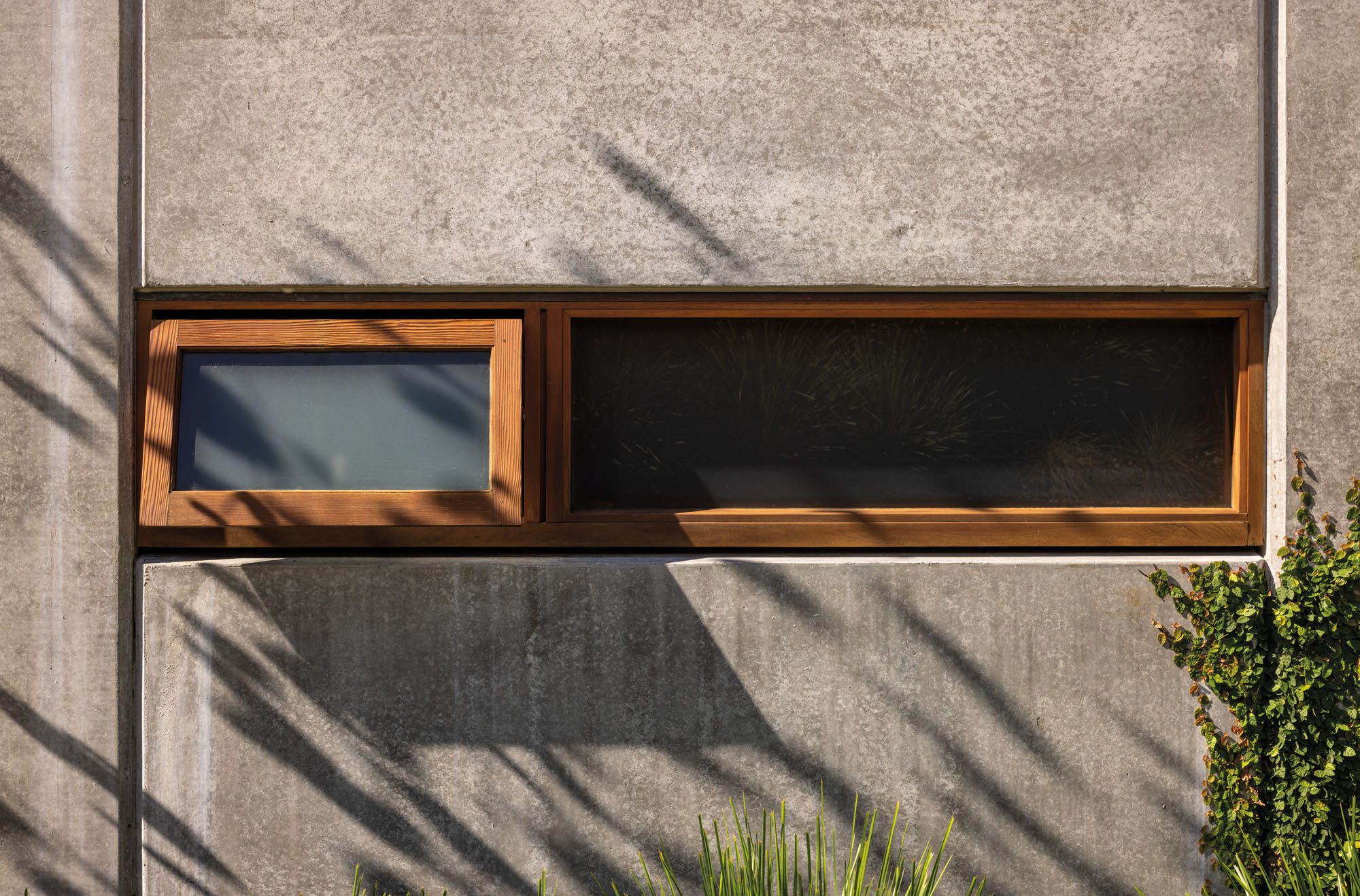
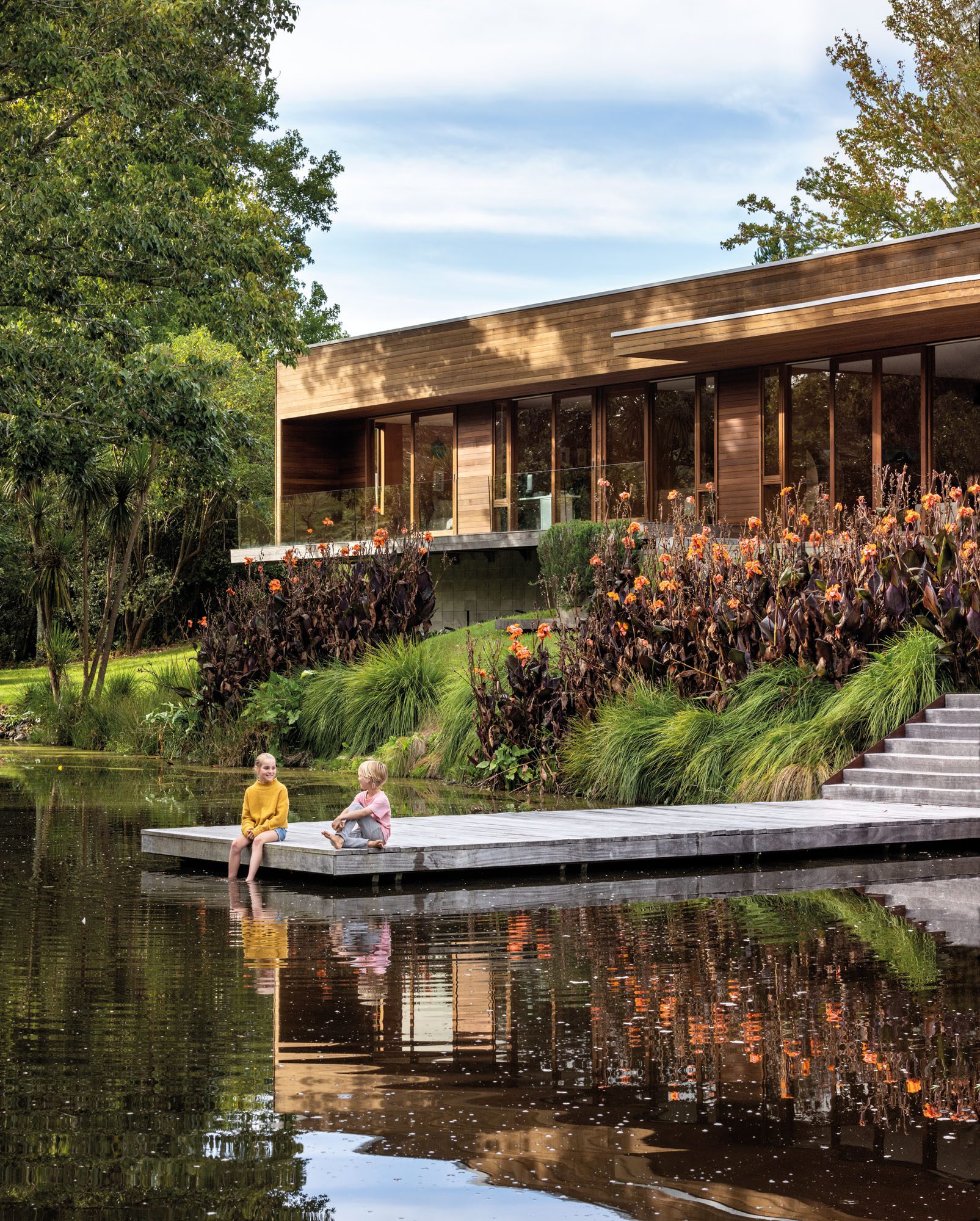
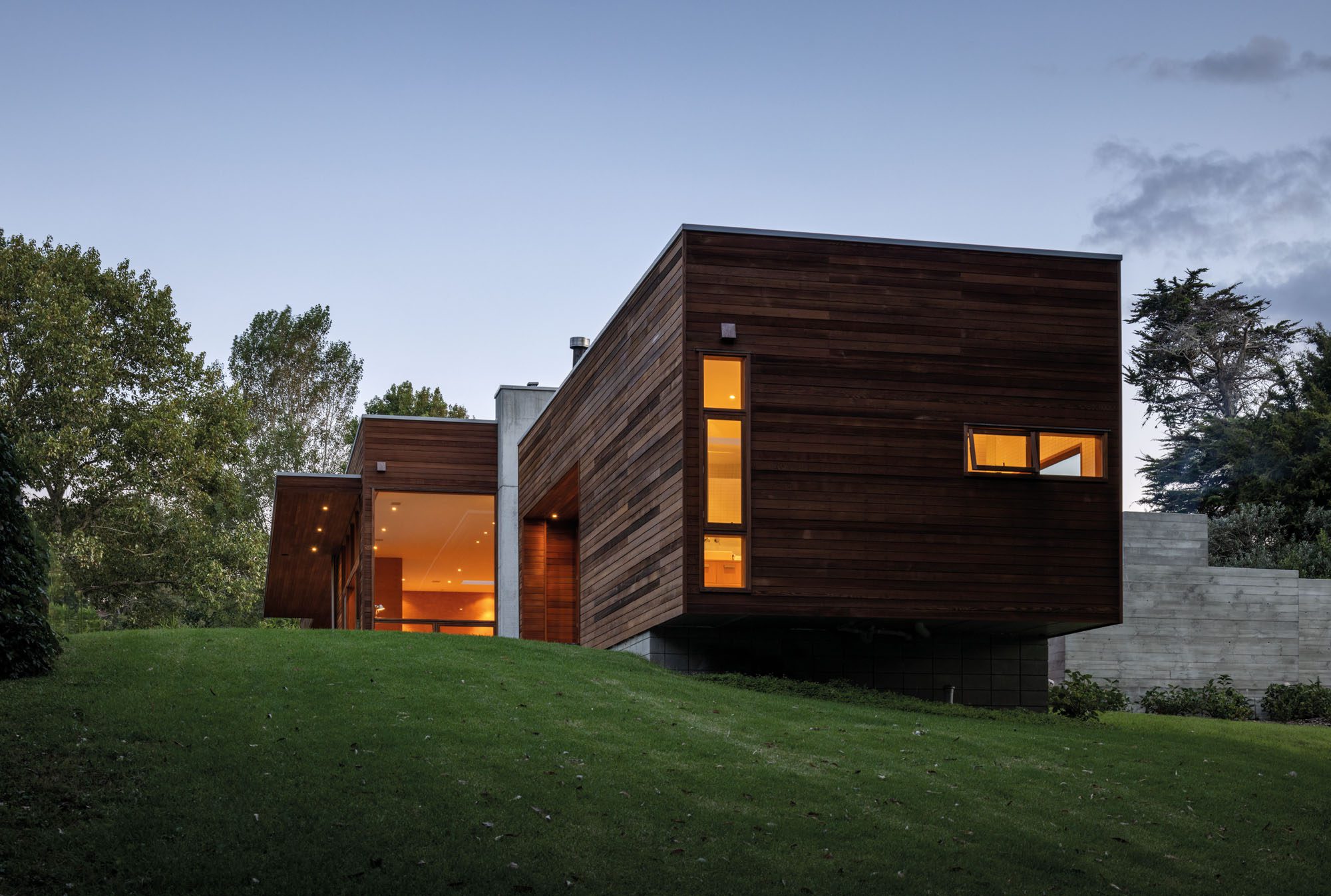
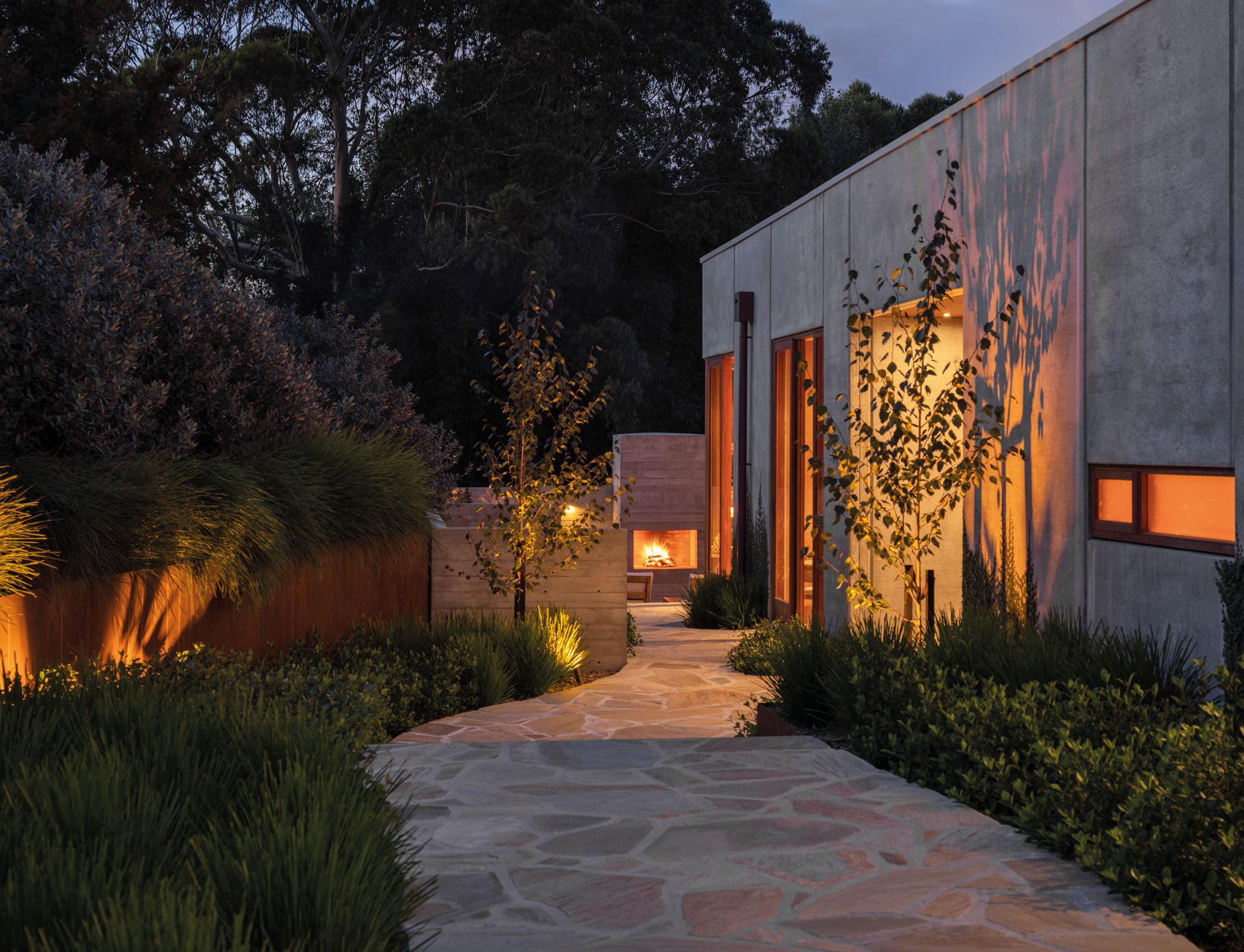
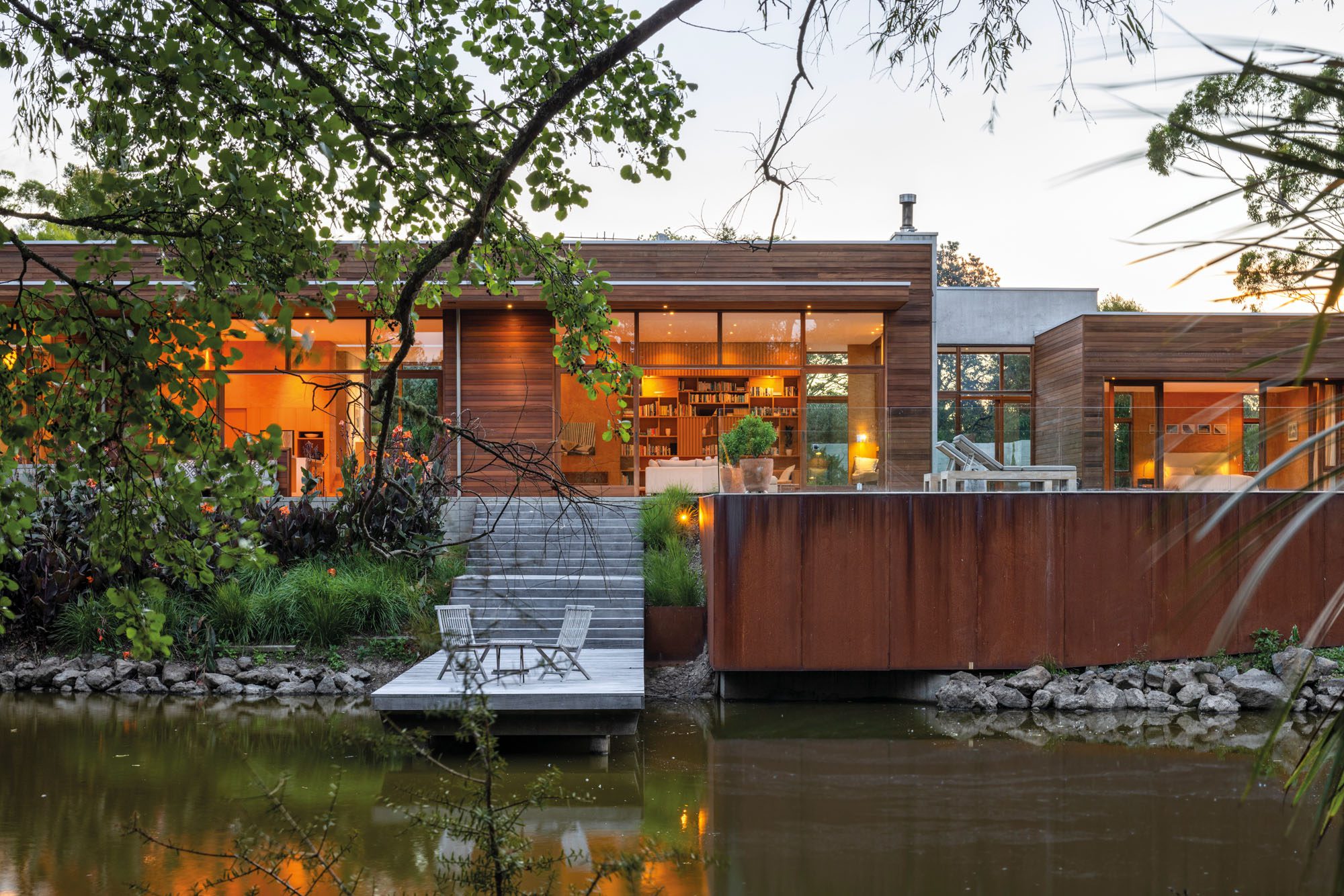
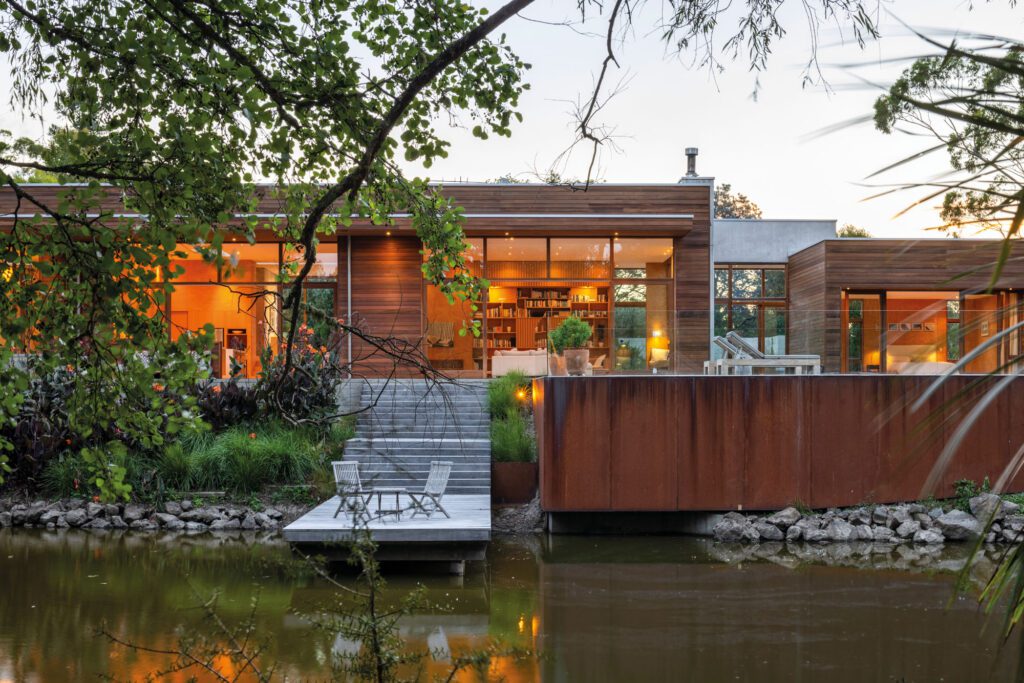
At points, the house is cantilevered over the land; at others, hunkered down and anchored to it. The southern elevation meets a western courtyard where an outdoor fire and water feature provide a tranquil place to pause. Corten steel, concrete and timber converge on the northern elevation.

To live in a house you’ve designed is a luxury, says architect Jo Craddock of her family home in Waimauku Valley — a project slowly realised over more than a decade. 

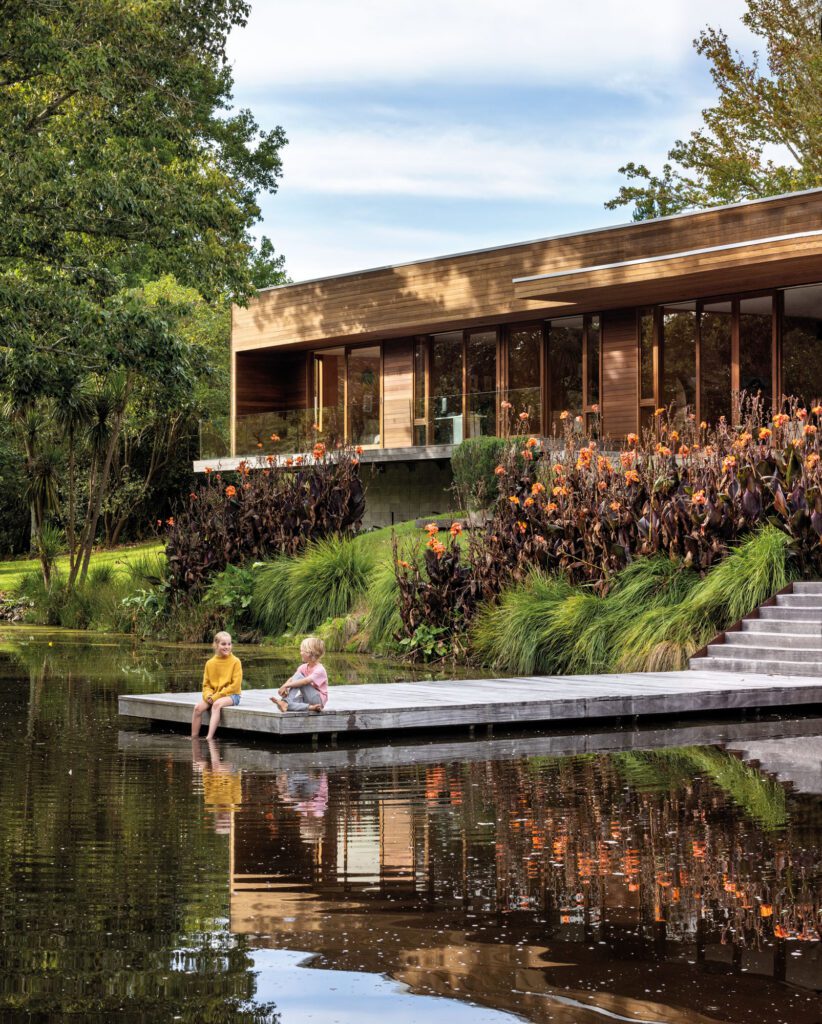
From the outset, this rural site north-west of Auckland offered a quiet sort of magic: mature gums, a reflective pond, gentle light, and land contours that naturally suggested where the house should sit. 

“It felt like an oasis,” Jo recalls; “close to the city but incredibly peaceful — a beautiful place to come home to.” 

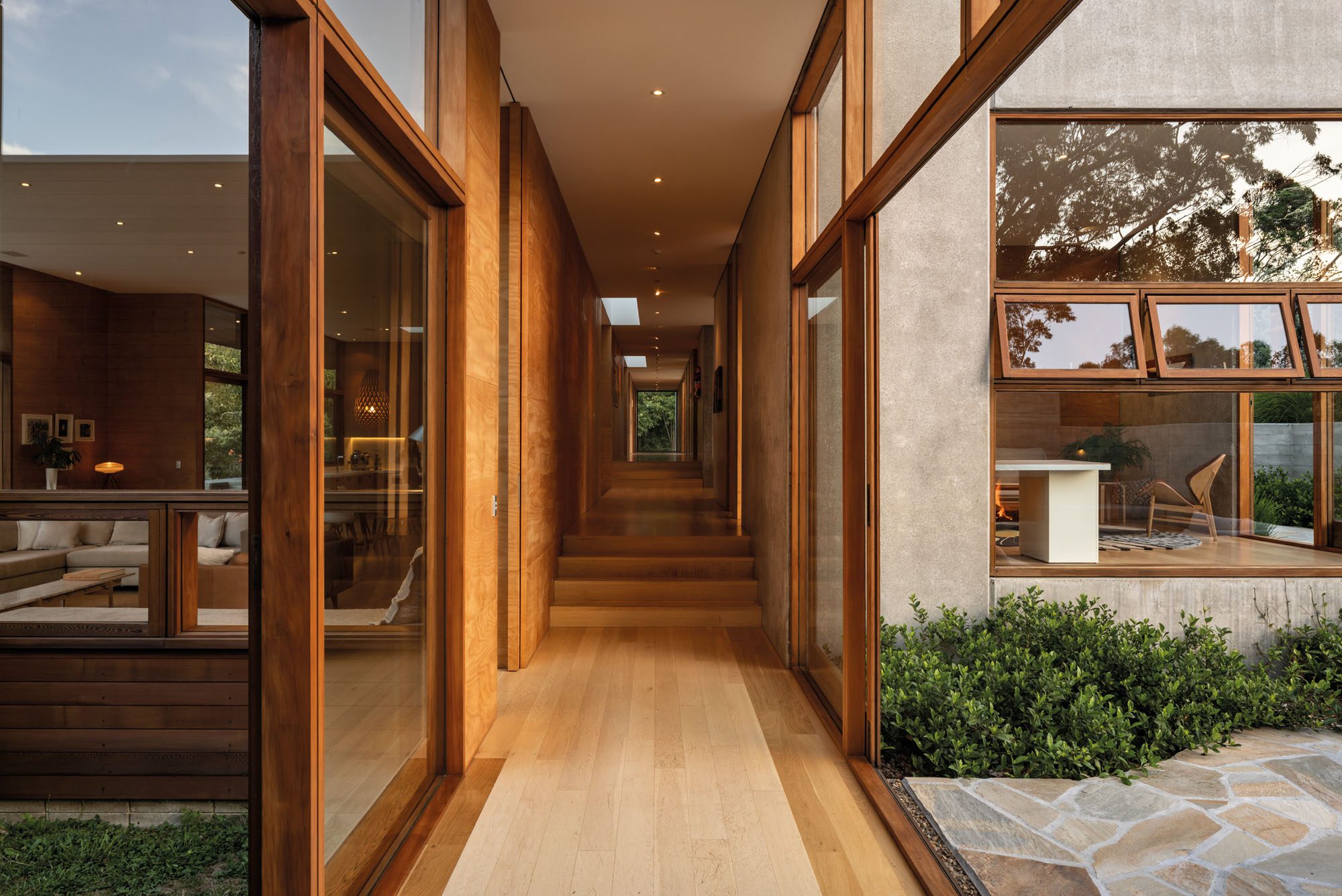
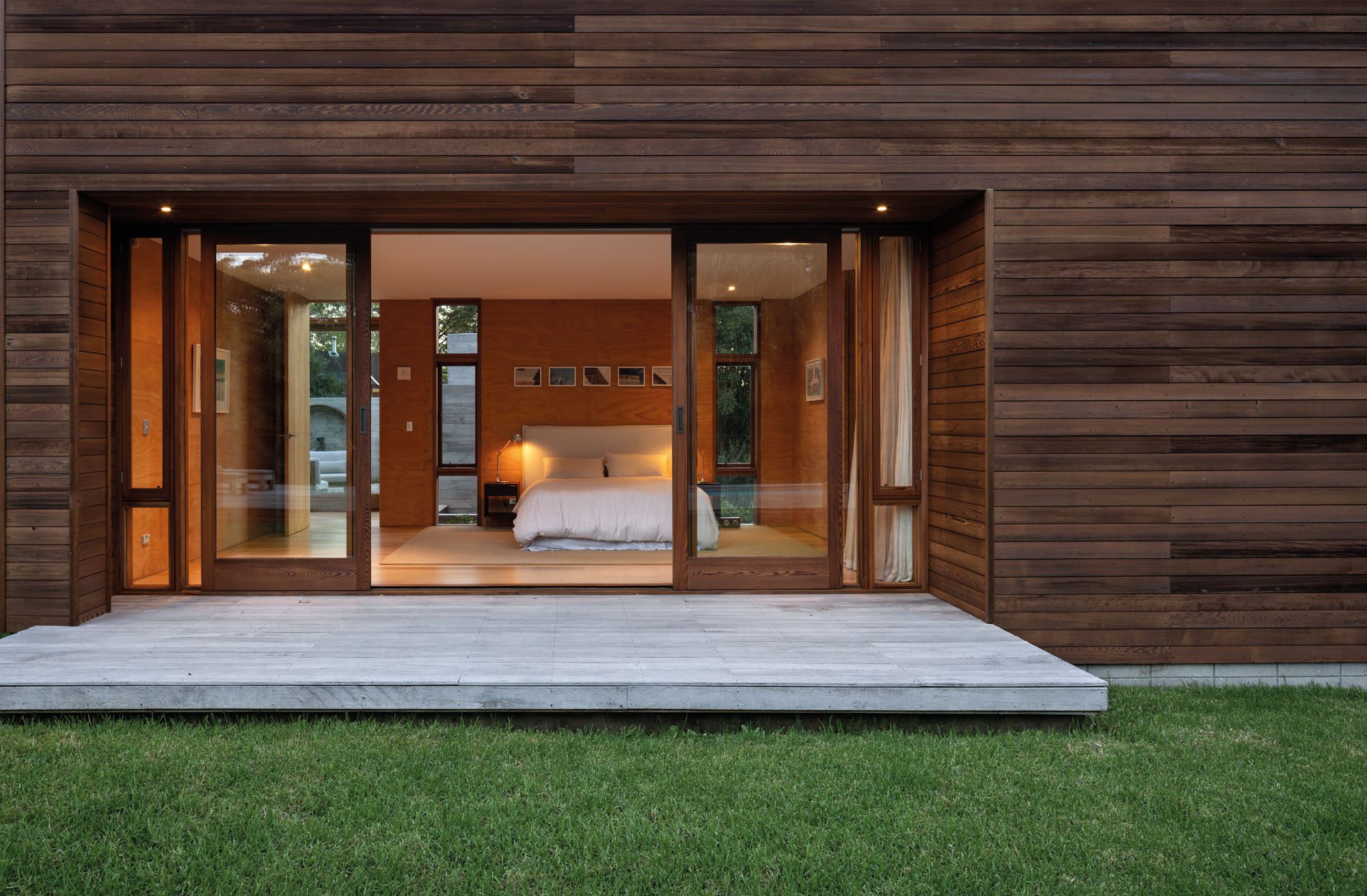
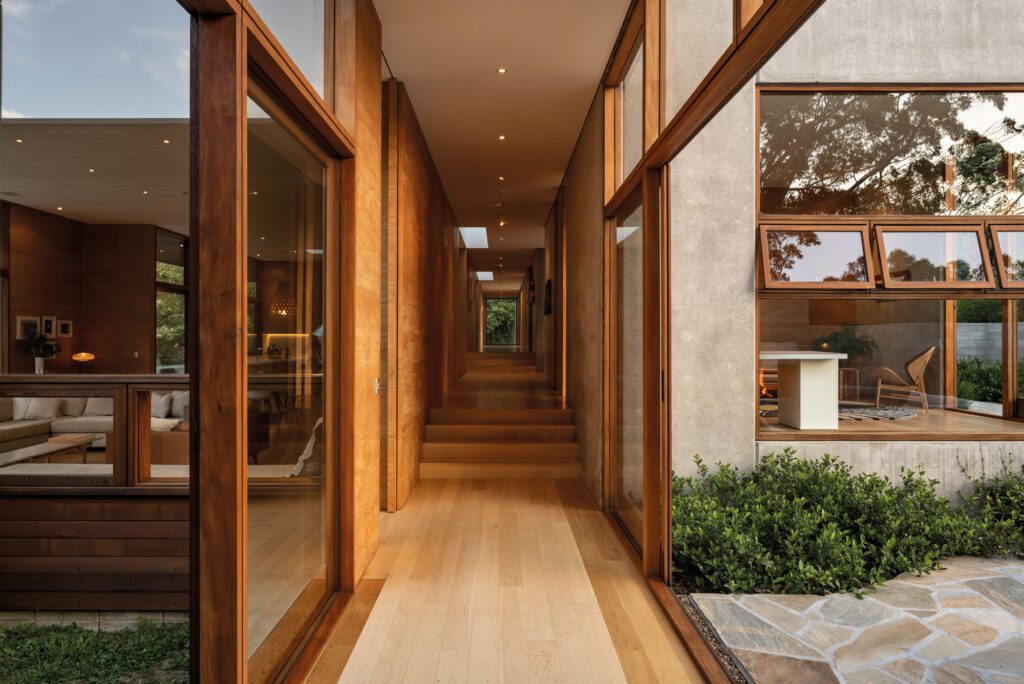
A glazed link connects the central living areas and children's wing to the main bedroom at the western end of the house.

Over 13 years, with no deadlines and three young children in tow, Jo designed not only a family home on the site but also an equestrian facility, including stables and a training arena. This extended timeline allowed for a rare precision: returning to the model season by season, refining sun angles, light and form. 

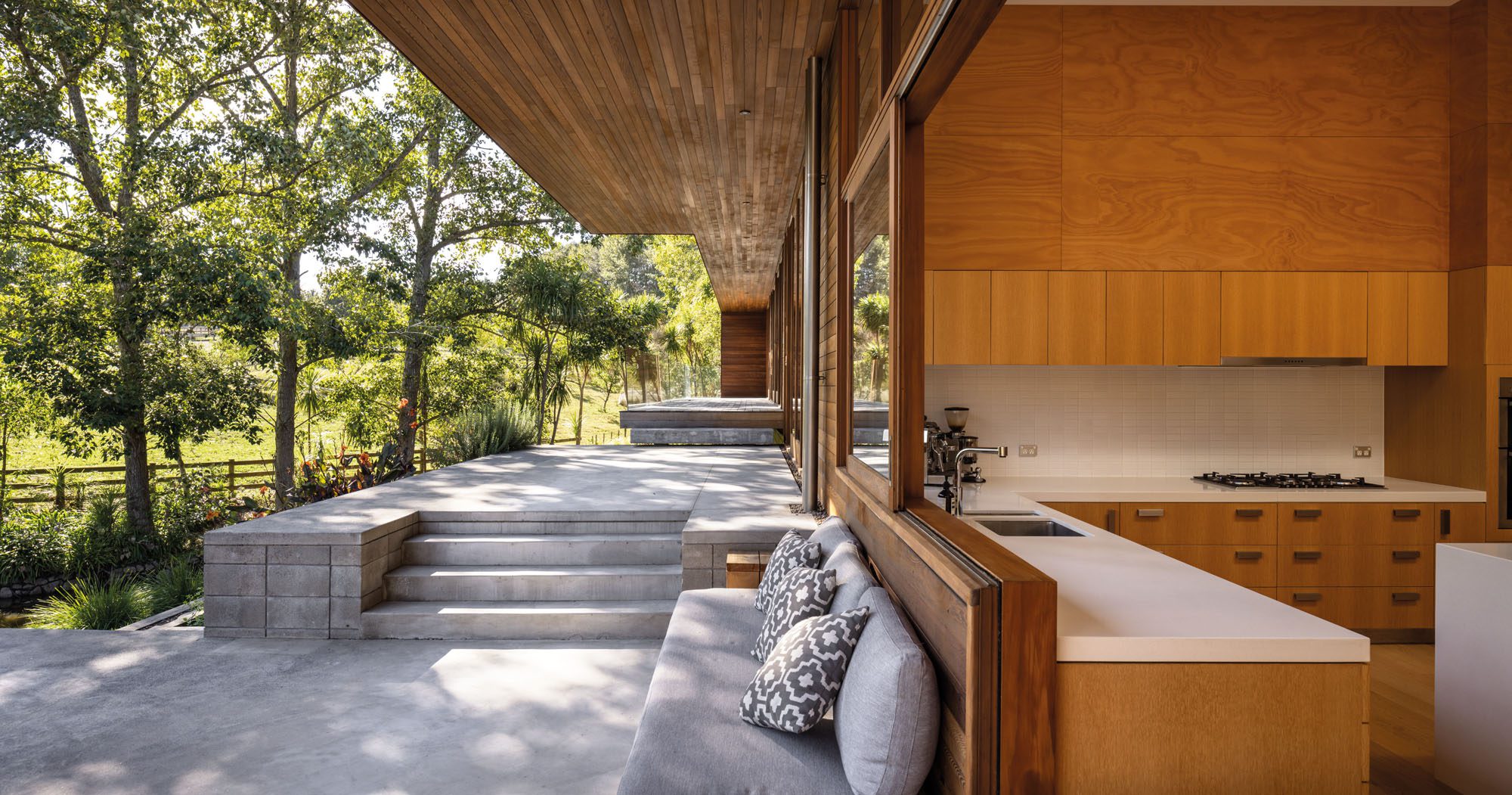
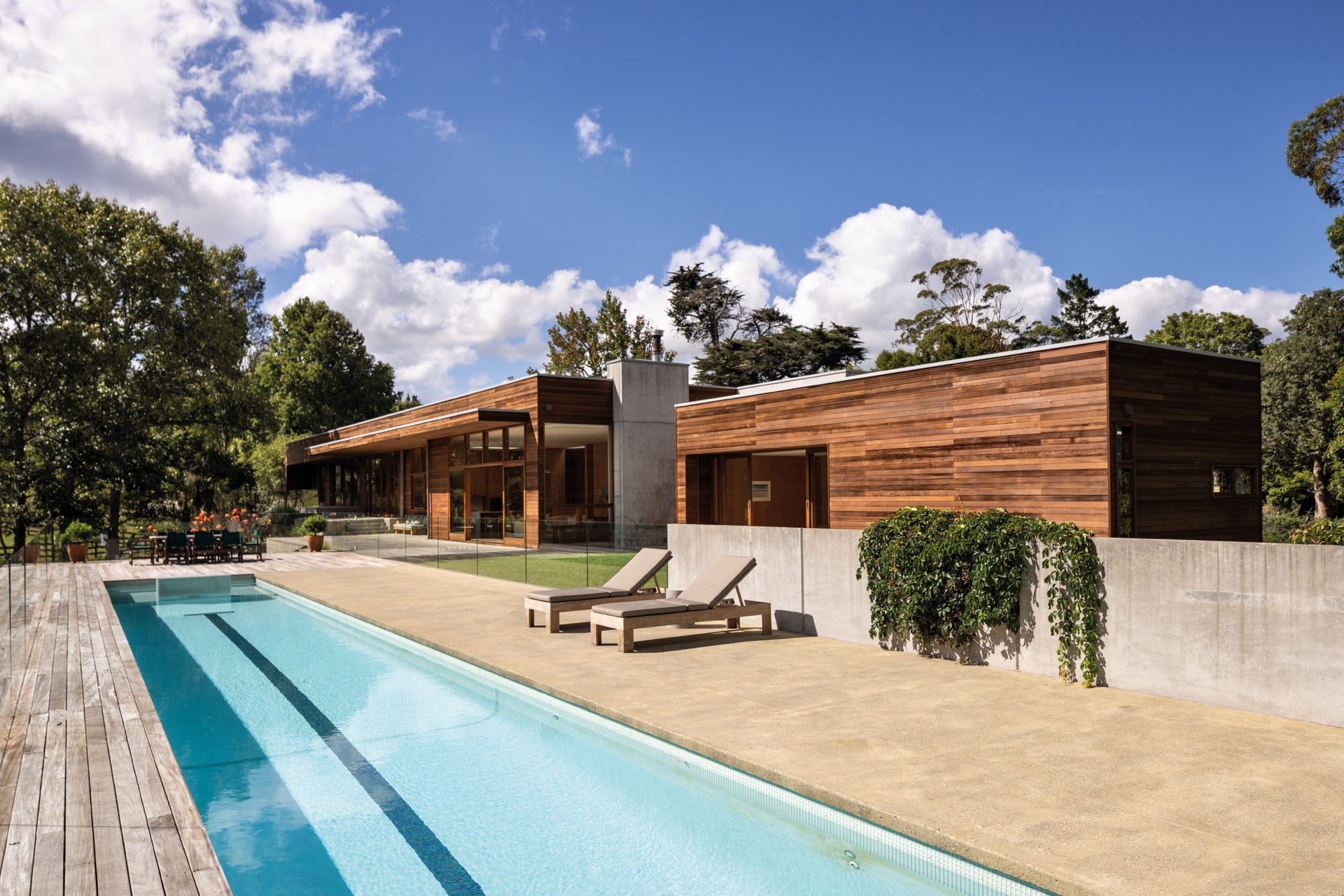
The final plan is deceptively simple: a composition of rectilinear forms that follow the slope of the land. A split-level configuration creates spatial variation while retaining a single ceiling line, so the volume grows gradually as you move into the communal spaces. At either end, it cantilevers over the land as it drops away. 

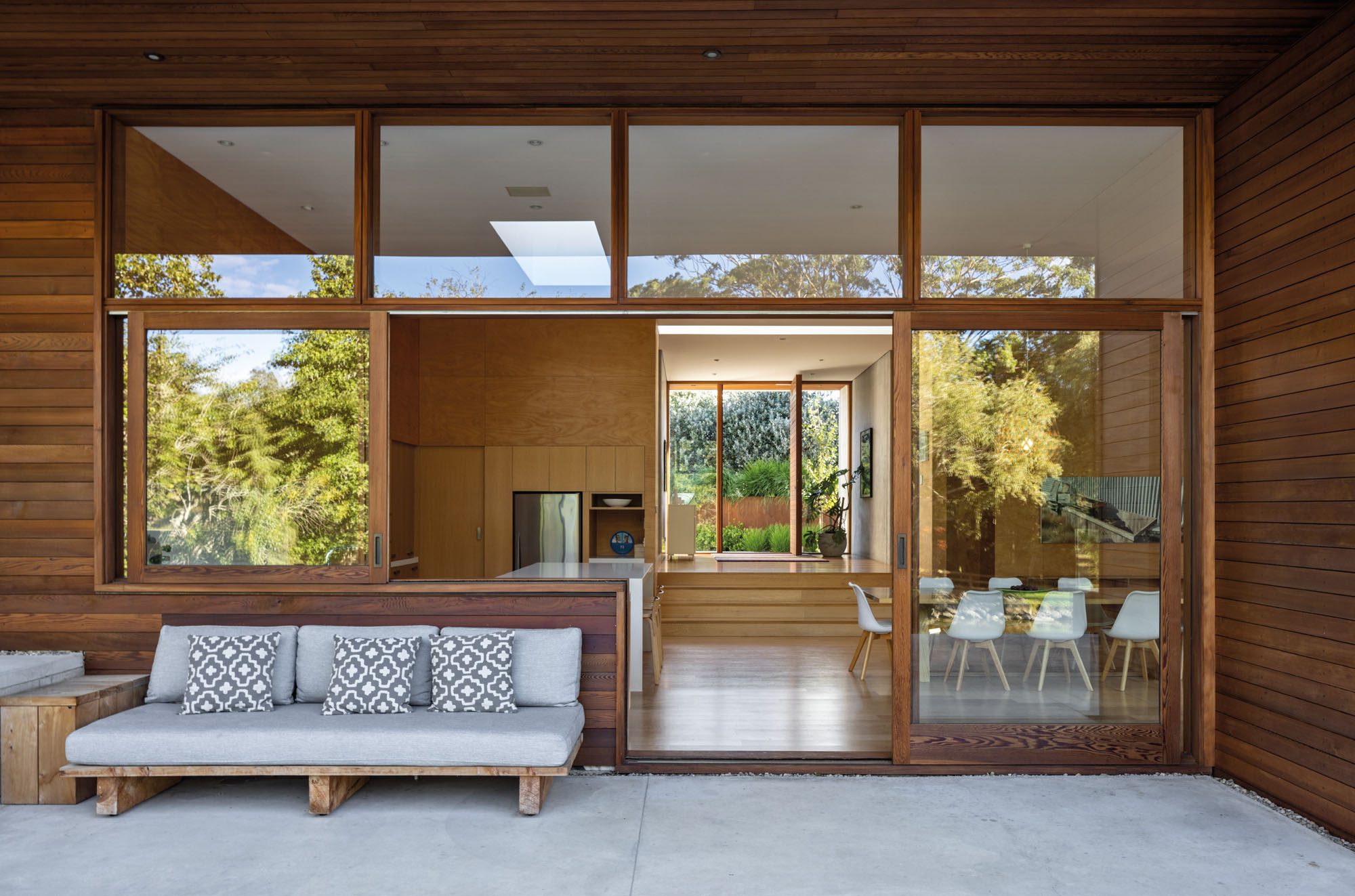
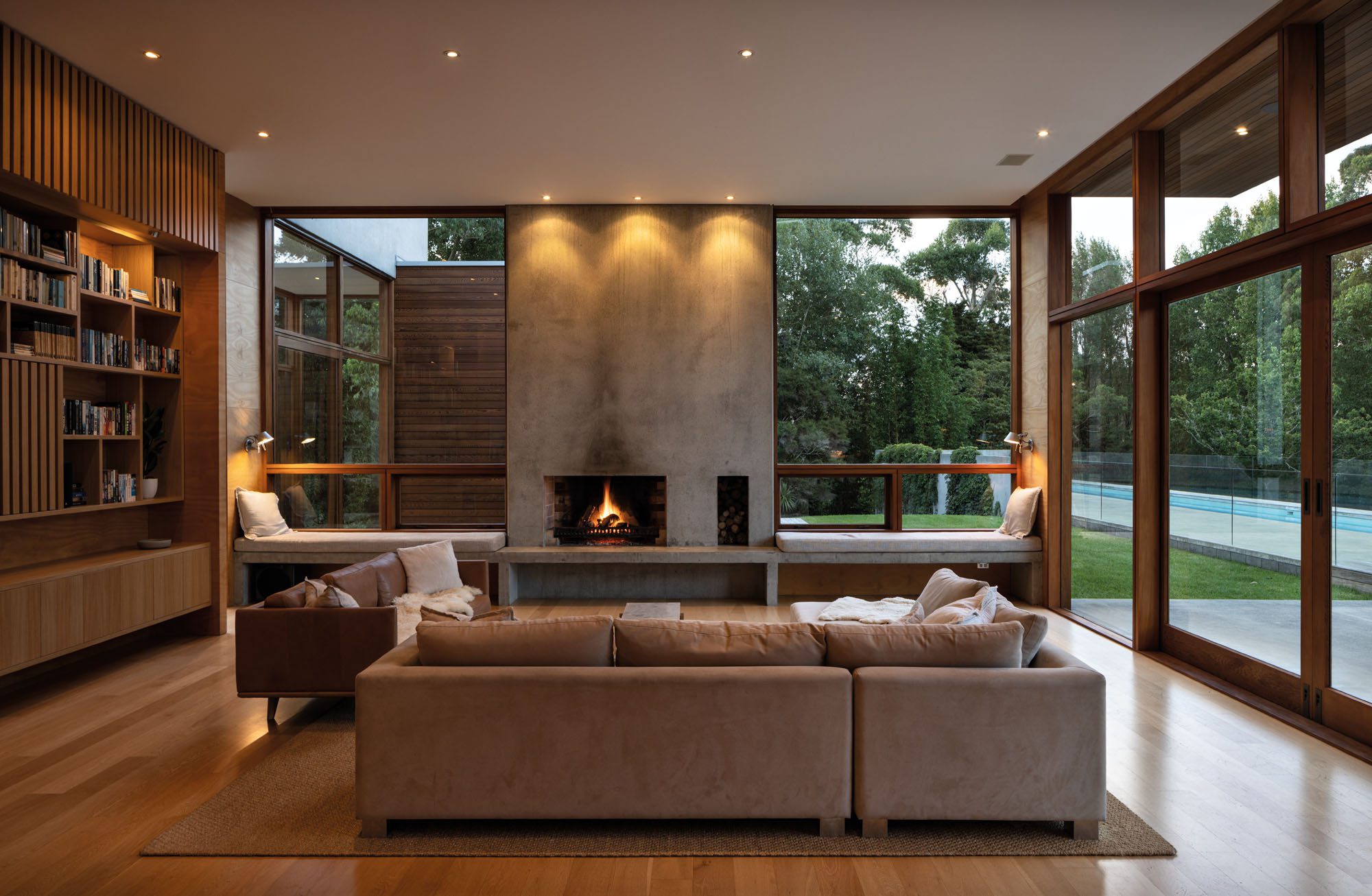
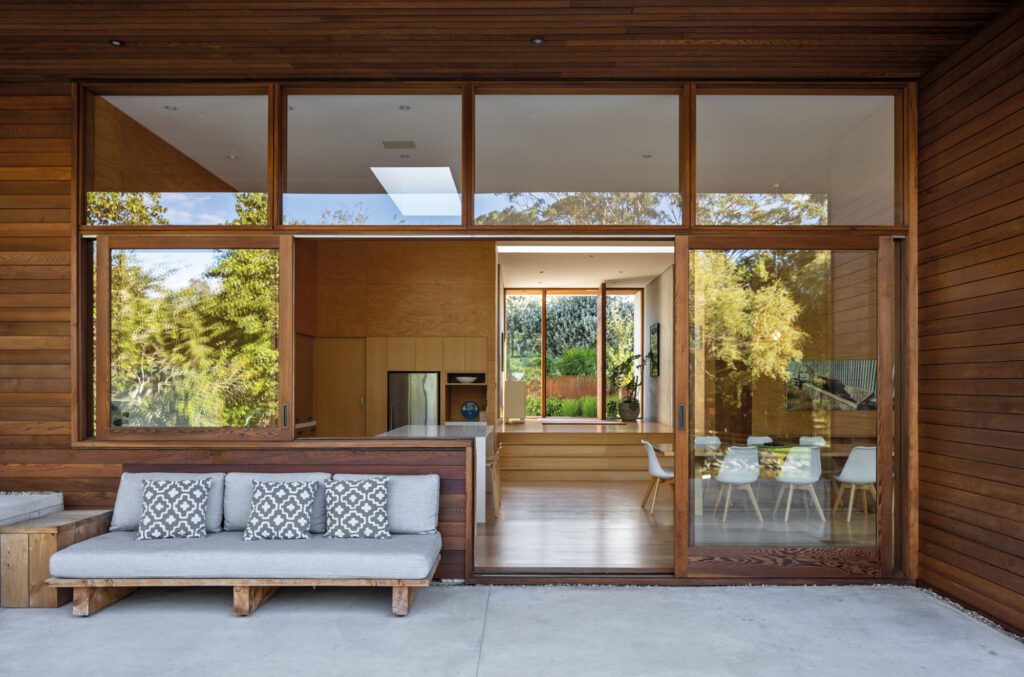
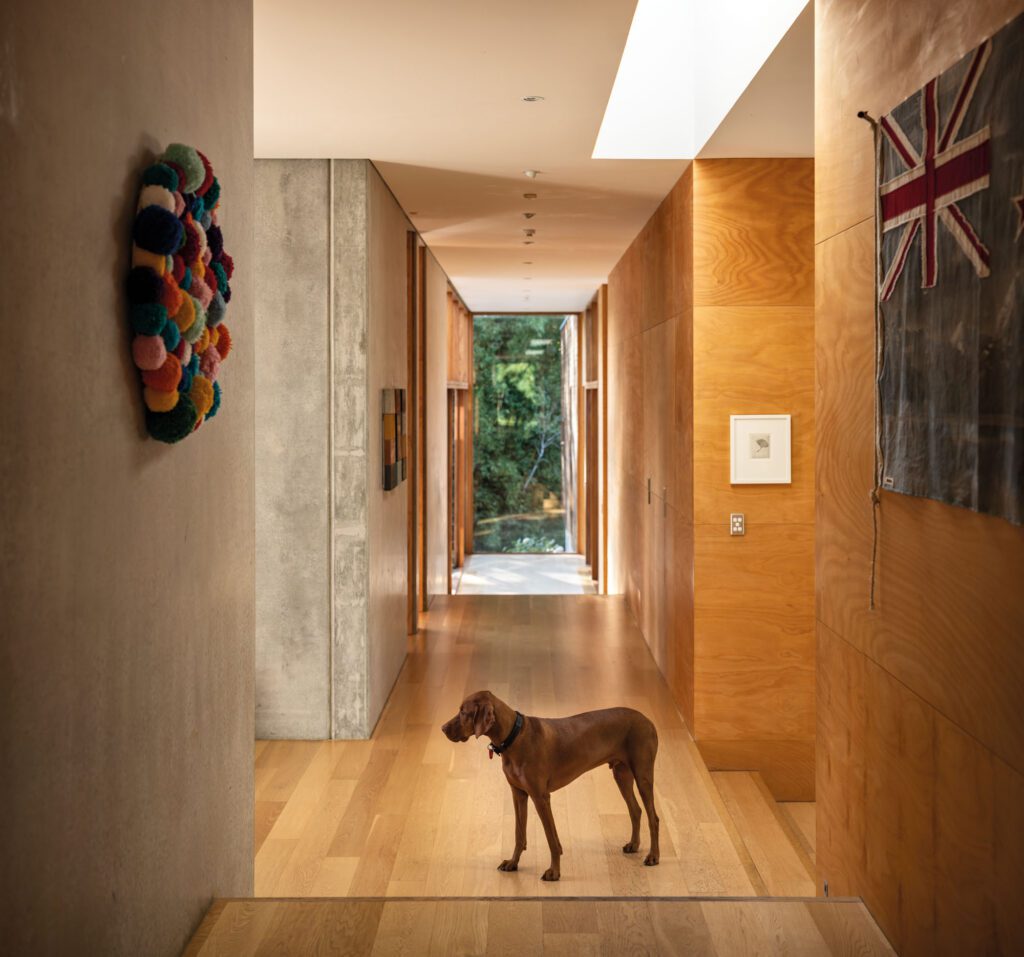
The main living areas and kitchen step down and open to the north. Internally, the material palette is dominated by timber; oak floors and ply wall linings.

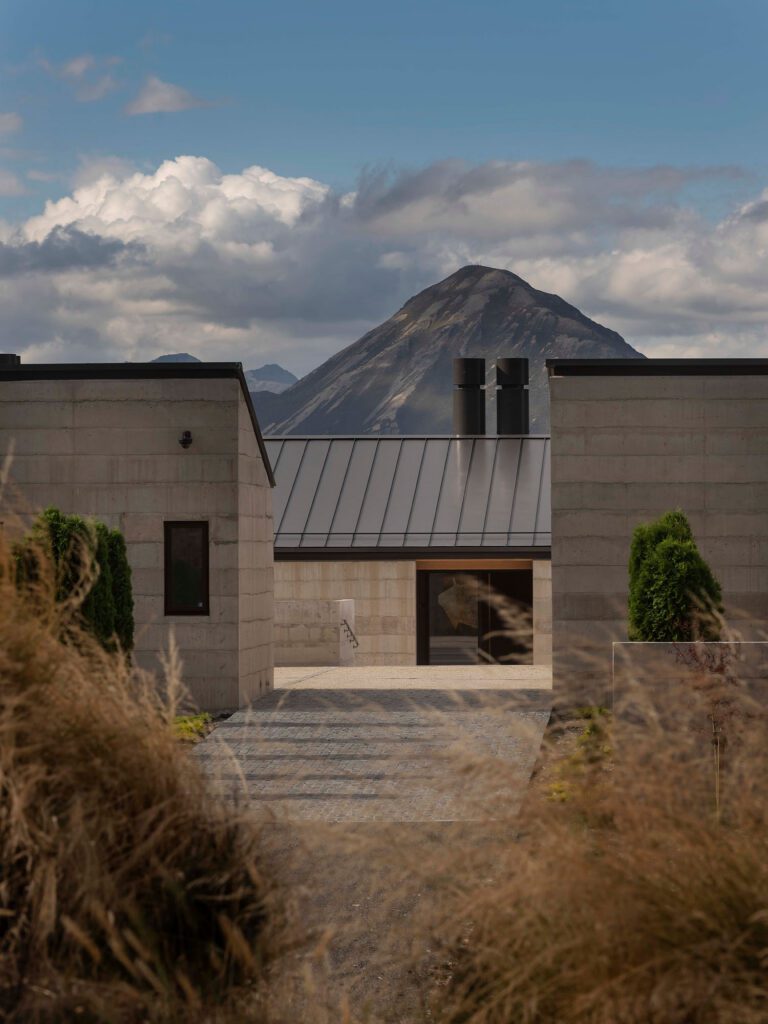
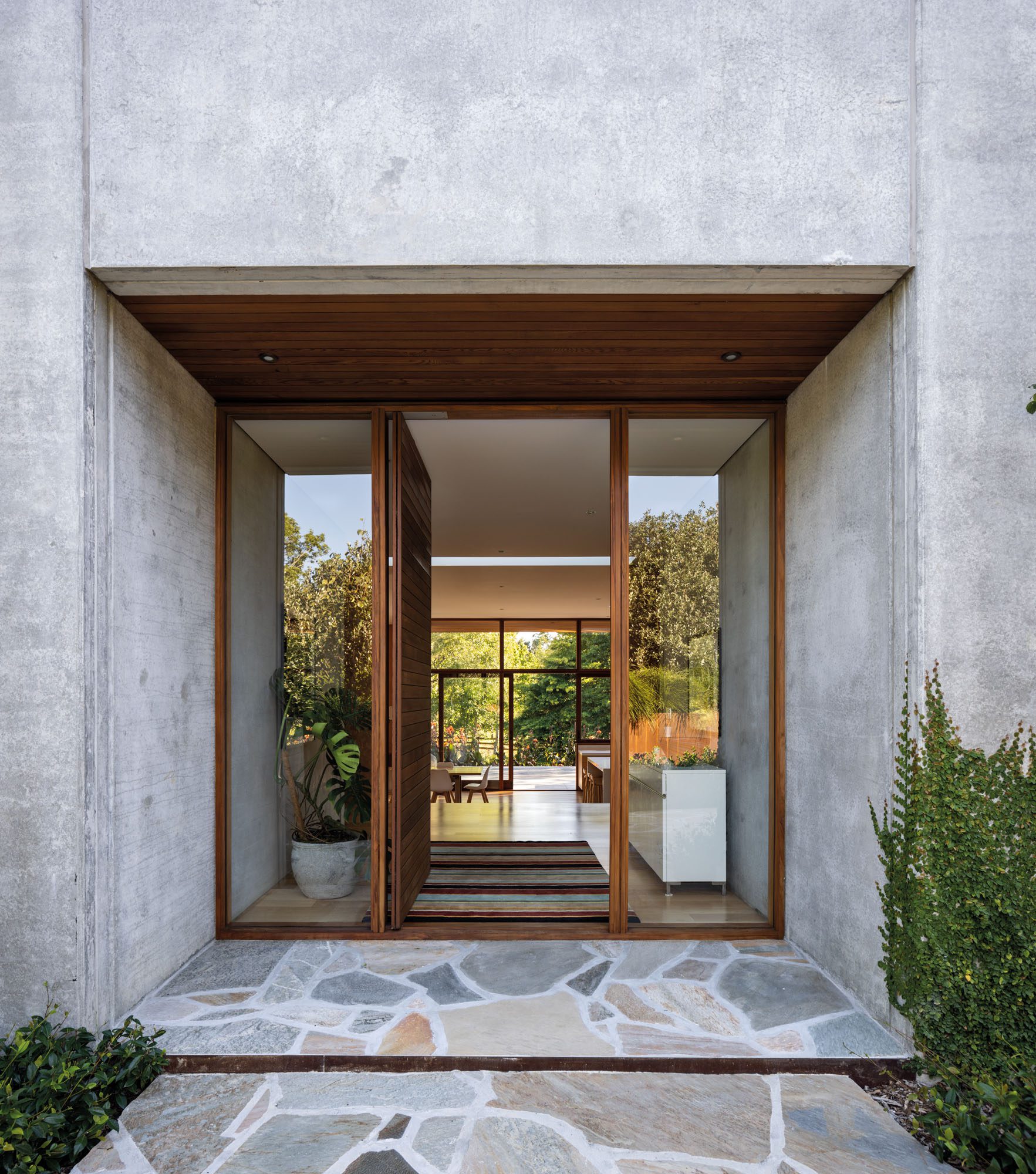
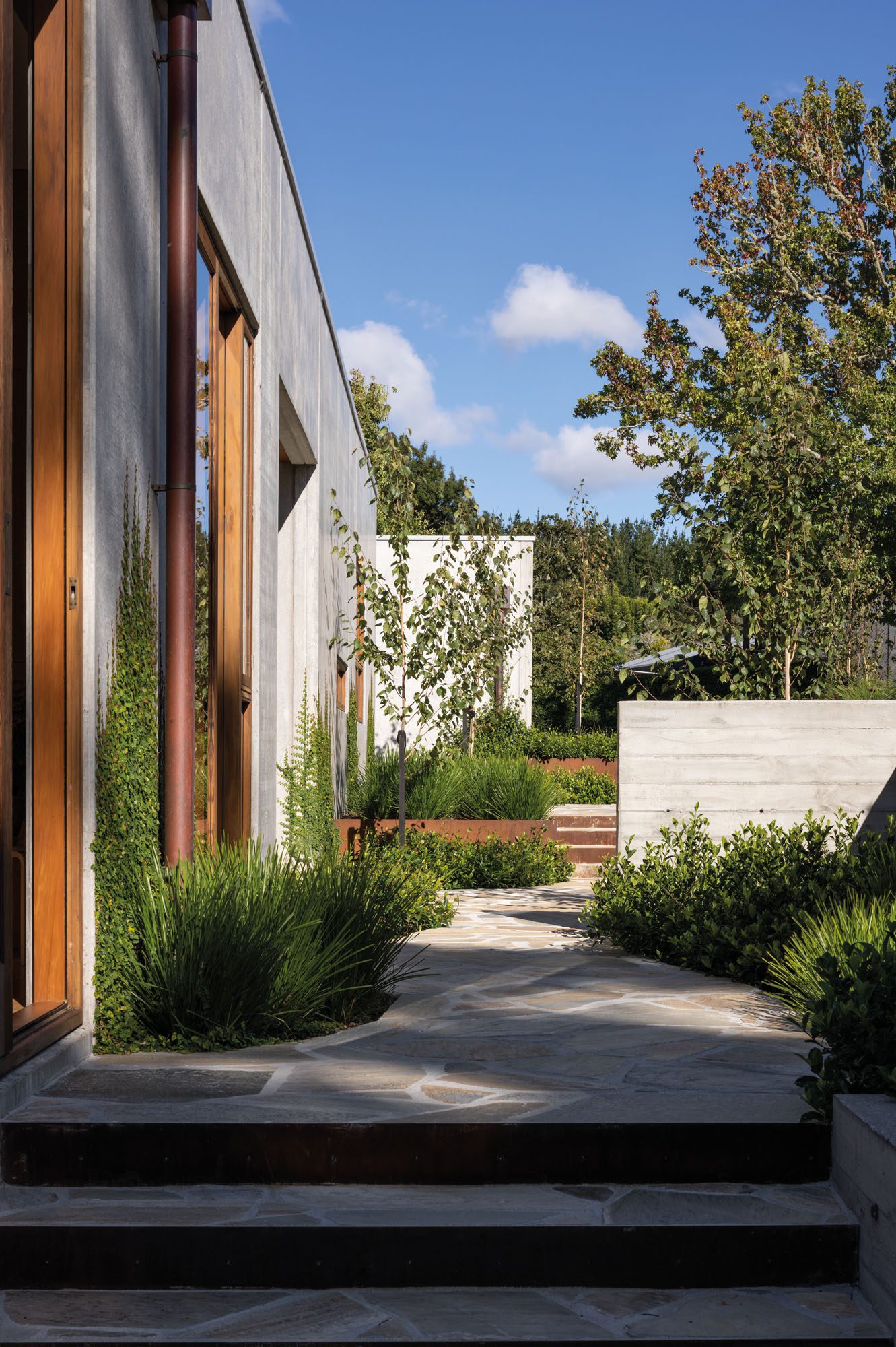
To the south, arrival is understated. A modest elevation of precast concrete walls form a thermal and acoustic barrier from the road behind. 

“I wanted it to feel protective,” Jo says; “a place that nurtures.”
 
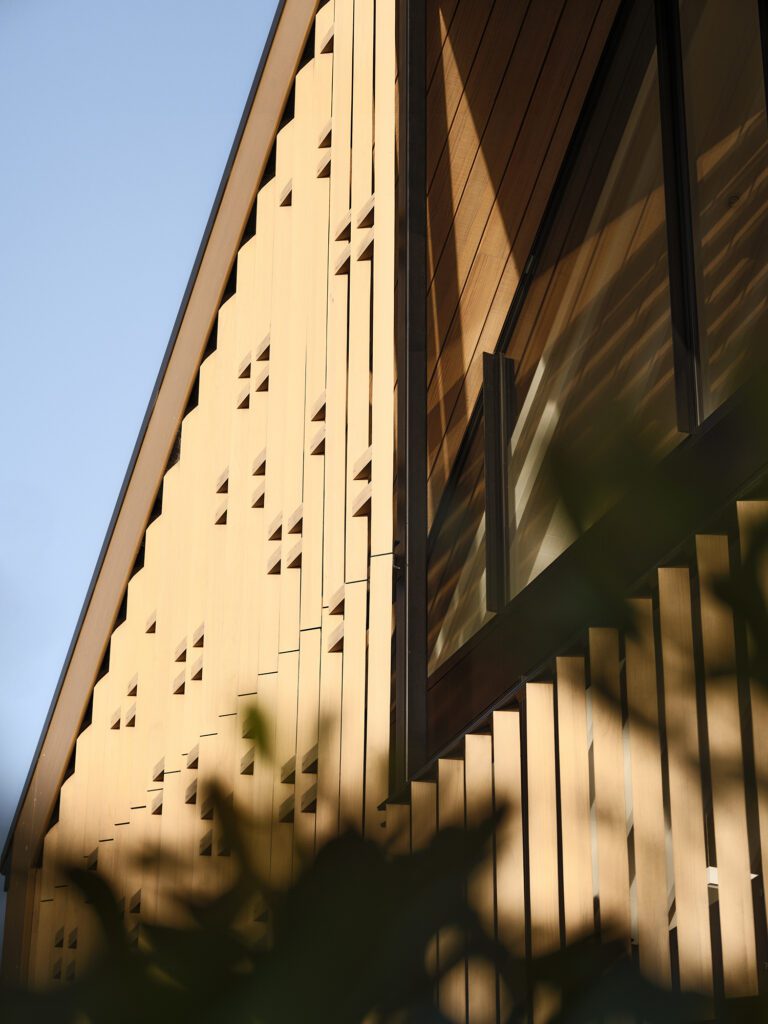
To the north, the house opens entirely. Cedar cladding softens the geometry; timber joinery, oak floors and ply walls lend warmth. A lap pool cantilevers towards the bush, its Corten steel cladding picking up tones reflected in the pond below and echoed in the dark-oiled cedar. 
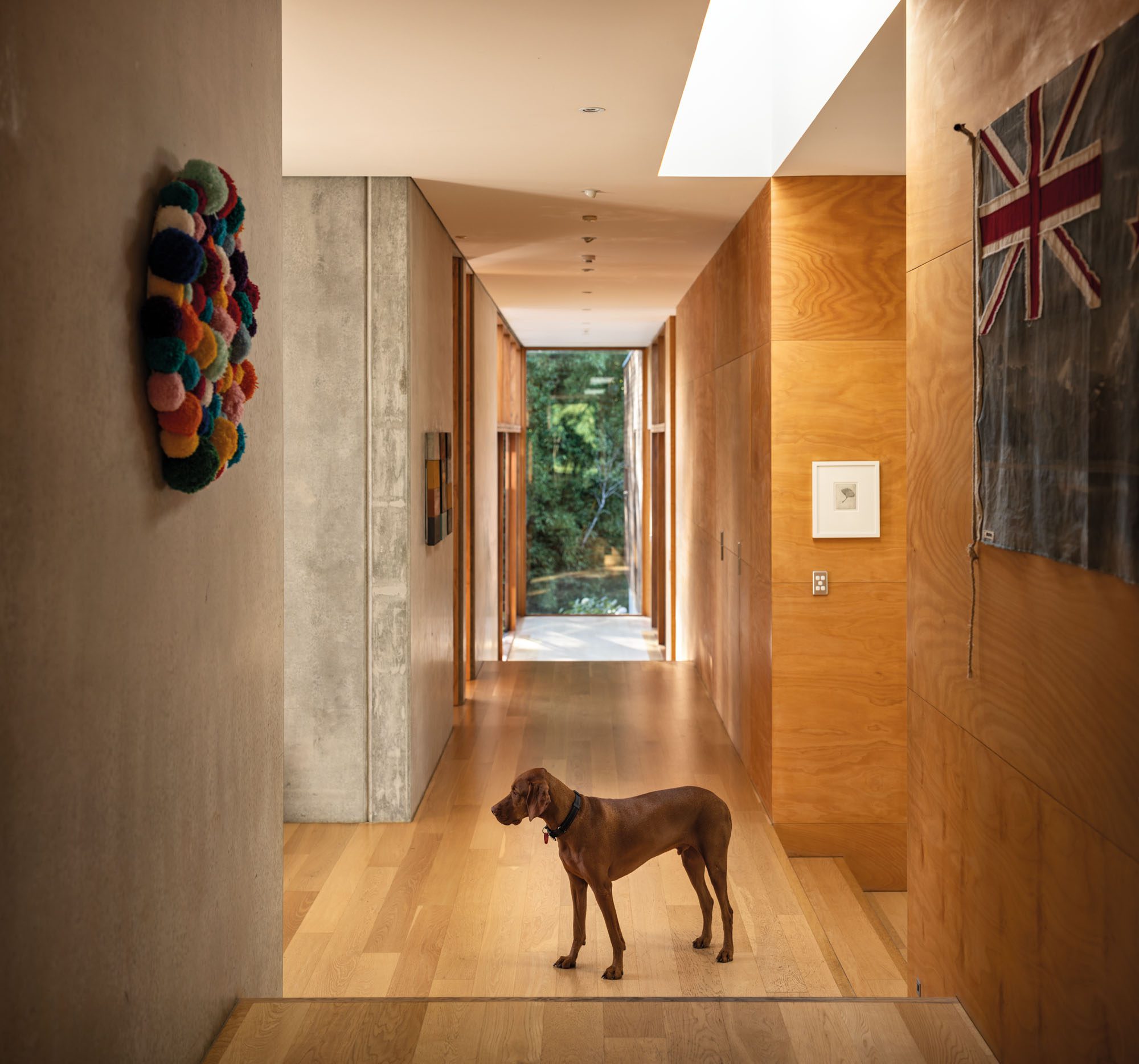
The central hall that runs the length of the house is a meeting point for materials; concrete to the south and timber to the north.

A long hallway bisects the home. The west is occupied by the main suite, separated by a glazed corridor; to the east, the children’s rooms. Jo’s office is tucked into a quiet corner overlooking the western courtyard, where Corten steel, concrete and timber converge. 

The central hall that runs the length of the house is a meeting point for materials; concrete to the south and timber to the north.

Here, a circular Corten water feature punctuates the space, set against the verticality of an outdoor fire and the heaviness of concrete walls. Jo cites the influence of Carlo Scarpa in these juxtapositions, and also mentions the work of Richard Neutra and David Chipperfield as shaping her approach to material and form. 

This is a home that hovers and hunkers, gestures outwards and turns inwards — refined and tactile. 

“It’s full of joy,” Jo says; “moments of stillness, of connection. It just feels right.”

Words: Clare Chapman
Images: Simon Devitt

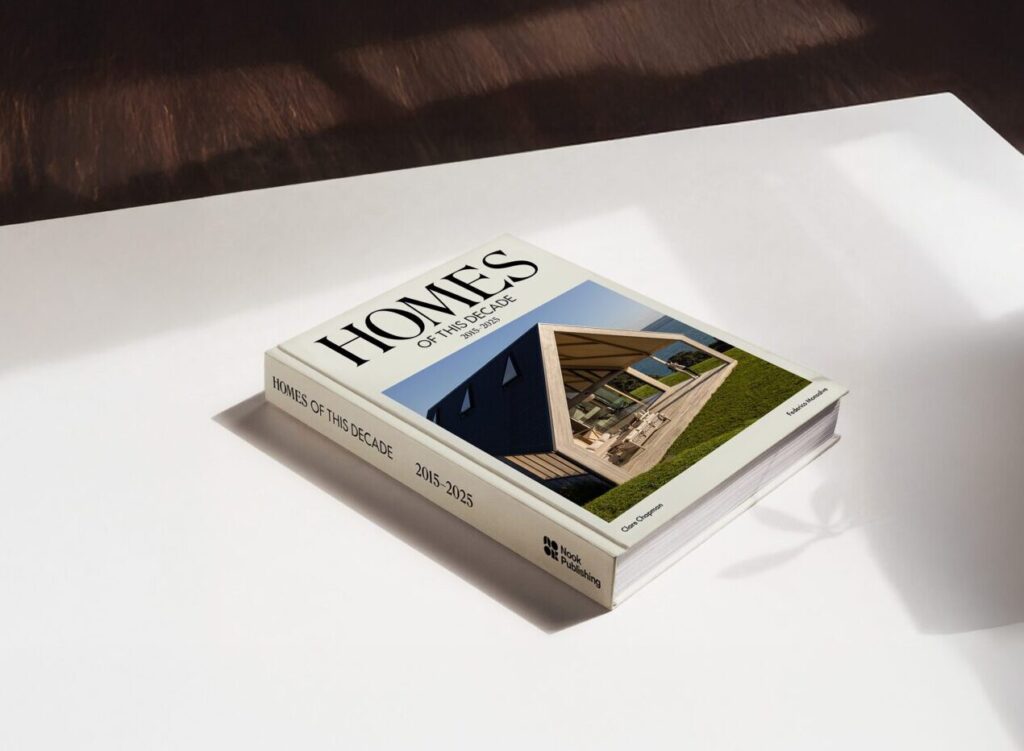
This feature first appeared in Homes of this Decade 2015-2025, which was published by Nook Publishing in 2025.

Latest video features

In the Coromandel, a home with a humble profile and a thoughtful design makes the most of a stunning location.

Built with awe-inspiring attention to detail, this Arrowtown home is a fresh interpretation of a familiar Otago rural vernacular.

This sculptural Northland bach is a perfect north arrow on a remote farm high above the sea.

With the sun on its bow and the community at its stern, this is a house in which the elements are always front of mind.

Trending articles

Design News

It could only be here

In conversation with Jonathan Coote and Tobin Smith of Warren and Mahoney, Anna Dorothea Ker explores how New Zealand homes are shaped — not by